“Fix It Up With God Afterward”: The Footrace That Tested a New Convert

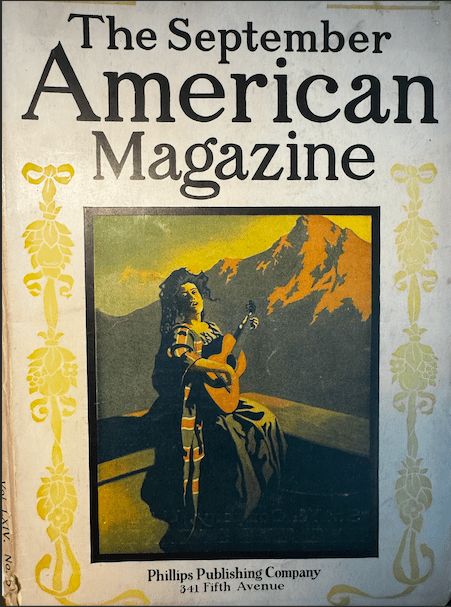
Third in a series drawn from Lindsay Denison’s profile of Billy Sunday in The American Magazine, September 1907.


A new convert’s faith is rarely tested by something so simple as a temptation to sin. More often it is tested by an obligation he took on before he believed — a promise made by the old self that the new self has to honor or break. For Billy Sunday, that test came in the form of a footrace, a pile of other men’s money, and Cap Anson refusing to take no for an answer.

It is one of the best stories in Lindsay Denison’s 1907 profile, and Sunday told it on himself.
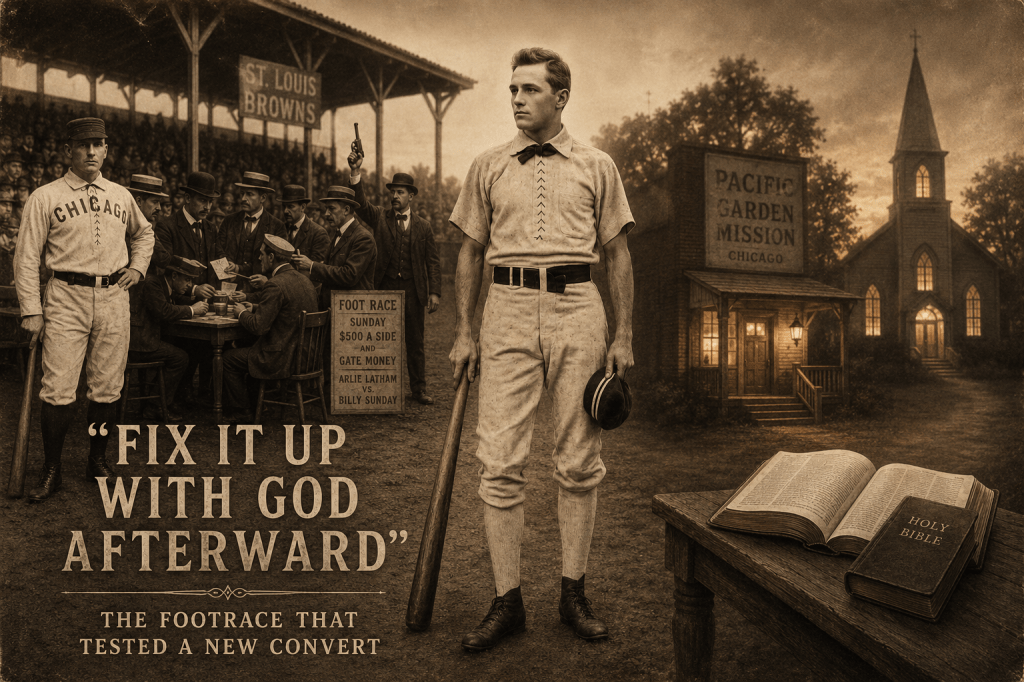
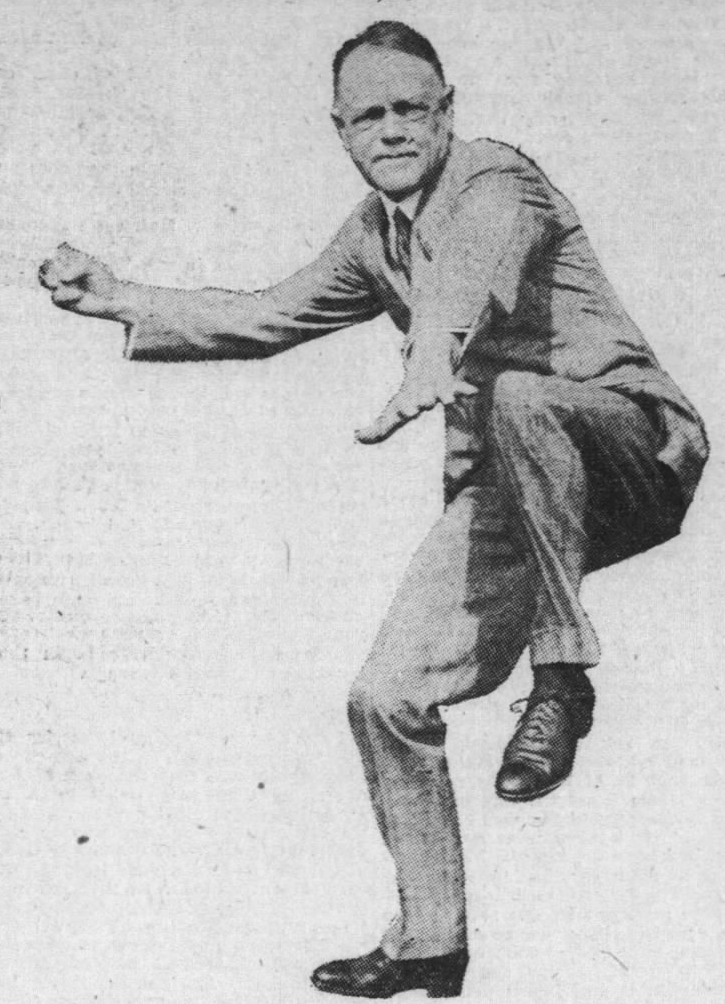
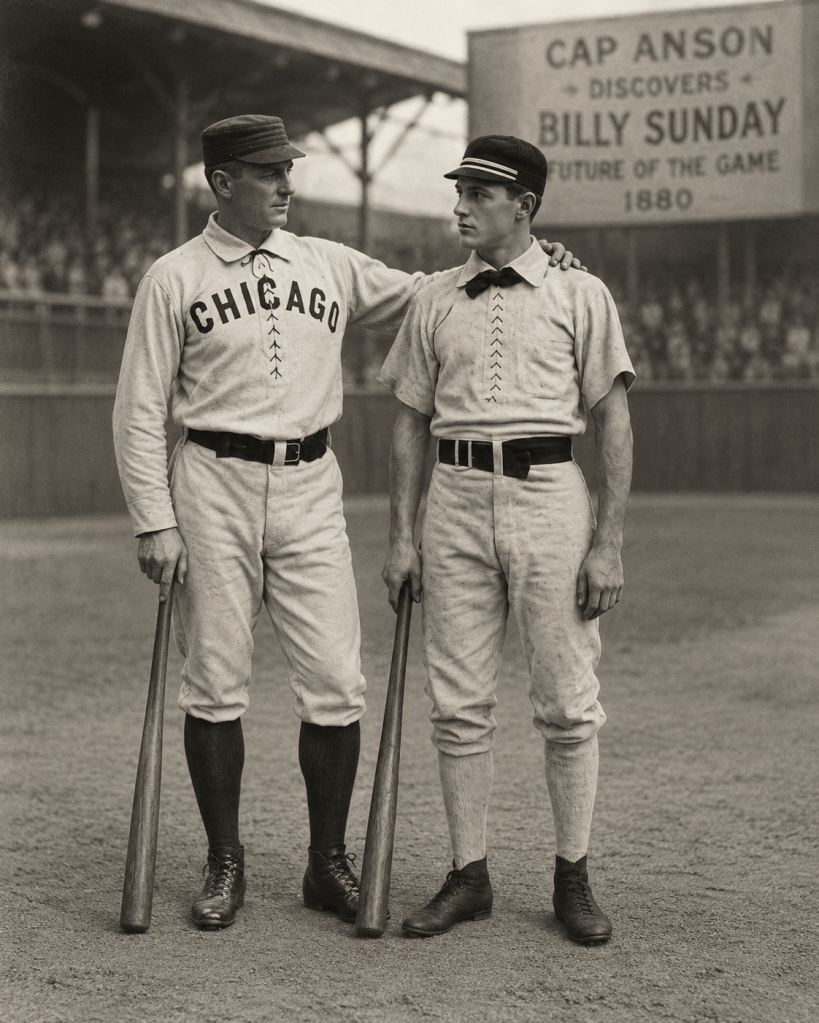
AI-generated image based on the story in this blogpost.

The bet

Before his conversion, Sunday had been matched in a hundred-yard race against Arlie Latham of the St. Louis Browns. The stakes were serious: $500 a side plus the gate money, with the race to be run in St. Louis on a Sunday at the close of the season. His captain, Cap Anson, had backed him heavily — and so had a great many of Anson’s friends. By Sunday’s own recollection, something like $75,000 was riding on the outcome.

Then Sunday walked into the Pacific Garden Mission and everything changed. Suddenly a man who had just resolved to live as Christ would have him live found himself committed to running a high-stakes gambling spectacle — on a Sunday, no less.

The prayer that wouldn’t resolve

This is the detail that makes the episode ring true. Sunday did not simply decide. He agonized.

He prayed over the race night after night, he told Denison, and still could not see his way clear. There was no clean answer. Backing out would betray Anson and the friends who had staked their money on him in good faith, long before his conversion. Going through with it meant a new Christian publicly running a Sunday gambling match. Either road ran against something he valued.

Unable to resolve it in prayer, he finally went to Anson and told him flatly that the captain would have to let him out of the race.

Anson’s answer

Anson would not hear of it. His first move was to needle Sunday’s pride — he wasn’t going to turn yellow and quit, was he? Sunday tried to explain himself. Anson wouldn’t listen.

What Anson said next is, in its rough way, one of the most quietly fascinating lines in the whole article — a piece of folk theology from a man who admitted he wasn’t much for religion. He told Sunday he’d backed him for thousands, and so had his friends, and then he reasoned it out: he didn’t believe God would want Sunday to begin his new life by throwing down his friends over a contract he’d signed before he ever went with God. So here was the plan. Sunday should go down to St. Louis, run the race — and then fix it up with God afterward.

It is the line that gives this post its title, and it deserves a moment’s attention. Anson, the irreligious ballplayer, was making a genuine moral argument: that a debt of honor incurred by the old self still binds the new one, and that a faith worth having shouldn’t begin with a betrayal. Whether or not the theology holds, the loyalty behind it is unmistakable.

“And, well, friends — I did”

So Sunday did exactly that. He went to St. Louis. He ran the race. He won it.

And then he came straight back to Chicago, went before the session of his church, and owned up to the whole thing. When the elders heard the full story, they let him off. He went on to serve as an elder of that same church for a good many years afterward.

What makes the story land is the order of operations. Sunday did not arrive at a tidy principle and then act on it. He wrestled, failed to find an answer, deferred to a friend’s blunt counsel, did the deed, and then submitted himself to his church’s judgment after the fact. It is conversion as a real human process — messy, compromised, and honest about the compromise — rather than a clean before-and-after.

Why he told it

It is worth asking why Sunday repeated a story that, on its face, shows him running a Sunday gambling race as a brand-new Christian. The answer is probably the same reason it works on us a century later: it made him believable.

A preacher who claimed to have gone instantly spotless from the moment he rose off that curb would have been easy to disbelieve and easy to resent. A preacher who admitted he prayed over a problem for nights, couldn’t crack it, ran the race anyway, and then went and confessed it — that man was telling the truth about how hard the early going had been. The audiences who heard him preach trusted him in part because he handed them stories like this one.

The footrace, in other words, was not a blemish Sunday hid. It was evidence he offered.


Next in the series: Preaching the Devil in Plain English — inside Billy Sunday’s pulpit style.
From Center Field to the Pulpit: The Conversion of Billy Sunday

Second in a series drawn from Lindsay Denison’s profile of Billy Sunday in The American Magazine, September 1907.


Before he was the man who made New England shiver and the cornfields cheer, Billy Sunday was a poor boy from Iowa with a dead father and a gift for running.

Lindsay Denison’s 1907 profile lays out the bare facts of that early life with a plainness that almost undersells them. Sunday was born in 1863 in Storey, in Ames County, Iowa. His father was a Union soldier, killed in battle before the boy was even born. He grew up in the Davenport Soldiers’ Orphans’ Home and was later apprenticed out to Col. John Scott — a state senator and former lieutenant-governor — before learning the furniture trade in Marshalltown.

It was an unremarkable beginning for a man who would become anything but unremarkable. And the thing that lifted him out of it was not religion. It was baseball.

Discovered by Cap Anson

AI-generated from period images of Anson and Sunday.

While Sunday was working in Marshalltown, the famous Captain Anson of the Chicago White Stockings spotted the makings of a great ballplayer in him. Anson brought him to Chicago in 1883, and for the next five years Sunday played right field for one of the dominant teams of the era — fast enough that Denison calls him the quickest base-runner the National League ever knew.

He was, in short, a professional athlete in his prime in a major American city. Which makes what happened next all the more surprising.

The curb on Van Buren Street

The conversion story is the hinge of Sunday’s entire life, and Denison opens the whole article with it.

One afternoon — nineteen years before the article was written — Sunday sat with three fellow ballplayers on a curb on Van Buren Street in Chicago, directly across from the Pacific Garden Mission. The men were Mike Kelly, Johnny Ward, and Buck Ewing, all famous names of early baseball. The mission’s windows were open, and the sound of the organ and the hymns rolled out into the street.

When the singing stopped, Sunday told the others he guessed he didn’t want another drink. He waved them a laughing good-bye, crossed the street, and walked into the mission. Ever since, Denison writes, he had been trying to live as he believed Christ would have him live.

There was no thunderclap in the telling — just a man getting up off a curb and walking toward something. The drama would come later.

What the ballplayers thought

Sunday’s own account of the aftermath is one of the most human passages in the article, and it turns on fear. The shakiest moment, he admitted, came the day the Chicago papers broke the news of his joining the church, as he walked down to the ballgrounds dreading what his teammates would say.

He needn’t have worried. Anson shook his hand and said, “Good for you, Billy.” Mike Kelly told him to stick to it. Fred Pfeffer and John Clarkson were just as warm. And George Gore — the one Sunday feared most — grabbed him with both hands and told him it was the best thing he had ever done. Finding that men he respected respected him the more for becoming a Christian, Sunday said, braced him up more than he could express.

(One more test of that new faith was still ahead of him — a footrace, a heavy bet, and a memorable bit of advice from Cap Anson. That’s a story worth its own post, and it’s coming next.)

The cost of the calling

What Denison documents next is the part that answered, years in advance, the critics who would later call Sunday a money-grubber.

After Chicago, Sunday played three more seasons with the Pittsburgh and Philadelphia clubs of the National League, preaching from a pulpit on Sunday nights in whatever town he found himself, firing a locomotive between seasons to stay in condition, and taking courses at Northwestern University. Then, in 1891 — in answer, he believed, to prayer about his future — he secured his release from the Philadelphia team.

Cincinnati immediately offered him $500 a month to keep playing. He turned it down. Instead he became director of the Chicago YMCA at $83 a month — and during the hard times of 1893, his salary went unpaid for seven months running. He was so poor he walked downtown in the morning and home again at night because he could not afford the car fare.

Sunday recalled all this to Denison with a touch of grim humor that says everything about how the later “grafter” accusations stung him: nobody, he noted, was calling him a grafter in those days.

From the YMCA to the pulpit

The final step came four years before the article appeared, when the Presbytery of Chicago received Sunday into the ministry. He had served for a time under the Rev. Dr. J. Wilbur Chapman, one of the leaders of the wave of evangelization then sweeping the Mississippi valley — the mentor under whom the ballplayer-turned-secretary finished becoming a preacher.

From an orphanage in Iowa to right field in Chicago to a tabernacle pulpit in a hundred small towns: it is an improbable arc, and Denison tells it as one. The boy who got up off a curb because he didn’t want another drink had, within two decades, become the man the whole Middle West was talking about.


Next in the series: “Fix It Up With God Afterward” — the footrace, Cap Anson, and the bet that tested a new convert.

“He Is Doing God’s Work”: A 1907 Magazine Discovers Billy Sunday

First in a series drawn from Lindsay Denison’s profile of Billy Sunday in The American Magazine, September 1907.


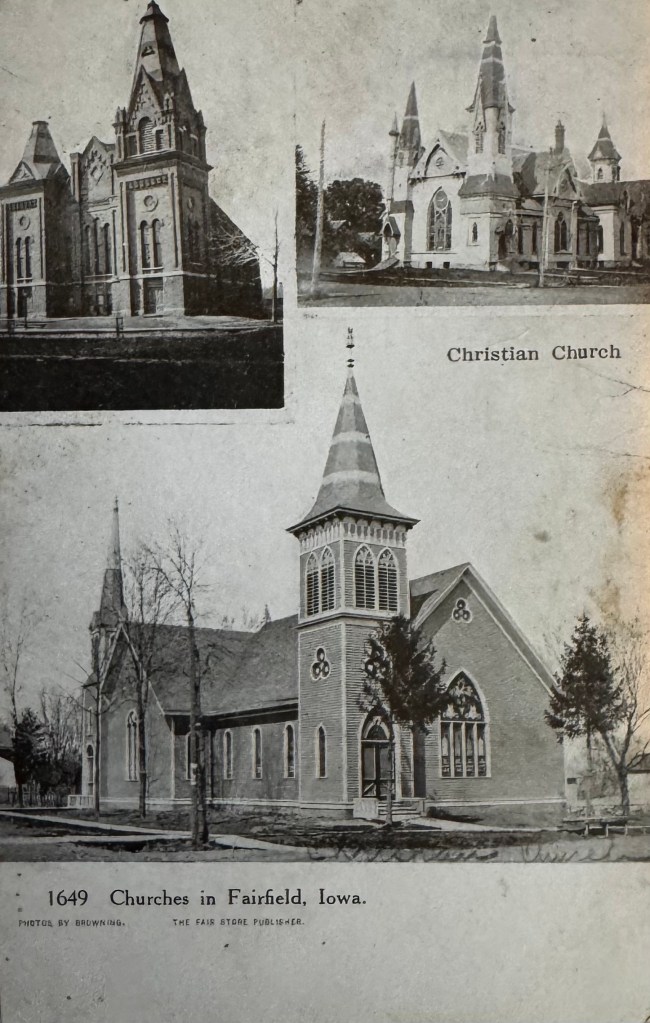
In the autumn of 1907, a New York journalist named Lindsay Denison stepped off a train into a tidy, prosperous Iowa town of about five thousand people. He had come a long way to watch a man preach.

The town was Fairfield. The man was the Rev. William A. “Billy” Sunday — former professional ballplayer, ordained Presbyterian minister, and the most electric revivalist the American Midwest had ever produced. Denison’s assignment was to explain him to the readers of The American Magazine, a national publication based a thousand miles east of the cornfields where Sunday did his work.

That distance is the whole story. In 1907, Billy Sunday was a regional sensation — a small-town, big-tent evangelist who worked a tight circuit through Iowa, Illinois, Wisconsin, Minnesota, and Colorado. But the fact that a New York magazine sent a reporter “all the way from New York,” as Sunday himself noted in one of his prayers, tells you something was shifting. The country was beginning to take notice.

A reluctant convert among the clergy

The article opens not with Sunday’s own voice but with the voice of a man he had thoroughly rattled: the Rev. Pearse Pinch, pastor of Fairfield’s Congregational church. Pinch’s testimony is one of the most striking things in the whole piece, precisely because it is so conflicted.

Sunday, by Pinch’s account, had trampled all over his theology and “kicked my teachings up and down that platform like a football.” The man had offended every refined notion the pastor held about his sacred profession. And yet — Pinch could not argue with the results. His congregation would grow by hundreds. So he humbled himself, gave the credit to Sunday and to God, and reached a conclusion he could not escape: the man was doing God’s work, and that he knew.

It is a perfect frame for the series ahead, because it captures the central tension of Billy Sunday’s whole career. Refined clergymen were horrified by his slang, his theatrics, his shirt-sleeve oratory. And then they watched the converts pour down the aisles, and they stopped arguing.

The numbers that made people look twice

Denison did not bury the lead. By 1907, Sunday had spent twelve years converting more than one hundred thousand men and women to a public profession of faith — and, crucially, he sent them into the churches and they stayed. A survey of ministers in eleven towns where Sunday had held revivals came back unanimous: the share of backsliders was small, even negligible.

This is what separated Sunday from the caricature of the fly-by-night tent preacher. He was, in Denison’s framing, making more church members than all the ministers of the Middle West working together. And he funneled converts not only into his own Presbyterian rolls but into the Methodist, Baptist, Episcopalian, Lutheran, Congregationalist, Roman Catholic, and Christian churches as well.

A man, not a “theological phonograph”

What made him work? Part of the answer, Denison found, was that Sunday never behaved like a clergyman descending on sinners. When he first arrived in Fairfield, he walked the stores around the public square and talked shop — cloth, horses, shoe leather, Chicago trade prices — and he knew his subjects well enough to impress the tailor, the livery man, and the shoe dealer.

By the time those introductory calls were done, the town had reached its verdict: Bill Sunday was a human being, not a theological phonograph. That instinct — to meet ordinary people as a peer rather than to preach down at them — is the thread that runs through everything else, from his plain-spoken sermons to the popular tunes his choir sang.

Why this series

Over the next several posts, we’ll work through Denison’s 1907 profile piece by piece: Sunday’s improbable journey from center field to the pulpit, the famous footrace that tested his new faith, the pulpit style that scandalized and converted in equal measure, the carnival-bright music of his meetings, the hard questions about money, and the unforgettable final day of the Fairfield revival.

Read as a whole, the article is more than a snapshot of one revival in one Iowa town. It is an early national notice of a man about to become one of the most famous preachers in America — caught at the very threshold, just before the rise steepened.

As Denison put it in his closing line, the spiritual ferment Sunday helped lead was spreading and intensifying across the country. What it would all come to, he wrote, was no part of his business to guess.

But it was worth watching.


Next in the series: From Center Field to the Pulpit — the conversion of Billy Sunday.

Billy Sunday’s take on society (c 1907) in his day?

The following appeared in The Times (Streator, Illinois) · Sat, Jan 26, 1907 · Page 2

REV. BILLY SUNDAY DEFINES WHAT HE TERMS SOCIETY OF THE PRESENT DAY.

In one of his series of revival sermons at Kankakee Rev. William Sunday paid his respects to present day “society.” Following are a few spitballs that he tossed over the plate:

“I believe in Christian society, but nine-tenths of society is on the road to perdition.

Society’s going to hell at a rate that’s dazzling. Where will you find the sheriff or judges who dare arraign the rich law breaker?

What is the reason they, don’t? Damnable politics. Society is hastening to the judgment that overtook Pompeii and Herculaneum, and some time may be buried in cinders and ashes thirty feet deep. I don’t know what method God will use to purify society, whether it will be fire or pestilence or famine. The only law some people will recognize; is the law of their desires.

“If you people don’t turn from your cussedness, God will do something to stagger you. He’s done it before and don’t think that He won’t do it again.” Sunday then drew a lurid word pie-ture of a brilliant drawing room in which a number of society dames were drawn about, a card table playing progressive euchre, while a waiter served them frappe.

On the other hand he pictured the back room of a stale beer joint, where four blear eyed, vermin covered old soaks, without clothing enough on their backs to flag a hand car, played penny ante for a jack pot of a few greasy old pennies.

“I fear that cursed gang of society more than I do all the town loafers in that beer joint.” shouted the speaker.

“There’s where your boy matriculates.

Here’s where he graduates. There’s where he backs out of the yard.

Here’s where his ticket is punched on the last division to hell.

“Society’s all right, lodges are all right, clubs are all right; but don’t think that’s all. I pity those whose visions are bounded by soups, frappes, and their Falstaffian appetites. I respect more one God-fearing, sox, darning old mother in Israel than a train load of good for nothing, gum chewing fudge eating, sizzle headed eissies who sit down and play rag time all day.”

And here the speaker gave a side-rending interpretation of a rendition of two popular rags.

“What America needs is not more railway extension and a lower tariff and a bigger wheat crop, but a baptism of the oldtime religion.”

The Times (Streator, Illinois) · Sat, Jan 26, 1907 · Page 2

The Greatest Show You’ve Never Heard Of: Circuit Chautauqua and the Performance of America


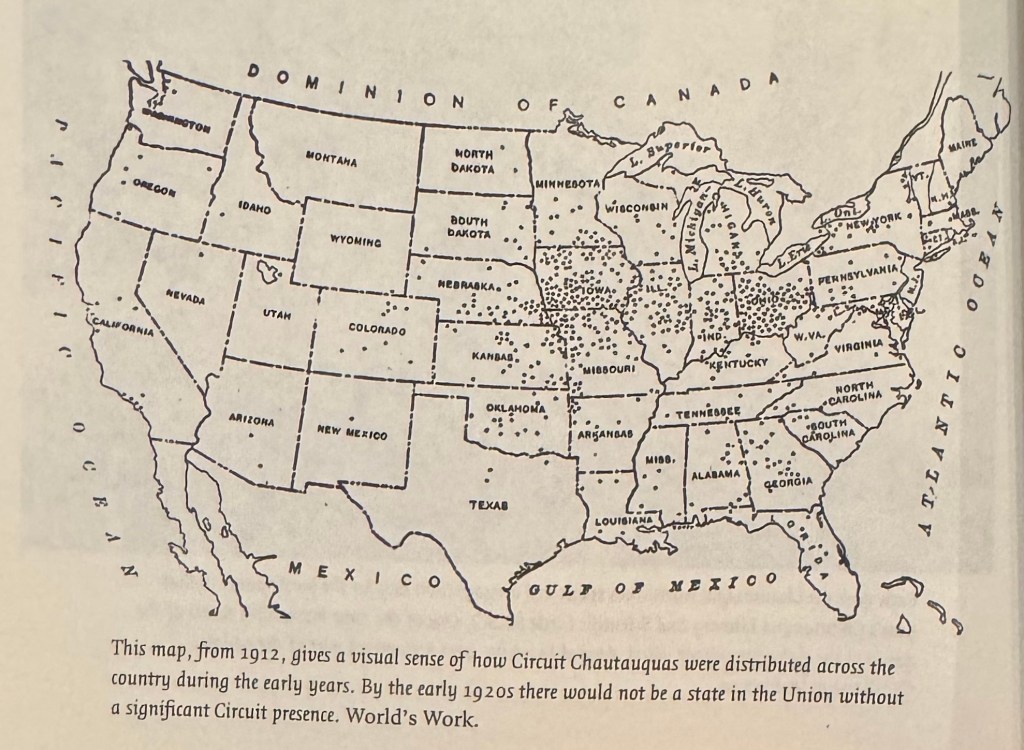
If you lived in small-town America a century ago and heard that a massive tent was going up just outside of town, you knew exactly what was coming: the Chautauqua was back.

Canning, p. 26

But not just any Chautauqua. This was the circuit Chautauqua—a full-blown cultural caravan, rolling into communities like a blend of TED Talk, county fair, gospel revival, and Broadway road show. It was, as historian Charlotte Canning describes it, “the greatest aggregation of public performers the world has ever known.”

Forget the dusty image of civic lectures and sober-minded schoolteachers. Circuit Chautauquas were performance-driven experiences, intentionally designed to shape the American imagination. They were mobile festivals of ideas, music, drama, and moral vision—staged under a giant canvas tent, and scheduled with industrial precision across the country.

Canning helps us see these not merely as education-on-wheels, but as orchestrated acts of cultural storytelling. At their heart, circuit Chautauquas were about performing a kind of “Americanness”—a staged identity that included democracy, morality, individual responsibility, and civic pride. And these weren’t abstract ideas: they were embodied in actors, lecturers, and musicians who took the platform with everything from Shakespearean monologues to lectures on temperance and suffrage.

The Paradox? These events, often remembered as wholesome and nostalgic, were also deeply commercial. Promoters like Roy Ellison and Keith Vawter didn’t just want to elevate the public—they wanted to make a million. Yet that’s part of the genius: they succeeded in selling culture as spectacle, without cheapening either.

To Canning, the tent was a stage—not just for performers, but for the entire community to see itself. Who belonged? Who was excluded? What did it mean to be an American in 1910 or 1920? Every act—whether musical trio or biblical dramatist—answered those questions in subtle (and sometimes not-so-subtle) ways.

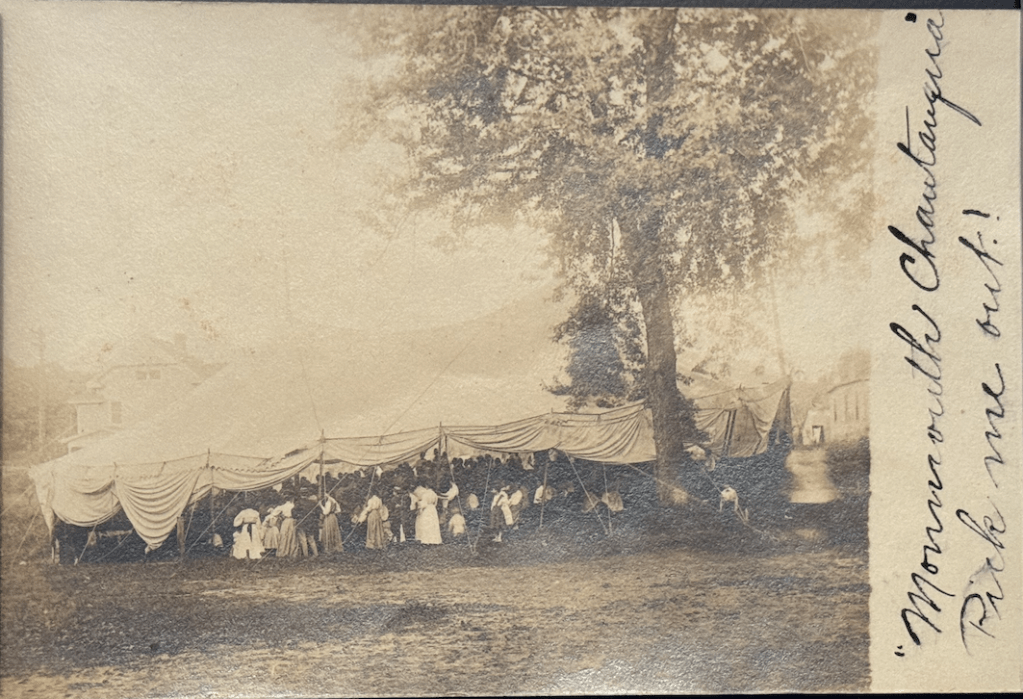
Monmouth, Illinois chautauqua, 1907 postcard. Author’s collection.
Billy spoke at Monmouth, August 17, 1906.

So the next time you think of rural America in the early 20th century, don’t just imagine plows and porches. Picture the circus-sized tent at the edge of town. The banners. The folding chairs. The packed crowd.

And inside that tent? America on stage.


Resource cited
Charlotte M. Canning. The Most American Thing in America: Circuit Chautauqua as Performance. 2005.

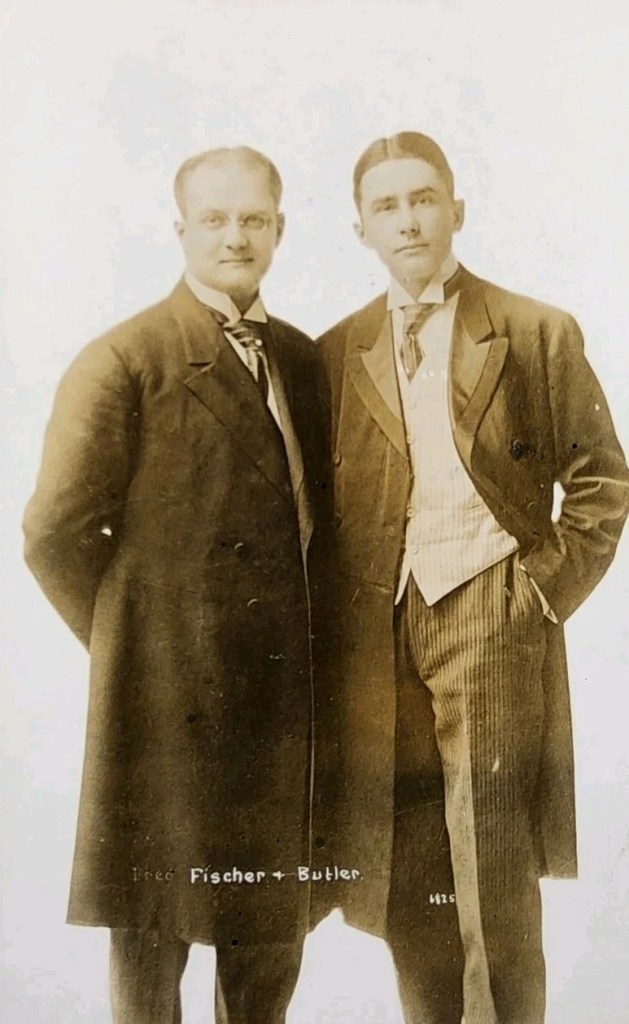
Fred G. Fischer – Choir Leader and Soloist and Charles Butler – Soloist

We recently acquired this image.

The reverse back of the postcard is blank.

Billy Sunday worked closely with two key musical assistants: Fred G. Fischer and Charles Butler, both of whom played significant roles in his evangelistic campaigns.

Fred G. Fischer – Choir Leader and Soloist

Fred G. Fischer was among Sunday’s earliest and most trusted collaborators. Serving as both choir leader and soloist, Fischer was instrumental in organizing and directing the musical components of Sunday’s revival meetings. His tenure with Sunday spanned approximately from 1900 to 1910, during which he helped cultivate the energetic and participatory musical atmosphere that became a hallmark of Sunday’s campaigns.

Charles Butler – Soloist

Charles Butler served as a soloist in Billy Sunday’s team, contributing to the musical aspects of the revival meetings. His role involved performing solo pieces that complemented the choir’s performances and supported the overall worship experience. Butler’s involvement with Sunday’s campaigns was notably during the years 1907–1908.

Both Fischer and Butler were integral to the musical dimension of Billy Sunday’s revival meetings, enhancing the emotional and spiritual resonance of the events through their leadership and performances.

Circa 1907 (1900-1910)

Billy Sunday 1907 Revival Campaigns

Worthington, MN – Began Dec 9, 1906. Ended Jan 5th, after four weeks.

Kankakee, ILL – Began January 6th, ending Feb 20th.

Murphysboro, ILL – Began Feb 23, 1907, ended March 31st.

Fairfield, IA – Began April 4th til May 6th.

Knoxville, IA

Gibson City, ILL – Began 9 June thru July 14th

Galesburg, ILL – Began 28 Sept thru 4 Nov 1907

Muscatine, IA – Began 10 Nov thru 15 Dec, 1907.

Above data cited in In Rare Form, Firstenberger: 121-22.

Also:

  • The Minneapolis Journal. Sat, Nov 24, 1906 ·Page 11
  • Gibson City Courier. Fri, Jul 19, 1907 ·Page 9
  • The Baltimore Sun. Sat, Oct 26, 1907 ·Page 11(“Billy” Sunday’s Way: Converted Ballplayer Converts 100,000 People)
  • The La Crosse Tribune. Thu, Jan 10, 1907 ·Page 1
  • Mattoon, ILL: Journal Gazette and Times-Courier. Tue, Jan 01, 1907 ·Page 7
  • Illinois: Cooksville Enterprise. Fri, Feb 22, 1907 ·Page 1
  • St. Joseph, MO: St. Joseph News-Press. Wed, Mar 27, 1907 ·Page 6
  • Joplin, MO: Joplin News-Herald. Wed, Apr 03, 1907 ·Page 4
  • Freeport, ILL: The Daily Journal. Tue, Jun 19, 1906 ·Page 5
  • The Muscatine Journal. Tue, Mar 05, 1907 ·Page 6
  • The Muscatine Journal. Fri, Apr 05, 1907 ·Page 1
  • Gibson City Courier. Fri, Jun 07, 1907 ·Page 4
  • Ottumwa Semi-Weekly Courier, Tue, Apr 30, 1907 ·Page 5