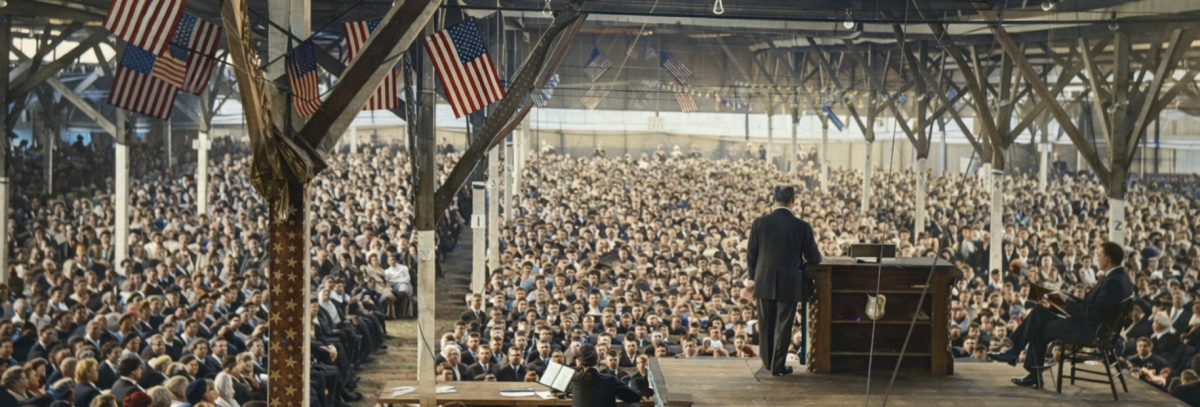
Stories of three other Evangelists: predecessors to Billy Sunday

The Ways and Works of Moody, Gypsy Smith and Chapman—Men Whose Methods Were as Different as Their Personalities.

By WILLIAM RADER

Cited in: The Philadelphia Evening Ledger. January 8, 1915:8.


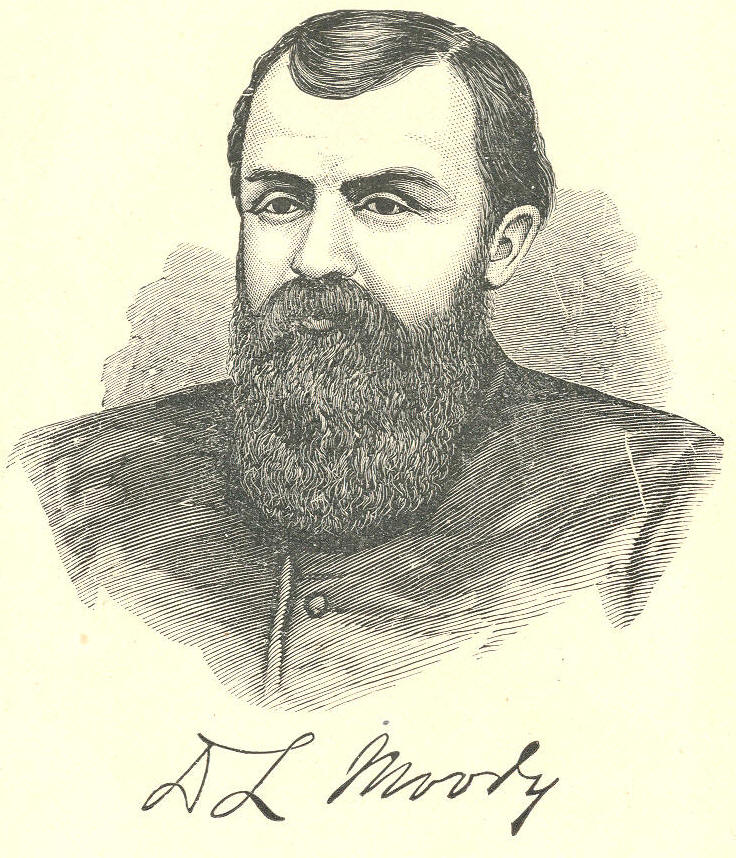
DWIGHT L. MOODY sleeps on Round Top, at Northfield, Mass. A few miles away, in Swanzey, N. H., is a simple shaft which marks the grave of Denman Thompson, of “The Old Homestead.” It is probable that the two men never met, but they were not unlike in appearance. Both were big, hearty Americans with good appetites, warm hearts and filled with loving kindness. The one spoke fiction on the stage as if it were truth; the other—to repeat a thought of Garrick—spoke truth on the pulpit as if it were fiction.

When Moody was a clerk in a Chicago shoe store, he became interested in religion through Dr. Edward N. Kirk and Edward Kimball. Without college or theological training, he began his great work and preached the gospel throughout the English-speaking world.


In the Old Pennsylvania R. R. Depot

One of his notable campaigns was in Philadelphia. The meetings were held in the abandoned freight depot of the Pennsylvania Railroad, used afterward as the Wanamaker store. The building was provided with seats to accommodate 10,000.

A striking incident of Moody’s Philadelphia campaign was the meeting set apart especially for intemperate men and women. His tender appeal to that assemblage is still remembered by Philadelphians who heard him.

Singing helped the preaching of Moody. The songs of Sankey grew to be as famous as the sermons of Moody. A hymnal was published which caused Moody and Sankey much trouble, since it was reported that they received royalties from the sale. Certain watchdogs of the moneybag believe that the blackest sin on the calendar is for a preacher or evangelist to make money. Every evangelist must make it plain that he is not a grafter.

Mr. Moody was the greatest evangelist-preacher of his generation. He did not use the best grammar, but he had common sense. Who could forget his sermons on “Sowing and Reaping,” “The New Birth” and “Repentance”?


Everybody Sing!

There was no claptrap in the Moody method, no straining for effects, but conviction, point and directness, and irresistible persuasiveness. He did not shatter the icicle of sin with well-directed aim, but melted it with words hot with a passion for redemption.

The first time I heard Moody he did what I thought at the time a sensational act. It was in Tremont Temple, Boston. Anxious to see him, as a student at Andover, I went early and took a seat near the front. The big choir on the platform was being trained while the people gathered. An old gentleman sat on one side of me, a lady the other. Moody soon appeared. He was announced by a man reading a paper in the audience, and asked him to put it away and join in the singing. “Everybody sing!” he shouted. “Everybody get a book!” He announced a hymn, but the singing was very unsatisfactory, and he had the people sing it over several times. Seeing I had no book and showing annoyance, he took fair aim and threw a hymn book as straight as a bullet at me. It took me in the stomach, and I think it raised me about two feet from the pew, but my consternation was no whit greater than the surprise of those who sat with me. We were strangers, but we all sang out of the same book, and Moody from that moment was an acknowledged master.

He was a man-finder. He discovered Henry Drummond and introduced him to the American people. He found a great preacher in Campbell Morgan, of London, and made him at home in the American pulpit. He took keen interest in liberal and conservative.

The Northfield conferences, which continue to this day, furnished an opportunity for testing the mettle of promising men in England and this country. A number enjoy an international reputation who owe their start to the insight of Mr. Moody.

He was a builder of institutions. The Y. M. C. A. work throughout the country was assisted by him. He raised great sums of money for the work. The Mount Hermon schools for young men and women are one of his memorials. His evangelistic work reached its zenith in his British campaign and at the World’s Fair in Chicago.


The Stolen Overcoat

The last time I heard Moody he made an impassioned plea in behalf of criminals and prisoners, and while he was making it an ex-convict stole his valuable new overcoat. It was a study in practical theology to observe the effect of this disappointment upon the great preacher, who, while furious at first, finally submitted to the inevitable with grace that an evangelist is supposed to possess.


Gypsy Smith is one of my favorite evangelists. He is a full-blooded gypsy, swarthy skin and beautiful brown eyes. Socially he is “a hail fellow well met,” one of the ripe fruits of the Moody-Sankey British campaign. He has a sense of humor and a wit that is irresistible. His voice is musical, and it is a treat to hear him sing.

Gypsy Smith uses faultless English. I asked him how he acquired this gift of English diction, and he said that after leaving the gypsy camp he was placed in a refined English home, where he heard the best grammar. If you have ever heard Gypsy Smith’s great sermon on “With the Stripes” you have listened to a discourse that has all the qualities of great preaching.


A Cultivated Gypsy

He is the perfect gentleman on the platform, winsome, attractive, eloquent, cultured and sympathetic. As a maker of sermons he has no equal. His breadth of scholarship, depth of feeling and height of intellectual reach make him a superior man in the field of higher evangelism.

Rodney is his real name. He is of the Tachine Roman gypsy tribe, and his mother was a fortune-teller. The life in the tent has enriched his imagination, given him a strong body and aided him in living a clean, pure life, and not since the day John Bright has any man appeared in England who has more perfectly revealed the possibilities of Anglo-Saxon speech.


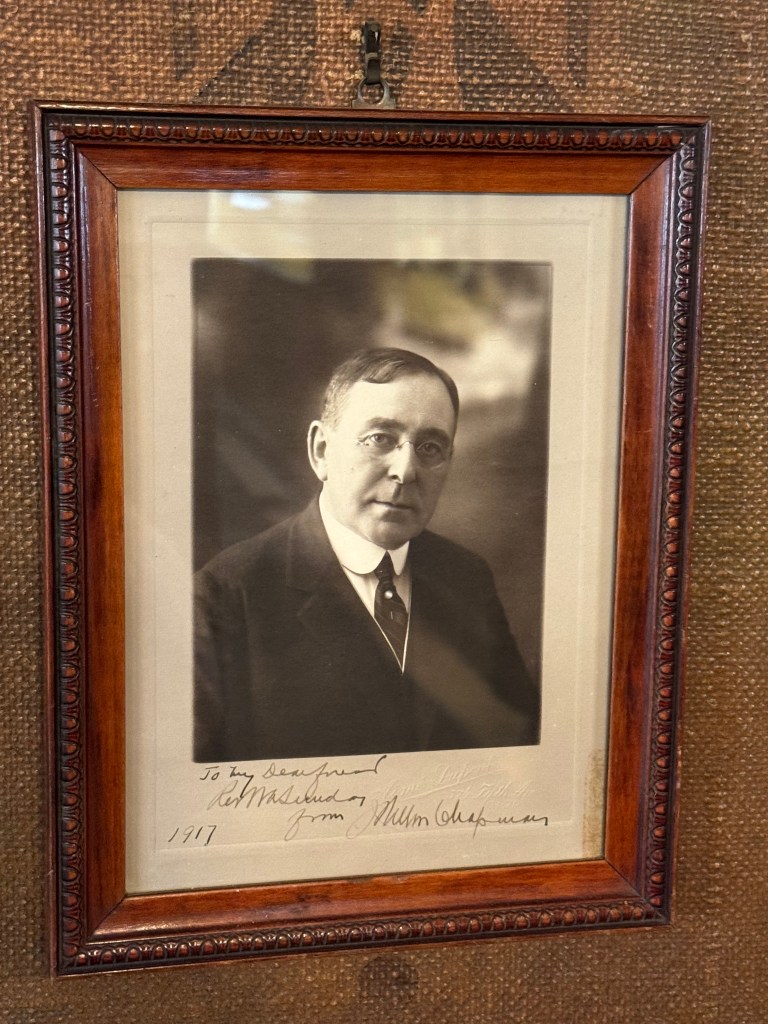
J. Wilbur Chapman was a Philadelphia pastor. For some years he was the pastor of Bethany Presbyterian Church; then he became a world evangelist.

Picture of Chapman inscribed to Billy, hanging in his Winona Lake home.

Doctor Chapman’s approach to the masses may be likened to the sun eating its way through a snowdrift. Here is a quiet, modest, devout man who takes a passage of scripture and illuminates it with his interpretations. His sermons search and reach as the leaven works its way through a meal. Doctor Chapman is not the sort of man who creates a big furore, though his campaign in Australia and Great Britain made a profound impression. He is unostentatious, with a charming modesty, intense in his mission, with deep convictions, while a man of sweetness and light, is on occasion a real son of thunder.

The popular response to evangelists is a matter which compels a study of the human mind and of the organized preparation of every great evangelistic effort. The multitudes do not fill large tabernacles to hear a man talk, but to hear him talk about religion. The sea of public feeling is tossed while wave crests and eddies by emotional religion. It is a question whether these men could gather such crowds to listen to a lecture on Browning or Shakespeare. I believe that if the press and literary men should back the movement Rudyard Kipling or Bernard Shaw or Theodore Roosevelt might fill for a period of time a vast audience discussing a literary or secular subject.


Doctor Wanted

It must be conceded, however, that men are interested in matters which concern their destiny. Wicked men have a strange desire to hear a good man denounce them; people—most of them—like to see the dog.

All men have spasms of goodness; aspiration loves company. A man with a rope on a stormy sea will have no trouble attracting attention. Perhaps the attitude of the public toward the evangelist is best illustrated by the scene on the Atlantic when it was sinking. Jews, Catholics, Protestants and skeptics gathered in the cabin. Moody, with one arm clasping the pillar, read the 91st Psalm. Then he went to his berth and fell asleep. Men who give help and comfort will have the multitude, for people are sheep—they follow a shepherd.


DEFIANCE

Let life its legioned army throw
Against my pennoned castle walls,
With curse and jibe and bitter groan
Its band of lowly seneschals;

But when the dust of conflict blows
And sounds the bugle o’er the lea,
They shall not find me fallen, dead;
They shall not kill the love in me!

Tho stained with blood of bleeding heart
Up in the ramparts’ evening breeze,
My banner floats the same as yore
Above the brooding cypress trees.

The sun has set; the shadows fade;
The night comes silent from the sea;
They shall not find me fallen, dead;
They shall not kill the love in me!

—Alonzo Harbaugh, in New York World

“Billy’s” Own Story of His Boyhood

Omaha Sunday Bee – September 26, 1915

Here is the Narrative of How He Lost His Father in the War and Was Raised Then in the Orphans’ Home at Glenwood, a Few Miles from Omaha


I was bred and born (not in old Kentucky, although my grandfather was a Kentuckian), but in old Iowa, November 19, 1862. I am a rube of the rubes. I am a hayseed of the hayseeds, and the malodors of the barnyard are on me yet, and it beats Pinaud and Colgate, too.

I have greased my hair with goose grease and blacked my boots with stove blacking. I have wiped my old proboscis with a gunny sack towel; I have drunk coffee out of my saucer, and I have eaten with my knife; I have said “done it” when I should have said “did it” and I have “saw” when I should have “seen,” and I expect to go to heaven just the same. I have crept and crawled out of the university of poverty and hard knocks, and have taken post graduate courses.

My father, William Sunday, went to the war four months before I was born, in Company E, Twenty-third Iowa. I have butted and fought and struggled since I was 6 years old. That’s one reason why I wear that little red, white and blue button. I know all about the dark and seamy side of life, and if ever a man fought hard, I have fought hard for everything I have ever gained.

The wolf scratched at the cabin door, and finally mother said: “Boys, I am going to send you to the Soldiers’ Orphans’ Home!” At Ames, Ia., we had to wait for a train, and we went to a little hotel, and they came about 1 o’clock and said: “Get ready for the train.”

I looked into my mother’s face. Her eyes were red, her hair was disheveled. I said, “What’s the matter, mother?” All the time “Ed” and I slept mother had been praying. We went to the train; she put one arm about me and the other about “Ed” and sobbed as if her heart would break. People walked by and looked at us, but they didn’t say a word. Why? They didn’t know, and if they had they probably wouldn’t have cared. Mother knew. She knew that for years she wouldn’t see her boys. We got into the train and said, “Good-bye, mother,” as the train pulled out.

We reached Council Bluffs. It was cold and we turned up our coats and shivered. We saw a hotel and went up and asked the woman for something to eat. She said, “What’s your name?”

“My name is William Sunday, and this is my brother, ‘Ed.’”

“Where are you going?”

“Going to the Soldiers’ Home at Glenwood.”

She wiped her tears and said, “My husband was a soldier and never came back. He wouldn’t turn anyone away and I wouldn’t turn you boys away.” She drew her arms about us and said, “Come on in.” She gave us our breakfast and dinner, too. There wasn’t any train going out on the “Q” until afternoon. We saw a freight train standing there so we climbed into the caboose.

The conductor came along and said, “Where’s your money or ticket?”

“Ain’t got any.”

“I’ll have to put you off.”

We commenced to cry. My brother handed him a letter of introduction to the superintendent of the Orphans’ Home. The conductor read it and handed it back as the tears rolled down his cheeks. Then he said, “Just sit still, boys. It won’t cost a cent to ride on my train.”

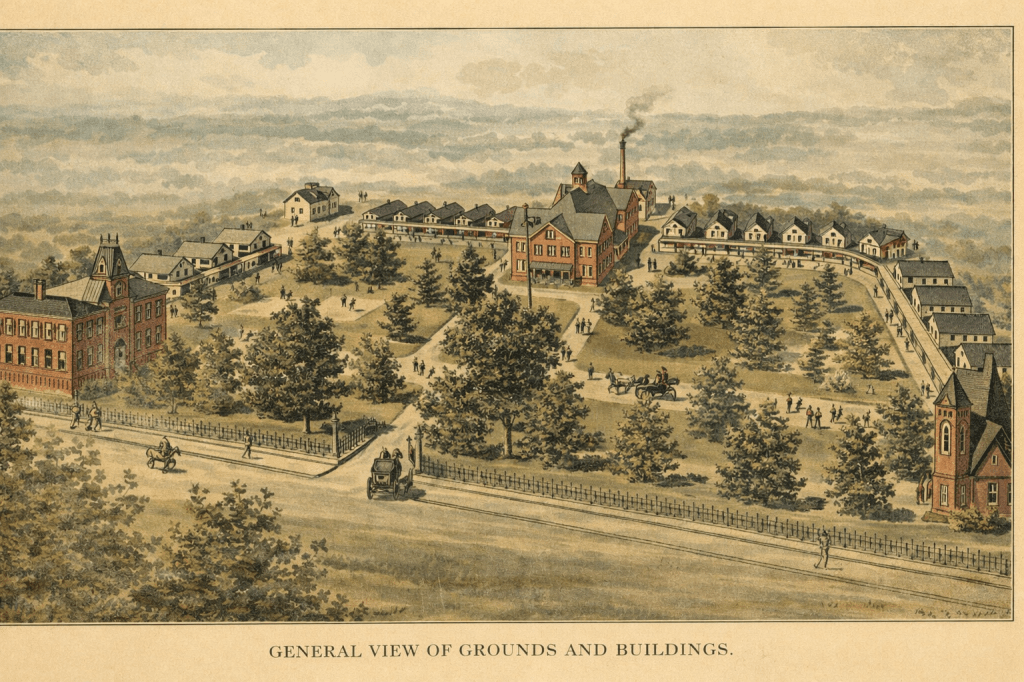
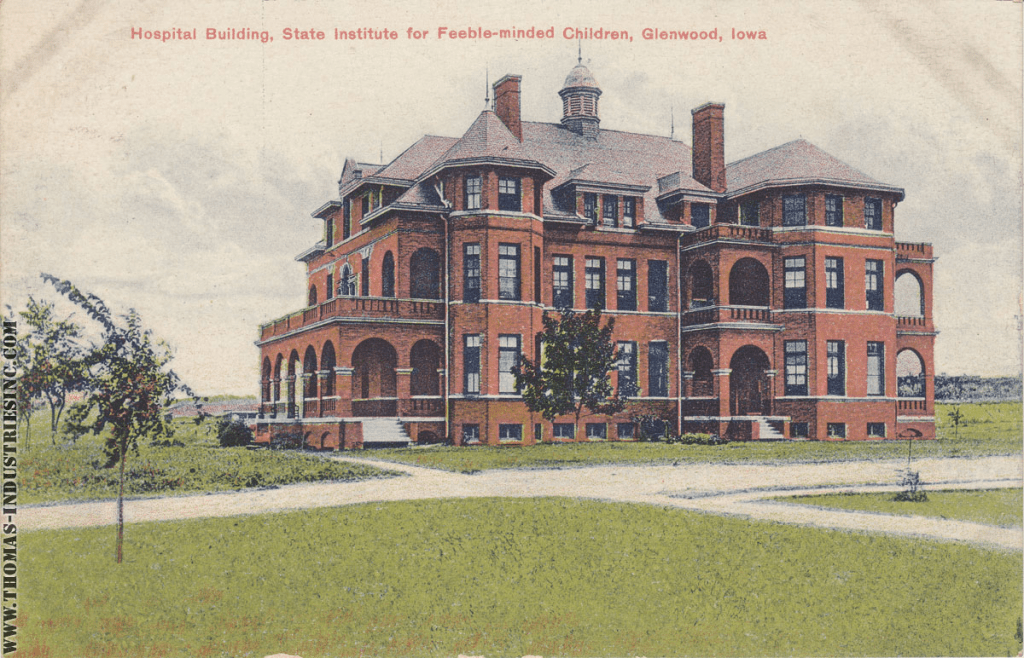
It’s only twenty miles from Council Bluffs to Glenwood, and as we rounded the curve the conductor said, “There it is, on the hill.”

I want to tell you that one of the brightest pictures that hangs upon the walls of my memory is the recollection of the days when as a little boy, out in the log cabin on the frontier of Iowa I knelt by mother’s side.

I went back to the old farm some years ago. The scenes had changed about the place. Faces I had known and loved had long since turned to dust. Fingers that used to turn the pages of the Bible were obliterated and the old trees beneath which we boys used to play and swing had been felled by the woodman’s axe. I stood and thought.

Once more with my gun on my shoulder and my favorite dog trailing at my heels I walked through the pathless wood and sat on the old familiar logs and stumps, and as I sat and listened to the wild, weird harmonies of nature, a vision of the past opened. The squirrel from the limb of the tree barked defiantly and I threw myself into an interrogation point, and when the gun cracked the squirrel fell at my feet. I grabbed him and ran home to throw him down and receive compliments for my skill as a marksman.

And I saw the tapestry of the evening fall. I heard the lowing herds and saw them wind slowly o’er the lea—and I listened to the tinkling bells that lulled the distant fowl. Once more I heard the shouts of childish glee. Once more I climbed the haystack for hens’ eggs. Once more we sat at the threshold and ate our frugal meal. Once more mother drew the trundle bed out from under the larger one, and we boys, kneeling down shut our eyes and clasping our little hands, said, “Now I lay me down to sleep; I pray the Lord my soul to keep. If I should die before I wake, I pray Thee, Lord, my soul to take. And this I ask for Jesus’ sake, amen.”

I stood beneath the old oak tree and it seemed to carry on a conversation with me. It seemed to say:

“Hello, Bill. Is that you?”

“Yes, it’s I, old tree.”

“Well, you’ve got a bald spot on the top of your head.”

“Yes, I know, old tree.”

“Won’t you climb up and sit on my limbs as you used to?”

“No, I haven’t got time now. I’d like to, though, awfully well.”

“Don’t go, Bill. Don’t you remember the old swing you made?”

“Yes, I remember; but I’ve got to go.”

“Say, Bill, don’t you remember when you tried to play George Washington and the cherry tree, and almost cut me down? That’s the scar you made, but it’s almost covered over now.”

“Yes, I remember all, but I haven’t time to stay.”

“Are you coming back, Bill?”

“I don’t know, but I’ll never forget you.”

Then the old apple tree seemed to call me and I said, “I haven’t time to wait, old apple tree.”

When I was about 14 years old, after leaving the Soldiers’ Orphans’ Home, I made application for the position of janitor in a school. I used to get up at 2 o’clock and there were fourteen stoves and coal had to be carried for all of them. I had to keep the fires up and keep up my studies and sweep the floors. I got $25 a month salary.

Well, one day I got a check for my salary and I went right down to the bank to get it cashed. Right in front of me was another fellow with a check to be cashed, and he shoved his in, and I came along and shoved my check in, and the teller handed me out $40. My check called for $25.

I went to a friend of mine, who was a lawyer in Kansas City, and told him. I said, “Frank, what do you think, Jay F— handed me $40 and my check only called for $25.” He said, “Bill, if I had your luck I would buy a lottery ticket.” But I said, “The $15 is not mine.” He said, “Don’t be a chump. If you were shy $10 and you went back you would not get it, and if they hand out $15, don’t be a fool—keep it.”

Well, he had some drag with me and influenced me. I was fool enough to keep it, and took it and bought a suit of clothes. I can see that suit now. It was a kind of brown with a little green in it, and I thought I was the goods, I want to tell you, when I got those store clothes on. That was the first suit of store clothes I had ever had, and I bought that suit and I had $25 left after I did it.

Years afterward I said, “I ought to be a Christian,” and I got on my knees to pray, and the Lord seemed to touch me on the back and say, “Bill, you owe that Farmers’ bank $15 with interest,” and I said, “Lord, the bank doesn’t know that I got that $15,” and the Lord said, “I know it.”

So I struggled along for years, probably like some of you, trying to be decent and honest and right some wrong that was in my life, and every time I got down to pray the Lord would say, “Fifteen dollars with interest, Nevada county, Iowa; $15, Bill.” So years afterward I sent that money back, enclosed a check, wrote a letter and acknowledged it, and I have the peace of God from that day to this, and I have never swindled anyone out of a dollar.


“Just Sit Still, Boys”: Billy Sunday’s Journey to the Soldiers’ Orphans’ Home

Billy Sunday often told audiences that his life had not begun in comfort or advantage. Long before he stood before great crowds in revival tabernacles, he had known poverty, loss, and uncertainty. One story he occasionally shared reached back to the earliest days of his childhood.

“My father enlisted four months before I was born,” Sunday recalled. “He went to the front with his Company of Twenty-third Iowa Infantry, but he never came back.” The elder Sunday died during the Civil War and was buried at Camp Patterson, Missouri. The evangelist never saw him.

The war left Billy’s mother alone with two small boys to raise, and life on the Iowa frontier was hard. “I have battled my way since I was six years old,” Sunday said years later. “I know all about the dark and seamy side of life. If ever a man fought hard every inch of his way, I have.”

Eventually the strain became too great. One day his mother gathered Billy and his brother Ed and told them quietly what must happen.

“Boys,” she said, “I am going to send you to the Soldiers’ Orphans’ Home at Glenwood, Iowa.”

The boys would have to travel there by train. The night before their departure Billy noticed something unusual about his mother. “I looked into mother’s face. Her eyes were red and her hair was disheveled.” Only later did he understand why. “All the time Ed and I slept, mother had been praying.”

When the moment came to leave, the goodbye was heartbreaking. “Mother put one arm about me and the other about Ed and sobbed as if her heart would break.” Passersby noticed the scene but did not understand its meaning. “People walked by and looked at us,” Sunday remembered, “but they didn’t say a word. They didn’t know, and if they had they wouldn’t have cared. Mother knew; she knew that for years she wouldn’t see her boys.”

The train pulled away and the boys cried out, “Good-by, mother!”

Their journey was not easy. When they reached Council Bluffs it was cold, and the boys had little money and thin coats. They turned their collars up against the wind and wandered about the town. Finally they went into a small hotel and asked a woman for something to eat.

“What is your name?” she asked.

“My name is Willie Sunday and this is my brother Ed,” he answered.

“Where are you going?”

“Going to the Soldiers’ Orphans’ Home at Glenwood.”

The woman wiped her eyes when she heard their story. “My husband was a soldier and he never came back,” she said softly. “He wouldn’t turn anyone away, and I certainly won’t turn you boys away.” She took them in and fed them both breakfast and dinner.

But the hardest part of the journey still remained. The boys had no money for the train that would take them the last miles to Glenwood. When they saw a freight train standing on the tracks, they climbed into the caboose and hoped for the best.

Soon the conductor appeared.

“Where’s your money?” he asked.

“Ain’t got any.”

“Where’s your tickets?”

“Ain’t got any.”

“You can’t ride without money or tickets,” the man said. “I’ll have to put you off.”

The boys began to cry. Ed handed the conductor a letter addressed to the superintendent of the soldiers’ orphans’ home. The man read it slowly. When he finished, he gave the letter back. Tears were running down his cheeks.

“Just sit still, boys,” he said gently. “It won’t cost you a cent to ride on my train.”

A short time later, as the train rounded a curve in the Iowa countryside, the conductor pointed toward a hill in the distance.

“There is the home on the hill.”

For Billy Sunday, the journey to the Soldiers’ Orphans’ Home marked the beginning of a difficult but formative chapter in his life. Years later, when he stood before vast revival crowds, he sometimes told this story—not simply to recount his past, but to remind listeners that even in the hardest moments, kindness and providence could appear in unexpected places.

Adapted from: March 13, 1916 (8). The Baltimore Sun.

How did Billy Sunday sum up his own theology (c.1916)?

“My theology is really summed up in four letters: H-e-l-p. I am here to do my best to help the people in this old world live better, and to show them the way to do it. Some people can see no way out for the sinner except through the police court or the potter’s field. I have come to tell you there is another way—through repentance and belief in the Lord Jesus Christ.

“Some people have put their trust in government, but there is no salvation through government. They all have failed to suppress vice and develop virtue, America as well as the rest. Others put their trust in education. You can dot every hill with a schoolhouse and put a university in every block and it will save no one unless it is combined with virtue and faith.

Source: April 13, 1916. Baltimore Sun (p.6)

On Billy preaching . . . c.1906

A person who witnessed Billy preaching at Princeton, Illinois, said this of the Evangelist’s preaching:

“When it comes to preaching Billy is a storm, a whirlwind, a cyclone, hurricane, a tornado, a-well, everything indicative of power. He preaches like his life depended upon it. He preaches like he had it to do.” Adding, “As long as Rev. William A. Sunday stays on track and labors to call men back to the old path – the gospel path – he should be allowed to work without opposition from Christian people, even if his methods are sensational and unique and his language at times is shocking.”

Bureau County Tribune (Princeton, Illinois) · Fri, Mar 9, 1906 · Page 3.

Billy Sunday: the man and his methods (period newspaper, c.1905)

The Man and His Methods.

“It is impossible to describe William A. Sunday. He simply gets there. While he shocks some of the staid old deacons by his rough and ready way of putting things, the great throng stand on and applaud. He has a wonderful gift of street slang and he uses the choicest of it. He can preach using as fine English as any man in the country, but he is dreadfully lonesome doing it. He likes to employ language people best understand.

He is a slight man, weighing less than 140 pounds, but is wiry and as scienced as Jeffries. He is a bundle of nerves, and from the moment he throws a beautiful fur coat from his shoulders to the close of the meeting every nerve is put in play. Those who hear him go away stating that he cannot stand it long to work with the nerve force he does, but he has stood it for eight years and is as able today as he was in the beginning. He pleads, he entreats, he prays and weeps, and the crowd are with him. Few men have the power to sway crowds like Sunday. He can cause them to break out in peals of laughter and can make them weep copiously as he appeals to sympathy. He is great on storytelling and can embellish with all the facial expressions necessary. He is so agile on the stage that without any trouble at all he can lean over backward and touch his head to the floor, and, if occasion demanded, could turn a flip with the best of them.

It is this that undoubtedly arouses the curious and those who wish to be entertained. But it doesn’t end there. He can preach powerful sermons. If you go once you go twice and if you go twice, you will find that at the close of his month’s services you have been present at about every service.”

– The Sioux City Journal (Sioux City, Iowa) · Sun, Feb 26, 1905 · Page 9.

The Circus That Tried to Hire Billy Sunday, c. 1917


And Why the Offer Destroys the Claim That He Preached for Money

One of the most common criticisms leveled against evangelist Billy Sunday is that he preached for money.

Critics point to the generous love offerings that were sometimes taken at the close of his revival campaigns and conclude that Sunday must have been motivated by financial gain. It is an easy accusation to make. But historical evidence tells a very different story.

One remarkable document from 1917 puts the matter in perspective.

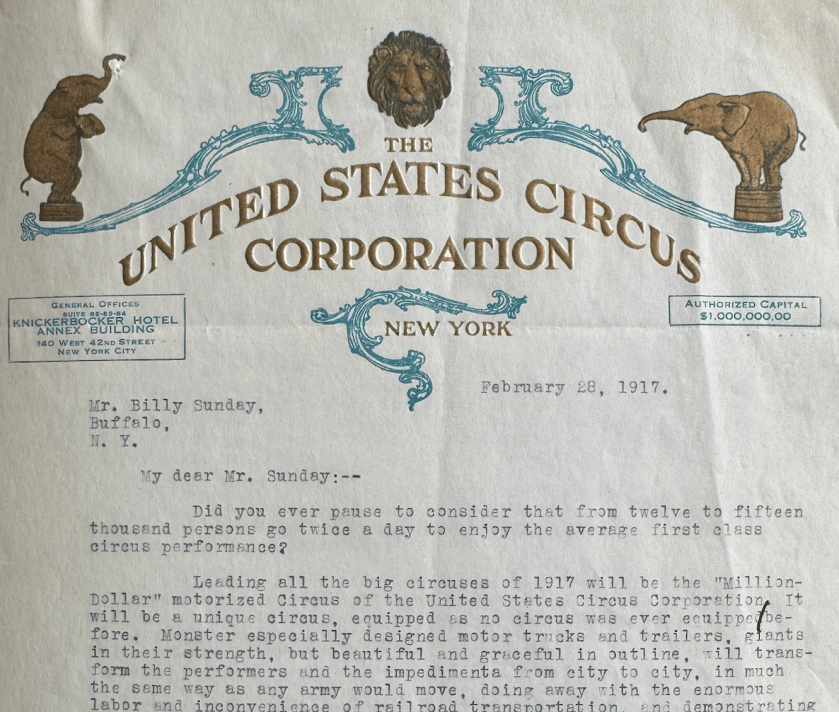
On February 28, 1917, Billy Sunday received an extraordinary letter from the president of the United States Circus Corporation. The proposal was simple, bold, and almost unbelievable.

The circus wanted Billy Sunday to join the show.

Original 1917 contract. Grace College. Morgan Library.

The letter opened by reminding Sunday of the enormous audiences that circuses attracted:

“Did you ever pause to consider that from twelve to fifteen thousand persons go twice a day to enjoy the average first class circus performance?”

The promoter explained that the company was launching what he called a “Million-Dollar” motorized circus, equipped with fleets of specially designed trucks and trailers that would carry the show from city to city.

The scale was enormous. Tens of thousands of people attended circus performances daily.

And the circus president believed Billy Sunday could preach to them.

Then came the offer.

“I… offer you a weekly salary of $14,000, or $2,000 a day, for as many weeks of the coming summer season as you can give.”

To grasp how staggering this proposal was, consider the numbers.

If Sunday had accepted the offer and worked for roughly ninety to one hundred days during the summer season, he would have earned between $180,000 and $200,000 in 1917.

Adjusted for inflation, that is roughly $4 million today.

In return, the circus would provide transportation, luxury touring cars for Sunday and his staff, and access to massive crowds across the country.

The promoter even suggested that Sunday hold revival meetings on Sundays as part of the circus program.

But here is the crucial point.

The proposal made no provision for Sunday to keep offerings from those meetings. In fact, the letter suggested that the proceeds from Sunday services could go largely or entirely to charity.

The circus wanted Billy Sunday not as a fundraiser—but as an attraction.

A headline act.

A revivalist who could preach to the largest audiences in America.

And yet Billy Sunday refused.


The Economics of Sunday’s Real Ministry

Now compare this circus offer to the income Sunday actually received during the same years.

During the summer Chautauqua season, Sunday could deliver 50 to 70 speaking engagements.

Typical speaking fees ranged from $250 to $500 per engagement.

That means a strong Chautauqua season might produce:

  • $12,500 on the low end
  • $35,000 on the high end

Even at the very top of that range, the circus contract would have paid five to six times more.

In other words, if Billy Sunday had been motivated primarily by money, the decision would have been obvious.

He could have become the highest-paid religious speaker in America simply by joining a circus.

Instead, he chose the sawdust trail.

He chose the revival tabernacle.

He chose the ministry that demanded months of exhausting preaching, travel, prayer meetings, counseling, and organization.

And he did it for far less money than the circus was willing to pay.

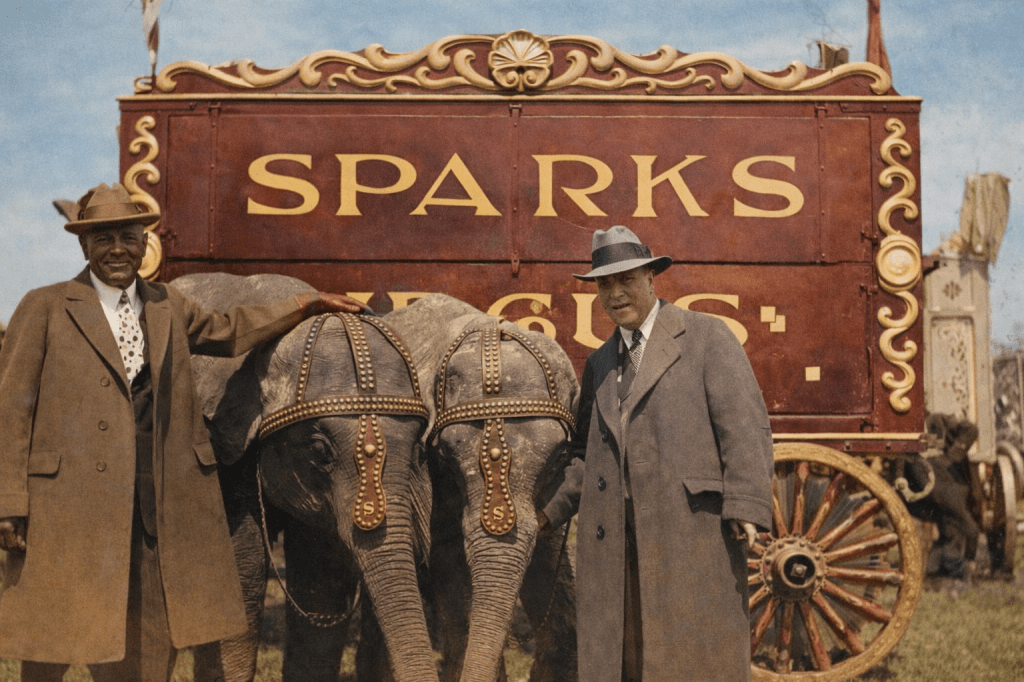
Rare original Sparks Bros Circus photograph showing evangelist Billy Sunday and Charles Sparks.

Why the Critics Miss the Point

Billy Sunday never pretended that money did not matter. Revival campaigns required large temporary tabernacles, choirs, staff members, and enormous logistical efforts.

But Sunday consistently refused opportunities that would have turned his preaching into entertainment.

The 1917 circus contract proves it.

The entertainment industry was willing to pay him millions in today’s dollars to headline the largest traveling show in America.

He said no.

The same evangelist who was accused of preaching for money walked away from a fortune.

And that fact should cause us to reconsider the narrative that Sunday’s critics often repeat.

Billy Sunday may have been many things—a fiery preacher, a former baseball player, a relentless evangelist—but the historical record shows that he was not in the ministry merely for the money.

If he had been, the circus would have had its star.

Instead, the revival fires continued to burn.


Did you know?

“It may not be generally known, but ‘Billy’ Sunday supports a mission on Van Buren street, Chicago, paying all the expenses of maintaining it out of his own pocket. He is also educating twenty boys and paying for it with his own money. These boys are waifs he has picked up out of the street. In this he is following the plan of the late Sam Jones, who in his lifetime educated hundreds of poor boys and made useful citizens out of them.”

The Kalamazoo Gazette. Fri, Jul 23, 1909 ·Page 4

Billy Sunday’s Own Account of His Conversion (1902)

“Lord, If You Ever Helped Mortal Man…”

One of the things I love most about researching Billy Sunday is when we can let him speak for himself.

Tucked inside The founding of Pacific Garden Mission: over thirty-five years contribute to the Master’s service by Sarah D. Clarke is a brief autobiographical sketch written by Sunday in September 1902. It is not polished theology. It is not retrospective myth-making. It reads like a man remembering the night that changed everything.

He begins with Chicago.

“Fifteen years ago one Sunday night I walked down State street, Chicago, in company with several baseball players… We entered a saloon, drank, and passed on to the corner of State and VanBuren…”

Then something happened.

A small band from Pacific Garden Mission was singing on the street. Sunday sat on the curb and listened.

“I had heard those songs from mother back in Iowa, in the Methodist Sunday School in Ames, Iowa, and God painted on the canvas of my memory the scenes and recollections of other days and faces. I bowed my head in shame and the tears rolled down my cheeks like rivers of water.”

The song that broke him was “Where is my wandering boy to-night.”

Col. Clarke invited the men to the Mission. Sunday’s response was immediate:

“I arose and said, ‘Boys, good-by, I’m done with this way of living.’”

That sentence is vintage Sunday. Abrupt. Decisive. No hedging.

But what follows is equally revealing.

The next morning, newspapers reported his church membership. He dreaded facing his teammates. He confessed:

“I would rather have faced a six-shooter…”

Yet when he arrived, the first to greet him was Mike Kelly.

“With a heart as tender as a woman’s… he took me by the hand and said: ‘That’s a grand thing to do, “Bill.” If I can help you let me know.’”

Cap Anson, Ed Williamson, Fred Pfeffer, Jno. Clarkson, Tom Burns, Dalrymple — they all encouraged him. And if they swore in his presence, “they would immediately ask my pardon.”

This detail matters. It corrects the caricature. Sunday did not convert in isolation from the baseball world. He converted in it.

Then comes one of the most famous episodes of his early testimony — the Detroit game.

Bottom of the ninth. Two out. Men on second and third. Charley Bennett at bat.

“I offered up a prayer and said, ‘Lord, if You ever helped mortal man, help me get that ball.’ I leaped the bench, looked over my shoulder, threw out my hand and the ball struck and stuck. The game was ours.”

Then the line that perfectly captures Sunday’s theology-by-experience:

“I am sure the Lord helped me catch that ball. This deduction may not be according to theology, but it’s according to experience.”

That is pure Billy Sunday — unfiltered, confident, experiential, unapologetic.

After baseball, he attended Northwestern University “where I picked up some Methodist enthusiasm and vim to counteract the stiff, staid Presbyterianism.” That phrase alone tells you how he would preach for the next thirty years.

He left professional baseball, became assistant secretary of the Chicago Y.M.C.A., then joined Rev. J. Wilbur Chapman in evangelistic work. Of Chapman he writes:

“All I am today as an evangelist I owe to Dr. Chapman and to Prof. R. R. Lloyd… with whom I studied privately.”

Notice that. Sunday never claimed to be self-made. He acknowledged formation, mentorship, study.

This 1902 piece is significant for another reason. It predates the massive tabernacles, the sawdust trails, the millions who would hear him preach. It shows us Sunday before the fame hardened into legend.

What do we see?

  • A mother’s hymns remembered.
  • A curbside conviction.
  • Public courage in a locker room.
  • A prayer in right field.
  • A man mentored, trained, and sent.

If you want to understand Billy Sunday, start here.

Not with the headlines.

Not with the critics.

Not even with the later statistics.

Start on a Chicago curb, with a baseball player weeping while a gospel song drifts through the night air.

And listen to him say it himself:

“Boys, good-by, I’m done with this way of living.”

Adapted from: The founding of Pacific Garden Mission : over thirty-five years contribute to the Master’s service / by Sarah D. Clarke

Who is Billy Sunday c. 1909

The Billy Sunday campaign published a souvenir booklet in 1910 that summarized the Springfield, Illinois campaign (Feb 26 – Apr 12, 1909). The following narrative shared much about the Rev. William A. ‘Billy’ Sunday

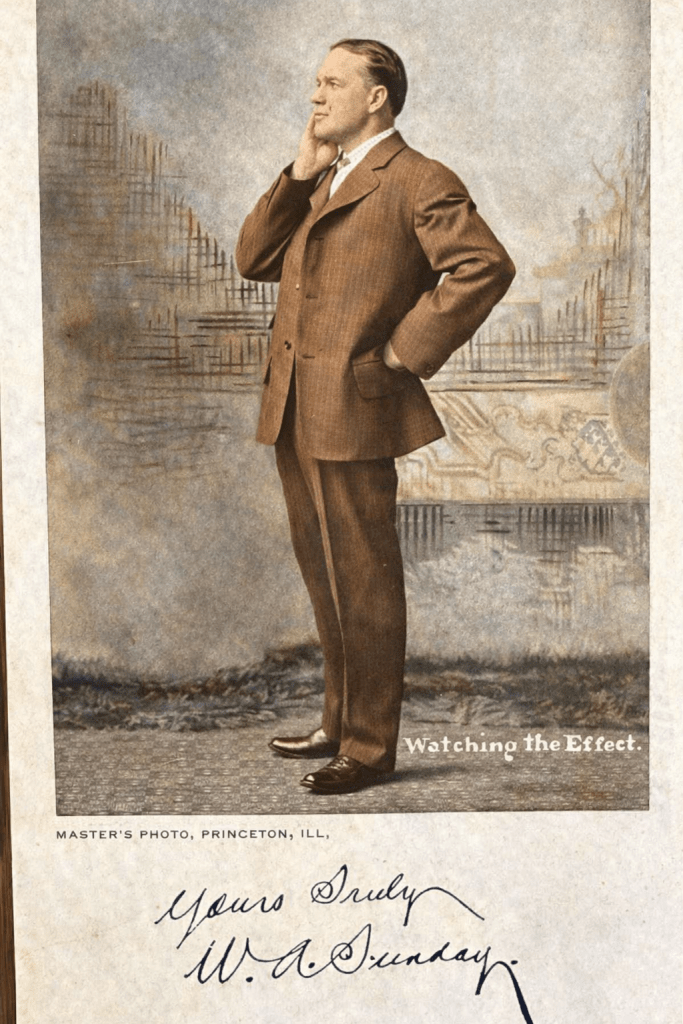
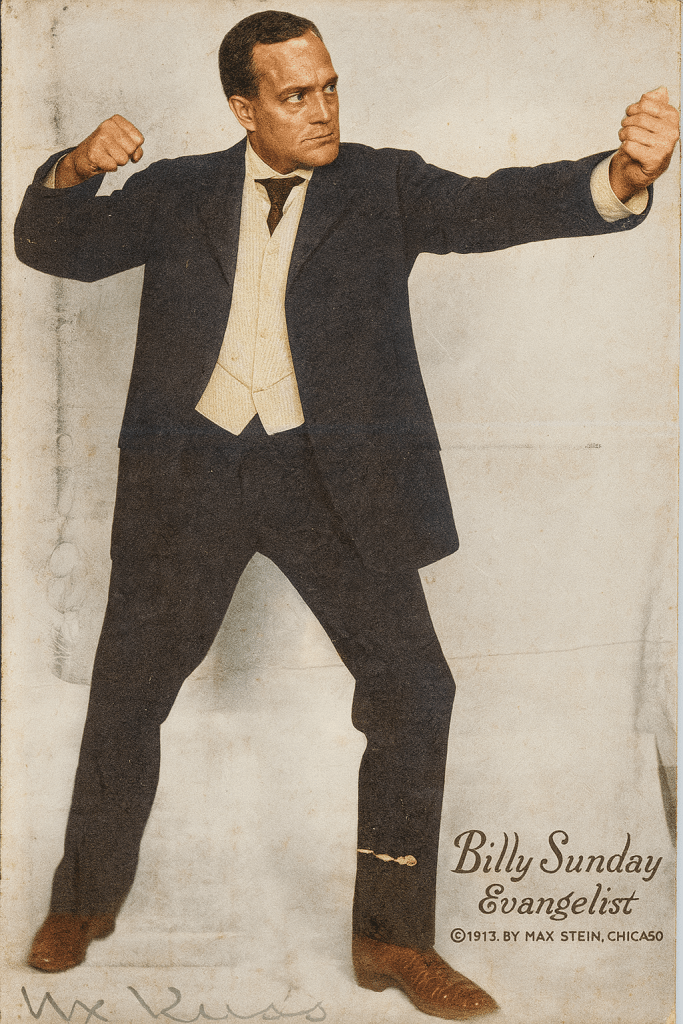
Rev. W. A. Sunday

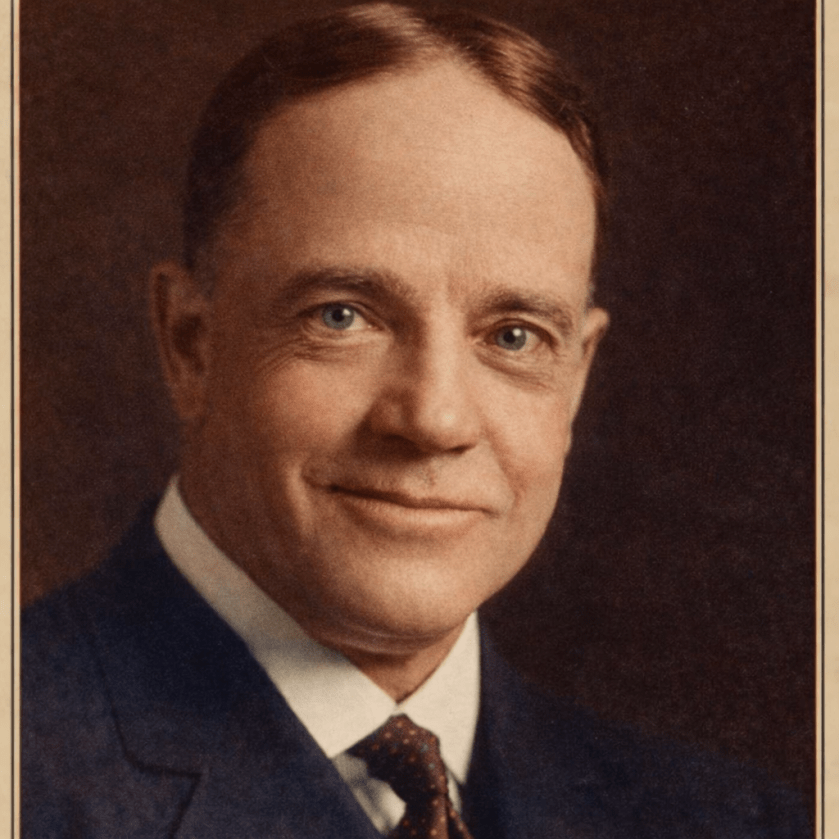
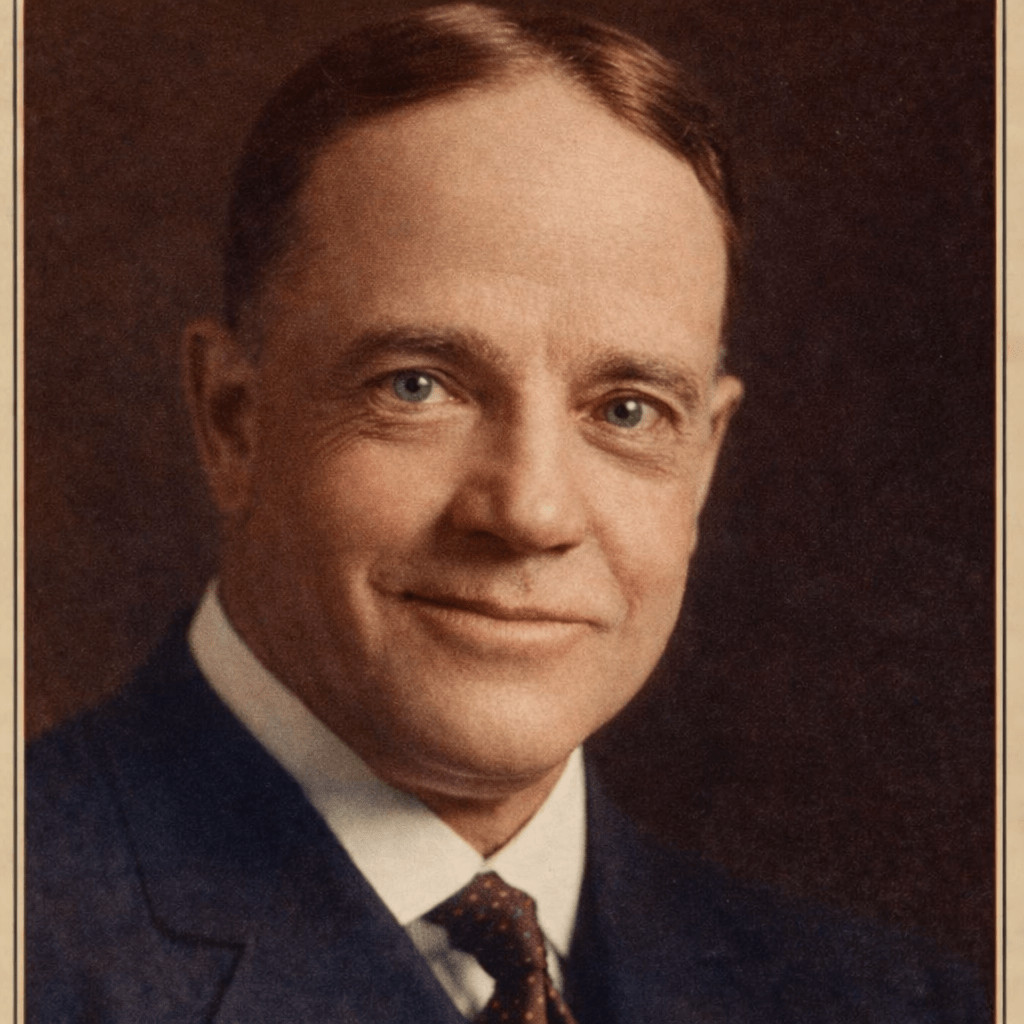
WILLIAM ASHLEY SUNDAY is the best beloved and the most abused, the simplest and the most misunderstood, the most soulful and the most like a vaudeville performer, the most powerful in oratory and the least appealing to the emotions, the most persuasive and the most controversial, the most scholarly and the plainest, not to say coarsest, the greatest poet in essence and the greatest scrapper, of any man on the forum, the platform, or the stage of the world today.

He has been styled, the polygonal preacher, because he has so many sides, each a complete, finished, forceful fact. A character picture of the man, to be complete, must be a description of each of these baker’s dozen sides of his personality, none of which is much more important than any other one. The most that can be done within a small space—or indeed within any limitation of space—is to sketch in broad lines the mere outlines of this evangelist who is preaching the gospel of peace on earth and fighting the devil with the hottest of fire at the same time.

His father was killed in the civil war. The little boy was sent to the Iowa home for soldiers’ orphans. Later he made his own living at a youthful age, and his school teacher of that time says she would often watch him on the playground and wonder whether he would be the greatest crook or the greatest power for good in America—she was even then sure he would be one of the two. The boy took the right hand road.

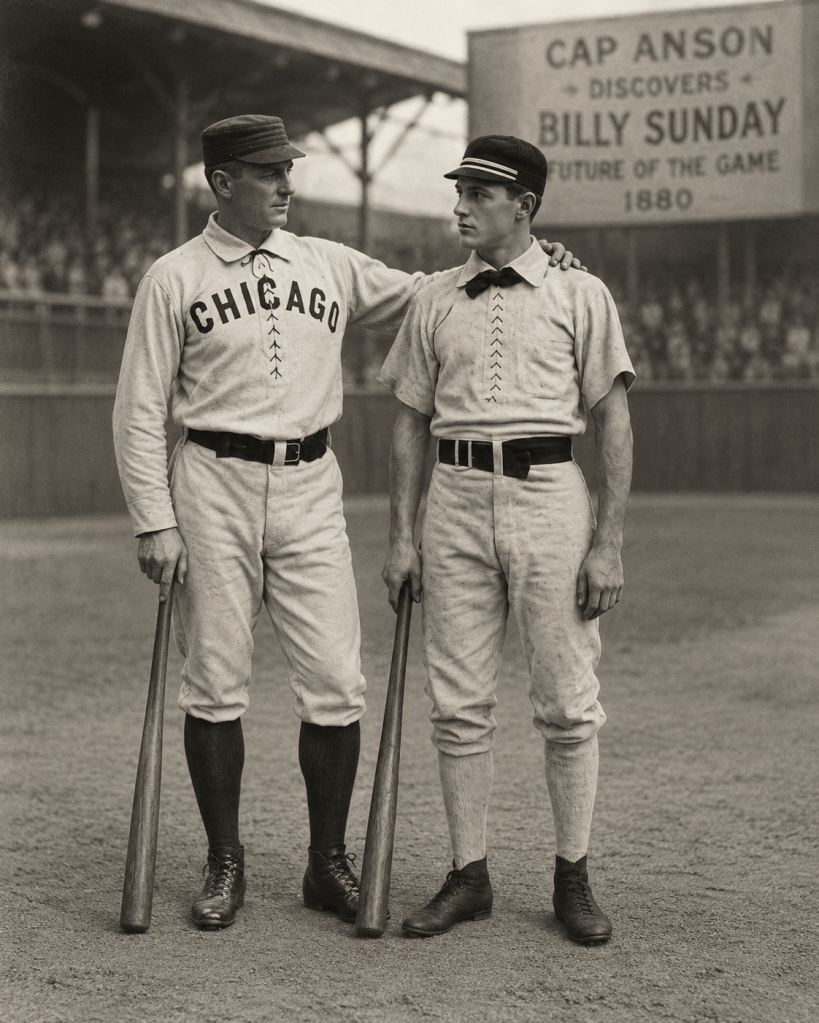
When a young man he was a locomotive fireman on the Chicago and Northwestern Railroad and lived at Marshalltown. This was also the home of the famous A. C. Anson, captain of the old Chicagos, who watched Billy Sunday play baseball on corner lots while at home in Marshalltown. Anson took him to Chicago, discovered in him a great baseball player, and Sunday held the record for base running for years, a record which he still holds; was the second man chosen on the All-American team to tour the world—an accident to his knee kept him from making the tour—and was a popular idol of the fans.

An old time catcher for the Louisville team says that in those days when en route the rest of the men would play poker in the Pullman, but Billy Sunday was always back on the cushions with a book. He has kept close to books ever since. He has a remarkable faculty of choosing the very best and most authoritative writing on any particular subject and reading that only—and hence the range of subjects upon which he is thoroughly and accurately informed, includes almost everything from histology to astronomy and from bacteriology to history—it is a little interesting to notice that chemistry is the one topic unmentioned in his sermons. Three medical college professors who met at the end of his sermon which includes a half hour of the deepest microscopical pathology, agreed that William A. Sunday is the only layman they ever heard or read who was accurate in all he said about medical science.

One night a bunch of baseball players strolling along a Chicago street ran into a curbstone evangelist and stopped to be amused. Sunday stayed after the others went on. He went from there to the Pacific Garden mission, where he was converted. He kept on playing baseball, and nobody who ever heard it will ever forget his own description of how the others of that famous Chicago team approved his home run into Christianity.

A little later he was employed by the Chicago Young Men’s Christian Association at a small salary, only part of it paid during the panic of 1893, and refusing offers of $500 a month to return to the diamond. As a part of his work, he addressed groups of men—he always did know men, because of his early life and hard struggles. The addresses became longer and stronger with the growth of the work and experience in it. That great evangelist, Wilbur F. Chapman, took Sunday away from the Chicago Y.M.C.A. to be his assistant. Sunday learned the art of evangelizing and after learning it thoroughly treated it as Napoleon treated the art of war—he re-made it for himself, so that its old practitioners hardly recognize it, and at the same time made it produce victories hitherto undreamed of. The William A. Sunday methods of campaigning for Christ are unlike any others; they include the best of those of the past and many things unique; probably only Sunday could use them successfully in all their details; but it seems certain that they have factors not found in most others which really are the corner stones of successful work in evangelism. Some of the chief parts of the art of evangelism, as practiced by William A. Sunday, are these: Absolute accuracy in every statement made, whether one of the essential parts of the argument, or merely an illustration; hew close to the line that Jesus Christ laid down, regardless of the falling chips, and wherever that line leads; use language that everybody can understand, never talk down to an audience, but be lucid to the most ignorant while you are talking up to the most scholarly persons before you; avoid sectarianism; demand united work from all the evangelical churches in the city, and push united work by all the members of those churches; roast the skin of vice and sin in all its forms, from backsliding and carelessness to murder and adultery, rub salt into the burnt flesh, and then apply a healing balm that causes the object of the criticism to leave the tabernacle chastened in spirit, but loving the rod that smote him; avoid all fads and fancies, all tangential movements of society, but do a common thing in a most unusual way; and—many others. Starting with small towns and a few hundred converts at each series of meetings, the same plan of campaign has been used for all the years involving campaigns in cities of all sizes, and the first meetings years ago were, so far as Mr. Sunday is concerned, almost exactly like the meetings in Springfield. Of course, some minor modifications have been made, but these are few. Always there are the first sermons to get the church members back out of the world into the influence of Christ and to get the public to come to the tabernacle—the public seems to find its greatest attraction in hearing church-member hypocrites and Pharisees skinned like eels. Always the strenuosity of the sermons almost imperceptibly lessens gradually until the preacher who preaches as man never preached before is less athletic and more rhetorical about the middle of the series. Then, to the amazement of people who judged the man from his first pulpit stunts, the Reverend William Ashley Sunday preaches like the great orator that he is, the scholar that he is, the poet-philosopher that he is. This many sided man cannot be even sketched within a hundred pages. There is competent authority for saying of him these superlatives as being strictly true: He understands the minds and feelings of men as few men ever have done. He is one of the greatest orators the world has ever seen—and this is proved by the results of his work.

He is one of the most remarkable stylists in literature, his perfect imitation in one hour of the styles of Carlyle, Gibbon, Ingersoll, and several other writers of individual styles being an unprecedented feat.

He is said by scientists to be the most—and indeed the only—perfectly accurate preacher in matters of science. And a large part of his sermons deal with science.

He appeals entirely to the reason of the people, and rarely or never to their emotions, and in this he is the greatest of evangelists in the opinion of many people.

In numbers of converts, dramatic height of scenes, and wonderful stirring of the audience, several of his meetings have eclipsed anything in the history of evangelism since pentecost—and the most of these have been meetings for men.