Did converts of Billy Sunday campaigns ‘stick”?

Three years after the Carthage meetings, a Mattoon, Illinois newspaper said that 80% of Carthage converts were still “living the new life. While two years after Keokuk, 75% of the converts “are still leading the new life.”
– JG-TC: Journal Gazette and Times-Courier (Mattoon, Illinois) · Mon, Mar 19, 1906 · Page 1.

Five years after the Belvidere revival of September 1901, a Belvidere newspaper reported that membership of Belvidere Methodist church in 1901 was 500 persons, and five years later it was 850, showing the ‘stickiness’ of Sunday converts over a long period of time.
– Belvidere Daily Republican (Belvidere, Illinois) · Mon, Mar 26, 1906 · Page 2.

The Circus That Tried to Hire Billy Sunday, c. 1917


And Why the Offer Destroys the Claim That He Preached for Money

One of the most common criticisms leveled against evangelist Billy Sunday is that he preached for money.

Critics point to the generous love offerings that were sometimes taken at the close of his revival campaigns and conclude that Sunday must have been motivated by financial gain. It is an easy accusation to make. But historical evidence tells a very different story.

One remarkable document from 1917 puts the matter in perspective.

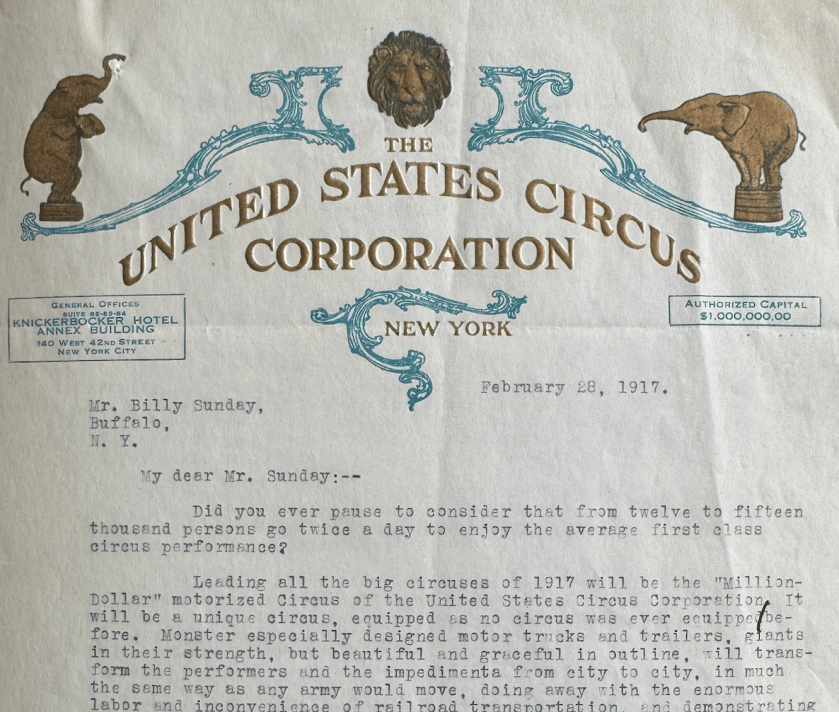
On February 28, 1917, Billy Sunday received an extraordinary letter from the president of the United States Circus Corporation. The proposal was simple, bold, and almost unbelievable.

The circus wanted Billy Sunday to join the show.

Original 1917 contract. Grace College. Morgan Library.

The letter opened by reminding Sunday of the enormous audiences that circuses attracted:

“Did you ever pause to consider that from twelve to fifteen thousand persons go twice a day to enjoy the average first class circus performance?”

The promoter explained that the company was launching what he called a “Million-Dollar” motorized circus, equipped with fleets of specially designed trucks and trailers that would carry the show from city to city.

The scale was enormous. Tens of thousands of people attended circus performances daily.

And the circus president believed Billy Sunday could preach to them.

Then came the offer.

“I… offer you a weekly salary of $14,000, or $2,000 a day, for as many weeks of the coming summer season as you can give.”

To grasp how staggering this proposal was, consider the numbers.

If Sunday had accepted the offer and worked for roughly ninety to one hundred days during the summer season, he would have earned between $180,000 and $200,000 in 1917.

Adjusted for inflation, that is roughly $4 million today.

In return, the circus would provide transportation, luxury touring cars for Sunday and his staff, and access to massive crowds across the country.

The promoter even suggested that Sunday hold revival meetings on Sundays as part of the circus program.

But here is the crucial point.

The proposal made no provision for Sunday to keep offerings from those meetings. In fact, the letter suggested that the proceeds from Sunday services could go largely or entirely to charity.

The circus wanted Billy Sunday not as a fundraiser—but as an attraction.

A headline act.

A revivalist who could preach to the largest audiences in America.

And yet Billy Sunday refused.


The Economics of Sunday’s Real Ministry

Now compare this circus offer to the income Sunday actually received during the same years.

During the summer Chautauqua season, Sunday could deliver 50 to 70 speaking engagements.

Typical speaking fees ranged from $250 to $500 per engagement.

That means a strong Chautauqua season might produce:

  • $12,500 on the low end
  • $35,000 on the high end

Even at the very top of that range, the circus contract would have paid five to six times more.

In other words, if Billy Sunday had been motivated primarily by money, the decision would have been obvious.

He could have become the highest-paid religious speaker in America simply by joining a circus.

Instead, he chose the sawdust trail.

He chose the revival tabernacle.

He chose the ministry that demanded months of exhausting preaching, travel, prayer meetings, counseling, and organization.

And he did it for far less money than the circus was willing to pay.

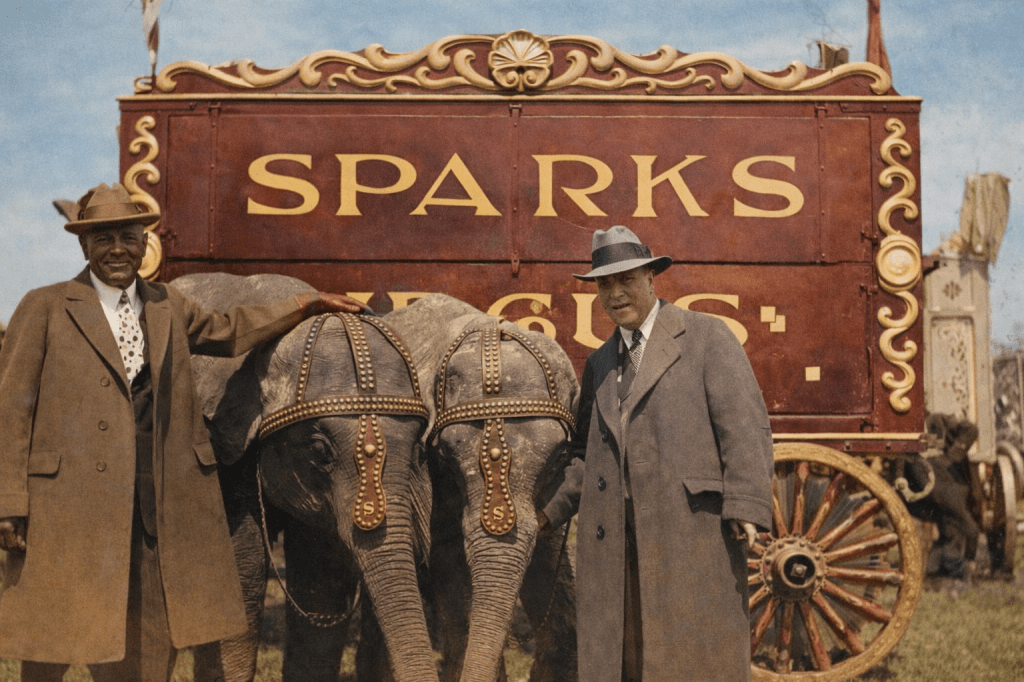
Rare original Sparks Bros Circus photograph showing evangelist Billy Sunday and Charles Sparks.

Why the Critics Miss the Point

Billy Sunday never pretended that money did not matter. Revival campaigns required large temporary tabernacles, choirs, staff members, and enormous logistical efforts.

But Sunday consistently refused opportunities that would have turned his preaching into entertainment.

The 1917 circus contract proves it.

The entertainment industry was willing to pay him millions in today’s dollars to headline the largest traveling show in America.

He said no.

The same evangelist who was accused of preaching for money walked away from a fortune.

And that fact should cause us to reconsider the narrative that Sunday’s critics often repeat.

Billy Sunday may have been many things—a fiery preacher, a former baseball player, a relentless evangelist—but the historical record shows that he was not in the ministry merely for the money.

If he had been, the circus would have had its star.

Instead, the revival fires continued to burn.


Did you know?

“It may not be generally known, but ‘Billy’ Sunday supports a mission on Van Buren street, Chicago, paying all the expenses of maintaining it out of his own pocket. He is also educating twenty boys and paying for it with his own money. These boys are waifs he has picked up out of the street. In this he is following the plan of the late Sam Jones, who in his lifetime educated hundreds of poor boys and made useful citizens out of them.”

The Kalamazoo Gazette. Fri, Jul 23, 1909 ·Page 4

Marshalltown, 1909: Home Turf, Hard Numbers, and a Blaze of Glory

April 25 – June 6, 1909
Marshalltown, Iowa

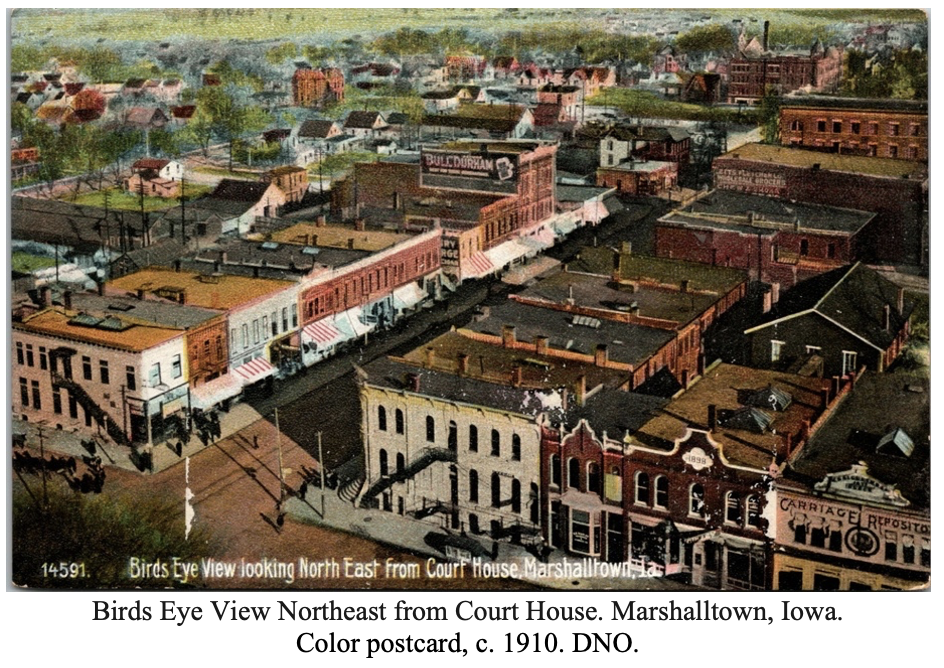
Fresh off a successful campaign in Springfield, Billy Sunday and his team rolled into Marshalltown in late April of 1909. This was not foreign soil. It was home turf.

Sunday had been raised in Iowa, shaped by its churches, and had even lived briefly in Marshalltown in the early 1890s while learning the mechanics of evangelistic work. By 1909 he returned not as an unknown ballplayer-turned-preacher, but as a nationally rising evangelist whose methods were becoming increasingly organized, efficient, and powerful.

Marshalltown was the right kind of proving ground. Large enough to sustain a six-week revival. Small enough to rally around one of its own.


The Setting: A City Poised for Revival

Marshalltown in 1910 had a population of 13,374—a fraction of Springfield’s 51,678. It was a growing industrial town, commercially strong, strategically located, and connected by rail. It was not metropolitan. But it was energetic.

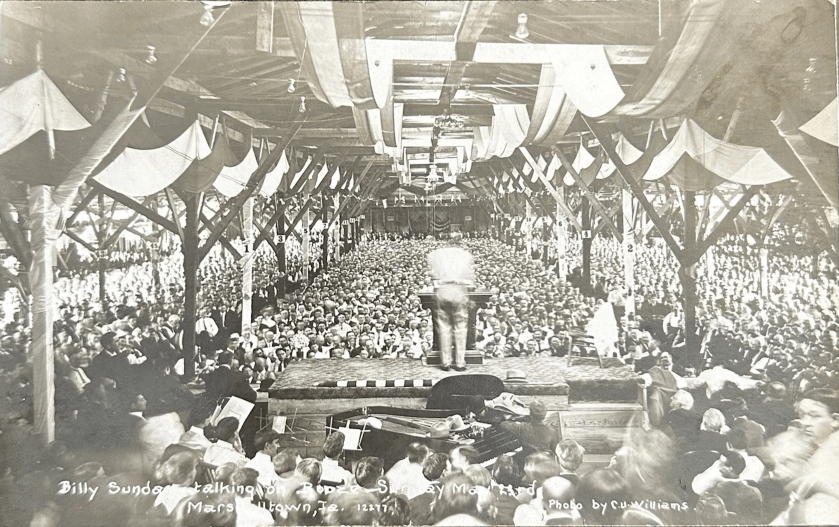
A wooden tabernacle was erected at the corner of Third and Main, seating 5,000. The Sunday machine was now running at full stride.

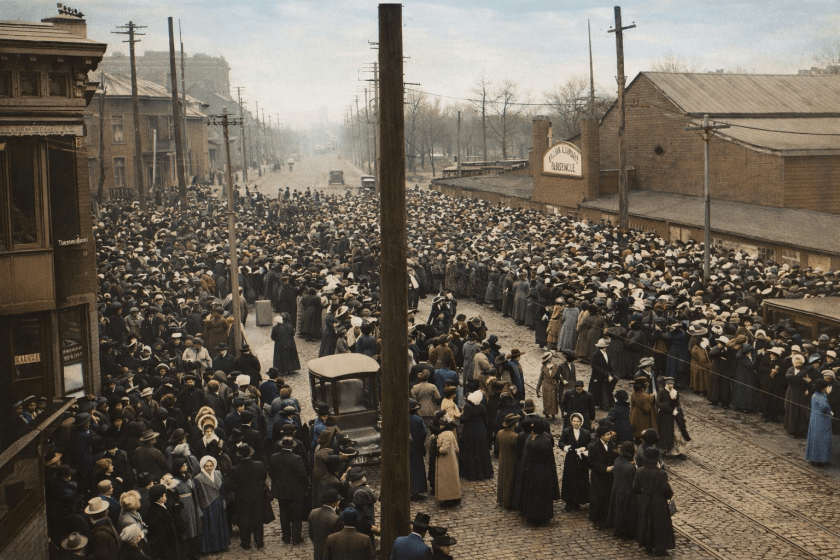
Opening night—April 25—saw over 12,000 people attend across all services. On the final day, June 6, Sunday preached to 13,200. In a town of just over 13,000 residents, that level of saturation is staggering.

By campaign’s end:

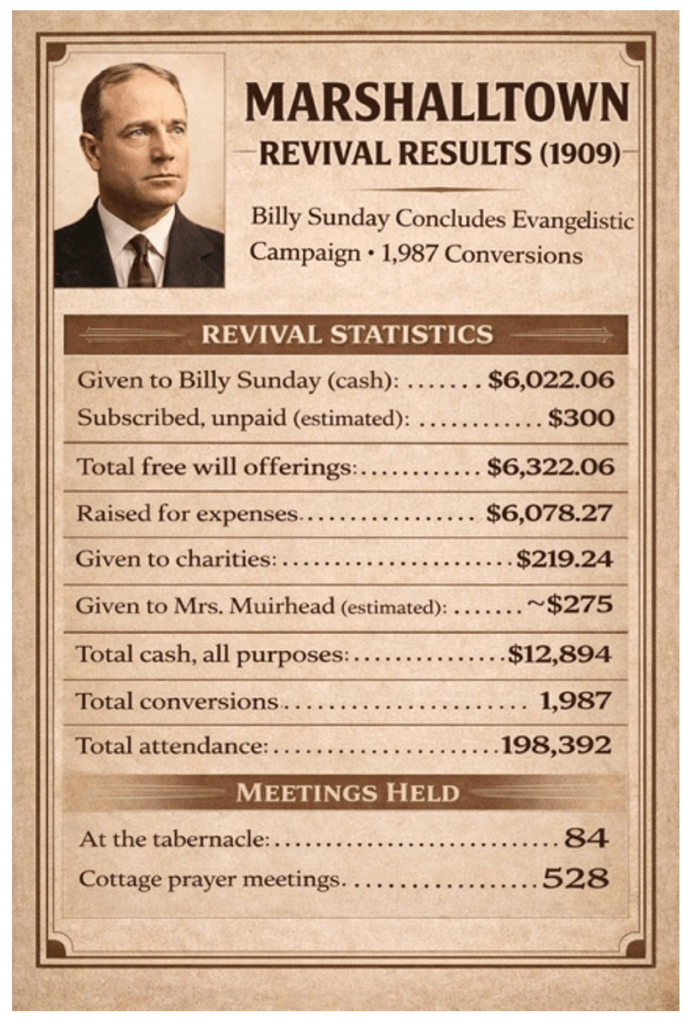
  • 2,000 total conversions (125 on the final day)
  • 84 tabernacle meetings
  • 528 cottage prayer meetings
  • Nearly 200,000 in total attendance

For six weeks, Marshalltown was consumed by revival.


The Money and the Machine

The final purse for Sunday was $6,139.
Total funds raised during the campaign reached $12,894.

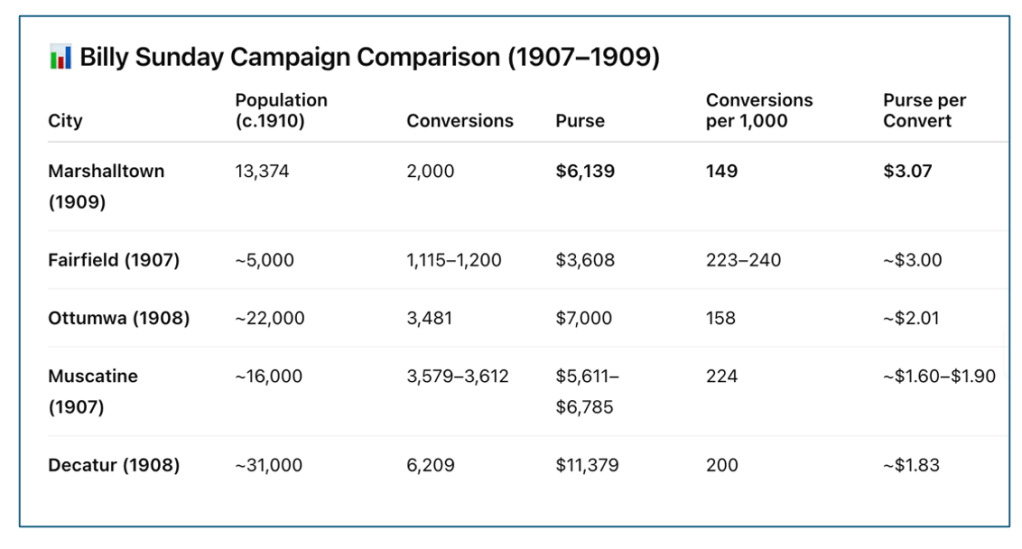
For comparison, that purse nearly matched Muscatine’s and approached Ottumwa’s from the previous year. Financially, Marshalltown demonstrated strong committee organization and enthusiastic backing. This was not a struggling campaign.

It was disciplined. Systematic. Mature.

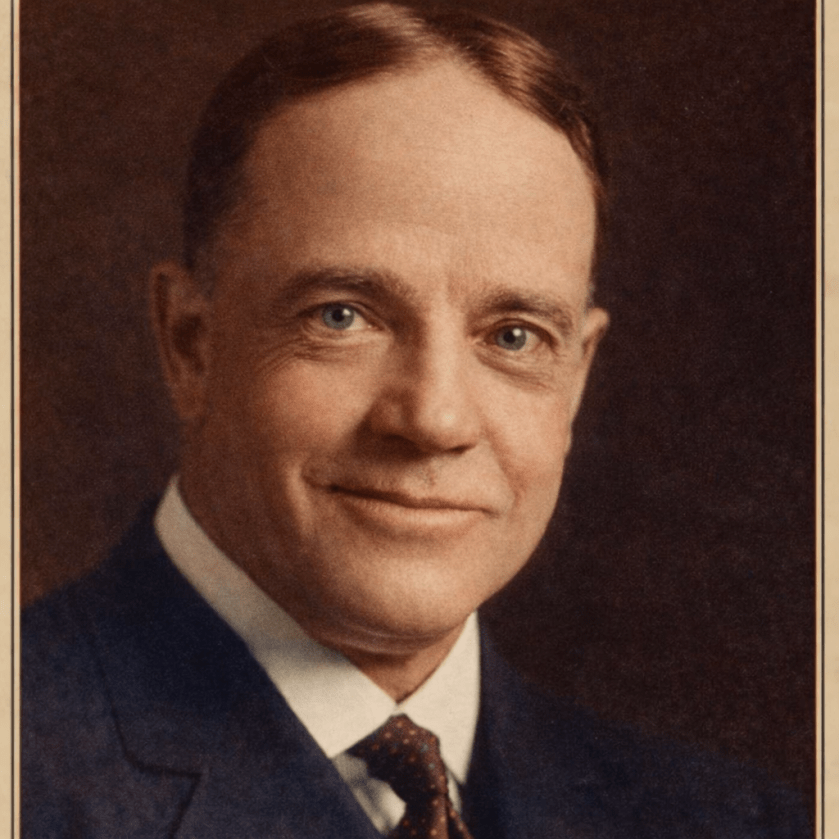
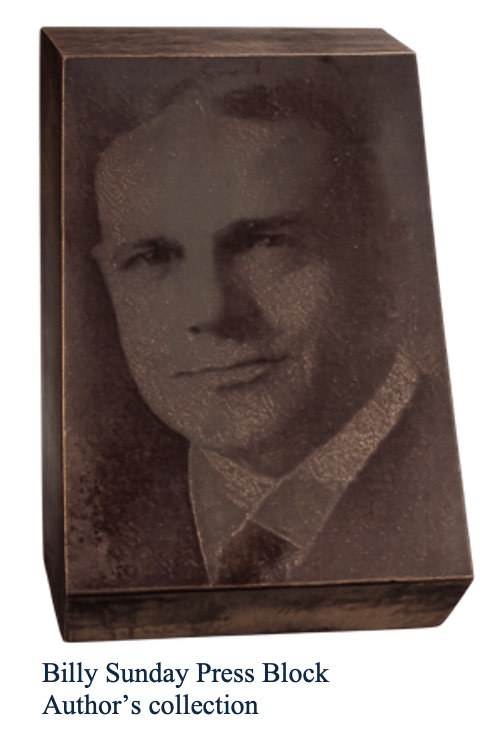
The press block used to print Sunday’s image during this period—now in my collection—reflects that growing sophistication. By 1909, Sunday was no longer improvising revivals. He was executing them.


Did Marshalltown “Underperform”?

One skeptical paper, the Davenport Weekly Democrat and Leader, suggested that Marshalltown’s results did not compare favorably with Fairfield, Ottumwa, Muscatine, and Decatur.

On the surface, that seems correct.

Measured per capita:

  • Marshalltown: ~149 converts per 1,000 residents
  • Fairfield: over 220 per 1,000
  • Muscatine: about 224 per 1,000
  • Decatur: around 200 per 1,000
  • Ottumwa: about 158 per 1,000

In raw totals, Marshalltown trailed Muscatine (3,579–3,612), Ottumwa (3,481), and especially Decatur (6,209).

So yes—the numbers were not dominant.

But numbers alone miss something important.


The Press: Praise and Pushback

The reaction was revealing.

The Audubon Republican declared the meetings closed in a “blaze of glory.” It reported over 500 cottage prayer meetings and said the town had been “thoroughly stirred up.”

The Marshalltown Evening Times-Republican went further, calling Sunday:

  • “One of the splendid prophets of the elder time…”
  • “One of the greatest revivalists in existence.”
  • “One of the plainest, simplest and happiest of men…”

Meanwhile, the skeptical Davenport Weekly Democrat and Leader offered sharper commentary. It described Sunday as a “contortionist of uncommon ability” with “remarkable versatility,” while acknowledging the “magnetic power of Mr. Sunday.”

Its most fascinating observation was psychological:

“The psychology of it all is that the people who are not regular attendants at churches must be reached not as individuals but in mass. They like to be moved by each other; and it is probable that this explains the success Mr. Sunday attains. He is helped greatly by the excitement and the enthusiasm of the crowds…”

That critique reads today like an astute analysis of mass evangelism. It wasn’t merely preaching. It was momentum. Atmosphere. Collective energy.

Sunday understood something about crowds that many pastors did not.


What Marshalltown Really Proved

Marshalltown was not Sunday’s most explosive campaign numerically.

But it demonstrated something perhaps more important in 1909:

  • Massive attendance penetration in a modest city
  • Financial stability and strong committee structure
  • Organizational maturity (over 600 total meetings)
  • National press attention—positive and critical

Marshalltown proved that Sunday could saturate an entire city.

Critics were talking. Admirers were praising. Nearly 200,000 attendances in six weeks ensured that no one in town was untouched by the revival’s presence.

He was no longer just holding meetings.

He was creating civic events.


A Blaze of Glory

The revival closed the way many Sunday campaigns did—intense, loud, emotional, decisive. A blaze of glory.

Marshalltown may not have produced the highest per-capita conversion rate of his Iowa stops. But it stands as a revealing moment in his rise.

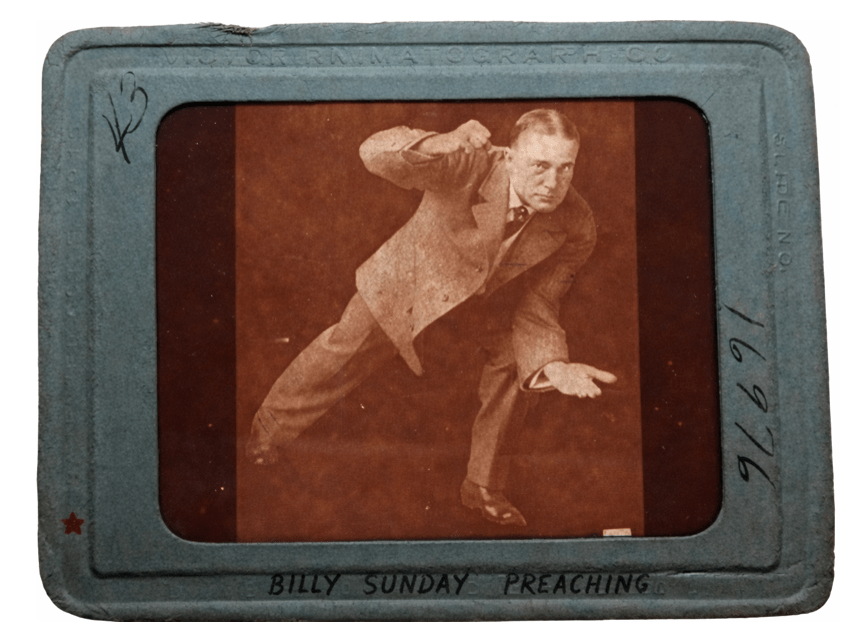
Magic lantern slide. Author’s collection.

By 1909, Billy Sunday was refining his method. The tabernacle system was humming. The prayer networks were mobilized. The press was watching closely.

And Iowa—his Iowa—was watching one of its own step onto a larger stage.

Marshalltown mattered because it showed that Sunday’s machine worked not just in isolated bursts, but in sustained, organized, city-wide saturation.

For a hometown son, that was no small thing.

Trail hitters remain firm, say converts. Circa 1918.

When revival calls crowds to the aisle, a critical question follows: “Will that decision endure?” In 1918, after Billy Sunday’s campaigns, journalists followed up with converts and organizers to ask whether the spiritual fervor survived time. The answers—preserved in this article—offer rare insight into how revival might seed long-term change. Read on to see what those trail hitters said, and what it teaches us about lasting faith.

The Washington Herald. Tue, Jan 29, 1918 ·Page 8

TRAIL HITTERS REMAIN FIRM, SAY CONVERTS

Effect of Sunday Revivals in Other Cities Has Been Permanent.

BY ARTHUR JOYCE.

Does ‘trail hitting’ at Billy Sunday campaign meetings show any permanent results? Are those persons who walk the sawdust aisles over at the Tabernacle interested only in formally shaking the hand of the evangelist – or is there something definite behind it all?

Thousands who have seen approximately 6,000 persons ‘hit the trail’ at the Tabernacle in this city are asking these questions. And about the only way in which they can be answered with any degree of accuracy is to look over the field where the evangelist has campaigned and see what’s the situation a year or two following the campaigns.

I recently had a talk with two influential representatives of cities in which Billy has campaigned and I put the questions to each of them. One is Gen. C. Edward Murray, quartermaster general of New Jersey, the other is Lucius L. Jeddy, head of the Merchants National Bank, of Syracuse, N.Y. Both were Billy Sunday ‘trail hitters’ – Gen. Murray in Trenton, N.J., and Mr. Eddy in Syracuse.

Big Sunday Club.

Gen. Murray is president of the Billy Sunday Club, of Trenton, an organization of ‘trail hitters’ formed after the evangelist’s Trenton campaign. That club now has a big membership and every member in it is personally interested in leading others to Christ.

‘The campaign in Trenton,’ said Gen. Murray, ‘awakened a remarkable interest in Christian work, especially among the men and women who ‘hit the trail.’ Churches have increased their membership to a remarkable extent; booze joints that keeled over; Sunday schools are crowded and everywhere there is shown a wonderful interest in things religious. I know many noted men who have passed up the cigars and joined the church and I know of one politician who formerly represented the booze interests, who has been converted and is now an active election on an anti-booze ticket.

‘On the whole, I should say that the Sunday campaign in Trenton has done more to evangelize the city than any other one happening in recent years. And I’m satisfied that the men who ‘hit the trail’ are still going right with the Lord and are doing their best to lead the aisles for Christ.’

Mr. Eddy told of the workings of the Billy Sunday Club in Syracuse. Every member of the organization was a ‘trail hitter’ and in the last two years, he said, they have led more than 20,000 men to Christian lives.

‘The ‘trail hitters’ not only themselves ‘stuck to their declarations to stand on God’s side,’ said Mr. Eddy, ‘but they’ve inaugurated an active campaign to bring others into the fold. And if that doesn’t show the permanency of ‘trail hitting’ I’ve lost my guess.’

Senator Vardaman, of Mississippi, made the statement that if the evangelist shall win only one person to Christ in his Washington campaign, ‘we will have been well repaid for our efforts in the revival cause here.’

In Philadelphia – three years after the Sunday campaign – there is a ‘trail-hitting’ organization in virtually every church where the evangelist assisted in the revival. There are probably 7,000 members enrolled in these organizations, and they’re campaigning every day to bring others to the church.

In Scranton, Pa., one church added 2,000 members to its rolls within six months after the Sunday campaign. Another Scranton church increased its enrollment by 1,000 in a year following the campaign. The same is true of the churches in Wilkes-Barre, Pa., and in Carbondale, Pa., churches.

In Wichita, Kan., three men of national reputation have been converted who call ‘gospel teams.’ These ‘teams’ go about the country and work in the Middle West to preach the gospel and tell of the wonderful work Billy Sunday did in their campaigns. Out of these teams has been formed a National Federation of Gospel Teams’ which are made up of leading men throughout the country – all of whom are either ‘trail hitters’ at Sunday meetings or are in the church as a result of the work of ‘trail-hitters’ who have taken up personal work. These teams have a record of 11,000 conversions to their credit.

Don’t All Stay.

Detroit has a ‘trail-hitters’ club’ of nearly 1,000 members; Los Angeles has one with about 500 men on its rolls; Atlanta has just finished organization of a Billy Sunday Club with several hundred members. And in virtually every city and town where the evangelist has campaigned there are similar organizations continuing the work Billy began. Nearly every ‘trail hitter’ in these places has associated himself with these clubs.

Of course, every person who ‘hits the trail’ isn’t a sticker. But records made by Sunday party experience year after Billy’s campaigns in leading cities show that approximately 85 per cent of those who ‘walk the aisles’ represent permanent converts.

The object of the ‘trail hitting’ is not only to bring to the ‘front’ in a public confession of faith those who have been more before taken any stand in the matter. Billy’s ‘invitations’ are intended to induce the church members to ‘reconsecrate’ themselves and ask to be more earnest Christian life from those who have already ‘accepted’ Christianity.


Legacy & What It Means
This article offers more than historical curiosity: it reveals Sunday’s conviction that conversion must stick. His method didn’t end with a call to the front — it extended into communities, clubs, and networks of believers committed to nurturing change.

Application for Today
In contemporary ministries, it’s easy to emphasize decisions without long-term follow-through. What lessons does Sunday’s model offer us? Perhaps this: revival without discipleship is incomplete.

Reflection & Invitation
If “trail hitters” in 1918 were expected to keep walking, not wander off, who in your context needs that same encouragement today? How will the faith you ignite be sustained, multiplied, and anchored in life?

Rev. Billy Sunday grills ministers, 1908

A Richmond, Indiana newspaper (1908)

Gathering of Winona Divines Rated With a Bunch of Bums.

BETTER BE COG WHEEL

And Stop Trying to Be a Whistle Is Sunday’s Advice to Them.

Lake, Ind., Aug. 22.—”I preach to this bunch just I do to a lot of bums, and I don’t see any difference in you. You ministers criticise me, but as long as God puts His mark of approval on my work it is up to you to keep your mouths shut. If God wants you to be a cog wheel you had better stop trying to be a whistle. Some people are all front door. Open it and you are in the back yard. Many a man goes to a seminary and is filled up with a lot of stuff that is of no more use to him than a crane’s legs would be to a setting hen.”

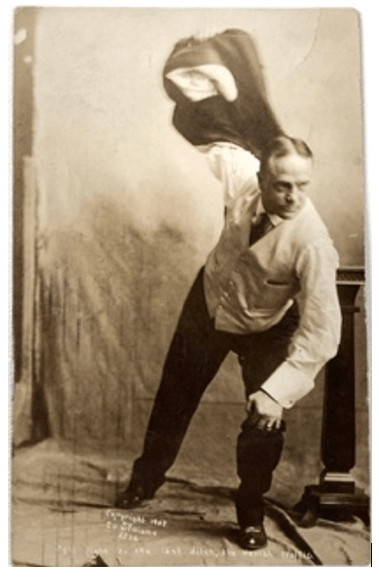
Such was the rhetoric and classical language in which the Rev. “Billy” Sunday the base ball evangelist, addressed the Bible conference at Winona Lake. He told gray-headed ministers how to succeed and grilled those who did not agree with his methods.

Called Rev. Smith “Gyp.”

He talked like a whirlwind and whisked up and down the gamut of Christian effort like a $25,000 limousine. He slapped the distinguished English evangelist, the Rev. Gypsy Smith on the back and called him “Gyp.” “Gyp” smiled a sour smile and looked as pleasant as he could.

While the message of Rev. Billy was as hot and peppery as chili sauce, it was received with fervent “amens” from over the auditorium and at the close “Gypsey” Smith gave his shoulder a pat of approval and Dr. Chapman smiled his approval.

Dr. Chapman said: “Unless a man is born with preach in him he will never get there. Too many preachers are more interested in drawing their salaries than in saving souls. Show me an earnest man and I will show you a man that is making the gang sit up and take notice. The earnest pastor does not sit around and wear out the seat of his pants waiting for something to turn up. The only thing that will turn up for him is the sod in the grave yard.”

The Richmond Item. Sat, Aug 22, 1908 ·Page 2

YOUNGSTOWN ATTORNEY HAS HIGH PRAISE FOR EVANGELIST SUNDAY, 1910

As published in the The Akron Beacon Journal. Sat, Jun 18, 1910 ·Page 3

Attorney W. S. Anderson of Youngstown, who defended Bert Petty, is a staunch supporter of “Billy” Sunday, the celebrated evangelist. He was one of Sunday’s many converts in Youngstown. Sunday spent six weeks in Youngstown this spring and Mr. Anderson says that the effect upon Youngstown was great and it has been lasting also.

“When I first went to hear him I was disgusted,” he said, “but I went several times more just out of curiosity and I grew to be a great admirer of his work. The first two weeks he spent in Youngstown he used a great deal of slang. This drew the crowds and when he had them coming he got down to work and his work was wonderful.”

Mr. Anderson says that all classes of people have been effected by Sunday’s work. “The lawyers are a pretty hard class of men to reach with religious services but Sunday did it. One night in his prayer he said, ‘Help the lawyers because we know they are a tough bunch.’ They were too, but many became followers of the evangelist.

“The work of Sunday can not be judged only by the number who came forward. It is the influence on all the people and their relations with one another.”

Mr. Anderson says Akron should get Billy Sunday here. “It will do the town a lot of good,” he said.

The impact of the Bellingham campaign (April 1910) on the local church membership?

The Bellingham Herald. Mon, Jun 13, 1910 ·Page 1

The church membership of Bellingham has been practically doubled as the result of the Rev. W. A. Sunday evangelistic campaign.

The meeting was fully attended, and perhaps the most remarkable feature of the session, was the enthusiasm with which the work of Rev.

W. A. Sunday in this city was referred to. Practically all of the pastors stated that their church membership had doubled, and in some cases almost trebled, while there is yet no sign of any cessation of the additions.

It is claimed now that the actual campaign itself has been but the start of a religious movement which is crystalizing in the different churches in a manner far beyond the highest expectation of the association.”

Billy himself defends his free-will offerings he was given, 1909

The Canton Press-News. Fri, Aug 13, 1909 ·Page 1

Billy Sunday’s Defense.

The one evangelist who has shaken half a dozen lowa cities more than any other is popularly called Sunday, for that is his name, ‘Billy’ Sunday. He is often scored severely for bis antics on the stage and for the way be rounded up the money on leaving the town he has excited to a high pitch. In his latest interview Sunday makes a defense of his style of getting the currency. He points to Jeffries, Bat Nelsons and the other fighters, and says: “But these fellows can get the money and nobody accuses them of graft. But let a preacher get together a few dollars and he is immediately called a grafter.”

He is not a quitter and announces the fact this way: “I expect to stay in the game as long as 1 have the physical and mental strength.

I have amassed a few dollars but it all came from free-will offerings.

I gave up ball playing and turned down offer of $12,000 a year to take up Y. M. C. A. work. Why during July and August of this year I could have made $20,000 on the chautauqua platform from the offer I have had, but I turned them down. I did it for the reason that I need all my strength for preaching. I don’t know no more about theology than a jackrabbit know about ping pong, but I preach as hard as I can.”

Mr. Sunday is booked for years ahead. -[Davenport Times.]

The Canton Press-News

What did preachers think about Billy Sunday, c. 1914?

“First, he is natural, never tries to be another, is never affected. The champion of the diamond is in action for God. Second, he uses the word of God, knows it, believes it, and preaches it with consummate skill and commanding power. Third, he knows the heart of man, and helps every hearer to find and see one’s self. In papers, parts of his sermons may appear to be jokes, but they are no joke to the one whose soul is uncovered by them. A friend said Saturday, ‘I can’t laugh at the jokes, they are too awfully true.’ Another said, ‘Billy’s ‘darns’ aren’t nearly so large when you hear them as they appear to be in the press.” Mr. Sunday shows us the dead body of sin to which we are chained until we loath it and groan to be delivered from it.

Fourth, best and most important of all, he believes in and depends upon the Holy Spirit; who is here working in, working for, and working with Mr. Sunday, and every consecrated follower of God. Just so sure as these things be true, we shall see a great work in Scranton. Every lover of God and man ought to pray most earnestly that this may be fact as well as prophecy. We ought not to judge until we see and hear. Come to the tabernacle and you will wish that all of your family and friends were with you. Mr. Sunday is more than a man working with human skill. He is a man of God being used to help men. Years hence we shall regret it if we fail to hear Billy Sunday now.”

Tribune-Republican. Tue, Mar 10, 1914 ·Page 10

Billy Sunday’s methods? An American Product

“Billy Sunday is an American Product – Where methods differ

More Lasting Good.

The old school of revivalists were of the itinerant class, moving rapidly through the country, their evangelism seemed sudden in its effect and I am afraid somewhat evanescent in its general results. It is just here that Mr. Sunday’s campaign gives promise of more lasting good. His coming has been carefully prepared for, his meeting place is undenominational in character. It is a movement conducted with great business acumen and sound common sense. He trains the ministers and church workers in such a way as to make them capable of caring for the harvest when it comes. Like a good farmer, he prunes the fruit trees with vigor cuts out all the dead wood and sprays them well to get rid of moths, beetles and canker worms, so that when the new fruit shall ripen it will be sound and beneficial. And the leaves of the trees shall be for the healing of the nations. Mr. Sunday is a man endowed with a great faith, He prays for the blessing, he prepares for the blessing, he is sure of getting it and it is therefore no surprise that he is so eminently successful.”

Time-Republican. Thur, Mar 05, 1914 ·Page 10