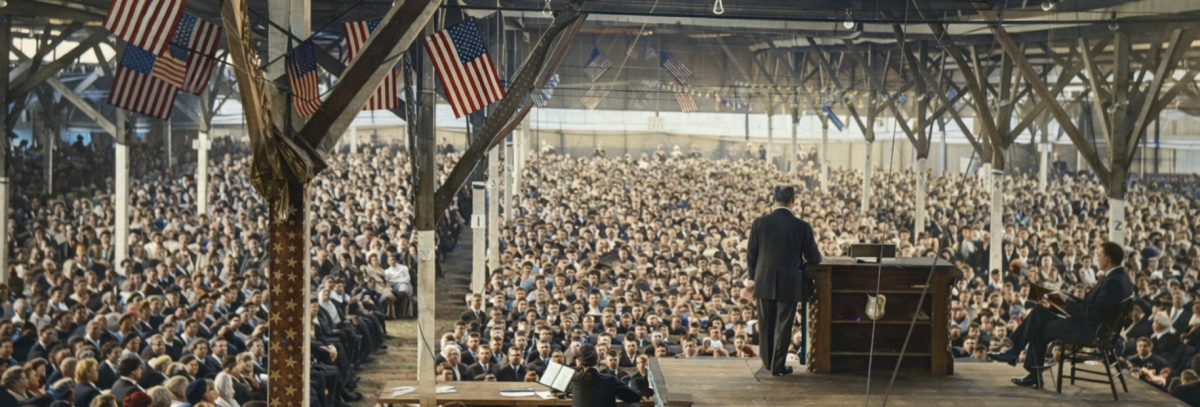
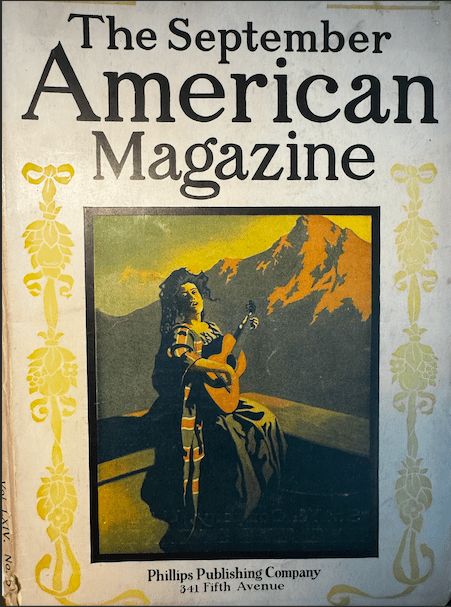
First in a series drawn from Lindsay Denison’s profile of Billy Sunday in The American Magazine, September 1907.
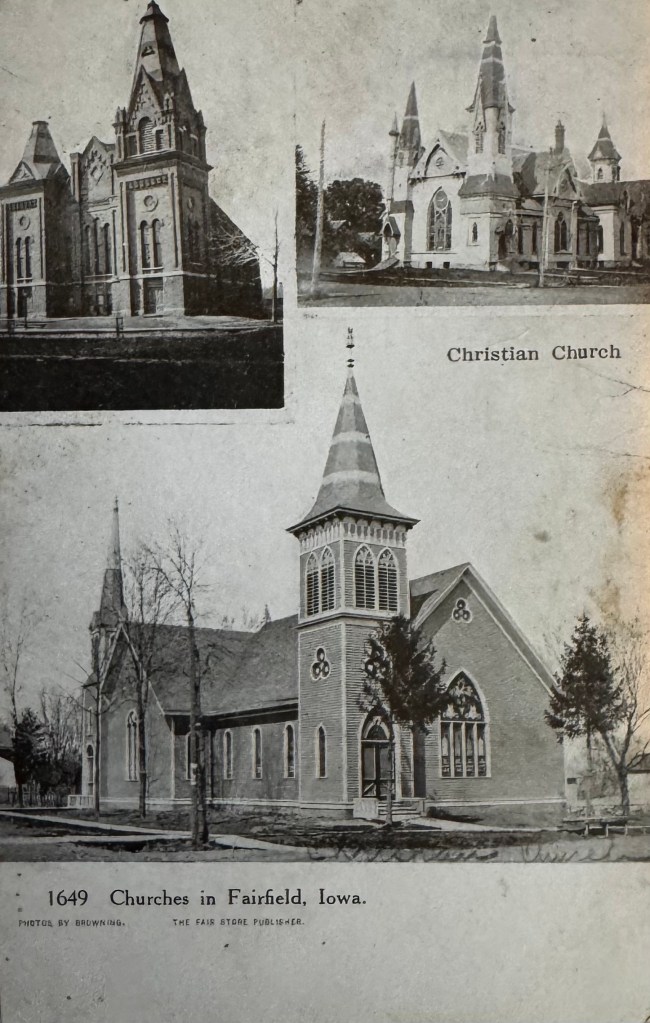
In the autumn of 1907, a New York journalist named Lindsay Denison stepped off a train into a tidy, prosperous Iowa town of about five thousand people. He had come a long way to watch a man preach.
The town was Fairfield. The man was the Rev. William A. “Billy” Sunday — former professional ballplayer, ordained Presbyterian minister, and the most electric revivalist the American Midwest had ever produced. Denison’s assignment was to explain him to the readers of The American Magazine, a national publication based a thousand miles east of the cornfields where Sunday did his work.
That distance is the whole story. In 1907, Billy Sunday was a regional sensation — a small-town, big-tent evangelist who worked a tight circuit through Iowa, Illinois, Wisconsin, Minnesota, and Colorado. But the fact that a New York magazine sent a reporter “all the way from New York,” as Sunday himself noted in one of his prayers, tells you something was shifting. The country was beginning to take notice.
A reluctant convert among the clergy
The article opens not with Sunday’s own voice but with the voice of a man he had thoroughly rattled: the Rev. Pearse Pinch, pastor of Fairfield’s Congregational church. Pinch’s testimony is one of the most striking things in the whole piece, precisely because it is so conflicted.
Sunday, by Pinch’s account, had trampled all over his theology and “kicked my teachings up and down that platform like a football.” The man had offended every refined notion the pastor held about his sacred profession. And yet — Pinch could not argue with the results. His congregation would grow by hundreds. So he humbled himself, gave the credit to Sunday and to God, and reached a conclusion he could not escape: the man was doing God’s work, and that he knew.
It is a perfect frame for the series ahead, because it captures the central tension of Billy Sunday’s whole career. Refined clergymen were horrified by his slang, his theatrics, his shirt-sleeve oratory. And then they watched the converts pour down the aisles, and they stopped arguing.
The numbers that made people look twice
Denison did not bury the lead. By 1907, Sunday had spent twelve years converting more than one hundred thousand men and women to a public profession of faith — and, crucially, he sent them into the churches and they stayed. A survey of ministers in eleven towns where Sunday had held revivals came back unanimous: the share of backsliders was small, even negligible.
This is what separated Sunday from the caricature of the fly-by-night tent preacher. He was, in Denison’s framing, making more church members than all the ministers of the Middle West working together. And he funneled converts not only into his own Presbyterian rolls but into the Methodist, Baptist, Episcopalian, Lutheran, Congregationalist, Roman Catholic, and Christian churches as well.
A man, not a “theological phonograph”
What made him work? Part of the answer, Denison found, was that Sunday never behaved like a clergyman descending on sinners. When he first arrived in Fairfield, he walked the stores around the public square and talked shop — cloth, horses, shoe leather, Chicago trade prices — and he knew his subjects well enough to impress the tailor, the livery man, and the shoe dealer.
By the time those introductory calls were done, the town had reached its verdict: Bill Sunday was a human being, not a theological phonograph. That instinct — to meet ordinary people as a peer rather than to preach down at them — is the thread that runs through everything else, from his plain-spoken sermons to the popular tunes his choir sang.
Why this series
Over the next several posts, we’ll work through Denison’s 1907 profile piece by piece: Sunday’s improbable journey from center field to the pulpit, the famous footrace that tested his new faith, the pulpit style that scandalized and converted in equal measure, the carnival-bright music of his meetings, the hard questions about money, and the unforgettable final day of the Fairfield revival.
Read as a whole, the article is more than a snapshot of one revival in one Iowa town. It is an early national notice of a man about to become one of the most famous preachers in America — caught at the very threshold, just before the rise steepened.
As Denison put it in his closing line, the spiritual ferment Sunday helped lead was spreading and intensifying across the country. What it would all come to, he wrote, was no part of his business to guess.
But it was worth watching.
Next in the series: From Center Field to the Pulpit — the conversion of Billy Sunday.

 Evangelist Billy Sunday (1862-1935)