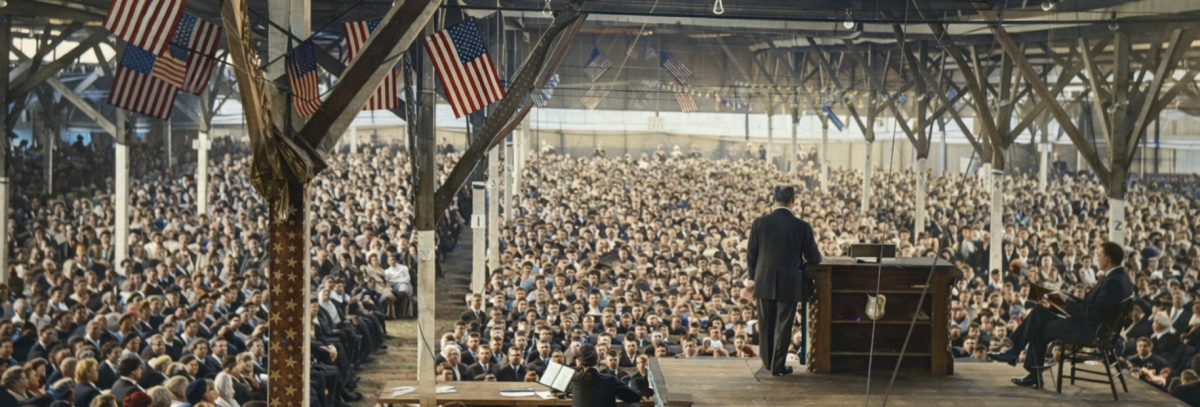
Second in a series drawn from Lindsay Denison’s profile of Billy Sunday in The American Magazine, September 1907.
Before he was the man who made New England shiver and the cornfields cheer, Billy Sunday was a poor boy from Iowa with a dead father and a gift for running.
Lindsay Denison’s 1907 profile lays out the bare facts of that early life with a plainness that almost undersells them. Sunday was born in 1863 in Storey, in Ames County, Iowa. His father was a Union soldier, killed in battle before the boy was even born. He grew up in the Davenport Soldiers’ Orphans’ Home and was later apprenticed out to Col. John Scott — a state senator and former lieutenant-governor — before learning the furniture trade in Marshalltown.
It was an unremarkable beginning for a man who would become anything but unremarkable. And the thing that lifted him out of it was not religion. It was baseball.
Discovered by Cap Anson
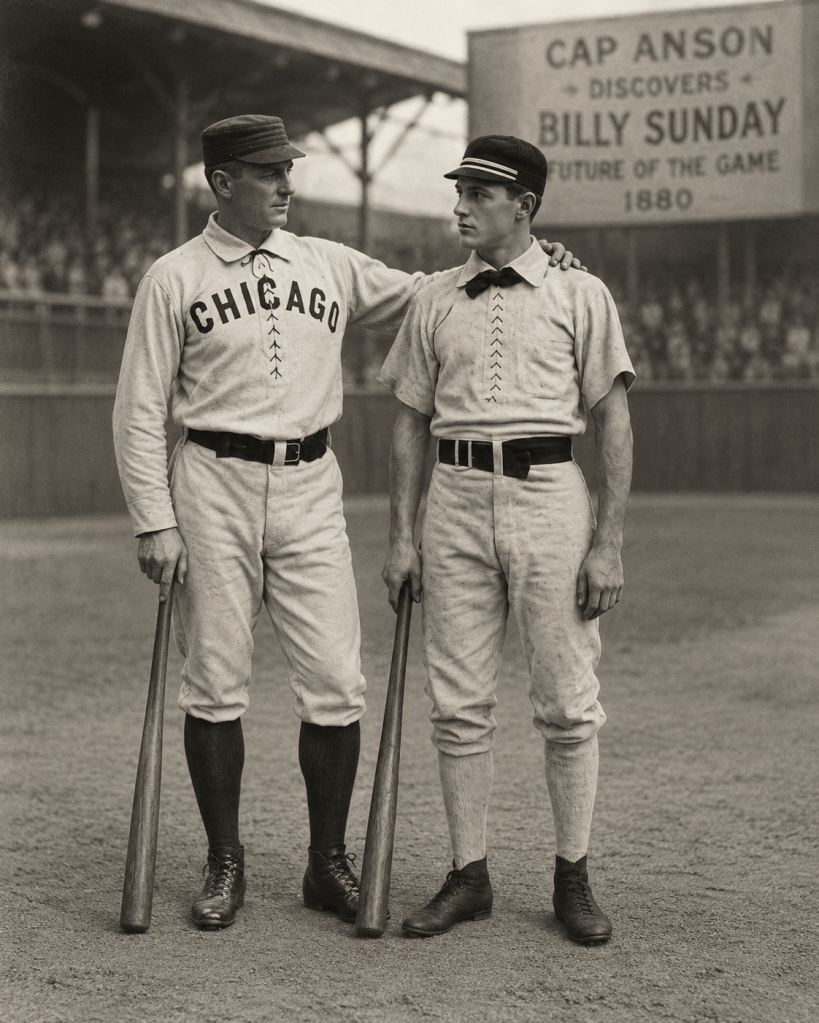
While Sunday was working in Marshalltown, the famous Captain Anson of the Chicago White Stockings spotted the makings of a great ballplayer in him. Anson brought him to Chicago in 1883, and for the next five years Sunday played right field for one of the dominant teams of the era — fast enough that Denison calls him the quickest base-runner the National League ever knew.
He was, in short, a professional athlete in his prime in a major American city. Which makes what happened next all the more surprising.
The curb on Van Buren Street
The conversion story is the hinge of Sunday’s entire life, and Denison opens the whole article with it.
One afternoon — nineteen years before the article was written — Sunday sat with three fellow ballplayers on a curb on Van Buren Street in Chicago, directly across from the Pacific Garden Mission. The men were Mike Kelly, Johnny Ward, and Buck Ewing, all famous names of early baseball. The mission’s windows were open, and the sound of the organ and the hymns rolled out into the street.
When the singing stopped, Sunday told the others he guessed he didn’t want another drink. He waved them a laughing good-bye, crossed the street, and walked into the mission. Ever since, Denison writes, he had been trying to live as he believed Christ would have him live.
There was no thunderclap in the telling — just a man getting up off a curb and walking toward something. The drama would come later.
What the ballplayers thought
Sunday’s own account of the aftermath is one of the most human passages in the article, and it turns on fear. The shakiest moment, he admitted, came the day the Chicago papers broke the news of his joining the church, as he walked down to the ballgrounds dreading what his teammates would say.
He needn’t have worried. Anson shook his hand and said, “Good for you, Billy.” Mike Kelly told him to stick to it. Fred Pfeffer and John Clarkson were just as warm. And George Gore — the one Sunday feared most — grabbed him with both hands and told him it was the best thing he had ever done. Finding that men he respected respected him the more for becoming a Christian, Sunday said, braced him up more than he could express.
(One more test of that new faith was still ahead of him — a footrace, a heavy bet, and a memorable bit of advice from Cap Anson. That’s a story worth its own post, and it’s coming next.)
The cost of the calling
What Denison documents next is the part that answered, years in advance, the critics who would later call Sunday a money-grubber.
After Chicago, Sunday played three more seasons with the Pittsburgh and Philadelphia clubs of the National League, preaching from a pulpit on Sunday nights in whatever town he found himself, firing a locomotive between seasons to stay in condition, and taking courses at Northwestern University. Then, in 1891 — in answer, he believed, to prayer about his future — he secured his release from the Philadelphia team.
Cincinnati immediately offered him $500 a month to keep playing. He turned it down. Instead he became director of the Chicago YMCA at $83 a month — and during the hard times of 1893, his salary went unpaid for seven months running. He was so poor he walked downtown in the morning and home again at night because he could not afford the car fare.
Sunday recalled all this to Denison with a touch of grim humor that says everything about how the later “grafter” accusations stung him: nobody, he noted, was calling him a grafter in those days.
From the YMCA to the pulpit
The final step came four years before the article appeared, when the Presbytery of Chicago received Sunday into the ministry. He had served for a time under the Rev. Dr. J. Wilbur Chapman, one of the leaders of the wave of evangelization then sweeping the Mississippi valley — the mentor under whom the ballplayer-turned-secretary finished becoming a preacher.
From an orphanage in Iowa to right field in Chicago to a tabernacle pulpit in a hundred small towns: it is an improbable arc, and Denison tells it as one. The boy who got up off a curb because he didn’t want another drink had, within two decades, become the man the whole Middle West was talking about.
Next in the series: “Fix It Up With God Afterward” — the footrace, Cap Anson, and the bet that tested a new convert.
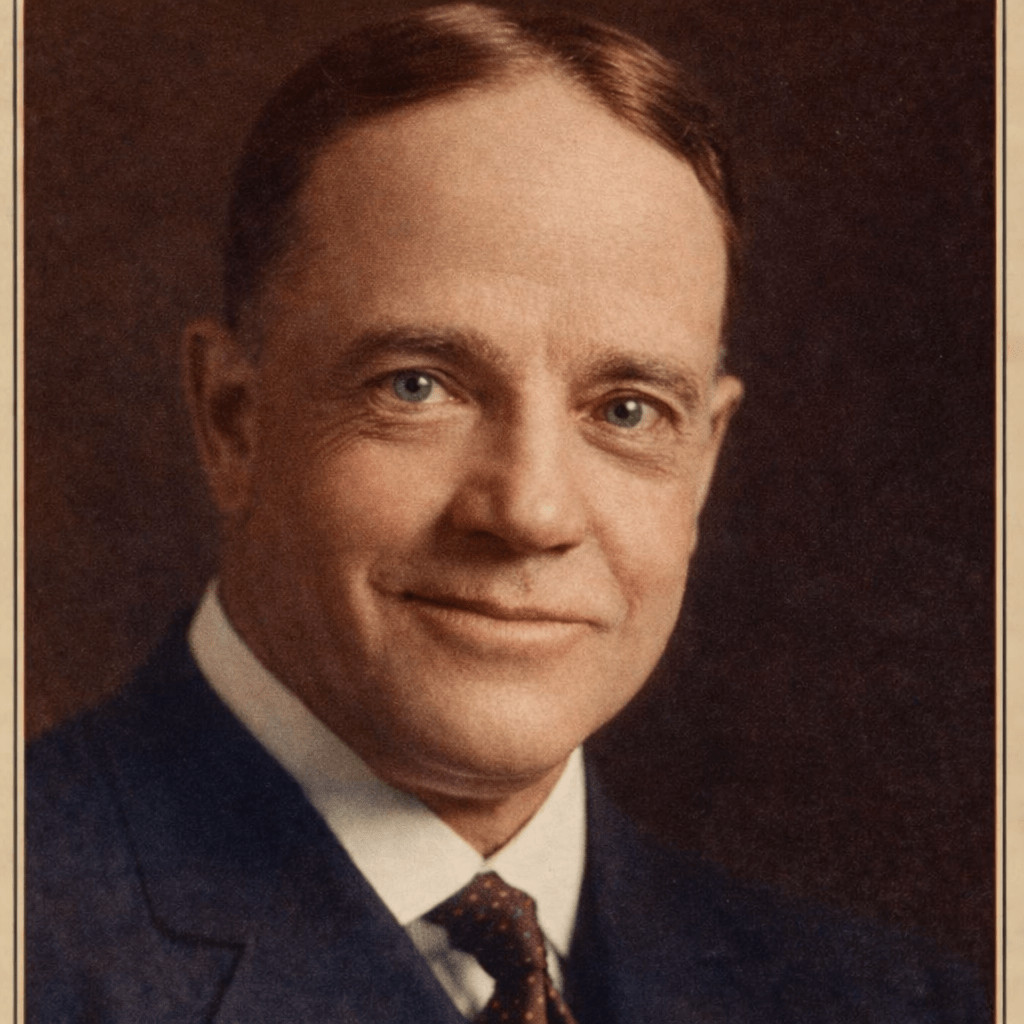
 Evangelist Billy Sunday (1862-1935)