Billy Sunday’s Own Account of His Conversion (1902)

“Lord, If You Ever Helped Mortal Man…”

One of the things I love most about researching Billy Sunday is when we can let him speak for himself.

Tucked inside The founding of Pacific Garden Mission: over thirty-five years contribute to the Master’s service by Sarah D. Clarke is a brief autobiographical sketch written by Sunday in September 1902. It is not polished theology. It is not retrospective myth-making. It reads like a man remembering the night that changed everything.
He begins with Chicago.

“Fifteen years ago one Sunday night I walked down State street, Chicago, in company with several baseball players… We entered a saloon, drank, and passed on to the corner of State and VanBuren…”

Then something happened.

A small band from Pacific Garden Mission was singing on the street. Sunday sat on the curb and listened.

“I had heard those songs from mother back in Iowa, in the Methodist Sunday School in Ames, Iowa, and God painted on the canvas of my memory the scenes and recollections of other days and faces. I bowed my head in shame and the tears rolled down my cheeks like rivers of water.”

The song that broke him was “Where is my wandering boy to-night.”

Col. Clarke invited the men to the Mission. Sunday’s response was immediate:

“I arose and said, ‘Boys, good-by, I’m done with this way of living.’”

That sentence is vintage Sunday. Abrupt. Decisive. No hedging.

But what follows is equally revealing.

The next morning, newspapers reported his church membership. He dreaded facing his teammates. He confessed:

“I would rather have faced a six-shooter…”

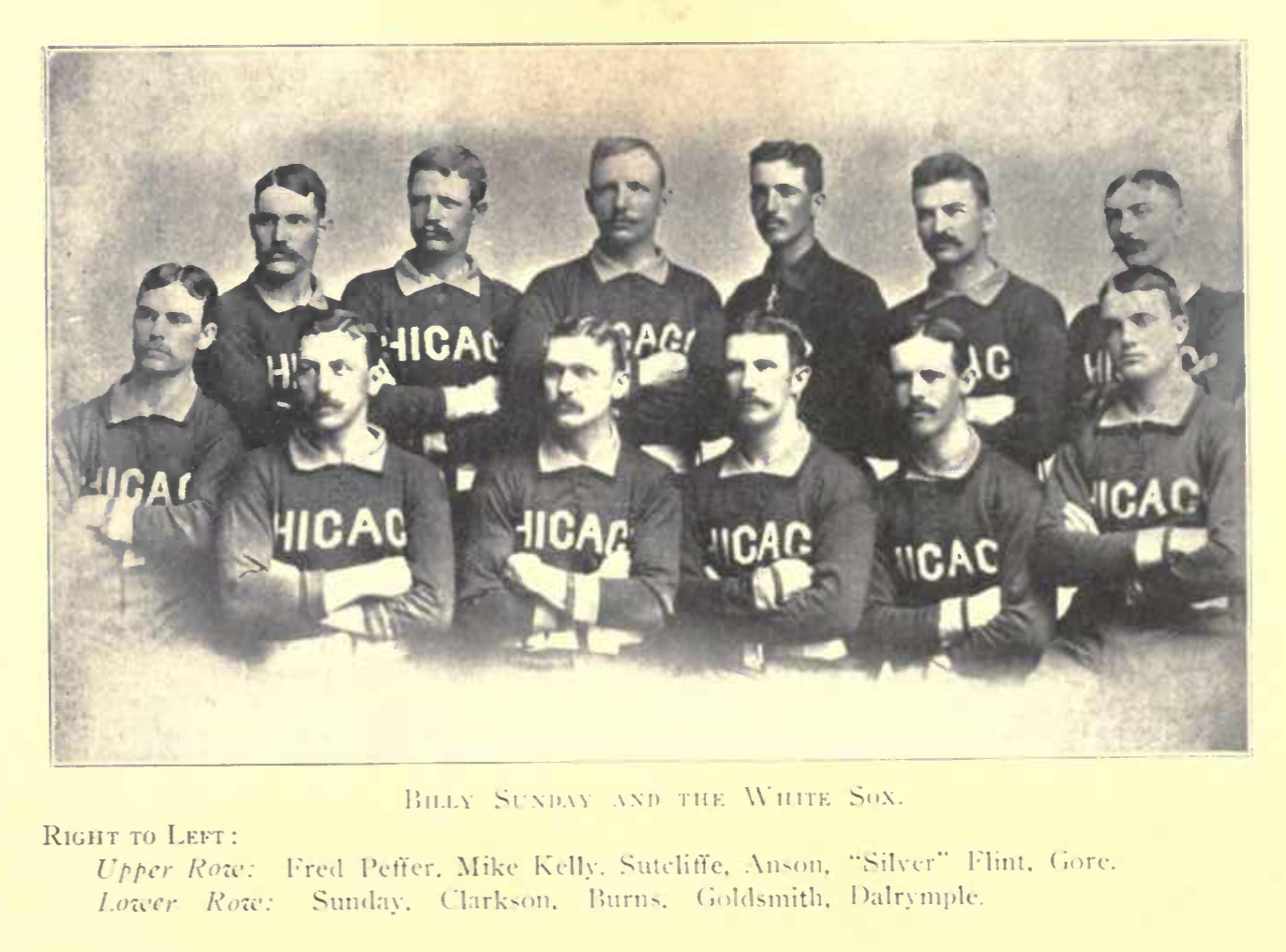
Yet when he arrived, the first to greet him was Mike Kelly.

“With a heart as tender as a woman’s… he took me by the hand and said: ‘That’s a grand thing to do, “Bill.” If I can help you let me know.’”

Cap Anson, Ed Williamson, Fred Pfeffer, Jno. Clarkson, Tom Burns, Dalrymple — they all encouraged him. And if they swore in his presence, “they would immediately ask my pardon.”

This detail matters. It corrects the caricature. Sunday did not convert in isolation from the baseball world. He converted in it.

Then comes one of the most famous episodes of his early testimony — the Detroit game.

Bottom of the ninth. Two out. Men on second and third. Charley Bennett at bat.

“I offered up a prayer and said, ‘Lord, if You ever helped mortal man, help me get that ball.’ I leaped the bench, looked over my shoulder, threw out my hand and the ball struck and stuck. The game was ours.”

Then the line that perfectly captures Sunday’s theology-by-experience:

“I am sure the Lord helped me catch that ball. This deduction may not be according to theology, but it’s according to experience.”

That is pure Billy Sunday — unfiltered, confident, experiential, unapologetic.

After baseball, he attended Northwestern University “where I picked up some Methodist enthusiasm and vim to counteract the stiff, staid Presbyterianism.” That phrase alone tells you how he would preach for the next thirty years.

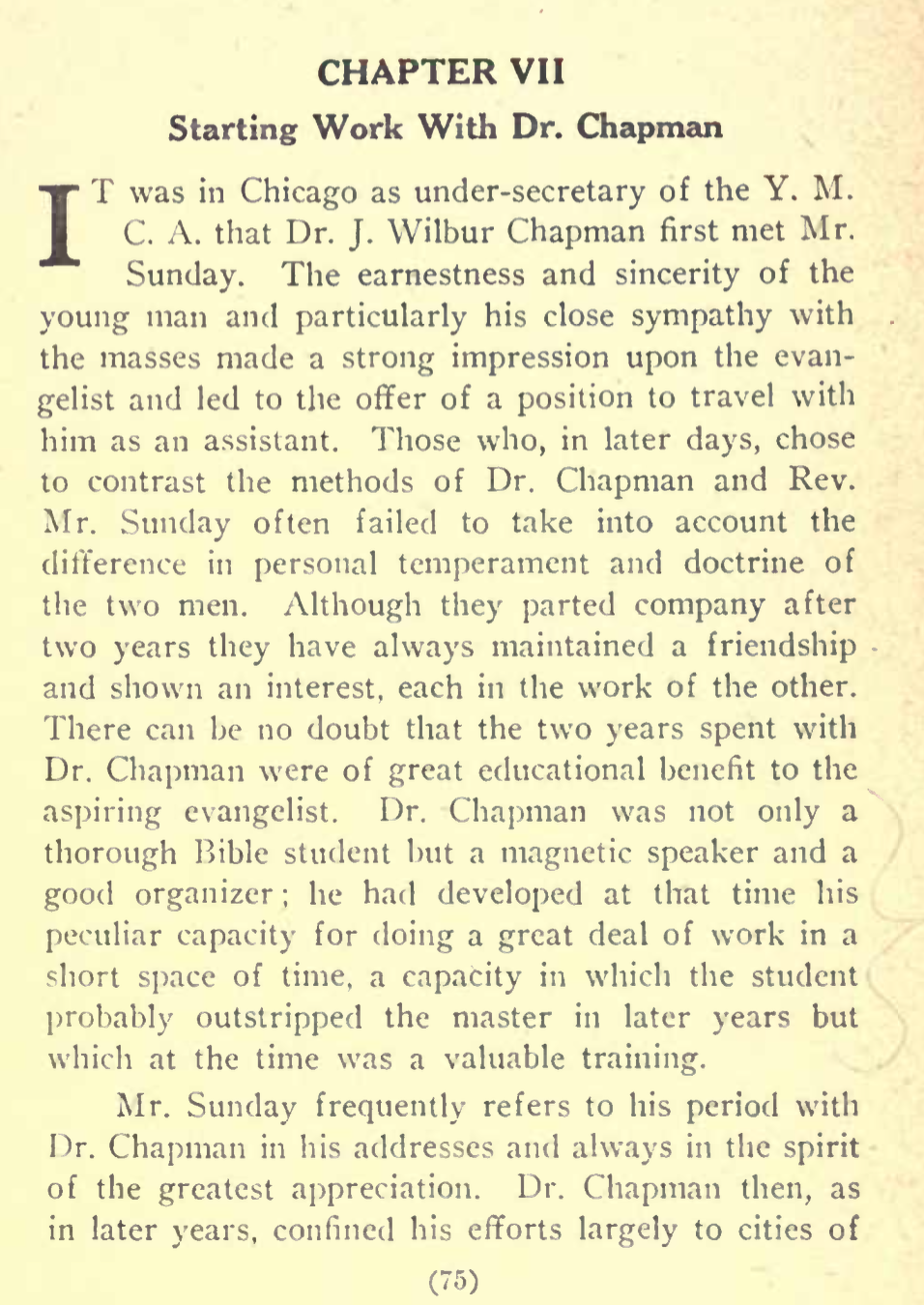
He left professional baseball, became assistant secretary of the Chicago Y.M.C.A., then joined Rev. J. Wilbur Chapman in evangelistic work. Of Chapman he writes:

“All I am today as an evangelist I owe to Dr. Chapman and to Prof. R. R. Lloyd… with whom I studied privately.”

Notice that. Sunday never claimed to be self-made. He acknowledged formation, mentorship, study.

This 1902 piece is significant for another reason. It predates the massive tabernacles, the sawdust trails, the millions who would hear him preach. It shows us Sunday before the fame hardened into legend.

What do we see?

  • A mother’s hymns remembered.
  • A curbside conviction.
  • Public courage in a locker room.
  • A prayer in right field.
  • A man mentored, trained, and sent.

If you want to understand Billy Sunday, start here.

Not with the headlines.

Not with the critics.

Not even with the later statistics.

Start on a Chicago curb, with a baseball player weeping while a gospel song drifts through the night air.

And listen to him say it himself:

“Boys, good-by, I’m done with this way of living.”

Adapted from: The founding of Pacific Garden Mission : over thirty-five years contribute to the Master’s service / by Sarah D. Clarke
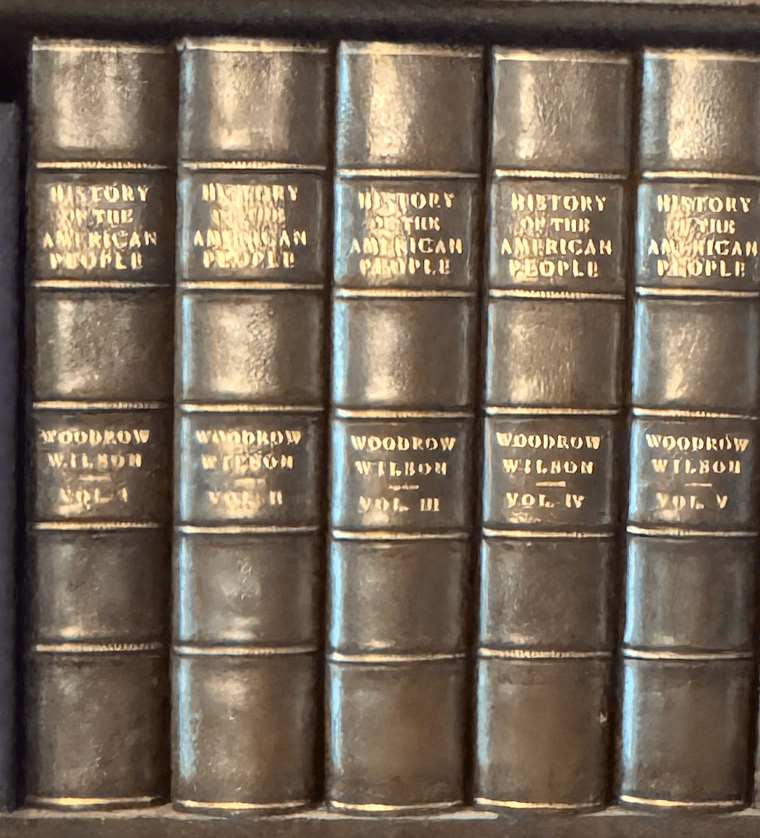

“Read good books,” urged Billy Sunday.

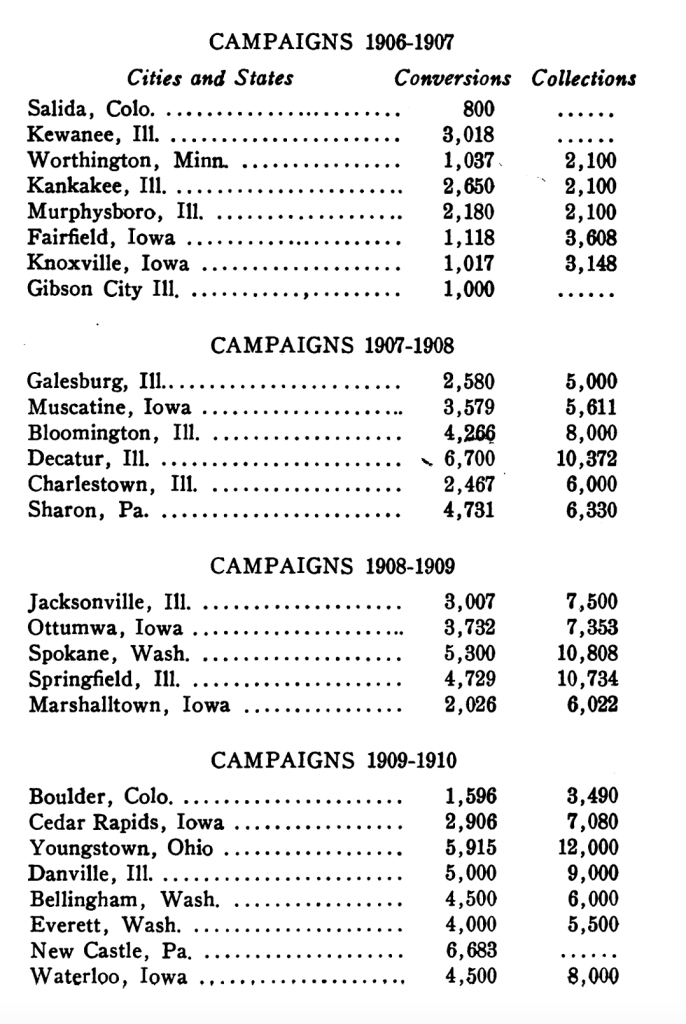
In October 1906 Billy preached to a crowd of roughly 800 people in Salida, Colorado, at First Presbyterian Church. During his message he exhorted the crowd…..

Read good books and keep good company. Every gambler and drunkard became so by imitating the gang he went with. Good books and good companions are to character what water is to the fruit trees, the grasses and the vegetables in this beautiful valley.

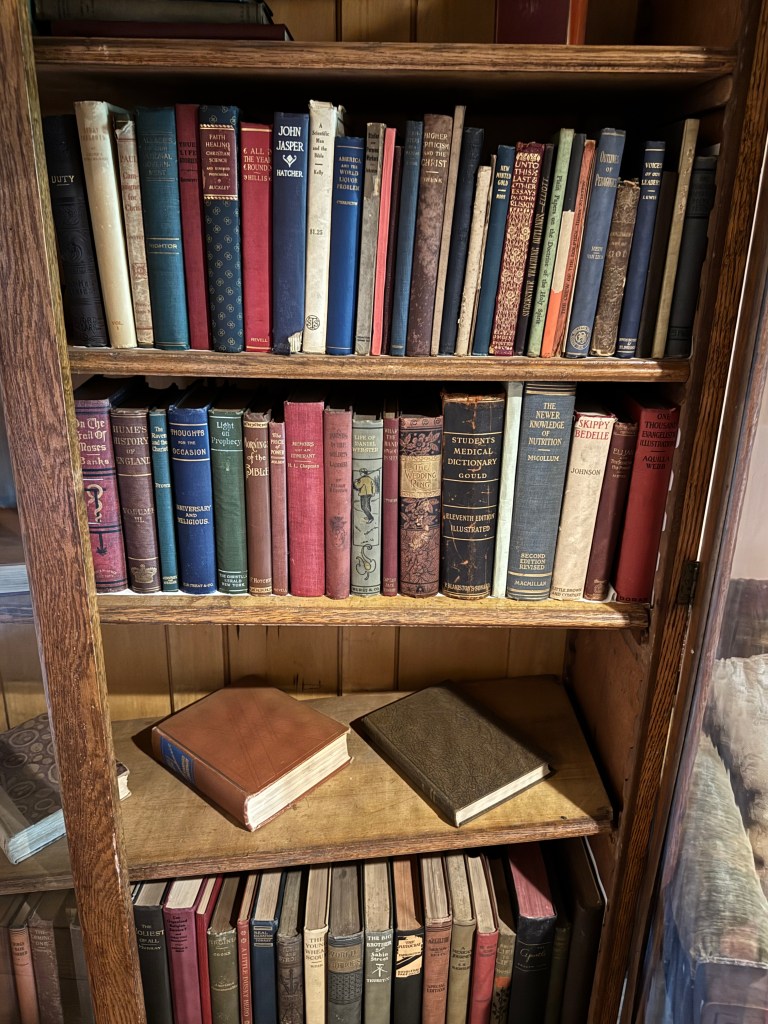
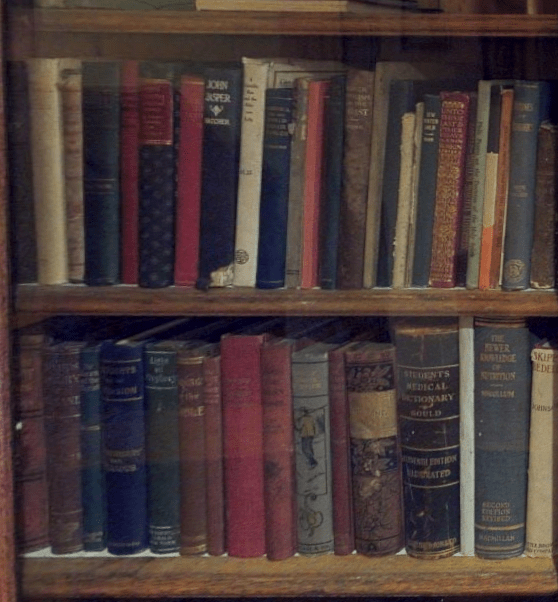
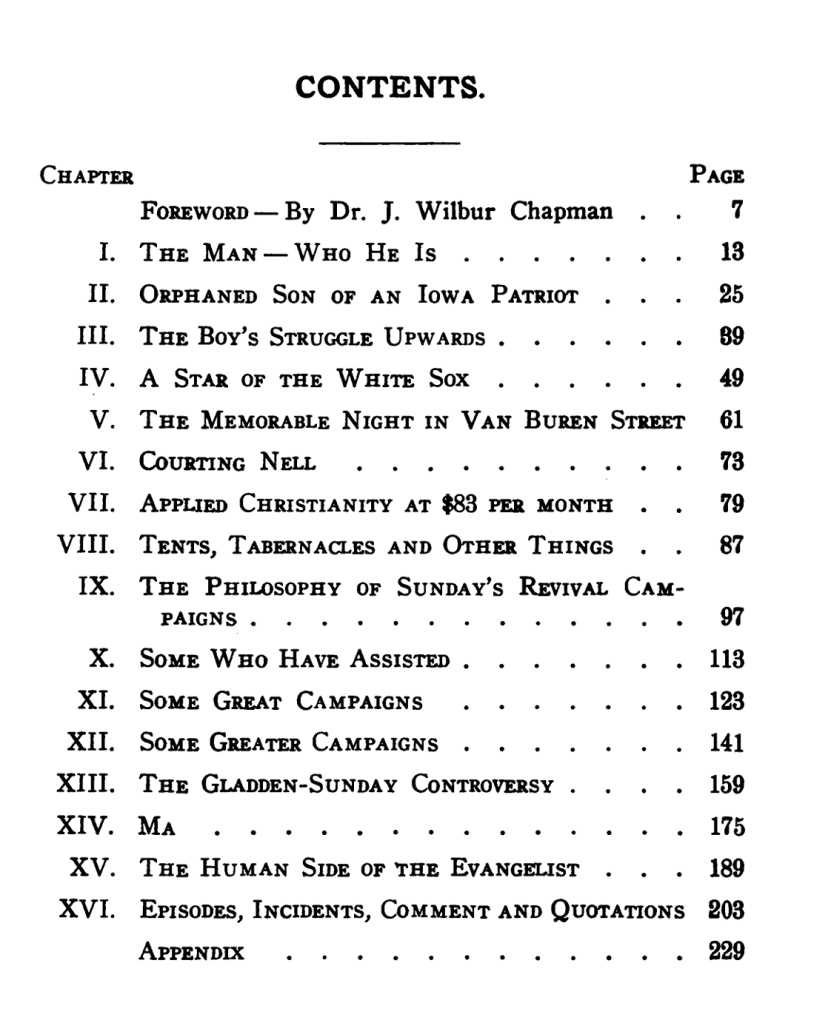
There are a few hundred books in the present Winona Lake home that Billy lived in for the last 30 years of his ministry. On the shelf, one can find A History of the American People, by Wodrow Wilson in the first edition (1902).

While Sunday’s authority came from Scripture, A History of the American People offered a grand, moral narrative of the United States that fit seamlessly with his revivalistic call: a chosen nation needing repentance and reform to fulfill its destiny. Wilson’s combination of national mission, moral urgency, and literary flair reinforced Sunday’s belief that evangelism and patriotism were inseparable in early-20th-century America.

Morgan Library at Grace College (Winona Lake) has several cards or notes in which Sunday and Wilson communicated together. They seemed to have liked each other.

What were some of Billy Sunday’s favorite author’s and books?

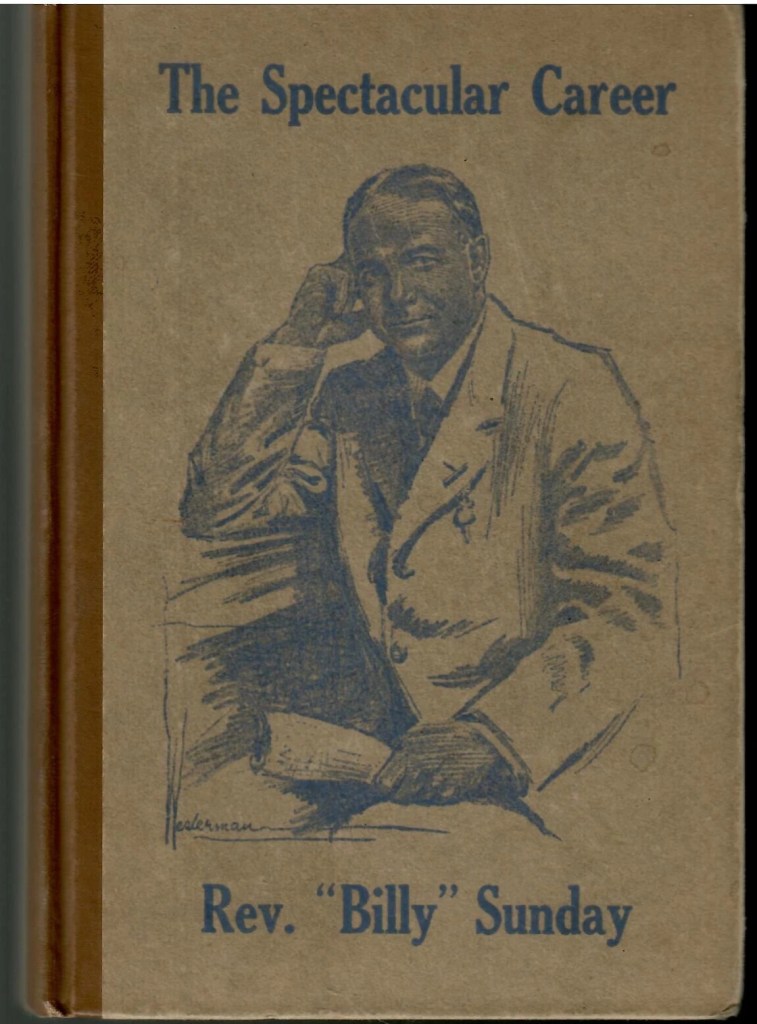
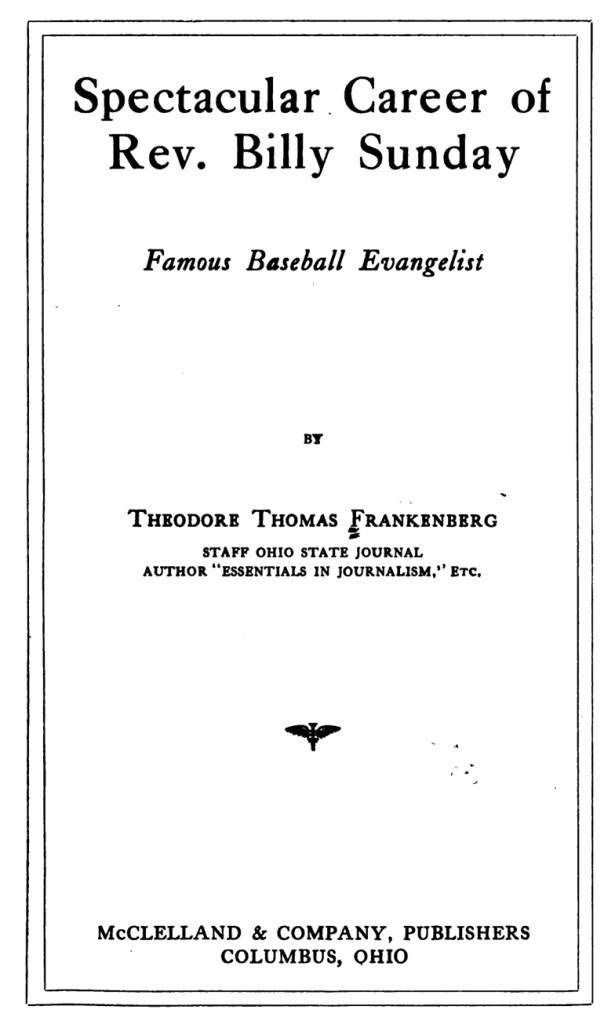
From Spectacular Career (198-201)

Mr. Sunday’s literary activities are carried on for the most part at Winona and sometimes at his fruit ranch in Oregon. The exacting demands on his time during a campaign admit of very little new work. At Winona it is his favorite method to take his Bible and spend the long days beneath the trees reading. This he calls resting and with the single exception of preaching to a responsive audience, is his favorite occupation. He is also fond of books relating to evangelistic and kindred work.

Books in the Billy Sunday home, Winona Lake, Indiana.

— “There are some books I like to read” he says, “I consider the Bible the best of them all. I also think the lives of Peter Cartwright, Charles G. Finney and John G. Paton are among the greatest of all books. Finney converted the owner of the New York mills at Utica, New York, and since he campaigned there, the mills have not been in the hands of non-Christian men.

He never goes into the pulpit with more than an outline before him. His extraordinary memory permits him to quote lengthy passages verbatim, but on this he does not rely for effect.

In comparing his sermons for use Mr. Sunday begins by noting various quotations and anecdotes which will illustrate the theme he wishes to handle. Notations of these are made on all sorts of scraps of paper and are then turned over to his secretary who shapes them into memoranda. Gradually the sermon takes form in the preacher’s mind and then with a great sheaf of notes in his hand he whips the whole into something like the form in which it will be used. Seldom if ever, however, are even his famous sermons preached twice exactly alike. He never goes into the pulpit with more than an outline before him. His extraordinary memory permits him to quote lengthy passages verbatim, but on this he does not rely for effect. It is in the infusion of intense personal enthusiasm that the most remarkable results from his discourses come.

In his earlier days Mr. Sunday made no effort to copyright any of his writings. What he considered unwarranted liberties with the text, however, later prompted him to do so, and in a little more than three years he copyrighted no less than 31 of his discourses.

The records of the Library of Congress show the following titles, copyrights of which are in his name:

Amusements.

And he said tomorrow.

Atonement.

Backsliders.

Behold, I stand at the door and knock.

Get on the water wagon.

Great reward.

Home.

Hope.

How shall we escape?

How to succeed.

If any man will.

If ye love me, keep my commandments.

Incarnation.

Is it well with thee?

Judgment.

Little plain talks—Character.

Moral leper.

Nathan and David.

No man cared for my soul.

Not far from the Kingdom.

Nuts for skeptics to crack.

Power of motherhood.

Question of the ages.

Samson.

Three great questions.

Three groups.

Twenty-third Psalm.

Unpardonable sin.

What must I do to be saved?

What shall the end be?

Title to one other copyright stands in the name of Mr. Sunday, this is for a book entitled “Life and Labors of Rev. Wm. A. (Billy) Sunday, the Great Modern Evangelist; With Selected Sermons.” It was copyrighted in the year 1908 by S. T. Herman and E. E. Poole; of Decatur, Illinois, and published by a printing establishment in Chicago.

The only feature of the book, which properly can be considered a life, are four pages of introduction. In the first paragraph of this introduction there are no less than five errors in fact, other portions of the meager outline are more or less at variance with actual conditions, although there is nothing to indicate any greater offense than carelessness.

The bulk of the 360 pages is taken up with reproductions of sermons. The readers of the book, if there be any, would have recognized whole pages of familiar expressions which he had heard in the tabernacle. The evangelist, however, more intimately familiar with the construction of all his works, finds that a number of his sermons were ruthlessly joined together and the entire continuity of thought disturbed.

Mr. Sunday, therefore, made it his business, at a considerable outlay in cash, to secure both the copy-right and the plates of the book, which he destroyed and effectively prevented any further issue. Copies are extremely rare and indeed none are known to exist outside of the Library of Congress. Thus ended the only previous attempt to put in book form the doings of the evangelist.

Billy Sunday was sued in 1918 about his book “Great Love Stories of the Bible.”

The Echo, Buffalo, New York

Thu, May 02, 1918 ·Page 1

ANOTHER SUIT AGAINST THE “REV.” BILLY SUNDAY

Man Who Wrote Book for Him Sues for $100,000 for Breach of Contract.

The Rev. William A. Sunday, the evangelist, was sued in the New York City Supreme Court last Wednesday by Hugh C. Weir of New Rochelle to recover $100,000 for breach of a contract, under which Weir alleges he wrote the series of “Great Love Stories of the Bible,” which appeared with Billy Sunday’s name as the author. Weir also alleges that under the agreement with Sunday he was to write “Billy Sunday’s Own Story,” and another series based on the Bible.

Weir says that he was to get 50 per cent. of the royalties on all the books except “Great Love Stories of the Bible,” for which Sunday got 60 per cent., out of which he was to pay 10 per cent. to a Bible historical authority for proofreading. Sunday was to advance $5,000 to Weir and collect out of the latter’s share of the royalties. The plaintiff also alleges that Sunday agreed to arrange for the sale of the books at all his meetings.

The complaint alleges that although a contract has been made with a reputable house for the publication of the books the evangelist has repudiated his agreement in all respects.

Mr. Sunday has served his answer in the suit, in which he admits that Weir collaborated with him in writing “Great Love Stories of the Bible,” but denies that he has broken any agreement made with Weir