Marshalltown, 1909: Home Turf, Hard Numbers, and a Blaze of Glory

April 25 – June 6, 1909
Marshalltown, Iowa

Fresh off a successful campaign in Springfield, Billy Sunday and his team rolled into Marshalltown in late April of 1909. This was not foreign soil. It was home turf.

Sunday had been raised in Iowa, shaped by its churches, and had even lived briefly in Marshalltown in the early 1890s while learning the mechanics of evangelistic work. By 1909 he returned not as an unknown ballplayer-turned-preacher, but as a nationally rising evangelist whose methods were becoming increasingly organized, efficient, and powerful.

Marshalltown was the right kind of proving ground. Large enough to sustain a six-week revival. Small enough to rally around one of its own.


The Setting: A City Poised for Revival

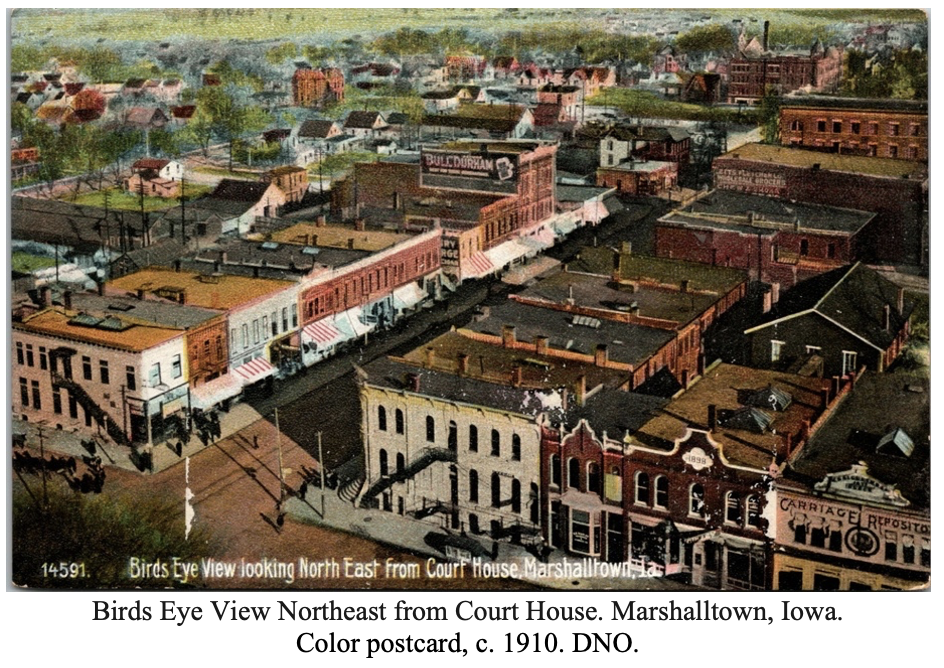
Marshalltown in 1910 had a population of 13,374—a fraction of Springfield’s 51,678. It was a growing industrial town, commercially strong, strategically located, and connected by rail. It was not metropolitan. But it was energetic.

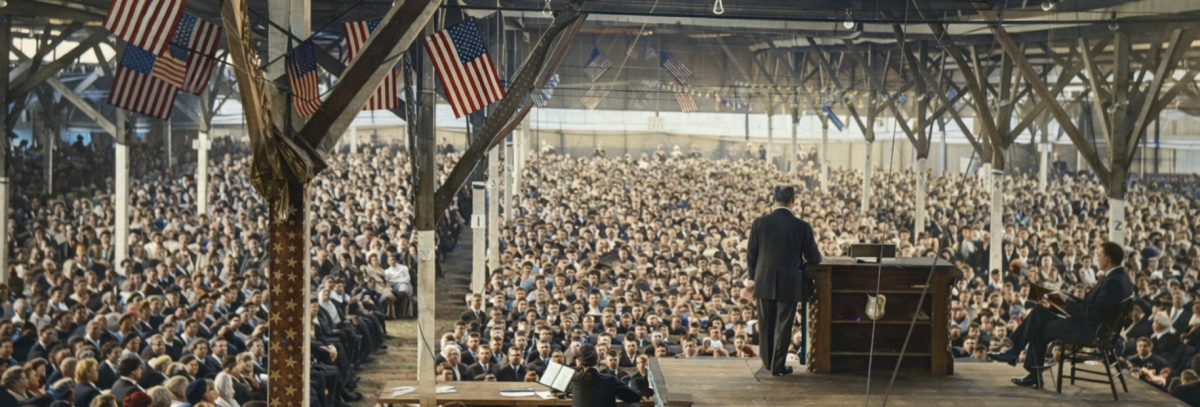
A wooden tabernacle was erected at the corner of Third and Main, seating 5,000. The Sunday machine was now running at full stride.

Opening night—April 25—saw over 12,000 people attend across all services. On the final day, June 6, Sunday preached to 13,200. In a town of just over 13,000 residents, that level of saturation is staggering.

By campaign’s end:

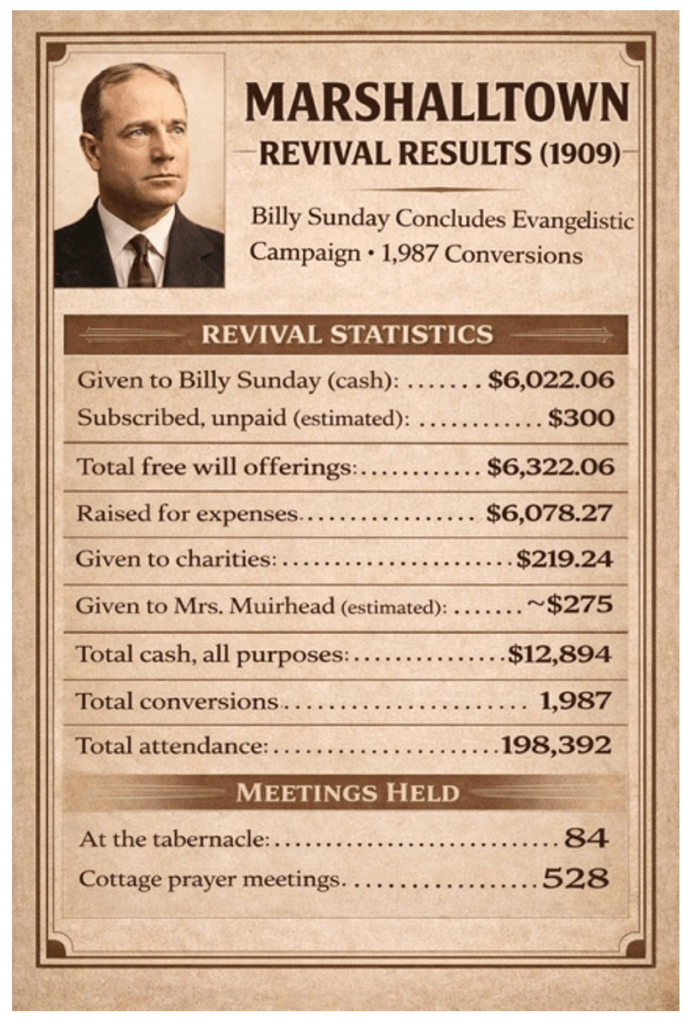
  • 2,000 total conversions (125 on the final day)
  • 84 tabernacle meetings
  • 528 cottage prayer meetings
  • Nearly 200,000 in total attendance

For six weeks, Marshalltown was consumed by revival.


The Money and the Machine

The final purse for Sunday was $6,139.
Total funds raised during the campaign reached $12,894.

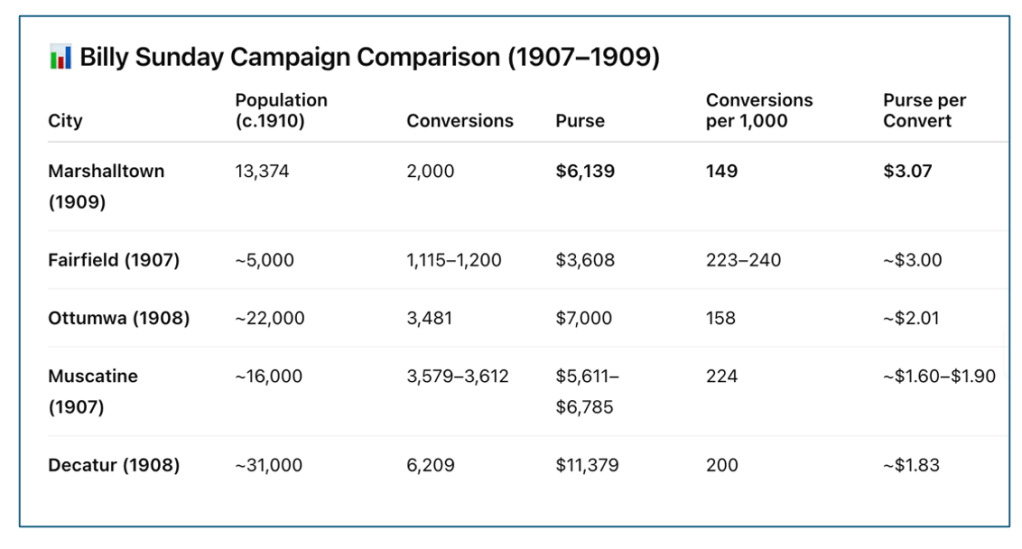
For comparison, that purse nearly matched Muscatine’s and approached Ottumwa’s from the previous year. Financially, Marshalltown demonstrated strong committee organization and enthusiastic backing. This was not a struggling campaign.

It was disciplined. Systematic. Mature.

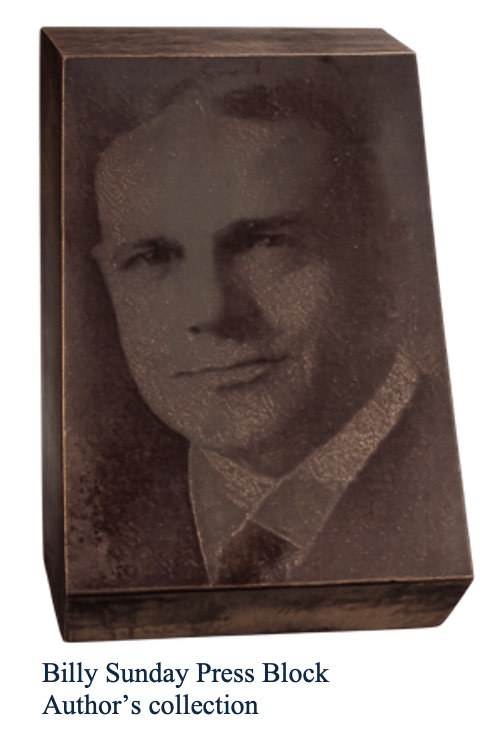
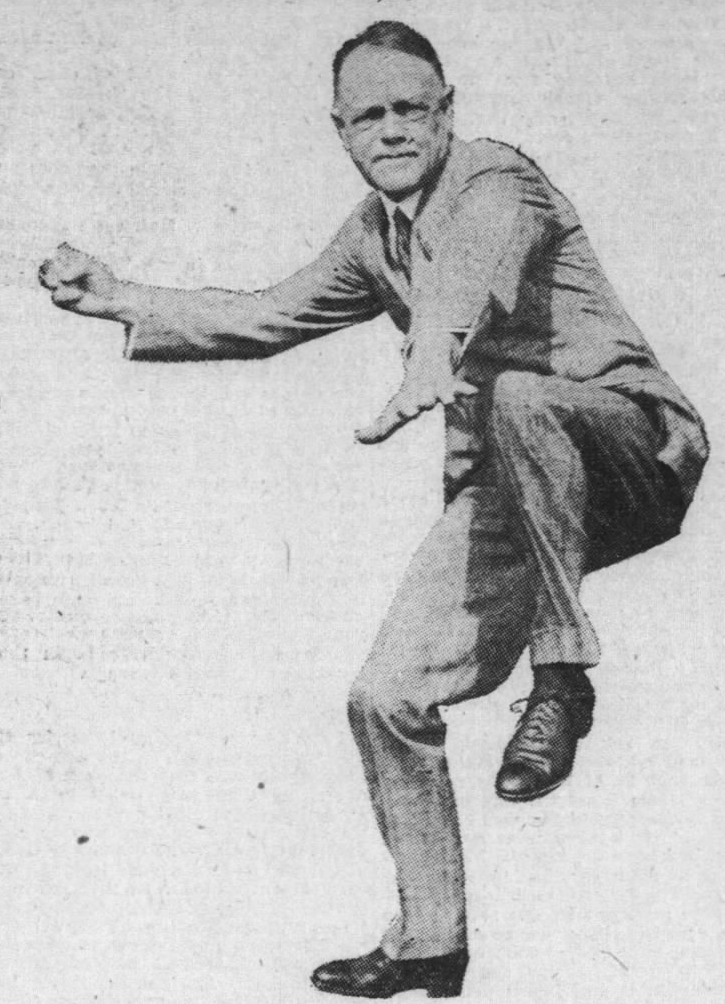
The press block used to print Sunday’s image during this period—now in my collection—reflects that growing sophistication. By 1909, Sunday was no longer improvising revivals. He was executing them.


Did Marshalltown “Underperform”?

One skeptical paper, the Davenport Weekly Democrat and Leader, suggested that Marshalltown’s results did not compare favorably with Fairfield, Ottumwa, Muscatine, and Decatur.

On the surface, that seems correct.

Measured per capita:

  • Marshalltown: ~149 converts per 1,000 residents
  • Fairfield: over 220 per 1,000
  • Muscatine: about 224 per 1,000
  • Decatur: around 200 per 1,000
  • Ottumwa: about 158 per 1,000

In raw totals, Marshalltown trailed Muscatine (3,579–3,612), Ottumwa (3,481), and especially Decatur (6,209).

So yes—the numbers were not dominant.

But numbers alone miss something important.


The Press: Praise and Pushback

The reaction was revealing.

The Audubon Republican declared the meetings closed in a “blaze of glory.” It reported over 500 cottage prayer meetings and said the town had been “thoroughly stirred up.”

The Marshalltown Evening Times-Republican went further, calling Sunday:

  • “One of the splendid prophets of the elder time…”
  • “One of the greatest revivalists in existence.”
  • “One of the plainest, simplest and happiest of men…”

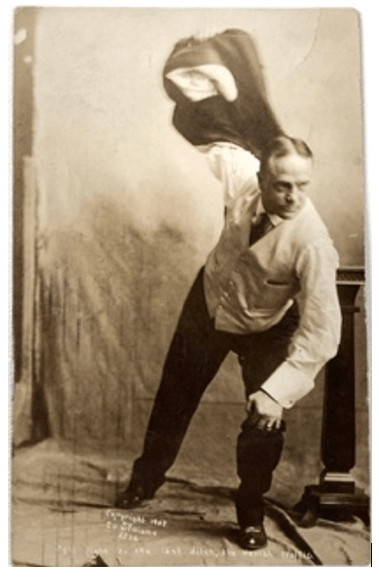
Meanwhile, the skeptical Davenport Weekly Democrat and Leader offered sharper commentary. It described Sunday as a “contortionist of uncommon ability” with “remarkable versatility,” while acknowledging the “magnetic power of Mr. Sunday.”

Its most fascinating observation was psychological:

“The psychology of it all is that the people who are not regular attendants at churches must be reached not as individuals but in mass. They like to be moved by each other; and it is probable that this explains the success Mr. Sunday attains. He is helped greatly by the excitement and the enthusiasm of the crowds…”

That critique reads today like an astute analysis of mass evangelism. It wasn’t merely preaching. It was momentum. Atmosphere. Collective energy.

Sunday understood something about crowds that many pastors did not.


What Marshalltown Really Proved

Marshalltown was not Sunday’s most explosive campaign numerically.

But it demonstrated something perhaps more important in 1909:

  • Massive attendance penetration in a modest city
  • Financial stability and strong committee structure
  • Organizational maturity (over 600 total meetings)
  • National press attention—positive and critical

Marshalltown proved that Sunday could saturate an entire city.

Critics were talking. Admirers were praising. Nearly 200,000 attendances in six weeks ensured that no one in town was untouched by the revival’s presence.

He was no longer just holding meetings.

He was creating civic events.


A Blaze of Glory

The revival closed the way many Sunday campaigns did—intense, loud, emotional, decisive. A blaze of glory.

Marshalltown may not have produced the highest per-capita conversion rate of his Iowa stops. But it stands as a revealing moment in his rise.

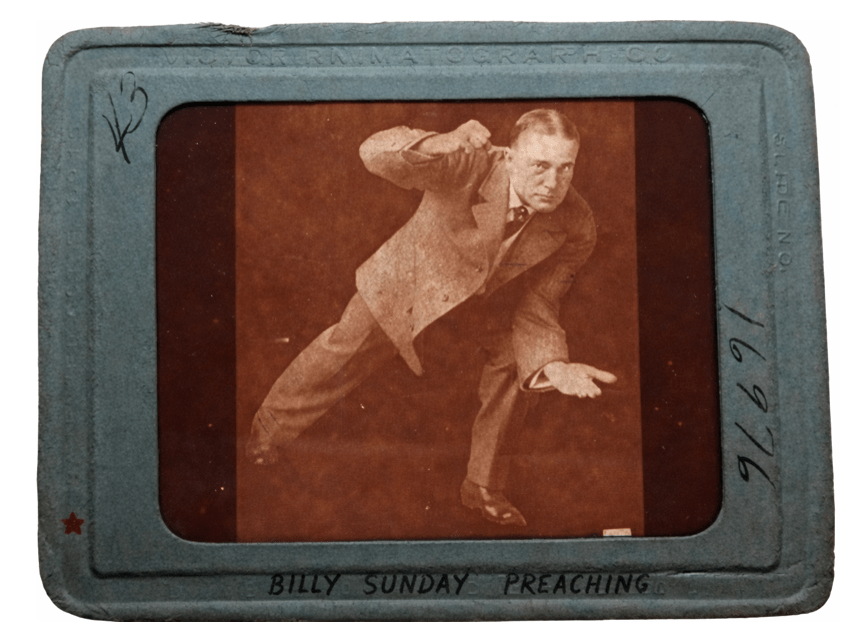
Magic lantern slide. Author’s collection.

By 1909, Billy Sunday was refining his method. The tabernacle system was humming. The prayer networks were mobilized. The press was watching closely.

And Iowa—his Iowa—was watching one of its own step onto a larger stage.

Marshalltown mattered because it showed that Sunday’s machine worked not just in isolated bursts, but in sustained, organized, city-wide saturation.

For a hometown son, that was no small thing.

Billy Sunday’s take on society (c 1907) in his day?

The following appeared in The Times (Streator, Illinois) · Sat, Jan 26, 1907 · Page 2

REV. BILLY SUNDAY DEFINES WHAT HE TERMS SOCIETY OF THE PRESENT DAY.

In one of his series of revival sermons at Kankakee Rev. William Sunday paid his respects to present day “society.” Following are a few spitballs that he tossed over the plate:

“I believe in Christian society, but nine-tenths of society is on the road to perdition.

Society’s going to hell at a rate that’s dazzling. Where will you find the sheriff or judges who dare arraign the rich law breaker?

What is the reason they, don’t? Damnable politics. Society is hastening to the judgment that overtook Pompeii and Herculaneum, and some time may be buried in cinders and ashes thirty feet deep. I don’t know what method God will use to purify society, whether it will be fire or pestilence or famine. The only law some people will recognize; is the law of their desires.

“If you people don’t turn from your cussedness, God will do something to stagger you. He’s done it before and don’t think that He won’t do it again.” Sunday then drew a lurid word pie-ture of a brilliant drawing room in which a number of society dames were drawn about, a card table playing progressive euchre, while a waiter served them frappe.

On the other hand he pictured the back room of a stale beer joint, where four blear eyed, vermin covered old soaks, without clothing enough on their backs to flag a hand car, played penny ante for a jack pot of a few greasy old pennies.

“I fear that cursed gang of society more than I do all the town loafers in that beer joint.” shouted the speaker.

“There’s where your boy matriculates.

Here’s where he graduates. There’s where he backs out of the yard.

Here’s where his ticket is punched on the last division to hell.

“Society’s all right, lodges are all right, clubs are all right; but don’t think that’s all. I pity those whose visions are bounded by soups, frappes, and their Falstaffian appetites. I respect more one God-fearing, sox, darning old mother in Israel than a train load of good for nothing, gum chewing fudge eating, sizzle headed eissies who sit down and play rag time all day.”

And here the speaker gave a side-rending interpretation of a rendition of two popular rags.

“What America needs is not more railway extension and a lower tariff and a bigger wheat crop, but a baptism of the oldtime religion.”

The Times (Streator, Illinois) · Sat, Jan 26, 1907 · Page 2

Billy Sunday’s methods? An American Product

“Billy Sunday is an American Product – Where methods differ

More Lasting Good.

The old school of revivalists were of the itinerant class, moving rapidly through the country, their evangelism seemed sudden in its effect and I am afraid somewhat evanescent in its general results. It is just here that Mr. Sunday’s campaign gives promise of more lasting good. His coming has been carefully prepared for, his meeting place is undenominational in character. It is a movement conducted with great business acumen and sound common sense. He trains the ministers and church workers in such a way as to make them capable of caring for the harvest when it comes. Like a good farmer, he prunes the fruit trees with vigor cuts out all the dead wood and sprays them well to get rid of moths, beetles and canker worms, so that when the new fruit shall ripen it will be sound and beneficial. And the leaves of the trees shall be for the healing of the nations. Mr. Sunday is a man endowed with a great faith, He prays for the blessing, he prepares for the blessing, he is sure of getting it and it is therefore no surprise that he is so eminently successful.”

Time-Republican. Thur, Mar 05, 1914 ·Page 10

$10,000 Raised In Ten Minutes for Negro YMCA – Atlanta 1917-1918

“Atlanta, Jan. 1.—Ten thousand dollars raised within ten minutes by white citizens of Atlanta yesterday assures the negroes of this city success in completing their Y.M.C.A. building. The white people are pledged to raise another ten thousand if necessary. A fifty thousand dollar fund was needed to obtain the gift of $25,000 from Julius Rosenwald. C.W. McClure made a donation with the statement that the friendly relations between the whites and the negroes were better than ever since Billy Sunday preached to both.”
Jan 1 paper

In the waning days of 1917, as Atlanta turned the page to a new year, a remarkable act of interracial philanthropy unfolded that would leave a lasting mark on the city’s history. Newspapers reported that ten thousand dollars had been raised in just ten minutes by white citizens of Atlanta to help fund a new YMCA building for the city’s Black community. The drive was part of a larger campaign to secure a matching gift of twenty-five thousand dollars from Julius Rosenwald, the Sears, Roebuck & Co. magnate whose generosity was transforming African American education and social life across the South. Local businessman C.W. McClure, who helped spearhead the effort, remarked that the relations between whites and Blacks in Atlanta had improved markedly since evangelist Billy Sunday had preached to both communities during his campaign there.

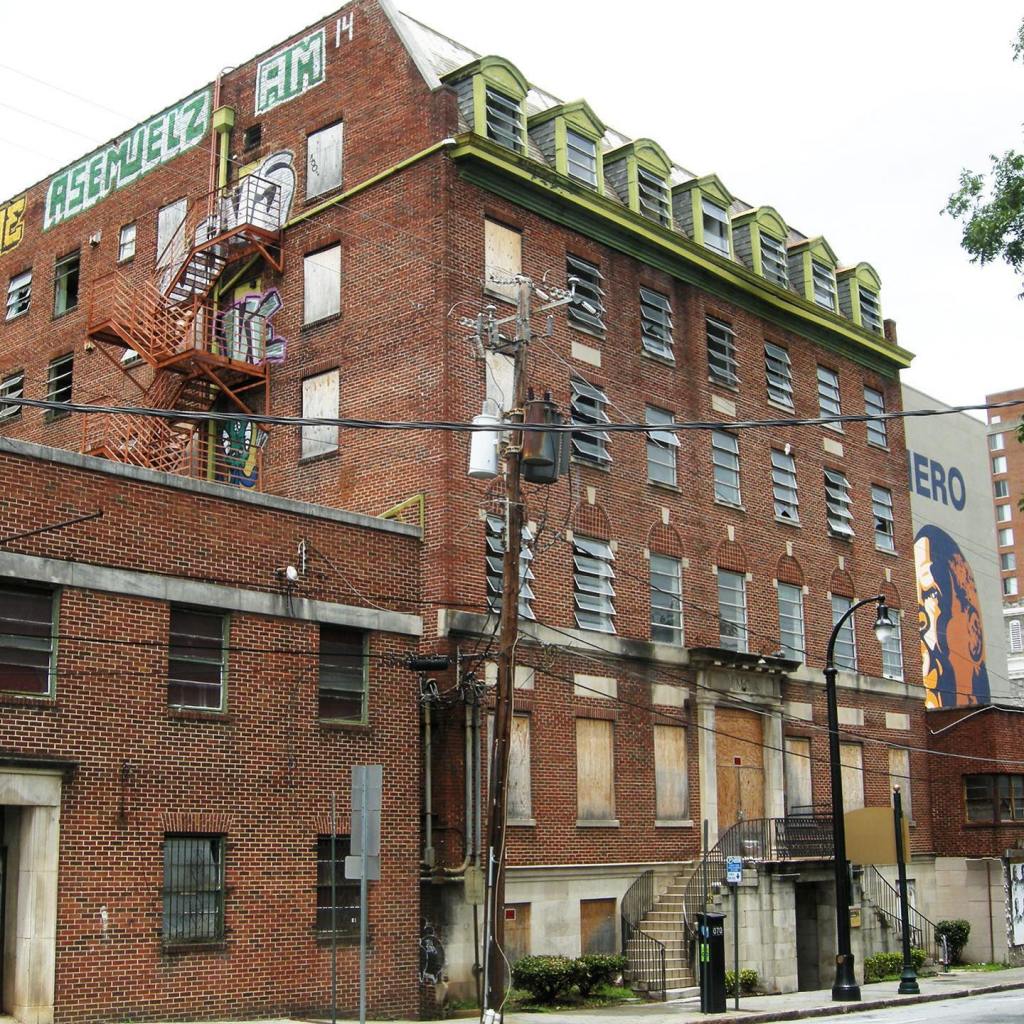
The fruits of that campaign materialized in the Butler Street YMCA—known in its day as the “Negro Y.” Built between 1918 and 1920, the new structure rose in the heart of the Sweet Auburn district, the beating center of Black enterprise and culture in Atlanta. The project followed Rosenwald’s signature pattern: a challenge grant that required local citizens—both white and Black—to raise the balance. The local enthusiasm kindled by Sunday’s revival evidently carried over into civic generosity, helping to meet the $50,000 goal needed to unlock Rosenwald’s contribution.

The Butler Street YMCA quickly became one of the South’s most important centers of African American life. Designed by the firm Hentz, Reid & Adler and built under the direction of Black contractor Alexander D. Hamilton, the facility was impressive for its time—three stories of brick and stone housing a swimming pool, gymnasium, dormitories, meeting halls, and classrooms. It provided a wholesome environment for young men seeking moral and social uplift in a city that offered them few such spaces.

More than a recreational facility, the Butler Street Y grew into a cornerstone of civic and spiritual leadership. Over the decades it came to be known as the “Black City Hall” of Atlanta, hosting meetings that shaped the course of civil rights and community advancement. Figures such as Martin Luther King Jr., Maynard Jackson, and Vernon Jordan would later pass through its doors. The Y stood as a living emblem of what cooperative goodwill and faith-inspired philanthropy could achieve during an era when segregation still divided the city.

The 1918 campaign that launched the Butler Street YMCA was more than a fundraising victory. It was a moment when revival energy turned outward—when the social conscience stirred by Billy Sunday’s preaching translated into practical generosity. In helping to fund the YMCA, the people of Atlanta built not only a structure but also a bridge between communities, one that carried forward the spirit of reform, service, and reconciliation that Sunday’s message had kindled. The Butler Street Y remained for nearly a century a monument to that brief but luminous cooperation—a place where faith met action and where the legacy of revival took tangible form in brick, mortar, and hope.

Butler YMCA, image from their Facebook page

Billy Sunday favored women’s suffrage.

BILLY SUNDAY IS FOR SUFFRAGE FIRST, LAST AND ALL THE TIME

Woman suffragists ought to like Billy Sunday.

“Do you favor woman suffrage?” he was asked the other day.

“Why not?” he hurled at the reporter just as though the latter were an “anti.”

“I don’t know,” murmured the representative of the press, in a tone measured to encourage Mr. Sunday to a further discussion of the subject. And Mr. Sunday was quite willing to talk about it. And talk he can on any subject.

He launched into one of the most picturesquely worded and one of the most emphatic indorsements of woman suffrage that its most ardent supporters could ever wish to have, “Why shouldn’t women have the franchise? They are as worthy of it as the men,” was the substance of what he said.

There are 6,000,000 women and girls working for a livelihood in this country, he statistically declared to the reporter.

He urged that the working woman fills an important place in the industrial and business life of the country.

“Take them out of the offices, mills, factories and stores, and you’ll miss them quickly enough.” These 6,000,000 women so engaged were advanced as one of Mr. Sunday’s reasons for granting the franchise to women.

All an interviewer of Mr. Sunday can hope to do is to get impressions. In answering one question he said enough interesting things on the equal suffrage question to fill a small volume. He invented enough aphorisms and sprung enough epigrams to make an issue of Elbert Hubbard’s Philistine look like a mere sample package.

If you go to interview Mr. Sunday take the best stenographer in the state with you. No, take two or three. Mr. Sunday uses words with exceeding celerity. He confessed that he could use as many as 350 a minute. The interviewer gained the impression that he was trying to break the speed limit yesterday.

“There’s only one stenographer I have known who could get my speeches in full,” he said, “and he missed one word in ten.”

The South Bend Tribune. Thu, May 15, 1913 ·Page 9

Billy Sunday believed (c 1913) that the Y.M.C.A. was drifting from its core mission

Y. M. C. A. Drifting Away.

“They are fighting and talking about the needs of an institutional church, they are having gymnasiums and socials. But don’t forget the fact that salvation is the prime end of everything. I don’t object to the gymnasium and all such things if they make them a means to an end. But remember that salvation of the soul is the end which we need. That is what is the matter with the church to-day, she is losing sight of that one fact. The Y. M. C. A. is drifting away from what it used to do for the people. I don’t object to the Y. M. C. A. I don’t object to gymnasiums. I do object when they make that the prime thing, putting in pool tables and such things. The church and the Y. M. C. A. and the Salvation Army are getting away from the fact that the salvation of the soul is the supreme end. I want to see the salvation of the soul the supreme end of the world.”

Citation: The South Bend Tribune. Sat, May 03, 1913 ·Page 12