Stories of three other Evangelists: predecessors to Billy Sunday

The Ways and Works of Moody, Gypsy Smith and Chapman—Men Whose Methods Were as Different as Their Personalities.

By WILLIAM RADER

Cited in: The Philadelphia Evening Ledger. January 8, 1915:8.
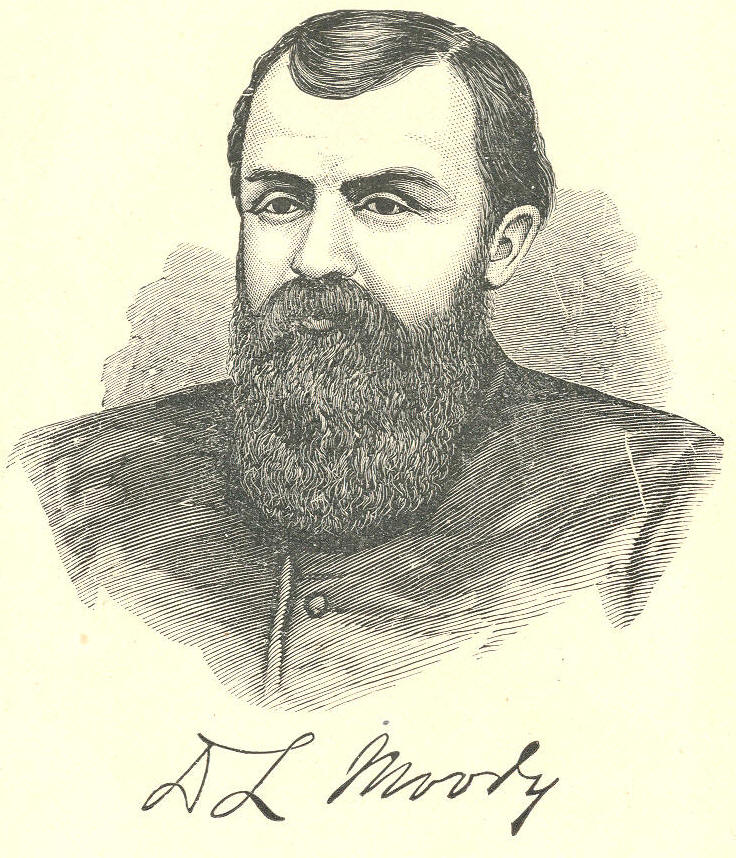

DWIGHT L. MOODY sleeps on Round Top, at Northfield, Mass. A few miles away, in Swanzey, N. H., is a simple shaft which marks the grave of Denman Thompson, of “The Old Homestead.” It is probable that the two men never met, but they were not unlike in appearance. Both were big, hearty Americans with good appetites, warm hearts and filled with loving kindness. The one spoke fiction on the stage as if it were truth; the other—to repeat a thought of Garrick—spoke truth on the pulpit as if it were fiction.

When Moody was a clerk in a Chicago shoe store, he became interested in religion through Dr. Edward N. Kirk and Edward Kimball. Without college or theological training, he began his great work and preached the gospel throughout the English-speaking world.


In the Old Pennsylvania R. R. Depot

One of his notable campaigns was in Philadelphia. The meetings were held in the abandoned freight depot of the Pennsylvania Railroad, used afterward as the Wanamaker store. The building was provided with seats to accommodate 10,000.

A striking incident of Moody’s Philadelphia campaign was the meeting set apart especially for intemperate men and women. His tender appeal to that assemblage is still remembered by Philadelphians who heard him.

Singing helped the preaching of Moody. The songs of Sankey grew to be as famous as the sermons of Moody. A hymnal was published which caused Moody and Sankey much trouble, since it was reported that they received royalties from the sale. Certain watchdogs of the moneybag believe that the blackest sin on the calendar is for a preacher or evangelist to make money. Every evangelist must make it plain that he is not a grafter.

Mr. Moody was the greatest evangelist-preacher of his generation. He did not use the best grammar, but he had common sense. Who could forget his sermons on “Sowing and Reaping,” “The New Birth” and “Repentance”?


Everybody Sing!

There was no claptrap in the Moody method, no straining for effects, but conviction, point and directness, and irresistible persuasiveness. He did not shatter the icicle of sin with well-directed aim, but melted it with words hot with a passion for redemption.

The first time I heard Moody he did what I thought at the time a sensational act. It was in Tremont Temple, Boston. Anxious to see him, as a student at Andover, I went early and took a seat near the front. The big choir on the platform was being trained while the people gathered. An old gentleman sat on one side of me, a lady the other. Moody soon appeared. He was announced by a man reading a paper in the audience, and asked him to put it away and join in the singing. “Everybody sing!” he shouted. “Everybody get a book!” He announced a hymn, but the singing was very unsatisfactory, and he had the people sing it over several times. Seeing I had no book and showing annoyance, he took fair aim and threw a hymn book as straight as a bullet at me. It took me in the stomach, and I think it raised me about two feet from the pew, but my consternation was no whit greater than the surprise of those who sat with me. We were strangers, but we all sang out of the same book, and Moody from that moment was an acknowledged master.

He was a man-finder. He discovered Henry Drummond and introduced him to the American people. He found a great preacher in Campbell Morgan, of London, and made him at home in the American pulpit. He took keen interest in liberal and conservative.

The Northfield conferences, which continue to this day, furnished an opportunity for testing the mettle of promising men in England and this country. A number enjoy an international reputation who owe their start to the insight of Mr. Moody.

He was a builder of institutions. The Y. M. C. A. work throughout the country was assisted by him. He raised great sums of money for the work. The Mount Hermon schools for young men and women are one of his memorials. His evangelistic work reached its zenith in his British campaign and at the World’s Fair in Chicago.


The Stolen Overcoat

The last time I heard Moody he made an impassioned plea in behalf of criminals and prisoners, and while he was making it an ex-convict stole his valuable new overcoat. It was a study in practical theology to observe the effect of this disappointment upon the great preacher, who, while furious at first, finally submitted to the inevitable with grace that an evangelist is supposed to possess.


Gypsy Smith is one of my favorite evangelists. He is a full-blooded gypsy, swarthy skin and beautiful brown eyes. Socially he is “a hail fellow well met,” one of the ripe fruits of the Moody-Sankey British campaign. He has a sense of humor and a wit that is irresistible. His voice is musical, and it is a treat to hear him sing.

Gypsy Smith uses faultless English. I asked him how he acquired this gift of English diction, and he said that after leaving the gypsy camp he was placed in a refined English home, where he heard the best grammar. If you have ever heard Gypsy Smith’s great sermon on “With the Stripes” you have listened to a discourse that has all the qualities of great preaching.


A Cultivated Gypsy

He is the perfect gentleman on the platform, winsome, attractive, eloquent, cultured and sympathetic. As a maker of sermons he has no equal. His breadth of scholarship, depth of feeling and height of intellectual reach make him a superior man in the field of higher evangelism.

Rodney is his real name. He is of the Tachine Roman gypsy tribe, and his mother was a fortune-teller. The life in the tent has enriched his imagination, given him a strong body and aided him in living a clean, pure life, and not since the day John Bright has any man appeared in England who has more perfectly revealed the possibilities of Anglo-Saxon speech.


J. Wilbur Chapman was a Philadelphia pastor. For some years he was the pastor of Bethany Presbyterian Church; then he became a world evangelist.
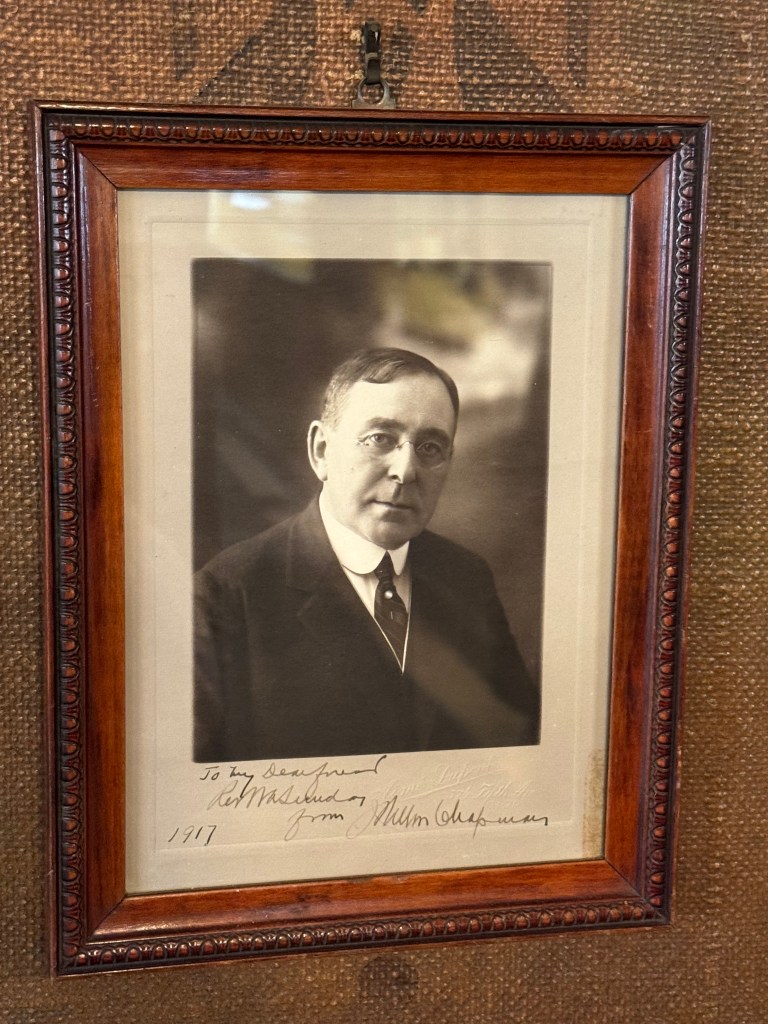
Picture of Chapman inscribed to Billy, hanging in his Winona Lake home.

Doctor Chapman’s approach to the masses may be likened to the sun eating its way through a snowdrift. Here is a quiet, modest, devout man who takes a passage of scripture and illuminates it with his interpretations. His sermons search and reach as the leaven works its way through a meal. Doctor Chapman is not the sort of man who creates a big furore, though his campaign in Australia and Great Britain made a profound impression. He is unostentatious, with a charming modesty, intense in his mission, with deep convictions, while a man of sweetness and light, is on occasion a real son of thunder.

The popular response to evangelists is a matter which compels a study of the human mind and of the organized preparation of every great evangelistic effort. The multitudes do not fill large tabernacles to hear a man talk, but to hear him talk about religion. The sea of public feeling is tossed while wave crests and eddies by emotional religion. It is a question whether these men could gather such crowds to listen to a lecture on Browning or Shakespeare. I believe that if the press and literary men should back the movement Rudyard Kipling or Bernard Shaw or Theodore Roosevelt might fill for a period of time a vast audience discussing a literary or secular subject.


Doctor Wanted

It must be conceded, however, that men are interested in matters which concern their destiny. Wicked men have a strange desire to hear a good man denounce them; people—most of them—like to see the dog.

All men have spasms of goodness; aspiration loves company. A man with a rope on a stormy sea will have no trouble attracting attention. Perhaps the attitude of the public toward the evangelist is best illustrated by the scene on the Atlantic when it was sinking. Jews, Catholics, Protestants and skeptics gathered in the cabin. Moody, with one arm clasping the pillar, read the 91st Psalm. Then he went to his berth and fell asleep. Men who give help and comfort will have the multitude, for people are sheep—they follow a shepherd.


DEFIANCE

Let life its legioned army throw
Against my pennoned castle walls,
With curse and jibe and bitter groan
Its band of lowly seneschals;

But when the dust of conflict blows
And sounds the bugle o’er the lea,
They shall not find me fallen, dead;
They shall not kill the love in me!

Tho stained with blood of bleeding heart
Up in the ramparts’ evening breeze,
My banner floats the same as yore
Above the brooding cypress trees.

The sun has set; the shadows fade;
The night comes silent from the sea;
They shall not find me fallen, dead;
They shall not kill the love in me!

—Alonzo Harbaugh, in New York World

Billy Sunday’s Mouth: In Defense of a Preacher Who Talked Like That

I was not prepared for the switchblade.

I had been reading Billy Sunday’s sermons for months — the atonement, the heaven imagery, the careful anti-moralism arguments — and I thought I had a reasonable handle on the man. Earnest. Urgent. Theologically sharper than his reputation. Then I hit a passage where he turned on his critics, and I actually laughed out loud in my study.

“You little two-by-four whisky-soaked fellows who can’t earn $10 a week and turn up your nose at religion. It is beneath you to be a Christian. It would lower your manhood. You are a fool.”

That’s not pastoral. That’s not even particularly civil. That is a man who has been called a vulgarian so many times that he has decided to demonstrate exactly what vulgarity looks like when it is aimed at the right target. And his critics — the educated, the respectable, the comfortably pewed — were exactly the right target.

The criticism of Sunday’s language is old and persistent. He talked like a street fighter. He invented words (“foolosopher” remains my personal favorite — philosophy plus fool, a portmanteau that dismisses two thousand years of Western skepticism in four syllables). He called Napoleon, Caesar, and Hannibal “old ginks who used to juggle power and men’s lives.” He described a wife-beater as “whisky-soaked, hog-jowled, weasel-eyed, pug-gut.” He told an old infidel that his ideas could go “to perdition.” He rendered the newsboy’s voice in four consecutive street slang terms without pausing for a breath.

The critics heard all of this and said: undignified. Unbecoming. Unworthy of a pulpit.

They were not entirely wrong. I’ll get to that.

But they were mostly wrong. And the way they were mostly wrong is the more interesting story.

What the Criticism Gets Right

There are moments — I counted them carefully across forty-five sermons — where Sunday reaches for a contempt word in a place where an argument should have gone. When he calls the participants of the 1893 Parliament of Religions “mutts like Hindus, followers of Zoroaster,” he is not engaging with religious pluralism. He is dismissing it. The slang is doing the work the reasoning should do, and the reasoning is absent.

That is a real weakness. The book I’m writing will name it without flinching.

There is also a genuine risk when the compound insult strings get long enough to become funny. “Whisky-soaked, hog-jowled, weasel-eyed, pug-gut” is objectively hilarious. And a sentence that makes the congregation laugh at the image may not be making them feel the gravity behind it. When the rhetoric is entertaining enough to applaud, it is sometimes too entertaining to convict.

Fair point. Conceded. Moving on.

What the Criticism Gets Wrong — Which Is Most of It

Here is what I kept noticing as I worked through the transcripts: Sunday’s slang has a targeting system. The compound insult strings are almost never aimed at the repentant, the struggling, or the socially marginal. They are aimed at the powerful who abuse the vulnerable, at false systems dressed in religious clothing, and at the self-righteous who use respectability as a hedge against grace.

The “whisky-soaked, hog-jowled, weasel-eyed, pug-gut” compound? Applied to a man beating his wife and children while invoking his personal liberty. The contempt tracks the abuse. Sunday’s critics — themselves largely comfortable professionals — heard the language as a class issue. The primary sources suggest it was a moral issue.

Then there is the street dialogue, which his critics consistently conflated with Sunday’s own voice. When the Chicago newsboy delivers four authentic period slang terms in four lines — “Aw, gwan with you, you big mutt” / “not on your tintype” / “Boss, I’m from Missouri, come across with the dough” — Sunday is not preaching in slang. He is reproducing a voice. Any novelist would claim the same distinction. Sunday had been a YMCA street worker in Chicago. He knew what newsboys sounded like. That precision is not vulgarity. It is observation disciplined into art.

And here is the thing about “foolosopher” that I want the critics to reckon with: it is not Sunday’s substitute for an argument against philosophical skepticism. It is the verdict at the end of an argument he has already made — a careful working-through of the internal contradictions of Enlightenment rationalism. The slang is the conclusion. Critics who read it without the preceding argument are reading a partial text and declaring a whole verdict. That is not criticism. That is a setup.

The Critics Themselves

This is where it gets interesting to me personally.

The people who criticized Sunday’s language most loudly were almost entirely drawn from the educated professional class and liberal Protestant clergy — the same people Sunday called out for preaching “deodorized, disinfected sermons” that had removed everything offensive from the gospel, including the offence of the gospel itself.

They heard “foolosopher” and “hog-jowled” from a pulpit and called it vulgarity. Of course they did. Their entire formation had taught them that elevated subjects require elevated language.

Sunday’s actual audiences — factory workers, railroad employees, domestic servants, immigrants still learning English — heard something entirely different. They heard recognition. The street slang was not a barrier between them and the theological content. It was the door through which the content entered.

Sunday was not preaching to the educated class and failing. He was preaching to everyone else and succeeding. That distinction matters enormously when you are evaluating whether a rhetorical choice was a failure of decorum or a brilliant act of pastoral intelligence.

The Passage I Can’t Shake

In “I Find No Fault in Him,” Sunday paraphrases Matthew 23 — Jesus’ scorched-earth denunciation of the Pharisees — in period vernacular:

“You miserable old lobster. You’re a fine bunch of guys, the way you skin widows. You sanctimonious rascals, you’re like a sepulchre — nice outside, but inside rotten. The whole bunch of you ought to be in jail.”

Every time I read that I think two things simultaneously. First: that is reckless. Second: that is exactly right.

Matthew 23 is not a pastoral nuance passage. It is white-hot prophetic fury directed at religious respectability weaponized against vulnerable people. Most formal translations preserve the dignity of the target along with the words of the rebuke. Sunday’s vernacular strips the dignity away — which is, arguably, precisely what Jesus was doing.

Is that good homiletics? I’m genuinely not settled on it. What I’m settled on is this: it is not a failure of register. It is a translation decision. And the question worth arguing about is not whether Billy Sunday talked like that — he clearly did — but whether talking like that was, for his specific audience in his specific moment, an act of faithful proclamation.

The trail responses documented across his campaigns suggest it was.

Billy Sunday talked like that. And the people he was talking to — not the critics in the press gallery, but the people in the seats — heard him.

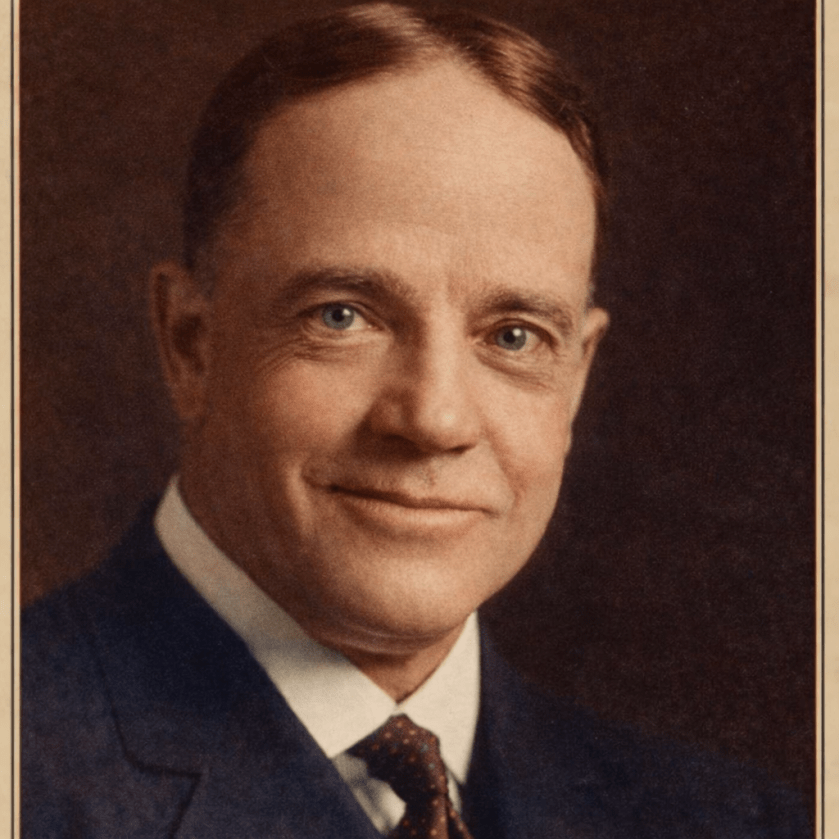
When is a revival needed? – Billy Sunday

Colorized picture from 1915. This was Billy’s favorite picture at the time.

“A revival is needed when the worldly spirit is in the church of God. It isn’t necessary to do something grossly inconsistent. A ship is all right in the sea, but all wrong when the sea is in her. The church of God is all right in the world, but all wrong when the world is in the church. Some people come to church on Sunday morning and on Monday morning they take a header into the world and the church never sees them again until Sunday morning. They squat and take up a little space in the pew and stay there and put a little money on the plate, but you never see them again until Sunday morning. I tell you, I believe half of the church members could die and the church wouldn’t lose anything of its spiritual force; it would lose them in numbers, but it wouldn’t lose anything in spiritual power.

I tell you, my friends, we need a panic in religion; the world don’t need informing; it needs reforming. We are going to the devil over culture clubs, as if the world needed informing; it don’t need anything of the kind. There are people who go to church and go to a certain denomination because their wife goes there. They got their religion and their property in their name. They go to that church.”

Cited in: Philadelphia Evening Public Ledger. January 6, 1915:6.

From a sermon on A Defense of Revivals, from Habakkuk 3:2. January 5, 1915. Philadelphia.

His power: what is it?

Cited in: The Philadelphia Evening Ledger. January 5, 1915:5. – William Rader

Billy Sunday is not easily defined. Power conceals its secret. Psychologists would call it hypnotism; theologians, the power of the spirit; the ethical teacher, the gift of truth; the dramatist, the art of the player; while others declare:

His strength is as the strength of ten,
Because his heart is pure.

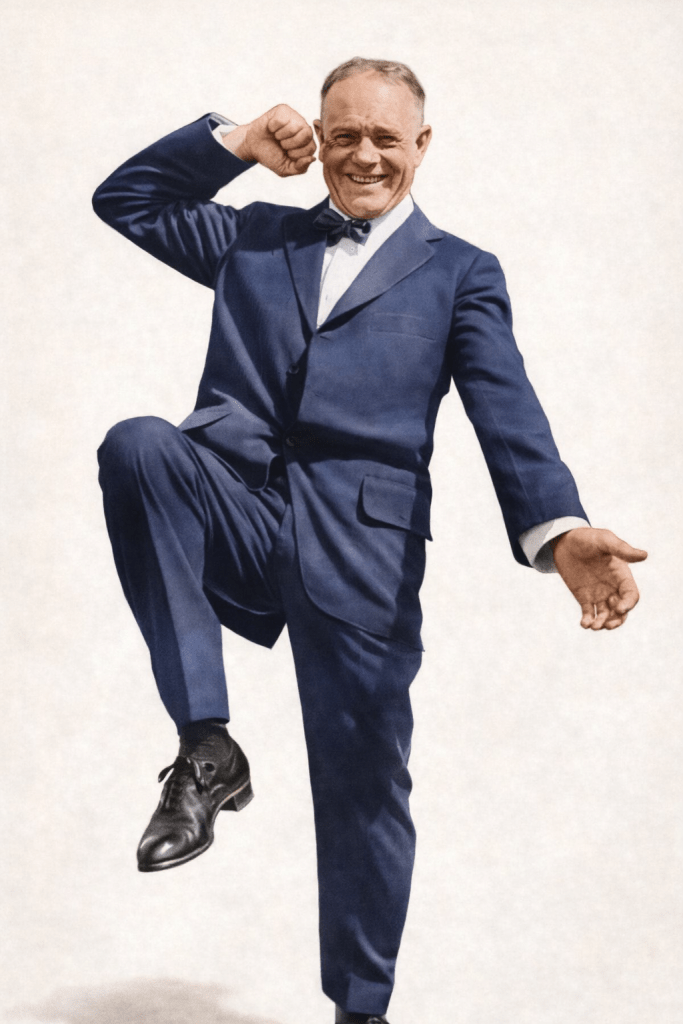
Billy Sunday is a good actor. Each sermon is carefully prepared, and some of it read from manuscript. Certain climaxes are illustrated. At one point he slides to a base; at another, kneels, or leaps upon the pulpit desk, or smashes a chair to pieces. Edward Everett did not more carefully prepare a speech with its proper gestures than does this evangelist build his sermons. The local color with which he decorates his main thought is taken from the city in which he speaks.

His imagination interested me. Speaking on “The Grenadier,” the consideration of his theme invited the use of the imagination, and he gave it full play. The sermon was an application of military attributes to practical life, a rebuke to the “wind-jammer” of the prayer meeting, and an appeal to the man who has taken an oath to be good to go out and honor it. He assailed the “saphead” who criticises the Church, and the description he gave of Daniel in the lion’s den and of the head of John the Baptist on a charger will not be forgotten.

I confess to a liking for his so-called slang. Most of it is plain English with a punch in it. It is the punch which preachers and editors and people who use words generally lack. Words are like shot, made to strike, and especially when used to influence great bodies of people. It is refreshing to hear a man say what he thinks and say it as he pleases—a thing most public men signally fail to do.

What a revival does? – Billy Sunday

Cited in: The Evening Public Ledger. January 5, 1915: 5.

“What is a revival? Now listen to me. A revival does two things. First, it returns the church from her backsliding; and, second, it causes the conversion of men and women; and it always includes the conviction of sin on the part of the church. What a spell the devil seems to cast over the church today!

“I suppose the people here are pretty fair representatives of the church of God, and if everybody did what you do there would never be a revival. Suppose I did no more than you do, then no people would ever be converted through my efforts; I would fold my arms and rust out. A revival helps to bring the unsaved to Jesus Christ.

“God Almighty never intended that the devil should triumph over the church. He never intended that the saloons should walk roughshod over Christianity. And if you think that anybody is going to frighten me, you don’t know me yet.

“I will cram it down their throats in this town for the miserable lies they hurl against me up and down the streets of this city. Don’t you forget it. You bet your life. You bet, and they will get it.

“When is a revival needed? When the individuals are careless and unconcerned. If the church was down on her face in prayer they would be more concerned with the fellow outside. The church has degenerated into a third-rate amusement joint with religion left out.

“When is a revival needed? When carelessness and unconcern keep the people asleep. It is must the duty of the church to awaken and work and labor for the men and women of this city as it is the duty of the fire department to arouse when the call sounds. What would you think of the fire department of Philadelphia if it slept while the town burned? You would condemn it and I will condemn you if you sleep and let men and women go to hell. It is just as much your business to be awake. The church of God is asleep today; it is turned into a dormitory, and has taken the devil’s opiates.”

HIT TYPEWRITER KEYS FOR PASTOR; THEN “HIT TRAIL”

Cited from: The Philadelphia Evening Public Ledger. January 2, 1915:3.

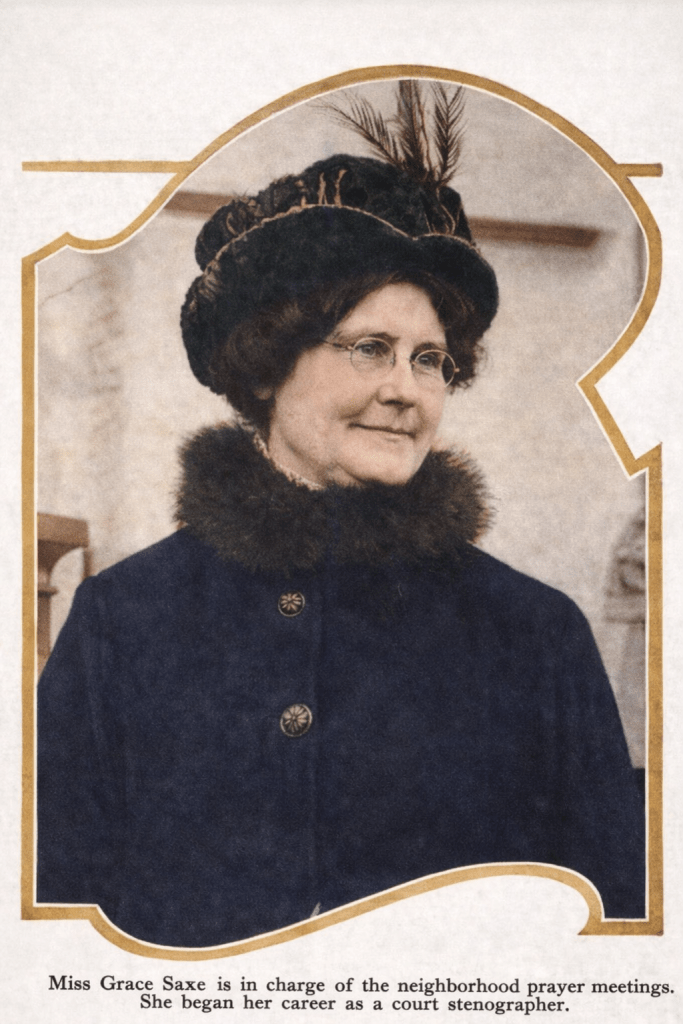
Miss Grace Saxe, “Billy” Sunday’s Prayer Meeting Organizer, Tells of Her Conversion.

“Billy” Sunday’s right-hand woman, whose other name is Miss Grace Saxe, is just as much a woman as though she didn’t hold one of the most important positions in the whole Sunday organization, a position which might make even a man forget all else but the responsibilities of his work.

For one of the very first things she did on arriving in Philadelphia several days in advance of the opening of the campaign was to launch forth on an energetic shopping tour.

“I simply had to have some pretty clothes to wear, to conduct my meetings,” she said, smiling nervously, at “Billy” Sunday’s home, 1914 Spring Garden street, happy, but exhausted, at the termination of her first work in Philadelphia.

Miss Saxe is the person whom Mr. Sunday has selected for the very vital work of organizing the neighborhood prayer meetings in the various cities where the revivals are conducted, and it is her particular duty to bring religion into as many of the private homes as she can possibly get into touch with and to make it a permanent factor of those homes.

“Our work would be a very poor thing indeed,” she said earnestly, “if we worked at these people up to a state of high religious fervor only to let them drop back again and cool off soon after the campaign was over.”


TELLS OF HER CONVERSION

“Although the revivals have not yet started, I cannot help feeling that the way Philadelphia has received us has been nothing short of magnificent. Already 5000 homes have been thrown open to these prayer meetings and more than 15,000 volunteers have come forward and signified their intention of fostering these meetings permanently and keeping the spirit of Christ in the home indefinitely.

“One phase of the work that I am particularly interested in is teaching people how to read the Bible. There are many who have a great desire to study the Book of God, but who do not know how to go about it, and organizing teaching, high school girls and women in city houses, into Bible classes is my chief duty.

Miss Saxe’s career has been an interesting one. Born in Iowa, she “entered” St. Louis to accept a position as court stenographer, and it was while she was energetically hitting the keys in the city that something occurred which, to use her own expression, “made her see the light.”

“Up until that time,” she said, a little shamefacedly, “I was rather an unregenerate creature. I used to come to town in Lyons, Dr. A. B. Simpson came to town and I was engaged to go and take down in shorthand a series of his lectures. There were about ten of them, and in addition to having to hear them I also had to go all over them again, transcribing them on the typewriter.


“TURNS DOWN” ROOSEVELT

“They made me think, and soon after I began a very careful study of the Bible. Later on I was engaged to work with the Rev. Dwight L. Moody, of Chicago, and after that I traveled abroad with Torrey and Alexander. By that time the work of making a Christian out of me was completed.

“Later on I happened to be in Egypt taking a little vacation when I received a request to go up the Nile and meet Mr. Roosevelt at Luxor, there to take down some of his lectures, but I found I was spoiled for that sort of thing. I had become so interested in religious work that nothing else seemed to satisfy, and it was soon after this that I accepted Mr. Sunday’s offer to become a member of his organization, and have worked with him ever since.”

Miss Saxe has the calm, placid Madonna-like face of one who is at peace with the world and herself.

“The test of his wonderful work is in the results that he gets. Day after day hundreds of testimonials come in which show the lasting conversions that he is responsible for.

“Only the other day a man sent a letter from Waterloo, Iowa, where a revival was conducted some three years ago, saying that he was thankful for the change that had been brought about in him, that he was willing even to have his name used if other conversions might be effected thereby.

“For 30 years this Johnny Bates had been a confirmed drunkard. His wife got disgusted and divorced him, his children grew away from him and he went down into the very depths. Three years ago he hit the sawdust trail and since then has never touched a drop. He now holds a splendid lucrative position and his wife has remarried him. That is but one of the many cases which testify to the indisputably good work that Mr. Sunday is doing.”

Cited from: The Philadelphia Evening Public Ledger. January 2, 1915:3.

“Billy’s” Own Story of His Boyhood

Omaha Sunday Bee – September 26, 1915

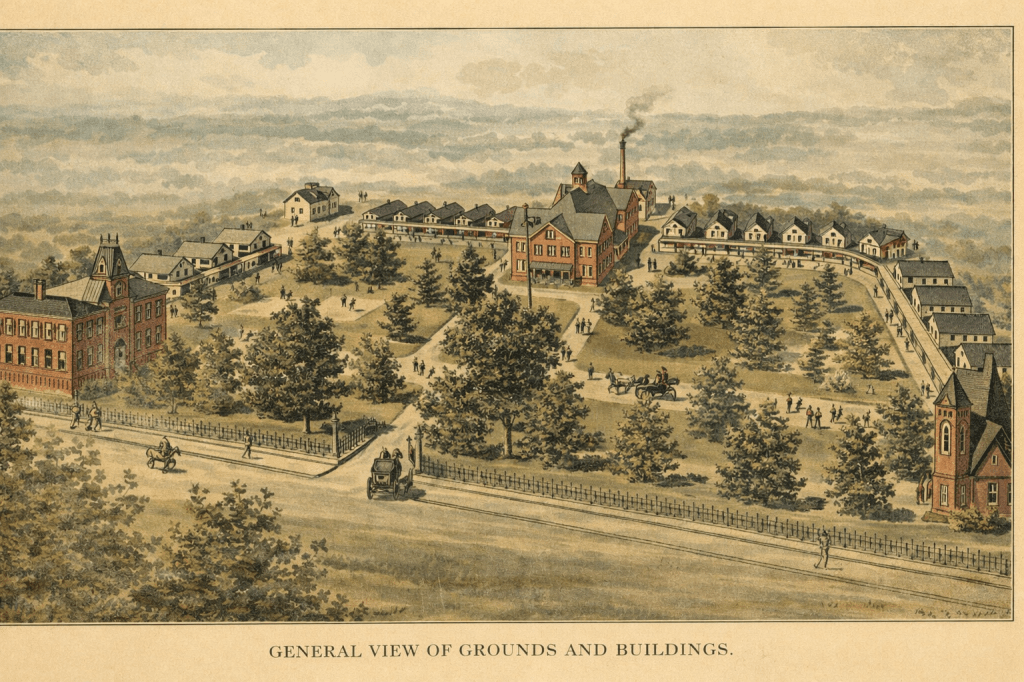
Here is the Narrative of How He Lost His Father in the War and Was Raised Then in the Orphans’ Home at Glenwood, a Few Miles from Omaha


I was bred and born (not in old Kentucky, although my grandfather was a Kentuckian), but in old Iowa, November 19, 1862. I am a rube of the rubes. I am a hayseed of the hayseeds, and the malodors of the barnyard are on me yet, and it beats Pinaud and Colgate, too.

I have greased my hair with goose grease and blacked my boots with stove blacking. I have wiped my old proboscis with a gunny sack towel; I have drunk coffee out of my saucer, and I have eaten with my knife; I have said “done it” when I should have said “did it” and I have “saw” when I should have “seen,” and I expect to go to heaven just the same. I have crept and crawled out of the university of poverty and hard knocks, and have taken post graduate courses.

My father, William Sunday, went to the war four months before I was born, in Company E, Twenty-third Iowa. I have butted and fought and struggled since I was 6 years old. That’s one reason why I wear that little red, white and blue button. I know all about the dark and seamy side of life, and if ever a man fought hard, I have fought hard for everything I have ever gained.

The wolf scratched at the cabin door, and finally mother said: “Boys, I am going to send you to the Soldiers’ Orphans’ Home!” At Ames, Ia., we had to wait for a train, and we went to a little hotel, and they came about 1 o’clock and said: “Get ready for the train.”

I looked into my mother’s face. Her eyes were red, her hair was disheveled. I said, “What’s the matter, mother?” All the time “Ed” and I slept mother had been praying. We went to the train; she put one arm about me and the other about “Ed” and sobbed as if her heart would break. People walked by and looked at us, but they didn’t say a word. Why? They didn’t know, and if they had they probably wouldn’t have cared. Mother knew. She knew that for years she wouldn’t see her boys. We got into the train and said, “Good-bye, mother,” as the train pulled out.

We reached Council Bluffs. It was cold and we turned up our coats and shivered. We saw a hotel and went up and asked the woman for something to eat. She said, “What’s your name?”

“My name is William Sunday, and this is my brother, ‘Ed.’”

“Where are you going?”

“Going to the Soldiers’ Home at Glenwood.”

She wiped her tears and said, “My husband was a soldier and never came back. He wouldn’t turn anyone away and I wouldn’t turn you boys away.” She drew her arms about us and said, “Come on in.” She gave us our breakfast and dinner, too. There wasn’t any train going out on the “Q” until afternoon. We saw a freight train standing there so we climbed into the caboose.

The conductor came along and said, “Where’s your money or ticket?”

“Ain’t got any.”

“I’ll have to put you off.”

We commenced to cry. My brother handed him a letter of introduction to the superintendent of the Orphans’ Home. The conductor read it and handed it back as the tears rolled down his cheeks. Then he said, “Just sit still, boys. It won’t cost a cent to ride on my train.”

It’s only twenty miles from Council Bluffs to Glenwood, and as we rounded the curve the conductor said, “There it is, on the hill.”

I want to tell you that one of the brightest pictures that hangs upon the walls of my memory is the recollection of the days when as a little boy, out in the log cabin on the frontier of Iowa I knelt by mother’s side.

I went back to the old farm some years ago. The scenes had changed about the place. Faces I had known and loved had long since turned to dust. Fingers that used to turn the pages of the Bible were obliterated and the old trees beneath which we boys used to play and swing had been felled by the woodman’s axe. I stood and thought.

Once more with my gun on my shoulder and my favorite dog trailing at my heels I walked through the pathless wood and sat on the old familiar logs and stumps, and as I sat and listened to the wild, weird harmonies of nature, a vision of the past opened. The squirrel from the limb of the tree barked defiantly and I threw myself into an interrogation point, and when the gun cracked the squirrel fell at my feet. I grabbed him and ran home to throw him down and receive compliments for my skill as a marksman.

And I saw the tapestry of the evening fall. I heard the lowing herds and saw them wind slowly o’er the lea—and I listened to the tinkling bells that lulled the distant fowl. Once more I heard the shouts of childish glee. Once more I climbed the haystack for hens’ eggs. Once more we sat at the threshold and ate our frugal meal. Once more mother drew the trundle bed out from under the larger one, and we boys, kneeling down shut our eyes and clasping our little hands, said, “Now I lay me down to sleep; I pray the Lord my soul to keep. If I should die before I wake, I pray Thee, Lord, my soul to take. And this I ask for Jesus’ sake, amen.”

I stood beneath the old oak tree and it seemed to carry on a conversation with me. It seemed to say:

“Hello, Bill. Is that you?”

“Yes, it’s I, old tree.”

“Well, you’ve got a bald spot on the top of your head.”

“Yes, I know, old tree.”

“Won’t you climb up and sit on my limbs as you used to?”

“No, I haven’t got time now. I’d like to, though, awfully well.”

“Don’t go, Bill. Don’t you remember the old swing you made?”

“Yes, I remember; but I’ve got to go.”

“Say, Bill, don’t you remember when you tried to play George Washington and the cherry tree, and almost cut me down? That’s the scar you made, but it’s almost covered over now.”

“Yes, I remember all, but I haven’t time to stay.”

“Are you coming back, Bill?”

“I don’t know, but I’ll never forget you.”

Then the old apple tree seemed to call me and I said, “I haven’t time to wait, old apple tree.”

When I was about 14 years old, after leaving the Soldiers’ Orphans’ Home, I made application for the position of janitor in a school. I used to get up at 2 o’clock and there were fourteen stoves and coal had to be carried for all of them. I had to keep the fires up and keep up my studies and sweep the floors. I got $25 a month salary.

Well, one day I got a check for my salary and I went right down to the bank to get it cashed. Right in front of me was another fellow with a check to be cashed, and he shoved his in, and I came along and shoved my check in, and the teller handed me out $40. My check called for $25.

I went to a friend of mine, who was a lawyer in Kansas City, and told him. I said, “Frank, what do you think, Jay F— handed me $40 and my check only called for $25.” He said, “Bill, if I had your luck I would buy a lottery ticket.” But I said, “The $15 is not mine.” He said, “Don’t be a chump. If you were shy $10 and you went back you would not get it, and if they hand out $15, don’t be a fool—keep it.”

Well, he had some drag with me and influenced me. I was fool enough to keep it, and took it and bought a suit of clothes. I can see that suit now. It was a kind of brown with a little green in it, and I thought I was the goods, I want to tell you, when I got those store clothes on. That was the first suit of store clothes I had ever had, and I bought that suit and I had $25 left after I did it.

Years afterward I said, “I ought to be a Christian,” and I got on my knees to pray, and the Lord seemed to touch me on the back and say, “Bill, you owe that Farmers’ bank $15 with interest,” and I said, “Lord, the bank doesn’t know that I got that $15,” and the Lord said, “I know it.”

So I struggled along for years, probably like some of you, trying to be decent and honest and right some wrong that was in my life, and every time I got down to pray the Lord would say, “Fifteen dollars with interest, Nevada county, Iowa; $15, Bill.” So years afterward I sent that money back, enclosed a check, wrote a letter and acknowledged it, and I have the peace of God from that day to this, and I have never swindled anyone out of a dollar.


When a Revival Outdrew the State Fair: Omaha, 1915

In the fall of 1915, Nebraska found itself hosting two of the largest public gatherings in its history.

One was expected.
The other was not.

In Lincoln, the Nebraska State Fair was in full swing. Newspaper headlines called it “the greatest ever held.” Despite rain and poor weather early in the week, crowds poured through the gates. By the time it ended, total attendance reached 180,767—a record-setting year. The fairgrounds were packed with machinery exhibits, livestock judging, aerial shows, wrestling matches, and the familiar buzz of a state coming together for its biggest annual spectacle.

It was, by every measure, a success.

But sixty miles away, something far more remarkable was unfolding.

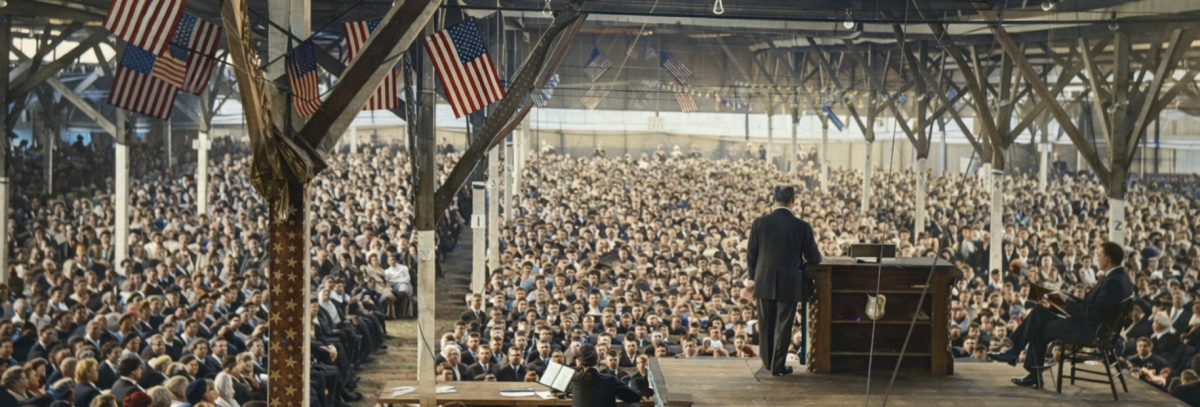
In Omaha, a temporary wooden tabernacle had been erected for evangelist Billy Sunday. There were no rides. No prize livestock. No grandstand attractions. Just sawdust, benches, a pulpit—and a preacher.

Yet by the time Sunday’s campaign ended, the numbers told a different story.

The revival recorded approximately 930,000 total attendees across its six weeks of meetings. Of those, nearly 795,000 passed through the tabernacle itself. More than 13,000 people walked the “sawdust trail,” publicly declaring their decision for Christ.

Let that sink in.

The largest civic event in the state drew just over 180,000 people in a week.
Billy Sunday’s revival drew over five times that number (in six weeks total).

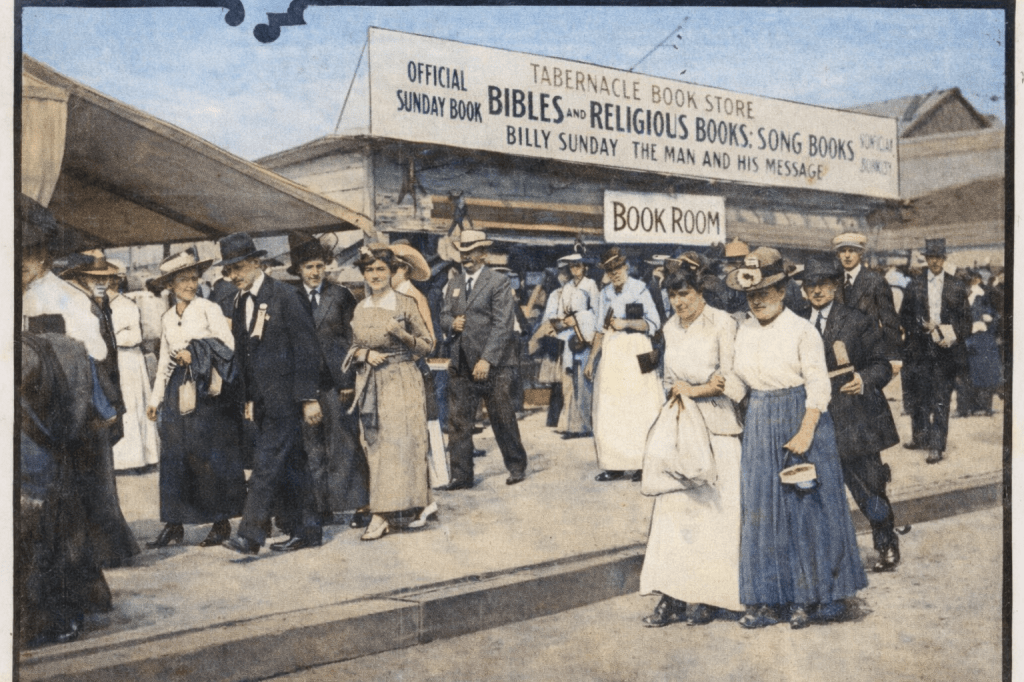
The 1915 Omaha Billy Sunday revival, bookstore.

And it wasn’t confined to a single venue or moment. The revival spread throughout the city:

  • Over 2,100 cottage prayer meetings during the campaign
  • Tens of thousands attending women’s meetings, Bible classes, and noon gatherings
  • Business leaders, factory workers, students, and families all pulled into its orbit

This was not simply a series of sermons. It was a citywide movement.

The contrast is striking. The State Fair represented the best of Nebraska’s agriculture, industry, and entertainment. It was planned, promoted, and expected to succeed.

Sunday’s revival, on the other hand, was built on something less tangible but far more powerful—a shared spiritual hunger that transcended social boundaries.

For a brief moment in 1915, Omaha became the epicenter of something larger than spectacle. Larger than tradition. Larger even than the state’s greatest annual event.

The fairgrounds would empty. The tabernacle would be torn down.

But for those who were there, the memory remained:

A season when the crowds came—not for entertainment—but for transformation.

Sources: curated from Omaha newspapers from 1915.

When “Ma” Sunday Called Them Forward, c.1915

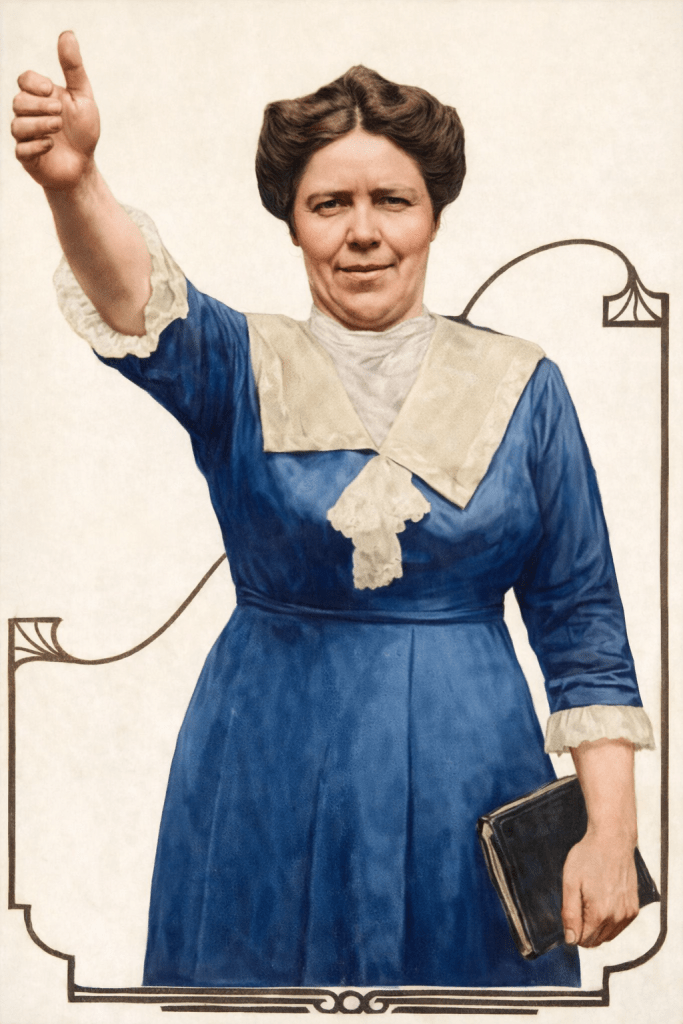
Ma Sunday in Omaha, c. 1915

There are moments in the Sunday campaigns that feel almost hidden in the shadow of Billy’s larger-than-life presence—but when you find them, they reveal something just as powerful.

One such moment came during a women-only meeting led by “Ma” Sunday.

The tabernacle was full—some 6,000 to 7,000 gathered—but this was a different kind of service. No booming theatrics. No sawdust-charged bravado. Instead, there was a quieter, deeply personal appeal.

And when she called them forward, 115 women and girls rose and walked the aisle.

A Different Kind of “Trail-Hitting”

The newspapers called it a “replica” of Billy’s famous trail-hitting—but it wasn’t quite the same.

There was a tenderness to it. And, at first, a bit of confusion.

Many of the women thought they were simply going forward to greet Mrs. Sunday—to shake her hand, to thank her, to meet her. They came quickly, almost instinctively, forming what one observer described as a “bee-line” down the aisle.

It took a firm voice from Mrs. Asher, one of the Sunday team, to steady the moment:

This is not a reception line. This is for those who want to be saved.

And just like that, the tone shifted.


Faces in the Crowd

The reports linger on the people—and that’s where the story lives.

A housemaid, still in her work attire, came forward and clasped Mrs. Sunday’s hand, covering it with kisses.

A weeping mother walked the aisle with her small son, alongside her grown daughter.

Two young girls, barely ten years old, came arm in arm.

High school girls stepped forward carrying their school pennants.

Even the choir—singing hymn after hymn—was visibly moved, some of them weeping as they sang.

This wasn’t spectacle. It was personal, family-bound, deeply human.


Her Message: Personal Service

If Billy Sunday’s sermons often thundered, Ma Sunday’s message pressed inward.

She didn’t just call women to come forward—she called them to act.

  • Make a prayer list.
  • Win at least one person to Christ.
  • Take responsibility for the spiritual lives around you.

Her appeal was practical, almost methodical—but never cold. It was rooted in experience, shaped by her own life, and delivered with a kind of plainspoken honesty.

At one point, she reflected on her upbringing—rigid, formal, spiritually lifeless—and contrasted it with her determination to move forward anyway:

I was going to bust.

It’s the kind of line that doesn’t sound polished—but it lands.


Tears—and Resolve

Perhaps the most telling moment came when she addressed women with unsaved husbands and children.

Many of them broke down.

The article notes they wept bitterly.

This wasn’t abstract theology. This was eternity pressing into the home.

And Ma Sunday didn’t leave it there. She pointed them toward action, toward prayer, toward persistence.

She even set her sights on the next gathering—calling for a packed house of mothers and grandmothers, marked by a simple white flower.


The Broader Picture

What we see here is something easy to miss if we focus only on Billy:

The Sunday campaigns were not a one-man operation.

They were a network of voices, and Ma Sunday’s was essential—especially among women. Her meetings didn’t mirror Billy’s so much as complement them.

Where he confronted, she invited.
Where he thundered, she persuaded.
Where he called for decision, she called for ongoing service.

And in doing so, she mobilized an entire segment of the revival that might otherwise have remained on the margins.


Final Reflection

In the end, the numbers—115 responding—tell only part of the story.

What matters more is what those women carried home with them:

  • A renewed sense of responsibility
  • A burden for their families
  • A call to personal witness

Ma Sunday didn’t just ask them to walk an aisle.

She asked them to live differently when they walked back out.

And for many of them, that’s where the real revival began.

Source: The Omaha Daily Bee, Sept 20, 1915:1

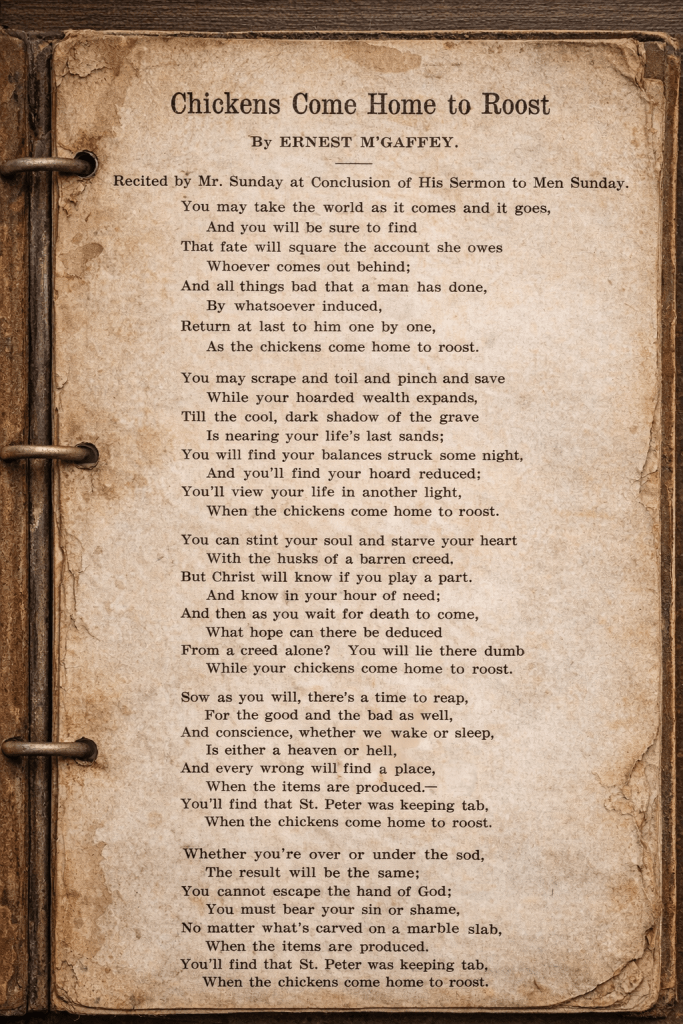
Sermon: When chickens come home to roost

One of Billy’s favorite sermons was When chickens come home to Roost. He would preach it often and usually in the first 1-2 weeks of a revival.

What was the sermon about?

In “Chickens Come Home to Roost,” Billy Sunday argues that sin is never isolated or harmless—it inevitably returns with consequences that grow over time. What begins as a small compromise develops into habit, then character, and ultimately destruction. He emphasizes that sin corrupts the individual internally before it manifests outwardly, dulling the conscience and weakening the will. Sunday also stresses that sin is not merely personal; it affects families, communities, and even nations. He dismantles common excuses—denial, delay, and comparison—and insists that no one escapes moral accountability. The sermon builds toward an urgent appeal: repentance must happen now, before sin’s consequences fully mature and bring irreversible damage.

Representative Quote:
“Your sin may seem quiet tonight, but it will rise up tomorrow and demand its wages.”