Former professional baseball player-turned urban evangelist. Follow this daily blog that chronicles the life and ministry of revivalist preacher William Ashley "Billy" Sunday (1862-1935)
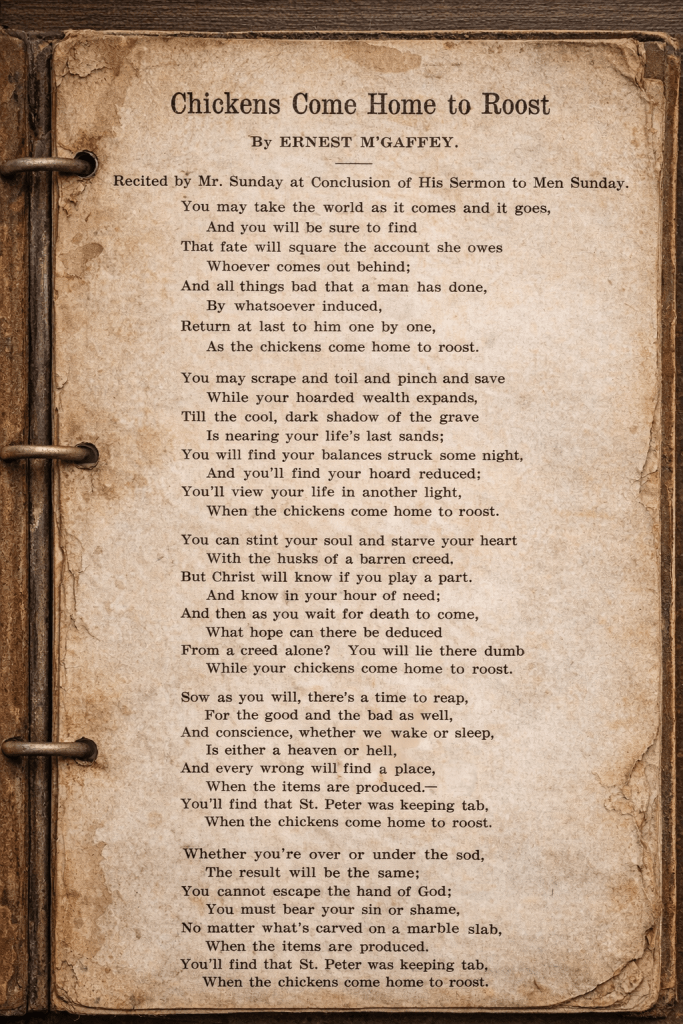
One of Billy’s favorite sermons was When chickens come home to Roost. He would preach it often and usually in the first 1-2 weeks of a revival.
What was the sermon about?
In “Chickens Come Home to Roost,” Billy Sunday argues that sin is never isolated or harmless—it inevitably returns with consequences that grow over time. What begins as a small compromise develops into habit, then character, and ultimately destruction. He emphasizes that sin corrupts the individual internally before it manifests outwardly, dulling the conscience and weakening the will. Sunday also stresses that sin is not merely personal; it affects families, communities, and even nations. He dismantles common excuses—denial, delay, and comparison—and insists that no one escapes moral accountability. The sermon builds toward an urgent appeal: repentance must happen now, before sin’s consequences fully mature and bring irreversible damage.
Representative Quote: “Your sin may seem quiet tonight, but it will rise up tomorrow and demand its wages.”
From Trenton to Baltimore: How Billy Sunday’s Preaching Evolved in 1916
When Billy Sunday concluded his revival campaign in Trenton, New Jersey, in February 1916, he had already delivered an extraordinary number of sermons in just a few winter weeks. Soon afterward he moved south to begin what would become an even larger campaign in Baltimore, Maryland.
A comparison of the sermon lists from the two cities reveals something fascinating about Sunday’s preaching strategy. While the evangelist was famous for repeating certain signature sermons from city to city, the Baltimore campaign shows a noticeable shift in emphasis and structure compared with Trenton.
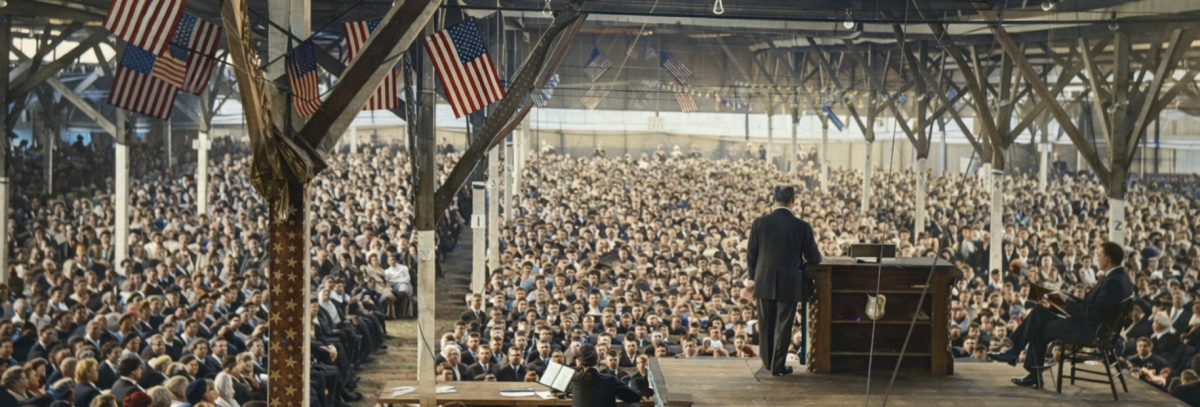
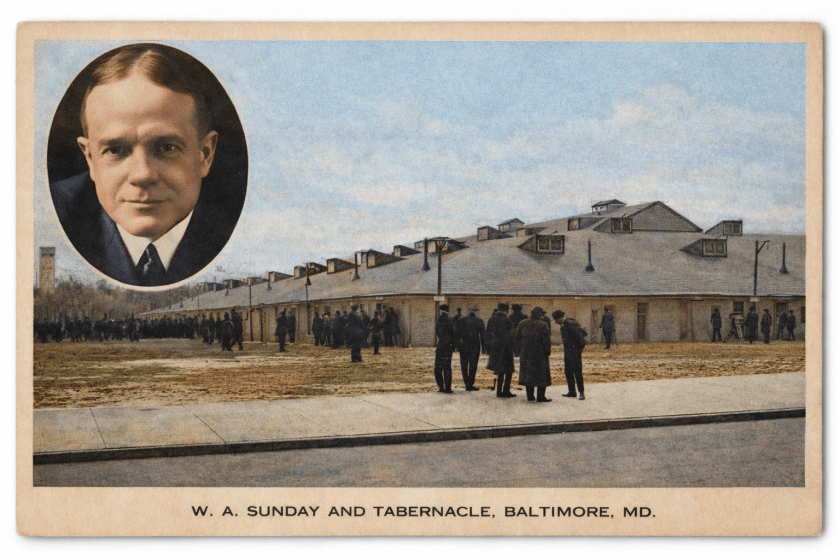
The Baltimore Tabernacle
The Trenton Campaign: Classic Revival Preaching
The Trenton sermons follow the pattern of a traditional evangelistic revival. Many of the titles focus directly on conversion, repentance, and the urgency of salvation. Messages such as What Must I Do to Be Saved?, After Death, Judgment, Rich Young Ruler, and What Shall the End Be? formed the backbone of Sunday’s preaching.
These sermons were part of Sunday’s well-known revival repertoire. In Trenton he rotated them rapidly, returning to the themes of judgment, repentance, and personal decision again and again. Titles like Backsliding, Get Right, Choose Ye This Day, and Be Sure Your Sins Will Find You Out show how directly he pressed the audience toward a response.
This approach reflected the classic revival method: present the danger of sin, call for repentance, and invite listeners to make a public decision.
Baltimore: A Broader and More Structured Campaign
When Sunday arrived in Baltimore later in February, the preaching program became noticeably broader. While the evangelistic messages remained, the sermon list shows a wider range of topics and a more deliberate sequence of themes.
Several sermons addressed revival within the church itself, including The Need of Revivals, Revive Thy Work, and The Restoration of the Church. Others focused on Christian living, such as Following Christ, Positive and Negative Religion, and Show Thyself a Man.
New Sermons Appear
The Baltimore list also introduces several sermons that do not appear in the Trenton campaign. Messages such as The Authenticity of the Bible, God’s Battle Line, The Temptation of Christ, Love Your Enemies, and The Incarnation of Christ reveal a more doctrinal dimension to the preaching.
In other words, Baltimore was not only about winning converts. It also included teaching aimed at strengthening believers and encouraging churches.
The Core Sermons Remained
Despite these differences, Sunday’s core sermons appear in both campaigns. Titles such as Dr. Jekyll and Mr. Hyde, The Fig Tree, Samson, The Atonement, Choose Ye This Day, and What Must I Do to Be Saved? were staples of his preaching for years.
These messages formed the foundation of Sunday’s evangelistic ministry, and he carried them from city to city with remarkable consistency.
A Larger Revival
The Baltimore campaign also dwarfed Trenton in size. By the time the meetings ended in April, reported attendance had reached 1,376,000 people across the entire series of services.
Such a large audience may explain the broader range of sermons. A major metropolitan revival like Baltimore required not only evangelistic appeals but also teaching, church renewal, and special meetings addressing different audiences.
Two Cities, One Evangelist
Taken together, the Trenton and Baltimore sermon lists provide a revealing glimpse into Billy Sunday’s methods. Trenton shows the evangelist operating in his classic revival mode—pressing the claims of the gospel with urgency and repetition. Baltimore shows him expanding that message into a wider program of preaching that addressed both unbelievers and the church itself.
In both cities, however, the heart of the message remained the same. Whether speaking in a smaller industrial city like Trenton or in a large urban center like Baltimore, Billy Sunday continued to deliver the message that had defined his ministry from the beginning: a call to repentance, faith, and a transformed life.
“My theology is really summed up in four letters: H-e-l-p. I am here to do my best to help the people in this old world live better, and to show them the way to do it. Some people can see no way out for the sinner except through the police court or the potter’s field. I have come to tell you there is another way—through repentance and belief in the Lord Jesus Christ.
“Some people have put their trust in government, but there is no salvation through government. They all have failed to suppress vice and develop virtue, America as well as the rest. Others put their trust in education. You can dot every hill with a schoolhouse and put a university in every block and it will save no one unless it is combined with virtue and faith.
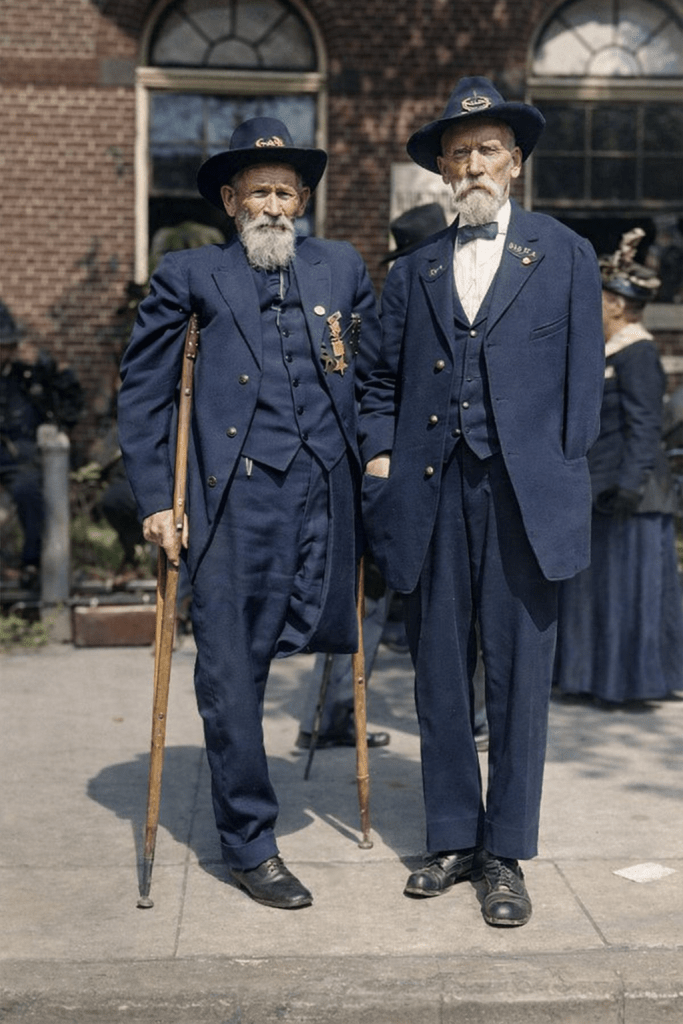
During Billy Sunday’s great revival in Baltimore in the spring of 1916, one evening at the tabernacle took on a distinctly historic tone. The sawdust aisles—normally filled with businessmen, laborers, and curious citizens—were suddenly occupied by a different kind of procession. A body of Union veterans of the Civil War, many gray with age but still proud of their service, marched forward together into the meeting.
1915 Civil War veterans, source unknown
According to the Baltimore Sun, nearly 500 veterans of the Grand Army of the Republic (GAR) attended the revival that night. The GAR, the powerful national organization of Union veterans, was still an important presence in American civic life in the early twentieth century. Though the war had ended more than fifty years earlier, the men who had fought to preserve the Union remained symbols of sacrifice and national memory.
The veterans were led by James E. Van Sant, commander of the Maryland Department of the GAR, along with E. R. Monfort of Iowa, who at the time served as Commander-in-Chief of the national organization. When they entered the tabernacle they were warmly received, and the crowd greeted them with enthusiastic applause.
The occasion had the character of both a patriotic ceremony and a revival meeting. The veterans arrived with a brass band, and when the musicians began to play familiar airs the audience responded with equal fervor. The strains of “Maryland, My Maryland” and “The Star-Spangled Banner” rang through the building, followed by old martial tunes such as “Yankee Doodle” and “Dixie.” The building reportedly shook with applause as the music echoed beneath the great wooden roof of the tabernacle.
The veterans also presented Billy Sunday with a gift—a ceremonial Old Glory mounted on an elaborately wrought brass standard. It was a gesture that connected the evangelist’s message with the patriotic ideals the veterans had fought to defend half a century earlier.
The evening was opened with prayer by Rev. B. F. Clarkson, chaplain of the Maryland GAR. Both Billy Sunday and his music director Homer Rodeheaver spoke warmly of the veterans and the sacrifices they had made for the nation. Rodeheaver added to the patriotic atmosphere by playing martial music and bugle calls on his trombone.
For the aging soldiers, the gathering was more than a nostalgic reunion. Many of them walked the same sawdust aisles as the younger men and women attending the revival. Their presence reminded the audience that the Civil War generation was rapidly passing from the scene. These men had once marched into battle for the Union; now they marched into a revival meeting in search of spiritual renewal.
By 1916, the Civil War was already receding into history, but its memory still held powerful emotional force. That night in Baltimore, the veterans’ appearance created a striking moment where patriotism, memory, and revival religion met under one roof.
The sight of those aged soldiers marching forward—flags waving, band playing, and the crowd cheering—must have been unforgettable. For one evening at least, the old warriors of the Union once again marched together, not onto a battlefield, but down the sawdust trail of Billy Sunday’s revival.
Curated from: The Philadelphia Evening Ledger. January 6, 1915:3.
You don’t just attend a Billy Sunday meeting—you step into it.
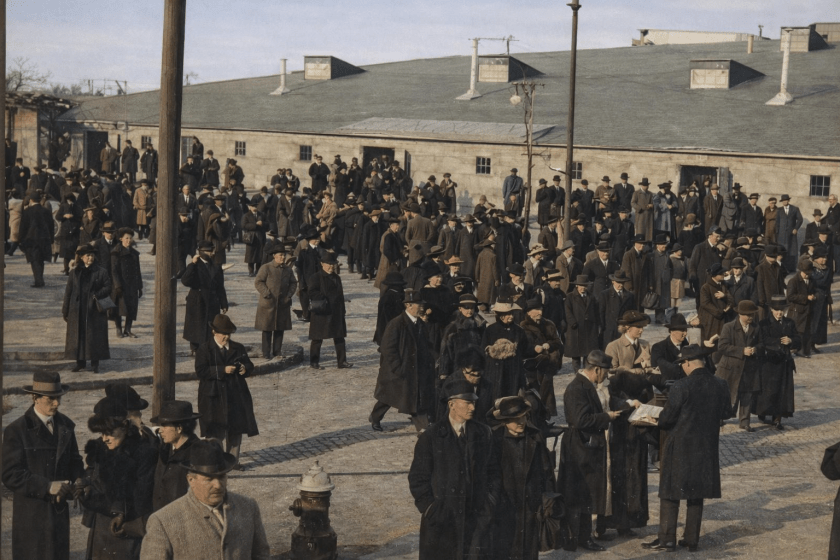
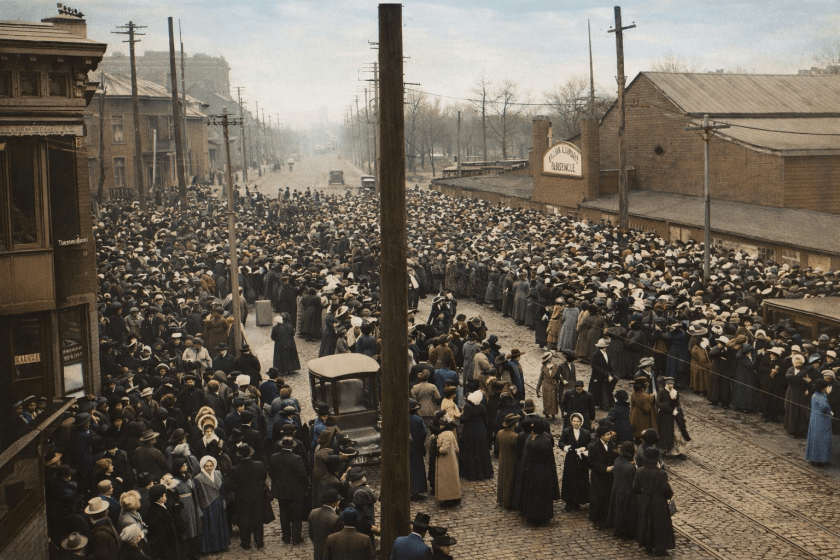
By the time I reached the tabernacle, the place was already alive. Not just crowded—alive. Policemen lined the edges, firemen stood ready, and yet there wasn’t even “the merest hint of disorder.” Whatever this thing was, it had structure. It had gravity. And it was pulling people in.
Colorized image of the Billy Sunday tabernacle in Philadelphia, c.1915.
Inside, the air carried that peculiar mixture of sawdust, sweat, and anticipation. Outside, though—that’s where you heard the real story.
A man near me, confident as a prophet, said to no one in particular:
“Billy Sunday has only started… it’s going to get worse and worse. He arouses more enthusiasm each day. If you don’t believe me, ask Scranton.”
That was the mood—this wasn’t the event. This was the beginning of the event.
The Crowd Watching the Crowd
It struck me quickly: people weren’t just watching Billy Sunday.
They were watching each other.
One visitor said it plainly:
“I was naturally interested in ‘Billy’ Sunday, and perhaps even more so in the crowd.”
And what a crowd it was.
A boy—no more than ten—hobbled in on crutches just to hear him. A sailor from the battleship Kansas had been waiting “for months” to catch a meeting. A woman stood nearby, nervous, almost whispering:
“Oh! no. I cannot give my name… my husband would throw a fit if he knew I had been in here.”
And yet—there she was.
That’s how you knew something was happening. Not just attendance—but risked attendance.
What People Were Saying
If you wanted to understand Billy Sunday, you didn’t start with the sermon.
You started with the talk afterward.
“What do you think of ‘Billy’?” someone asked.
The answers came quick, overlapping:
“Great.” “Some man.” “An ace.” “I like him because he goes after the hypocrites.”
Others reached for bigger words:
“Wonderful… splendid… marvelous.”
But not everyone could quite put their finger on it.
One woman, looking slightly dazed, said:
“I have had so many things fired at me in the last hour that I can’t quite set my bearings.”
That may have been the most honest response of all.
More Than a Sermon
There was something else in the air—something heavier than excitement.
A man, speaking to a small group of women, said what many were thinking:
“I would like to see ‘Billy’ Sunday wake this city up and get the rum out of it… Look how many homes he would make happy.”
And then, almost quietly, another moment:
In the northeast corner of the tabernacle, someone reported hearing a man say:
“This is my last drink.”
No sermon transcript can capture that.
That’s the sawdust trail doing its work.
The Unexpected Details
Not everything was solemn.
Someone joked about the sawdust itself:
“They say Mr. Sunday hates noise, and I know I am going to sneeze. I always do when around sawdust.”
Even the ministers weren’t immune to the moment. One well-known clergyman was said to amuse himself before preaching by reading The Fun of Getting Thin—and now, thanks to the crowds, “occupies two seats.”
And everywhere—evidence of men lingering longer than usual:
“There were enough cigar butts left in the gutters… to start a true second-hand cigar store.”
It wasn’t tidy.
It wasn’t polished.
But it was real.
Order in the Midst of It All
For all its energy, the thing held together.
The crowds were vast, but they moved. The police managed them. The firemen stood watch. The machinery of the city seemed, for a moment, to cooperate with something larger than itself.
One observer summed it up best:
“To get and hold a vast throng like this on a weekday for the purpose of hearing the gospel certainly is a tribute to the man himself.”
And It’s Only the Beginning
If you stood there long enough, listening—not to the sermon, but to the people—you began to realize something:
The revival hadn’t peaked.
It hadn’t even arrived yet.
It was building.
You could hear it in the confidence of the man who said, “ask Scranton.” You could see it in the boy on crutches. You could feel it in the nervous woman who came anyway. You could sense it in the man who muttered, “my last drink.”
Billy Sunday may have been the preacher.
But the city— the crowd— the conversations spilling out onto the streets—
They were becoming the message.
And Philadelphia, whether it knew it yet or not, was just getting started.
Three years after the Carthage meetings, a Mattoon, Illinois newspaper said that 80% of Carthage converts were still “living the new life. While two years after Keokuk, 75% of the converts “are still leading the new life.” – JG-TC: Journal Gazette and Times-Courier (Mattoon, Illinois) · Mon, Mar 19, 1906 · Page 1.
Five years after the Belvidere revival of September 1901, a Belvidere newspaper reported that membership of Belvidere Methodist church in 1901 was 500 persons, and five years later it was 850, showing the ‘stickiness’ of Sunday converts over a long period of time. – Belvidere Daily Republican (Belvidere, Illinois) · Mon, Mar 26, 1906 · Page 2.
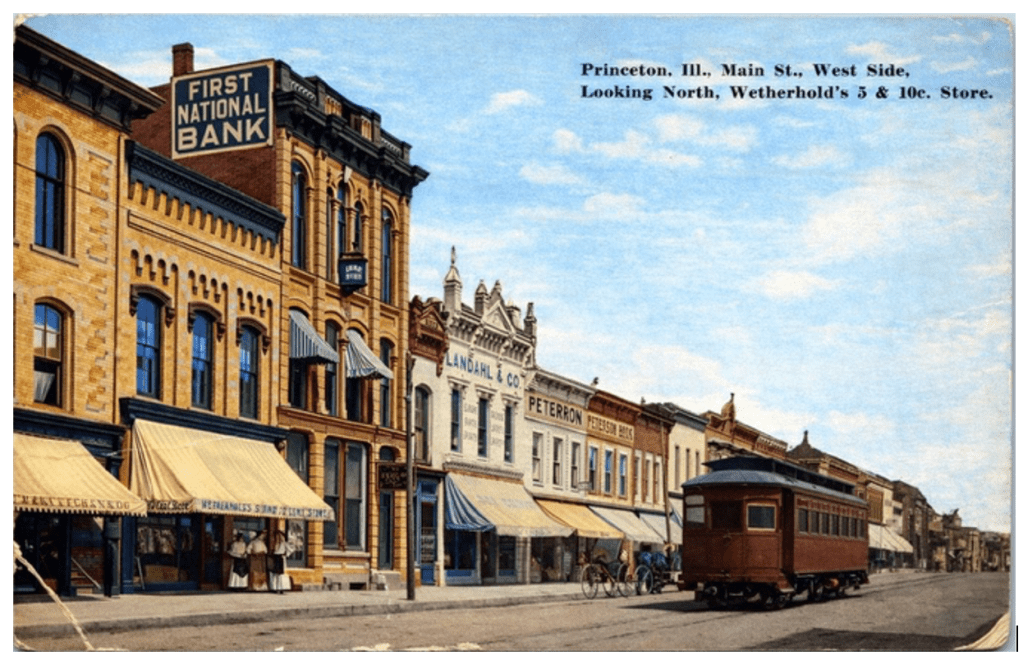
From February 11 to March 11, 1906, evangelist Billy Sunday conducted a major revival campaign in Princeton, drawing sustained crowds and producing significant conversion totals that reinforced his growing reputation as one of the most effective evangelists in the Midwest. A temporary tabernacle seating approximately 3,600 people was filled nightly, indicating the strong regional interest in Sunday’s preaching and the extensive cooperation of local churches.
The meetings quickly produced measurable results. One report noted 919 conversions in a single day on February 24, illustrating the intense response often seen at the height of Sunday’s campaigns. Despite severe winter weather—including one of the worst storms of the season on March 3—attendance and participation remained strong. By March 8, newspapers reported 1,298 converts, and by the close of the revival on March 11, the total number of recorded conversions had reached 2,325.
Contemporary observers described the atmosphere in Princeton as spiritually charged. A visiting pastor reported that the “city was aflame with the revival spirit,” while others praised Sunday’s dynamic preaching style, likening his delivery to a “storm” or “cyclone” in its intensity. His methods, though sometimes criticized as sensational, were widely regarded by supporters as effective in reaching large audiences—especially men—who might otherwise avoid church.
The Princeton campaign also contributed to Sunday’s rapidly expanding influence across the region. Shortly afterward, newspapers noted that since October 1905 he had reportedly received about $12,000 in offerings and recorded 9,000 conversions, with 20,000 conversions attributed to his work across the Rock River Valley of Illinois. The Princeton meetings thus formed a significant chapter in the early expansion of Sunday’s evangelistic career.
Sources: The Dixon Evening Telegraph, March 2, 1906, p. 5. Bureau County Tribune (Princeton, IL), March 9, 1906, p. 3. Freeport Journal-Standard (Freeport, IL), February 26, 1906, pp. 1, 5; March 8, 1906, p. 4. Journal Gazette and Times-Courier (Mattoon, IL), March 19, 1906, p. 1.
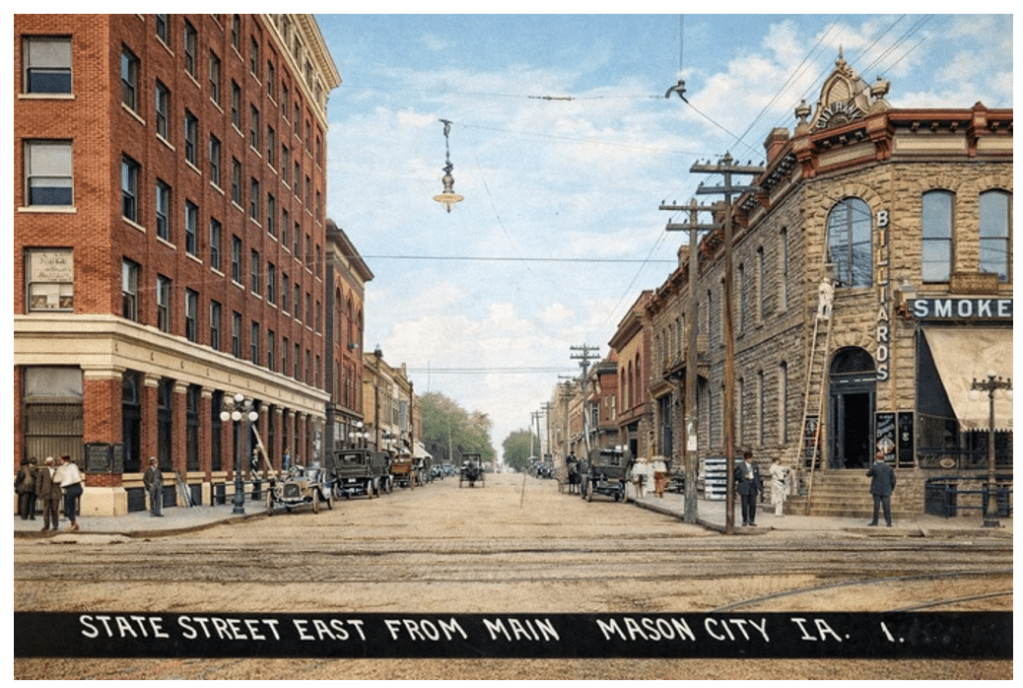
Billy Sunday conducted a month-long revival campaign in Mason City, Iowa, from January 13 to February 12, 1905, during a period when the city’s population was only about 8,300 and total church membership was roughly 3,000. A temporary tabernacle constructed of rough boards and tar paper—heated by six furnaces to withstand winter conditions—served as the central venue for the meetings.
Attendance was substantial for a community of Mason City’s size. One January meeting drew 2,000 men, while associate evangelist Ira E. Honeywell simultaneously addressed 1,000 women in a separate gathering. During a notable men’s meeting on January 29, Sunday delivered a forceful sermon condemning social vices; more than 50 men responded for prayer and conversion. The revival continued despite severe winter weather, including temperatures reported at twenty below zero.
By the campaign’s conclusion, the meetings had produced approximately 700 conversions, including 200 on the final day. Sunday received a $1,800 love offering, while an additional $2,500 was raised for campaign expenses and $800 for the city’s poor. Contemporary newspapers widely reported the revival and praised Sunday’s energetic preaching style and his unusual ability to sway large crowds.
The following article excerpt was carried in several newspapers in mid August 1910.
MIDDLE WEST HAS A RELIGIOUS FERMENT
In Chicago Itself Other World Matters Have the Floor.
“The rest of the country can hardly realize the breadth and the depth and the fervor of the spiritual tumult which is stirring the Middle West with Chicago as its center. Chicago newspapers regularly carry columns of sermons in their paid advertising columns. In Chicago street cars are displayed glaring placards advertising the “Book of Mormon,” and 48,000 copies have been sold in the city during the past two or three years. Billboards are covered with big four-sheet posters in colors, calling upon the public to attend great free mass meetings in the Coliseum, with a gospel choir of 2000 voices as the special attraction. Every Sunday morning the Auditorium—the largest theater in the city—is packed with the congregation of Central Church, and every Sunday evening Orchestra Hall is filled with people attending the religious services, which are supported by a voluntary club of Chicago business men. And during the clement season of each recent year scores of Middle West towns, with populations of ten and twenty thousand people, have practically dropped all their ordinary occupations and given themselves over for weeks at a time to a strange, fanatical religious ecstasy, under the acrobatic ministrations of “Billy” Sunday, baseball evangelist. And these are only the more normal the more nearly orthodox manifestations of the spiritual unrest.”—Henry M. Hyde in Collier’s.
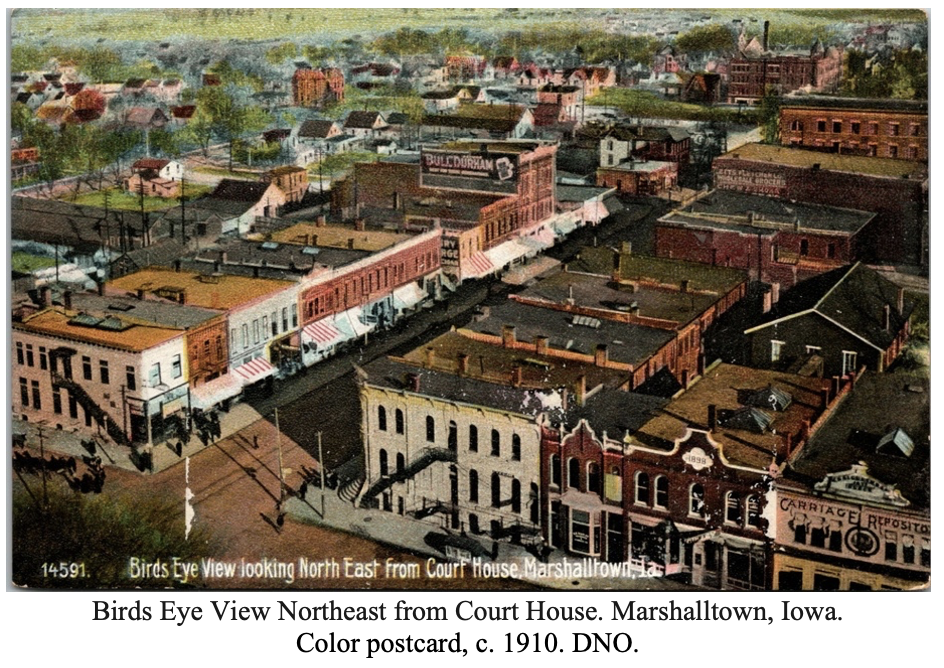
Fresh off a successful campaign in Springfield, Billy Sunday and his team rolled into Marshalltown in late April of 1909. This was not foreign soil. It was home turf.
Sunday had been raised in Iowa, shaped by its churches, and had even lived briefly in Marshalltown in the early 1890s while learning the mechanics of evangelistic work. By 1909 he returned not as an unknown ballplayer-turned-preacher, but as a nationally rising evangelist whose methods were becoming increasingly organized, efficient, and powerful.
Marshalltown was the right kind of proving ground. Large enough to sustain a six-week revival. Small enough to rally around one of its own.
The Setting: A City Poised for Revival
Marshalltown in 1910 had a population of 13,374—a fraction of Springfield’s 51,678. It was a growing industrial town, commercially strong, strategically located, and connected by rail. It was not metropolitan. But it was energetic.
A wooden tabernacle was erected at the corner of Third and Main, seating 5,000. The Sunday machine was now running at full stride.
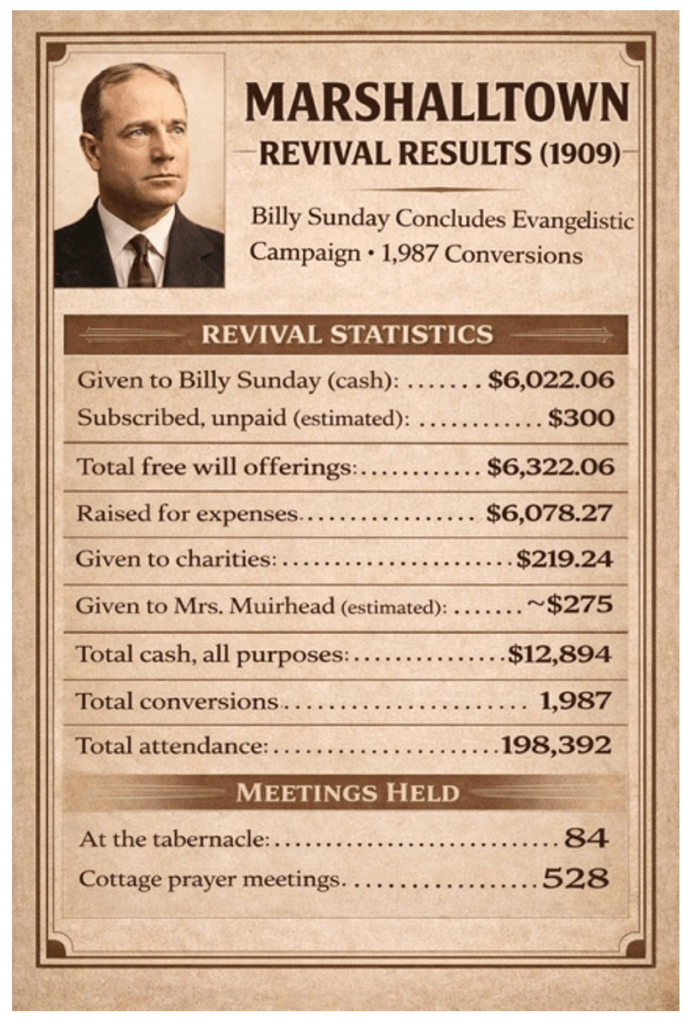
Opening night—April 25—saw over 12,000 people attend across all services. On the final day, June 6, Sunday preached to 13,200. In a town of just over 13,000 residents, that level of saturation is staggering.
By campaign’s end:
2,000 total conversions (125 on the final day)
84 tabernacle meetings
528 cottage prayer meetings
Nearly 200,000 in total attendance
For six weeks, Marshalltown was consumed by revival.
The Money and the Machine
The final purse for Sunday was $6,139. Total funds raised during the campaign reached $12,894.
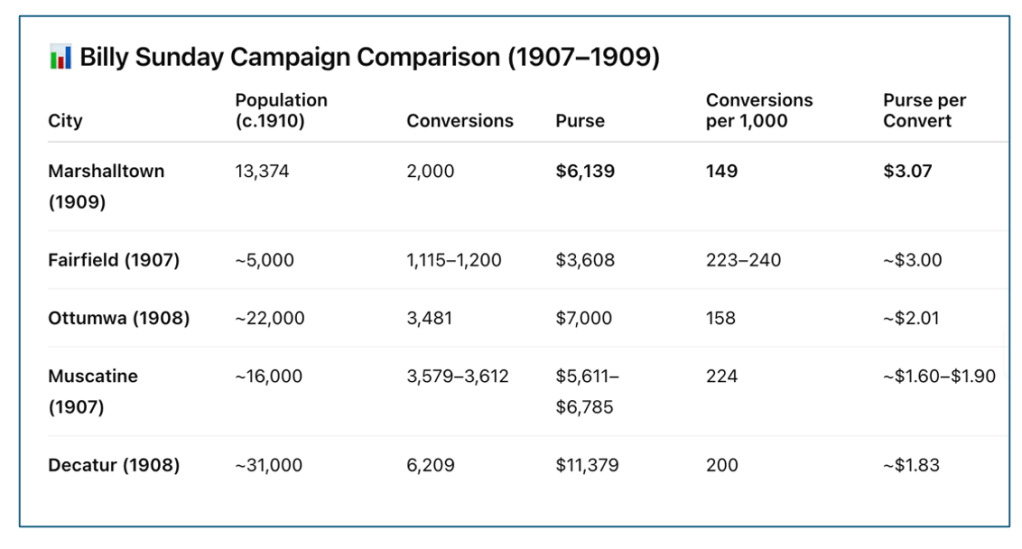
For comparison, that purse nearly matched Muscatine’s and approached Ottumwa’s from the previous year. Financially, Marshalltown demonstrated strong committee organization and enthusiastic backing. This was not a struggling campaign.
It was disciplined. Systematic. Mature.
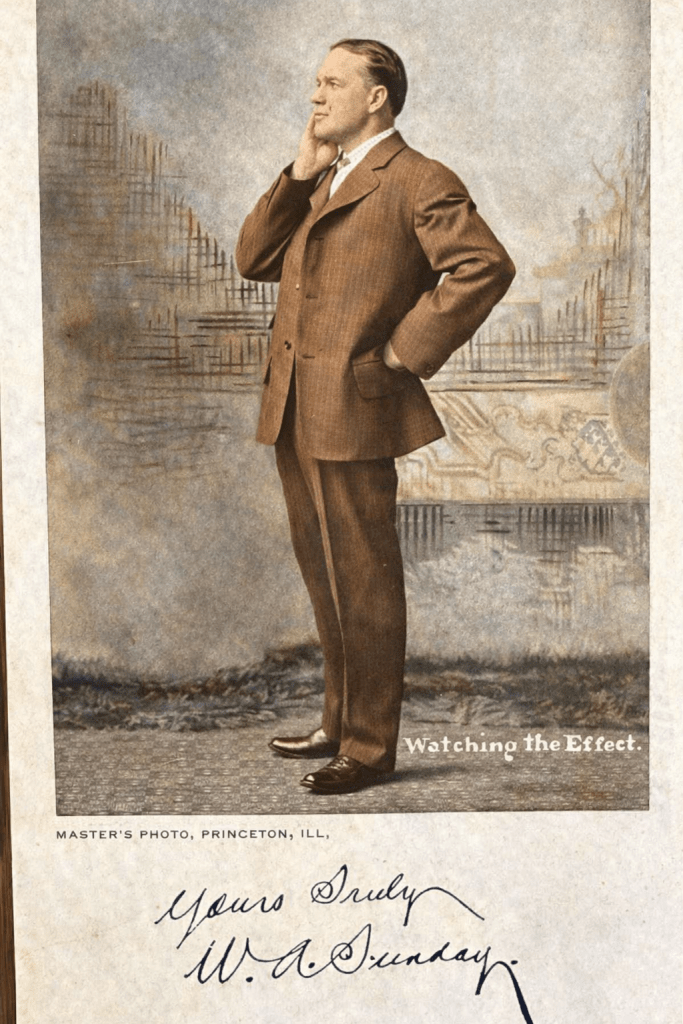
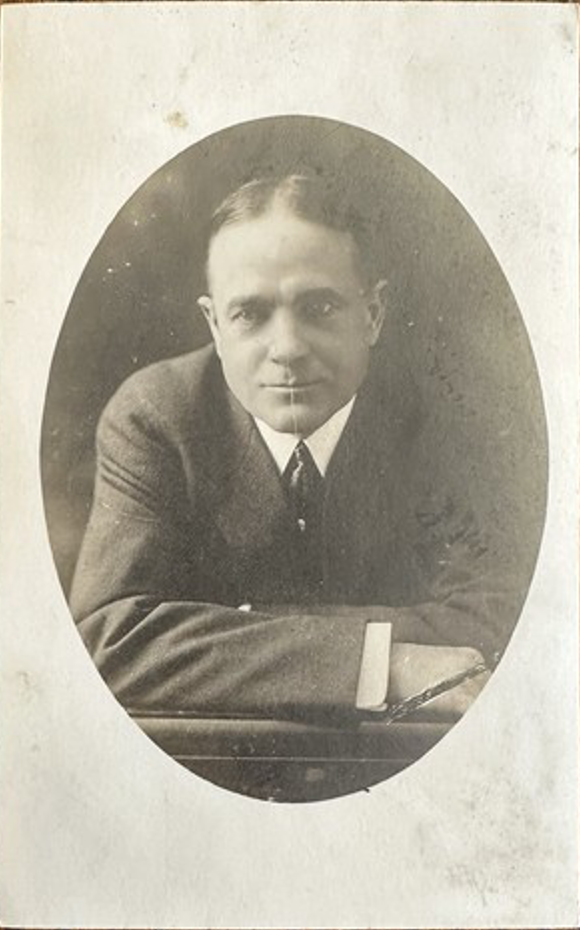
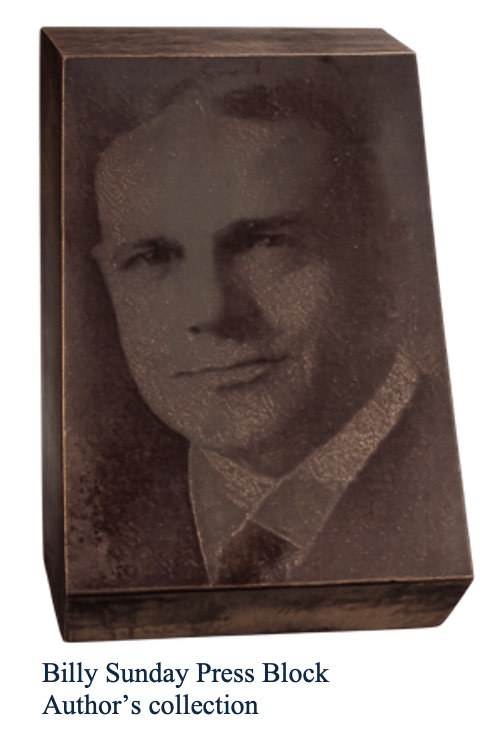
The press block used to print Sunday’s image during this period—now in my collection—reflects that growing sophistication. By 1909, Sunday was no longer improvising revivals. He was executing them.
Did Marshalltown “Underperform”?
One skeptical paper, the Davenport Weekly Democrat and Leader, suggested that Marshalltown’s results did not compare favorably with Fairfield, Ottumwa, Muscatine, and Decatur.
On the surface, that seems correct.
Measured per capita:
Marshalltown: ~149 converts per 1,000 residents
Fairfield: over 220 per 1,000
Muscatine: about 224 per 1,000
Decatur: around 200 per 1,000
Ottumwa: about 158 per 1,000
In raw totals, Marshalltown trailed Muscatine (3,579–3,612), Ottumwa (3,481), and especially Decatur (6,209).
So yes—the numbers were not dominant.
But numbers alone miss something important.
The Press: Praise and Pushback
The reaction was revealing.
The Audubon Republican declared the meetings closed in a “blaze of glory.” It reported over 500 cottage prayer meetings and said the town had been “thoroughly stirred up.”
The Marshalltown Evening Times-Republican went further, calling Sunday:
“One of the splendid prophets of the elder time…”
“One of the greatest revivalists in existence.”
“One of the plainest, simplest and happiest of men…”
Meanwhile, the skeptical Davenport Weekly Democrat and Leader offered sharper commentary. It described Sunday as a “contortionist of uncommon ability” with “remarkable versatility,” while acknowledging the “magnetic power of Mr. Sunday.”
Its most fascinating observation was psychological:
“The psychology of it all is that the people who are not regular attendants at churches must be reached not as individuals but in mass. They like to be moved by each other; and it is probable that this explains the success Mr. Sunday attains. He is helped greatly by the excitement and the enthusiasm of the crowds…”
That critique reads today like an astute analysis of mass evangelism. It wasn’t merely preaching. It was momentum. Atmosphere. Collective energy.
Sunday understood something about crowds that many pastors did not.
What Marshalltown Really Proved
Marshalltown was not Sunday’s most explosive campaign numerically.
But it demonstrated something perhaps more important in 1909:
Massive attendance penetration in a modest city
Financial stability and strong committee structure
Organizational maturity (over 600 total meetings)
National press attention—positive and critical
Marshalltown proved that Sunday could saturate an entire city.
Critics were talking. Admirers were praising. Nearly 200,000 attendances in six weeks ensured that no one in town was untouched by the revival’s presence.
He was no longer just holding meetings.
He was creating civic events.
A Blaze of Glory
The revival closed the way many Sunday campaigns did—intense, loud, emotional, decisive. A blaze of glory.
Marshalltown may not have produced the highest per-capita conversion rate of his Iowa stops. But it stands as a revealing moment in his rise.
Magic lantern slide. Author’s collection.
By 1909, Billy Sunday was refining his method. The tabernacle system was humming. The prayer networks were mobilized. The press was watching closely.
And Iowa—his Iowa—was watching one of its own step onto a larger stage.
Marshalltown mattered because it showed that Sunday’s machine worked not just in isolated bursts, but in sustained, organized, city-wide saturation.
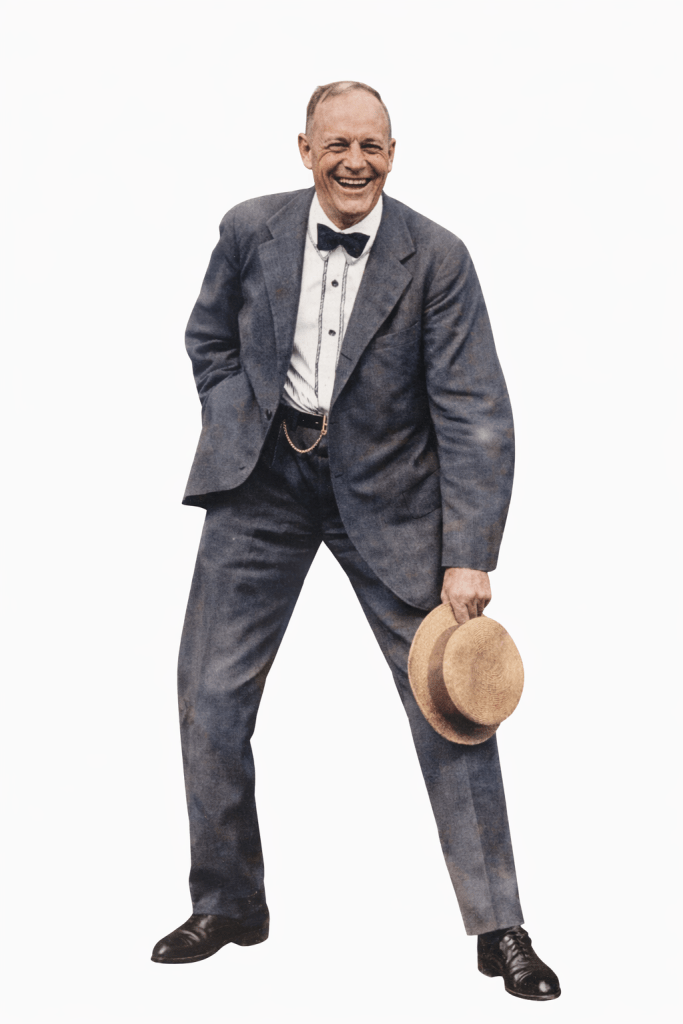
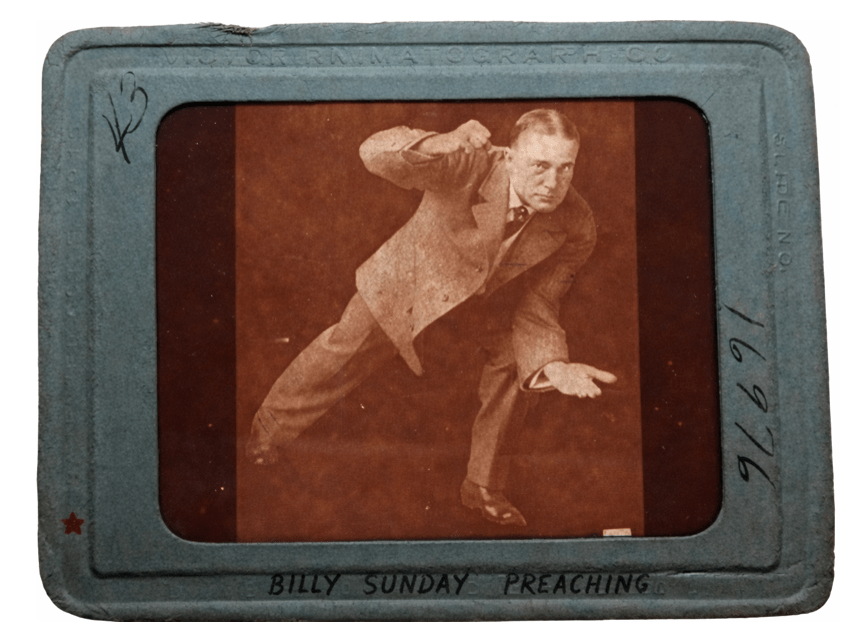
 Evangelist Billy Sunday (1862-1935)