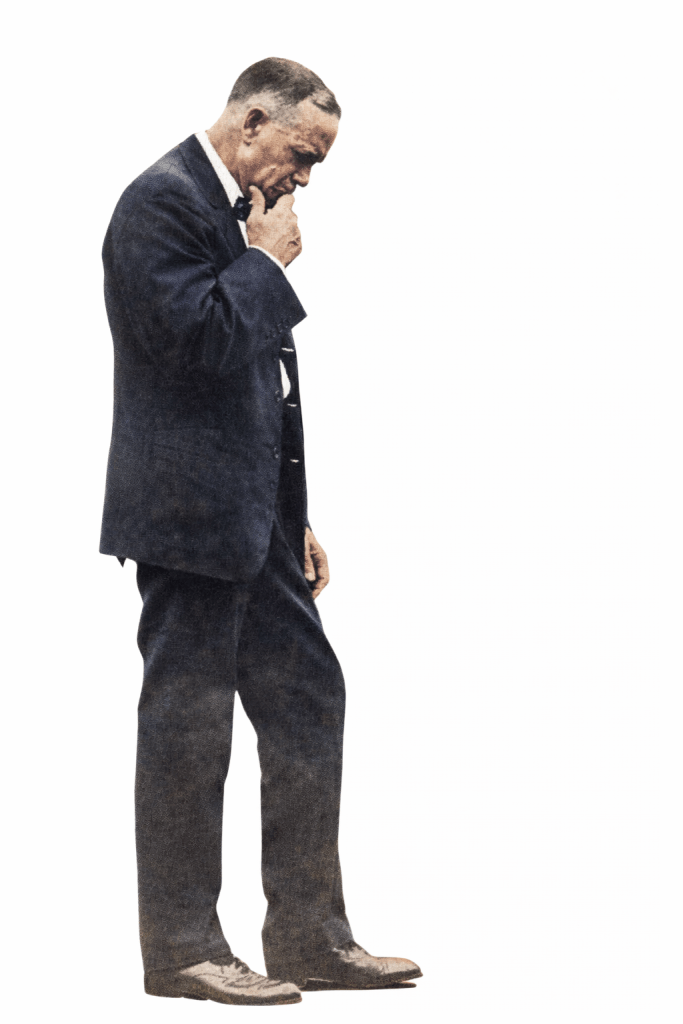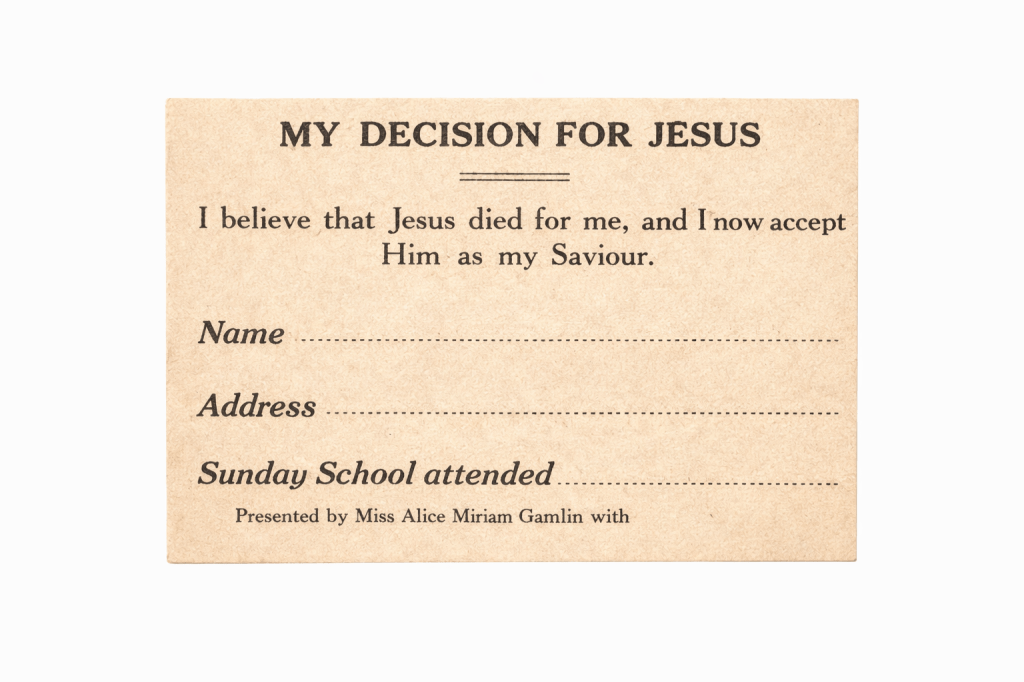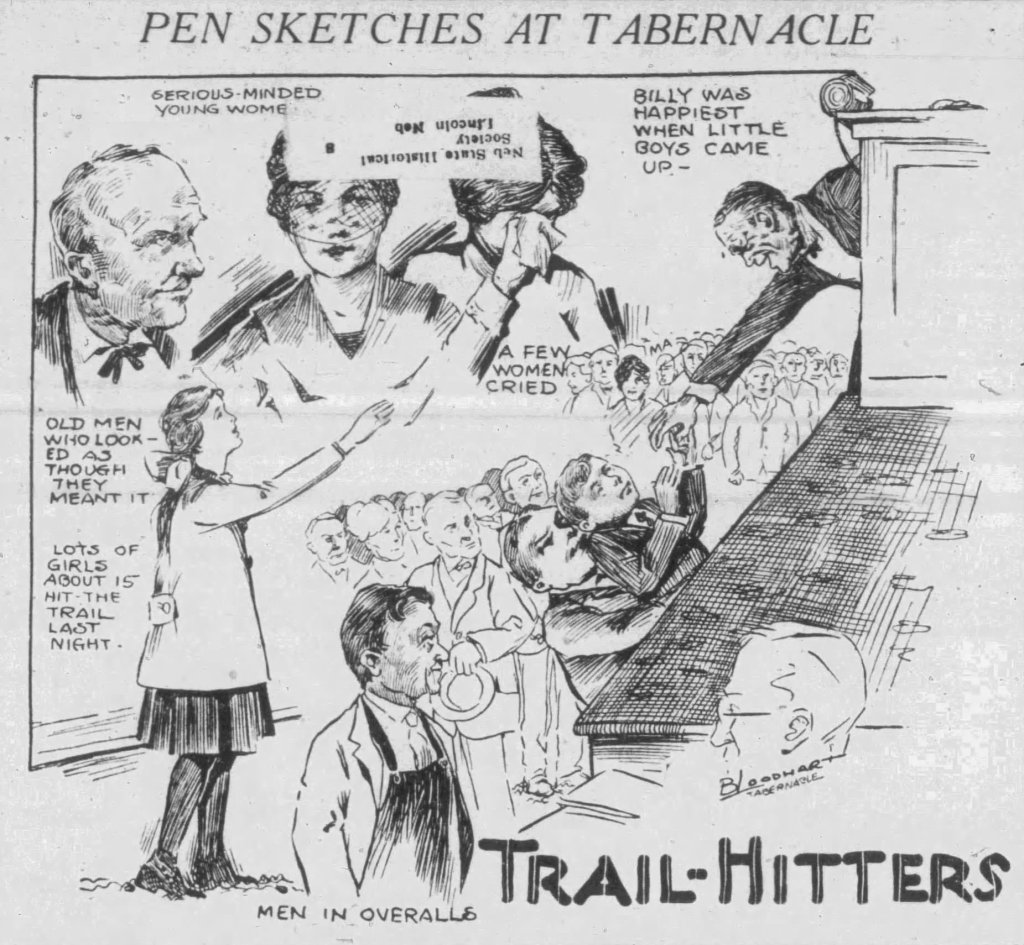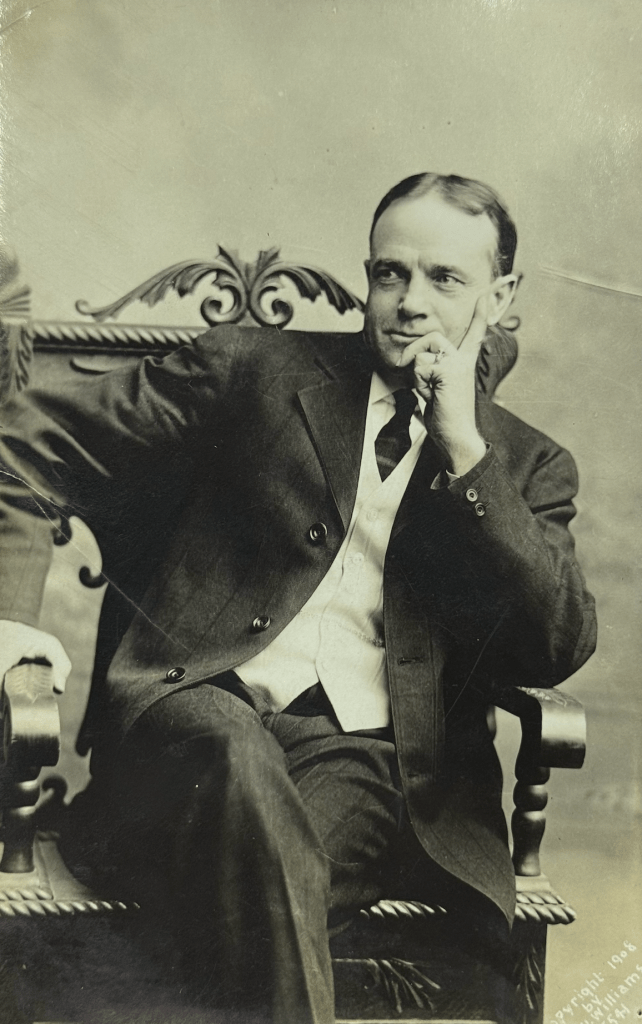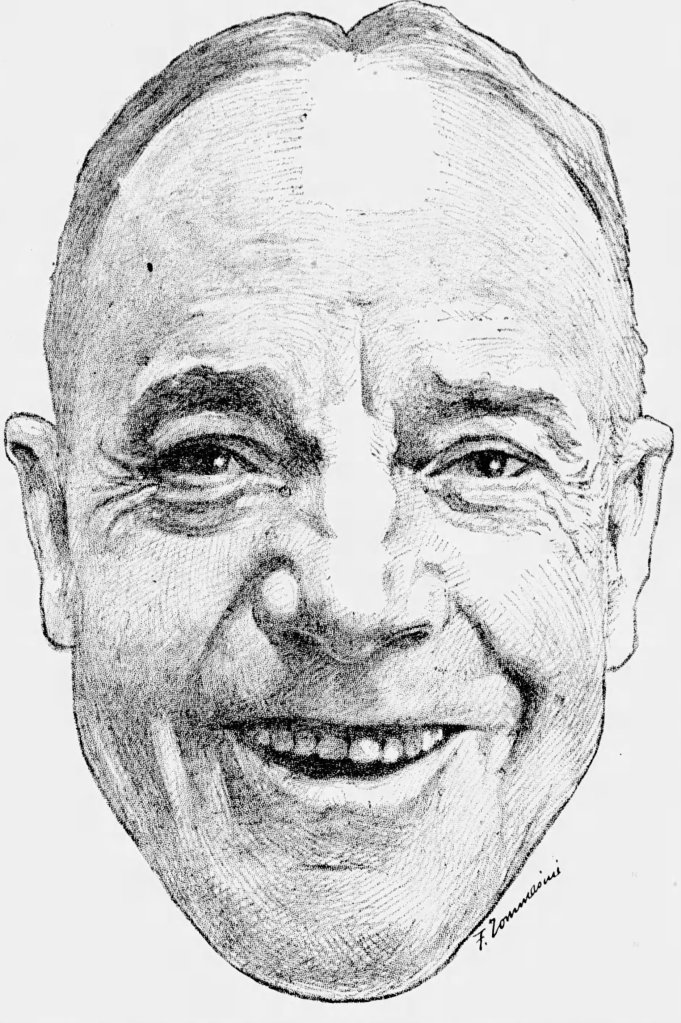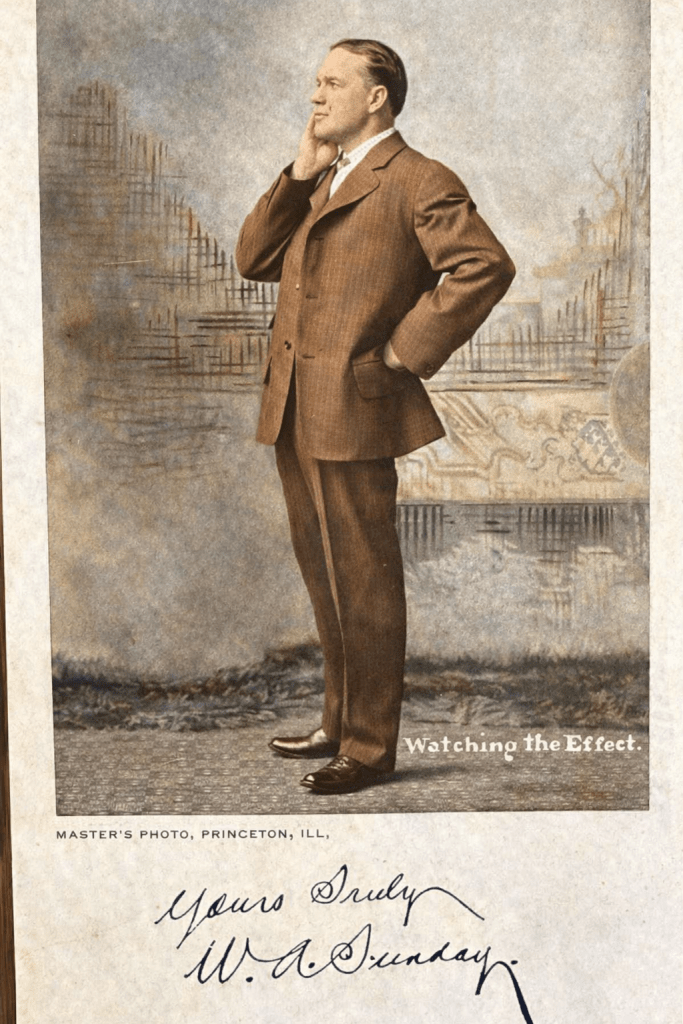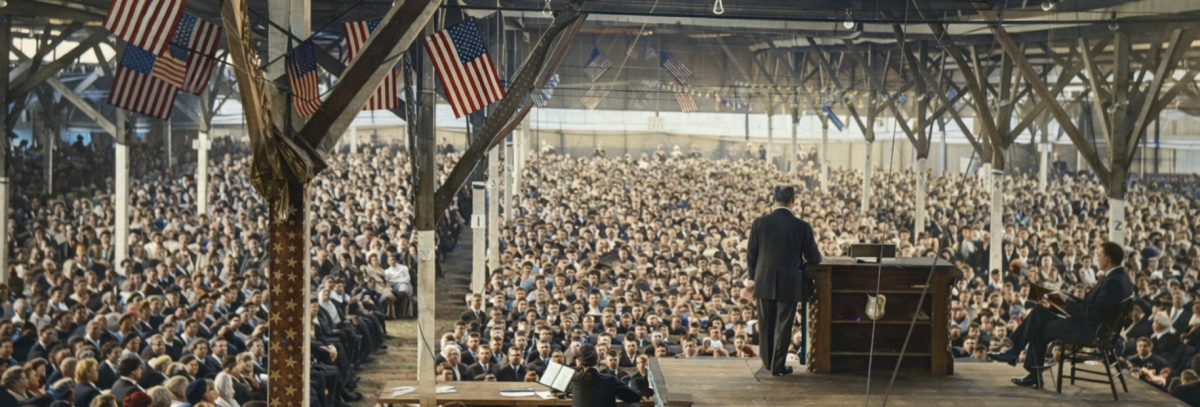
Billy Sunday receives bomb death threat while in Omaha in 1915

Curated from original Omaha Daily Bee newspaper

A sensational threat upon the life of Evangelist Billy Sunday, conveyed through a crudely written “black-hand” letter, stirred the city yesterday but failed to interrupt the progress of the revival meetings at the great tabernacle.

The warning, received through the mails on Wednesday, declared that a bomb would be hurled into the tabernacle at 2 o’clock Thursday afternoon, September 23, and that Sunday would be killed unless he departed the city within ten days. The missive, scrawled in poor handwriting across ordinary note paper, bore at its lower corner the drawing of a black hand and a crude sketch of a bomb connected to a clock marking the fatal hour.

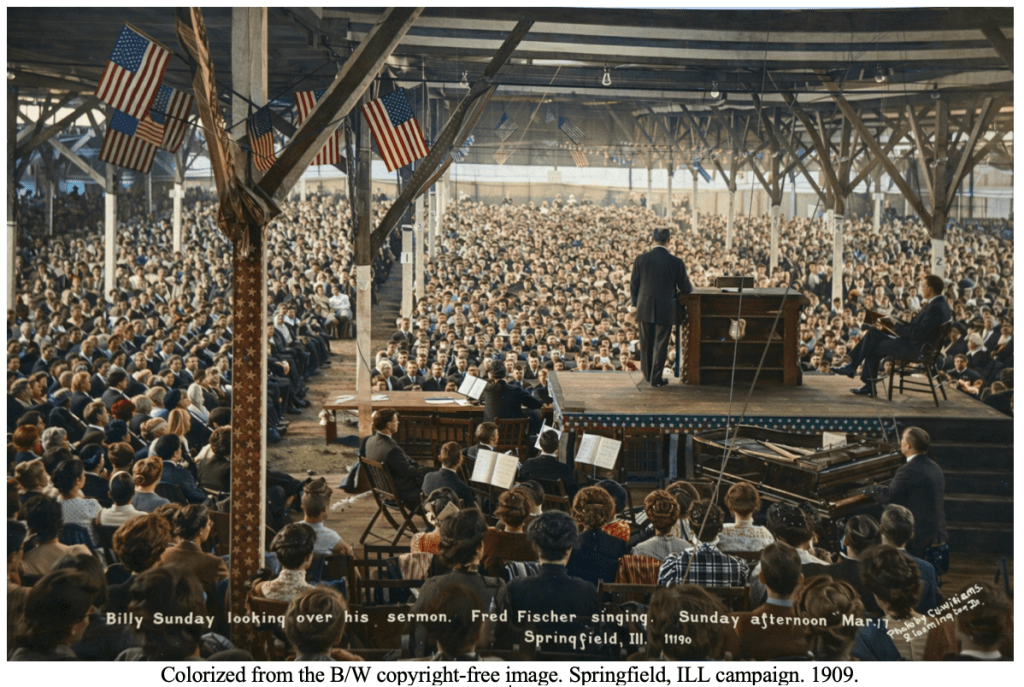
The Billy Sunday Tabernacle. Omaha, Nebraska.

Authorities were immediately notified. Chief of Police Dunn detailed detectives to trace the author of the threat, and a vigilant watch was ordered about the tabernacle grounds. Secretary Mathews, who first examined the letter, refrained from alarming the evangelist and quietly placed the matter in the hands of the police.

Despite the ominous warning, the Thursday afternoon meeting proceeded without incident. A squad of detectives, led by Sergeants Patsk Havey and Tom Donahue, mingled with the crowd, keeping careful surveillance in anticipation of any attempt upon Sunday’s life.

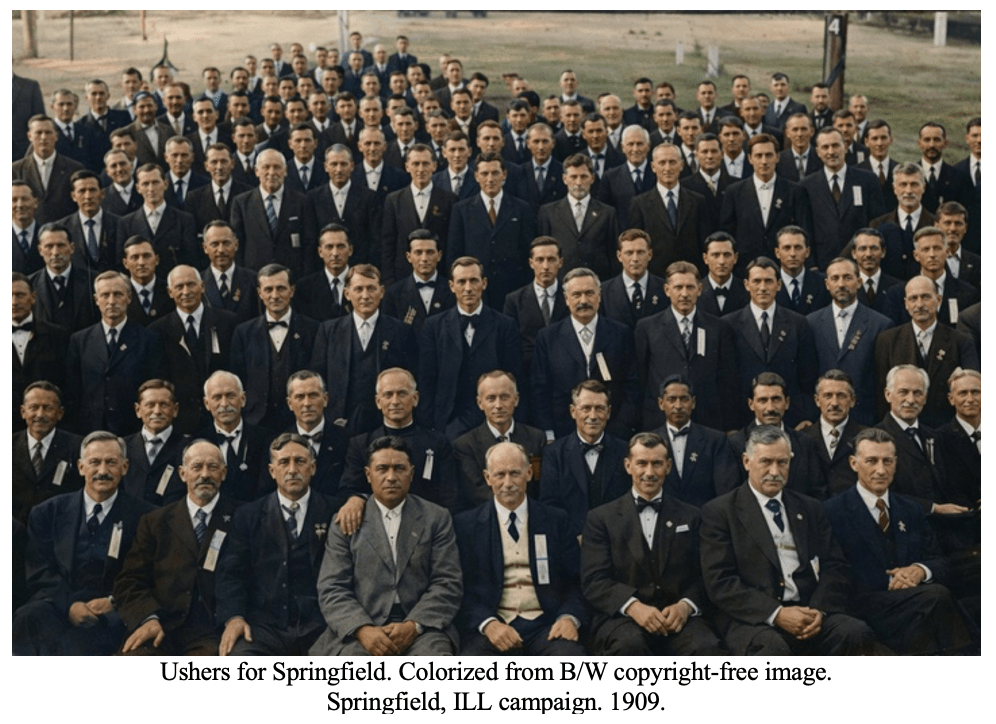
If the threat was intended to deter attendance, it met with mixed success. Many curious men flocked to the tabernacle, drawn by the sensational report, while the number of women present was noticeably reduced. Total attendance fell below the usual mark. Yet inside, the service moved forward undisturbed—save for the innocent crying of a baby, whose presence, smuggled past ushers, proved the only interruption to the evangelist’s address.

Thus, what promised to be a day of danger passed into one of quiet defiance. The bomb did not appear. The preacher remained. And the revival, under the watchful eye of the law, pressed on.

Adapted from: The Omaha Daily Bee, September 23 and 24, 1915

“Why the Church Is Weak”: Billy Sunday’s Blunt Message to Kansas City (1916)

When Billy Sunday preached in Kansas City during his 1916 revival campaign, his sermons often struck directly at the spiritual condition of the church itself. One message, reported by the The Kansas City Star, carried a sharp and revealing title: “Why the Church Is Weak.”

Sunday did not begin by blaming society, politics, or culture. Instead, he argued that the church’s weakness came from within.

“The sermon by Billy Sunday this afternoon had for its subject this verse from Judges xvi, 20: ‘He wist not that the spirit of the Lord had departed from him.’”

Drawing from the story of Samson, Sunday warned that the modern church could lose its spiritual power without even realizing it. In his view, the problem was not a lack of organization, buildings, or membership.

“Nothing in the world can substitute for the spirit of God.”

For Sunday, the church had become timid. Instead of confronting sin, it had grown cautious and respectable. He charged that many congregations had traded spiritual authority for social approval.

“The church is afraid of men and women; we are to be in the world, but not of the world.”

The evangelist insisted that the church had gradually surrendered its moral courage. Leaders often hesitated to rebuke wrongdoing among their members, even when it was obvious.

“Leading church members lead in nothing but card parties and society functions.”

To Sunday, such compromises drained the church of its influence. A church that tolerated worldliness could no longer confront it.

He argued that the true strength of Christianity had never been found in numbers or wealth. The early church, he reminded his audience, possessed little of either.

“God’s church has not increased correspondingly in power as it has in numbers… it has decreased in spiritual power.”

Sunday contrasted the modern church with the first believers described in the book of Acts. They had no impressive buildings, no social prestige, and little money. Yet they possessed something far greater—spiritual conviction.

“There was a time when the church had more members than she has today; there never was a time when she had more money than she has today… but there was a time when she had more spiritual power than she has today.”

Another cause of weakness, Sunday argued, was the church’s tendency to accommodate fashionable society. Rather than confronting sin, some congregations had become comfortable with it.

“That is why many a preacher is a failure today; he is a compromiser.”

Sunday spoke especially bluntly about moral compromise among church members. When churches tolerated behavior they should have challenged, they undermined their own witness.

“We have lost our power because we have compromised.”

But the evangelist did not end his message with criticism. He pointed his listeners toward the remedy: a return to genuine spiritual life. The church needed renewed faith, repentance, and courage.

He concluded with a simple but urgent appeal. If the church wanted to regain its strength, it needed to return to prayer and dependence upon God.

“If there’s anything the church of God needs it is to climb the stairs and get in an upper room.”

In the packed tabernacle that afternoon, Sunday’s message was unmistakable. The problem facing the church was not outside pressure or hostile culture. It was the quiet erosion of conviction within.

And until the church rediscovered the spiritual power that marked its earliest days, Sunday warned, its influence would continue to fade.

Billy Sunday as an Actor: How a Kansas City Newspaper Explained His Method (1916)

When Billy Sunday arrived in Kansas City during his 1916 revival campaign, reporters tried to explain what made his preaching so electrifying. One article in the The Kansas City Star offered an unusual perspective. Rather than describing Sunday simply as a preacher, the writer analyzed him as something closer to a dramatic performer.

The article was titled “Billy Sunday as an Actor,” and it attempted to dissect the evangelist’s method from a theatrical standpoint. What the reporter saw was not merely a sermon but a kind of living drama unfolding on the sawdust platform.

According to the writer, Sunday had the ability to bring invisible scenes vividly to life:

“Mr. Sunday, erect and eloquent, is addressing some jury which is corporeally invisible, but which instantly lives before the eyes.”

In other words, Sunday’s sermons created mental pictures so vivid that listeners could almost see the courtroom of heaven forming before them. The preacher might begin by placing his audience before the bar of divine judgment, describing the sinner standing before God.

But the sermon did not stay in one place for long. Sunday constantly shifted roles, turning the message into a dramatic sequence of scenes. One moment he might portray a bartender leaning over a counter; the next he was the drunken customer staggering through the gutter.

The article described these rapid transitions with striking clarity:

“Then he becomes a barkeeper… And in another instant he is the drunkard—‘a dirty rum guzzler’—cringing, broken, swaying to the gutter.”

Through pantomime, gestures, and changes in voice, Sunday acted out moral situations that his audience immediately recognized.

The reporter concluded that Sunday’s preaching relied heavily on what he called melodrama. But the word was not meant as criticism so much as explanation. Melodrama, the article observed, was easy for ordinary people to understand because it dealt in clear moral conflict.

“Melodrama has nothing to do with character and is easy to understand,” the writer noted. “It is the drama of situation.”

That description captures something essential about Billy Sunday’s preaching. His sermons did not revolve around abstract theological debates. Instead, they focused on recognizable human stories: the drunkard, the wandering son, the sinner facing judgment.

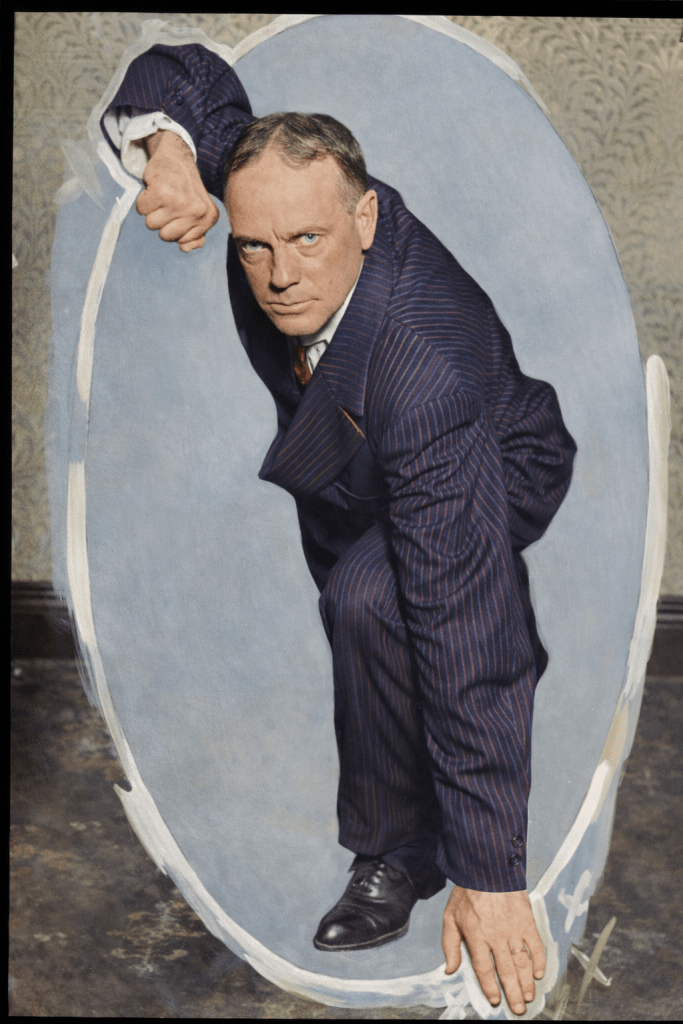
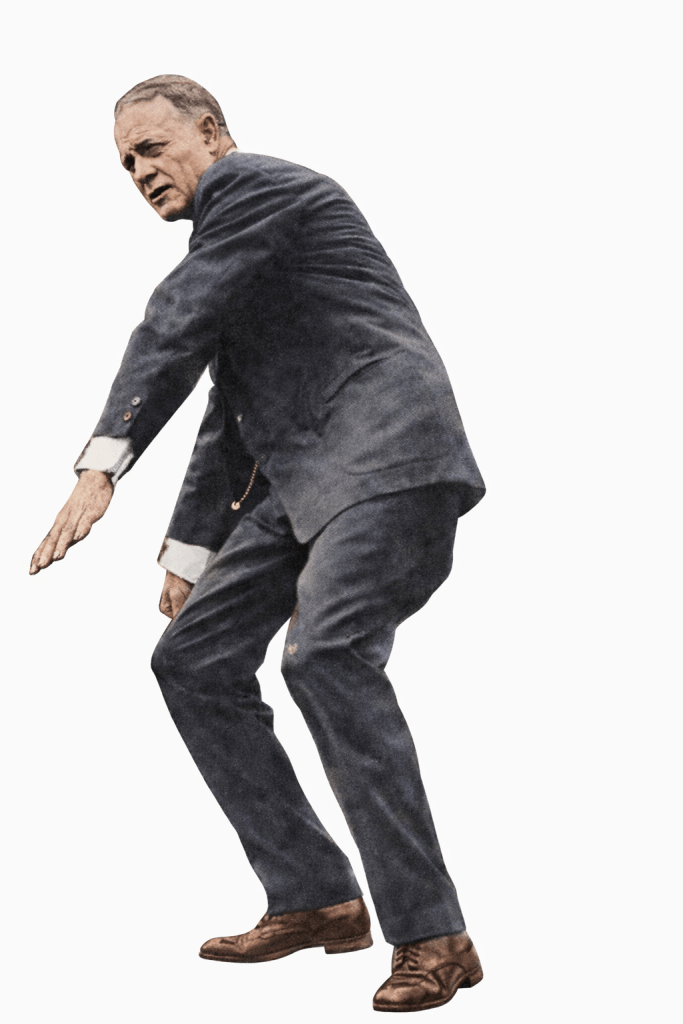
Another feature the reporter noticed was Sunday’s physical intensity. The evangelist rarely stood still. He ran, leaped, stamped his foot, pointed accusingly, and pounded the pulpit for emphasis. The effect, the article suggested, was almost like watching an athlete or dancer.

One colorful comparison even likened him to the famed ballet performer Vaslav Nijinsky—an extraordinary metaphor for a revival preacher.

Perhaps the most perceptive observation in the article concerned the simplicity of Sunday’s language. The reporter noted that his words were blunt, Anglo-Saxon, and forceful:

“Short, pungent… Saxon derivatives of English… packed full of powerful stimulus.”

This plainspoken style, filled with vivid phrases and sharp imagery, helped Sunday communicate with audiences drawn from every social class.

In the end, the Kansas City writer recognized something that many critics missed. Billy Sunday’s sermons were not merely lectures about religion. They were dramatic moral confrontations, staged in front of thousands of listeners each night.

On the bare platform of a temporary tabernacle, without scenery or props, Sunday created entire scenes through voice, motion, and imagination. His preaching was not simply heard—it was seen and felt.

And that, the reporter concluded, was the secret of his remarkable power over a crowd.

Adapted from: The Kansas City Star. May 4, 1916:2.

Billy Sunday Comes to Beaver Falls (May–June 1912)

When Billy Sunday rolled into Beaver Falls, Pennsylvania, in the spring of 1912, the town was not simply hosting another traveling preacher — it was about to experience one of the most energetic revival campaigns of the Progressive Era.

From May 19 to June 24, 1912, Sunday’s massive wooden tabernacle stood as the focal point of community life. Every night the building filled with the noise of hymns, sawdust underfoot, and Sunday’s unmistakable mix of athletic bravado, homespun humor, and urgent gospel appeal.

A Thunderous Opening

The campaign opened on Sunday, May 19, 1912, and the response was immediate. Newspapers report that 5,000 people packed the tabernacle that first day — a remarkable turnout for a town the size of Beaver Falls.

This wasn’t curiosity alone. People came expecting something — conviction, hope, or perhaps just the spectacle of America’s most famous evangelist in action. What they received was classic Billy Sunday: vivid stories, blunt moral challenge, and a call for personal decision.

Six Weeks That Shook the Town

Over the next five weeks, the revival became the center of local conversation. Businesses adjusted hours, families planned around evening services, and local pastors cooperated in ways that were rare in an age of denominational competition.

By the end of the campaign, the results were striking:

  • Nearly 4,000 people made public professions of faith.
  • On one particularly dramatic Sunday night, 8,000 people attended, and 200 walked the “sawdust trail” — Sunday’s famous term for coming forward to make a commitment to Christ.
  • Financial support for the campaign totaled $10,244 for Billy Sunday and his team — a significant sum in 1912, reflecting broad community buy-in rather than a handful of wealthy donors.

Newspapers emphasized that this was not simply emotional enthusiasm. Churches reported new members, families reconciled, and local leaders spoke of a noticeable moral impact on the town.

A Scholar’s Honor for a Street-Corner Preacher

Perhaps the most surprising moment of the campaign came not in the tabernacle, but on a college campus.

While in Beaver Falls, Sunday was awarded an honorary doctorate from Westminster College in Pennsylvania.

This was no small thing.

Sunday had no formal theological training. He was a former baseball player turned evangelist — rough around the edges, energetic, and deeply practical. Yet Westminster recognized that his cultural influence and moral leadership were shaping American religious life in ways few professors ever could.

In many ways, the honor symbolized something larger: Billy Sunday had moved from being a popular revivalist to a nationally respected religious figure.

Why Beaver Falls Matters

The Beaver Falls campaign illustrates why Billy Sunday mattered in American history:

  • It shows the scale of his influence — thousands attending, thousands responding.
  • It reveals his ability to unite communities across denominational lines.
  • It demonstrates that revival in the early 20th century was not merely emotional theater; it was a movement that reshaped churches, families, and civic life.
  • And it reminds us that Sunday was not just a showman — he was a man whose message was taken seriously enough to earn the respect of higher education.

For six weeks in 1912, Beaver Falls became a spiritual crossroads where ordinary people encountered an extraordinary evangelist — and many left changed.


The Billy Sunday Party, C. 1909 – Marshalltown, Iowa

Billy Sunday Comes to Marshalltown (April–May 1909)

In the spring of 1909, Marshalltown, Iowa was transformed into a revival center that drew crowds from across the region and left a lasting mark on the community.

Billy Sunday’s campaign ran from April 25 through May 29, 1909, with the tabernacle standing as the visible heart of the movement. The vast wooden structure dominated the landscape, and every night it filled with singing, testimony, and Sunday’s electrifying preaching.

The opening night on Sunday, April 25 set an extraordinary tone.

Newspapers reported that 12,000 people attended the very first day, even though the tabernacle’s seating capacity was only 5,000. The crowd spilled out around the building, filling the grounds, streets, and nearby areas. Trains brought visitors in, local families rearranged schedules, and the entire town seemed to pulse with anticipation.

Sunday’s preaching style was unmistakable: plain-spoken, forceful, and vividly illustrated. He mixed humor, athletic imagery, moral urgency, and heartfelt appeals for personal decision, holding massive audiences in rapt attention night after night.

The campaign did not slow down.

By the final day on May 29, Sunday preached to 13,200 people, an even larger crowd than opening night. That evening, 125 people walked the “sawdust trail,” publicly committing their lives to Christ.

But the revival was far more than a handful of large meetings.

According to newspaper accounts, there were 84 separate services held inside the tabernacle alone. Beyond that, the spiritual energy of the campaign spilled into the wider city: another 528 meetings took place in churches, homes, schools, and gathering places throughout Marshalltown.

The numbers are staggering for a town of its size.

Total attendance across the six weeks reached 199,300 people. This figure included repeated attendance by many locals as well as visitors from surrounding towns and counties.

Total collections for the campaign amounted to 12,894 dollars — a substantial sum in 1909. From this, Billy Sunday personally received 6,500 dollars for himself and his team, with the rest covering the costs of running such a massive operation.

Newspapers also reported that approximately 2,000 people made professions of faith over the course of the campaign. Local pastors later testified that many of these converts joined churches and became active participants in community life.

Marshalltown formally closed the revival on June 6, according to the Freeport Weekly Standard, marking the end of one of the most intense religious seasons the city had ever experienced.

What makes Marshalltown especially significant in the story of Billy Sunday is not just the scale of attendance, but the depth of community involvement. This was not a series of isolated sermons; it was a town-wide movement that reshaped schedules, united churches, and focused public attention on moral and spiritual questions for weeks at a time.

For six remarkable weeks in 1909, Marshalltown was not simply an Iowa town — it was a crossroads where tens of thousands encountered the passionate message of America’s most famous evangelist.

Long after the tabernacle came down, people remembered that spring as a moment when their city stood at the center of something larger than itself.

The Youngstown, Ohio (early 1910) Sunday-revival

The Cleveland Plain Dealer. Feb 6, 1910  

Billy Sunday Comes to Youngstown: A City on Fire (January–February 1910)

When Billy Sunday rolled into Youngstown, Ohio, in January 1910, he did not arrive quietly—and Youngstown did not receive him quietly either.

From the very first night, it was clear that this industrial city, filled with steel mills, rail yards, immigrants, laborers, and restless energy, was primed for revival. Sunday began his campaign on January 8, 1910, and within hours it was obvious that this would be no ordinary meeting.

A city floods the tabernacle

On opening night, 5,000 people packed the tabernacle, according to the New Castle News (Jan. 10, 1910). The very next evening, crowds swelled to 7,000, as reported by The Pittsburgh Post (Jan. 10, 1910). The word had spread fast: Billy Sunday was in town, and Youngstown wanted in.

As the weeks unfolded, the numbers only grew more astonishing.

By February 4, the campaign had already recorded 2,221 conversions. That same night, 15,000 people attempted to crowd into a tabernacle that could seat only 7,000—a vivid picture of spiritual hunger and civic excitement. The Cleveland Press marveled at the scene, noting the crush of humanity trying simply to hear Sunday preach.

Youngstown had become a revival city.

The dramatic final Sunday

The campaign reached its crescendo on February 20, 1910.

That final day, 10,000 people attended, while 6,000 more were turned away for lack of space. The Marion Daily Star reported that 5,900 total conversions had been recorded over the course of the meetings, including 970 decisions on the closing day alone.

It was a stunning finish—one of those great climactic Sundays that made Sunday’s name synonymous with American revivalism.

At the conclusion of the campaign, Sunday received his customary purse of 10,000 dollars, a significant sum in 1910 and a sign both of the city’s appreciation and of the scale of the event.

What Youngstown reveals about Billy Sunday

The Youngstown campaign illustrates several hallmarks of Billy Sunday’s ministry:

  • mass appeal: from night one, thousands came. This was not a slow build—it was a tidal wave.
  • urban impact: Youngstown, a gritty industrial center, responded with remarkable intensity, showing that Sunday’s message resonated far beyond small towns or rural communities.
  • public spectacle and spiritual urgency: the overflow crowds on multiple occasions suggest that this was as much a civic event as a religious one.
  • measured results: newspapers tracked conversions closely, giving us concrete numbers that help modern historians gauge the scope of the revival.

Most of all, Youngstown demonstrates why Sunday was “the man for the moment.” In an era of rapid industrial change, social tension, and moral anxiety, he spoke with clarity, fire, and confidence—and cities like Youngstown listened.

More than a century later, the Youngstown campaign stands as one of the great urban revivals of Sunday’s early career. The numbers are impressive, but the deeper story is about a city temporarily transformed—its people stirred, challenged, and moved to decision.

J. Wilbur Chapman on Billy Sunday

Writing just days after the Youngstown campaign ended, J. Wilbur Chapman offered this striking tribute to Sunday in The Dayton Herald (Feb. 23, 1910):

“Some of the sermons he preaches now are not mine. I love him. I know his sincerity and passion for Jesus. I thank God for his ministry. Most of us are too dignified. Let rules of grammar and conventionality be broken if souls can be saved. As soon as he begins to speak the doors will be closed so you can’t get out. You’ve got to take your dose for once. If ever a man was called to preach; if ever a man had the seal of God’s approval on his ministry, that man is Sunday. I take off my hat to any man that can turn men to Jesus Christ.”

Billy Sunday in Bellingham, Washington: Six Weeks that Stirred the City (April–May 1910)

After wrapping up in Danville, Illinois (early April 1910), Billy and his family left for
Bellingham aboard a train.

When Billy Sunday arrived in Bellingham, Washington, in the spring of 1910, the city knew something significant was about to happen.

His campaign formally began on April 17, 1910, and was scheduled to run for six weeks through May 29. Even before the opening service, anticipation was high. On April 16, The Bellingham Herald placed the coming revival on the front page, signaling that this was not just another religious meeting but a major civic event.

From the start, the campaign drew extensive attention. Local and regional newspapers covered Sunday’s meetings with unusual depth and frequency. By May 2, The Seattle Star was featuring the revival prominently on its own front page, evidence that Sunday’s influence extended far beyond Bellingham into the broader Pacific Northwest.

One of the most remarkable days came on Sunday, May 1. That evening, approximately 15,000 people crowded into the tabernacle and surrounding grounds to hear Sunday preach. The turnout was stunning for a city of Bellingham’s size at the time. Collections that day totaled $3,201.10, a substantial sum in 1910, reflecting both the generosity of the crowd and the financial scale of Sunday’s campaigns. That same service also recorded 140 conversions, showing that this was not merely spectacle but a movement that claimed measurable spiritual results.

Interest in Sunday’s work went beyond daily newspaper reports. On May 8, The Bellingham Herald devoted magazine-style coverage to the revival, suggesting that the meetings had become a defining moment in the city’s public life rather than a passing event.

Perhaps the most revealing glimpse into Sunday himself came from an interview published in The Daily Herald of Everett on May 18 under the title “Billy Sunday: His Methods, His Ideas and His Work.” In it, Sunday rejected the idea that his success came from showmanship or gimmicks. He explained his approach in characteristically plain terms:

“I haven’t any tricks. I’m just an old-fashioned preacher. I tell people in plain words the simple truth, that they are lost in sin and need salvation. I just preach the Bible – that’s all.”

That statement captures the heart of his appeal in Bellingham. He did not present himself as a social reformer, a political activist, or a religious entertainer. He came as a straightforward revival preacher who believed that the Bible, clearly proclaimed, could still change lives.

By the time the campaign concluded on May 29, Bellingham had experienced six weeks of intense preaching, packed crowds, and sustained public attention. For many residents, these meetings likely became a defining memory of the year 1910—a season when their city was temporarily at the center of a national religious movement.

The Bellingham campaign illustrates why Billy Sunday was such a powerful figure in early twentieth-century America. He could command enormous crowds, attract front-page coverage, inspire generous giving, and still insist that his effectiveness rested not on method but on message. In Bellingham, as in so many other cities, Sunday left behind not just statistics, but stories of a community stirred by revival.

Billy Sunday in New Castle, Pennsylvania: A City Swept by Revival (September–October 1910)

When Billy Sunday came to New Castle, Pennsylvania, in the fall of 1910, the city quickly discovered that it was not ready for what was about to happen.

The campaign opened on September 18, 1910, and from the very first service it was clear that the tabernacle—built to hold 7,500 people—was not nearly large enough. According to the New Castle Herald (Sept. 19, 1910), crowds overflowed the structure on opening day, spilling into the streets and surrounding grounds. What had been intended as a major civic event immediately became something larger: a public phenomenon.

For six weeks, New Castle lived inside a revival. Night after night, thousands gathered to hear Sunday preach in his unmistakable style—direct, forceful, unsparing, and deeply earnest. Newspapers across western Pennsylvania followed the meetings closely, treating the campaign as front-page news rather than mere church business.

By the time the final service concluded on October 30, the numbers were staggering.

In total, $12,500 was collected during the campaign, as reported by the Warren Times Mirror on November 3, 1910. But far more striking were the spiritual results reported by local churches: 6,383 recorded conversions, including 1,050 decisions on the final evening alone.

The New Castle Herald captured the meaning of those numbers in a powerful editorial reflection on October 31:

“Just think of 6,383 souls being added to the churches of this city and county. This means one out of every six persons residing in this city. It means a very much larger proportion in reality, for these 6,383 are all of age to think and to accept for themselves the doctrines of Christianity. In the light of this, the money given yesterday to the evangelist seems a trivial sum, when compared with the good he has done.”

That statement goes to the heart of why New Castle mattered in Sunday’s career. This was not simply a revival that filled a building or generated headlines. It reshaped congregations across an entire region. Local churches suddenly found themselves filled with new members, new energy, and new responsibility for discipleship.

The New Castle campaign also illustrates why Billy Sunday became such a defining figure in early twentieth-century America. In an era before radio, television, or social media, he could command massive crowds purely through reputation, word of mouth, and the sheer force of his preaching. Cities did not merely host Sunday; they were changed by him.

More than a century later, the New Castle revival stands as one of Sunday’s most dramatic successes. For six weeks in 1910, a steel-town community experienced a spiritual earthquake—one that newspapers, pastors, and ordinary citizens remembered long after the tabernacle was torn down.

For historians of revival, New Castle offers a vivid case study in how Sunday’s campaigns worked: huge crowds, intense emotion, measurable results, and lasting impact on local churches.

For the people of New Castle, it was simply the season when their city met Billy Sunday—and was never quite the same again.