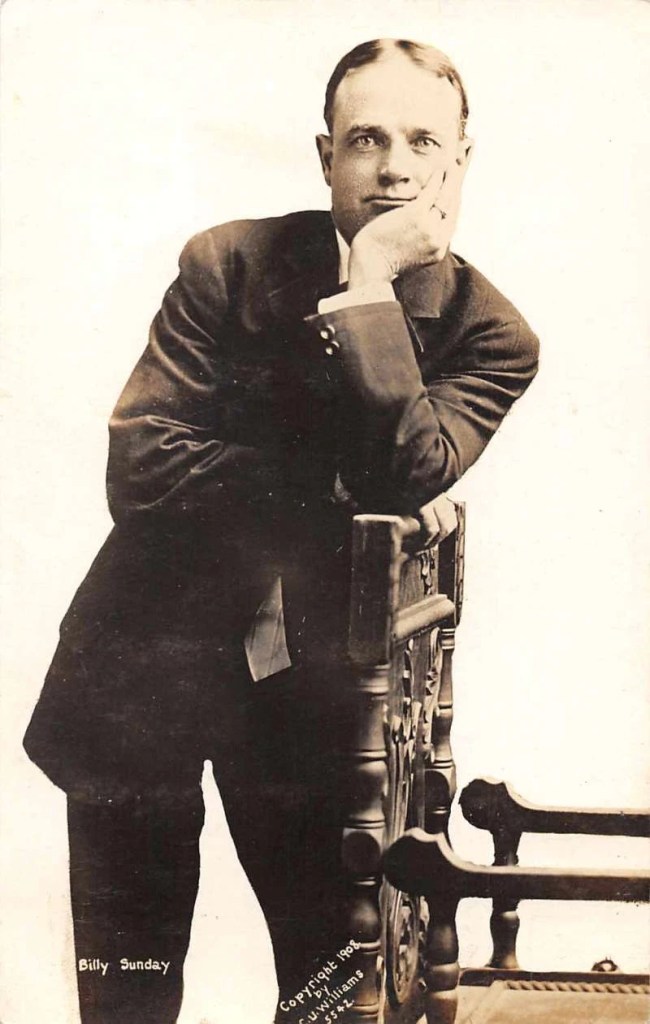
Former professional baseball player-turned urban evangelist. Follow this daily blog that chronicles the life and ministry of revivalist preacher William Ashley "Billy" Sunday (1862-1935)
“It is impossible to describe William A. Sunday. He simply gets there. While he shocks some of the staid old deacons by his rough and ready way of putting things, the great throng stand on and applaud. He has a wonderful gift of street slang and he uses the choicest of it. He can preach using as fine English as any man in the country, but he is dreadfully lonesome doing it. He likes to employ language people best understand.
He is a slight man, weighing less than 140 pounds, but is wiry and as scienced as Jeffries. He is a bundle of nerves, and from the moment he throws a beautiful fur coat from his shoulders to the close of the meeting every nerve is put in play. Those who hear him go away stating that he cannot stand it long to work with the nerve force he does, but he has stood it for eight years and is as able today as he was in the beginning. He pleads, he entreats, he prays and weeps, and the crowd are with him. Few men have the power to sway crowds like Sunday. He can cause them to break out in peals of laughter and can make them weep copiously as he appeals to sympathy. He is great on storytelling and can embellish with all the facial expressions necessary. He is so agile on the stage that without any trouble at all he can lean over backward and touch his head to the floor, and, if occasion demanded, could turn a flip with the best of them.
It is this that undoubtedly arouses the curious and those who wish to be entertained. But it doesn’t end there. He can preach powerful sermons. If you go once you go twice and if you go twice, you will find that at the close of his month’s services you have been present at about every service.”
– The Sioux City Journal (Sioux City, Iowa) · Sun, Feb 26, 1905 · Page 9.
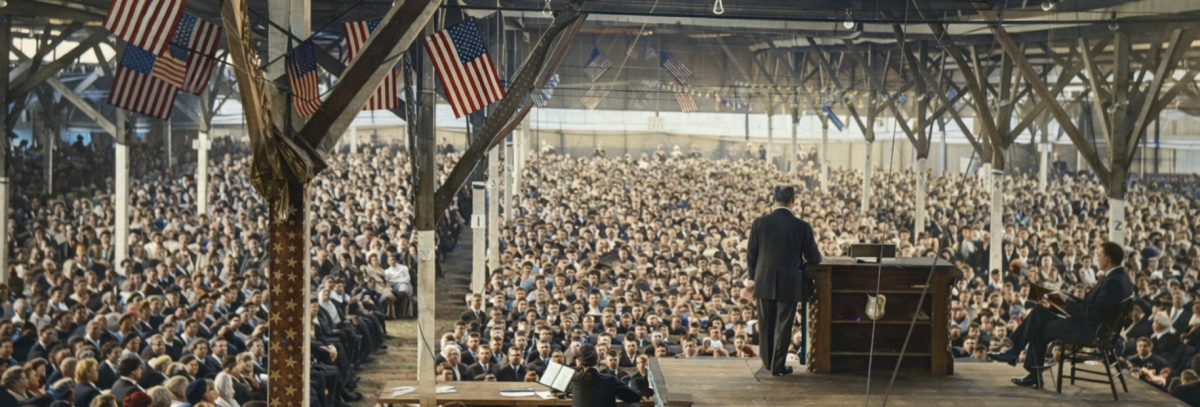
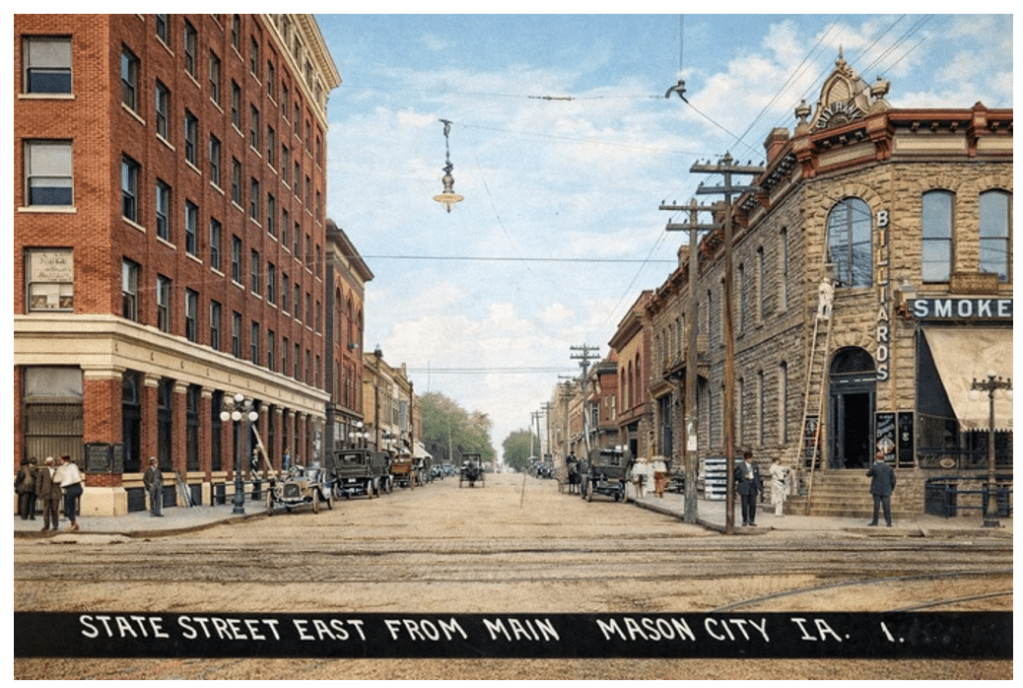
Billy Sunday conducted a month-long revival campaign in Mason City, Iowa, from January 13 to February 12, 1905, during a period when the city’s population was only about 8,300 and total church membership was roughly 3,000. A temporary tabernacle constructed of rough boards and tar paper—heated by six furnaces to withstand winter conditions—served as the central venue for the meetings.
Attendance was substantial for a community of Mason City’s size. One January meeting drew 2,000 men, while associate evangelist Ira E. Honeywell simultaneously addressed 1,000 women in a separate gathering. During a notable men’s meeting on January 29, Sunday delivered a forceful sermon condemning social vices; more than 50 men responded for prayer and conversion. The revival continued despite severe winter weather, including temperatures reported at twenty below zero.
By the campaign’s conclusion, the meetings had produced approximately 700 conversions, including 200 on the final day. Sunday received a $1,800 love offering, while an additional $2,500 was raised for campaign expenses and $800 for the city’s poor. Contemporary newspapers widely reported the revival and praised Sunday’s energetic preaching style and his unusual ability to sway large crowds.
In the summer of 1910, Billy Sunday stood at an interesting crossroads in his rapidly expanding ministry. By this point he was already nationally known as one of America’s most electrifying evangelists. Cities across the country were beginning to build large tabernacles to accommodate the crowds that flocked to hear him preach. Yet during the summer months—when revival campaigns often paused—Sunday occasionally appeared on the Chautauqua circuit, the great American network of traveling lecture assemblies that combined education, entertainment, reform movements, and religion.
Unlike many lecturers who spent the entire season touring the circuit, Sunday’s 1910 Chautauqua schedule was surprisingly limited. He appeared only at a handful of assemblies, and his comments to the press make clear that this was intentional. Sunday had been offered lucrative opportunities to spend the entire summer lecturing. One newspaper reported that he declined an offer of $20,000 to devote the season to Chautauqua work, explaining that the exhausting schedule would leave him unable to conduct revival campaigns in the fall.
“The report that I am to retire is all pure nonsense… I refused $20,000 to give my time to Chautauqua work this summer, as I would be worn out and could not preach before January.”
Sunday’s priority remained evangelistic preaching. Nevertheless, the few Chautauqua appearances he did make during the summer of 1910 provide a fascinating glimpse into his growing national popularity and the remarkable drawing power he already possessed.
Whidbey Island: The Northwestern Chautauqua Assembly
Sunday’s Chautauqua engagements began on July 24, 1910, at the Northwestern Chautauqua Assembly on Whidbey Island, Washington.
At this gathering Sunday delivered a message titled “Forces that Win.” Like many of his sermons, it blended moral exhortation with vivid biblical storytelling. Reports indicate he illustrated his message with the story of David and Goliath, a favorite example of spiritual courage overcoming overwhelming odds.
Even among the prominent lecturers and performers typical of a Chautauqua program, Sunday stood out. His dynamic speaking style—rapid delivery, colorful language, and dramatic physical movement—contrasted sharply with the more measured lecture format audiences often expected.
Hillsboro–Litchfield: A Midwestern Assembly
In early August Sunday appeared at the Hillsboro–Litchfield Chautauqua, running from August 4 through August 11. These regional Chautauqua assemblies usually featured a mixture of lectures, concerts, political discussions, and religious addresses.
Sunday’s presence on such programs reflected the growing recognition that he was not merely a revivalist but also one of the most compelling public speakers in the country.
Maxwelton, Washington: Crowds Even in Small Communities
On August 6, Sunday spoke at the Maxwelton Chautauqua in Washington, addressing a crowd estimated at 4,500 people.
The size of the audience is striking. Maxwelton itself was a small community, yet thousands gathered to hear Sunday speak. Even outside the large urban revival campaigns for which he would soon become famous, his reputation alone was enough to draw impressive crowds.
Patterson Springs: Record-Breaking Interest
Another Chautauqua stop came on August 10 at Patterson Springs. Newspapers noted that Sunday had previously delivered a lecture there that produced $3,600 in ticket receipts, reportedly a record for a single Chautauqua lecture.
This financial success reveals something important about Sunday’s role in the Chautauqua movement. He was not just a preacher filling a religious slot in the program. He was one of the circuit’s major attractions, capable of drawing large audiences and generating significant revenue.
Even so, Sunday resisted becoming primarily a Chautauqua lecturer. His heart remained in revival work.
Lake Whatcom: The “Human Interest” Lecturer
On August 24, Sunday appeared at the Washington Assembly Chautauqua near Lake Whatcom. Promotional material advertised him as delivering the program’s “human interest” lecture, a category that perfectly suited his style.
Sunday’s talks often mixed humor, storytelling, social criticism, and passionate moral appeal. He could move easily from a humorous anecdote to a blistering denunciation of vice, particularly the liquor trade. This blend of entertainment and moral seriousness made him an ideal Chautauqua speaker.
Richmond, Indiana: A Crowd of Eight Thousand
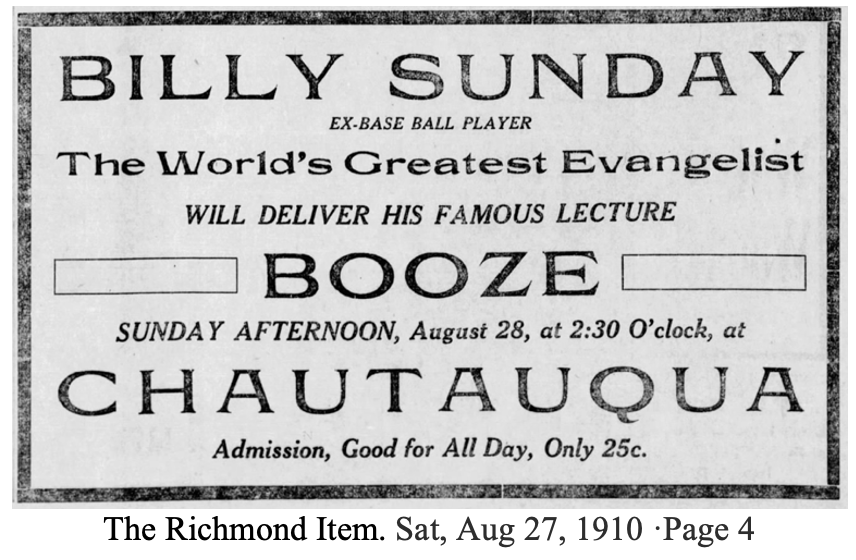
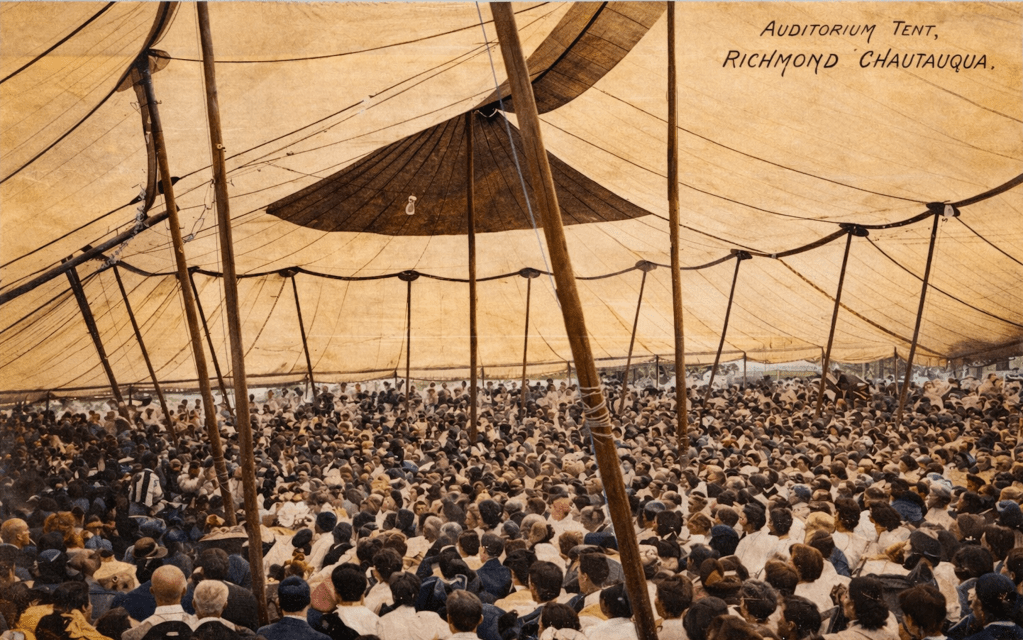
Sunday’s most dramatic Chautauqua appearance of 1910 came on August 28 at the Richmond, Indiana Chautauqua.
The crowd numbered roughly 8,000 people, and Sunday delivered one of his most famous temperance sermons, “Booze.”
Contemporary accounts describe a performance that was nothing short of theatrical. Once fully warmed up, Sunday removed his coat and launched into an explosive denunciation of the saloon. At one point he grabbed a red flag representing the liquor trade, hurled it to the ground, and stamped on it before triumphantly seizing the American flag to symbolize moral victory.
Such dramatic gestures were typical of Sunday’s style. Critics sometimes mocked them as stage tricks, but audiences loved them. They reinforced his reputation as the relentless enemy of alcohol and social vice.
Why the 1910 Season Was Short
One of the most interesting aspects of Sunday’s Chautauqua activity in 1910 is how limited it was.
Rumors circulated in the press that he might be retiring from public speaking altogether. In reality, the opposite was true. Sunday simply refused to devote the entire summer to the lecture circuit.
He explained that constant Chautauqua travel would leave him exhausted and unable to conduct the revival campaigns that he believed were his true calling. Instead, he used the summer months partly for rest and partly for select speaking engagements before returning to the intense schedule of fall revivals.
This decision proved wise. Later in 1910 Sunday conducted major campaigns in New Castle, Pennsylvania, and Waterloo, Iowa, drawing enormous crowds and recording thousands of conversions.
A Glimpse of Sunday’s Expanding Influence
Though brief, Billy Sunday’s 1910 Chautauqua season reveals several important aspects of his rising influence.
First, it demonstrates the extraordinary demand for him as a public speaker. Even isolated appearances drew crowds in the thousands.
Second, it shows that he was already a major figure in the reform movements of the era—especially the temperance crusade.
Finally, it highlights Sunday’s own priorities. While many speakers made their careers on the Chautauqua circuit, Sunday viewed it as secondary. His passion remained revival preaching and evangelism.
In hindsight, the summer of 1910 marks a moment when Billy Sunday could have easily become one of the most lucrative lecturers in America. Instead, he chose the harder path—returning to the sawdust floors of revival tabernacles and the exhausting pace of evangelistic campaigns.
And in doing so, he continued building the ministry that would soon make him the most famous evangelist in America.
The following article excerpt was carried in several newspapers in mid August 1910.
MIDDLE WEST HAS A RELIGIOUS FERMENT
In Chicago Itself Other World Matters Have the Floor.
“The rest of the country can hardly realize the breadth and the depth and the fervor of the spiritual tumult which is stirring the Middle West with Chicago as its center. Chicago newspapers regularly carry columns of sermons in their paid advertising columns. In Chicago street cars are displayed glaring placards advertising the “Book of Mormon,” and 48,000 copies have been sold in the city during the past two or three years. Billboards are covered with big four-sheet posters in colors, calling upon the public to attend great free mass meetings in the Coliseum, with a gospel choir of 2000 voices as the special attraction. Every Sunday morning the Auditorium—the largest theater in the city—is packed with the congregation of Central Church, and every Sunday evening Orchestra Hall is filled with people attending the religious services, which are supported by a voluntary club of Chicago business men. And during the clement season of each recent year scores of Middle West towns, with populations of ten and twenty thousand people, have practically dropped all their ordinary occupations and given themselves over for weeks at a time to a strange, fanatical religious ecstasy, under the acrobatic ministrations of “Billy” Sunday, baseball evangelist. And these are only the more normal the more nearly orthodox manifestations of the spiritual unrest.”—Henry M. Hyde in Collier’s.
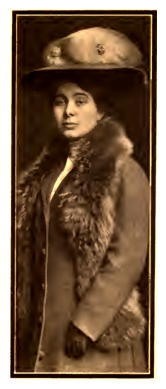
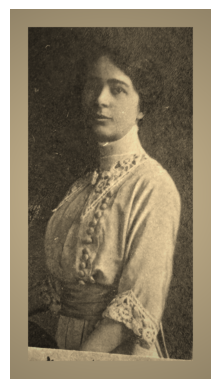
Some one has said “To make ‘soul winners’ out of church members” is the business of Miss Francis Miller with the Sunday party. Her greatest opportunity comes each afternoon at the close of Mr. Sunday’s sermon. Christians of all ages and experience gather before her on the platform to be instructed how to use the Bible in meeting the excuses and answering the questions of sinners. She is an expert in teaching how to diagnose the sinner’s heart and apply the specific Scripture remedy chapter and verse. For years she was a passive church member when a sermon on “Personal Work” by Billy Sunday opened her eyes to a great responsibility. Mr. Alexander led her into Bible study and Grace Saxe made her eager to do Bible work. She carries ordination in the Congregational church and has had experience in pastoral work. Miss Miller’s work in other places is being duplicated in Cedar Rapids.
Miss Miller’s Bible work in connection with the revivals conducted by Mr. Sunday has ripened in the school of experience. At first she came on the ground at the close of the revival and organized union Bible study classes. Experiments of this kind at Knoxville, Iowa, Kewanee and Kankakee, Ill., revealed that the work done in this way could not be made of permanent value without local leaders, which was not always available. The experiment was tried out beginning in advance of the revival. Miss Miller went to Muscatine and Galesburg two weeks before Mr. Sunday to prepare the personal workers for his coming. Later Miss Miller worked during the three last weeks of the meetings and then remained two weeks after the close to organize the local Bible class work upon a permanent basis. This was the plan pursued at Springfield where forty-five district or neighborhood Bible classes were formed with a central training class for the leaders. These classes were interrupted by the summer vacation period but the classes took up their work this fall with about one thousand members working in the various districts. A class was formed among the so-called “society girls,” the girls of leisure, in well to-do homes. They call it “The Worth While Bible Class,” and they have been aggressive in Y.W.C.A. and associated charity work. One Bible class in Springfield supplanted a card club. The girls gave up their cards for Bibles. There was no breaking up of existing social ties but a change of bonds. No new social lines were drawn but a new directive of interest was taken. Many girls who have been stimulated to take up personal work have gone to Moody Institute for training. Word comes from Boulder, Col. that sixty high school girls hold regular Bible study meetings in the high school building. Miss Miller is one of the busiest workers of the Sunday party. She meets with the home girls of leisure at 10 a.m. The fifty gathered at the home of Mrs. Frank Watson Friday may be regarded as typical; at 11:15 three days of the week she meets the Coe college girls; at 12:15 she talks about 150 high school girls at St. Paul’s M.E. church; at 3:00 holds a personal workers’ class for everybody and at 6:30 for clerks, teachers and others. Careful plans are being made to insure systematic Bible study after the close of the big revival.
The Cedar Rapids Gazette. Thu, Nov 18, 1909 ·Page 5
Miss Frances Miller
TRUE today as it ever has been, the title, “church member,” or “Christian,” are not synonymous with “soul winning.” Miss Miller, with Bible in hand, finger on chapter and verse, persuades you—yes, convinces you they should be—that they are. To make “soul winners” out of church members is her business with Mr. Sunday’s party, and she does it. Skilled herself through years of study and practice, she stands before her class of hundreds, each afternoon at the close of Mr. Sunday’s sermon and schools them to meet the excuses and questions of the sinner, not as the quack with the patent cure all, but as the trained physician who diagnoses, then prescribes. With clear, logical reasonings, deduced from Scripture, carried by a clear, far-reaching voice, she instructs how to diagnose the sinner’s heart and apply the specific Scripture remedy with chapter and verse.
Miss Miller herself was not always a soul-winning church member. For five years she was not. A church member, simply, she thinks, because she was asked to be. Reared in a Christian home, honest at heart, she was ready. When Billy Sunday, about sixteen years ago, broke the truth to her in a sermon on “Personal Work,” she surrendered to it. Mr. Alexander led her into Bible study and Grace Saxe made her want to do Bible work.
She was born in Minnesota, grew up in North Dakota, lived in Illinois, was educated in the high school at Waterloo, Iowa, and college at Fargo, N. D., and afterwards taking a two years’ course and finals in the Bible Institute in Chicago.
She spent a summer with Mr. Williams and Mr. Alexander, organizing Bible classes, etc., one of which at Vinion, Ia., still continues, and that is over ten years ago. Her first year out of college she had charge of two Congregational churches near Valley City, N. D., and later was ordained a member of the Congregational church.
Besides “personal work” classes she teaches systematic Bible study classes, special prayer meetings in Y.M.C.A., laundries, shops, high schools, etc., at times and places convenient for the many who cannot attend the regular services. Morning and afternoon she does it, conducting four or more meetings a day and plunges into the vast tabernacle in the evening hunting for someone to lead to her Christ.
Her Bible is pre-eminently a part of a great revival campaign in supplementing the preaching by preparing intelligent workers and grounding converts in the Scriptures. Thus two of the weakest spots, two chief causes of failure in modern revival work, are cared for.
And Why the Offer Destroys the Claim That He Preached for Money
One of the most common criticisms leveled against evangelist Billy Sunday is that he preached for money.
Critics point to the generous love offerings that were sometimes taken at the close of his revival campaigns and conclude that Sunday must have been motivated by financial gain. It is an easy accusation to make. But historical evidence tells a very different story.
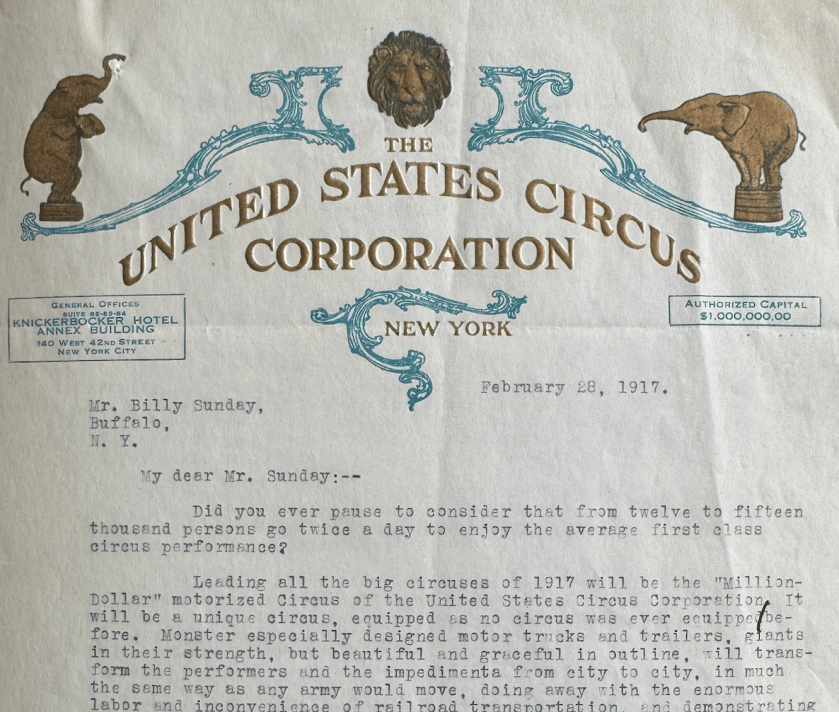
One remarkable document from 1917 puts the matter in perspective.
On February 28, 1917, Billy Sunday received an extraordinary letter from the president of the United States Circus Corporation. The proposal was simple, bold, and almost unbelievable.
The circus wanted Billy Sunday to join the show.
Original 1917 contract. Grace College. Morgan Library.
The letter opened by reminding Sunday of the enormous audiences that circuses attracted:
“Did you ever pause to consider that from twelve to fifteen thousand persons go twice a day to enjoy the average first class circus performance?”
The promoter explained that the company was launching what he called a “Million-Dollar” motorized circus, equipped with fleets of specially designed trucks and trailers that would carry the show from city to city.
The scale was enormous. Tens of thousands of people attended circus performances daily.
And the circus president believed Billy Sunday could preach to them.
Then came the offer.
“I… offer you a weekly salary of $14,000, or $2,000 a day, for as many weeks of the coming summer season as you can give.”
To grasp how staggering this proposal was, consider the numbers.
If Sunday had accepted the offer and worked for roughly ninety to one hundred days during the summer season, he would have earned between $180,000 and $200,000 in 1917.
Adjusted for inflation, that is roughly $4 million today.
In return, the circus would provide transportation, luxury touring cars for Sunday and his staff, and access to massive crowds across the country.
The promoter even suggested that Sunday hold revival meetings on Sundays as part of the circus program.
But here is the crucial point.
The proposal made no provision for Sunday to keep offerings from those meetings. In fact, the letter suggested that the proceeds from Sunday services could go largely or entirely to charity.
The circus wanted Billy Sunday not as a fundraiser—but as an attraction.
A headline act.
A revivalist who could preach to the largest audiences in America.
And yet Billy Sunday refused.
The Economics of Sunday’s Real Ministry
Now compare this circus offer to the income Sunday actually received during the same years.
During the summer Chautauqua season, Sunday could deliver 50 to 70 speaking engagements.
Typical speaking fees ranged from $250 to $500 per engagement.
That means a strong Chautauqua season might produce:
$12,500 on the low end
$35,000 on the high end
Even at the very top of that range, the circus contract would have paid five to six times more.
In other words, if Billy Sunday had been motivated primarily by money, the decision would have been obvious.
He could have become the highest-paid religious speaker in America simply by joining a circus.
Instead, he chose the sawdust trail.
He chose the revival tabernacle.
He chose the ministry that demanded months of exhausting preaching, travel, prayer meetings, counseling, and organization.
And he did it for far less money than the circus was willing to pay.
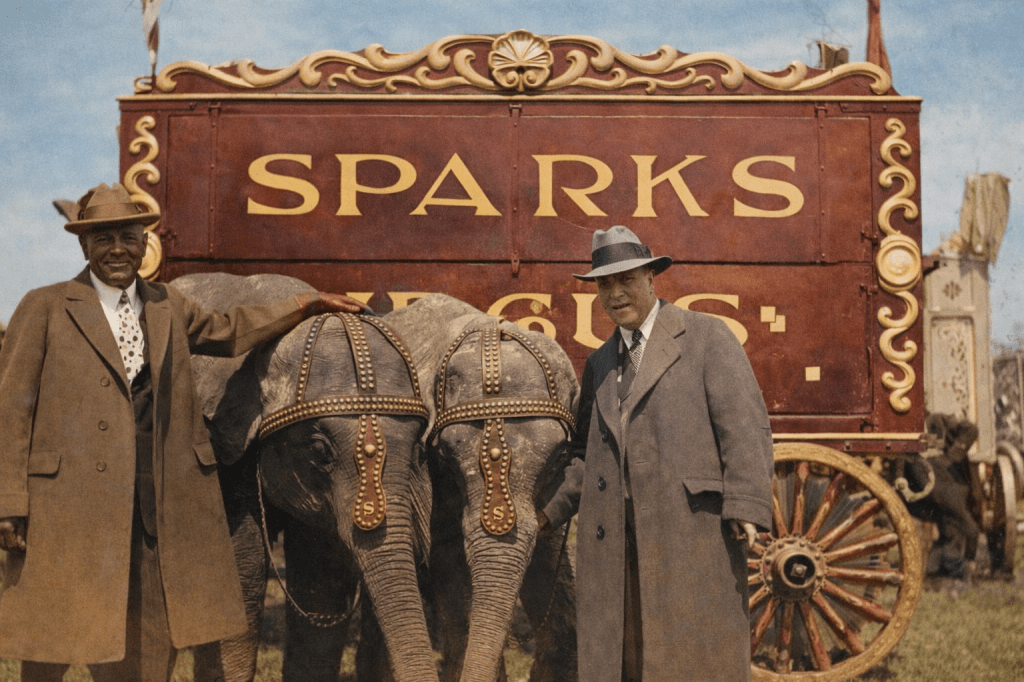
Rare original Sparks Bros Circus photograph showing evangelist Billy Sunday and Charles Sparks.
Why the Critics Miss the Point
Billy Sunday never pretended that money did not matter. Revival campaigns required large temporary tabernacles, choirs, staff members, and enormous logistical efforts.
But Sunday consistently refused opportunities that would have turned his preaching into entertainment.
The 1917 circus contract proves it.
The entertainment industry was willing to pay him millions in today’s dollars to headline the largest traveling show in America.
He said no.
The same evangelist who was accused of preaching for money walked away from a fortune.
And that fact should cause us to reconsider the narrative that Sunday’s critics often repeat.
Billy Sunday may have been many things—a fiery preacher, a former baseball player, a relentless evangelist—but the historical record shows that he was not in the ministry merely for the money.
If he had been, the circus would have had its star.
Instead, the revival fires continued to burn.
Did you know?
“It may not be generally known, but ‘Billy’ Sunday supports a mission on Van Buren street, Chicago, paying all the expenses of maintaining it out of his own pocket. He is also educating twenty boys and paying for it with his own money. These boys are waifs he has picked up out of the street. In this he is following the plan of the late Sam Jones, who in his lifetime educated hundreds of poor boys and made useful citizens out of them.”
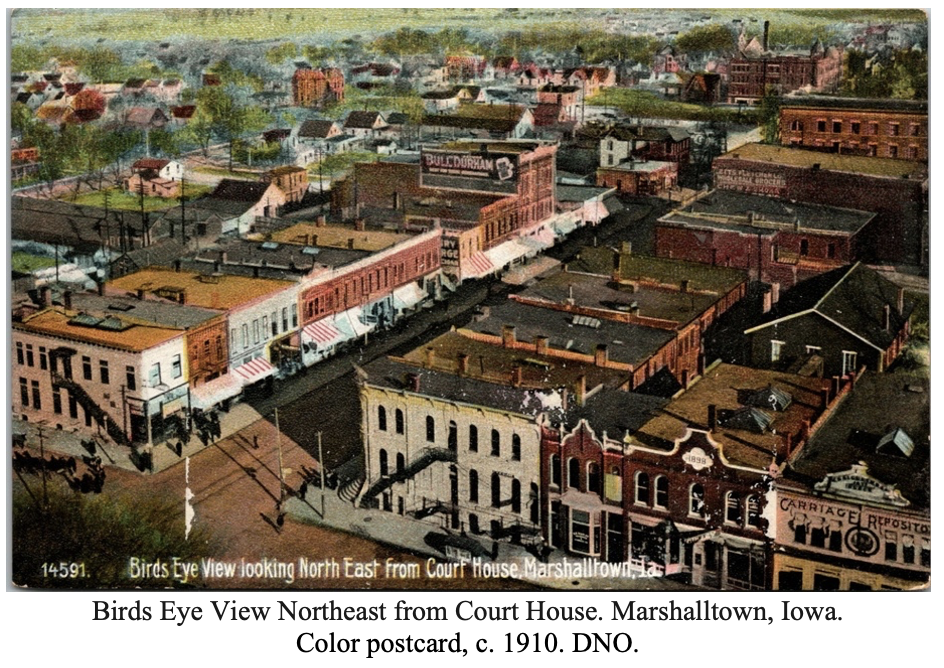
Fresh off a successful campaign in Springfield, Billy Sunday and his team rolled into Marshalltown in late April of 1909. This was not foreign soil. It was home turf.
Sunday had been raised in Iowa, shaped by its churches, and had even lived briefly in Marshalltown in the early 1890s while learning the mechanics of evangelistic work. By 1909 he returned not as an unknown ballplayer-turned-preacher, but as a nationally rising evangelist whose methods were becoming increasingly organized, efficient, and powerful.
Marshalltown was the right kind of proving ground. Large enough to sustain a six-week revival. Small enough to rally around one of its own.
The Setting: A City Poised for Revival
Marshalltown in 1910 had a population of 13,374—a fraction of Springfield’s 51,678. It was a growing industrial town, commercially strong, strategically located, and connected by rail. It was not metropolitan. But it was energetic.
A wooden tabernacle was erected at the corner of Third and Main, seating 5,000. The Sunday machine was now running at full stride.
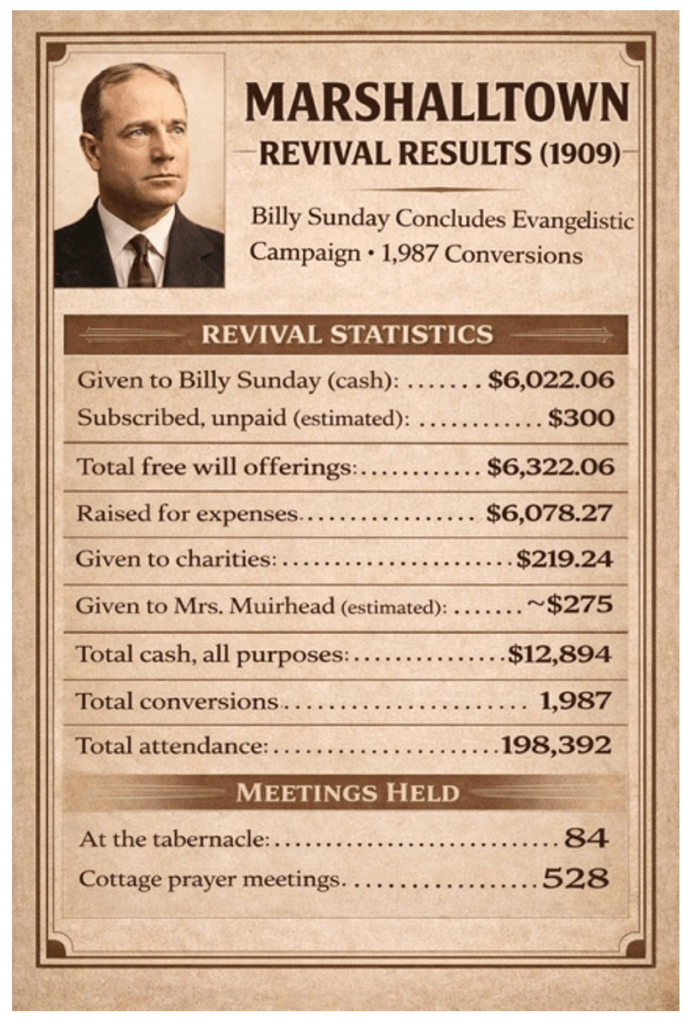
Opening night—April 25—saw over 12,000 people attend across all services. On the final day, June 6, Sunday preached to 13,200. In a town of just over 13,000 residents, that level of saturation is staggering.
By campaign’s end:
2,000 total conversions (125 on the final day)
84 tabernacle meetings
528 cottage prayer meetings
Nearly 200,000 in total attendance
For six weeks, Marshalltown was consumed by revival.
The Money and the Machine
The final purse for Sunday was $6,139. Total funds raised during the campaign reached $12,894.
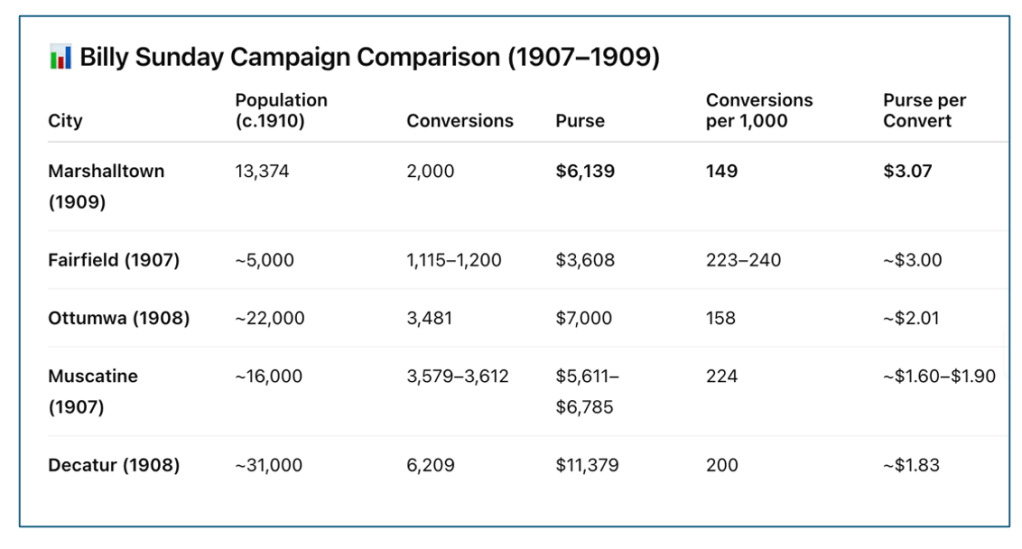
For comparison, that purse nearly matched Muscatine’s and approached Ottumwa’s from the previous year. Financially, Marshalltown demonstrated strong committee organization and enthusiastic backing. This was not a struggling campaign.
It was disciplined. Systematic. Mature.
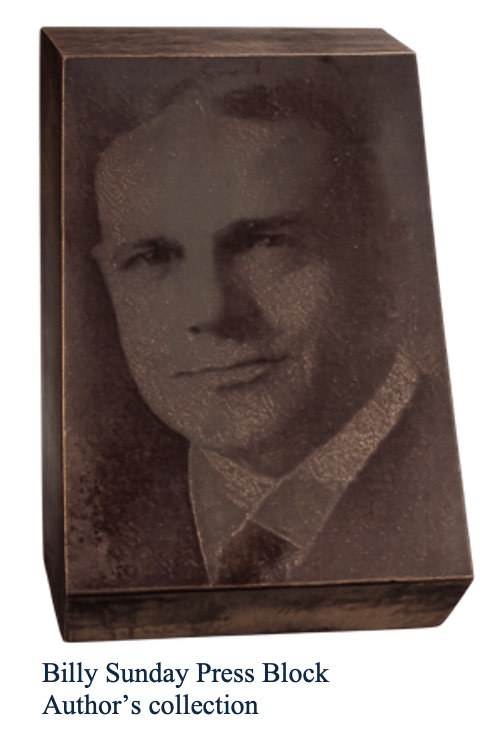
The press block used to print Sunday’s image during this period—now in my collection—reflects that growing sophistication. By 1909, Sunday was no longer improvising revivals. He was executing them.
Did Marshalltown “Underperform”?
One skeptical paper, the Davenport Weekly Democrat and Leader, suggested that Marshalltown’s results did not compare favorably with Fairfield, Ottumwa, Muscatine, and Decatur.
On the surface, that seems correct.
Measured per capita:
Marshalltown: ~149 converts per 1,000 residents
Fairfield: over 220 per 1,000
Muscatine: about 224 per 1,000
Decatur: around 200 per 1,000
Ottumwa: about 158 per 1,000
In raw totals, Marshalltown trailed Muscatine (3,579–3,612), Ottumwa (3,481), and especially Decatur (6,209).
So yes—the numbers were not dominant.
But numbers alone miss something important.
The Press: Praise and Pushback
The reaction was revealing.
The Audubon Republican declared the meetings closed in a “blaze of glory.” It reported over 500 cottage prayer meetings and said the town had been “thoroughly stirred up.”
The Marshalltown Evening Times-Republican went further, calling Sunday:
“One of the splendid prophets of the elder time…”
“One of the greatest revivalists in existence.”
“One of the plainest, simplest and happiest of men…”
Meanwhile, the skeptical Davenport Weekly Democrat and Leader offered sharper commentary. It described Sunday as a “contortionist of uncommon ability” with “remarkable versatility,” while acknowledging the “magnetic power of Mr. Sunday.”
Its most fascinating observation was psychological:
“The psychology of it all is that the people who are not regular attendants at churches must be reached not as individuals but in mass. They like to be moved by each other; and it is probable that this explains the success Mr. Sunday attains. He is helped greatly by the excitement and the enthusiasm of the crowds…”
That critique reads today like an astute analysis of mass evangelism. It wasn’t merely preaching. It was momentum. Atmosphere. Collective energy.
Sunday understood something about crowds that many pastors did not.
What Marshalltown Really Proved
Marshalltown was not Sunday’s most explosive campaign numerically.
But it demonstrated something perhaps more important in 1909:
Massive attendance penetration in a modest city
Financial stability and strong committee structure
Organizational maturity (over 600 total meetings)
National press attention—positive and critical
Marshalltown proved that Sunday could saturate an entire city.
Critics were talking. Admirers were praising. Nearly 200,000 attendances in six weeks ensured that no one in town was untouched by the revival’s presence.
He was no longer just holding meetings.
He was creating civic events.
A Blaze of Glory
The revival closed the way many Sunday campaigns did—intense, loud, emotional, decisive. A blaze of glory.
Marshalltown may not have produced the highest per-capita conversion rate of his Iowa stops. But it stands as a revealing moment in his rise.
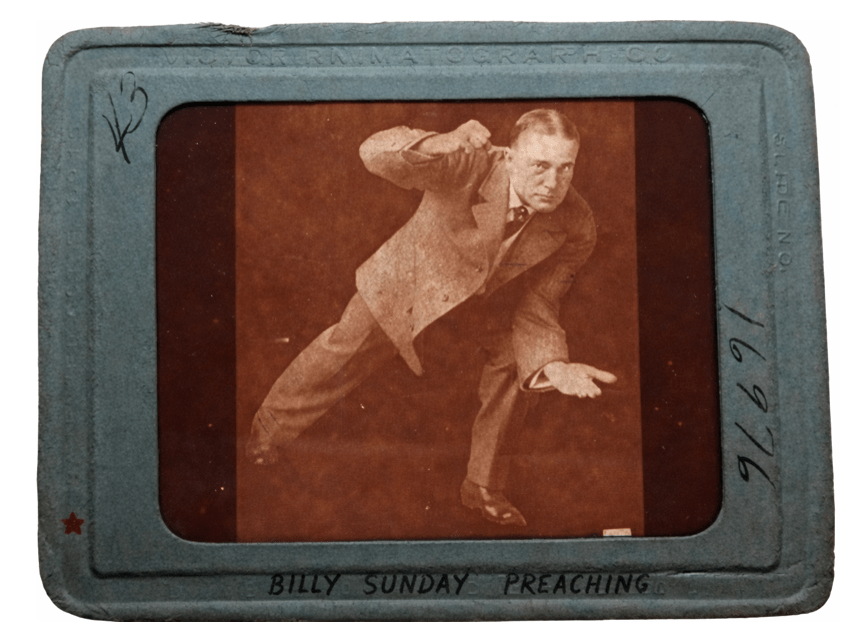
Magic lantern slide. Author’s collection.
By 1909, Billy Sunday was refining his method. The tabernacle system was humming. The prayer networks were mobilized. The press was watching closely.
And Iowa—his Iowa—was watching one of its own step onto a larger stage.
Marshalltown mattered because it showed that Sunday’s machine worked not just in isolated bursts, but in sustained, organized, city-wide saturation.
Jumped to the short-lived Players’ League in 1890 with the Philadelphia Phillies.
This was his final season in professional baseball.
Career Snapshot
Years: 1883–1890
Teams:
Chicago White Stockings (1883–1887)
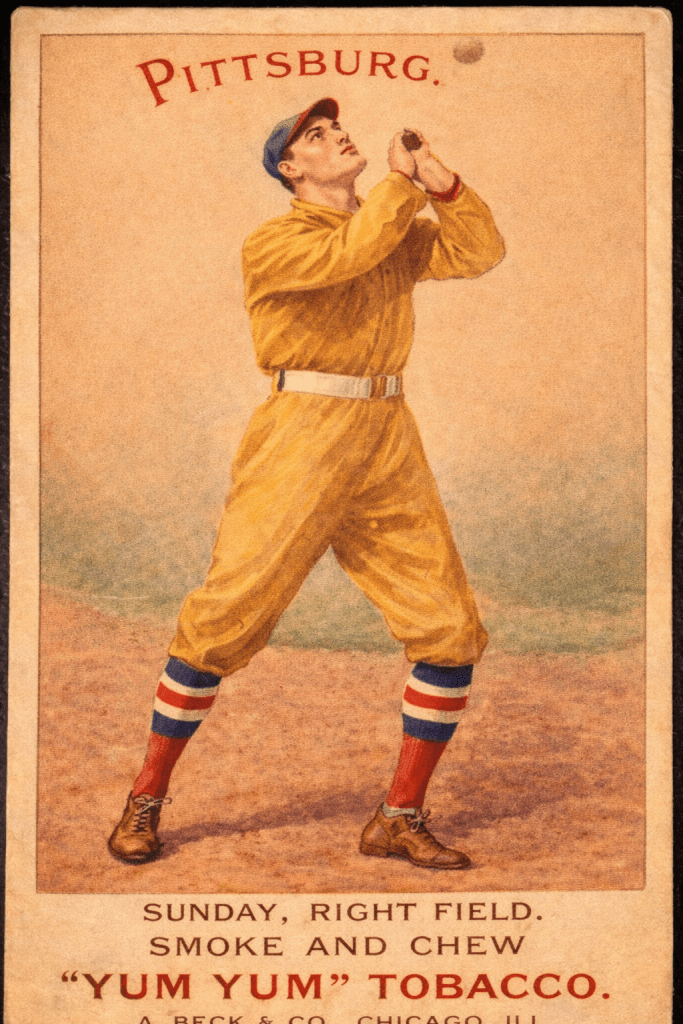
Pittsburgh Alleghenys (1888–1890)
Philadelphia Phillies – Players’ League (1890)
Position: Outfielder
Batting Average: .248
Games Played: 499
Stolen Bases: 95
After Baseball
After leaving baseball in 1890, Sunday worked briefly with the Chicago YMCA, where his speaking ability began to emerge. Within a few years he joined the evangelistic team of J. Wilbur Chapman, launching the ministry that eventually made him the most famous evangelist in America before Billy Graham.
After Baseball
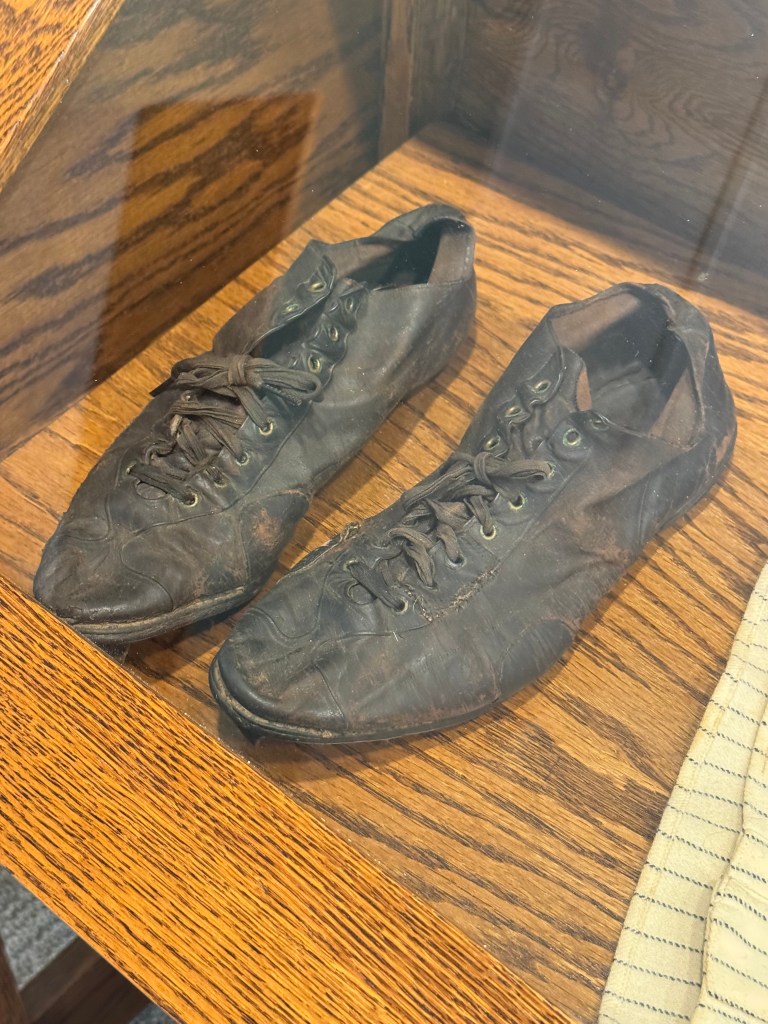
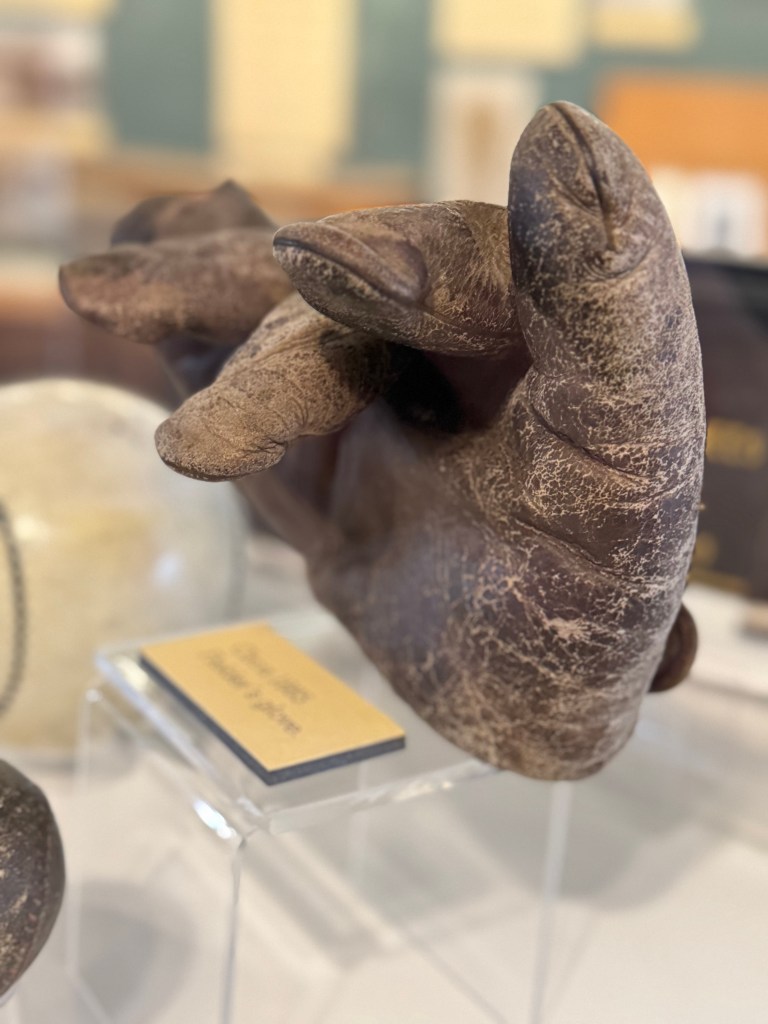
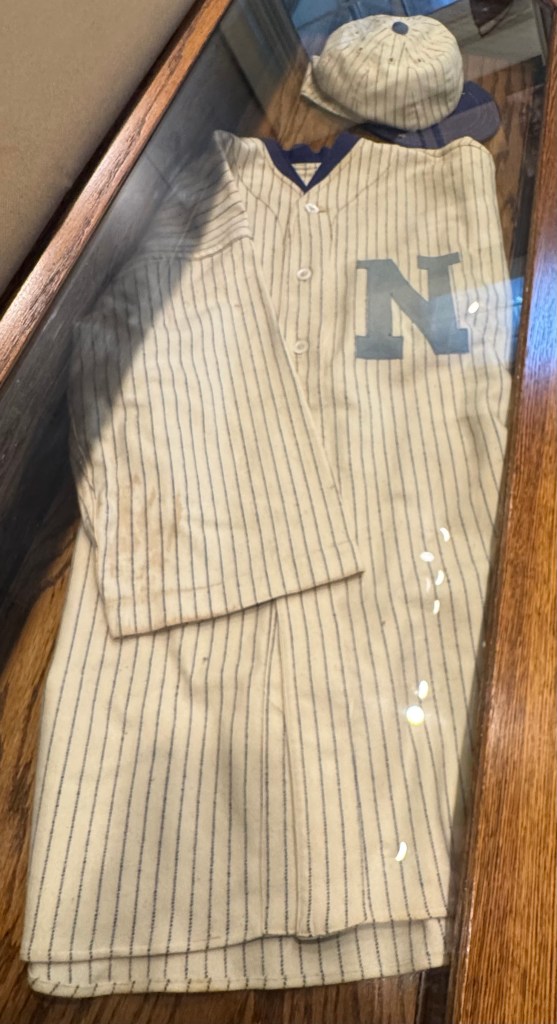
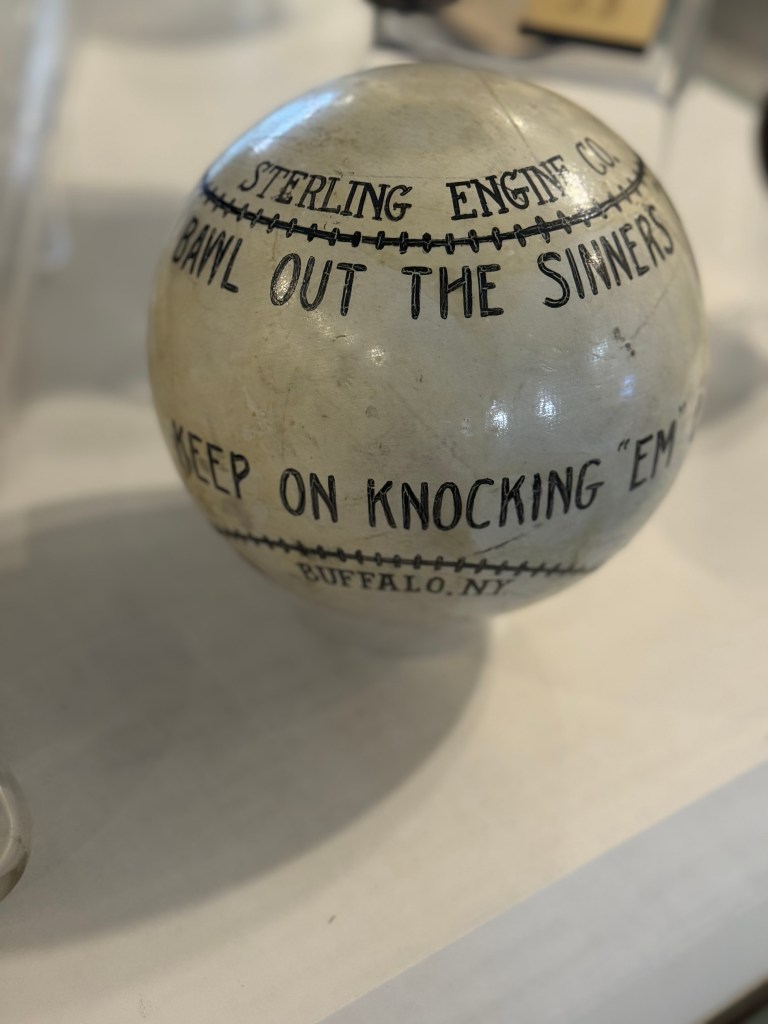
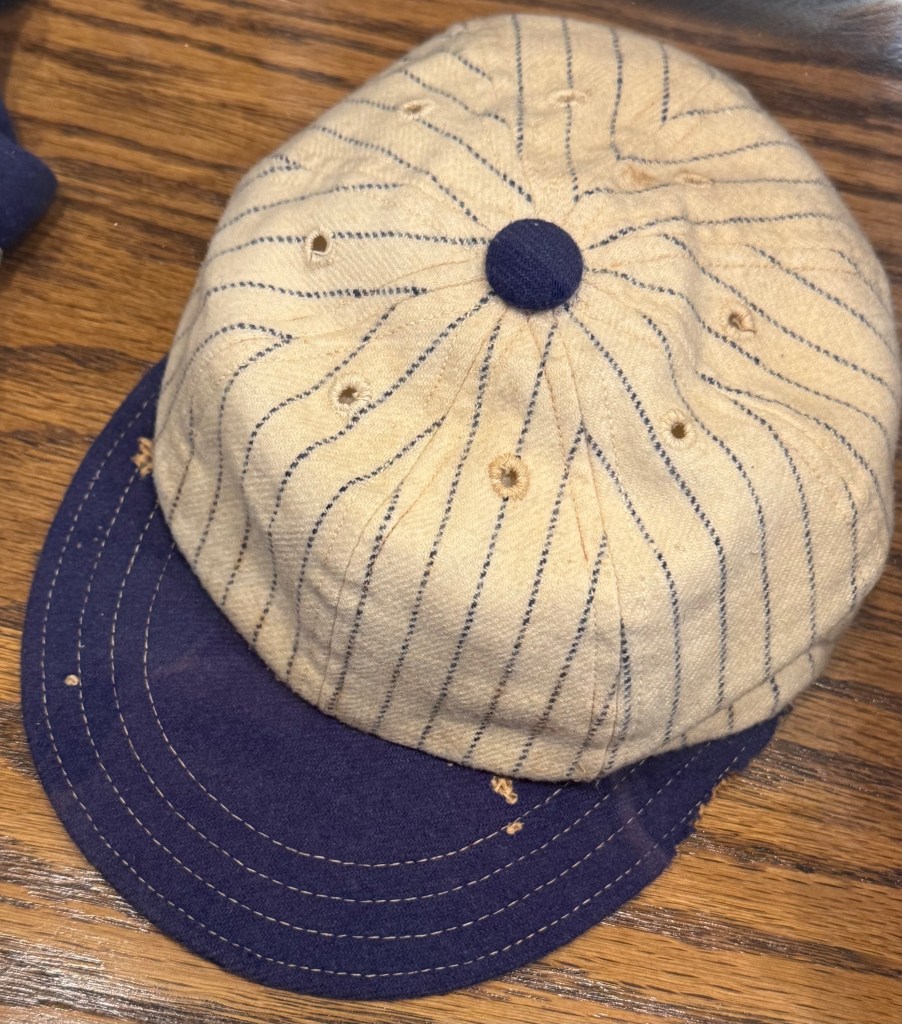
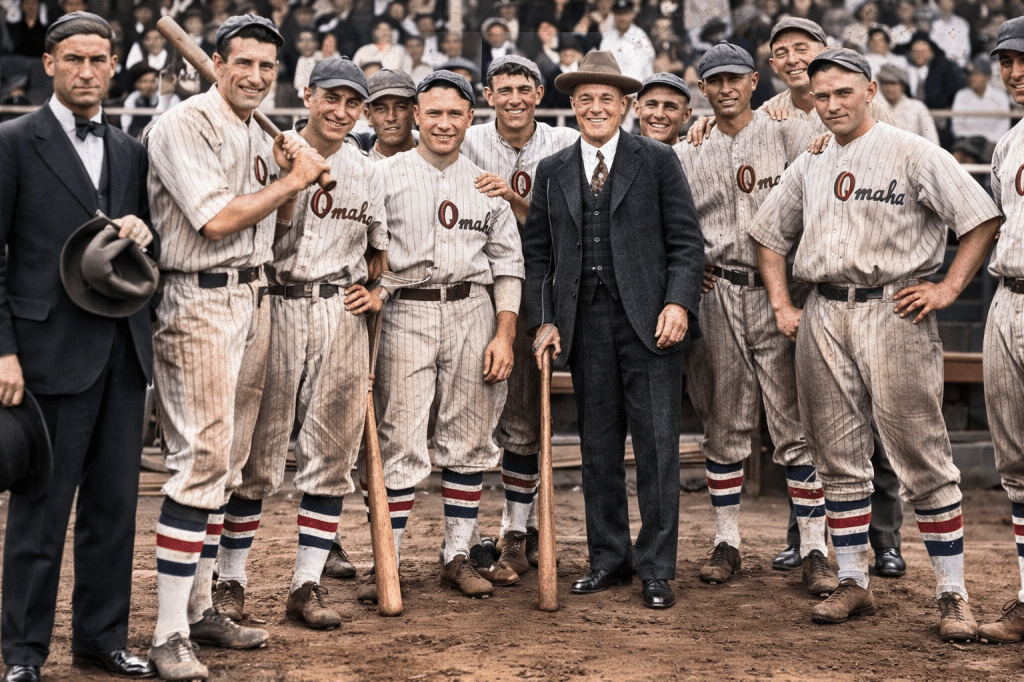
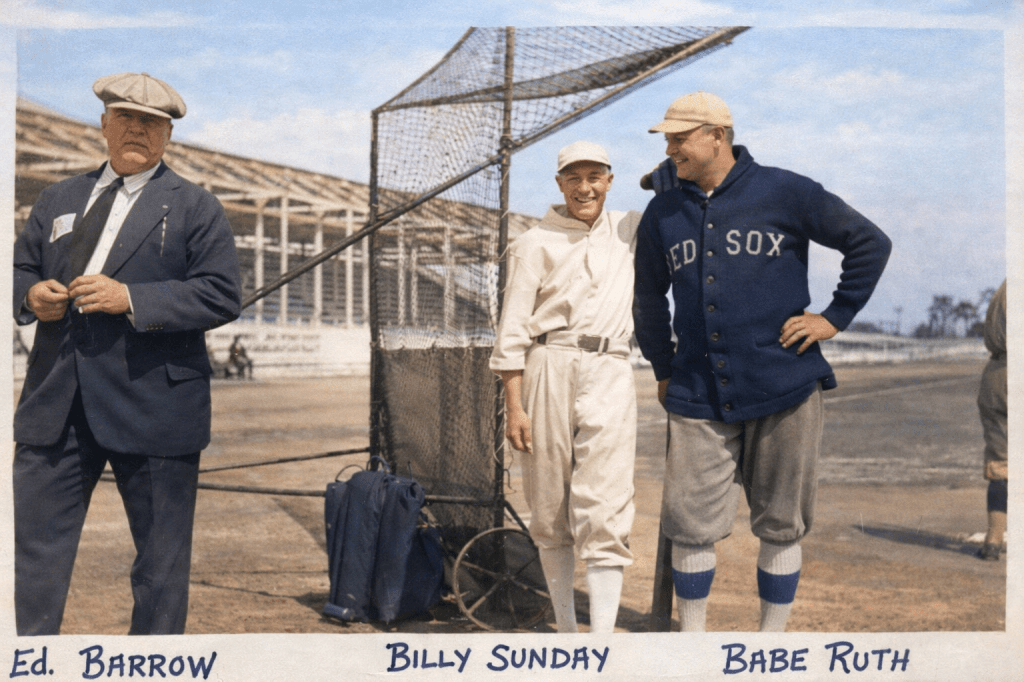
Here is a photo gallery of baseball related images associated with Billy Sunday.
One of the things I love most about researching Billy Sunday is when we can let him speak for himself.
Tucked inside The founding of Pacific Garden Mission: over thirty-five years contribute to the Master’s service by Sarah D. Clarke is a brief autobiographical sketch written by Sunday in September 1902. It is not polished theology. It is not retrospective myth-making. It reads like a man remembering the night that changed everything.
He begins with Chicago.
“Fifteen years ago one Sunday night I walked down State street, Chicago, in company with several baseball players… We entered a saloon, drank, and passed on to the corner of State and VanBuren…”
Then something happened.
A small band from Pacific Garden Mission was singing on the street. Sunday sat on the curb and listened.
“I had heard those songs from mother back in Iowa, in the Methodist Sunday School in Ames, Iowa, and God painted on the canvas of my memory the scenes and recollections of other days and faces. I bowed my head in shame and the tears rolled down my cheeks like rivers of water.”
The song that broke him was “Where is my wandering boy to-night.”
Col. Clarke invited the men to the Mission. Sunday’s response was immediate:
“I arose and said, ‘Boys, good-by, I’m done with this way of living.’”
That sentence is vintage Sunday. Abrupt. Decisive. No hedging.
But what follows is equally revealing.
The next morning, newspapers reported his church membership. He dreaded facing his teammates. He confessed:
“I would rather have faced a six-shooter…”
Yet when he arrived, the first to greet him was Mike Kelly.
“With a heart as tender as a woman’s… he took me by the hand and said: ‘That’s a grand thing to do, “Bill.” If I can help you let me know.’”
Cap Anson, Ed Williamson, Fred Pfeffer, Jno. Clarkson, Tom Burns, Dalrymple — they all encouraged him. And if they swore in his presence, “they would immediately ask my pardon.”
This detail matters. It corrects the caricature. Sunday did not convert in isolation from the baseball world. He converted in it.
Then comes one of the most famous episodes of his early testimony — the Detroit game.
Bottom of the ninth. Two out. Men on second and third. Charley Bennett at bat.
“I offered up a prayer and said, ‘Lord, if You ever helped mortal man, help me get that ball.’ I leaped the bench, looked over my shoulder, threw out my hand and the ball struck and stuck. The game was ours.”
Then the line that perfectly captures Sunday’s theology-by-experience:
“I am sure the Lord helped me catch that ball. This deduction may not be according to theology, but it’s according to experience.”
That is pure Billy Sunday — unfiltered, confident, experiential, unapologetic.
After baseball, he attended Northwestern University “where I picked up some Methodist enthusiasm and vim to counteract the stiff, staid Presbyterianism.” That phrase alone tells you how he would preach for the next thirty years.
He left professional baseball, became assistant secretary of the Chicago Y.M.C.A., then joined Rev. J. Wilbur Chapman in evangelistic work. Of Chapman he writes:
“All I am today as an evangelist I owe to Dr. Chapman and to Prof. R. R. Lloyd… with whom I studied privately.”
Notice that. Sunday never claimed to be self-made. He acknowledged formation, mentorship, study.
This 1902 piece is significant for another reason. It predates the massive tabernacles, the sawdust trails, the millions who would hear him preach. It shows us Sunday before the fame hardened into legend.
What do we see?
A mother’s hymns remembered.
A curbside conviction.
Public courage in a locker room.
A prayer in right field.
A man mentored, trained, and sent.
If you want to understand Billy Sunday, start here.
Not with the headlines.
Not with the critics.
Not even with the later statistics.
Start on a Chicago curb, with a baseball player weeping while a gospel song drifts through the night air.
And listen to him say it himself:
“Boys, good-by, I’m done with this way of living.”
Adapted from: The founding of Pacific Garden Mission : over thirty-five years contribute to the Master’s service / by Sarah D. Clarke
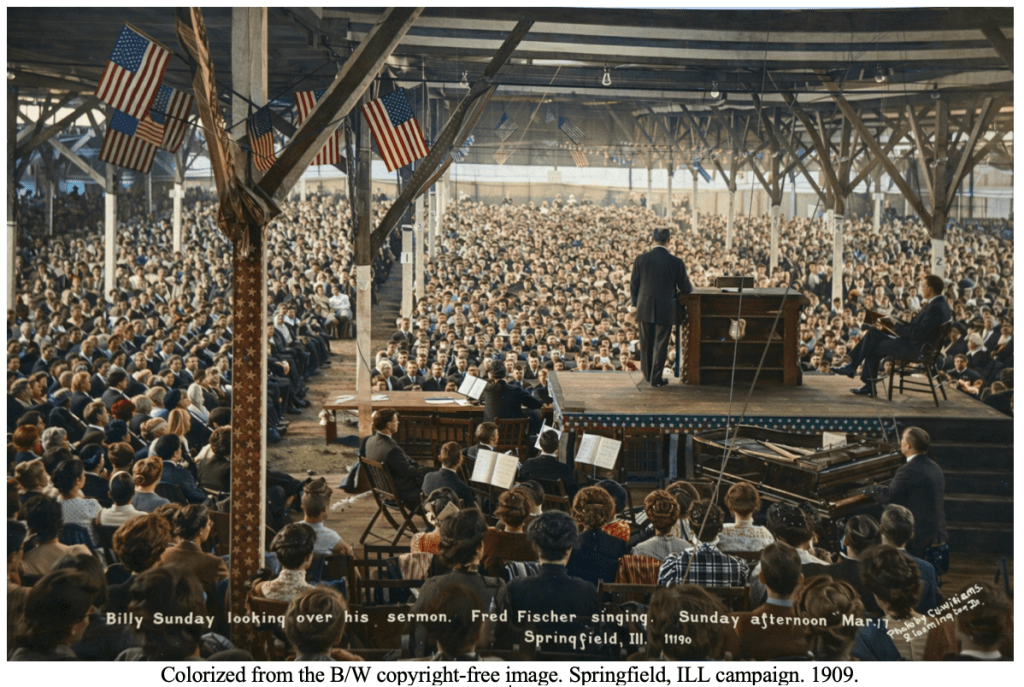
Springfield, Illinois February 26 – April 11, 1909
In the spring of 1909, something happened in Springfield that people would talk about for decades.
Not a political convention. Not a legislative battle. A revival.
For forty-five days, the capital city of Illinois — population 51,678 — was overtaken by a wooden tabernacle, a former professional baseball player turned evangelist, and what many believed was a visitation of God.
By the time it ended, nearly 5,000 people had walked the sawdust trail.
And Springfield would never quite be the same.
The Numbers — and the Scale
The statistics alone are staggering.
4,729 reported conversions
774 converts on the final day alone — the largest single-day total of Sunday’s career to that point
607,000 total attendance over the course of the campaign
35,000+ at the final Sunday service
$20,218 in total contributions
$10,734 to Sunday
$9,483 to campaign expenses
To put this in perspective: Springfield’s population was just over 51,000. Attendance over the campaign equaled more than twelve times the city’s population.
One hundred thousand people attended special weekday meetings. 35,800 participated in cottage prayer meetings.
This was not a tent revival on the fringe of town.
This was the town.
Even Governor Charles Deneen and members of his family were reported among the converts on the closing day, joining First Methodist Episcopal Church . When the governor walks the aisle, you know something seismic is happening.
And yet, remarkably, Billy Sunday himself was reportedly disappointed with the conversion numbers. He believed “personal work was not begun early enough.”
That was Sunday. Five thousand souls, and he still thought the church could have done more.
The Night Billy Was Horsewhipped
The campaign did not begin quietly.
On opening night, in front of 8,000 people, Sunday was assaulted.
A man named Sherman Potts rushed forward with a buggy whip and struck Sunday multiple times. The audience teetered toward panic. Women wept. Children screamed. Sunday leapt from the platform and knocked his assailant down. They rolled in the aisle before ushers and police subdued the attacker.
The papers reported that Potts had previously been declared insane and had been confined at Jacksonville. He claimed he acted in defense of women’s virtue, alleging that Sunday had criticized them.
What could have ended the revival instead amplified it.
Fred Fischer directed the choir to sing, calming the crowd. The meeting continued.
Springfield had just witnessed the kind of drama that headlines love — and revivals sometimes ride.
The “Judgment” Sermon and the Men
On one Sunday afternoon, 8,000 men packed the tabernacle to hear Sunday preach what was described as his “judgment” sermon.
Three hundred men responded.
Sunday’s masculine appeal — direct, confrontational, athletic — was reshaping revival culture. This was not sentimental religion. It was muscular, public, civic.
He preached like a ballplayer sliding into home — coat off, body leaning, words cutting.
And men came.
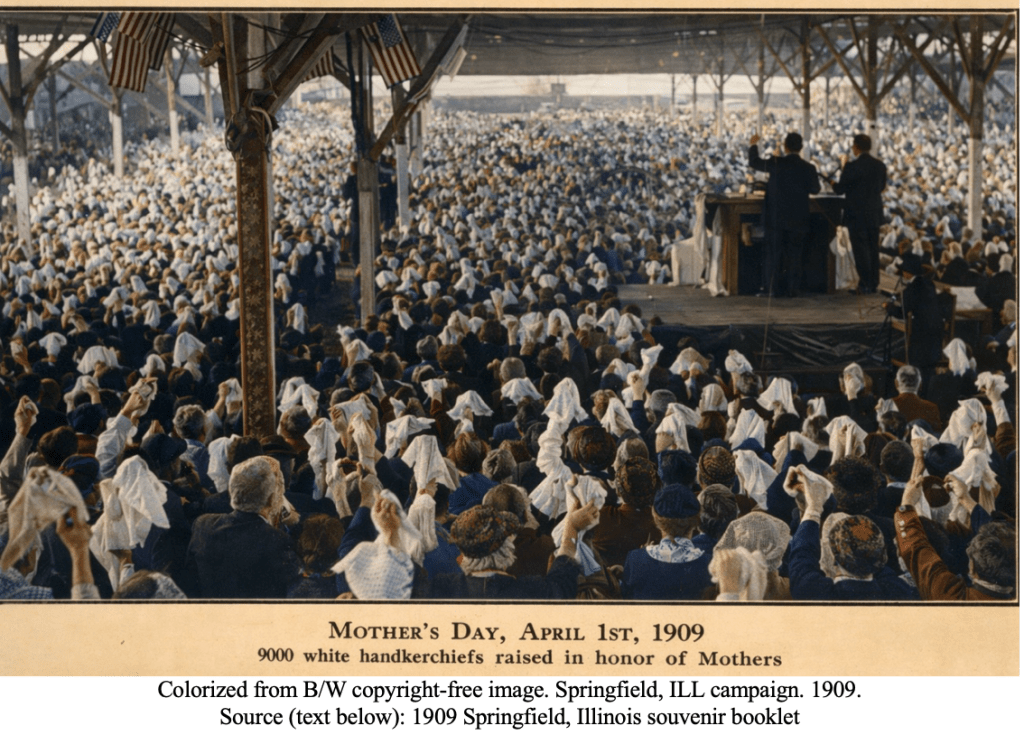
Mother’s Day: 9,000 White Handkerchiefs
One of the most remarkable moments came on Mother’s Day.
Sunday requested that every person wear a white flower or ribbon in honor of mother. If your mother was alive, do her an act of kindness. Write her. Telegraph her. Give her a gift. If she was gone, do something kind for someone else’s mother.
He invited businessmen to close their stores from 2–4 p.m. and pledged that an offering would go to the Woman’s Club for distribution to city charities.
Then it happened.
Nine thousand white handkerchiefs rose in the air in honor of mothers.
In an era before official federal recognition of Mother’s Day, Springfield became a tableau of white cloth and public gratitude.
It was revival fused with civic virtue. Sunday understood symbolism.
Inclusion: Deaf Mutes and Interpreted Sermons
Another remarkable feature of the campaign was the regular attendance of a large group of deaf men from Jacksonville.
Professor Frank Reed, Jr., of the State School interpreted Sunday’s sermons. Reports indicate that between thirty and forty deaf attendees were converted during the Springfield meetings .
When the offering was taken, the deaf men gave ten dollars — a meaningful sum in 1909. Sunday seized the moment: If men who could not hear a word of what I say were contributing to this extent, what ought some of you fellows down there do who hear it all?
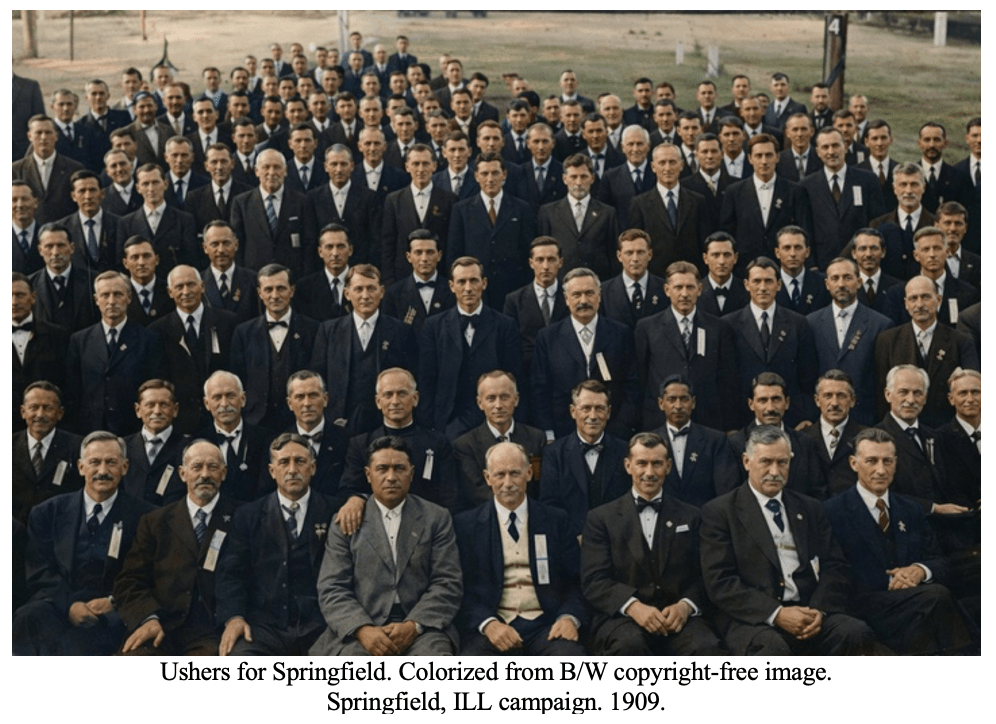
Photographs from the campaign show massive ranks of ushers — disciplined, suited, organized.
Springfield was not spontaneous chaos. It was structured revival.
This was the era when Sunday’s campaigns became logistical marvels:
Massive wooden tabernacle
Coordinated prayer meetings
Choirs
Personal workers
Cottage gatherings
Financial accountability
The revival was both spiritual movement and operational achievement.
Sunday was not merely a preacher. He was building a machine.
“A Good and Great Man”
After the campaign, C. C. Sinclair, pastor of Stewart Street Christian Church, offered this assessment:
“A good and great man, mighty in word and in deed; a prophet, and more than a prophet… The church has been purged and strengthened, and Springfield is being turned to God. It is such a revival of religion as comes to a community but once in a generation.”
That language is not casual.
Once in a generation.
Springfield’s churches reported strengthening and purging — language that suggests repentance within the church as much as conversion outside it.
Revival, for Sunday, was not merely altar calls. It was institutional recalibration.
Why Springfield Mattered
Springfield 1909 was a hinge moment.
It proved Sunday could sustain massive attendance over weeks.
It demonstrated his appeal to political and civic leadership.
It showed that controversy could fuel momentum.
It fused patriotic symbolism, moral reform, and evangelical urgency.
It revealed a revival model scalable to larger cities.
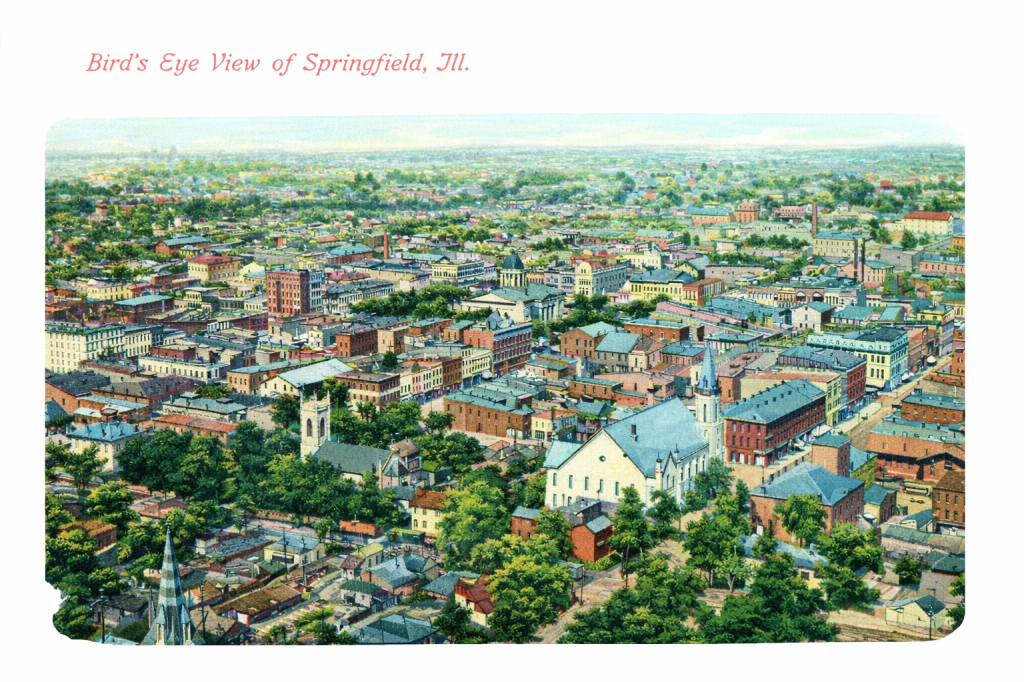
1909 postcard of Springfield, Illinois. Color-corrected. Author’s collection.
In many ways, Springfield was the rehearsal for the metropolitan campaigns to come.
And for a city of 51,000 to generate 607,000 in cumulative attendance? That’s not ordinary religious enthusiasm.
That’s a cultural event.
The Artifact That Survived
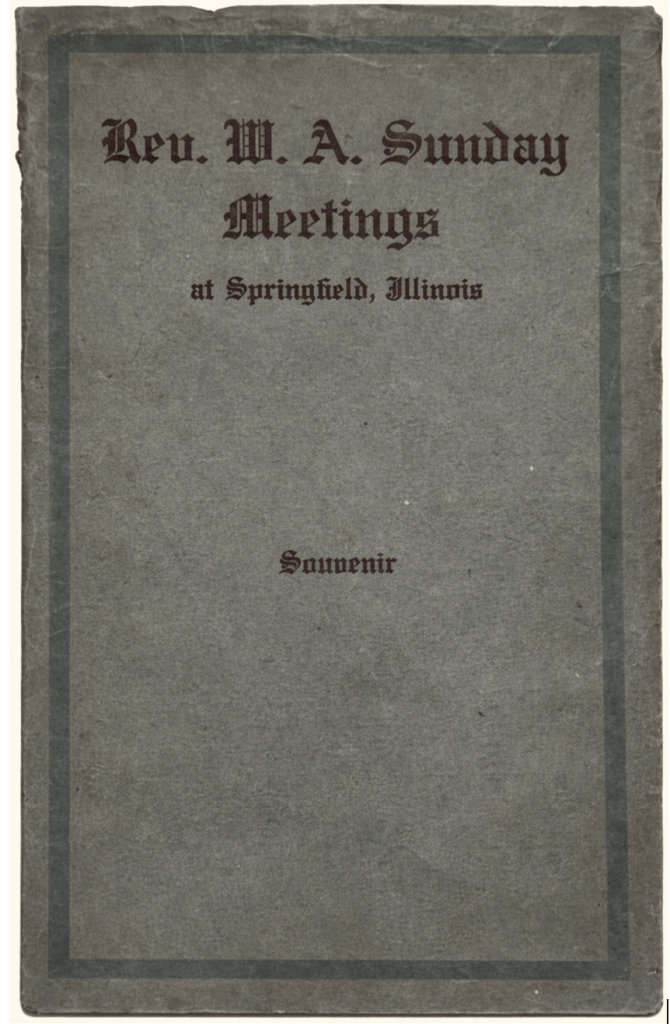
I own a 60-page souvenir booklet titled Rev. W. A. Sunday Meetings at Springfield, Illinois (c. 1909). When it arrived in November 2025, the bottom left corner throughout the entire booklet had been ripped away and was missing from the package .
It’s fragile. Imperfect. Scarred.
But so is revival history.
What Springfield experienced in 1909 was messy, dramatic, organized, emotional, public, controversial, generous, patriotic, and deeply evangelical.
It was America before the Great War.
It was Protestant civic religion at full throttle.
It was Billy Sunday in ascent.
And for forty-five days, Springfield stood still — while thousands walked forward.

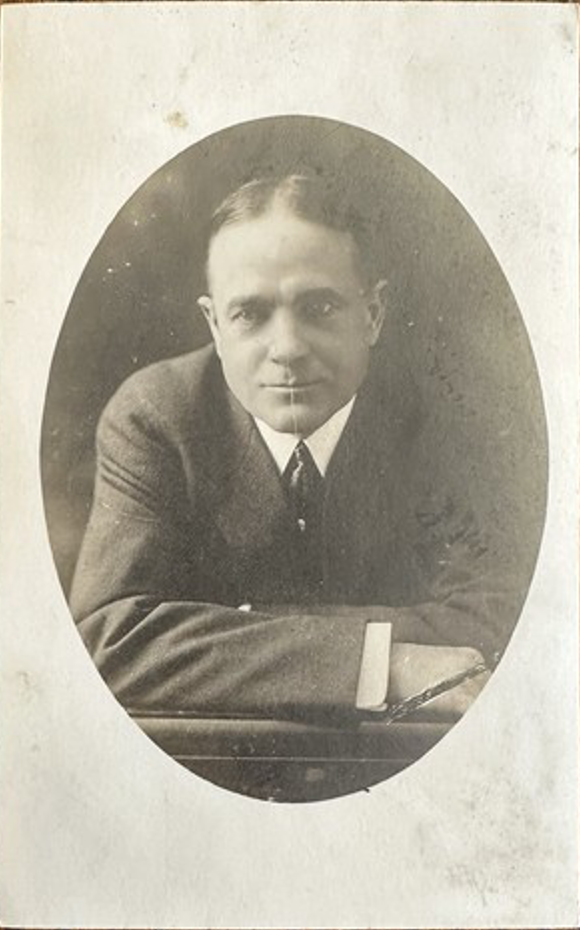
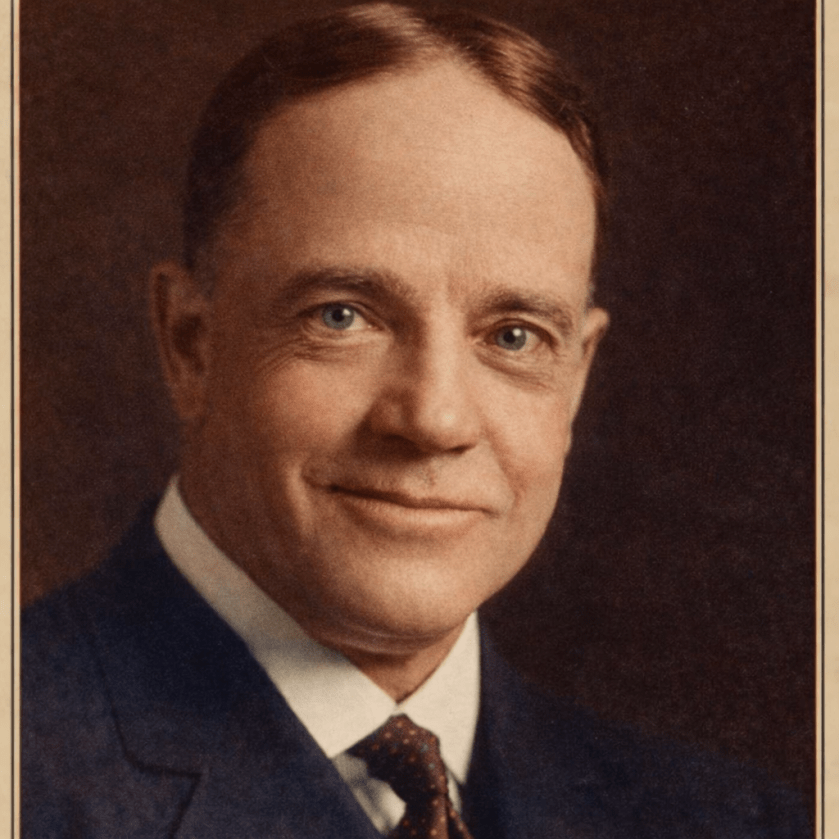
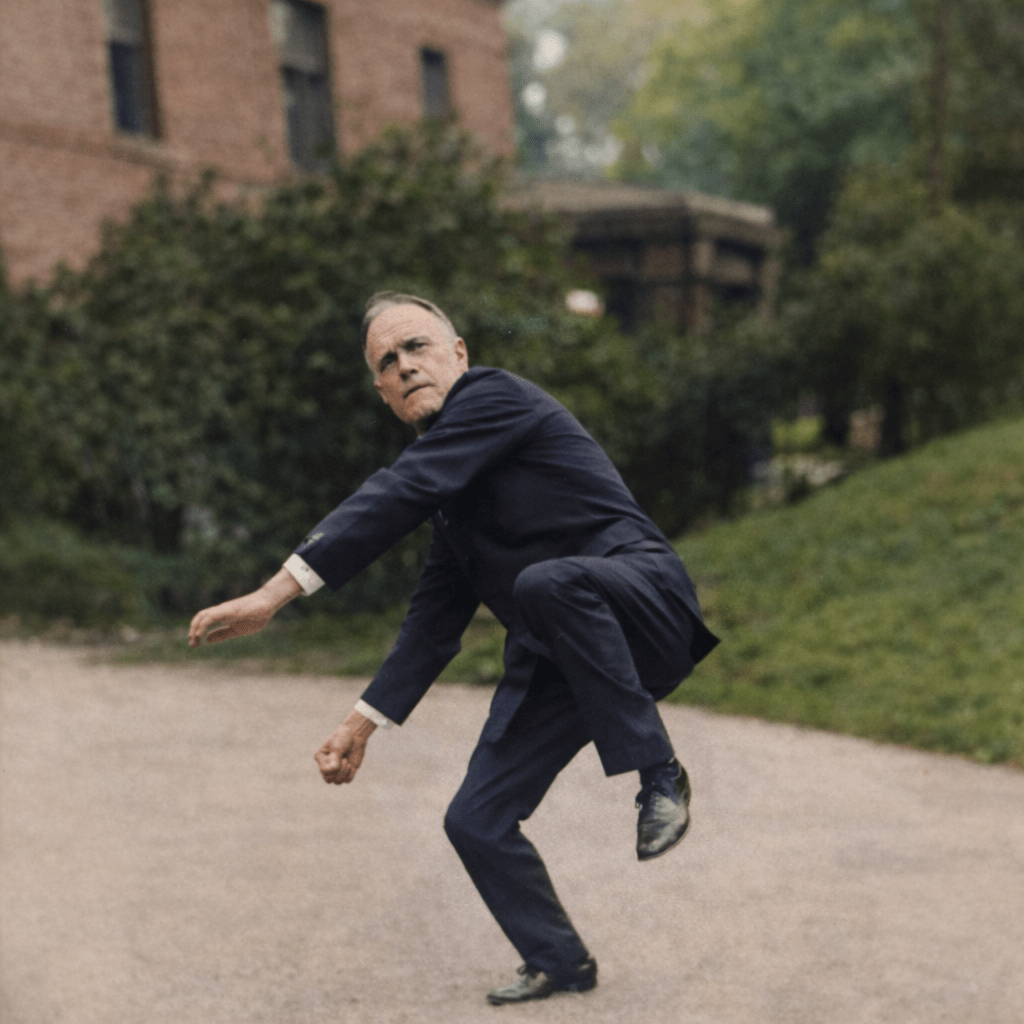
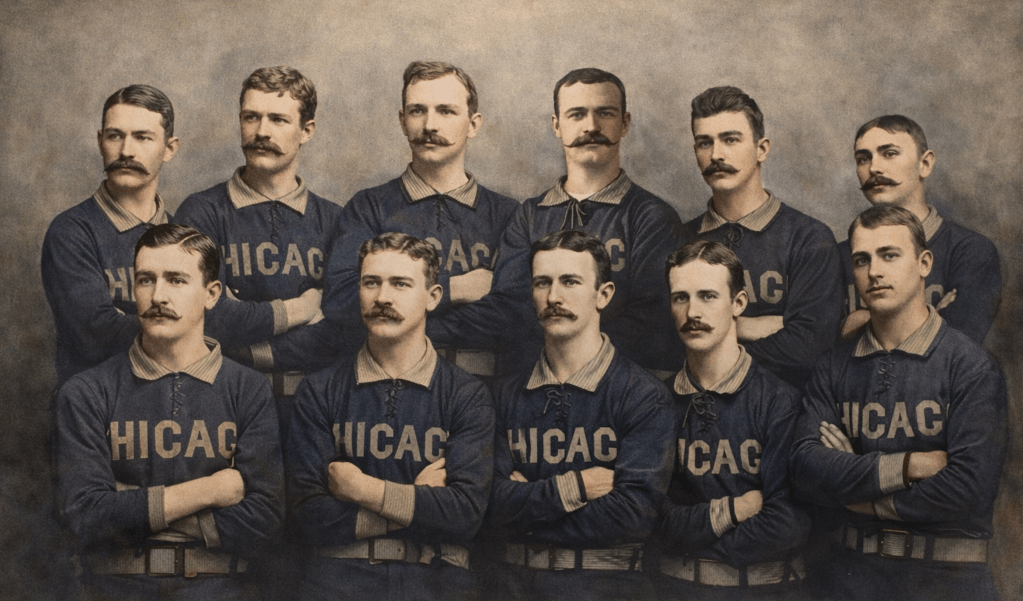
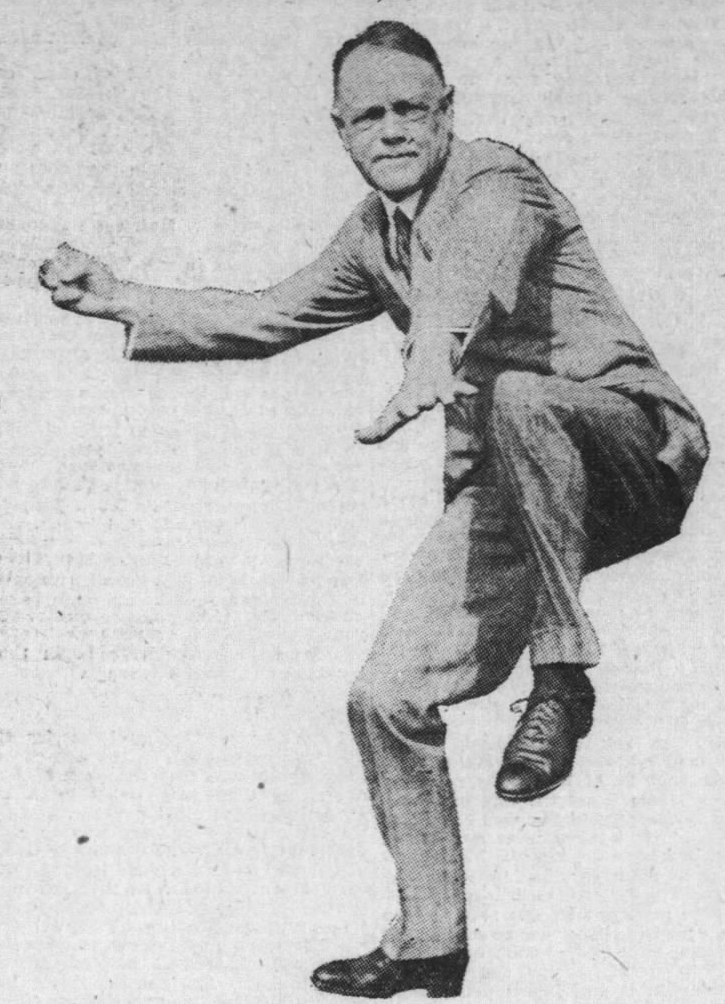
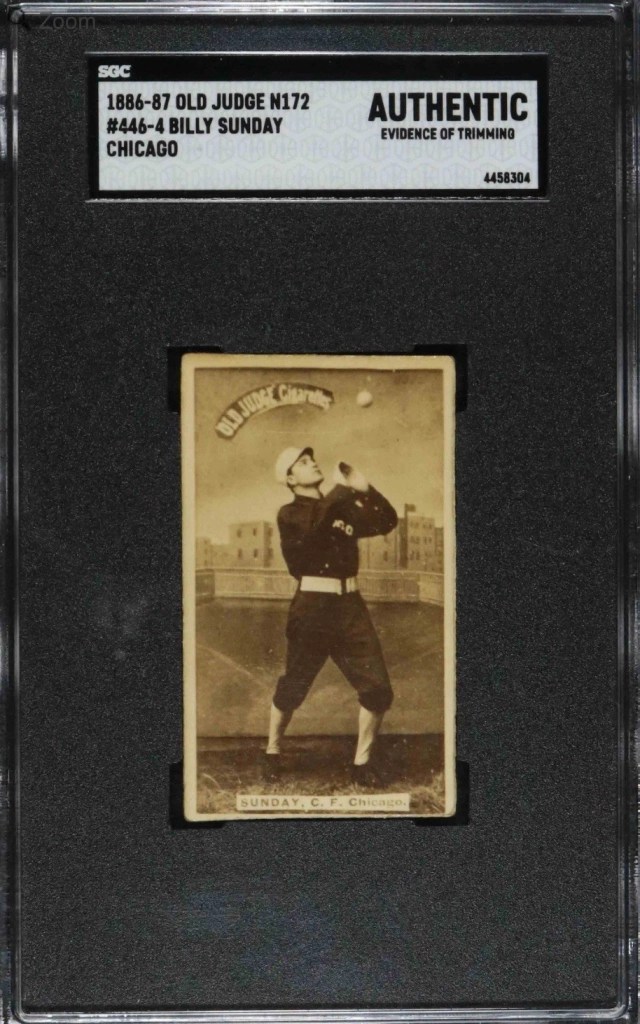

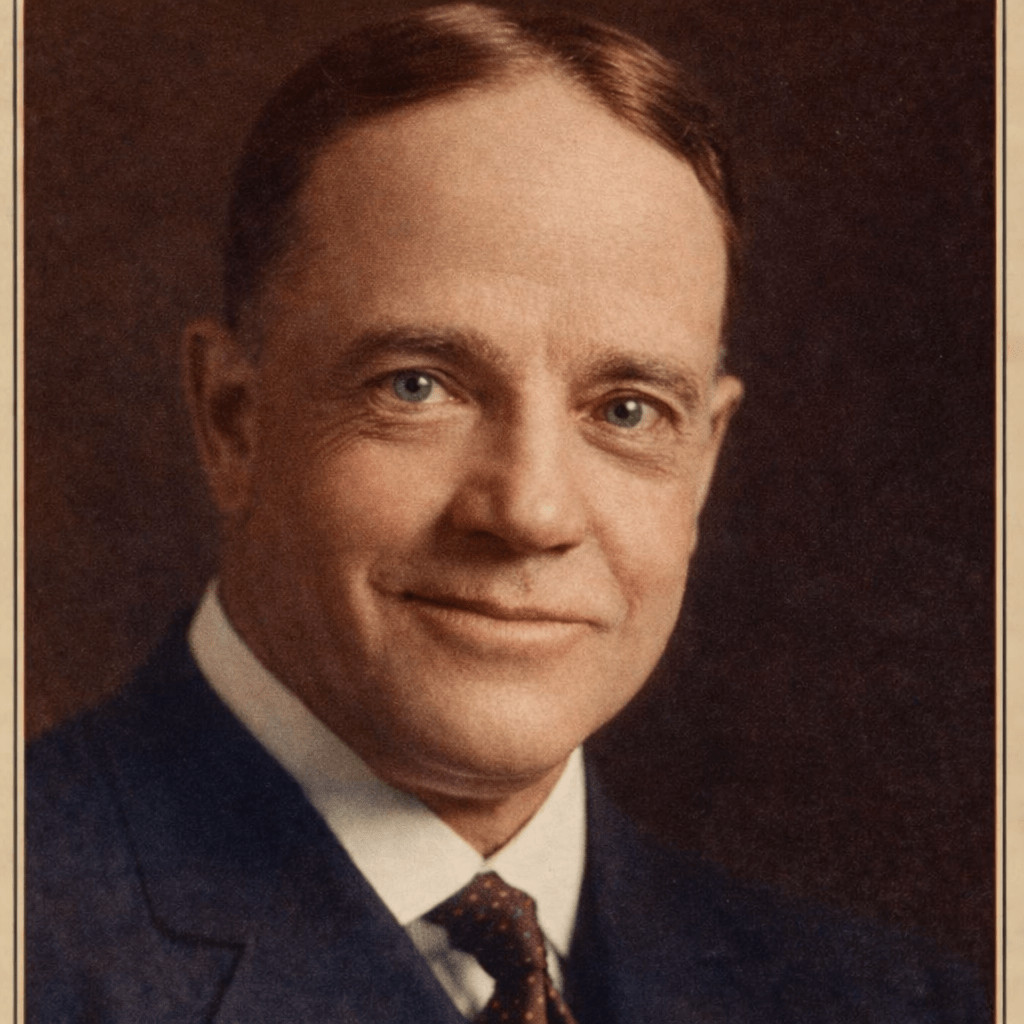
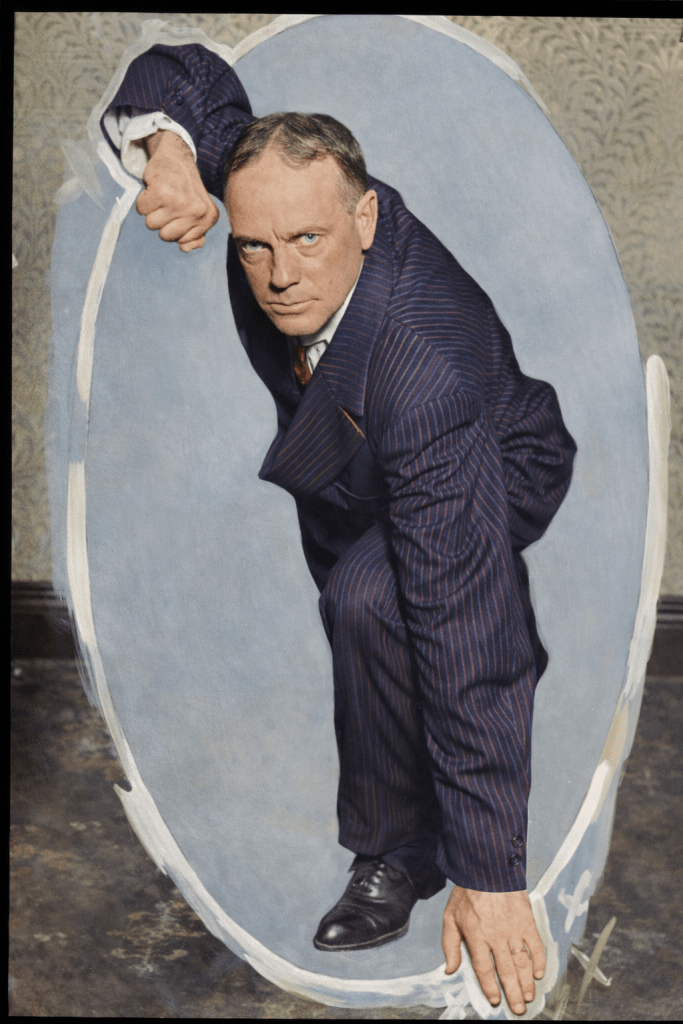
 Evangelist Billy Sunday (1862-1935)