Former professional baseball player-turned urban evangelist. Follow this daily blog that chronicles the life and ministry of revivalist preacher William Ashley "Billy" Sunday (1862-1935)
ONE of the most impressive and successful days in the great campaign was Mother’s Day, as suggested by Rev. Mr. Sunday. The following request was published:
Every person is requested to wear a white flower or ribbon to-day in honor of mother. If your mother is alive do her an act of kindness. Telegraph or write to her, or give her a gift to express your love. If mother is not alive, perform an act of kindness to somebody else’s mother. The services at the tabernacle will be for mothers, although everybody is invited. Businessmen are invited to close their places of business from two to four o’clock, or at least to let as many employees off as possible. An offering will be taken at the tabernacle to be given to the Woman’s Club to be distributed to the charities of the city as the club deems best.
He prays as though God Almighty were standing right before him.
He prays for everybody.
He prays with the same earnestness and energy that marks his preaching. He prays with the zeal and vim that starred him in baseball.
He expects his prayers to land.
He prays for you and me, for the plumber and the telephone girl, for the banker and the street cleaner, for the washwoman and the debutante.
There’s nothing perfunctory in Sunday’s praying.
Sunday’s prayer is not what he says many a prayer is—“Just a funny noise.” Sunday has something to ask for and he asks for it.
He prays for the salvation of souls, for the success of his meetings, for men to “hit the trail for Jesus Christ.”
Billy Sunday at prayer is the picture of a lawyer pleading to a court. Sunday is the attorney at the bar. Those he prays for are his clients. God Almighty is the supreme judge. God is on the bench hearing the argument.
Sunday states his case. He tells the “judge” what he wants; he gives his reasons; he makes his argument; he pleads:
“For Christ’s sake, God, grant what I ask.”
There’s punch in Sunday’s praying. His prayers distinguish him.
Cited from: The Omaha Daily News. September 19, 1915: 10.
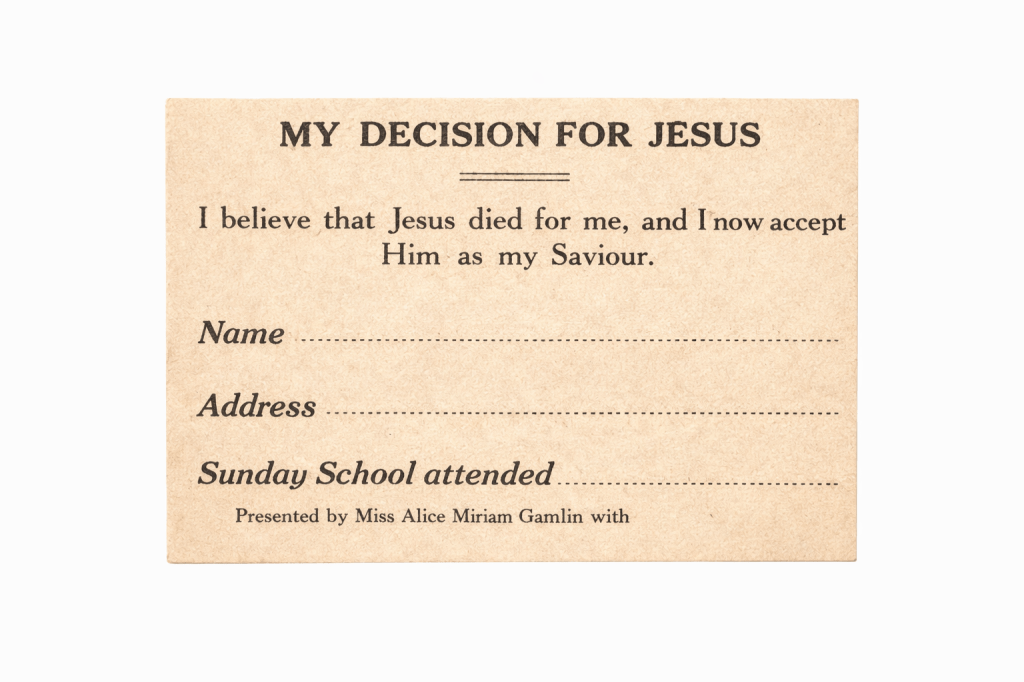
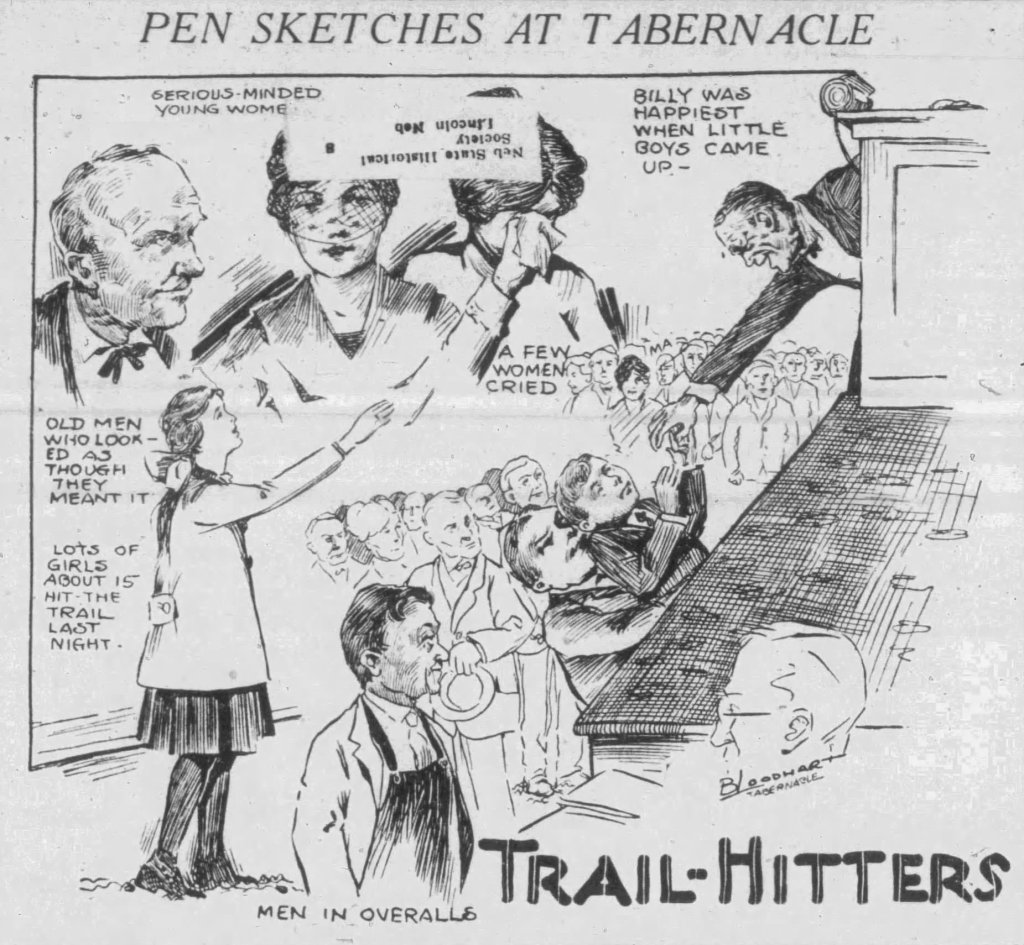
Here is what a ‘trail hitter’ filled out who walked the sawdust trail during a Billy Sunday revival. Omaha saw 13,000+ conversions, closing on October 24, 1915 (opening Sept 5). Billy preached at least 96 times just in the tabernacle during this revival, and scores more outside of the tabernacle venue.
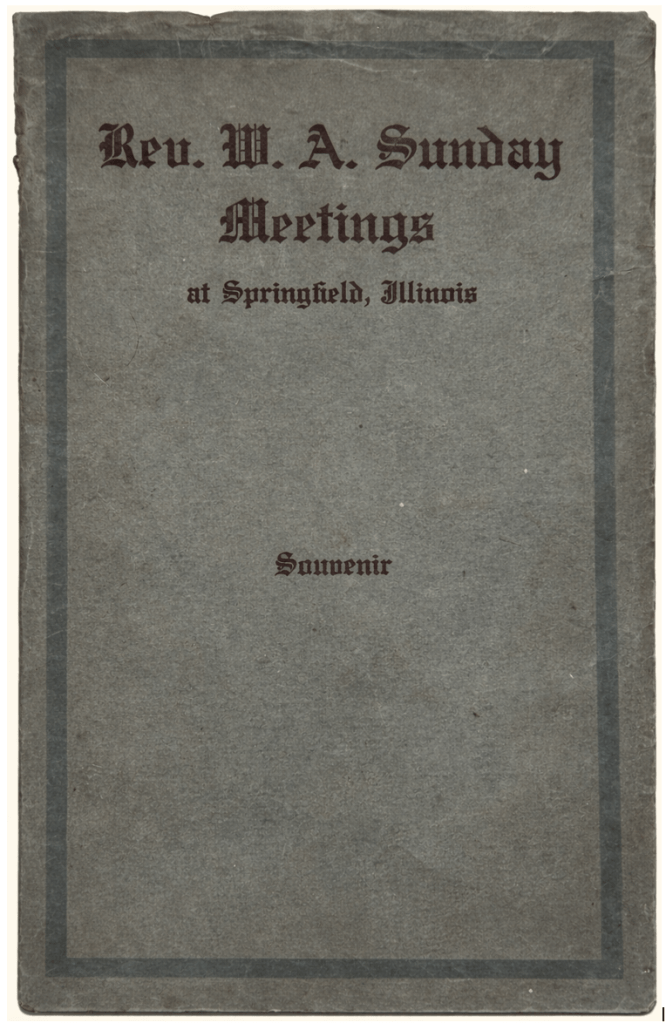
The Billy Sunday campaign published a souvenir booklet in 1910 that summarized the Springfield, Illinois campaign (Feb 26 – Apr 12, 1909). The following narrative shared much about the Rev. William A. ‘Billy’ Sunday
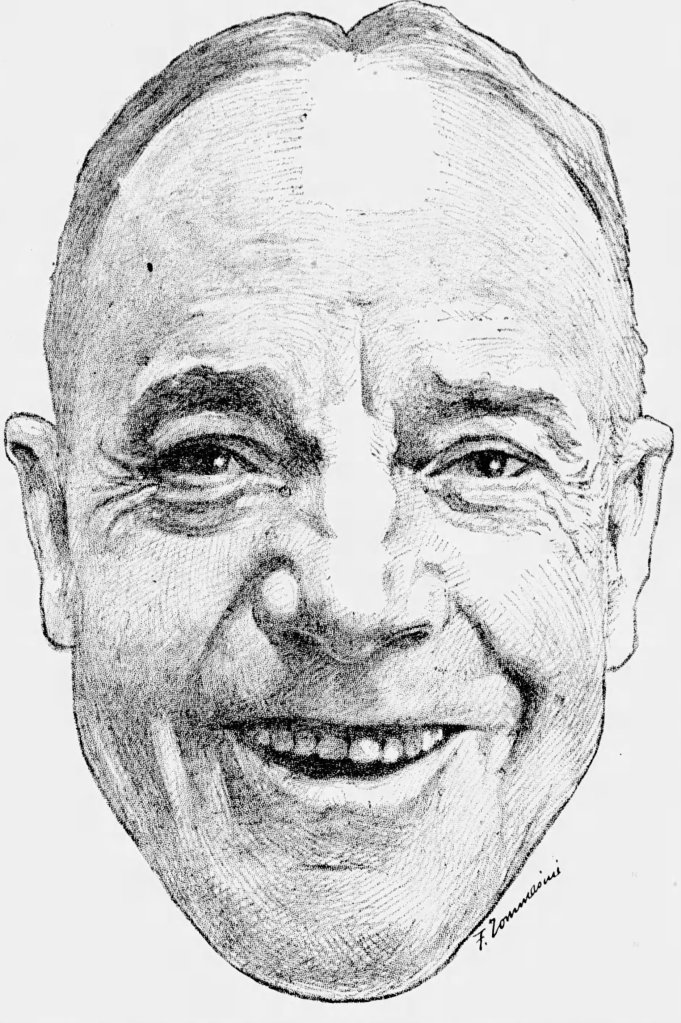
Rev. W. A. Sunday
WILLIAM ASHLEY SUNDAY is the best beloved and the most abused, the simplest and the most misunderstood, the most soulful and the most like a vaudeville performer, the most powerful in oratory and the least appealing to the emotions, the most persuasive and the most controversial, the most scholarly and the plainest, not to say coarsest, the greatest poet in essence and the greatest scrapper, of any man on the forum, the platform, or the stage of the world today.
He has been styled, the polygonal preacher, because he has so many sides, each a complete, finished, forceful fact. A character picture of the man, to be complete, must be a description of each of these baker’s dozen sides of his personality, none of which is much more important than any other one. The most that can be done within a small space—or indeed within any limitation of space—is to sketch in broad lines the mere outlines of this evangelist who is preaching the gospel of peace on earth and fighting the devil with the hottest of fire at the same time.
His father was killed in the civil war. The little boy was sent to the Iowa home for soldiers’ orphans. Later he made his own living at a youthful age, and his school teacher of that time says she would often watch him on the playground and wonder whether he would be the greatest crook or the greatest power for good in America—she was even then sure he would be one of the two. The boy took the right hand road.
When a young man he was a locomotive fireman on the Chicago and Northwestern Railroad and lived at Marshalltown. This was also the home of the famous A. C. Anson, captain of the old Chicagos, who watched Billy Sunday play baseball on corner lots while at home in Marshalltown. Anson took him to Chicago, discovered in him a great baseball player, and Sunday held the record for base running for years, a record which he still holds; was the second man chosen on the All-American team to tour the world—an accident to his knee kept him from making the tour—and was a popular idol of the fans.
An old time catcher for the Louisville team says that in those days when en route the rest of the men would play poker in the Pullman, but Billy Sunday was always back on the cushions with a book. He has kept close to books ever since. He has a remarkable faculty of choosing the very best and most authoritative writing on any particular subject and reading that only—and hence the range of subjects upon which he is thoroughly and accurately informed, includes almost everything from histology to astronomy and from bacteriology to history—it is a little interesting to notice that chemistry is the one topic unmentioned in his sermons. Three medical college professors who met at the end of his sermon which includes a half hour of the deepest microscopical pathology, agreed that William A. Sunday is the only layman they ever heard or read who was accurate in all he said about medical science.
One night a bunch of baseball players strolling along a Chicago street ran into a curbstone evangelist and stopped to be amused. Sunday stayed after the others went on. He went from there to the Pacific Garden mission, where he was converted. He kept on playing baseball, and nobody who ever heard it will ever forget his own description of how the others of that famous Chicago team approved his home run into Christianity.
A little later he was employed by the Chicago Young Men’s Christian Association at a small salary, only part of it paid during the panic of 1893, and refusing offers of $500 a month to return to the diamond. As a part of his work, he addressed groups of men—he always did know men, because of his early life and hard struggles. The addresses became longer and stronger with the growth of the work and experience in it. That great evangelist, Wilbur F. Chapman, took Sunday away from the Chicago Y.M.C.A. to be his assistant. Sunday learned the art of evangelizing and after learning it thoroughly treated it as Napoleon treated the art of war—he re-made it for himself, so that its old practitioners hardly recognize it, and at the same time made it produce victories hitherto undreamed of. The William A. Sunday methods of campaigning for Christ are unlike any others; they include the best of those of the past and many things unique; probably only Sunday could use them successfully in all their details; but it seems certain that they have factors not found in most others which really are the corner stones of successful work in evangelism. Some of the chief parts of the art of evangelism, as practiced by William A. Sunday, are these: Absolute accuracy in every statement made, whether one of the essential parts of the argument, or merely an illustration; hew close to the line that Jesus Christ laid down, regardless of the falling chips, and wherever that line leads; use language that everybody can understand, never talk down to an audience, but be lucid to the most ignorant while you are talking up to the most scholarly persons before you; avoid sectarianism; demand united work from all the evangelical churches in the city, and push united work by all the members of those churches; roast the skin of vice and sin in all its forms, from backsliding and carelessness to murder and adultery, rub salt into the burnt flesh, and then apply a healing balm that causes the object of the criticism to leave the tabernacle chastened in spirit, but loving the rod that smote him; avoid all fads and fancies, all tangential movements of society, but do a common thing in a most unusual way; and—many others. Starting with small towns and a few hundred converts at each series of meetings, the same plan of campaign has been used for all the years involving campaigns in cities of all sizes, and the first meetings years ago were, so far as Mr. Sunday is concerned, almost exactly like the meetings in Springfield. Of course, some minor modifications have been made, but these are few. Always there are the first sermons to get the church members back out of the world into the influence of Christ and to get the public to come to the tabernacle—the public seems to find its greatest attraction in hearing church-member hypocrites and Pharisees skinned like eels. Always the strenuosity of the sermons almost imperceptibly lessens gradually until the preacher who preaches as man never preached before is less athletic and more rhetorical about the middle of the series. Then, to the amazement of people who judged the man from his first pulpit stunts, the Reverend William Ashley Sunday preaches like the great orator that he is, the scholar that he is, the poet-philosopher that he is. This many sided man cannot be even sketched within a hundred pages. There is competent authority for saying of him these superlatives as being strictly true: He understands the minds and feelings of men as few men ever have done. He is one of the greatest orators the world has ever seen—and this is proved by the results of his work.
He is one of the most remarkable stylists in literature, his perfect imitation in one hour of the styles of Carlyle, Gibbon, Ingersoll, and several other writers of individual styles being an unprecedented feat.
He is said by scientists to be the most—and indeed the only—perfectly accurate preacher in matters of science. And a large part of his sermons deal with science.
He appeals entirely to the reason of the people, and rarely or never to their emotions, and in this he is the greatest of evangelists in the opinion of many people.
In numbers of converts, dramatic height of scenes, and wonderful stirring of the audience, several of his meetings have eclipsed anything in the history of evangelism since pentecost—and the most of these have been meetings for men.
Another popular sermon for Billy Sunday during the 1915-1916 campaigns was the Secret of Failure.
In “Secret of Failure,” Billy Sunday argues that failure in life is not accidental but rooted in disobedience to known truth. Using Jeremiah 5:5, he contends that God’s blessings are available, but people forfeit them by breaking His laws. The central issue is not ignorance but willful rebellion—people know what is right yet refuse to do it. Sunday emphasizes that sin is often subtle and socially acceptable, not just gross immorality, and that even church members can live in quiet compromise. He warns that partial obedience, moral neglect, and conformity to the world lead to spiritual defeat. External religion—church attendance, respectability, or profession of faith—cannot substitute for genuine obedience and transformation. True success, he insists, comes from aligning one’s life with God’s revealed will. The sermon builds toward a direct appeal: stop excusing sin, confess it honestly, and live out what you already know to be true, or failure—spiritual and moral—is inevitable.
Quotes from the sermon
“Your failure isn’t because you don’t know better—it’s because you won’t do better.”
“God tells you what to do, and you nod your head—but you never move your feet.”
“Some men are too good to be counted among the wicked—and too bad to be counted among the saved.”
“A half-obedient man is a whole failure.”
“You can sit in church and hear the truth every week—and still go to hell with a Bible in your lap.”
Billy Sunday preached the sermon of David and Nathan often during 1915-1916, using it in Kansas City, Baltimore, Philly, and Omaha.
Billy was fond of using narrative passages of Scripture to apply to a gospel sitting.
In this sermon, Billy Sunday argues that the Bible’s credibility is demonstrated by its honesty in revealing both the virtues and sins of its central figures. This transparency proves Scripture is not fabricated but divinely truthful. From this foundation, he emphasizes the universality and progressive nature of sin, showing how it enslaves individuals and shapes character over time. Sunday rejects the idea that morality, religious rituals, or personal effort can remove sin, insisting that only Christ provides true forgiveness and transformation. Genuine salvation, he argues, results in a changed life, not mere outward reform. The sermon builds toward an urgent appeal for repentance and new birth, calling listeners to abandon self-deception and receive the cleansing and renewal that only God can provide.
June 4, 1916. The Kansas City Star.
Here are some noteworthy quotes from the sermon
“God tells both sides of the story. He doesn’t whitewash His saints—He shows you the black spots as well as the bright.”
“A man doesn’t become a criminal in a day; he practices himself into it. Sin is a habit before it is a headline.”
“You can’t whitewash your heart with good works—sin soaks through. It takes the blood of Christ to make it clean.”
“If a man is born again and lives like the devil, then either he isn’t born again—or the Bible isn’t true.”
The following is a biographical sketch of Helen Sunday, wife of Billy Sunday. Part of the 1909 Springfield campaign souvenir.
Mrs. W. A. Sunday
THE biographer who omits to study the wife of his subject certainly will miss the key to his problem of investigation. The world talks of the influence of the mothers upon its men; but it, curiously enough, generally omits appreciation of the strong influence of the wife upon any man; and perhaps more men have been made and unmade by their wives than by their mothers, when heredity is omitted from the matter.
Mrs. William A. Sunday was a girl of great strength of character when she was Miss Helen A. Thompson, the daughter of a Chicago business man. She married a famous baseball player and found herself the wife of one of the greatest of evangelists—and she not only made the revolutionary change with him but is one of the chief causes of William A. Sunday being what he is in the eyes of the world. She was a church worker, a shining exception to the rule of the results of marrying a man to make him better. She upheld the hands of her husband when he was in poverty and the poorly paid worker of the Chicago Y.M.C.A., writing letters declining, for seven times his salary, to return to the baseball field. When William A. Sunday was starting out as an evangelist along entirely new lines of endeavor which merged into In his entirely unprecedented lines of achievement, his wife helped greatly to keep up his courage, keep him along the line he had chosen, and keep him as much as possible free from worries. Mrs. Sunday complements her husband perfectly—they are not at all similar, and she is strongest where he is weakest and weakest where he is strongest. If he had a helpmeet like himself, Mr. Sunday might be plunging into hot water every month and every year. Luckily for him, his wife guides him around and over most obstacles, keeps his fingers out of the fire, and does what Mr. Sunday never thinks of doing—looks after his own interests.
The wedding of Mr. and Mrs. William A. Sunday was not the kind one finds pictured in Paul and Virginia by any manner of means; it was a twentieth-century marriage of two distinct individuals joining as helpmeets, without either submerging a personality in the other—certainly not the old kind of entire submergence of the wife in the husband. They disagree about as many things as other people do, but each knows in what things the other is best informed or strongest, and the one best qualified always decides the question. The result is that they are more free from actual, important disagreements—the kind called love spats or marital troubles—than most people. This is a match of brains as well as of hearts, of sense as well as of souls, and of respect as well as of love.
Mrs. Sunday does what she can in public during a series of meetings conducted by her husband, but the most important thing she does is to keep her husband able to do the great things he accomplishes in every city in which he works. She is a perfect wife for a very remarkable man.
When the revival campaign of Billy Sunday reached Kansas City in 1916, observers could easily assume that the evangelist’s enormous crowds and national reputation had appeared overnight. But a reflective article in the The Kansas City Star reminded readers that Sunday’s success had actually grown slowly and deliberately over many years.
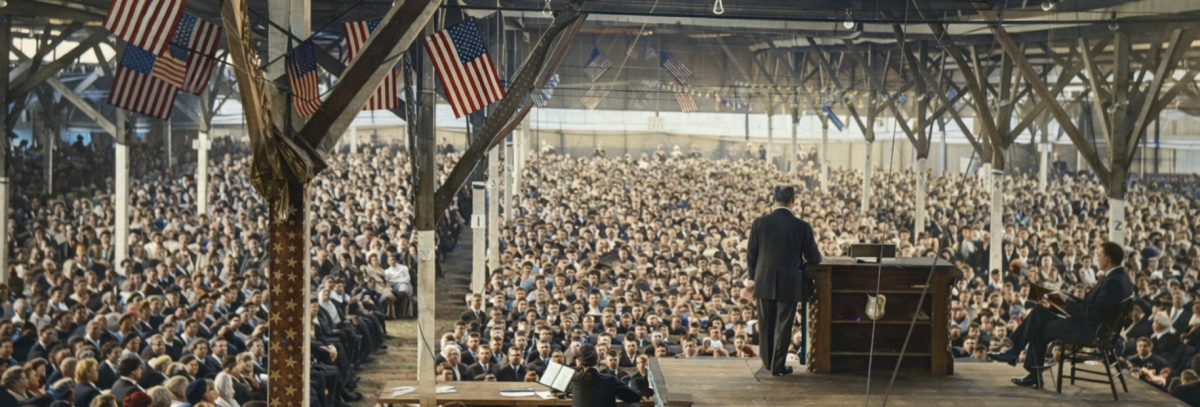
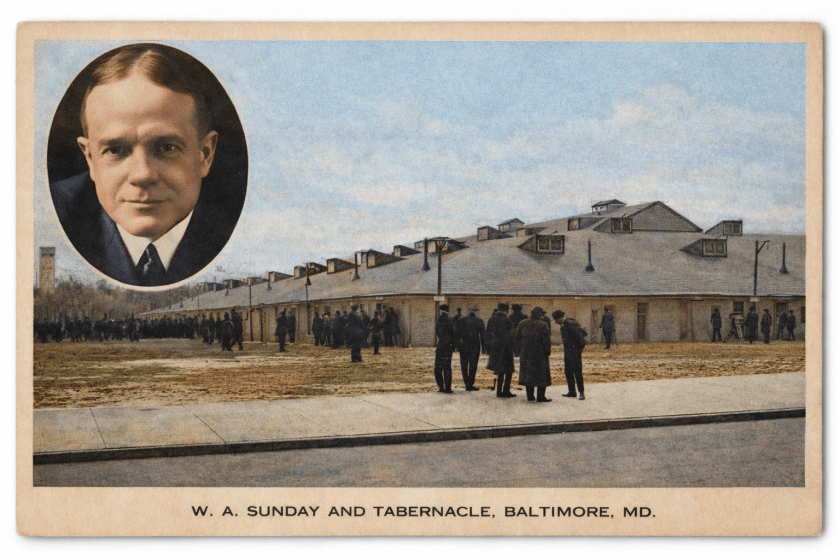
The Baltimore Tabernacle
The paper explained that there was nothing sudden or “mushroom-like” about the rise of the Sunday revivals.
“There is nothing ‘mushroom’ in the growth of the Billy Sunday meetings.”
Instead, the evangelist’s methods and audience steadily developed over time. In the early years, when Sunday first began holding revival meetings, his audiences often found little that seemed unusual.
“Early audiences found nothing spectacular in the sermons of the revivalist.”
Those early campaigns were also modest in scale. At first, Sunday and his team believed that smaller communities were the natural limit of their work.
“We used to think that the town of ten thousand population was our limit.”
As the years passed, however, confidence grew. The team gradually moved into larger towns and then into major cities. The article recalled how Sunday’s organization expanded step by step—building larger tabernacles and reaching larger crowds with each campaign.
“All the time we were gradually adding to our party and building larger tabernacles.”
By 1916, the scale had changed dramatically. Cities once thought far beyond reach were now the focus of massive campaigns.
“Here we are and New York City is in sight with a tabernacle seating twenty-five thousand.”
The article also emphasized that Sunday’s preaching style had developed its own distinctive character. His revival methods were not borrowed directly from older traditions but shaped by his own personality and experience.
The writer noted that Sunday had “thrown out the life line in a fashion distinctly unique.”
Another aspect of his ministry that caught the attention of reporters was the structure of the campaigns themselves. A typical revival lasted about a month, with the message unfolding gradually over time.
In the early weeks, Sunday often avoided direct appeals for conversion, instead using stories and humor to gain the attention of his audience. Only later did the preaching intensify.
By the third week, the article explained, Sunday would devote his sermons to confronting sin and pressing listeners toward repentance. The final week focused on urging people to make a decision.
Even the physical setting reflected Sunday’s distinctive approach. Unlike some revivalists, he rejected the traditional “mourner’s bench” used in earlier revival meetings. Instead, converts were invited to come forward and sit in chairs while he spoke with them personally.
The article also noted that Sunday was not closely tied to any one denomination. While he often expressed appreciation for various churches, his ministry remained broadly interdenominational.
By the time Kansas City hosted the campaign in 1916, Billy Sunday had become one of the most recognizable religious figures in America. Yet the newspaper’s reflection reminded readers that the movement had not been built in a single moment.
It had grown—campaign by campaign, city by city, and year by year.
And in the process, Billy Sunday had created a revival method that was unmistakably his own.
Page 2 of The Britt News, published in Britt, Iowa on Thursday, March 4th, 1909 Horsewhipped by Religious Zealot at Springfield.
Rev W. A. Sunday, better known as “Billy” Sunday, a former baseball player, who is now an evangelist, was horsewhipped Friday night by a religious fanatic at the Sunday tabernacle in Springfield, Ill., where, in the presence of 8,000 persons he was conducting the opening meeting of a religious revival.
The evangelist had just made his opening remarks and was leaning against the pulpit while a hymn was sung by Fischer and Butler, his choral leaders, when a powerful man who says his name is Sherman Potts ran forward with a buggy whip and struck Sunday several terrific blows.
Sunday leaped from the platform and dashed at his assailant, whom he knocked down. The audience was on the verge of a panic, with women weeping and children screaming while Potts and Sunday rolled and tumbled in the aisle.
Mr Fischer directed the choir and the audience to sing, and in a few moments the entire audience was calmed Several men seized Potts and held him until policemen came and took him to jail.
Mr Sunday suffered several painful bruises from the whip The prisoner said his home was near Lexington, Ill According to his statements at the jail he was once declared insane and committed to the Jacksonville asylum, whence after a brief confinement he was released.
He made the attack he said, in defense of the virtue of women which he declared had been criticized by the evangelist The police say that Potts is a religious fanatic.
Page 2 of The Britt News, published in Britt, Iowa on Thursday, March 4th, 1909.

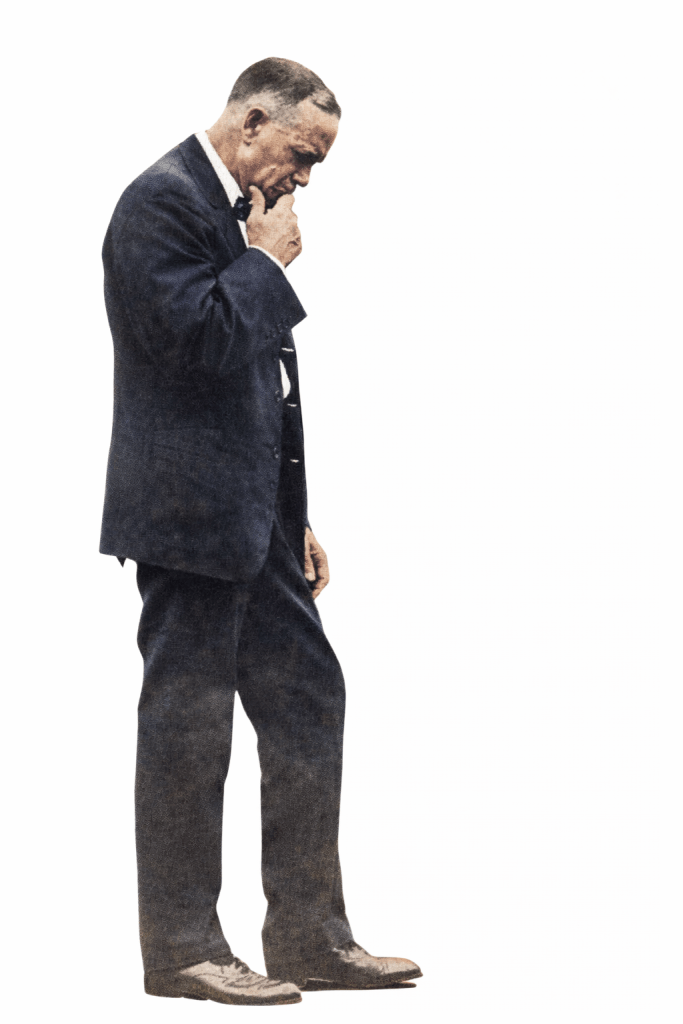
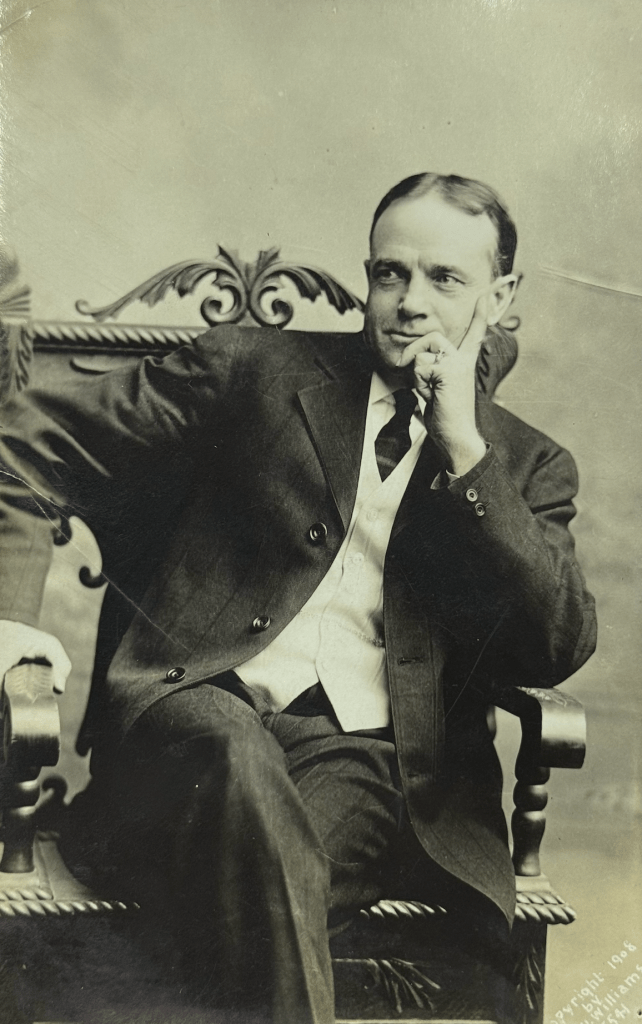


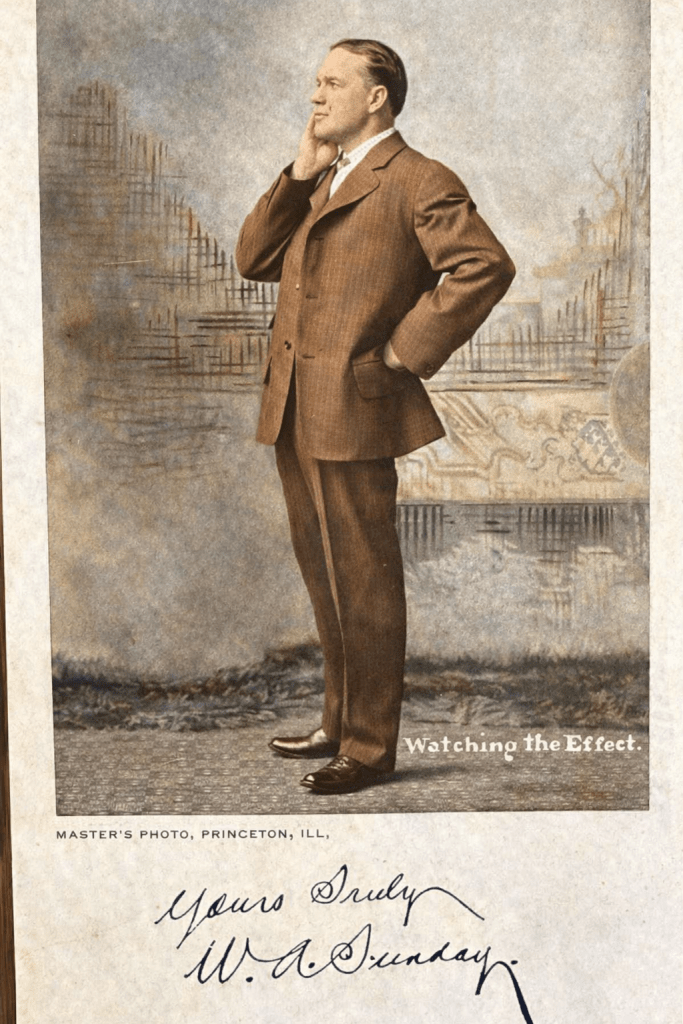
 Evangelist Billy Sunday (1862-1935)