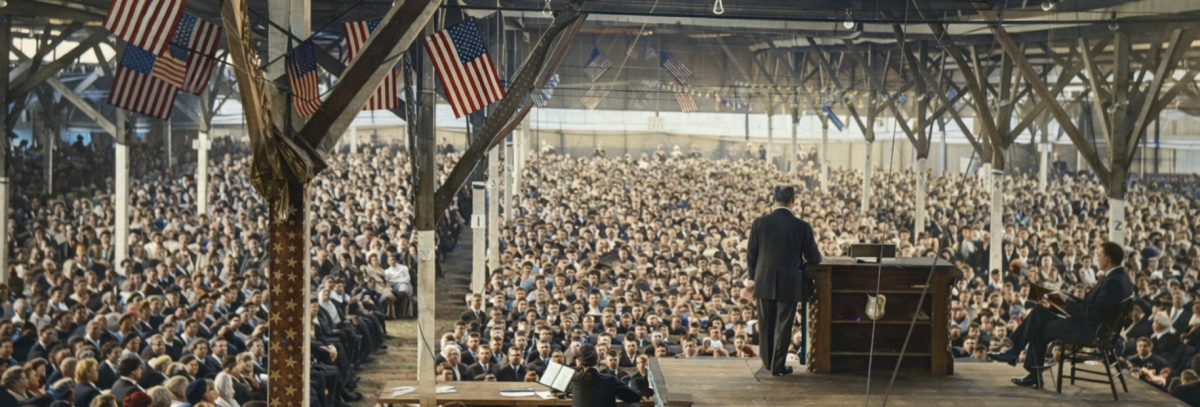
Baltimore, April 1916
During Billy Sunday’s great revival in Baltimore in the spring of 1916, one evening at the tabernacle took on a distinctly historic tone. The sawdust aisles—normally filled with businessmen, laborers, and curious citizens—were suddenly occupied by a different kind of procession. A body of Union veterans of the Civil War, many gray with age but still proud of their service, marched forward together into the meeting.
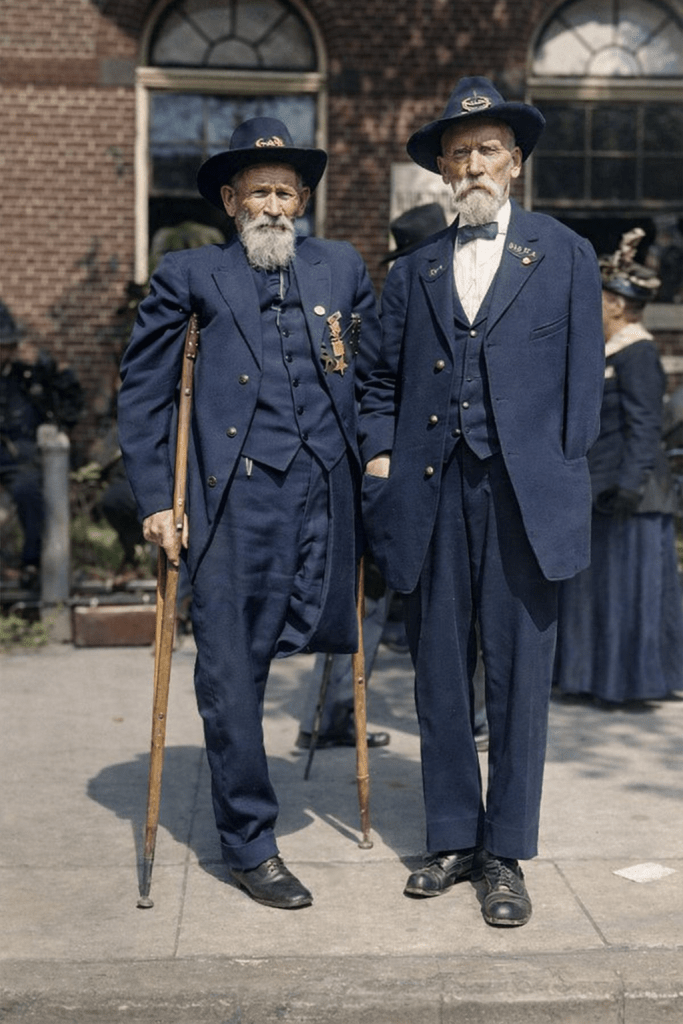
According to the Baltimore Sun, nearly 500 veterans of the Grand Army of the Republic (GAR) attended the revival that night. The GAR, the powerful national organization of Union veterans, was still an important presence in American civic life in the early twentieth century. Though the war had ended more than fifty years earlier, the men who had fought to preserve the Union remained symbols of sacrifice and national memory.
The veterans were led by James E. Van Sant, commander of the Maryland Department of the GAR, along with E. R. Monfort of Iowa, who at the time served as Commander-in-Chief of the national organization. When they entered the tabernacle they were warmly received, and the crowd greeted them with enthusiastic applause.
The occasion had the character of both a patriotic ceremony and a revival meeting. The veterans arrived with a brass band, and when the musicians began to play familiar airs the audience responded with equal fervor. The strains of “Maryland, My Maryland” and “The Star-Spangled Banner” rang through the building, followed by old martial tunes such as “Yankee Doodle” and “Dixie.” The building reportedly shook with applause as the music echoed beneath the great wooden roof of the tabernacle.
The veterans also presented Billy Sunday with a gift—a ceremonial Old Glory mounted on an elaborately wrought brass standard. It was a gesture that connected the evangelist’s message with the patriotic ideals the veterans had fought to defend half a century earlier.
The evening was opened with prayer by Rev. B. F. Clarkson, chaplain of the Maryland GAR. Both Billy Sunday and his music director Homer Rodeheaver spoke warmly of the veterans and the sacrifices they had made for the nation. Rodeheaver added to the patriotic atmosphere by playing martial music and bugle calls on his trombone.
For the aging soldiers, the gathering was more than a nostalgic reunion. Many of them walked the same sawdust aisles as the younger men and women attending the revival. Their presence reminded the audience that the Civil War generation was rapidly passing from the scene. These men had once marched into battle for the Union; now they marched into a revival meeting in search of spiritual renewal.
By 1916, the Civil War was already receding into history, but its memory still held powerful emotional force. That night in Baltimore, the veterans’ appearance created a striking moment where patriotism, memory, and revival religion met under one roof.
The sight of those aged soldiers marching forward—flags waving, band playing, and the crowd cheering—must have been unforgettable. For one evening at least, the old warriors of the Union once again marched together, not onto a battlefield, but down the sawdust trail of Billy Sunday’s revival.
 Evangelist Billy Sunday (1862-1935)