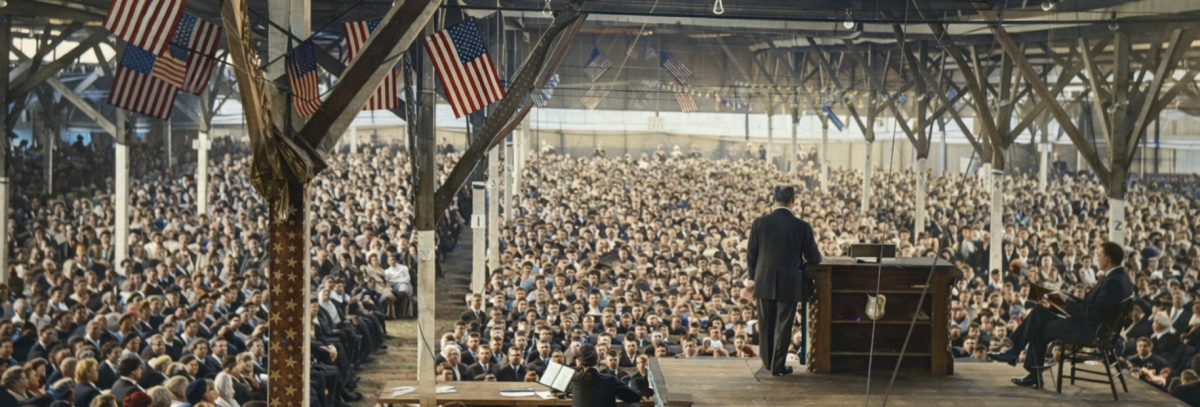
Curated from: The Philadelphia Evening Ledger. January 6, 1915:3.
You don’t just attend a Billy Sunday meeting—you step into it.
By the time I reached the tabernacle, the place was already alive. Not just crowded—alive. Policemen lined the edges, firemen stood ready, and yet there wasn’t even “the merest hint of disorder.” Whatever this thing was, it had structure. It had gravity. And it was pulling people in.
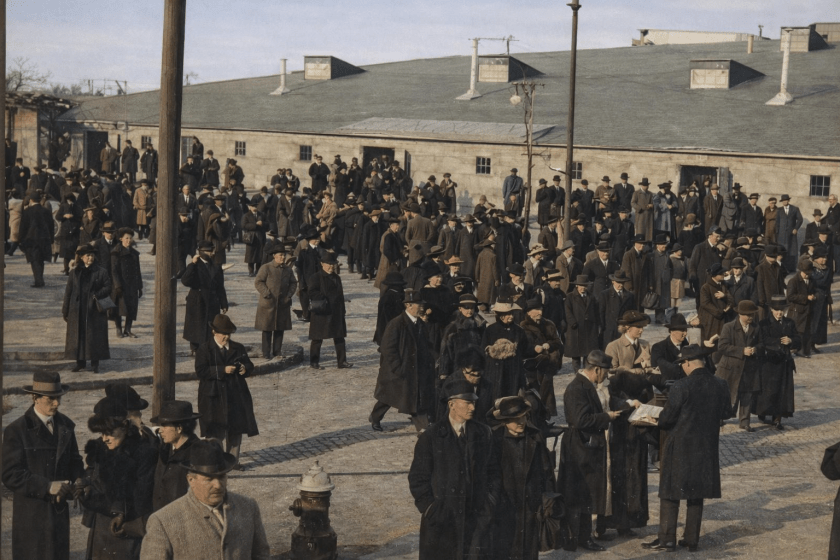
Inside, the air carried that peculiar mixture of sawdust, sweat, and anticipation. Outside, though—that’s where you heard the real story.
A man near me, confident as a prophet, said to no one in particular:
“Billy Sunday has only started… it’s going to get worse and worse. He arouses more enthusiasm each day. If you don’t believe me, ask Scranton.”
That was the mood—this wasn’t the event. This was the beginning of the event.
The Crowd Watching the Crowd
It struck me quickly: people weren’t just watching Billy Sunday.
They were watching each other.
One visitor said it plainly:
“I was naturally interested in ‘Billy’ Sunday, and perhaps even more so in the crowd.”
And what a crowd it was.
A boy—no more than ten—hobbled in on crutches just to hear him. A sailor from the battleship Kansas had been waiting “for months” to catch a meeting. A woman stood nearby, nervous, almost whispering:
“Oh! no. I cannot give my name… my husband would throw a fit if he knew I had been in here.”
And yet—there she was.
That’s how you knew something was happening. Not just attendance—but risked attendance.
What People Were Saying
If you wanted to understand Billy Sunday, you didn’t start with the sermon.
You started with the talk afterward.
“What do you think of ‘Billy’?” someone asked.
The answers came quick, overlapping:
“Great.”
“Some man.”
“An ace.”
“I like him because he goes after the hypocrites.”
Others reached for bigger words:
“Wonderful… splendid… marvelous.”
But not everyone could quite put their finger on it.
One woman, looking slightly dazed, said:
“I have had so many things fired at me in the last hour that I can’t quite set my bearings.”
That may have been the most honest response of all.
More Than a Sermon
There was something else in the air—something heavier than excitement.
A man, speaking to a small group of women, said what many were thinking:
“I would like to see ‘Billy’ Sunday wake this city up and get the rum out of it… Look how many homes he would make happy.”
And then, almost quietly, another moment:
In the northeast corner of the tabernacle, someone reported hearing a man say:
“This is my last drink.”
No sermon transcript can capture that.
That’s the sawdust trail doing its work.
The Unexpected Details
Not everything was solemn.
Someone joked about the sawdust itself:
“They say Mr. Sunday hates noise, and I know I am going to sneeze. I always do when around sawdust.”
Even the ministers weren’t immune to the moment. One well-known clergyman was said to amuse himself before preaching by reading The Fun of Getting Thin—and now, thanks to the crowds, “occupies two seats.”
And everywhere—evidence of men lingering longer than usual:
“There were enough cigar butts left in the gutters… to start a true second-hand cigar store.”
It wasn’t tidy.
It wasn’t polished.
But it was real.
Order in the Midst of It All
For all its energy, the thing held together.
The crowds were vast, but they moved. The police managed them. The firemen stood watch. The machinery of the city seemed, for a moment, to cooperate with something larger than itself.
One observer summed it up best:
“To get and hold a vast throng like this on a weekday for the purpose of hearing the gospel certainly is a tribute to the man himself.”
And It’s Only the Beginning
If you stood there long enough, listening—not to the sermon, but to the people—you began to realize something:
The revival hadn’t peaked.
It hadn’t even arrived yet.
It was building.
You could hear it in the confidence of the man who said, “ask Scranton.”
You could see it in the boy on crutches.
You could feel it in the nervous woman who came anyway.
You could sense it in the man who muttered, “my last drink.”
Billy Sunday may have been the preacher.
But the city—
the crowd—
the conversations spilling out onto the streets—
They were becoming the message.
And Philadelphia, whether it knew it yet or not, was just getting started.
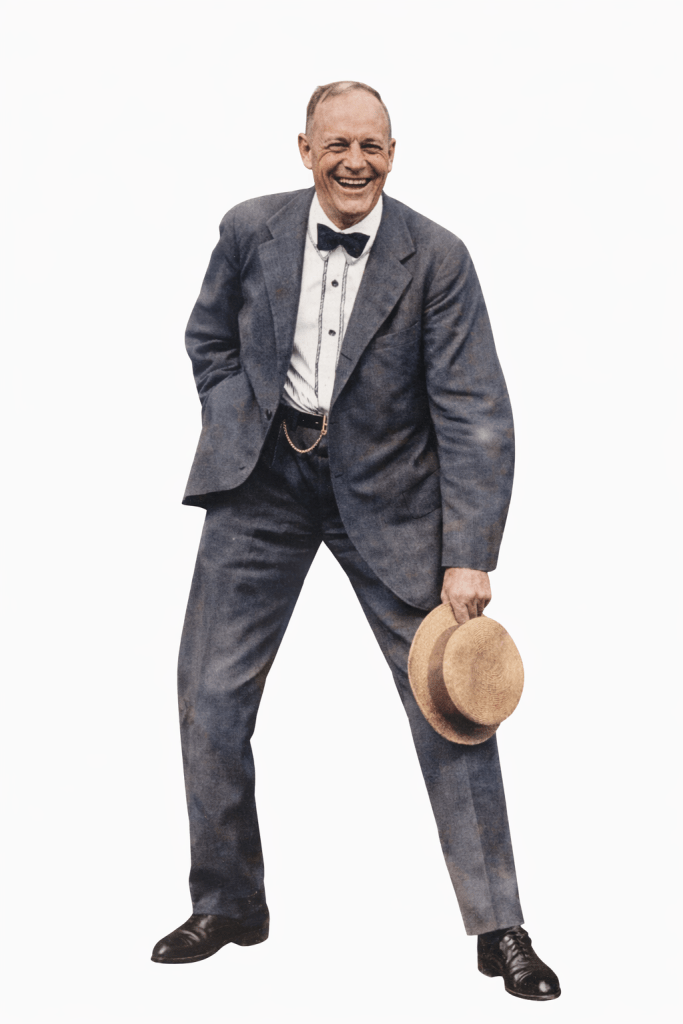
 Evangelist Billy Sunday (1862-1935)