Former professional baseball player-turned urban evangelist. Follow this daily blog that chronicles the life and ministry of revivalist preacher William Ashley "Billy" Sunday (1862-1935)
As reported by The Richmond Item. Fri, May 26, 1922 ·Page 7.
SUNDAY DONATES SUM OF $120,485
Then on Top of That he Gives $65,000 to Pacific Garden Mission of Chicago
Those who call Billy Sunday a grafter were asked yesterday afternoon to hear a little of some past donations of the evangelist. He told his tabernacle audience that when he was in New York City (c. 1917) he told the people coming to the tabernacle to give him all they were able to and he would give it all to the Red Cross and the Y. M. C. A., for their war work.
New York City gave me $120,485, Mr. Sunday said, and I turned over every cent for the work that I had said I would. I went to Chicago and the city gave me $65,000 and I gave the sum to the Pacific garden mission. I give away a tenth of my income. And that is all right. I do not advertise all the things I do with my money. I do not tell all the world the things that I pay off. You follow me around, some of you, and I will make you dizzy with the money I give away. But I don’t have to tell anyone. It is written down above so that is all that matters.
No Guarantee
When Mr. Sunday promised to come to Richmond, he was guaranteed nothing, and all that was to go to him was the free-will offerings the last day of the campaign. He exclaimed, I wonder whether any circus would come to your city on that basis just take up a collection. I wonder whether your county or city officials would collect its taxes on that basis take up a collection. I wonder whether they would let you go to the movies and then take up a collection. No collection for Dempsey when he stood ten minutes in the ring and received $300,000. Oh! no. If I got some of you pay more for your gasoline each year than you do for your church. Oh. it makes me mad when I see you putting God on a five and ten cent basis.
Little
Like one old bird who was always at prayer meeting giving testimony and telling of all he did when he had more on tobacco than he gave to the church in 13 years.
Mr. Sunday preached on God So Loved the World. The Rev. Alford of Columbus, O., made opening prayer. Messrs Mathews and Rodeheaver sang a duet. Mr. Rodeheaver sang My Wonderful Dream. following the sermon, Mr. Sunday gave the invitation and six persons responded.
had found the sheep that was lost. He took her tenderly, and in his shepherd’s plaid he carried her to the fold. One, two, three, four, five, six ninety-six, ninety-seven, ninety-eight, ninety-nine and one hundred. He locked the fold and entered the cabin and she had fallen exhausted on the floor.
She was lying there panting and at the sound of his voice and footsteps she staggered to her knees, reeling and fell dead.
That Jesus Christ should come to this old world to give us a chance to be saved, to try and find us, cursed and scarred and bruised with sin. That is God’s message to us. He so loved the world, that he gave his only Begotten Son, that whosoever believeth in him should not perish, but have everlasting life.
Once, years ago in New York I was told there lived a wealthy Christian merchant. He married a beautiful woman, gave her a bank account and unknown to him she drank. She used to go away and visit friends on pretence of visiting relatives. She kept it up and at last fell into a life of sin and shame.
One night he came home and found a note telling him that she had gone away never to return. That her life could not merit his true, Christian character and life. He hired detectives and they searched every where and they could not find her.
Copies of her pictures were left with the police and with undertakers around the country and he said, If you run across her body, use the best clothes that money can buy, buy the finest casket, etc.; bank it with flowers and send for me.
Three years went by when the phone rang and a voice said, We have found her.
And he went to the undertaking establishment and as he looked through the glass upon her face, he cried, Oh, Mary, if you only knew how I loved you, you would have come back.
He stood weeping as if his heart would break and he said, Bury her.
And he erected a costly monument and said to the undertaker, Put on it one word: Forgiven.
That is God’s message to us. He forgives our transgressions, and I am glad that I have a God and that I have a Salvation like that to preach to you.
Evangelist Explains Why He Uses Language of Streets In His Sermons
“Richmond ministers are dead right when they declare that if they said in their own pulpits some of the things I say in mine, it would sound ridiculous,” Billy Sunday admitted yesterday.
“There is a time and a place for all things,” continued Sunday. “Staid old church people, reared in Sunday schools, prayer meetings and churches and familiar with elegant phraseology, do not need to have things told them in the plain language of the street in order to comprehend them. Richmond ministers preach to about the same crowd every Sunday and they understand them perfectly.
Short Over Heads.
“But I speak to multitudes whose fathers never darken a church door. If I put them to the usual pulpit terms it would be clouds over their heads. Some of my hearers never went to school, never received church training. Their vocabulary is often limited to 500 words—many of them idioms of the street and slang, and some of them bordering on cuss words. Now I do not use cuss words, but I use the slang or phrase of the street that I know they will understand and respond to—and they do.
“I saw a man seated in front of me in the tabernacle whose dress and appearance showed he was a sport. He was plainly no church-goer. When I said in my sermon, ‘Don’t pass the buck!’ his face lighted up immediately. He was all smiles and he quickly got the idea I was trying to convey. Had I used highfalutin terms they would have been wasted on him.
Never So.
“When Lincoln used the word ‘sugar coated’ in one of his messages, Secretary of State Seward said he would never do—it was not refined enough.
“All right, you put in a better word,” Lincoln told Seward. Next day Seward came back and said he couldn’t find a better word, and ‘sugar-coated’ remained in the message.
Lincoln said there never would come a time when the American people would not know what ‘sugar-coated’ meant.
The apostle said: ‘By their works ye shall know them’—and when I put it: ‘Show me! I’m from Missouri,’ the man of the street not used to going to church gets the idea in a jiffy.”
Cited in: The Richmond Item. Sun, May 07, 1922 ·Page 6
Note: To read Billy Sunday’s actual prayers, as they were published in the local paper in Richmond, visit this link.
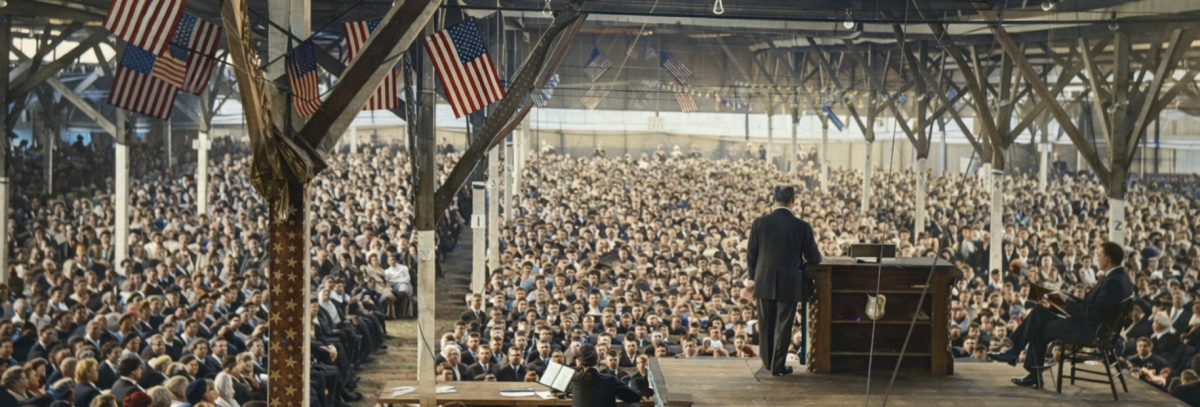
In the spring of 1922, evangelist Billy Sunday descended upon Richmond, Indiana, for a multi-week revival campaign. Thousands flocked to the great wooden tabernacle built for the occasion. They came to hear Sunday’s famously theatrical sermons—but they also heard him pray.
Many of these prayers were transcribed by local newspapers, preserving a unique glimpse into Sunday’s heart when he spoke not to the crowds, but to Christ.
What do these prayers tell us about the man? What did he care about most? What themes, ideas, and images kept surfacing? What unusual moments give us insight into the soul of this revivalist?
After reviewing more than two dozen of his public prayers from the Richmond campaign, a compelling portrait emerges—equal parts preacher, prophet, and penitent.
1. Evangelistic Zeal and Urgency
Above all, Billy Sunday was an evangelist. His prayers are not casual introductions or polite benedictions—they are urgent appeals to heaven for conversions on earth.
Time and again he pleads, “Help them to walk down here,” or “May many tonight say, ‘Here is my hand, my heart, my pledge.’” He speaks to God with the language of altar calls. He prays as a man storming the gates of hell to rescue the lost.
In one prayer, he imagines a vast spiritual migration:
“Help hundreds of men and women to walk down the aisles tonight and take their stand for Christ… inside here, and the people outside here… help them all tonight to take their stand for Jesus Christ.”
His prayers are saturated with urgency, especially for those who might never get another chance.
2. The Devil Is Real—and He’s the Enemy
Sunday believed in the devil. Not as a metaphor, but as a malevolent force actively working to destroy lives and communities. He blames Satan for:
Every penitentiary,
Every broken home,
Every alcoholic and prostitute,
Every grave dug in rebellion against God.
In his words:
“It seems to me the devil has dug enough graves… carved enough epitaphs… made enough drunkards… enough whoremongers.”
He prays for the devil to be “beaten back” and envisions him retreating from Richmond on “crutches,” staggering in defeat. This isn’t poetic fluff—it reflects a core conviction: revival is spiritual warfare, and prayer is how you fight.
3. A God of Nearness, Not Abstraction
For all of Sunday’s thundering urgency, his prayers also reveal a tender intimacy with Christ. He doesn’t begin with “Our most gracious heavenly Father,” but with the familiar, almost childlike invocation: “Say Jesus…”
He pictures Jesus leaning over heaven’s battlements, watching, weeping, waiting. He describes God’s heart as a harbor in a storm:
“It is big enough for a world to hide in.”
And when Sunday talks about Christ’s presence, he appeals to the common-sense faith of farmers and factory workers:
“We can’t see You… but we know You are here. We don’t see the air either, but we know it’s there. We’re breathing it.”
4. Confession of Inadequacy
One of the most human aspects of Sunday’s prayers is how often he admits weakness. Despite his celebrity and rhetorical firepower, Sunday repeatedly tells Jesus:
“I feel distressingly inadequate.”
“I don’t know what more to say.”
“If I’ve failed, it’s from the head, not the heart.”
In one powerful moment, he imagines standing before God in eternity and being asked whether he preached the truth. He answers each divine question with clarity and conviction, but it’s clear he is not self-congratulatory—he’s a servant hoping he has done enough.
5. Gratitude and Specificity
Sunday doesn’t just thank God in broad strokes. He prays for:
The Starr Piano Factory
The Rotary and Kiwanis Clubs
The Odd Fellows and Masonic lodges
Factory workers, businesswomen, farmers, police, firemen, and clerks
His team: Rodey, Bob, Mrs. Asher, and others by name
This detailed intercession reflects a preacher deeply connected to his audience, not only spiritually, but culturally and economically.
6. Theology in the Trenches
Sunday’s theology comes through clearly:
The Bible is true.
Jesus is the only way of salvation.
Hell is eternal.
The Holy Spirit is active.
Salvation is by faith, not works.
But what’s unique is how conversational and concrete these doctrines become in prayer. He doesn’t just affirm them—he reasons with God about them, preaches them back to heaven, and pleads for their consequences to take root in people’s lives.
7. Vivid, Unusual, and Creative Moments
A few standout moments show Sunday’s inventive imagination:
Mock Interview at the Judgment Seat: He prays as if answering Jesus’ questions about whether he preached the full counsel of God—including hell, the Cross, and the exclusivity of Christ.
Agricultural Intercession: In one prayer, he pleads for protection from potato bugs, green aphids, boll weevils, and chinch bugs—spiritual warfare with an entomological twist!
Preaching Boards: As the tabernacle was to be converted into a gymnasium, Sunday says, “Every knot hole will seem to preach a sermon. Every board will be precious.” Even the building itself becomes a kind of legacy.
Evangelism by Auto: He imagines a man driving home from the tabernacle and being stopped by a sword-bearing angel with the question, “Did you solve the problem—what shall it profit a man if he gain the world and lose his soul?”
Conclusion: A Man on Fire, A Gospel on Display
Billy Sunday’s Richmond prayers are far more than stage-setting; they are the spiritual lifeblood of the campaign. Through them we meet a man convinced of eternal realities, obsessed with souls, conversing with God like an old friend, and pouring out every ounce of energy to bring people to Christ.
And though the world has changed in a thousand ways since 1922, the raw passion of these prayers still speaks. They call us back to a faith that is urgent, concrete, emotional, and unashamed.
Sunday once imagined God asking, “Bill, did you preach the truth?” His prayers leave little doubt how he would answer: “I did.”
Would you like this formatted into a downloadable PDF or Word doc for posting or printing?
In the early 20th century, no evangelist captured the American imagination quite like Billy Sunday. With his blazing speed on the baseball diamond and firebrand preaching style in packed tabernacles, Sunday became a household name. But who was the man behind the headlines and revival tents?
While some 1930s newspapers portrayed him as a tragic figure in decline, the truth is both richer and more inspiring. Here are the most accurate and meaningful highlights of Billy Sunday’s life—stories that are not only true, but worth remembering.
1. From Iowa Log Cabin to Orphan’s Home
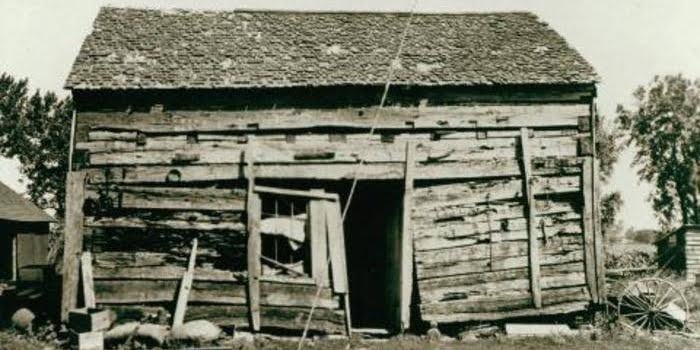
Billy Sunday was born on November 19, 1862, in a humble two-room cabin in Story County, Iowa. His father, a Civil War soldier, died when Billy was just a month old. Poverty and hardship followed. By age 8, Billy was working odd jobs to help support his family, and at 9 he was sent to live in state-run orphanages in Glenwood and Davenport with his brother Edward. It was a rough start—but one that forged a resilient spirit.
Sunday childhood cabin
2. A Baseball Star is Born
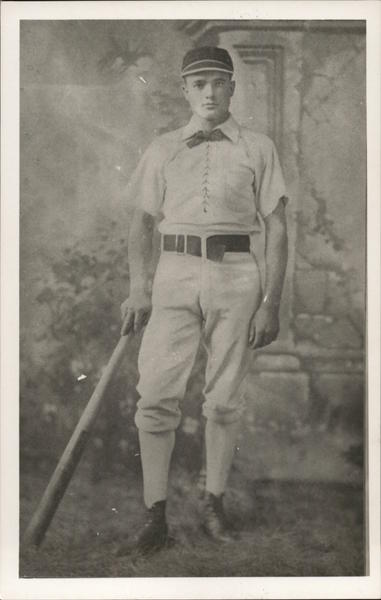
Billy Sunday
Billy’s speed made him a local legend in fire brigade races and eventually caught the attention of Cap Anson, manager of the Chicago White Stockings. In 1884, Billy went straight from sandlot baseball to the major leagues, where he played for Chicago, Pittsburgh, and Philadelphia. He was known for:
Circling the bases in 14 seconds
Lightning speed and dramatic fielding
Coaching at Northwestern University in the off-season
Though not a superstar at the plate, Sunday’s athleticism and work ethic made him a fan favorite.
3. A Saloon, a Hymn, and a Mission
In 1887, while still a ballplayer, Billy heard hymns outside the Pacific Garden Mission in Chicago. Drawn in by the music, he began attending services and was soon converted to Christianity. His transformation was real and lasting.
He turned down lucrative baseball contracts and took a $1,000-a-year job at the Chicago YMCA, launching a new career path—urban evangelism. He later joined J. Wilbur Chapman as an assistant before launching his solo revival ministry in 1896.
Pacific Garden Mission circa 1914
4. Revivalism Redefined
Billy Sunday became one of the most dynamic preachers in American history. His sermons were:
Full of slang, humor, and action
Delivered in massive tabernacles, often seating 10,000–20,000
Focused on personal repentance, moral reform, and civic virtue
In New York City (1917), he preached to over 1.5 million people in ten weeks. He gave the entire $120,465 offering to war charities. In Chicago, he donated another $65,000 to the Pacific Garden Mission.
No other evangelist of his day had such reach—or gave so much away.
5. The Power Couple: Billy and “Ma” Sunday
Billy met Nell Thompson in Sunday school, and after overcoming her family’s resistance to marrying a ballplayer, the two became partners for life. Nell—or “Ma,” as the nation came to know her—was the administrative backbone of Billy’s ministry. She managed his schedule, finances, and logistics, allowing him to focus on preaching.
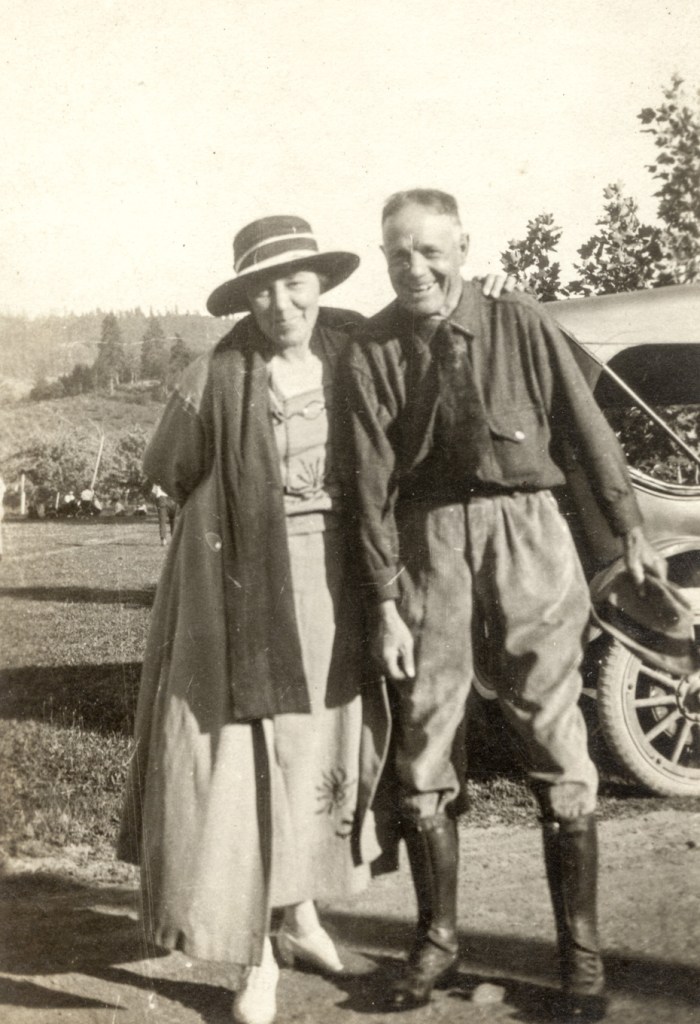
Ellen Sanders Collection: Photos from her grandmother Ruth Shafer Hines who taught in Odell School 1920-1921. She came to Hood River with her aunt and uncle Jen and Dan Feldwish.
6. Later Years: Sorrow, Sacrifice, and Perseverance
Though his ministry never lost its power, Billy’s later years were marked by tragedy:
His daughter Helen died in 1932.
His son George died in 1933 after personal and financial collapse.
He suffered a heart attack in 1933 but returned to preaching against doctors’ orders.
He resumed small-town revivals to support his grandchildren, after spending his savings trying to rescue George’s failed business.
Despite failing health and shrinking crowds, Billy Sunday kept preaching. Not for fame. Not for money. But because he believed the gospel still needed to be heard.
Final Reflection
Billy Sunday’s story is often misunderstood. Yes, he lived through grief, made financial sacrifices, and returned to smaller venues. But he did not die penniless. He died spent—having poured out his life in the service of others and the cause of Christ.
🗣️ A Quote to Remember
“I want to preach until I can’t preach anymore, and then I want to crawl up into the pulpit and die.” —Billy Sunday
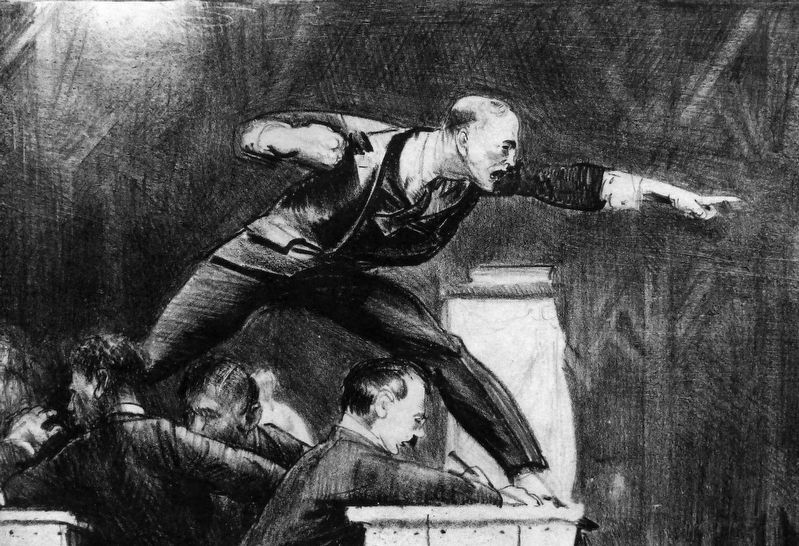
This 1923 lithograph of Billy Sunday by George Bellows (detail) “…captures the fiery, spiritual intensity of Sunday’s oratory skills by emphasizing his forceful gesture one that delights his audience and charges the whole scene with a celestial glow.” — National Portrait Gallery
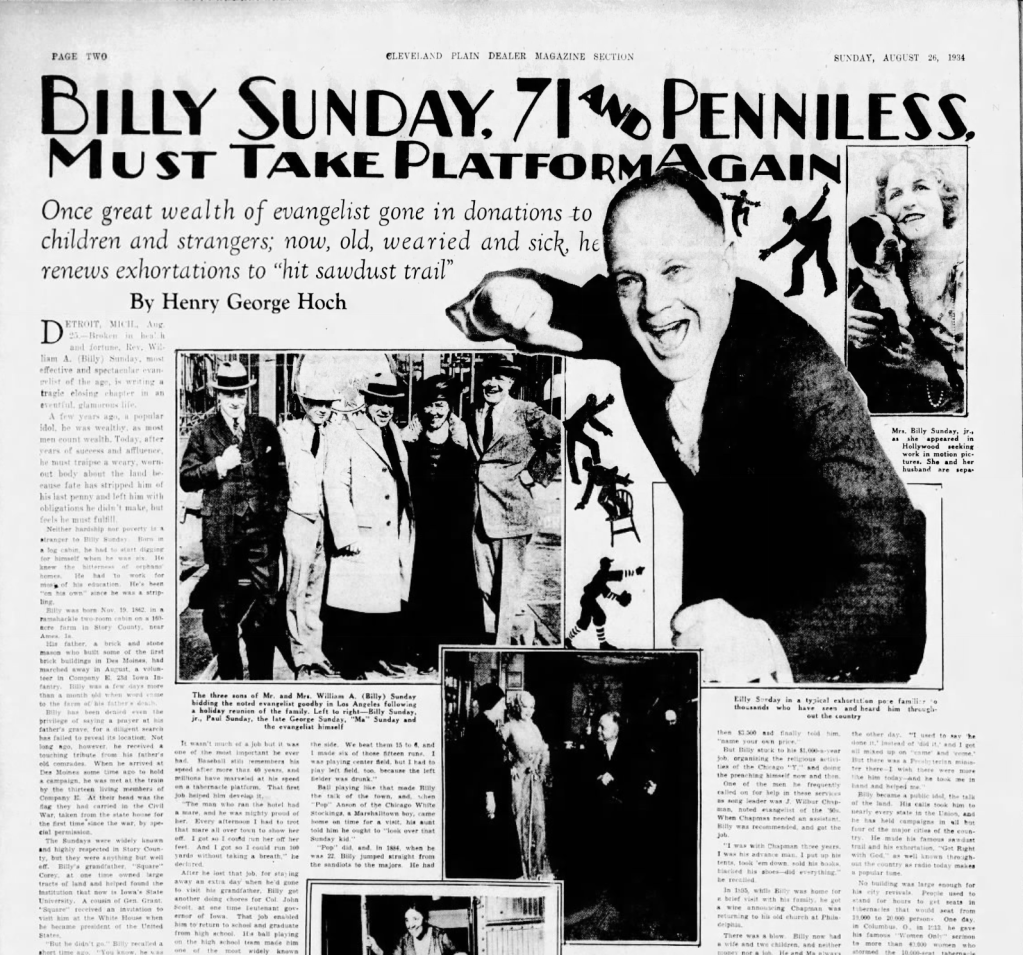
BILLY SUNDAY. 71 and PENNILESS. MUST TAKE PLATFORM AGAIN
Once great wealth of evangelist gone in donations to children and strangers; now, old, wearied and sick, he renews exhortations to “hit sawdust trail”
By Henry George Hoch
DETROIT, MICH., Aug.
Broken in health and fortune, Rev. William A. (Billy) Sunday, most effective and spectacular evangelist of the age, is writing a tragic closing chapter in an eventful, glamorous life.
A few years ago, a popular idol, he was wealthy, as most men count wealth. Today, after years of success and affluence, he must traipse a weary, worn-out body about the land because fate has stripped him of his last penny and left him with obligations he didn’t make, but feels he must fulfill.
Neither hardship nor poverty is a stranger to Billy Sunday. Born in a log cabin, he had to start digging for himself when he was six. He knew the bitterness of an orphan’s home. He had to work for most of his education. He’s been “on his own” since he was a stripling.
Billy was born Nov. 19, 1862, in a ramshackle two-room cabin on a 160-acre farm in Story County, near Ames, Ia.
His father, a brick and stone mason who built some of the first brick buildings in Des Moines, had marched away in August, a volunteer in Company E, 23d Iowa Infantry. Billy was a few days more than a month old when word came to the farm of his father’s death.
Billy has been denied even the privilege of saying a prayer at his father’s grave, for a diligent search has failed to reveal its location. Not long ago, however, he received a touching tribute from his father’s old comrades. When he arrived at Des Moines some time ago to hold a campaign, he was met at the train by the thirteen living members of Company E. At their head was the flag they had carried in the Civil War, taken from the state house for the first time since the war, by special permission.
The Sundays were widely known and highly respected in Story County, but they were anything but well off. Billy’s grandfather, “Squire” Corey, at one time owned large tracts of land and helped found the institution that now is Iowa State University, a cousin of Gen. Grant. “Squire” received an invitation to visit him at the White House when he became president of the United States.
“But he didn’t go,” Billy recalled a short time ago. “You know, he was just an Iowa hill Billy, and he thought he’d better stay home where he belonged.”
Billy’s widowed mother did her best to keep her three boys at home, but the wolf was close to their door, and at 8 years of age he had to start running errands and doing odd jobs to help along the family income. Of course, it wasn’t all work and no play, and Billy had a game he liked immensely.
“I used to make a ball of string and cover it with strips I’d tear from mother’s old dresses. Then, when I was going after the cows, I’d toss it way up in the air, close my eyes and run, and then try to find it and catch it,” he recalled.
“When I was just a kid I used to play on a grown-up ball team because I could play better than any of them. They’d wait for me to come to them. I was the only one that knew how to go after it.
Billy was 9 when his mother finally had to give up the struggle to keep the little home together, and he and his older brother, Edward, were packed off to the Soldiers Orphans Home at Glenwood, Ia.
Thousands upon thousands throughout the land have heard Billy tell the story of that trip. His mother was so poor she lacked the money to pay their fare all the way, and the two little boys had to beg a meal at Council Bluffs and then “bum” a ride on a freight train for the last twenty miles to Glenwood.
It was years later that Billy and his mother were reunited, when he was a successful and famous evangelist. She lived with him the last 30 years of her life in the rainy days when he could do more for her materially than she ever had been able to do for him.
The brothers stayed at orphanages, first at Glenwood and then at Davenport, five years. Edward then had reached the age limit of 14, and when he was dismissed, the fourteen-year-old Billy left with him.
For a time they lived with their grandfather “Square” Corey, on his farm near Ames. But Billy didn’t take to farm life, and soon, after an undeserved tongue lashing over a broken yoke, he went to Nevada, Ia., to make his own way in the world.
His first job, in a hotel, gave him board and room. “I was bellhop, bus boy, clerk and everything else. Every morning at 5 o’clock I had to meet the train bulletin: Welton Hotel, dollar a day,” he remembered.
It wasn’t much of a job but it was one of the most important he ever had. Baseball still remembers his speed after more than 40 years, and millions have marveled at his speed on a tabernacle platform. That first job helped him develop it.
“The man who ran the hotel had a mare, and he was mighty proud of her. Every afternoon I had to trot that mare all over town to show her off. I got so I could run her off her feet. And I got so I could run 100 yards without taking a breath,” he declared.
After he lost that job, for staying away an extra day when he’d gone to visit his grandfather, Billy got another doing chores for Col. John Scott, at one time lieutenant governor of Iowa. That job enabled him to return to school and graduate from high school. His ball playing on the high school team made him one of the most widely known youngsters.
A volunteer fire department had much to do with getting Billy into professional baseball.
“All the towns had volunteer fire departments in those days, and they wanted men that could run fast,” he recalled. “They used to hold state tournaments to locate the speedy fellows. I was one of the contests and was asked to come to Marshalltown to join the fire department.
“We had a team at Marshalltown that could pull a 325-pound wagon 300 yards and attach the hose, all in 34 seconds,” he said.
Of course, young Elly got on the Marshalltown built team, and a big time at it, his speed and his ability to get the hard ones made him the star of the team.
“Once we played Des Moines for the state championship and $50 on
the side. We beat them 15 to 4, and I made six of those fifteen runs. I was playing center field, but I had to play left field, too, because the left fielder was drunk.
Ball playing like that made Billy the talk of the town, and, when ‘Pop’ Anson of the Chicago White Stockings, a Marshalltown boy, came home on time for a visit, his aunt told him he ought to ‘look over that Sunday kid.’ ‘Pop’ did, and, in 1884, when he was 22, Billy jumped straight from
the sandlots to the majors. He had several years there and if he hadn’t got religion his speed and pep and natural bent for the dramatic might have made him as much of a gate attraction as Babe Ruth with his brain and bat.
Pop Anson once said that Billy was a bit weak on the hitting side and not the smartest base runner in the game, but a brilliant fielder, a strong and accurate thrower, and one of the fastest men in the game.
There never was a speedier man on the diamond, nor one who liked to take longer chances. One of the fast men in the country to do 100 yards in ten seconds, Billy was the first man to circle the diamond in fourteen seconds “from a standing start, and touching all the bases.”
“No one ever beat that,” he declared recently, with pardonable pride. “Not even Ty Cobb, and he was the greatest baseball player that ever lived.”
Billy wanted more education and while he was with the old White Stockings he attended Northwestern University after the season closed. He had a winter job there coaching the football and baseball teams. Billy was not what you could call a hard drinker, but he used to take a little beer or wine with the boys now and then.
One night in 1887 he was in a downtown Chicago saloon with some other players—among them Mike Kelly and Ed Williamson—when a group from the Pacific Garden Mission started an outdoor meeting at State and Van Buren Streets, near by. Their hymns caught Billy’s attention and interest.
“I used to hear those hymns in Sunday school at home. I’d never heard another sing them. When one of the workers came into the saloon and invited us to attend their meeting at the mission I decided to go. The fellows laughed at me but I went. And I liked it. “I wasn’t converted that night.
But I liked their meetings and I went back several times. One night when Harry Monroe was preaching I found my way to God,” is Billy’s story of his conversion.
Many years later he was to repay in big measure his debt to the mission where he was converted.
Billy didn’t quit baseball immediately after his conversion but he joined the church and became an active worker. And baseball teams had to get along without him when he tore loose on a preaching star. He used to get frequent calls from Y. M. C. A.’s and other men’s groups to lead services and preach, both at home and on the road. He always responded and the novelty of hearing a diamond star deliver a sermon attracted big crowds and got him a lot of attention.
It was in Sunday school Billy first met Nell Thompson, whom millions in America know as “Ma” Sunday. It was love at first sight for him, but she had another beau, and Billy’s suit didn’t progress with the speed with which he circled the bases. Her family didn’t like the idea of her getting too thick with a ball player, either, and at the time forbade her to see him. But Billy was persistent, and soon he began to get a little encouragement. Finally, they overcame the family’s disapproval, and were married.
In the spring of 1891, the Brotherhood Association, forerunner of the American League, broke up and the market was flooded with players.
Billy got his release, and with a wife and baby to support, he left a job which paid him good money to become the first “Y” religious secretary in the country at $1,000 a year.
The Pittsburgh team, to which he had been transferred wanted him back to finish the season. Those weren’t the days of big money in sports, but they offered him $2,500, then $3,500 and finally told him, ‘name your own price.’
But Billy stuck to his $1,000-a-year job, organizing the religious activities of the Chicago Y. M. C. A. and doing the preaching himself now and then.
One of the men he frequently called on for help in these services as song leader was J. Wilbur Chapman, noted evangelist of the ’90s. When Chapman needed an assistant, Billy was recommended, and got the job.
‘I was with Chapman three years. I was his advance man. I put up his tents, took ’em down, sold his books, blacked his shoes—did everything,’ he recalled.
In 1893, while Billy was home for a brief visit with his family, he got a wire announcing Chapman was returning to his old church at Philadelphia.
There was a blow. Billy now had a wife and two children, and neither money nor a job. He and Ma always took their troubles to God in prayer, and they prayed hard and long over that one. Both say what happened is the most convincing answer to prayer they’ve ever had.
It was a letter from Garner, Ia., asking Billy to hold a ten-day revival in their 300-seat opera house. That call always has been a mystery to Billy. So far as he knows, no one in Garner knew him or had heard him preach.
That first campaign was a tough one. Billy, who’d never been on his own before, had to preach at ten meetings, and he had only eight sermons. A lot of midnight oil was burned in Garner before Billy filled the gap.
While that meeting was in progress Billy was invited to hold a campaign at Pawnee City, Neb., and another at Tecumseh, Neb. From that day to this there never has been a day when there weren’t calls ahead for Billy and Ma.
Billy started out with ‘sort of high falutin’ sermons with words as long as your arm, but he soon discovered his real forte, the Anglo-Saxon speech of the man in the street, with plenty of slang and action—the ‘Billy Sunday’ kind of preaching and preaching that nearly everyone in this country has heard, or heard about.
People liked his preaching. His crowds grew bigger and bigger until the Iowa and Nebraska Opera Houses—usually the biggest halls in town—couldn’t begin to hold the crowds, and he had to take to tent meetings.
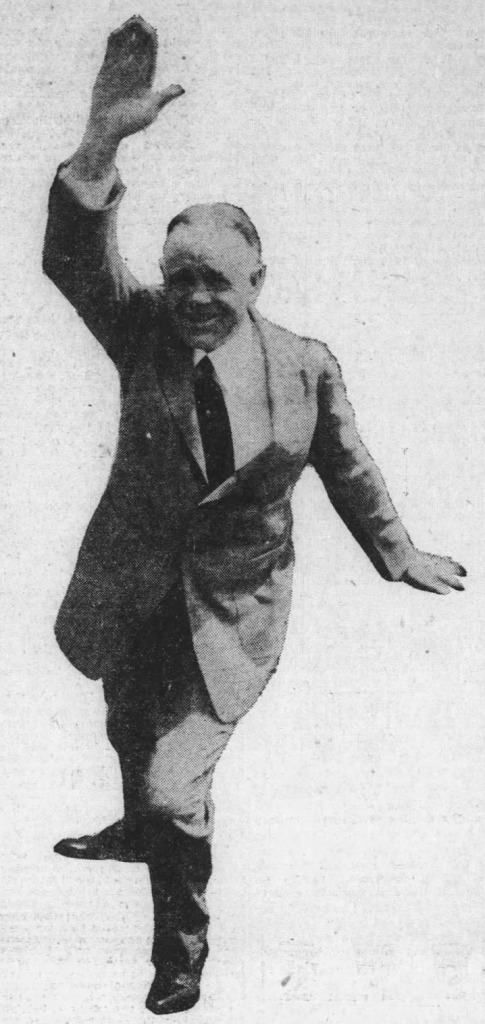
Constantly the calls kept coming from larger and larger towns, and the middle west was filled with talk of this baseball evangelist who pulled off his coat and vest, tore off his collar and tie, and hopped about like a jumping jack as he blazed away at sin and the devil and booze with salty slang and blunt words never before heard from a pulpit.
There were some who criticized his language, calling it vulgar and out of place, but others talked of how people walked the famous sawdust trail, and how ‘deadbeats’ began to pay their bills after Billy had been in town a few days, and how churches were revitalized after his campaign, and saloons and dens of vice gave way to Y. M. C. A.’s and W. C. T. U.’s and places like that. The cities called to him. He went reluctantly. Elgin, Ill., was the first city to hear him.
“I was scared stiff,” he recalled the other day. “I used to say ‘he done it,’ instead of ‘did it,’ and I got all mixed up on ‘come’ and ‘come.’ But there was a Presbyterian minister there I wish there were more like him today and he took me in hand and helped me.
Billy became a public idol, the talk of the land. His calls took him to nearly every state in the Union, and he has held campaigns in all but four of the major cities of the country. He made his famous sawdust trail and his exhortation, “Get Right with God,” as well known throughout the country as radio today makes a popular tune.
No building was large enough for his city revivals. People used to stand for hours to get seats in tabernacles that would seat from 10,000 to 20,000 persons. One day, in Columbus, O., in 1913 he gave his famous “Women Only” sermon to more than 4,000 women who stormed the 10,000-seat tabernacle there and forced him to hold extra meetings.
During a ten-week campaign in New York he spoke to 1,500,000 people and nearly 100,000 of them hit the trail. His greatest campaigns were held in New York and Chicago in 1917. John D. Rockefeller, Jr., was the financial “angel” of the New York meeting.
“He told me, don’t worry about the collections. You won’t have to worry about anything,” Billy said. This Billy Sunday who talked at meeting after meeting from early morning till late at night one New York newspaper estimated he spoke 1,290,000 words in ten weeks of
preaching there was an amazing thing to his old cronies on the ball clubs.
When Billy was in Detroit in the fall of 1933, he renewed acquaintance with Fred E. Goldie Goldsmith. They had been teammates on the old Chicago White Stockings in the ’80s, when that team came to Detroit and set an all-time record by scoring eighteen runs in one inning. “That Billy Sunday has got to be quite a talker,” Goldie commented. “He was such a quiet lad on the team. Never said hardly anything.”
Other friends have commented on that trait. The man who has preached to greater visible crowds than any other living American, talking generally for much more than an hour, is at heart a silent, retiring man. Away from his work he prefers to let others do the talking.
Through the years of success such as no other evangelist has known, great sums of money passed through Billy’s hands, hundreds of thousands of dollars. Most of it was given away to needy people and institutions. Today, all of it is gone. New York gave him the biggest ‘love offering’ he, or any other evangelist, ever has received.
We had just entered the war when I began my New York campaign,’ he said. ‘The first day of the campaign I told them whatever they gave me I would give to the boys overseas through the Red Cross, the Y.M.C.A., the Salvation Army, and the like.
‘They gave me $120,465, and every penny of it went to the boys over- there. When I left New York I had to draw on my own funds for my railroad fare.’
Chicago also gave him a great offering $65.00, and all of that was given to the old Pacific Garden Mission, in which he had been converted 38 years before.
One of his converts, a former convict, once came to Billy and related the story of losing his home because he couldn’t meet the payments. Billy wrote him a check for $500 to pay off the mortgage.
Friends say he has financed the college education of more than 70 young men and that the country is dotted with homes and institutions that have been helped through dark days by Billy’s checks.
It was about six years ago that the tragic series of events began which he himself has called his worst years. He is on the road, although he needs rest — and wants it.
His eldest son, George, had worked with him for a time in his campaigns, but, after his first marriage he had established a real estate business in Los Angeles. His brother, Billy, Jr., was with him. In 1928, Billy, Jr., was sued for divorce by his actress wife. A week later George and his wife parted and she sued for a separation and support.
One October night in 1932 Billy was speaking in Detroit for the Michigan Anti-Saloon League. After the meeting, he received a call that his daughter, Helen, wife of Frank E. Hagan, surgeon of Mich., was about to die. A friend drove him there before she died, and Billy, marked by grief, returned for the remainder of his tour for the Anti-Saloon League.
A year ago he buried George in a grave beside Helen at Sturgis. And in that grave he buried his hopes of retirement and rest.
When the depression came along, George’s business was hard hit, and then he had family trouble. ‘I used the $8000 I’d saved up to try and save his business and help him out of his troubles. It’s all gone, every penny. And now, George is dead,’ he cried, sobbing with his sobs.
Then he revealed that he had pledged to pay George’s two children $15 a month until they are 21—the eldest now is 17.
A year ago February, at Des Moines, he was stricken by a heart attack during a sermon. A blood clot was found in the coronary artery. He had to spend three months in bed, with Ma nursing him back to health. Then three more months of rest.
He needed more rest, but, last September, past his allotted three-score years and ten, he had to take up again the hard grind of the itinerant evangelist, answering, for the first time in his career, calls from individual churches, and returning once again to the smaller towns.
For Billy Sunday is broke because he sacrificed everything for his children. ‘As long as he lives he must work to live and to meet the obligations he has assumed for others.’
Copyright, 1935, by the Plain Dealer Publishing Co. in co-op with American Newspaper Alliance.
Did Billy Sunday Die Penniless? Separating Fact from Fiction
In the twilight of Billy Sunday’s life, the press painted a picture of a once-glorious evangelist now broken in body and fortune. A 1934 article in the Cleveland Plain Dealer claimed that Sunday had been “stripped of his last penny” and was forced to continue preaching out of sheer necessity. But how much of that is true?
Let’s take a closer look at the facts and exaggerations surrounding the closing chapter of one of America’s most dynamic preachers.
What’s Historically Accurate
1. Great Personal Loss
Billy Sunday endured crushing personal tragedies in his later years. His daughter, Helen, died in 1932. Just a year later, his son George died—after financial ruin, a failed marriage, and spiritual drift. These losses left Billy heartbroken and emotionally drained.
2. Radical Generosity
Sunday wasn’t just a fiery preacher—he was known for extraordinary generosity. During his 1917 campaign in New York City, he received a staggering $120,465 love offering—and gave every penny to soldiers and wartime charities. He also gave generously to students, struggling families, and institutions like Pacific Garden Mission (where he himself had been converted).
3. Declining Health
In 1933, Sunday suffered a heart attack while preaching in Des Moines. Doctors discovered a blood clot in his coronary artery and urged rest. He spent months recuperating—but eventually resumed his preaching schedule despite serious health concerns.
4. Humble Return to Small-Town Preaching
In his final years, Sunday no longer drew the massive urban crowds of earlier decades. Instead, he accepted invitations from small-town churches—returning to the kind of humble venues where he began. This wasn’t a forced exile but a sober shift that reflected the times and his own desire to keep preaching.
What’s Probably Exaggerated
Claim
Analysis
“Stripped of his last penny”
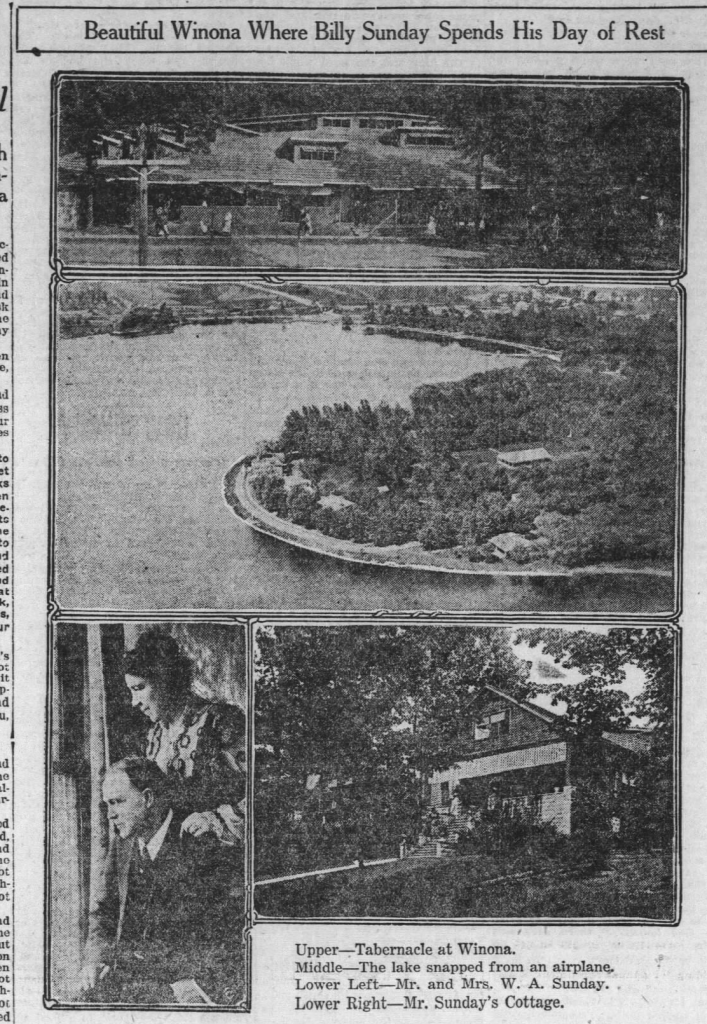
Overstated. Sunday had certainly lost most of his wealth by 1934, but he was not destitute. He still owned property in Winona Lake, Indiana, and had the means to travel.
“He must work to live”
Partially true. Sunday continued preaching due to personal obligation—particularly to support his grandchildren—but not because he was facing homelessness or poverty.
“Broken in health and fortune”
Dramatic tone. He was declining physically, yes—but he still traveled, preached, and maintained a basic household. His condition was serious, but not total ruin.
“All of it is gone” (money)
Unverifiable. He likely had very little liquid wealth by the 1930s, but “all” is a strong word. He retained enough assets to live modestly, and continued to support others financially.
Final Thought
Billy Sunday’s final years were indeed marked by sorrow, sacrifice, and strain—but not by absolute destitution. While the press dramatized his story for emotional impact, the truth is more nuanced: Sunday gave away fortunes, suffered deeply, and kept preaching to the end—not because he had to survive, but because he felt called.
He didn’t die penniless. He died spent.
“I want to preach until I can’t preach anymore, and then I want to crawl up into the pulpit and die.” —Billy Sunday
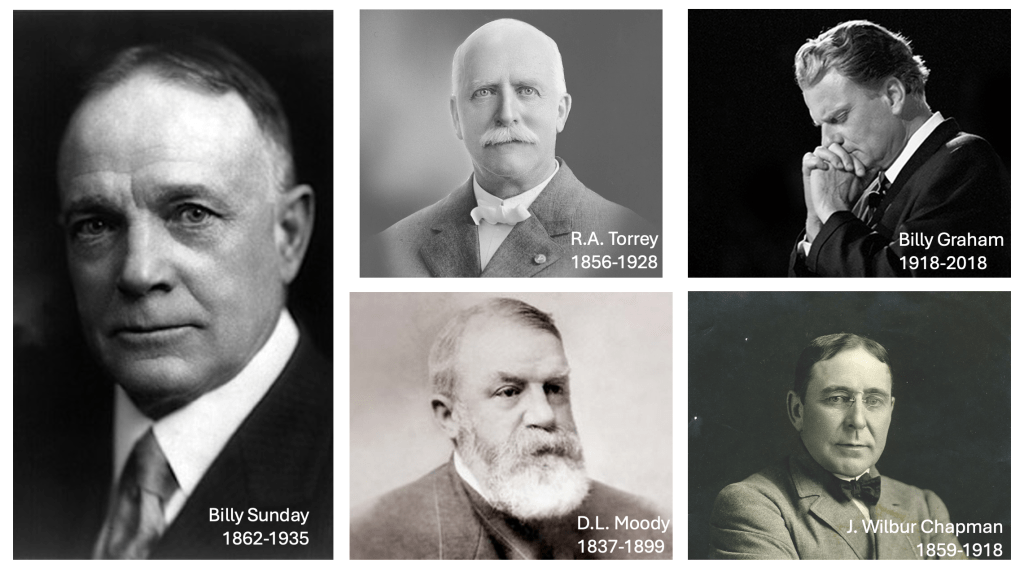
When most people think of revival preachers in American history, names like D.L. Moody, R.A. Torrey, or J. Wilbur Chapman often come to mind. But Billy Sunday was cut from a different cloth. He wasn’t just a preacher—he was a one-man spiritual cyclone, mixing athleticism, theatricality, and gospel fire in a way no one had ever seen before.
So what exactly set Billy Sunday apart from the rest? How did his preaching and ministry differ from his contemporaries? Here’s a snapshot comparison to help you see why Sunday’s voice roared across the American landscape like a thunderclap—and why his influence still echoes today.
A Quick Comparison: Billy Sunday vs. His Contemporaries
Topic
Billy Sunday
Contemporary Evangelists
Preaching Style
Fiery, physical, theatrical; used slang and sports metaphors
Moody: Calm and fatherly; Torrey: Intellectual; Chapman: Pastoral
Theological Emphasis
Strong focus on personal salvation, substitutionary atonement, and sin
Similar focus, though often with more doctrinal exposition or gentler tone
View of Modernism
Vehemently opposed; saw it as a threat to true Christianity
Most were critical, but some (like Fosdick) were sympathetic to modernist ideas
Moody: Emphasized charity and urban outreach; others less publicly political
Engagement with Politics
Highly political; openly supported Prohibition, patriotic causes, and civic reform
Moody and others were less politically vocal, though supportive of moral reform
Use of Media/Publicity
Master of mass media: posters, press coverage, advance men, tabernacles
Chapman and Torrey used some publicity, but far less theatrically or broadly
Attitude toward Higher Criticism
Condemned it outright as destructive to faith
Most conservative contemporaries agreed, though some engaged it more thoughtfully
View on Women’s Role
Praised godly mothers; Helen Sunday was integral to the ministry, though Billy upheld traditional roles
More varied: some supported women in ministry (e.g., Aimee Semple McPherson)
Revival Structure
Mass meetings, community-wide, tabernacles, extended multi-week events
Similar formats, but Sunday’s scale and advance team coordination stood out
Legacy Impact
Set the stage for 20th-century mass evangelism (influence on Graham, etc.)
Others laid groundwork (Moody), but Sunday modernized the revival model
Why It Mattered Then—and Now
Billy Sunday didn’t fit into a neat category. He was part preacher, part performer, part prophet—and all in for Christ. While others wrote theological treatises or built Bible schools, Sunday pounded his fists on pulpits and dove across stages to bring people to the cross.
His fierce denunciation of sin, especially the sins tearing apart American families—booze, gambling, corruption, moral apathy—connected with the common man. He used theatrical movement, slang, and sports metaphors to reach crowds who might never set foot in a traditional church.
But his legacy wasn’t just showmanship. Billy Sunday built the prototype for what would later become 20th-century crusade evangelism, paving the way for figures like Billy Graham. He made evangelism a national event, not just a church function.
Final Thought
In a world drifting further from spiritual conviction, it’s worth remembering men like Billy Sunday—men who refused to compromise truth, who called a nation to repentance, and who showed that the gospel is worth getting loud about.
Whether you’re a pastor, a historian, or just someone trying to figure out what revival looks like in your day, take a page from Sunday’s playbook: preach it hot, live it loud, and never apologize for loving Jesus.



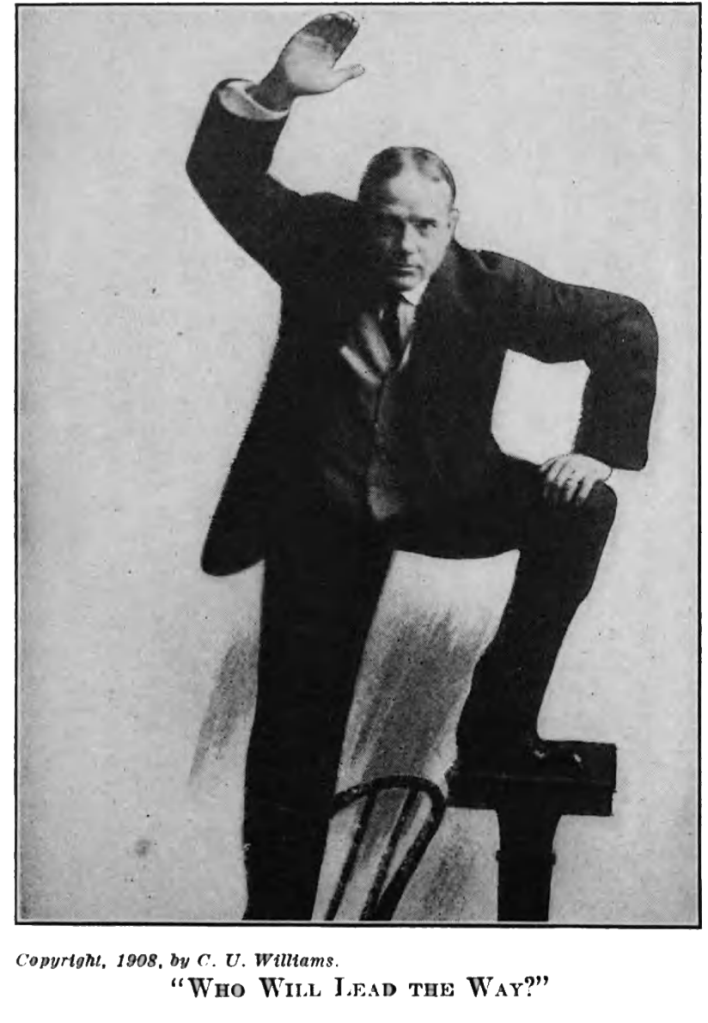

 Evangelist Billy Sunday (1862-1935)