Former professional baseball player-turned urban evangelist. Follow this daily blog that chronicles the life and ministry of revivalist preacher William Ashley "Billy" Sunday (1862-1935)
THE YEARS HAVE SHOWN A DEVELOPMENT IN SUNDAY’S METHODS.
Ed., the following is an exact reprint from a 1916 article.
Early Audiences Found Nothing Spectacular in the Sermons of the Revivalist, and Towns of 10,000 Were the Limit Then.
There is nothing “mushroom” in the growth of the Billy Sunday meetings. The gradual development of Sunday’s revival methods was recalled today to Ma Sunday by an old clipping from The Star of July 28, 1902.
The clipping was a reprint from the Brooklyn Eagle and it mentioned the fact that Sunday had made the large sum of $12,000 in a year. It said:
Mr. Sunday is not mercenary and he thinks more of converts than he does of money. He mentioned his Pitts to the interviewer simply because he had been asked if it had not been something in the start of a religious revival from the base salary of an American baseball player to the supreme income of a modern athlete and evangelist.
“God has been truly good to us,” was Mr. Sunday’s reply.
“We started our work in Bellingham at $1,500 for the same length of time. Farmington and other places were small, but they are mostly made up of millionaires, we drew $800 in thirty days.”
Ma Sunday smiled over it.
“We certainly would not have tackled Kansas City or Boston or New York City in those days,” she said.
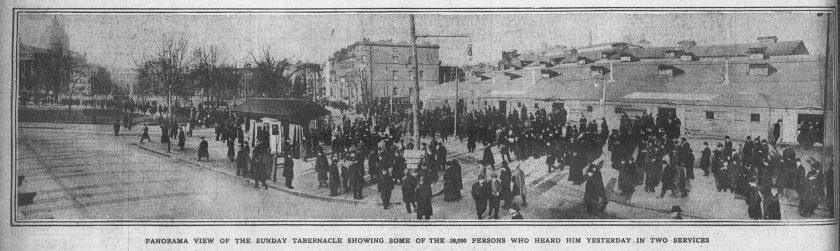
“We used to think that the town of ten thousand population was our limit. We felt that was as large as we could handle and to get above that would perhaps mean a failure. Then we began including the town of twenty thousand. All the time we were gradually adding to our party and building larger tabernacles, until here we are and New York City is in sight with a tabernacle seating twenty-five thousand.”
Fourteen years have also made changes in other ways, as the following extract from the same clipping shows:
Mr. Sunday’s revival methods are all in fashion distinctive to unique. No Sunday jumping, no frenzy and no hysterics among the converts at his meetings. He talks to his congregation in a sane and reasonable fashion. When he has them convinced that they are a pretty bad lot he asks them to come to the front. There are no mourner’s benches. Instead, there are chairs upon which to invite the penitents to sit while he circulates among them and talks to them individually. He takes the name of each subject and turns him over to the pastor of the denomination for which he expresses a preference and refuses to be longer responsible for his new charge. Sometimes it is estimated with no determination.
His plan is to stay a month in each place. For the first two weeks he does not “give” the invitation. He tells the people funny stories and amuses them with his strange and bizarre methods of preaching. The third week he devotes to the subject of sin as he has found it in the experience of whom he is talking. The fourth week he seeks the souls of the sinners and the penitents.
The singer is a tall, well dressed young chap, 40 years old, with the look of a man much younger. It is helpful he wears such neat clothing, for although he has no pretensions to preaching power, it is his warm, personal, but because he makes him different from other preachers.
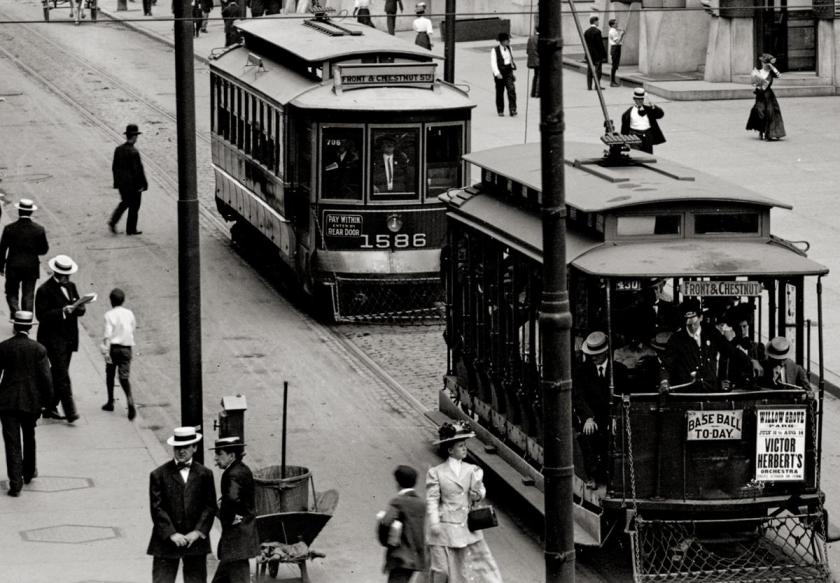
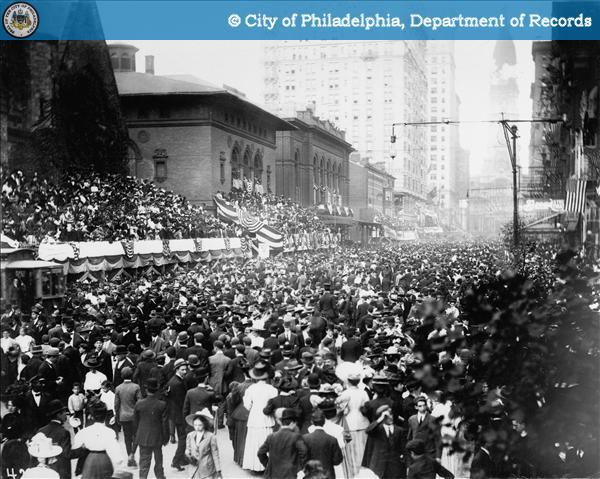
When Billy Sunday arrived in Philadelphia in early 1915, he stepped into a city alive with options.
This wasn’t a spiritually quiet moment in American life—it was a crowded marketplace of attention. Every night, Philadelphians could choose where to go, what to watch, and how to spend their time. Entertainment was not scarce; it was everywhere. And much of it was designed to delight, distract, and hold an audience far more comfortably than a hard-hitting revival sermon.
That’s what makes Sunday’s campaign so compelling.
He didn’t draw crowds because there was nothing else to do. He drew crowds in spite of everything else there was to do.
Let’s step into that world.
The Bright Lights of the Theatre
Philadelphia had a thriving theatre scene—serious plays, comedies, and traveling productions that brought a touch of Broadway to the city. These venues were polished and respectable, often appealing to middle- and upper-class audiences.
An evening at the theatre meant dressing well, sitting in a structured setting, and watching trained actors perform carefully scripted stories. It was entertainment with dignity—refined, cultural, and often expensive.
The theatre still carried prestige in 1915, but it was no longer the only game in town.
Vaudeville: Fast, Funny, and Everywhere
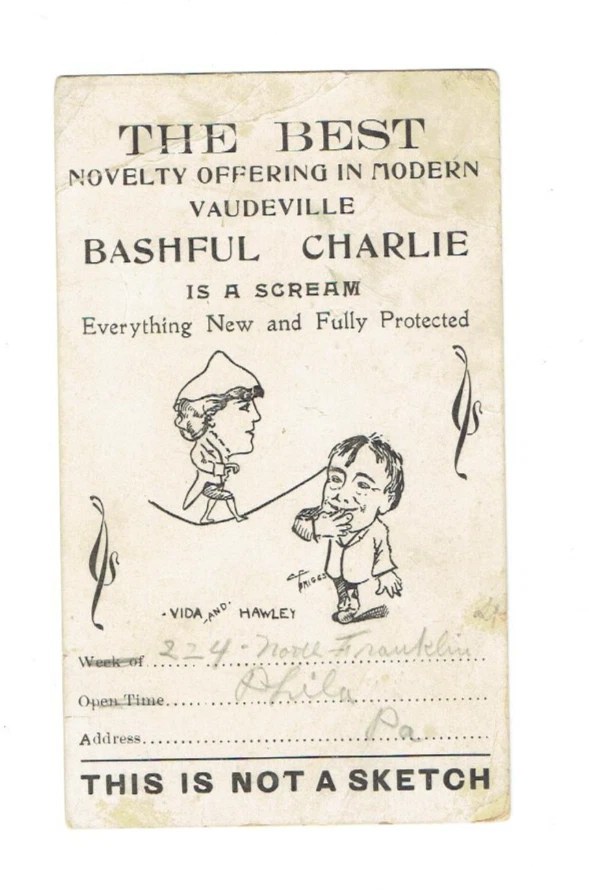
If theatre was refined, vaudeville was electric.
Vaudeville shows were built on variety—comedians, singers, dancers, acrobats, magicians—all packed into a single program. The pace was quick, the tone was lively, and the appeal was broad.
For many working-class and middle-class Philadelphians, vaudeville was the go-to night out. It was affordable, constantly changing, and full of energy. No two shows were exactly alike, and that unpredictability kept audiences coming back.
In 1915, vaudeville was at or near its peak. It wasn’t just popular—it was a cultural force.
The Rise of the Photoplay
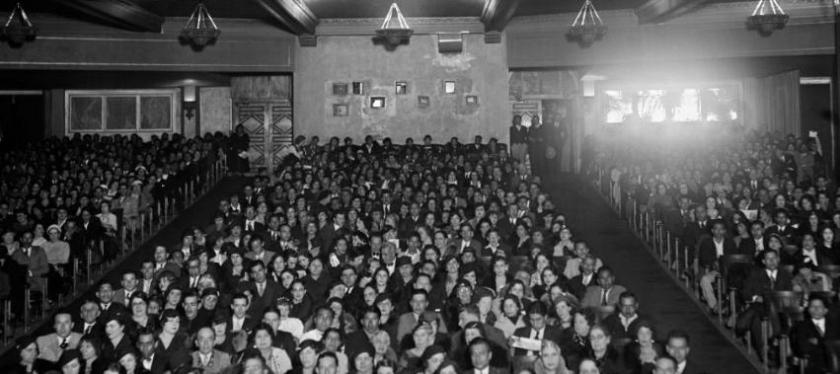
And then there were the movies—still new, still evolving, but already reshaping the landscape.
They were called photoplays, and by 1915 they were drawing massive crowds. For just a few cents, people could step into a darkened theater and be transported into another world through silent film.
That same year saw the release of The Birth of a Nation, a film that demonstrated just how powerful and immersive cinema could be.
Movies had three advantages that made them unstoppable:
They were cheap
They were accessible
They were constantly changing
In many ways, they represented the future of entertainment—and people knew it.
Music, Dance, and the Pull of the Nightlife
For younger audiences especially, entertainment wasn’t just about watching—it was about participating.
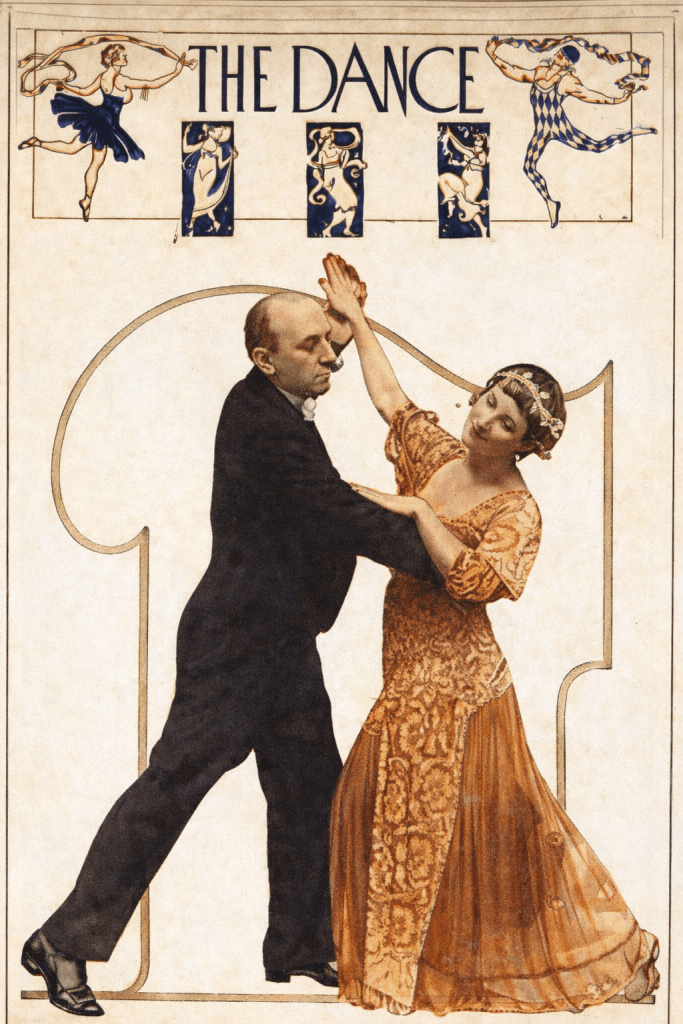
Dance halls and social clubs offered ragtime music, lively crowds, and a chance to be part of the action. These venues were social, energetic, and often stretched late into the night.
They were also controversial.
Revivalists like Billy Sunday frequently warned against the moral dangers of dance halls, seeing them as places where discipline gave way to impulse. But for many in the city, they were simply where life felt most alive.
Traveling Shows and Big-Tent Spectacle
Even in a major city, the draw of spectacle remained strong.
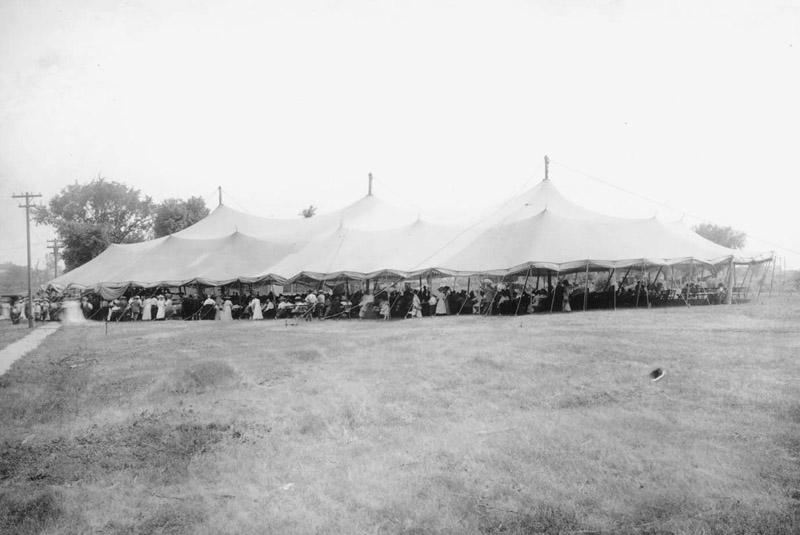
Circuses, traveling shows, and Chautauqua events brought something different—large-scale experiences that combined entertainment, education, and wonder. Whether it was a circus parade or a lecture under a tent, these events added to the sense that something exciting was always happening just around the corner.
They were part of the cultural fabric, especially for families and those looking for something beyond the everyday.
And Then… There Was the Tabernacle
Into that world stepped Billy Sunday.
No velvet curtains. No orchestra. No stagecraft.
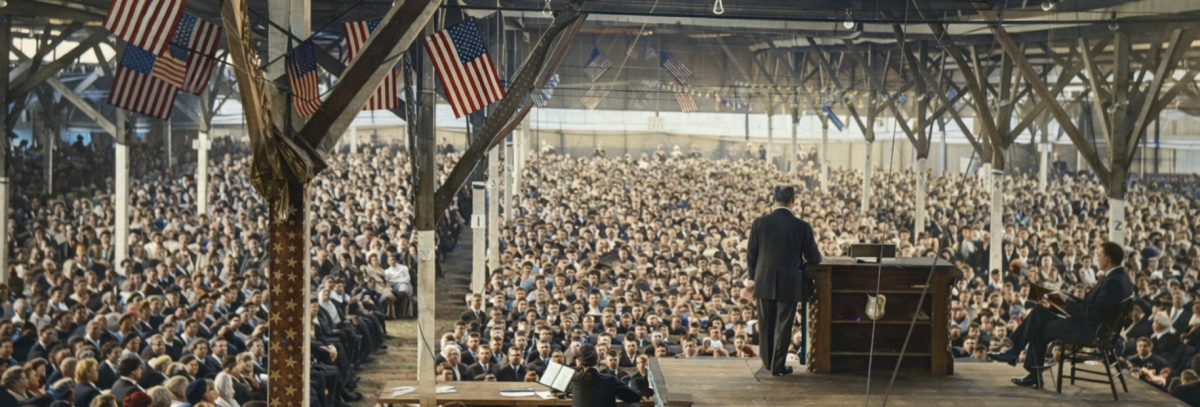
Just a rough wooden tabernacle, a sawdust-covered floor, and a preacher who spoke with urgency and conviction.
And yet—night after night—people came.
Why?
Because Sunday offered something none of the others could.
The theatre entertained.
Vaudeville amused.
Movies captivated.
Dance halls energized.
But Sunday confronted.
He spoke about sin, purpose, eternity, and the need for decision. His meetings were not passive experiences. They demanded a response.
The Real Story
The real story of Philadelphia in 1915 is not just that Billy Sunday drew crowds.
It’s that he drew them in the middle of one of the most competitive entertainment environments America had ever seen.
Every night, people made a choice.
They could laugh, watch, dance, or be distracted. Or they could walk into a wooden tabernacle and be challenged.
And tens of thousands chose the latter.
That’s not just revival.
That’s a man—and a message—breaking through the noise of an entire culture.
Article curated by AI, examining period newspapers, with human oversight.
A City on the Edge: The World Behind Billy Sunday’s Philadelphia Campaign (Jan–Mar 1915)
When Billy Sunday stepped into Philadelphia on January 3, 1915, he didn’t enter a quiet city.
He stepped into a world already under strain.
To understand the power of that campaign—why thousands poured into the tabernacle, why his words landed with such force—you have to look beyond the sawdust trail and into the broader setting. Because what was happening outside the tabernacle made what happened inside feel urgent, even necessary.
A World at War—But Not Yet America’s
By early 1915, Europe was already bleeding.
What had begun in the summer of 1914 as a war of movement had hardened into something far more brutal. The Western Front was frozen in place. Soldiers lived in trenches carved into mud and misery. Artillery thundered day and night. Machine guns cut down advances before they began. The casualty lists grew longer by the week.
And in February 1915, something changed that Americans could not ignore: Germany declared the waters around Great Britain a war zone. Submarines—U-boats—would strike without warning.
For the first time, the war felt like it might reach across the Atlantic.
America was still neutral. But no one felt untouched.
A Nation Holding Its Breath
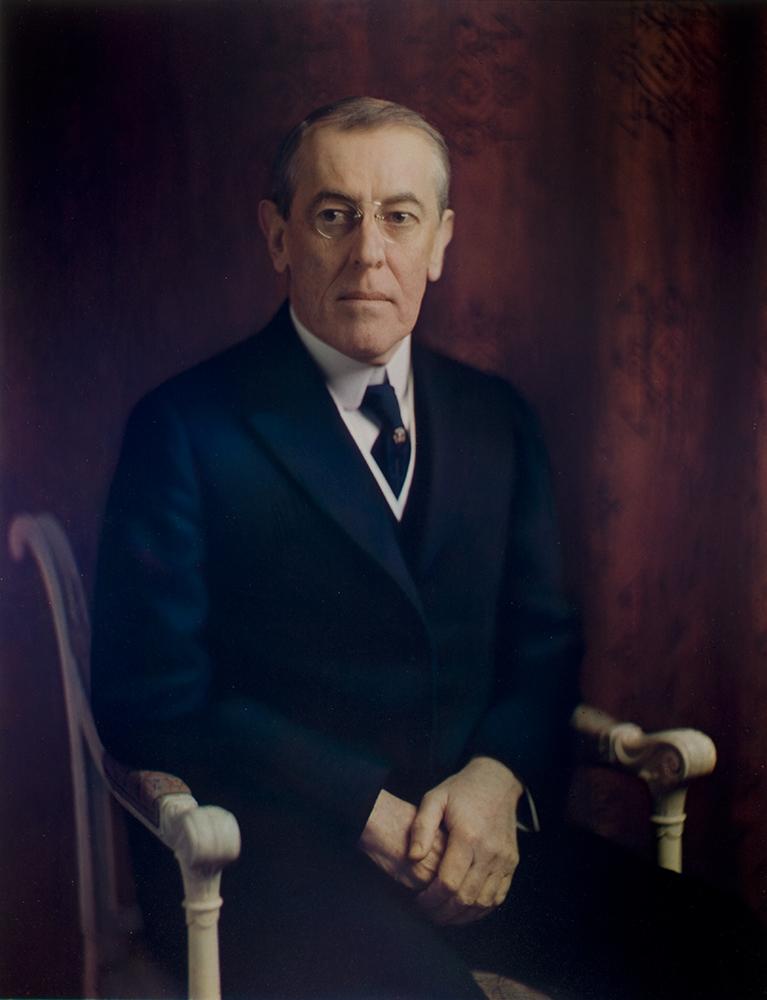
Under President Woodrow Wilson, the United States tried to maintain distance. Officially, this was not our war.
But neutrality is easier to declare than to feel.
Every day, newspapers carried headlines from Europe. Americans followed the movements of armies, the sinking of ships, the warnings issued to neutral nations. Trade tied the U.S. to the Allies. American goods crossed the ocean. American lives traveled those same routes.
The question lingered, unspoken but persistent:
How long can we stay out of this?
There was no clear answer—only a growing sense that the ground was shifting.
Prosperity with a Shadow
At the same time, the American economy was waking up.
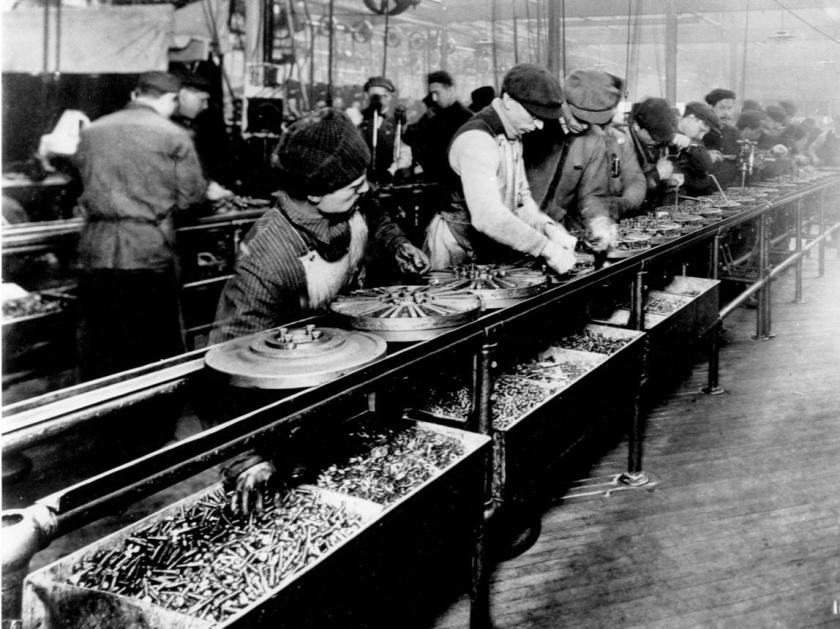
Factories were busy. Orders increased. Production surged. War in Europe meant demand for American goods—steel, machinery, supplies.
Philadelphia, an industrial powerhouse, felt it.
But prosperity came with questions.
Was America simply helping… or quietly profiting from the suffering overseas? Could a nation grow rich while the world burned?
These weren’t always spoken out loud. But they were felt.
And men like Billy Sunday had a way of bringing those quiet tensions into the open.
A Moral Movement Finding Its Voice
This was also a moment when moral reform was cresting.
The temperance movement was no longer a fringe cause. The Anti-Saloon League had become a powerful national force. States were beginning to go dry. The conversation about alcohol, vice, and public morality was moving from pulpits into politics.
Sunday did not arrive in Philadelphia as a lone voice crying in the wilderness.
He arrived as a leading voice in a growing chorus.
His attacks on the saloon, his calls for personal repentance, his insistence on moral clarity—they resonated because the ground had already been prepared.
The Pressure of the Modern City
Philadelphia in 1915 was a city alive with motion—and tension.
Immigrants poured into neighborhoods already crowded. Industry demanded long hours and offered uncertain stability. Streets were full. Lives were busy. The pace was relentless.
And beneath it all was something harder to measure:
A kind of spiritual restlessness.
People were working, striving, building—but many sensed something was missing. The old certainties felt less certain. The future felt unclear.
It is no accident that revival fires so often burn brightest in moments like these.
Why It All Matters
Billy Sunday’s Philadelphia campaign did not happen in isolation.
It unfolded in a world:
unsettled by war
uncertain about the future
prospering, but uneasy
crowded, busy, and spiritually searching
When Sunday preached about sin, judgment, repentance, and decision, he was not introducing new concerns.
He was naming what people were already feeling.
And that is why they came.
A Final Word
If you want to understand the Philadelphia campaign, don’t start with the tabernacle.
Start with the world outside it.
Because Billy Sunday did not create the urgency of that moment—he stepped into it, gave it language, and called a city to respond.
The Ways and Works of Moody, Gypsy Smith and Chapman—Men Whose Methods Were as Different as Their Personalities.
By WILLIAM RADER
Cited in: The Philadelphia Evening Ledger. January 8, 1915:8.
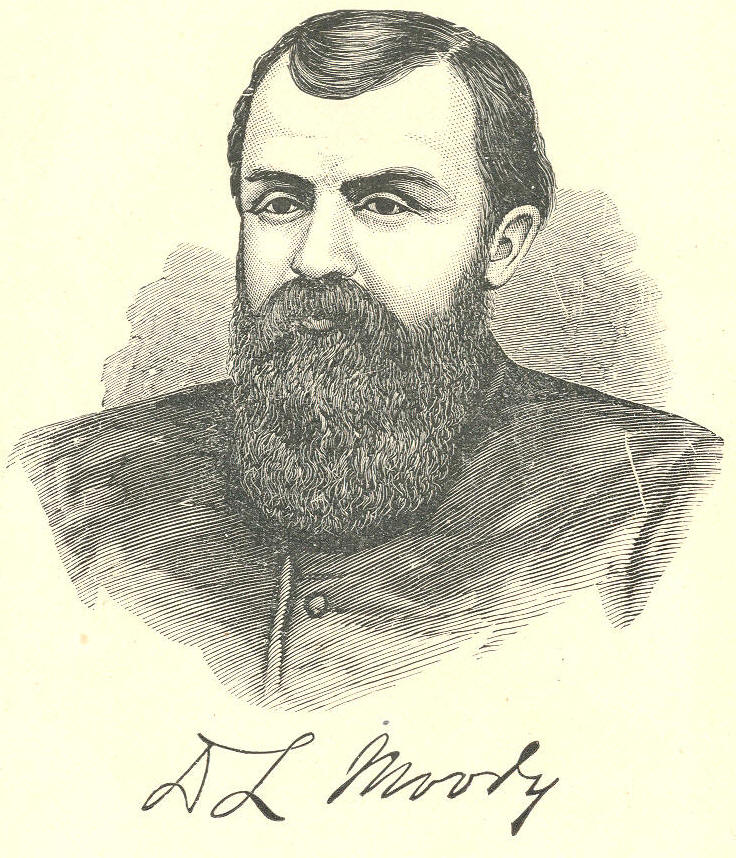
DWIGHT L. MOODY sleeps on Round Top, at Northfield, Mass. A few miles away, in Swanzey, N. H., is a simple shaft which marks the grave of Denman Thompson, of “The Old Homestead.” It is probable that the two men never met, but they were not unlike in appearance. Both were big, hearty Americans with good appetites, warm hearts and filled with loving kindness. The one spoke fiction on the stage as if it were truth; the other—to repeat a thought of Garrick—spoke truth on the pulpit as if it were fiction.
When Moody was a clerk in a Chicago shoe store, he became interested in religion through Dr. Edward N. Kirk and Edward Kimball. Without college or theological training, he began his great work and preached the gospel throughout the English-speaking world.
In the Old Pennsylvania R. R. Depot
One of his notable campaigns was in Philadelphia. The meetings were held in the abandoned freight depot of the Pennsylvania Railroad, used afterward as the Wanamaker store. The building was provided with seats to accommodate 10,000.
A striking incident of Moody’s Philadelphia campaign was the meeting set apart especially for intemperate men and women. His tender appeal to that assemblage is still remembered by Philadelphians who heard him.
Singing helped the preaching of Moody. The songs of Sankey grew to be as famous as the sermons of Moody. A hymnal was published which caused Moody and Sankey much trouble, since it was reported that they received royalties from the sale. Certain watchdogs of the moneybag believe that the blackest sin on the calendar is for a preacher or evangelist to make money. Every evangelist must make it plain that he is not a grafter.
Mr. Moody was the greatest evangelist-preacher of his generation. He did not use the best grammar, but he had common sense. Who could forget his sermons on “Sowing and Reaping,” “The New Birth” and “Repentance”?
Everybody Sing!
There was no claptrap in the Moody method, no straining for effects, but conviction, point and directness, and irresistible persuasiveness. He did not shatter the icicle of sin with well-directed aim, but melted it with words hot with a passion for redemption.
The first time I heard Moody he did what I thought at the time a sensational act. It was in Tremont Temple, Boston. Anxious to see him, as a student at Andover, I went early and took a seat near the front. The big choir on the platform was being trained while the people gathered. An old gentleman sat on one side of me, a lady the other. Moody soon appeared. He was announced by a man reading a paper in the audience, and asked him to put it away and join in the singing. “Everybody sing!” he shouted. “Everybody get a book!” He announced a hymn, but the singing was very unsatisfactory, and he had the people sing it over several times. Seeing I had no book and showing annoyance, he took fair aim and threw a hymn book as straight as a bullet at me. It took me in the stomach, and I think it raised me about two feet from the pew, but my consternation was no whit greater than the surprise of those who sat with me. We were strangers, but we all sang out of the same book, and Moody from that moment was an acknowledged master.
He was a man-finder. He discovered Henry Drummond and introduced him to the American people. He found a great preacher in Campbell Morgan, of London, and made him at home in the American pulpit. He took keen interest in liberal and conservative.
The Northfield conferences, which continue to this day, furnished an opportunity for testing the mettle of promising men in England and this country. A number enjoy an international reputation who owe their start to the insight of Mr. Moody.
He was a builder of institutions. The Y. M. C. A. work throughout the country was assisted by him. He raised great sums of money for the work. The Mount Hermon schools for young men and women are one of his memorials. His evangelistic work reached its zenith in his British campaign and at the World’s Fair in Chicago.
The Stolen Overcoat
The last time I heard Moody he made an impassioned plea in behalf of criminals and prisoners, and while he was making it an ex-convict stole his valuable new overcoat. It was a study in practical theology to observe the effect of this disappointment upon the great preacher, who, while furious at first, finally submitted to the inevitable with grace that an evangelist is supposed to possess.
Gypsy Smith is one of my favorite evangelists. He is a full-blooded gypsy, swarthy skin and beautiful brown eyes. Socially he is “a hail fellow well met,” one of the ripe fruits of the Moody-Sankey British campaign. He has a sense of humor and a wit that is irresistible. His voice is musical, and it is a treat to hear him sing.
Gypsy Smith uses faultless English. I asked him how he acquired this gift of English diction, and he said that after leaving the gypsy camp he was placed in a refined English home, where he heard the best grammar. If you have ever heard Gypsy Smith’s great sermon on “With the Stripes” you have listened to a discourse that has all the qualities of great preaching.
A Cultivated Gypsy
He is the perfect gentleman on the platform, winsome, attractive, eloquent, cultured and sympathetic. As a maker of sermons he has no equal. His breadth of scholarship, depth of feeling and height of intellectual reach make him a superior man in the field of higher evangelism.
Rodney is his real name. He is of the Tachine Roman gypsy tribe, and his mother was a fortune-teller. The life in the tent has enriched his imagination, given him a strong body and aided him in living a clean, pure life, and not since the day John Bright has any man appeared in England who has more perfectly revealed the possibilities of Anglo-Saxon speech.
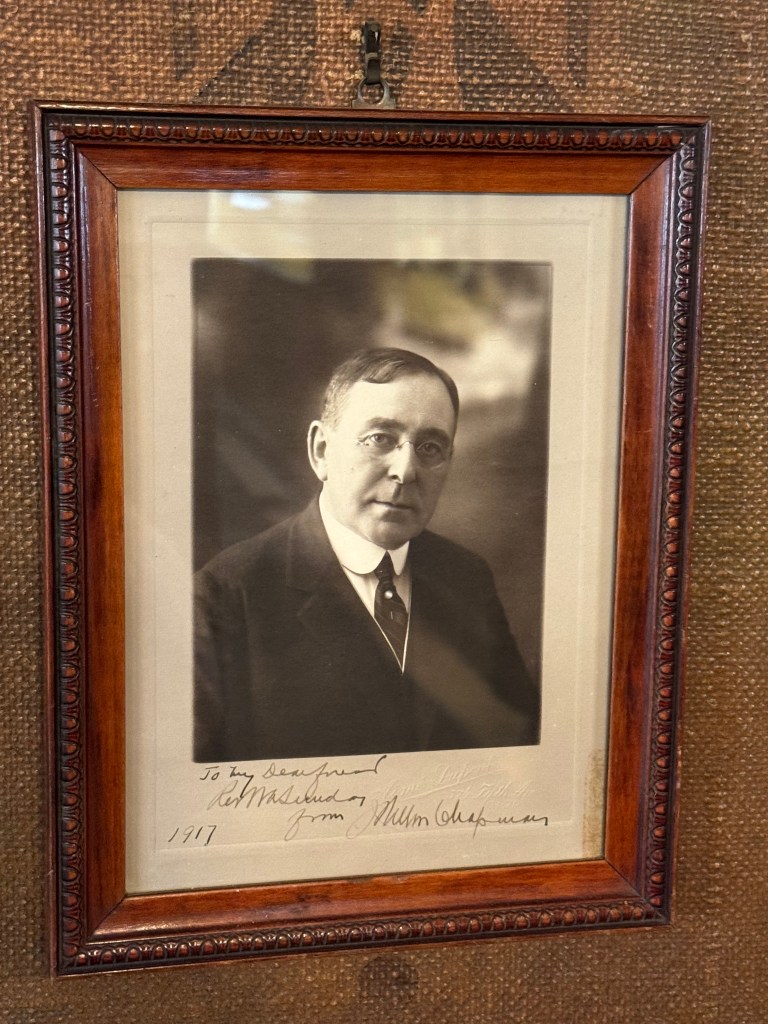
J. Wilbur Chapman was a Philadelphia pastor. For some years he was the pastor of Bethany Presbyterian Church; then he became a world evangelist.
Picture of Chapman inscribed to Billy, hanging in his Winona Lake home.
Doctor Chapman’s approach to the masses may be likened to the sun eating its way through a snowdrift. Here is a quiet, modest, devout man who takes a passage of scripture and illuminates it with his interpretations. His sermons search and reach as the leaven works its way through a meal. Doctor Chapman is not the sort of man who creates a big furore, though his campaign in Australia and Great Britain made a profound impression. He is unostentatious, with a charming modesty, intense in his mission, with deep convictions, while a man of sweetness and light, is on occasion a real son of thunder.
The popular response to evangelists is a matter which compels a study of the human mind and of the organized preparation of every great evangelistic effort. The multitudes do not fill large tabernacles to hear a man talk, but to hear him talk about religion. The sea of public feeling is tossed while wave crests and eddies by emotional religion. It is a question whether these men could gather such crowds to listen to a lecture on Browning or Shakespeare. I believe that if the press and literary men should back the movement Rudyard Kipling or Bernard Shaw or Theodore Roosevelt might fill for a period of time a vast audience discussing a literary or secular subject.
Doctor Wanted
It must be conceded, however, that men are interested in matters which concern their destiny. Wicked men have a strange desire to hear a good man denounce them; people—most of them—like to see the dog.
All men have spasms of goodness; aspiration loves company. A man with a rope on a stormy sea will have no trouble attracting attention. Perhaps the attitude of the public toward the evangelist is best illustrated by the scene on the Atlantic when it was sinking. Jews, Catholics, Protestants and skeptics gathered in the cabin. Moody, with one arm clasping the pillar, read the 91st Psalm. Then he went to his berth and fell asleep. Men who give help and comfort will have the multitude, for people are sheep—they follow a shepherd.
DEFIANCE
Let life its legioned army throw Against my pennoned castle walls, With curse and jibe and bitter groan Its band of lowly seneschals;
But when the dust of conflict blows And sounds the bugle o’er the lea, They shall not find me fallen, dead; They shall not kill the love in me!
Tho stained with blood of bleeding heart Up in the ramparts’ evening breeze, My banner floats the same as yore Above the brooding cypress trees.
The sun has set; the shadows fade; The night comes silent from the sea; They shall not find me fallen, dead; They shall not kill the love in me!
I had been reading Billy Sunday’s sermons for months — the atonement, the heaven imagery, the careful anti-moralism arguments — and I thought I had a reasonable handle on the man. Earnest. Urgent. Theologically sharper than his reputation. Then I hit a passage where he turned on his critics, and I actually laughed out loud in my study.
“You little two-by-four whisky-soaked fellows who can’t earn $10 a week and turn up your nose at religion. It is beneath you to be a Christian. It would lower your manhood. You are a fool.”
That’s not pastoral. That’s not even particularly civil. That is a man who has been called a vulgarian so many times that he has decided to demonstrate exactly what vulgarity looks like when it is aimed at the right target. And his critics — the educated, the respectable, the comfortably pewed — were exactly the right target.
The criticism of Sunday’s language is old and persistent. He talked like a street fighter. He invented words (“foolosopher” remains my personal favorite — philosophy plus fool, a portmanteau that dismisses two thousand years of Western skepticism in four syllables). He called Napoleon, Caesar, and Hannibal “old ginks who used to juggle power and men’s lives.” He described a wife-beater as “whisky-soaked, hog-jowled, weasel-eyed, pug-gut.” He told an old infidel that his ideas could go “to perdition.” He rendered the newsboy’s voice in four consecutive street slang terms without pausing for a breath.
The critics heard all of this and said: undignified. Unbecoming. Unworthy of a pulpit.
They were not entirely wrong. I’ll get to that.
But they were mostly wrong. And the way they were mostly wrong is the more interesting story.
What the Criticism Gets Right
There are moments — I counted them carefully across forty-five sermons — where Sunday reaches for a contempt word in a place where an argument should have gone. When he calls the participants of the 1893 Parliament of Religions “mutts like Hindus, followers of Zoroaster,” he is not engaging with religious pluralism. He is dismissing it. The slang is doing the work the reasoning should do, and the reasoning is absent.
That is a real weakness. The book I’m writing will name it without flinching.
There is also a genuine risk when the compound insult strings get long enough to become funny. “Whisky-soaked, hog-jowled, weasel-eyed, pug-gut” is objectively hilarious. And a sentence that makes the congregation laugh at the image may not be making them feel the gravity behind it. When the rhetoric is entertaining enough to applaud, it is sometimes too entertaining to convict.
Fair point. Conceded. Moving on.
What the Criticism Gets Wrong — Which Is Most of It
Here is what I kept noticing as I worked through the transcripts: Sunday’s slang has a targeting system. The compound insult strings are almost never aimed at the repentant, the struggling, or the socially marginal. They are aimed at the powerful who abuse the vulnerable, at false systems dressed in religious clothing, and at the self-righteous who use respectability as a hedge against grace.
The “whisky-soaked, hog-jowled, weasel-eyed, pug-gut” compound? Applied to a man beating his wife and children while invoking his personal liberty. The contempt tracks the abuse. Sunday’s critics — themselves largely comfortable professionals — heard the language as a class issue. The primary sources suggest it was a moral issue.
Then there is the street dialogue, which his critics consistently conflated with Sunday’s own voice. When the Chicago newsboy delivers four authentic period slang terms in four lines — “Aw, gwan with you, you big mutt” / “not on your tintype” / “Boss, I’m from Missouri, come across with the dough” — Sunday is not preaching in slang. He is reproducing a voice. Any novelist would claim the same distinction. Sunday had been a YMCA street worker in Chicago. He knew what newsboys sounded like. That precision is not vulgarity. It is observation disciplined into art.
And here is the thing about “foolosopher” that I want the critics to reckon with: it is not Sunday’s substitute for an argument against philosophical skepticism. It is the verdict at the end of an argument he has already made — a careful working-through of the internal contradictions of Enlightenment rationalism. The slang is the conclusion. Critics who read it without the preceding argument are reading a partial text and declaring a whole verdict. That is not criticism. That is a setup.
The Critics Themselves
This is where it gets interesting to me personally.
The people who criticized Sunday’s language most loudly were almost entirely drawn from the educated professional class and liberal Protestant clergy — the same people Sunday called out for preaching “deodorized, disinfected sermons” that had removed everything offensive from the gospel, including the offence of the gospel itself.
They heard “foolosopher” and “hog-jowled” from a pulpit and called it vulgarity. Of course they did. Their entire formation had taught them that elevated subjects require elevated language.
Sunday’s actual audiences — factory workers, railroad employees, domestic servants, immigrants still learning English — heard something entirely different. They heard recognition. The street slang was not a barrier between them and the theological content. It was the door through which the content entered.
Sunday was not preaching to the educated class and failing. He was preaching to everyone else and succeeding. That distinction matters enormously when you are evaluating whether a rhetorical choice was a failure of decorum or a brilliant act of pastoral intelligence.
The Passage I Can’t Shake
In “I Find No Fault in Him,” Sunday paraphrases Matthew 23 — Jesus’ scorched-earth denunciation of the Pharisees — in period vernacular:
“You miserable old lobster. You’re a fine bunch of guys, the way you skin widows. You sanctimonious rascals, you’re like a sepulchre — nice outside, but inside rotten. The whole bunch of you ought to be in jail.”
Every time I read that I think two things simultaneously. First: that is reckless. Second: that is exactly right.
Matthew 23 is not a pastoral nuance passage. It is white-hot prophetic fury directed at religious respectability weaponized against vulnerable people. Most formal translations preserve the dignity of the target along with the words of the rebuke. Sunday’s vernacular strips the dignity away — which is, arguably, precisely what Jesus was doing.
Is that good homiletics? I’m genuinely not settled on it. What I’m settled on is this: it is not a failure of register. It is a translation decision. And the question worth arguing about is not whether Billy Sunday talked like that — he clearly did — but whether talking like that was, for his specific audience in his specific moment, an act of faithful proclamation.
The trail responses documented across his campaigns suggest it was.
Billy Sunday talked like that. And the people he was talking to — not the critics in the press gallery, but the people in the seats — heard him.
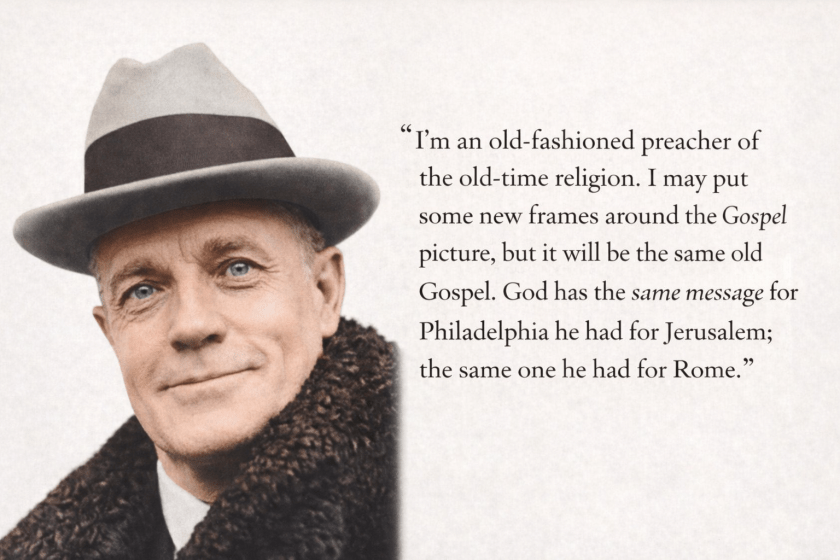
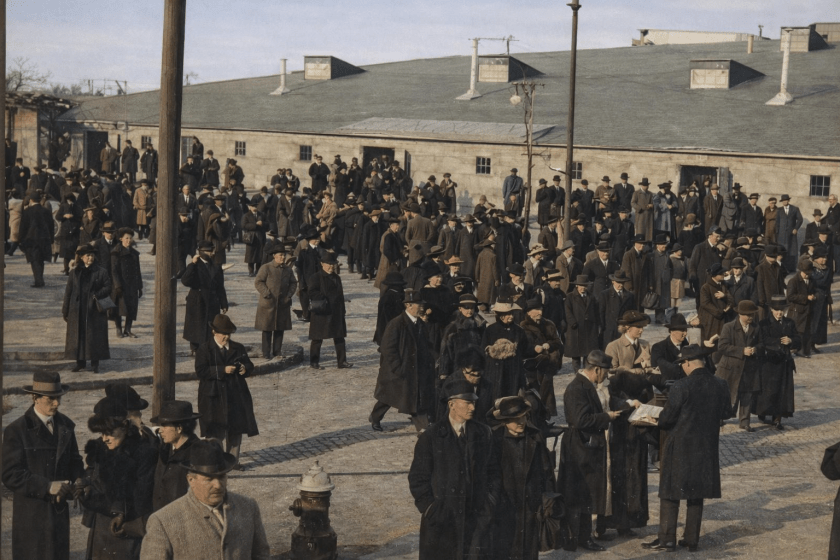
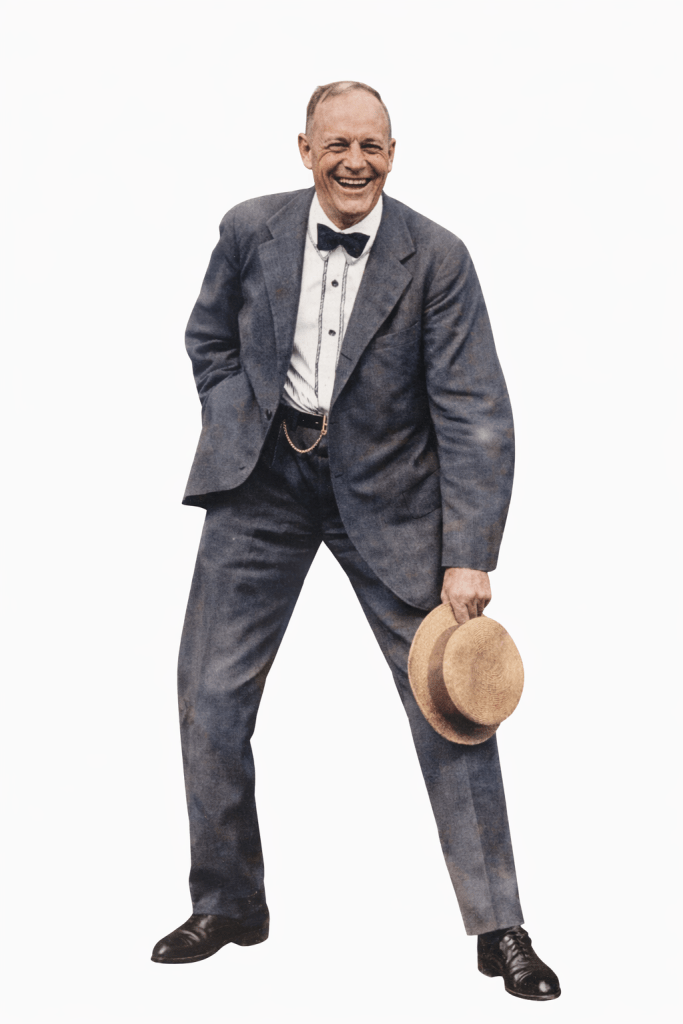
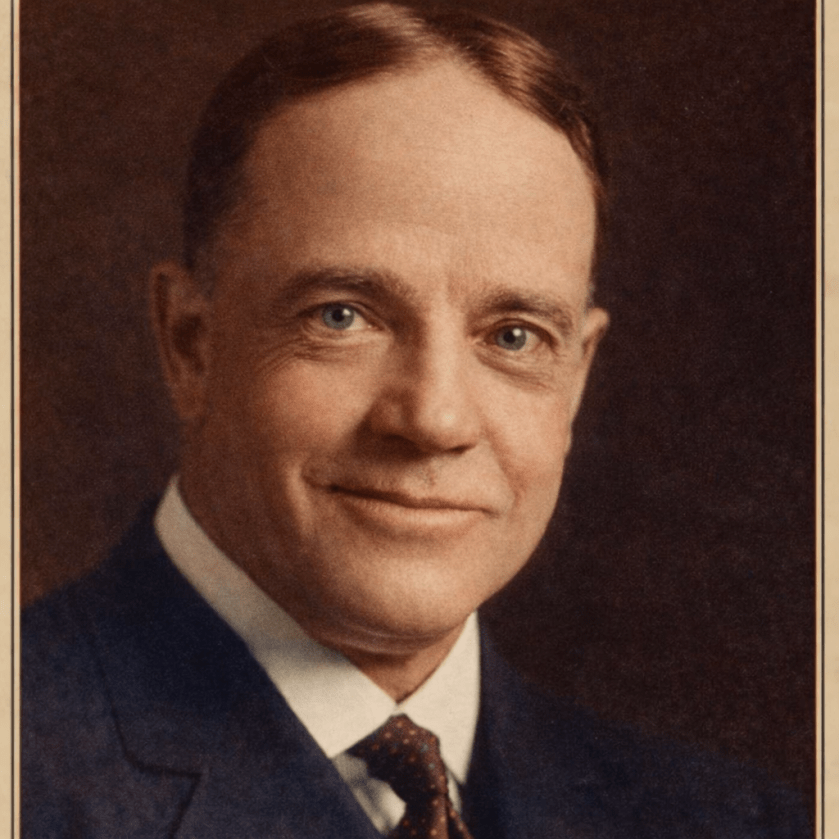
Colorized picture from 1915. This was Billy’s favorite picture at the time.
“A revival is needed when the worldly spirit is in the church of God. It isn’t necessary to do something grossly inconsistent. A ship is all right in the sea, but all wrong when the sea is in her. The church of God is all right in the world, but all wrong when the world is in the church. Some people come to church on Sunday morning and on Monday morning they take a header into the world and the church never sees them again until Sunday morning. They squat and take up a little space in the pew and stay there and put a little money on the plate, but you never see them again until Sunday morning. I tell you, I believe half of the church members could die and the church wouldn’t lose anything of its spiritual force; it would lose them in numbers, but it wouldn’t lose anything in spiritual power.
I tell you, my friends, we need a panic in religion; the world don’t need informing; it needs reforming. We are going to the devil over culture clubs, as if the world needed informing; it don’t need anything of the kind. There are people who go to church and go to a certain denomination because their wife goes there. They got their religion and their property in their name. They go to that church.”
Cited in: Philadelphia Evening Public Ledger. January 6, 1915:6.
From a sermon on A Defense of Revivals, from Habakkuk 3:2. January 5, 1915. Philadelphia.
Cited in: The Philadelphia Evening Ledger. January 5, 1915:5. – William Rader
Billy Sunday is not easily defined. Power conceals its secret. Psychologists would call it hypnotism; theologians, the power of the spirit; the ethical teacher, the gift of truth; the dramatist, the art of the player; while others declare:
His strength is as the strength of ten, Because his heart is pure.
Billy Sunday is a good actor. Each sermon is carefully prepared, and some of it read from manuscript. Certain climaxes are illustrated. At one point he slides to a base; at another, kneels, or leaps upon the pulpit desk, or smashes a chair to pieces. Edward Everett did not more carefully prepare a speech with its proper gestures than does this evangelist build his sermons. The local color with which he decorates his main thought is taken from the city in which he speaks.
His imagination interested me. Speaking on “The Grenadier,” the consideration of his theme invited the use of the imagination, and he gave it full play. The sermon was an application of military attributes to practical life, a rebuke to the “wind-jammer” of the prayer meeting, and an appeal to the man who has taken an oath to be good to go out and honor it. He assailed the “saphead” who criticises the Church, and the description he gave of Daniel in the lion’s den and of the head of John the Baptist on a charger will not be forgotten.
I confess to a liking for his so-called slang. Most of it is plain English with a punch in it. It is the punch which preachers and editors and people who use words generally lack. Words are like shot, made to strike, and especially when used to influence great bodies of people. It is refreshing to hear a man say what he thinks and say it as he pleases—a thing most public men signally fail to do.


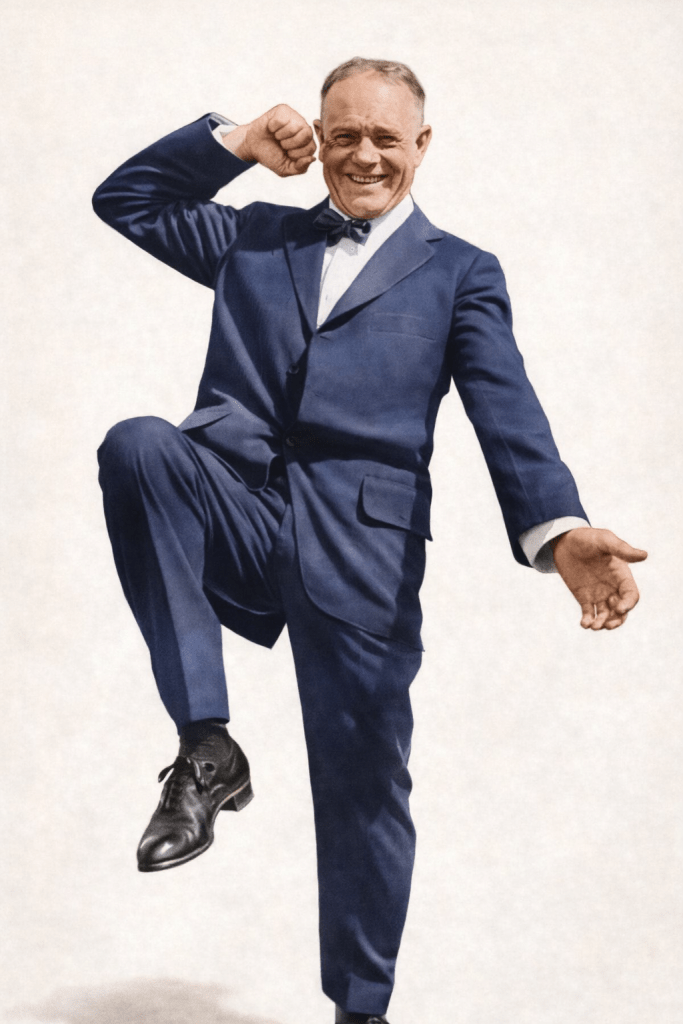
 Evangelist Billy Sunday (1862-1935)