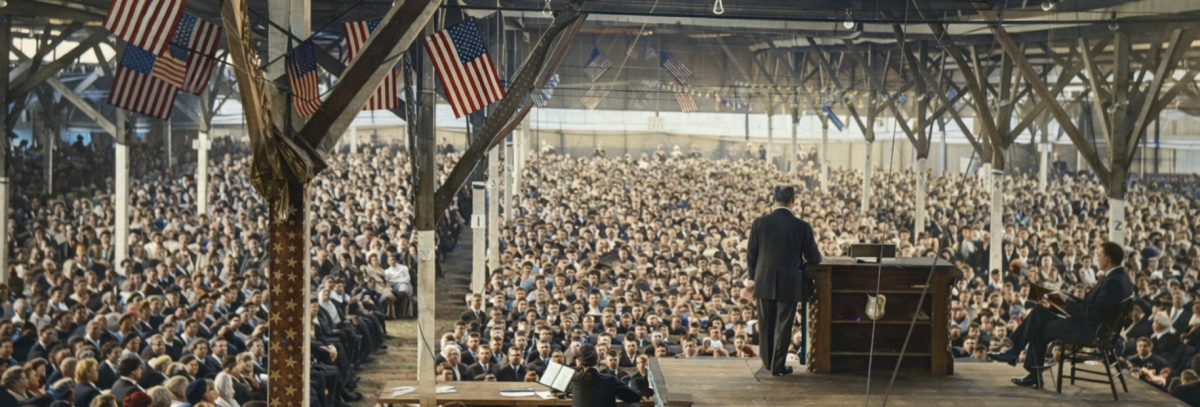
In the fall of 1915, Nebraska found itself hosting two of the largest public gatherings in its history.
One was expected.
The other was not.
In Lincoln, the Nebraska State Fair was in full swing. Newspaper headlines called it “the greatest ever held.” Despite rain and poor weather early in the week, crowds poured through the gates. By the time it ended, total attendance reached 180,767—a record-setting year. The fairgrounds were packed with machinery exhibits, livestock judging, aerial shows, wrestling matches, and the familiar buzz of a state coming together for its biggest annual spectacle.
It was, by every measure, a success.
But sixty miles away, something far more remarkable was unfolding.
In Omaha, a temporary wooden tabernacle had been erected for evangelist Billy Sunday. There were no rides. No prize livestock. No grandstand attractions. Just sawdust, benches, a pulpit—and a preacher.
Yet by the time Sunday’s campaign ended, the numbers told a different story.
The revival recorded approximately 930,000 total attendees across its six weeks of meetings. Of those, nearly 795,000 passed through the tabernacle itself. More than 13,000 people walked the “sawdust trail,” publicly declaring their decision for Christ.
Let that sink in.
The largest civic event in the state drew just over 180,000 people in a week.
Billy Sunday’s revival drew over five times that number (in six weeks total).
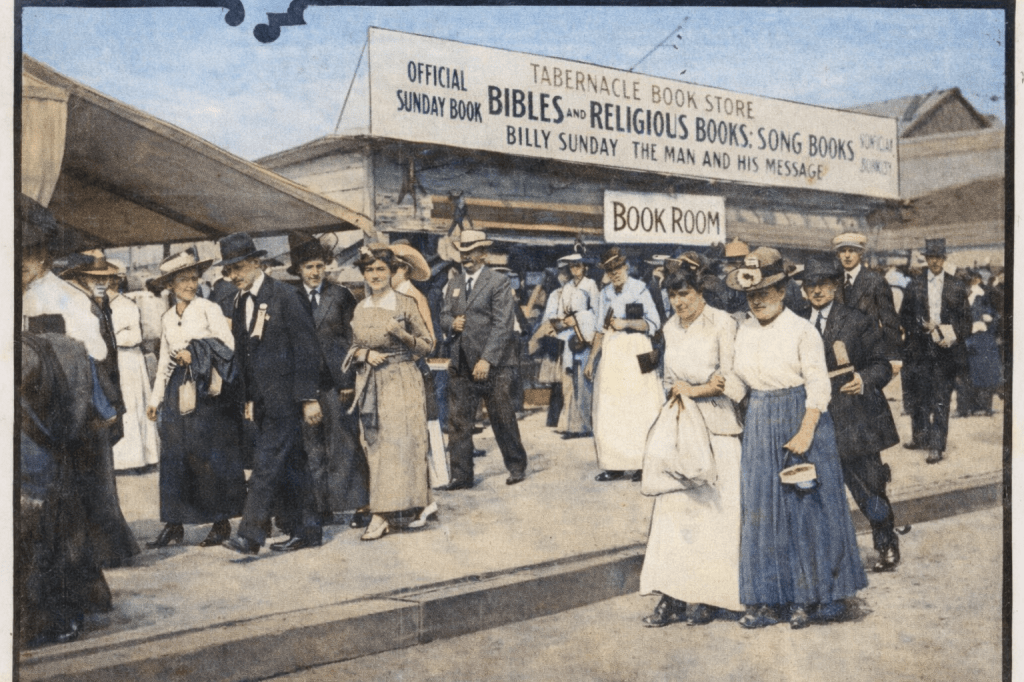
And it wasn’t confined to a single venue or moment. The revival spread throughout the city:
- Over 2,100 cottage prayer meetings during the campaign
- Tens of thousands attending women’s meetings, Bible classes, and noon gatherings
- Business leaders, factory workers, students, and families all pulled into its orbit
This was not simply a series of sermons. It was a citywide movement.
The contrast is striking. The State Fair represented the best of Nebraska’s agriculture, industry, and entertainment. It was planned, promoted, and expected to succeed.
Sunday’s revival, on the other hand, was built on something less tangible but far more powerful—a shared spiritual hunger that transcended social boundaries.
For a brief moment in 1915, Omaha became the epicenter of something larger than spectacle. Larger than tradition. Larger even than the state’s greatest annual event.
The fairgrounds would empty. The tabernacle would be torn down.
But for those who were there, the memory remained:
A season when the crowds came—not for entertainment—but for transformation.
Sources: curated from Omaha newspapers from 1915.

 Evangelist Billy Sunday (1862-1935)