There are moments in the Sunday campaigns that feel almost hidden in the shadow of Billy’s larger-than-life presence—but when you find them, they reveal something just as powerful.
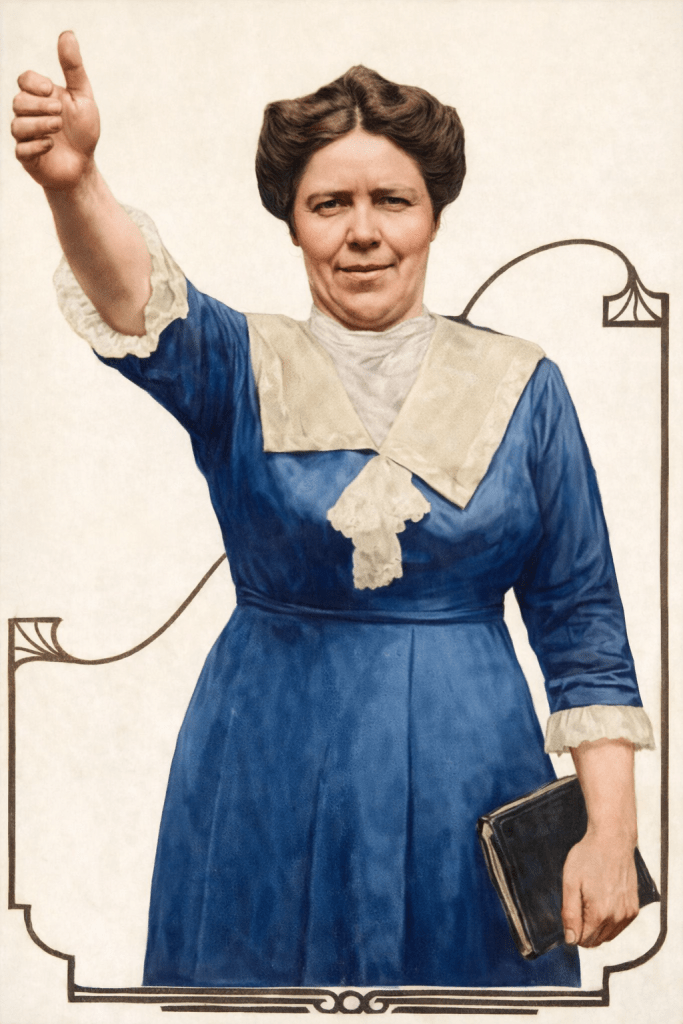
One such moment came during a women-only meeting led by “Ma” Sunday.
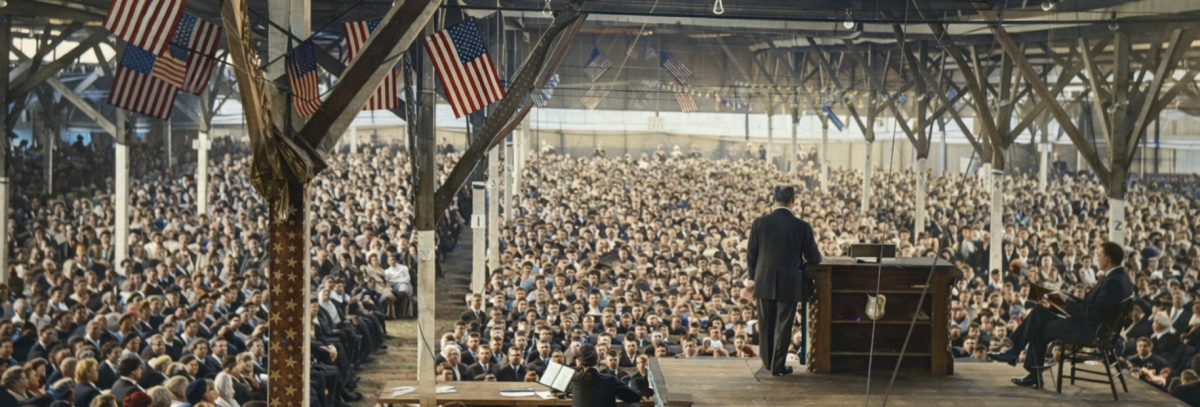
The tabernacle was full—some 6,000 to 7,000 gathered—but this was a different kind of service. No booming theatrics. No sawdust-charged bravado. Instead, there was a quieter, deeply personal appeal.
And when she called them forward, 115 women and girls rose and walked the aisle.
A Different Kind of “Trail-Hitting”
The newspapers called it a “replica” of Billy’s famous trail-hitting—but it wasn’t quite the same.
There was a tenderness to it. And, at first, a bit of confusion.
Many of the women thought they were simply going forward to greet Mrs. Sunday—to shake her hand, to thank her, to meet her. They came quickly, almost instinctively, forming what one observer described as a “bee-line” down the aisle.
It took a firm voice from Mrs. Asher, one of the Sunday team, to steady the moment:
This is not a reception line. This is for those who want to be saved.
And just like that, the tone shifted.
Faces in the Crowd
The reports linger on the people—and that’s where the story lives.
A housemaid, still in her work attire, came forward and clasped Mrs. Sunday’s hand, covering it with kisses.
A weeping mother walked the aisle with her small son, alongside her grown daughter.
Two young girls, barely ten years old, came arm in arm.
High school girls stepped forward carrying their school pennants.
Even the choir—singing hymn after hymn—was visibly moved, some of them weeping as they sang.
This wasn’t spectacle. It was personal, family-bound, deeply human.
Her Message: Personal Service
If Billy Sunday’s sermons often thundered, Ma Sunday’s message pressed inward.
She didn’t just call women to come forward—she called them to act.
- Make a prayer list.
- Win at least one person to Christ.
- Take responsibility for the spiritual lives around you.
Her appeal was practical, almost methodical—but never cold. It was rooted in experience, shaped by her own life, and delivered with a kind of plainspoken honesty.
At one point, she reflected on her upbringing—rigid, formal, spiritually lifeless—and contrasted it with her determination to move forward anyway:
I was going to bust.
It’s the kind of line that doesn’t sound polished—but it lands.
Tears—and Resolve
Perhaps the most telling moment came when she addressed women with unsaved husbands and children.
Many of them broke down.
The article notes they wept bitterly.
This wasn’t abstract theology. This was eternity pressing into the home.
And Ma Sunday didn’t leave it there. She pointed them toward action, toward prayer, toward persistence.
She even set her sights on the next gathering—calling for a packed house of mothers and grandmothers, marked by a simple white flower.
The Broader Picture
What we see here is something easy to miss if we focus only on Billy:
The Sunday campaigns were not a one-man operation.
They were a network of voices, and Ma Sunday’s was essential—especially among women. Her meetings didn’t mirror Billy’s so much as complement them.
Where he confronted, she invited.
Where he thundered, she persuaded.
Where he called for decision, she called for ongoing service.
And in doing so, she mobilized an entire segment of the revival that might otherwise have remained on the margins.
Final Reflection
In the end, the numbers—115 responding—tell only part of the story.
What matters more is what those women carried home with them:
- A renewed sense of responsibility
- A burden for their families
- A call to personal witness
Ma Sunday didn’t just ask them to walk an aisle.
She asked them to live differently when they walked back out.
And for many of them, that’s where the real revival began.
Source: The Omaha Daily Bee, Sept 20, 1915:1
 Evangelist Billy Sunday (1862-1935)