“Ma Sunday” Takes the Pulpit in Kansas City (1916)

During the 1916 revival campaign of Billy Sunday in Kansas City, one of the most striking moments came when the evangelist’s wife, Helen Amelia Thompson Sunday—known widely as “Ma Sunday”—took the pulpit herself.
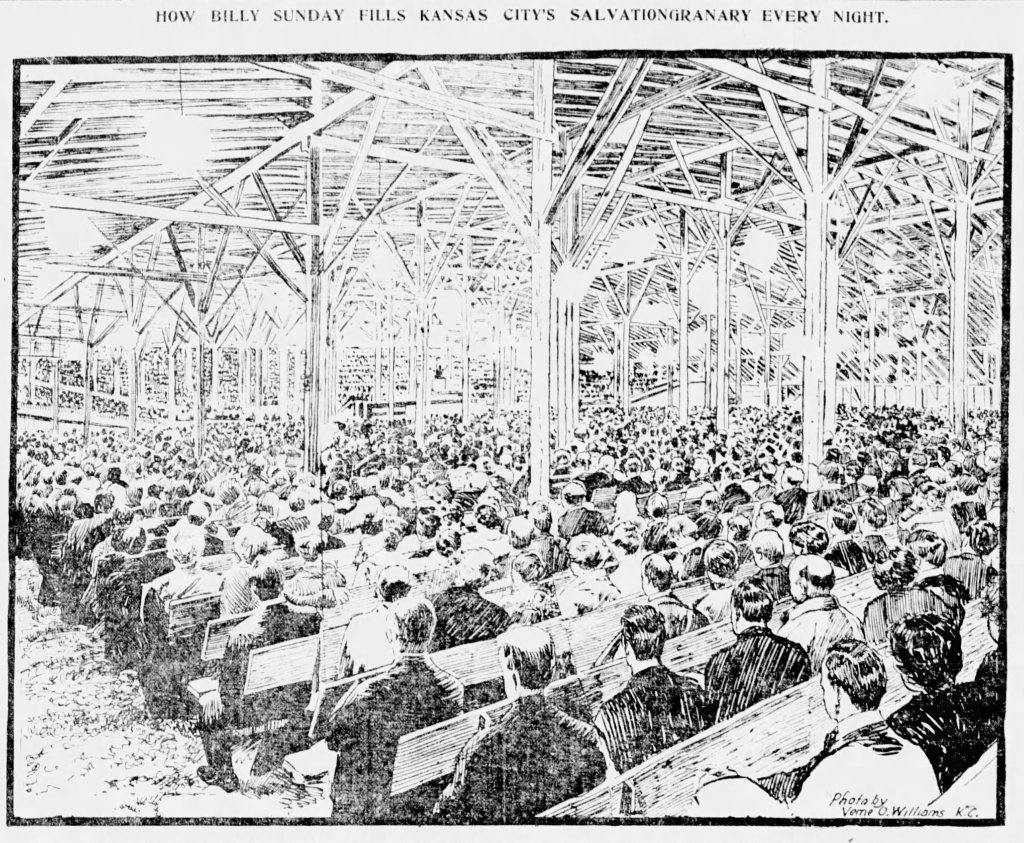
A report in the The Kansas City Star described her address as unmistakably in the style of her famous husband: energetic, blunt, and deeply challenging to church members.

The newspaper noted that Kansas City audiences had not heard her preach before, but the reaction was immediate. Speaking rapidly and with confidence, she quoted Scripture freely, used expressive gestures, and even thumped the pulpit for emphasis.

By the end of her half-hour address, the reporter observed, “she was perspiring freely,” a familiar description for anyone who had watched Billy Sunday preach.

Her message was aimed squarely at professing Christians, not skeptics or outsiders. She criticized believers whose lives contradicted their testimony.

“The professed Christian who forgets his vows every time a joy ride is offered… is a liar—she said liar—every time testimonials are called for.”

Like her husband, Ma Sunday believed revival depended not only on converting sinners but also on awakening the church. In her view, too many Christians expected evangelists to do the spiritual work while they remained passive.

“Don’t you think that we are going to carry the load and let you sit back and say, ‘I hope you have a good meeting.’”

Instead, she challenged church members to take personal responsibility for the spread of the gospel. Her message emphasized the role of ordinary believers as witnesses for Christ.

She even offered a striking calculation:

“If every church member would win one person to God a year in twenty-five years the world would be saved.”

But she also warned that careless Christian living could damage the church’s influence.

“The church member who proves himself a liar every time he testifies is more harm than good to the church.”

At one point she posed a simple question to the audience: how many people were praying for others? Only a few hands rose. Yet when she asked how many were professed Christians, nearly every hand went up. The contrast, she implied, revealed the problem.

Another theme in her address was the temptation of worldly distractions. She criticized believers who treated recreation as more important than spiritual discipline.

“Lots of Christians forget every time they have a chance to go joy riding.”

Her solution was straightforward: prayer and active participation in the revival effort.

“Get a prayer list… I don’t mean to show around and talk about, but to pray for.”

She also defended the unusual style of her husband’s ministry. Critics often accused Billy Sunday of being theatrical or unconventional. Ma Sunday reminded her listeners that religious leaders throughout the Bible had often acted outside ordinary expectations.

“The Pharisees tried to trip up Jesus for doing things out of the ordinary… Mr. Sunday has lots of authority for doing things out of the ordinary.”

Her address illustrated an important aspect of the Sunday revival campaigns: they were family efforts. While Billy Sunday delivered the dramatic evening sermons, Ma Sunday frequently reinforced the message by speaking directly to believers about prayer, personal responsibility, and spiritual integrity.

In Kansas City that spring of 1916, the newspaper report made one thing clear. The revival was not powered by one voice alone.

Ma Sunday had her own message—and she delivered it with the same urgency and conviction that had made the Sunday campaigns famous across America.

The Kansas City Star. May 9, 1916:4.
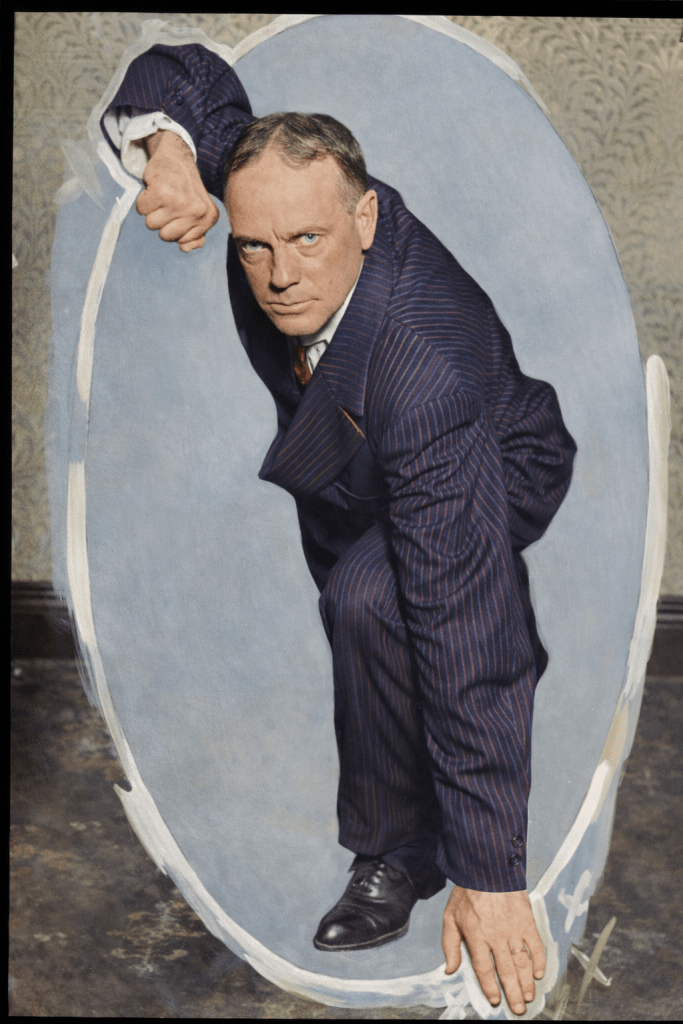
Who was singer Fred G. Fischer?

Able Leader of the Singing at the Sunday Revival Meetings.

Note: This account was published in the Freeport Daily Journal in 1906.

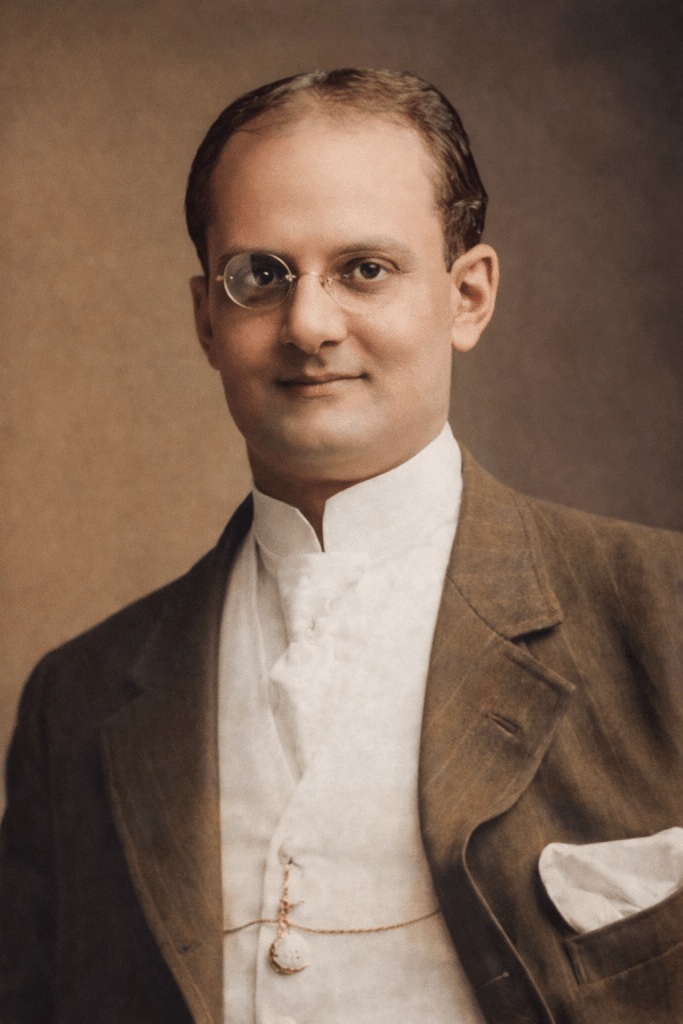
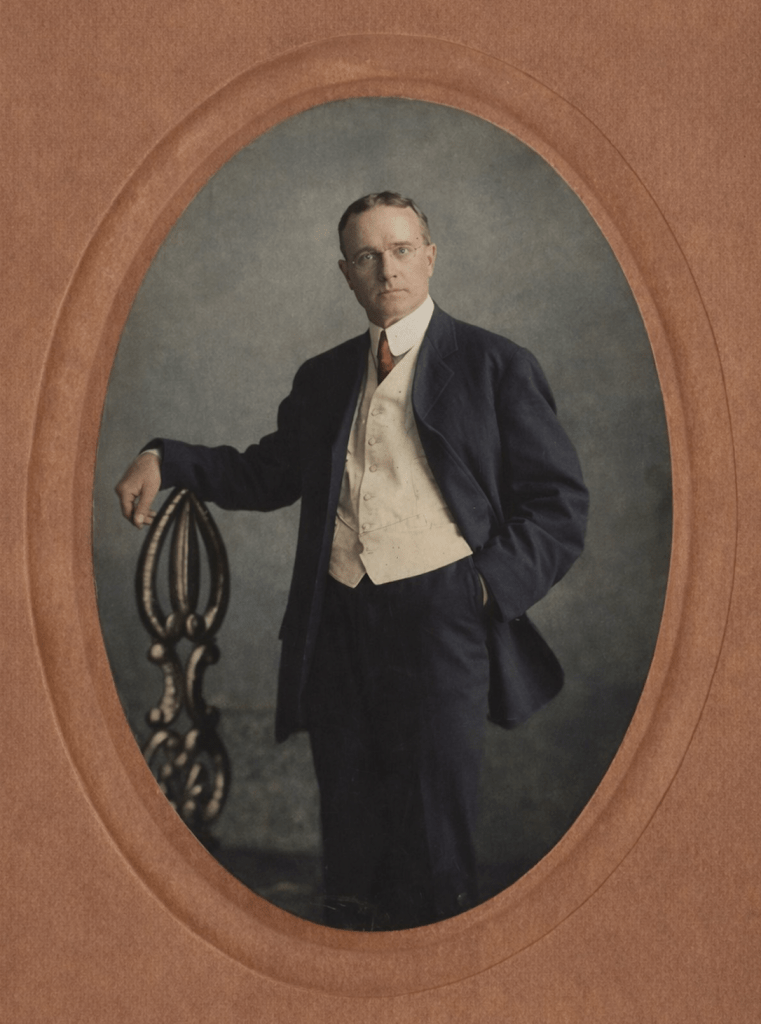
“Without good music, without good, stirring gospel singing, an evangelistic revival campaign would not make much headway. As choir leader and singer for the Sunday meetings, Prof. Fred G. Fischer is the right man in the right place. He was born at Mendota. He is of German parentage and inherits his musical talents. Mr. Fischer is a nephew of P. P. Bilhorn, the well-known gospel singer and song writer, and promises to become as famous as his illustrious uncle. He has given all his time to the study of music since he was eleven years of age, having quite school at that age for the purpose of cultivating his artistic talent.

Fred G. Fischer

Mr. Fischer studied with Robert Webster and Deveries, the great French vocalist. At first, he began as an independent singer, going from place to place, assisting pastors wherever he found one needing his services. He was in this work when he received a letter from Mr. Sunday, who had heard his sing, and a bargain was made for the two to travel together. Mr. Fischer went to the next appointment and was there for two days conducting the meetings before Mr. Sunday came. He has been with the evangelist ever since and expects to remain with him as long as there is work to do.

Mr. Fischer was married about two years ago, and lives in Chicago. He has a good voice, and, knowing how to use it to the best advantage, has few equals in leading a choir. Possessed of fine social qualities, he has already become popular with Freeport’s musical talent.”

The Daily Journal (Freeport, Illinois) · Tue, May 1, 1906 · Page 5.

Billy Sunday receives bomb death threat while in Omaha in 1915

Curated from original Omaha Daily Bee newspaper

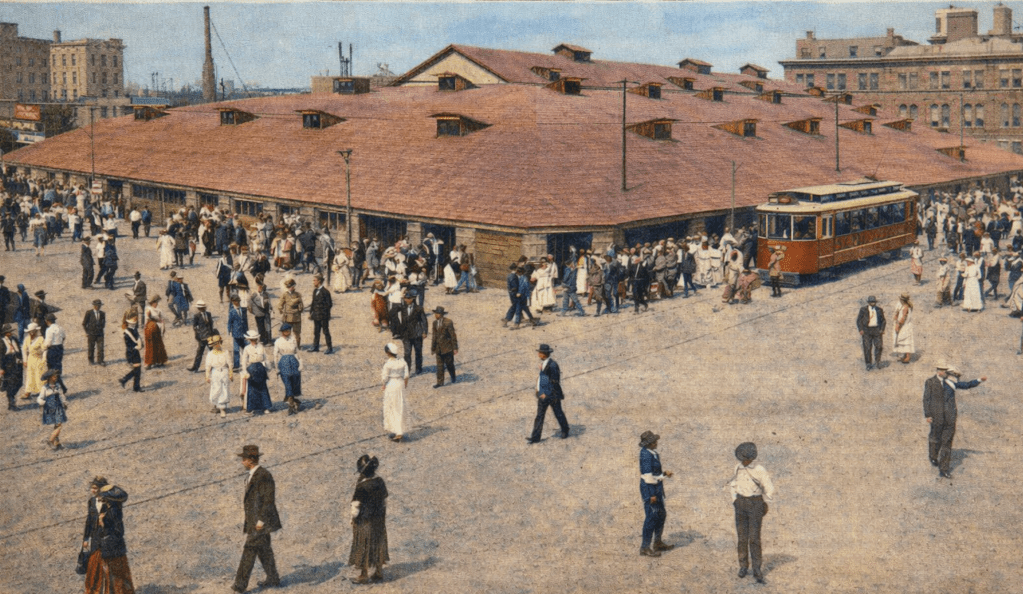
A sensational threat upon the life of Evangelist Billy Sunday, conveyed through a crudely written “black-hand” letter, stirred the city yesterday but failed to interrupt the progress of the revival meetings at the great tabernacle.

The warning, received through the mails on Wednesday, declared that a bomb would be hurled into the tabernacle at 2 o’clock Thursday afternoon, September 23, and that Sunday would be killed unless he departed the city within ten days. The missive, scrawled in poor handwriting across ordinary note paper, bore at its lower corner the drawing of a black hand and a crude sketch of a bomb connected to a clock marking the fatal hour.

The Billy Sunday Tabernacle. Omaha, Nebraska.

Authorities were immediately notified. Chief of Police Dunn detailed detectives to trace the author of the threat, and a vigilant watch was ordered about the tabernacle grounds. Secretary Mathews, who first examined the letter, refrained from alarming the evangelist and quietly placed the matter in the hands of the police.

Despite the ominous warning, the Thursday afternoon meeting proceeded without incident. A squad of detectives, led by Sergeants Patsk Havey and Tom Donahue, mingled with the crowd, keeping careful surveillance in anticipation of any attempt upon Sunday’s life.

If the threat was intended to deter attendance, it met with mixed success. Many curious men flocked to the tabernacle, drawn by the sensational report, while the number of women present was noticeably reduced. Total attendance fell below the usual mark. Yet inside, the service moved forward undisturbed—save for the innocent crying of a baby, whose presence, smuggled past ushers, proved the only interruption to the evangelist’s address.

Thus, what promised to be a day of danger passed into one of quiet defiance. The bomb did not appear. The preacher remained. And the revival, under the watchful eye of the law, pressed on.

Adapted from: The Omaha Daily Bee, September 23 and 24, 1915

“Why the Church Is Weak”: Billy Sunday’s Blunt Message to Kansas City (1916)

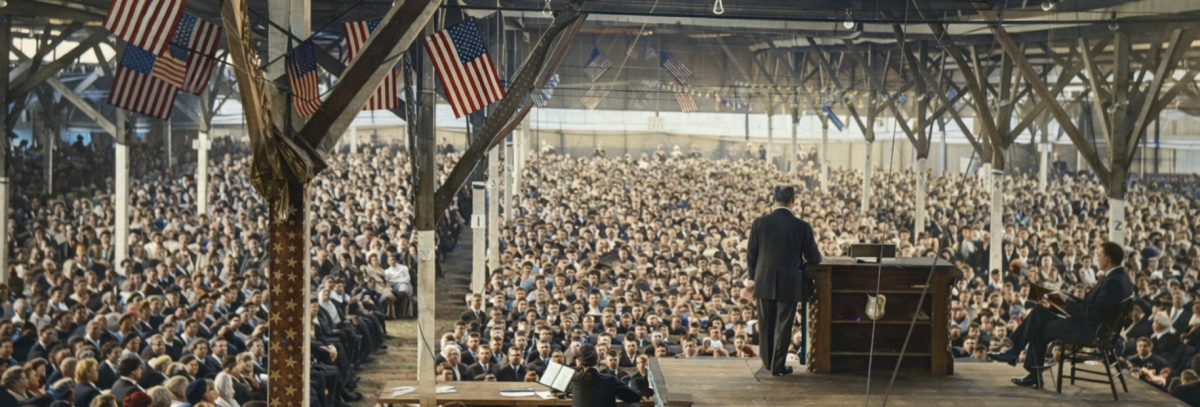
When Billy Sunday preached in Kansas City during his 1916 revival campaign, his sermons often struck directly at the spiritual condition of the church itself. One message, reported by the The Kansas City Star, carried a sharp and revealing title: “Why the Church Is Weak.”

Sunday did not begin by blaming society, politics, or culture. Instead, he argued that the church’s weakness came from within.

“The sermon by Billy Sunday this afternoon had for its subject this verse from Judges xvi, 20: ‘He wist not that the spirit of the Lord had departed from him.’”

Drawing from the story of Samson, Sunday warned that the modern church could lose its spiritual power without even realizing it. In his view, the problem was not a lack of organization, buildings, or membership.

“Nothing in the world can substitute for the spirit of God.”

For Sunday, the church had become timid. Instead of confronting sin, it had grown cautious and respectable. He charged that many congregations had traded spiritual authority for social approval.

“The church is afraid of men and women; we are to be in the world, but not of the world.”

The evangelist insisted that the church had gradually surrendered its moral courage. Leaders often hesitated to rebuke wrongdoing among their members, even when it was obvious.

“Leading church members lead in nothing but card parties and society functions.”

To Sunday, such compromises drained the church of its influence. A church that tolerated worldliness could no longer confront it.

He argued that the true strength of Christianity had never been found in numbers or wealth. The early church, he reminded his audience, possessed little of either.

“God’s church has not increased correspondingly in power as it has in numbers… it has decreased in spiritual power.”

Sunday contrasted the modern church with the first believers described in the book of Acts. They had no impressive buildings, no social prestige, and little money. Yet they possessed something far greater—spiritual conviction.

“There was a time when the church had more members than she has today; there never was a time when she had more money than she has today… but there was a time when she had more spiritual power than she has today.”

Another cause of weakness, Sunday argued, was the church’s tendency to accommodate fashionable society. Rather than confronting sin, some congregations had become comfortable with it.

“That is why many a preacher is a failure today; he is a compromiser.”

Sunday spoke especially bluntly about moral compromise among church members. When churches tolerated behavior they should have challenged, they undermined their own witness.

“We have lost our power because we have compromised.”

But the evangelist did not end his message with criticism. He pointed his listeners toward the remedy: a return to genuine spiritual life. The church needed renewed faith, repentance, and courage.

He concluded with a simple but urgent appeal. If the church wanted to regain its strength, it needed to return to prayer and dependence upon God.

“If there’s anything the church of God needs it is to climb the stairs and get in an upper room.”

In the packed tabernacle that afternoon, Sunday’s message was unmistakable. The problem facing the church was not outside pressure or hostile culture. It was the quiet erosion of conviction within.

And until the church rediscovered the spiritual power that marked its earliest days, Sunday warned, its influence would continue to fade.

Billy Sunday as an Actor: How a Kansas City Newspaper Explained His Method (1916)

When Billy Sunday arrived in Kansas City during his 1916 revival campaign, reporters tried to explain what made his preaching so electrifying. One article in the The Kansas City Star offered an unusual perspective. Rather than describing Sunday simply as a preacher, the writer analyzed him as something closer to a dramatic performer.

The article was titled “Billy Sunday as an Actor,” and it attempted to dissect the evangelist’s method from a theatrical standpoint. What the reporter saw was not merely a sermon but a kind of living drama unfolding on the sawdust platform.

According to the writer, Sunday had the ability to bring invisible scenes vividly to life:

“Mr. Sunday, erect and eloquent, is addressing some jury which is corporeally invisible, but which instantly lives before the eyes.”

In other words, Sunday’s sermons created mental pictures so vivid that listeners could almost see the courtroom of heaven forming before them. The preacher might begin by placing his audience before the bar of divine judgment, describing the sinner standing before God.

But the sermon did not stay in one place for long. Sunday constantly shifted roles, turning the message into a dramatic sequence of scenes. One moment he might portray a bartender leaning over a counter; the next he was the drunken customer staggering through the gutter.

The article described these rapid transitions with striking clarity:

“Then he becomes a barkeeper… And in another instant he is the drunkard—‘a dirty rum guzzler’—cringing, broken, swaying to the gutter.”

Through pantomime, gestures, and changes in voice, Sunday acted out moral situations that his audience immediately recognized.

The reporter concluded that Sunday’s preaching relied heavily on what he called melodrama. But the word was not meant as criticism so much as explanation. Melodrama, the article observed, was easy for ordinary people to understand because it dealt in clear moral conflict.

“Melodrama has nothing to do with character and is easy to understand,” the writer noted. “It is the drama of situation.”

That description captures something essential about Billy Sunday’s preaching. His sermons did not revolve around abstract theological debates. Instead, they focused on recognizable human stories: the drunkard, the wandering son, the sinner facing judgment.

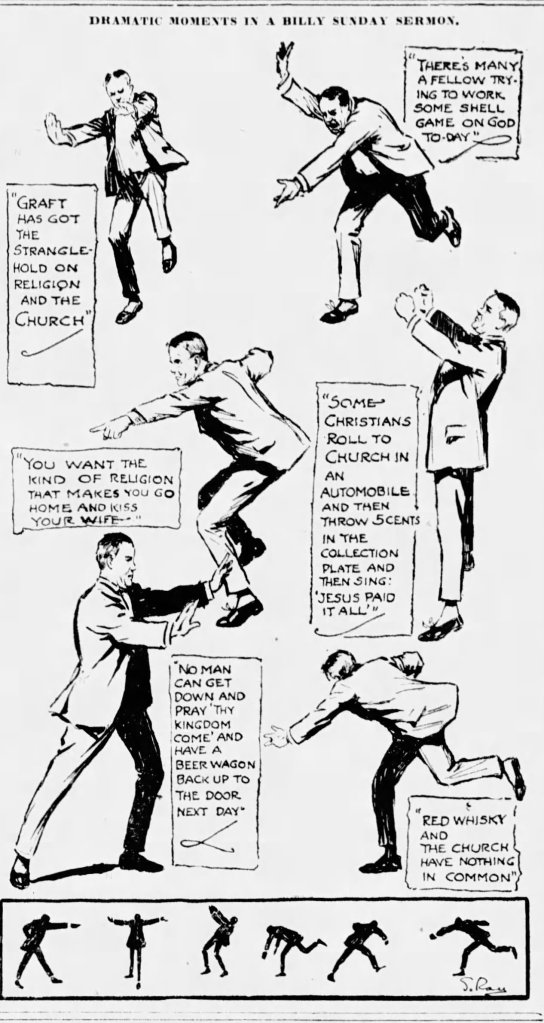
Another feature the reporter noticed was Sunday’s physical intensity. The evangelist rarely stood still. He ran, leaped, stamped his foot, pointed accusingly, and pounded the pulpit for emphasis. The effect, the article suggested, was almost like watching an athlete or dancer.

One colorful comparison even likened him to the famed ballet performer Vaslav Nijinsky—an extraordinary metaphor for a revival preacher.

Perhaps the most perceptive observation in the article concerned the simplicity of Sunday’s language. The reporter noted that his words were blunt, Anglo-Saxon, and forceful:

“Short, pungent… Saxon derivatives of English… packed full of powerful stimulus.”

This plainspoken style, filled with vivid phrases and sharp imagery, helped Sunday communicate with audiences drawn from every social class.

In the end, the Kansas City writer recognized something that many critics missed. Billy Sunday’s sermons were not merely lectures about religion. They were dramatic moral confrontations, staged in front of thousands of listeners each night.

On the bare platform of a temporary tabernacle, without scenery or props, Sunday created entire scenes through voice, motion, and imagination. His preaching was not simply heard—it was seen and felt.

And that, the reporter concluded, was the secret of his remarkable power over a crowd.

Adapted from: The Kansas City Star. May 4, 1916:2.