Former professional baseball player-turned urban evangelist. Follow this daily blog that chronicles the life and ministry of revivalist preacher William Ashley "Billy" Sunday (1862-1935)
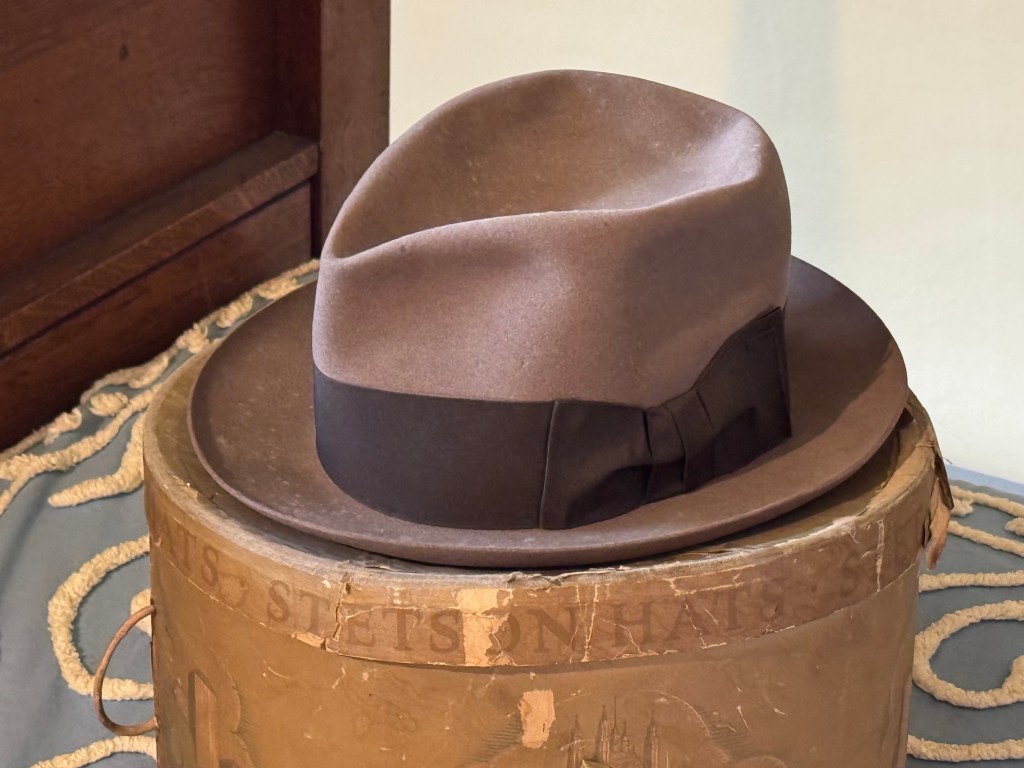
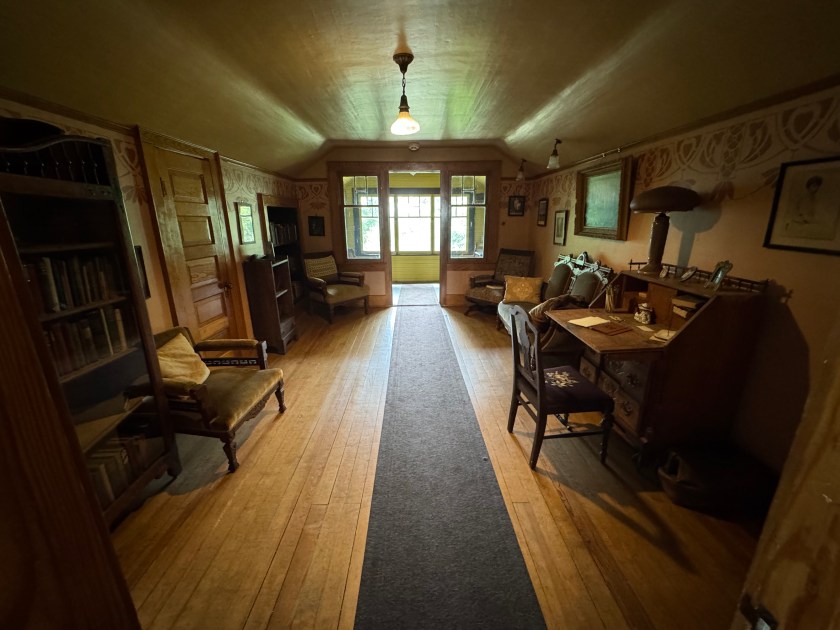
Billy was often photographed in this hat, which now resides on the bed in his former Winona Lake home. Permission to photograph was granted by the Winona Lake History Center.
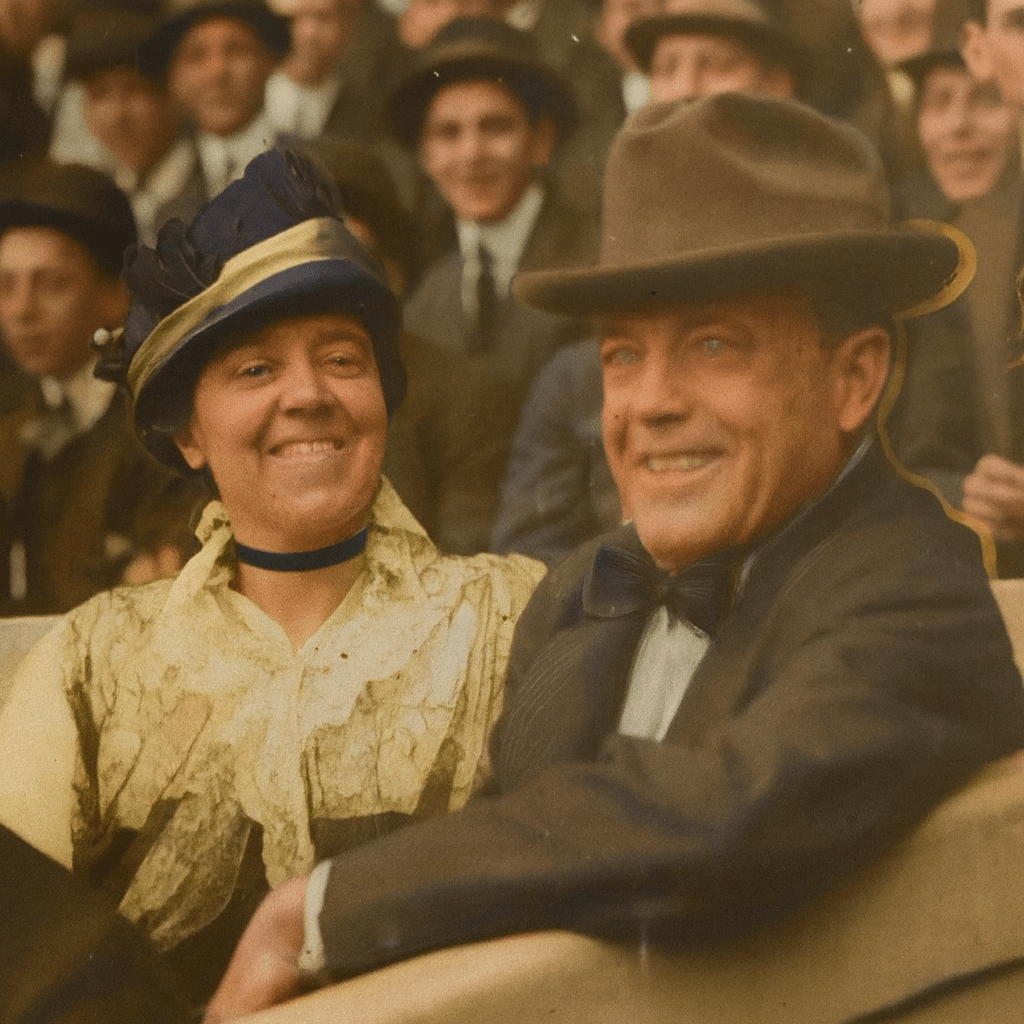
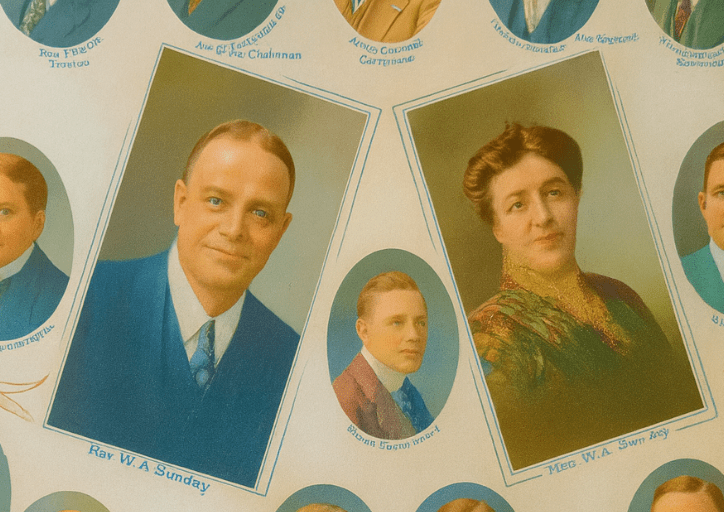
The picture below was taken in 1915 at the Polo Grounds (colorized with AI).
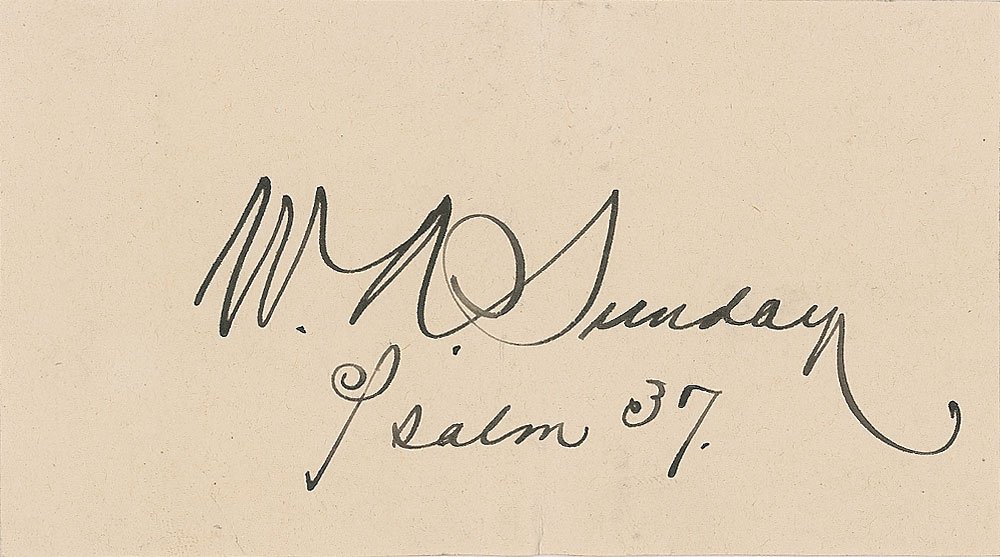
Many surviving signatures of Billy Sunday accompany and simple inscription to Psalm 37.
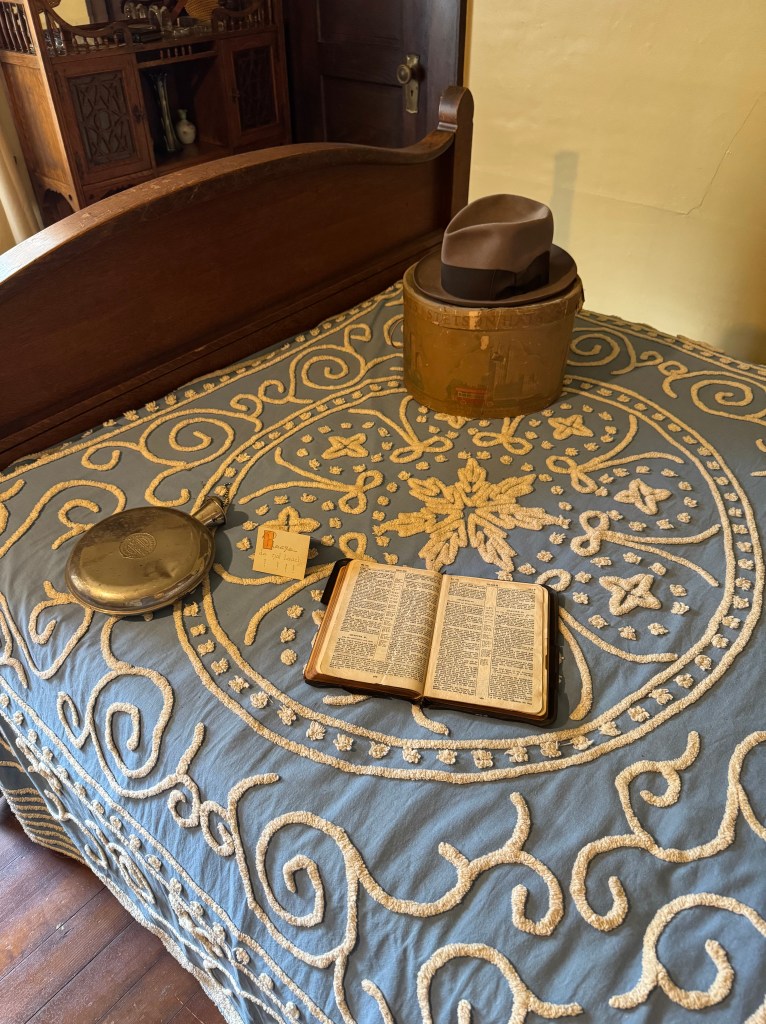
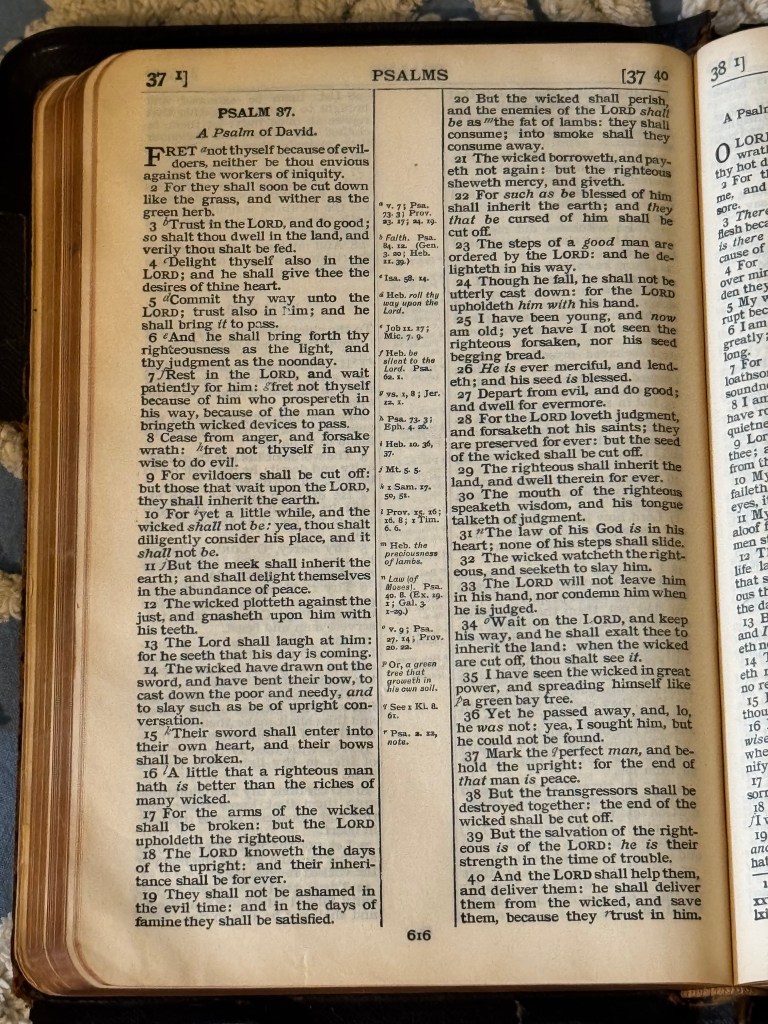
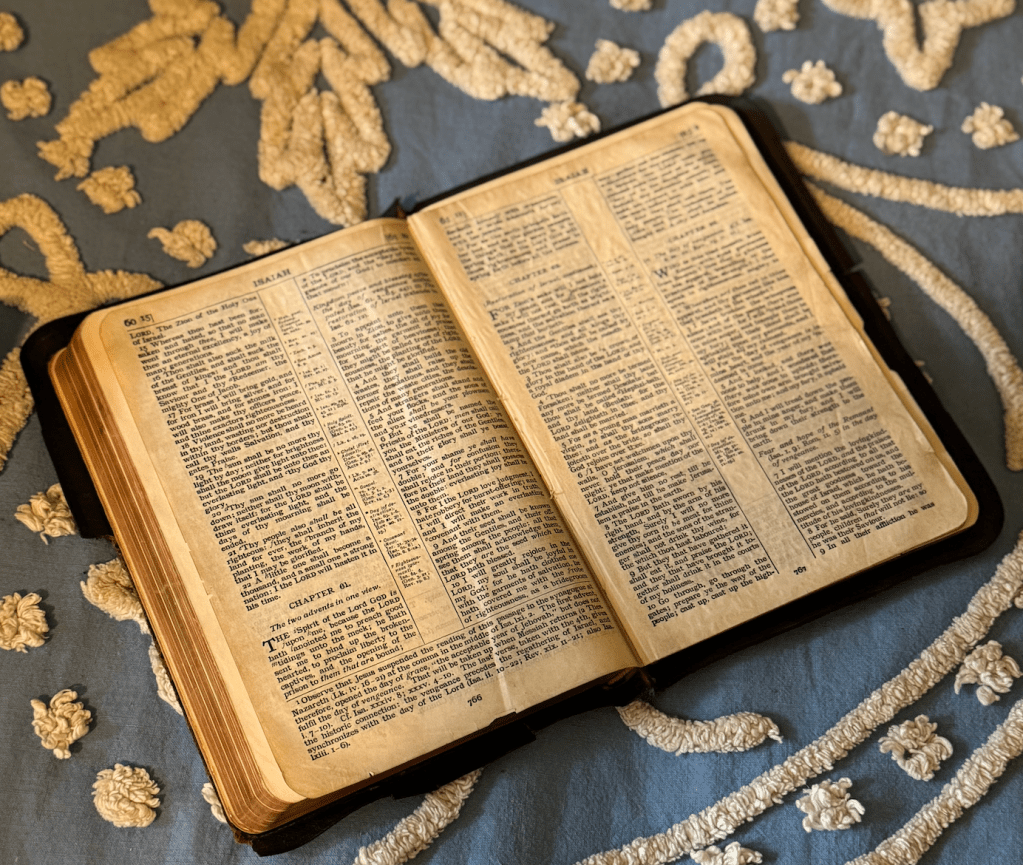
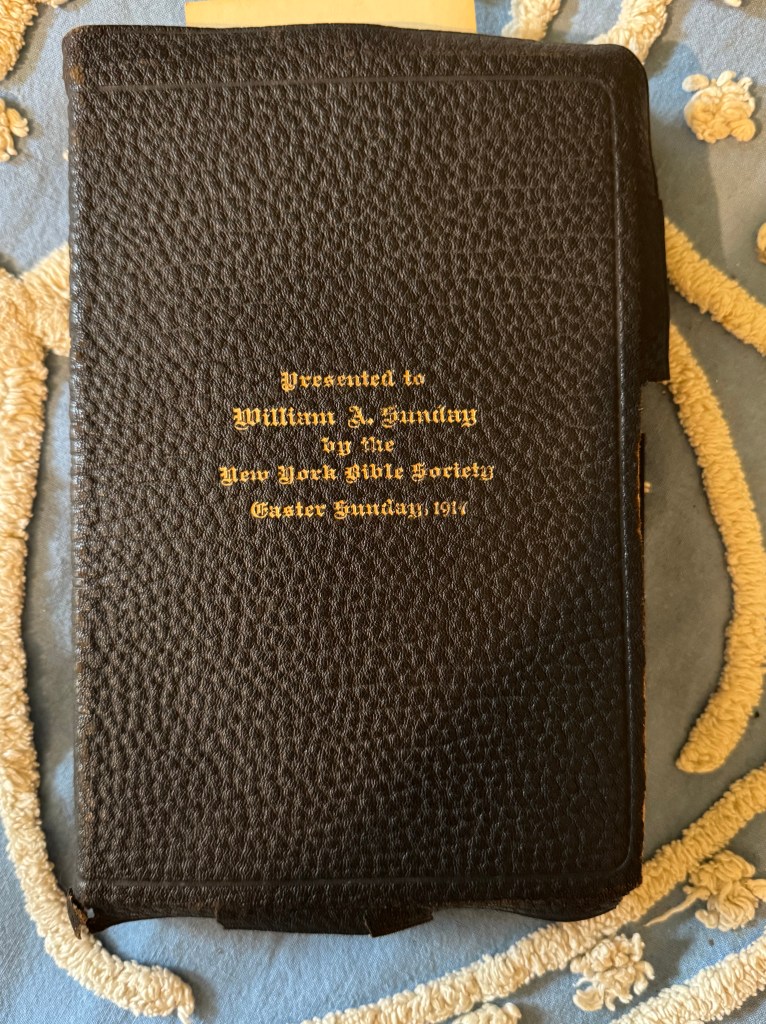
There is a KJV Scofield Bible, dated 1909, on the bed of Billy and Ma Sunday in their home in Winona Lake. This particular Bible was gifted to Billy in 1917 on Easter Sunday, in New York.
Permission granted by the Winona Lake History Center to photograph the Bible.
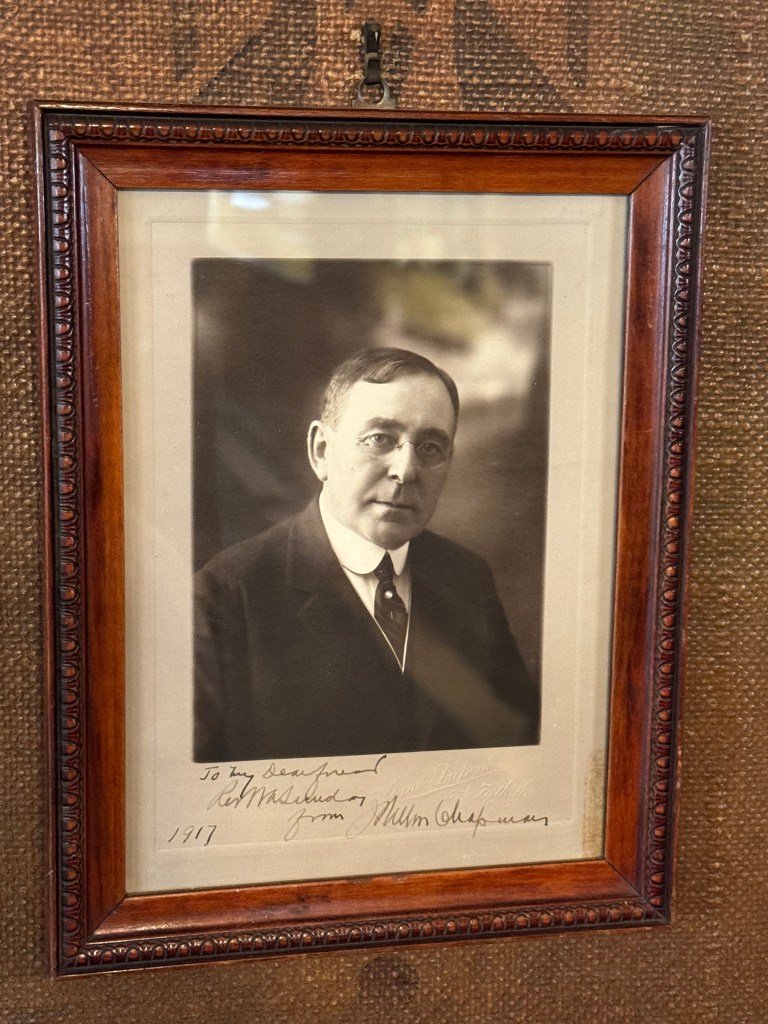
The following (1917) signed picture of J. Wilbur Chapman, in the Billy Sunday home in Winona Lake, attests to the massive influence Chapman had on Sunday.
When the Apprentice Met the Evangelist: How J. Wilbur Chapman Shaped Billy Sunday’s Early Ministry
Before the tabernacles were packed, before the crowds surged forward by the thousands, before the name “Billy Sunday” echoed across the country like a revivalist’s thunderclap—he was simply a former ballplayer, freshly converted, and hungry to make his life count for Christ.
That’s when J. Wilbur Chapman stepped into the picture.
It was 1893. Chapman, already an established evangelist with a Presbyterian pedigree and a knack for drawing the spiritually curious, needed an assistant—someone to handle logistics, rally local churches, and stir up enthusiasm before his campaigns. Billy Sunday had the energy and the zeal. Chapman had the method and the message.
For two critical years—1893 to 1895—Sunday shadowed Chapman like a student to his rabbi. He wasn’t yet preaching, but he was watching. Learning. Absorbing. Chapman’s campaigns weren’t just events—they were carefully orchestrated spiritual operations. Inquiry rooms. Personal follow-ups. Gospel invitations that were both clear and convicting. Sunday took it all in.
But it wasn’t just technique that Chapman passed on—it was a vision. A way of doing evangelism that held fast to the truth of Scripture while reaching real people in real places. Sunday saw in Chapman a man who carried both conviction and compassion. And though their styles couldn’t have been more different—Chapman, the dignified clergyman; Sunday, the kinetic whirlwind—it worked. Like iron sharpening iron.
In 1895, Chapman surprised many by stepping back from itinerant preaching to take a pastorate in New York. The pulpit reclaimed him. But for Billy Sunday, it was a release—a gentle push from the nest. With his mentor’s example still fresh, Sunday stepped onto his own stage. He started small—tiny Iowa towns, rough-hewn tabernacles, handfuls of seekers. But something was forming. Something bold.
It’s hard to overstate what those two years meant. Without Chapman, Sunday might’ve remained a sideshow curiosity—a saved athlete giving testimonies. But with Chapman’s imprint, he became an evangelist. A revivalist. A force.
And though their paths diverged, Sunday never forgot the man who shaped his earliest steps. He took Chapman’s gospel framework, set it ablaze with his own personality, and carried it farther than either man probably imagined.
Chapman taught him how to build the fire. Sunday learned how to preach like it mattered.



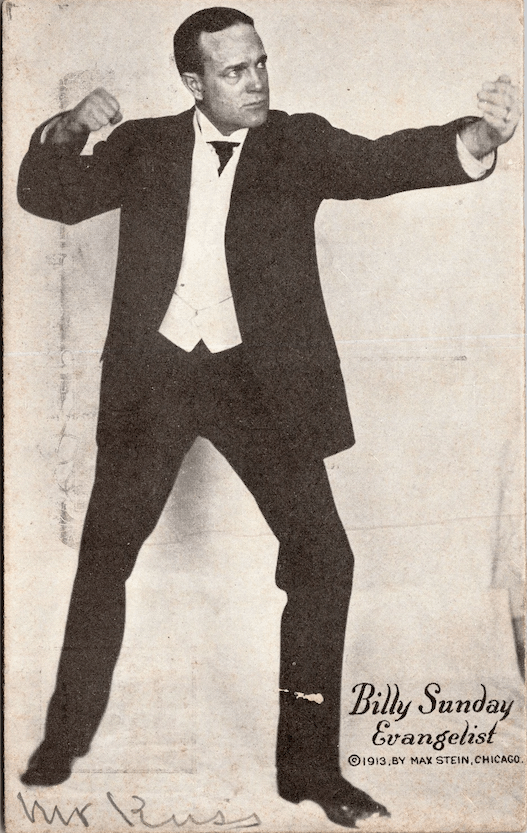
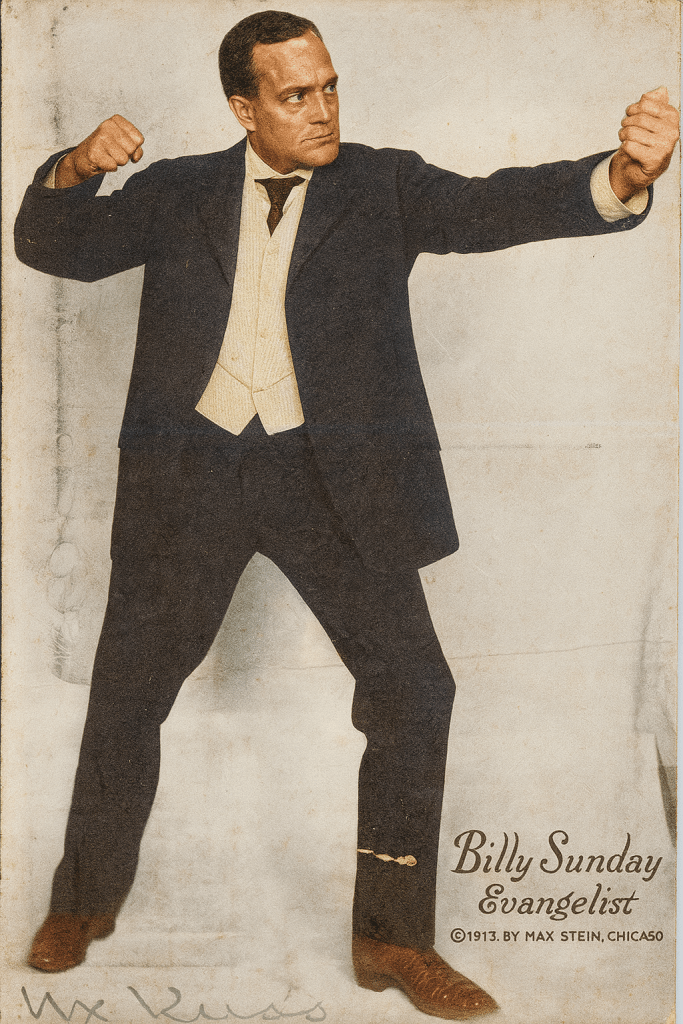
 Evangelist Billy Sunday (1862-1935)