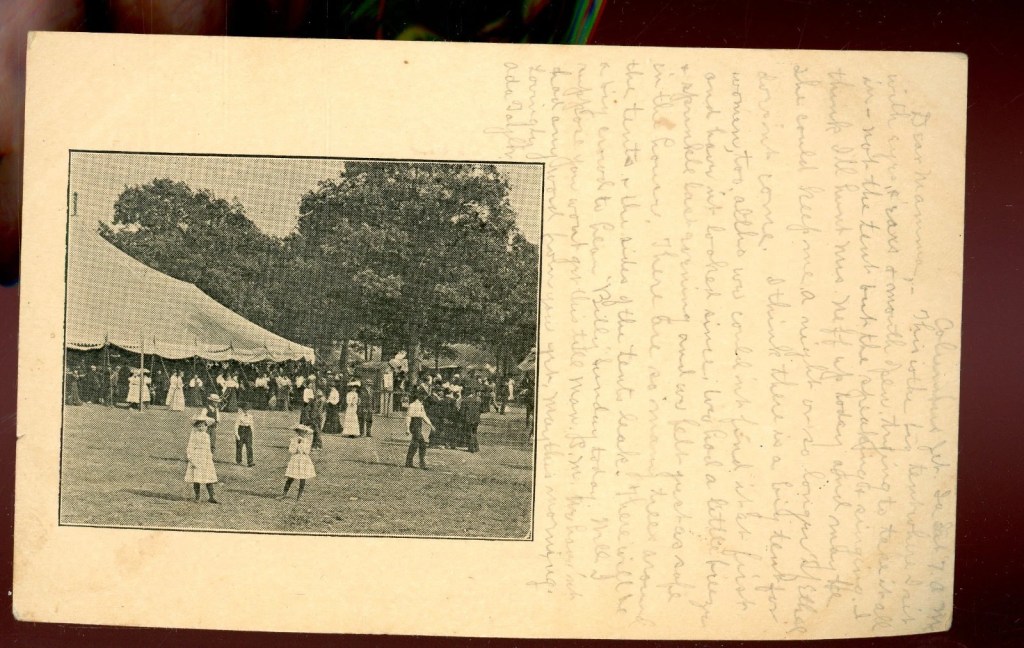
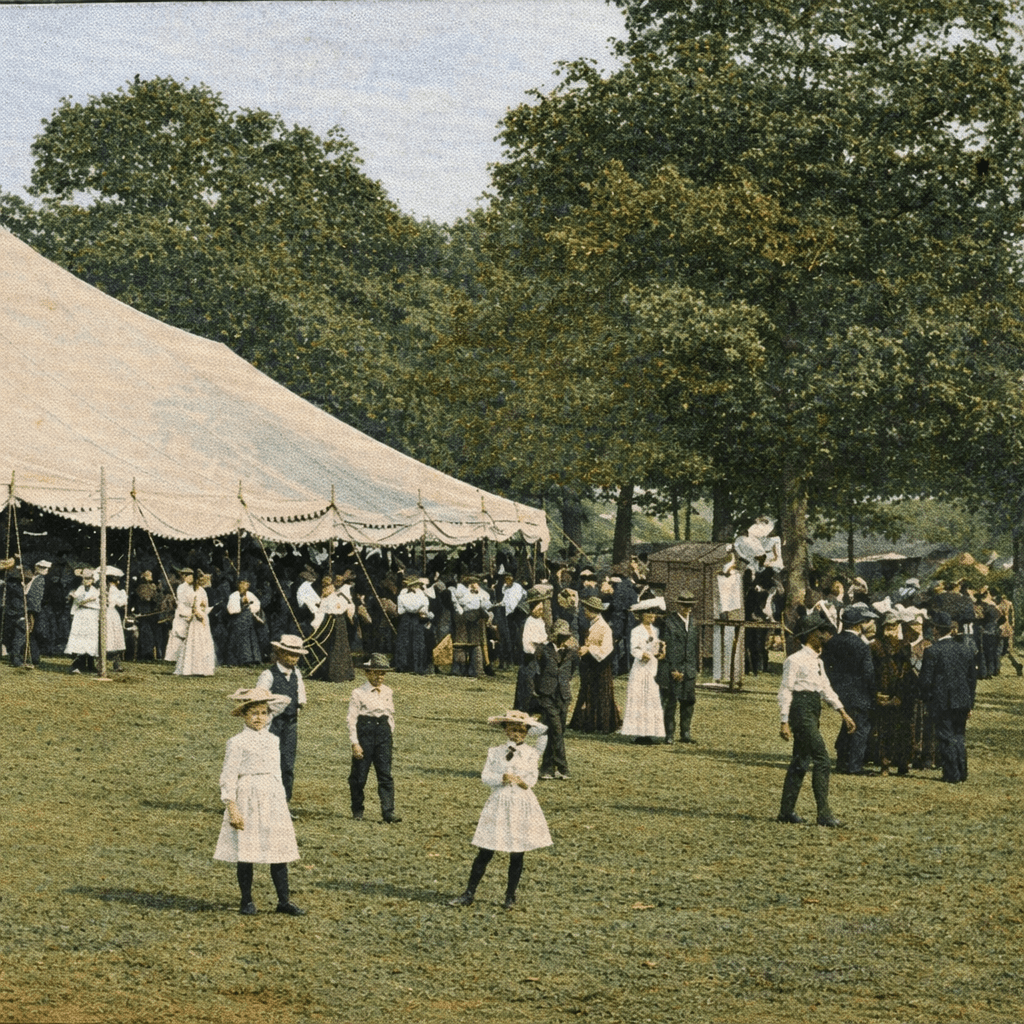
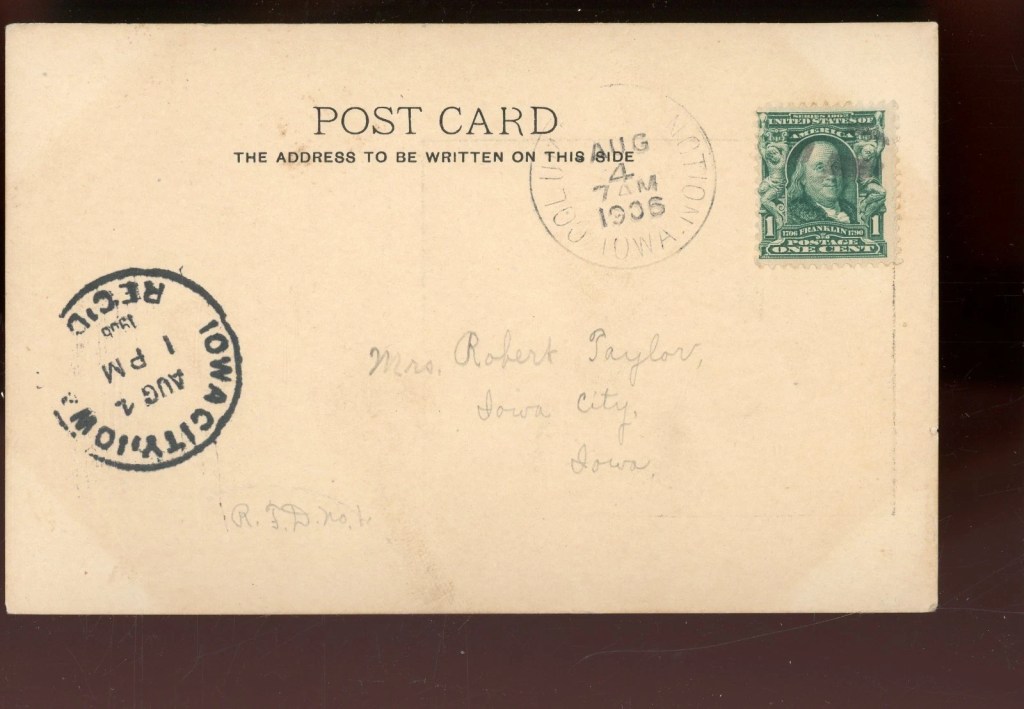
Postcard verifies Billy spoke “today” in Columbus Junction, Iowa (Chautauqua)
Former professional baseball player-turned urban evangelist. Follow this daily blog that chronicles the life and ministry of revivalist preacher William Ashley "Billy" Sunday (1862-1935)
Postcard verifies Billy spoke “today” in Columbus Junction, Iowa (Chautauqua)
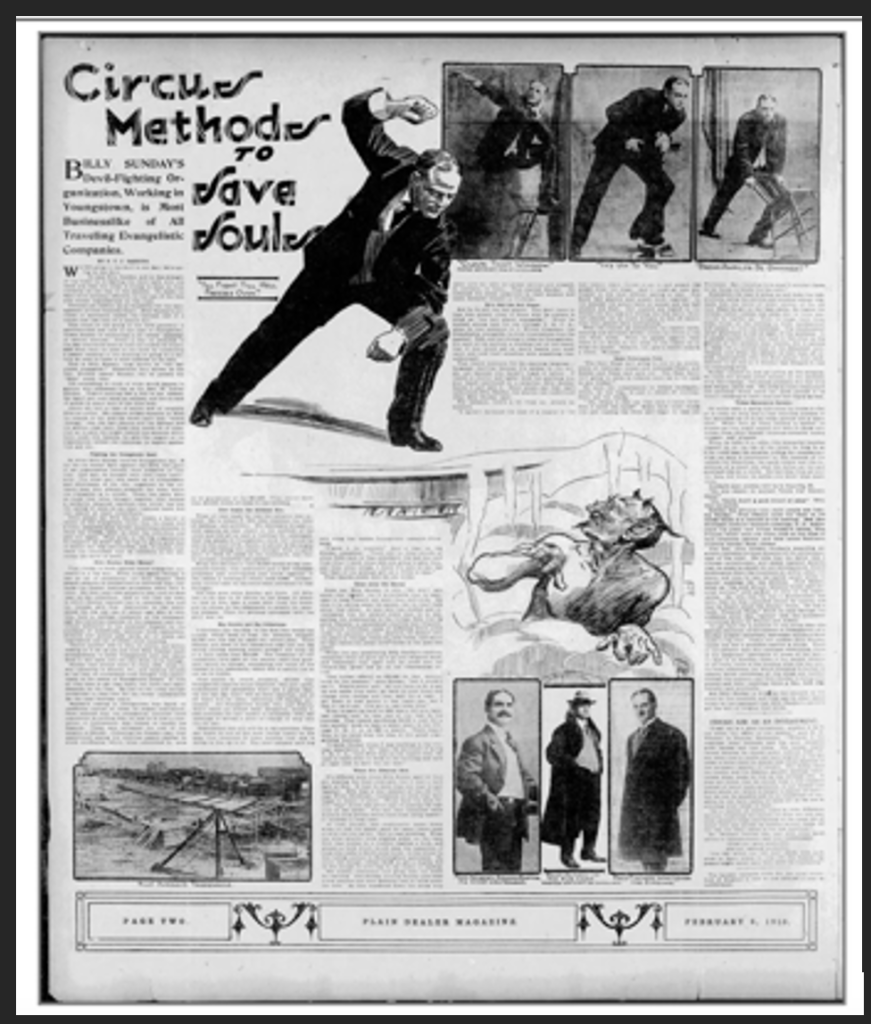
When Billy Sunday rolled into Youngstown, Ohio, in January 1910, he did not arrive quietly—and Youngstown did not receive him quietly either.
From the very first night, it was clear that this industrial city, filled with steel mills, rail yards, immigrants, laborers, and restless energy, was primed for revival. Sunday began his campaign on January 8, 1910, and within hours it was obvious that this would be no ordinary meeting.
On opening night, 5,000 people packed the tabernacle, according to the New Castle News (Jan. 10, 1910). The very next evening, crowds swelled to 7,000, as reported by The Pittsburgh Post (Jan. 10, 1910). The word had spread fast: Billy Sunday was in town, and Youngstown wanted in.
As the weeks unfolded, the numbers only grew more astonishing.
By February 4, the campaign had already recorded 2,221 conversions. That same night, 15,000 people attempted to crowd into a tabernacle that could seat only 7,000—a vivid picture of spiritual hunger and civic excitement. The Cleveland Press marveled at the scene, noting the crush of humanity trying simply to hear Sunday preach.
Youngstown had become a revival city.
The campaign reached its crescendo on February 20, 1910.
That final day, 10,000 people attended, while 6,000 more were turned away for lack of space. The Marion Daily Star reported that 5,900 total conversions had been recorded over the course of the meetings, including 970 decisions on the closing day alone.
It was a stunning finish—one of those great climactic Sundays that made Sunday’s name synonymous with American revivalism.
At the conclusion of the campaign, Sunday received his customary purse of 10,000 dollars, a significant sum in 1910 and a sign both of the city’s appreciation and of the scale of the event.
The Youngstown campaign illustrates several hallmarks of Billy Sunday’s ministry:
Most of all, Youngstown demonstrates why Sunday was “the man for the moment.” In an era of rapid industrial change, social tension, and moral anxiety, he spoke with clarity, fire, and confidence—and cities like Youngstown listened.
More than a century later, the Youngstown campaign stands as one of the great urban revivals of Sunday’s early career. The numbers are impressive, but the deeper story is about a city temporarily transformed—its people stirred, challenged, and moved to decision.
Writing just days after the Youngstown campaign ended, J. Wilbur Chapman offered this striking tribute to Sunday in The Dayton Herald (Feb. 23, 1910):
“Some of the sermons he preaches now are not mine. I love him. I know his sincerity and passion for Jesus. I thank God for his ministry. Most of us are too dignified. Let rules of grammar and conventionality be broken if souls can be saved. As soon as he begins to speak the doors will be closed so you can’t get out. You’ve got to take your dose for once. If ever a man was called to preach; if ever a man had the seal of God’s approval on his ministry, that man is Sunday. I take off my hat to any man that can turn men to Jesus Christ.”
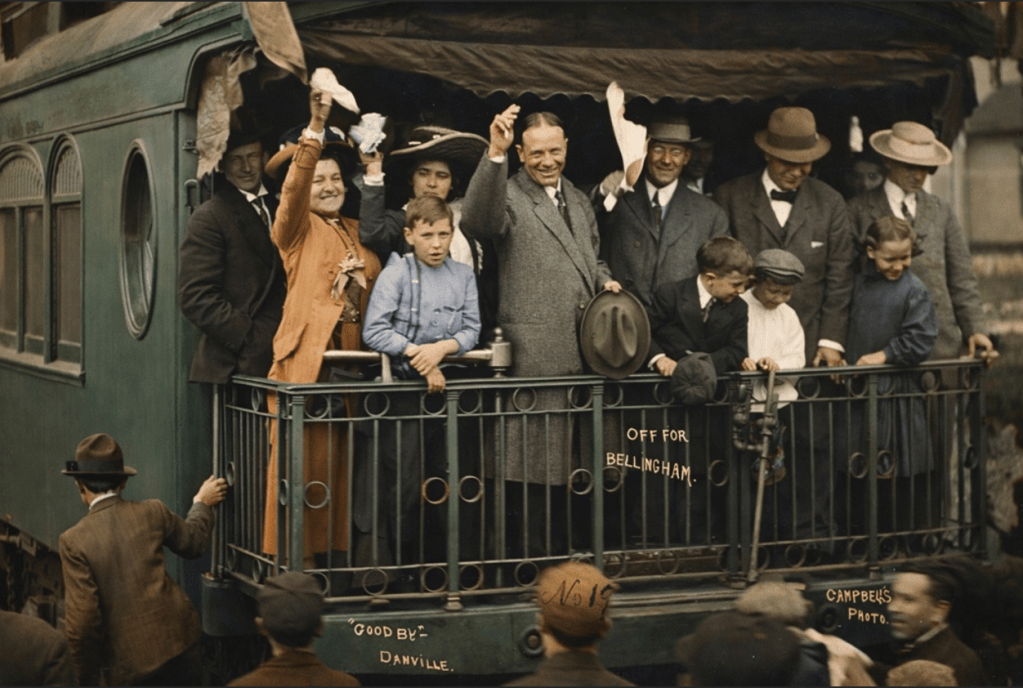
When Billy Sunday arrived in Bellingham, Washington, in the spring of 1910, the city knew something significant was about to happen.
His campaign formally began on April 17, 1910, and was scheduled to run for six weeks through May 29. Even before the opening service, anticipation was high. On April 16, The Bellingham Herald placed the coming revival on the front page, signaling that this was not just another religious meeting but a major civic event.
From the start, the campaign drew extensive attention. Local and regional newspapers covered Sunday’s meetings with unusual depth and frequency. By May 2, The Seattle Star was featuring the revival prominently on its own front page, evidence that Sunday’s influence extended far beyond Bellingham into the broader Pacific Northwest.
One of the most remarkable days came on Sunday, May 1. That evening, approximately 15,000 people crowded into the tabernacle and surrounding grounds to hear Sunday preach. The turnout was stunning for a city of Bellingham’s size at the time. Collections that day totaled $3,201.10, a substantial sum in 1910, reflecting both the generosity of the crowd and the financial scale of Sunday’s campaigns. That same service also recorded 140 conversions, showing that this was not merely spectacle but a movement that claimed measurable spiritual results.
Interest in Sunday’s work went beyond daily newspaper reports. On May 8, The Bellingham Herald devoted magazine-style coverage to the revival, suggesting that the meetings had become a defining moment in the city’s public life rather than a passing event.
Perhaps the most revealing glimpse into Sunday himself came from an interview published in The Daily Herald of Everett on May 18 under the title “Billy Sunday: His Methods, His Ideas and His Work.” In it, Sunday rejected the idea that his success came from showmanship or gimmicks. He explained his approach in characteristically plain terms:
“I haven’t any tricks. I’m just an old-fashioned preacher. I tell people in plain words the simple truth, that they are lost in sin and need salvation. I just preach the Bible – that’s all.”
That statement captures the heart of his appeal in Bellingham. He did not present himself as a social reformer, a political activist, or a religious entertainer. He came as a straightforward revival preacher who believed that the Bible, clearly proclaimed, could still change lives.
By the time the campaign concluded on May 29, Bellingham had experienced six weeks of intense preaching, packed crowds, and sustained public attention. For many residents, these meetings likely became a defining memory of the year 1910—a season when their city was temporarily at the center of a national religious movement.
The Bellingham campaign illustrates why Billy Sunday was such a powerful figure in early twentieth-century America. He could command enormous crowds, attract front-page coverage, inspire generous giving, and still insist that his effectiveness rested not on method but on message. In Bellingham, as in so many other cities, Sunday left behind not just statistics, but stories of a community stirred by revival.
When Billy Sunday came to New Castle, Pennsylvania, in the fall of 1910, the city quickly discovered that it was not ready for what was about to happen.
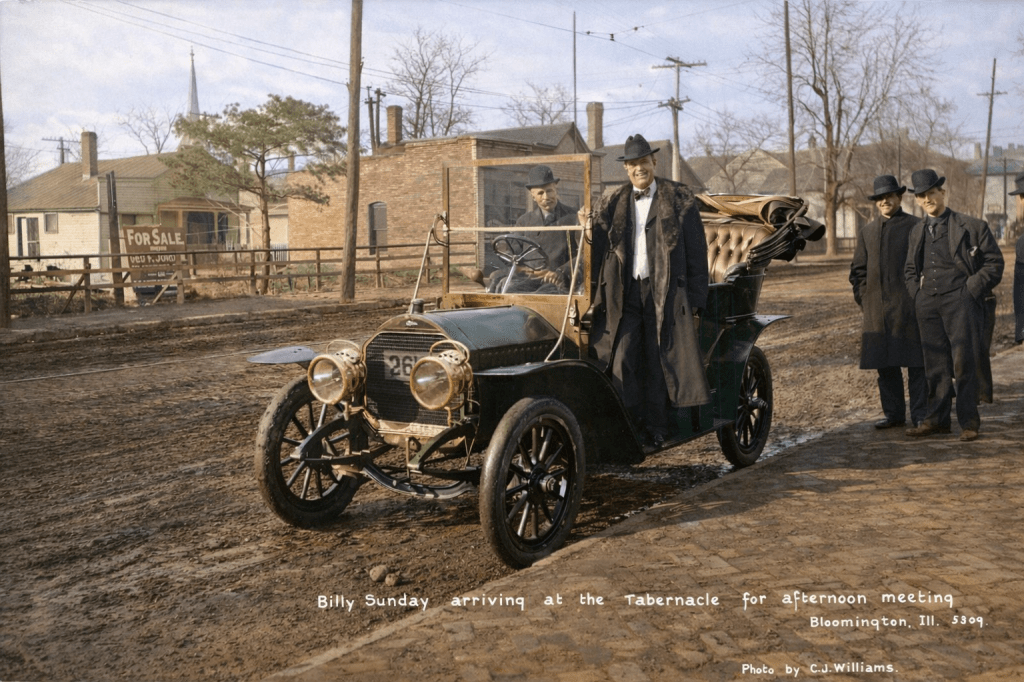
The campaign opened on September 18, 1910, and from the very first service it was clear that the tabernacle—built to hold 7,500 people—was not nearly large enough. According to the New Castle Herald (Sept. 19, 1910), crowds overflowed the structure on opening day, spilling into the streets and surrounding grounds. What had been intended as a major civic event immediately became something larger: a public phenomenon.
For six weeks, New Castle lived inside a revival. Night after night, thousands gathered to hear Sunday preach in his unmistakable style—direct, forceful, unsparing, and deeply earnest. Newspapers across western Pennsylvania followed the meetings closely, treating the campaign as front-page news rather than mere church business.
By the time the final service concluded on October 30, the numbers were staggering.
In total, $12,500 was collected during the campaign, as reported by the Warren Times Mirror on November 3, 1910. But far more striking were the spiritual results reported by local churches: 6,383 recorded conversions, including 1,050 decisions on the final evening alone.
The New Castle Herald captured the meaning of those numbers in a powerful editorial reflection on October 31:
“Just think of 6,383 souls being added to the churches of this city and county. This means one out of every six persons residing in this city. It means a very much larger proportion in reality, for these 6,383 are all of age to think and to accept for themselves the doctrines of Christianity. In the light of this, the money given yesterday to the evangelist seems a trivial sum, when compared with the good he has done.”
That statement goes to the heart of why New Castle mattered in Sunday’s career. This was not simply a revival that filled a building or generated headlines. It reshaped congregations across an entire region. Local churches suddenly found themselves filled with new members, new energy, and new responsibility for discipleship.
The New Castle campaign also illustrates why Billy Sunday became such a defining figure in early twentieth-century America. In an era before radio, television, or social media, he could command massive crowds purely through reputation, word of mouth, and the sheer force of his preaching. Cities did not merely host Sunday; they were changed by him.
More than a century later, the New Castle revival stands as one of Sunday’s most dramatic successes. For six weeks in 1910, a steel-town community experienced a spiritual earthquake—one that newspapers, pastors, and ordinary citizens remembered long after the tabernacle was torn down.
For historians of revival, New Castle offers a vivid case study in how Sunday’s campaigns worked: huge crowds, intense emotion, measurable results, and lasting impact on local churches.
For the people of New Castle, it was simply the season when their city met Billy Sunday—and was never quite the same again.
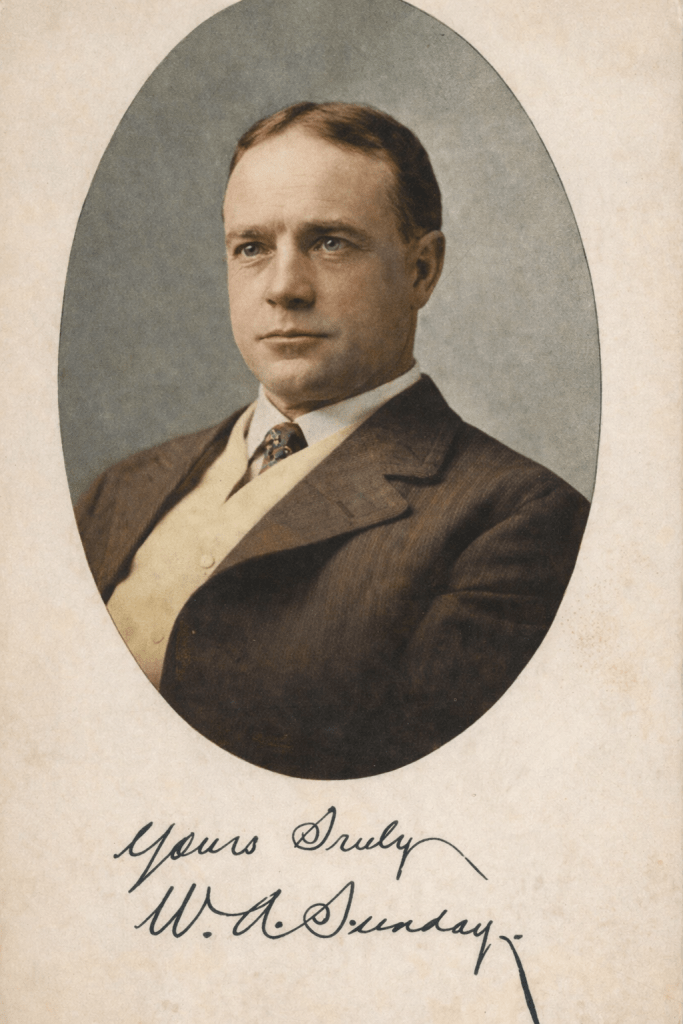
Postcard colorized by author
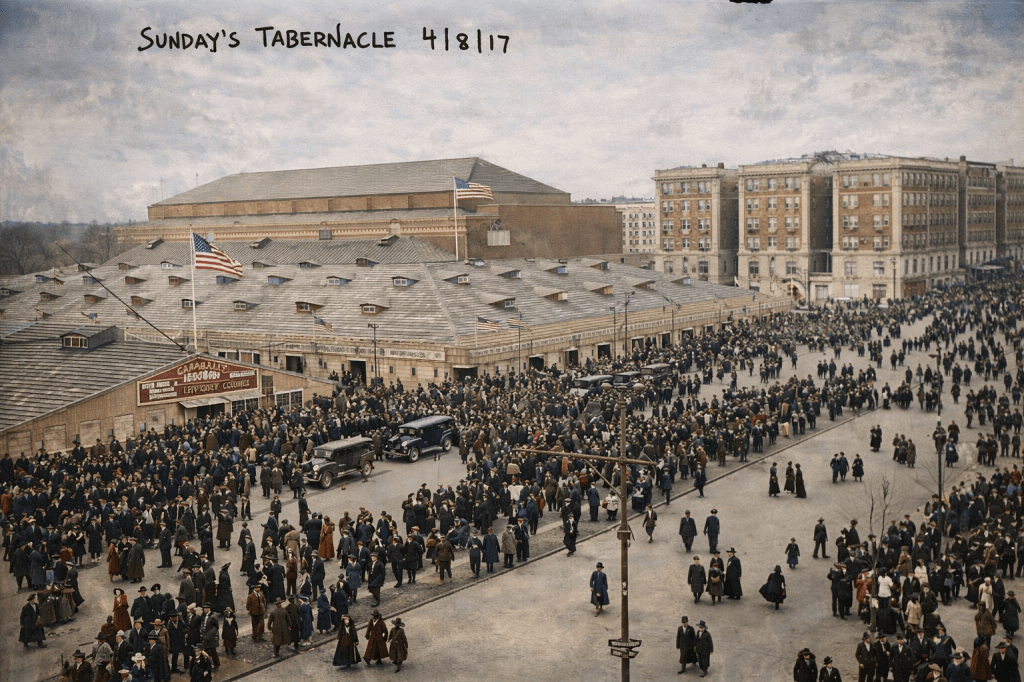
“New York City gave me $120,485, Mr. Sunday said, and I turned over every cent for the work that I had said I would. I went to Chicago, and the city gave me $65,000 and I gave the sum to the Pacific Garden mission. I give away a tenth of my income. And that is all right. I do not advertise all the things I do with my money. I do not tell all the world the things that I pay off. You follow me around, some of you, and I will make you dizzy with the money I give away. But I don’t have to tell anyone. It is written down above so that is all that matters.”
As reported by The Richmond Item. Fri, May 26, 1922 ·
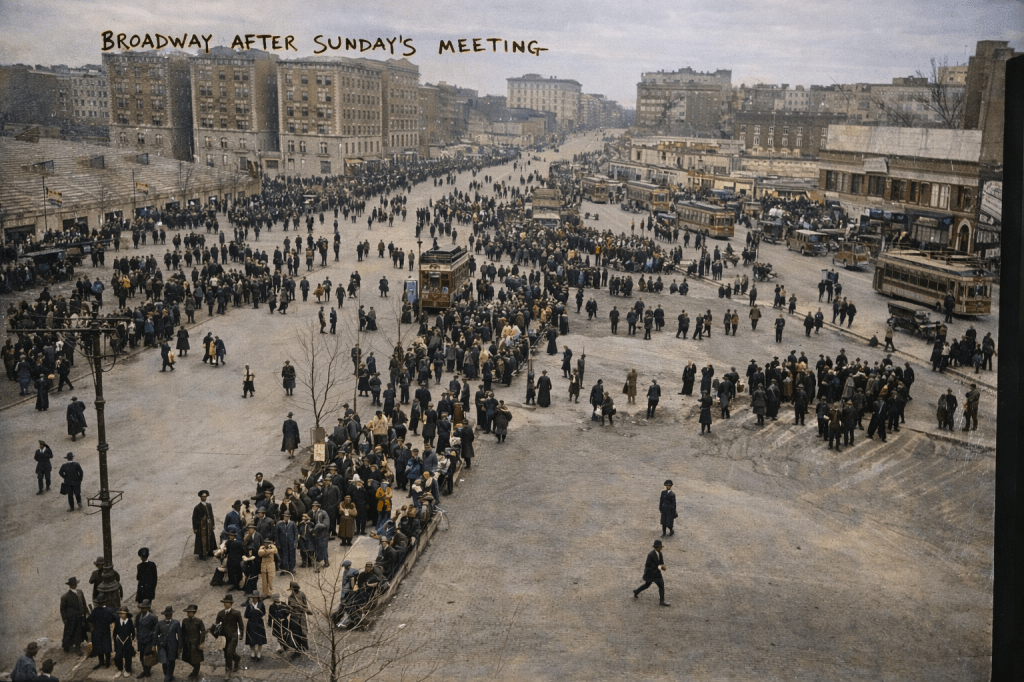
Billy’s New York Tribune editorial
The letter was typed on the back of Richmond January 1919 letterhead
New York Tribune
New York City N.Y.
For ten weeks in New York, I went the limit of my strength preaching Christ and Him crucified, explaining as plainly as I could the plan of Salvation as revealed in the Bible. Hundreds of thousands flocked to the old Tabernacle at One Hundred and sixty-eighth street and Broadway (the dearest spot in little old New York to me) and tens of thousands publicly expressed their faith in His atoning blood, proving beyond question of a doubt that people are willing and eager to go hear the Bible explained but will not go to hear it explained away.
There is no Christianity without the deity of Christ, there is no Salvation without faith in the atonement of Christ on Calvary. The doctrine that God is the father of us all and that “self-sacrifice is the key to Heaven” is religious bunk. The fountain head of this horrible war that has drenched the world with blood you will find was in that infamous hellish theology made in Germany. It is now showing its fangs in Russia.
The future existence of our government and its institutions depend in a large measure upon the class of people who will soon be called upon to assist in solving the grave problems that lie just ahead of us. It has been well said that this is a government of the people, by the people and for the people. Therefore, it can rise no higher than the plane of its citizenship. Christianity is the only weapon with which we may successfully contend against extreme Socialism, Bolshevism, I.W. Wism and Anarchy.
When I pronounced the benediction the last night in New York my responsibility for the work there ended. I’ve never yet been satisfied with the results of any campaign I have ever conducted. No business house does as much business as it would like to do. No newspaper ever has as large a circulation as the owner would like to have. No doctor saves as many lives as he would like to save. I have never seen as many people accept Christ as I would like to see but I do my utmost in every campaign.
In a city where I held a campaign there was a church four squares from the Tabernacle. The pastor did not openly oppose the meeting, but he did not encourage his people to help. He had no ushers from his church in the aisles, no singers in the choir, no personal workers in the building, nobody on the committees. Neither he nor his church made any special investment of time energy or money. A few weeks after the meeting closed, he published a statement that though his church was scarcely more than a stone’s throw from the Tabernacle there were no results, and the campaign was a failure.
In the same city another pastor, whose church was seven miles away, entered actively into the campaign. His men were ushers, his singers were in the choir, his workers zealous and untiring in their efforts to win others. He and his people invested largely in time, strength and money and within two weeks after the campaign closed nearly one hundred persons united with his church on profession of faith. And this pastor published a statement that the campaign was a great success. To the one object failure – to the other, a triumphant success. One used a hammer, the other a saw, draw your own conclusions.
As long as God gives me strength I will keep pounding away at the fortifications of sin and pointing men to Jesus Christ as the only way of Salvation, no matter who knocks.
Don’t worry about old John Barleycorn. He has been tried, convicted, sentenced by forty states and today he sits strapped in the chair waiting for the executioner to pull the lever. His time is about up. I’ve given him a few uppercuts myself during the past twenty-five years and you can write it down in your blue book that I’m getting ready to preach his funeral sermon and close with the doxology.
W.A. Sunday
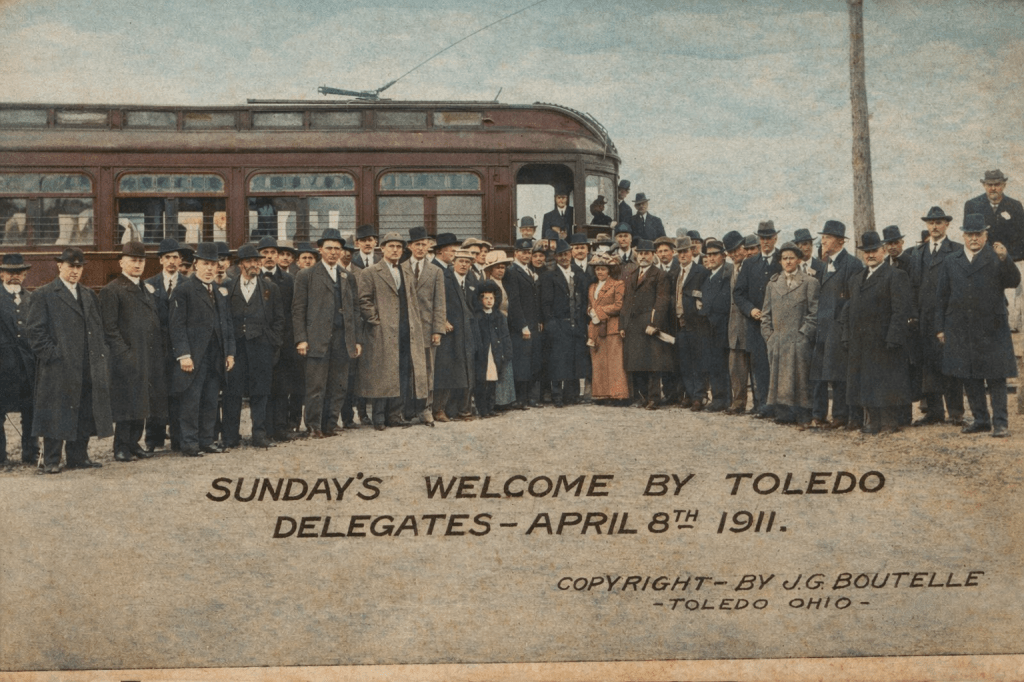
Billy Sunday’s Toledo Campaign (April 9 – May 21, 1911)
Billy Sunday’s 1911 revival in Toledo, Ohio, was one of the most anticipated evangelistic events the city had ever seen. Running for six intense weeks—from April 9 to May 21—the campaign opened with extraordinary momentum. On opening Sunday alone, more than 30,000 people attended three services, immediately signaling the citywide interest and spiritual hunger surrounding Sunday’s arrival.
The revival was held in a massive temporary tabernacle measuring 160 by 220 feet, with seating for 7,000 people, plus an additional 1,000 seats in the choir loft. Night after night, the structure filled with working men and women, families, and curious onlookers drawn by Sunday’s reputation for plainspoken preaching, moral urgency, and energetic delivery.
Organizers initially hoped for 20,000 conversions, a figure reflecting Toledo’s size and the scale of the meetings. While that expectation proved optimistic, the final results were still remarkable: 7,323 people publicly professed conversion, surpassing Sunday’s previous record at New Castle. The response confirmed Toledo as one of the strongest campaigns of his early national prominence.
Financial support from the city was equally notable. Total offerings reached $14,423.58, breaking Sunday’s earlier giving record of $10,000 at New Castle. Newspapers emphasized that these contributions came largely from people of ordinary means, underscoring the grassroots character of Sunday’s appeal and the broad civic buy-in to the revival.
By the time the campaign concluded in late May, Toledo had experienced weeks of sustained attention on spiritual renewal, personal reform, and public morality. Though it fell short of early conversion projections, the Toledo campaign stood as a record-setting and influential moment in Billy Sunday’s rise as America’s most prominent evangelist of the Progressive Era.
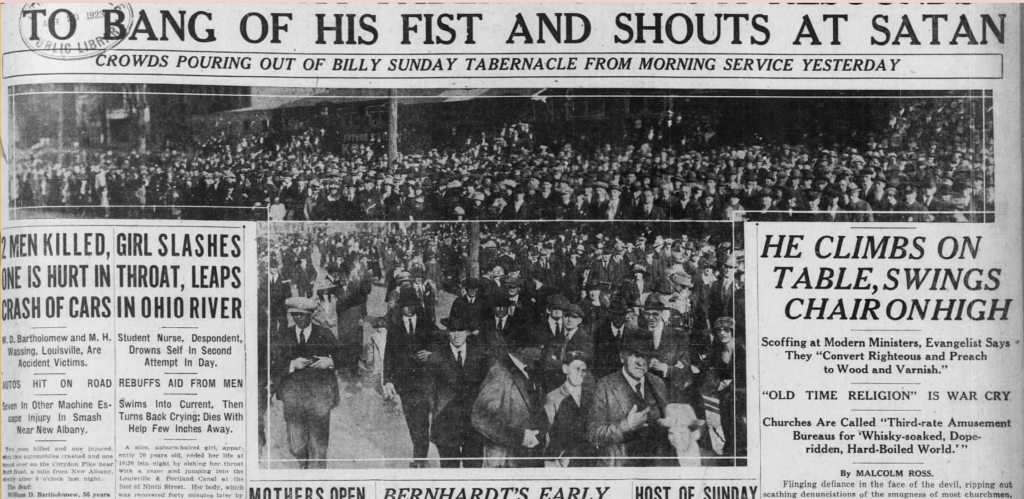
Billy used the newly constructed Kosair Auditorium for his Louisville revival meetings (April 22 – June 2).
” . . . during the six weeks of the revival to be held at the Kosair Auditorium, on Broadway between Floyd and Brook streets.” Source – newspaper

Now location of the 1922-23 Kosair Auditorium, adjacent to the Kosair Temple (now the Norton Research Institute).
The current Norton Research Institute was the original Kosair Temple, NOT the Auditorium. 224 E. Broadway (between Brook and Jackson Streets)

The Auditorium (Broadway between Floyd and Brook) pre-dated the Temple and likely served as a temporary venue while the Shrine built its new home a few blocks east (between Brook and Jackson).
These items were posted on eBay in the past few months. I did not buy them.

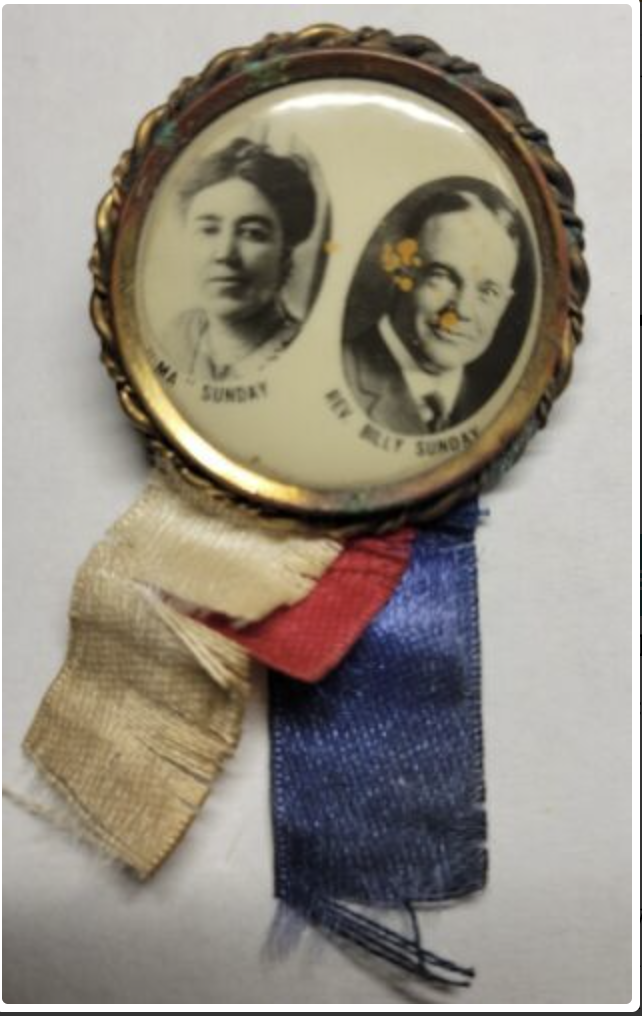
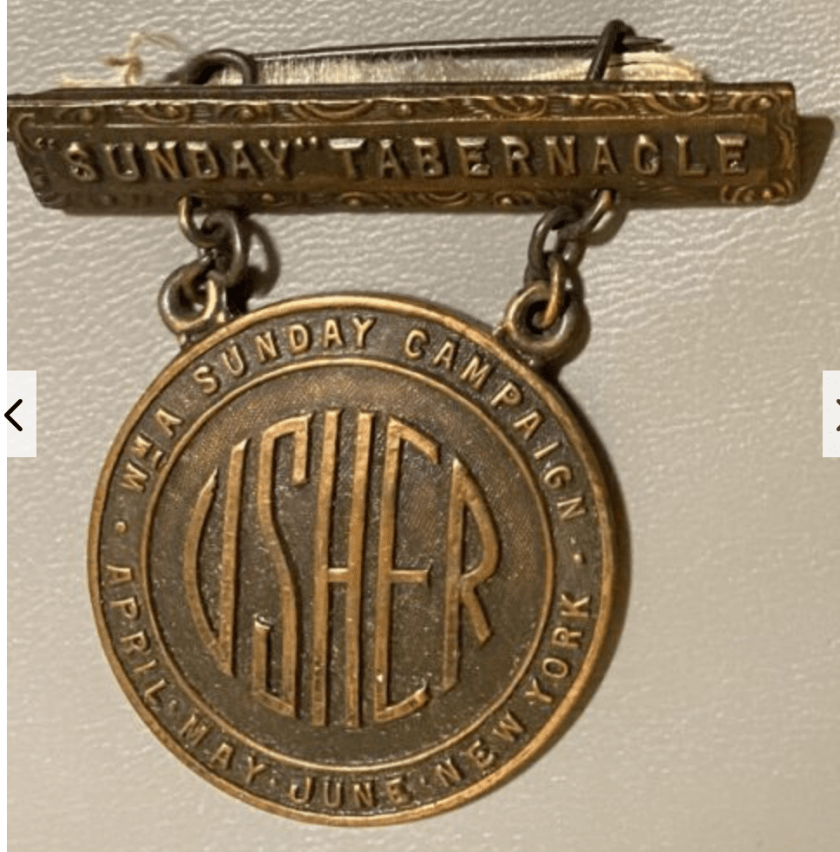
I was living in Winona Lake in 1992 – attending Grace Theological Seminary – when the Billy Sunday Tabernacle was demolished. Knowing this was the last time anyone would see the sole remaining Sunday tabernacle in America, I took these pictures.
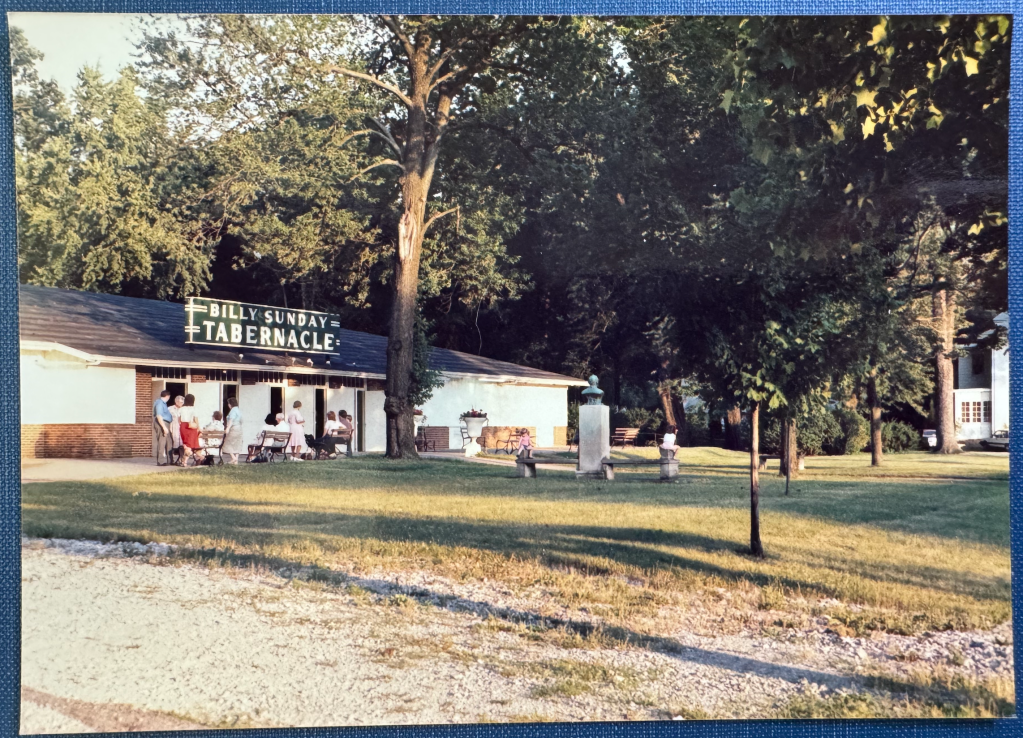
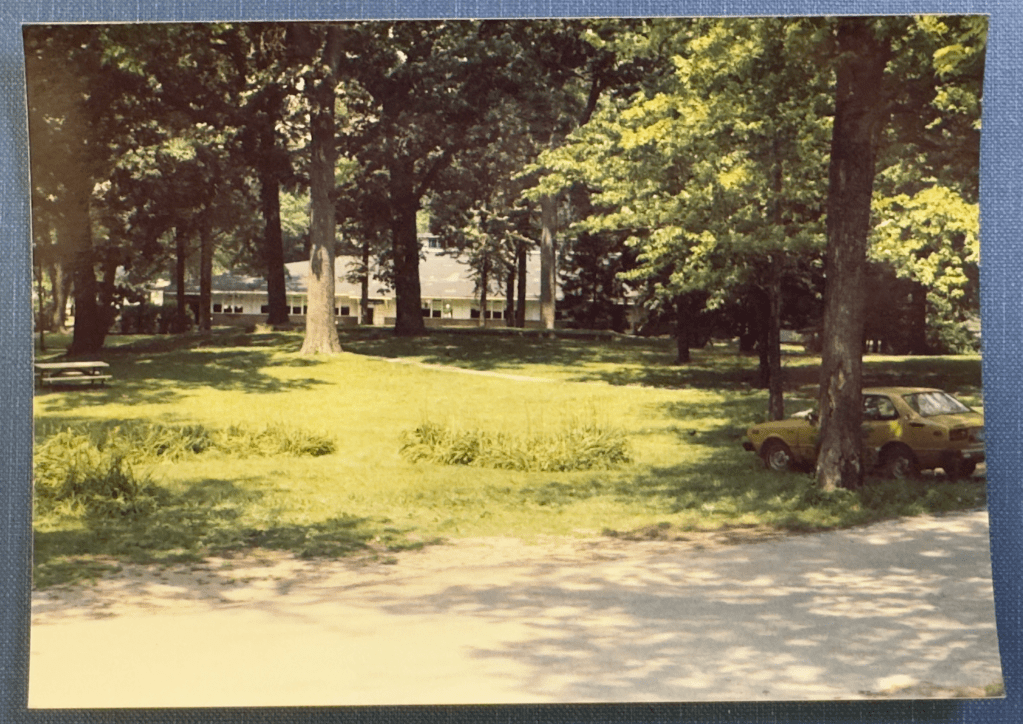
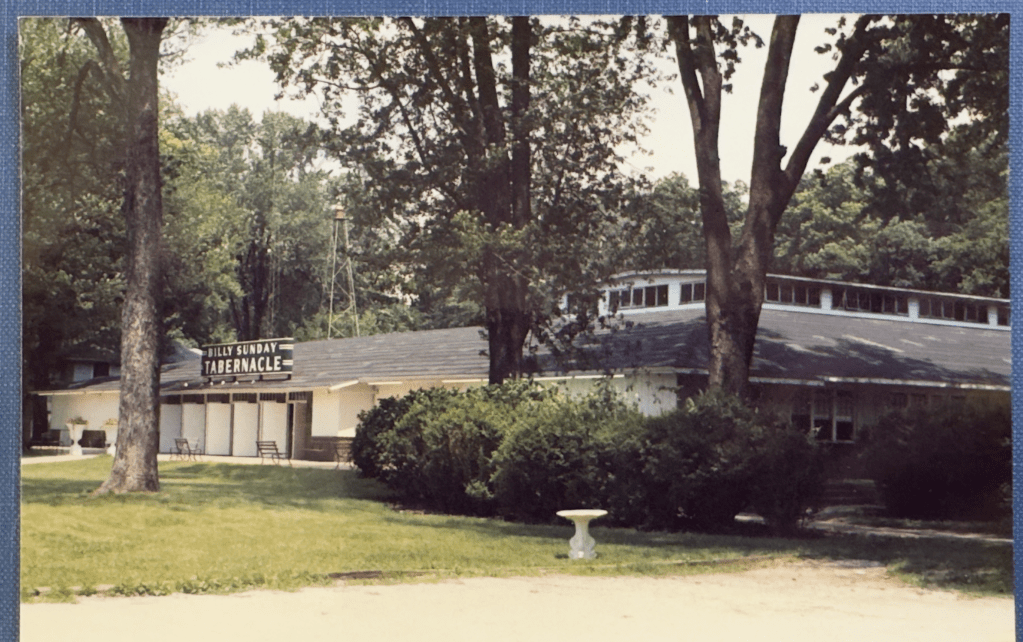
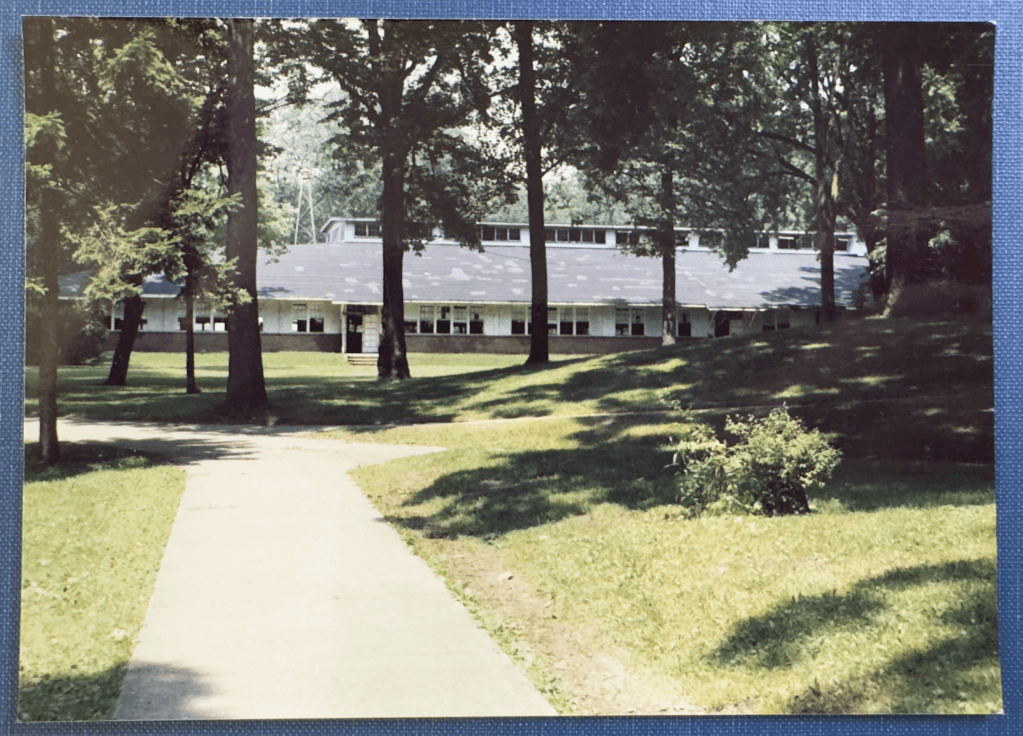

Coverage: The Indianapolis Star. Sun, May 17, 1992.
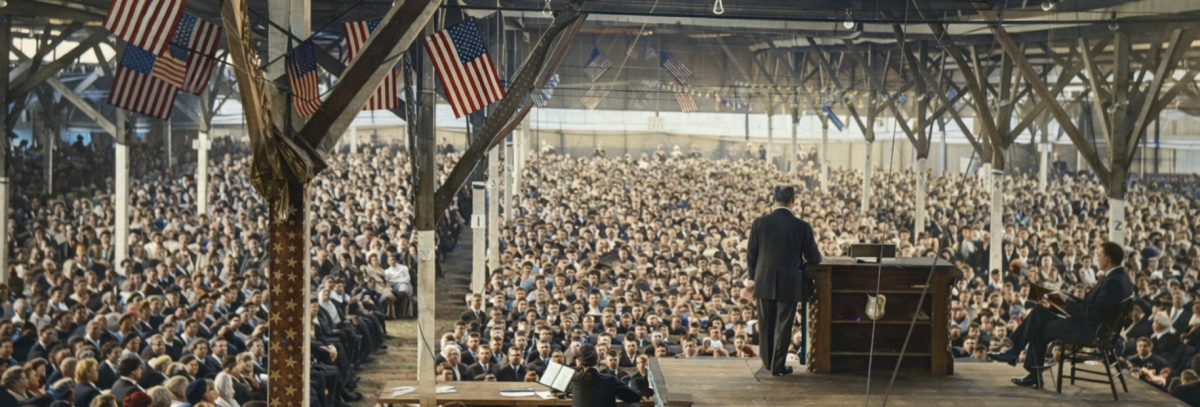
 Evangelist Billy Sunday (1862-1935)