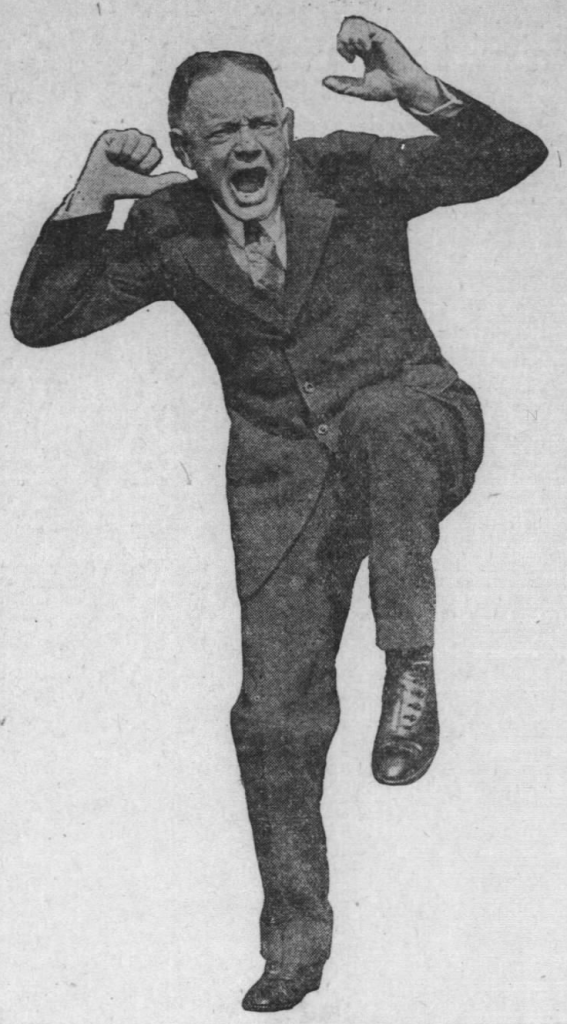
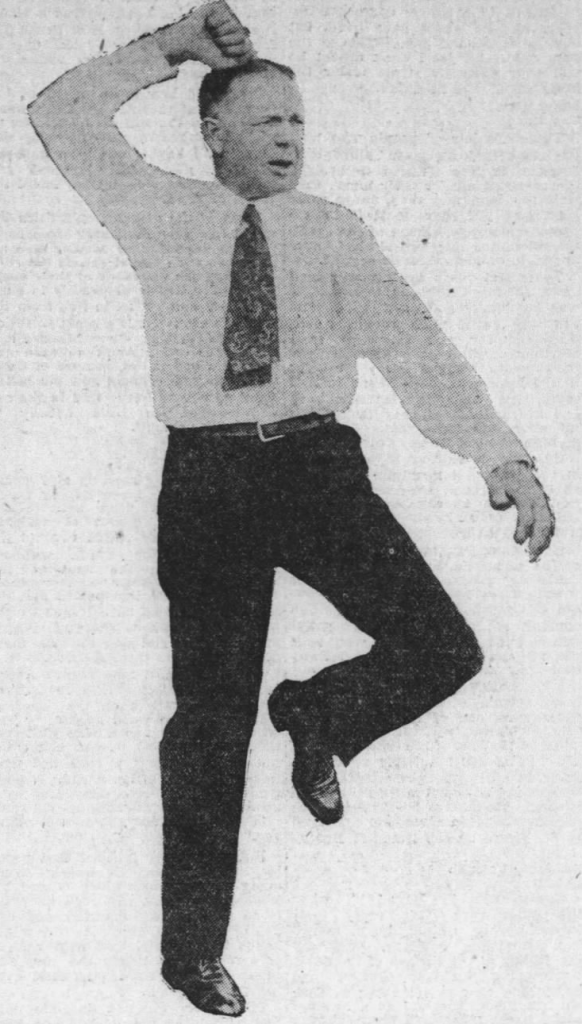
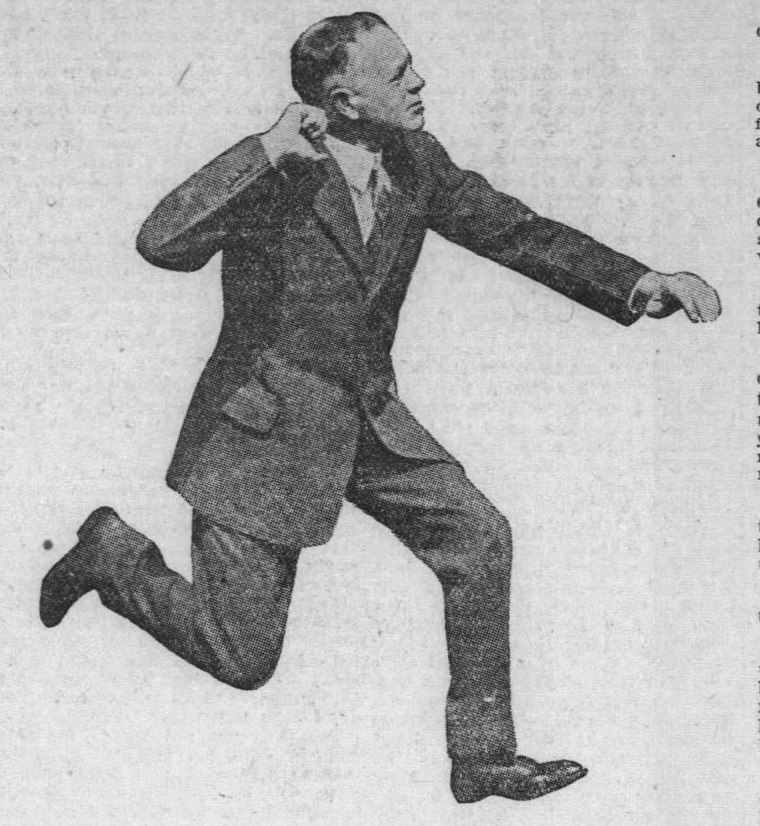
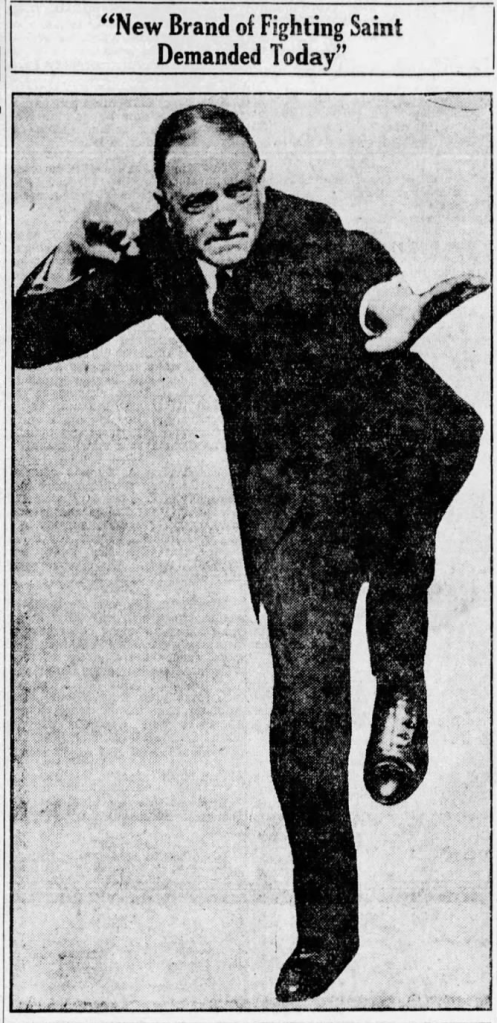
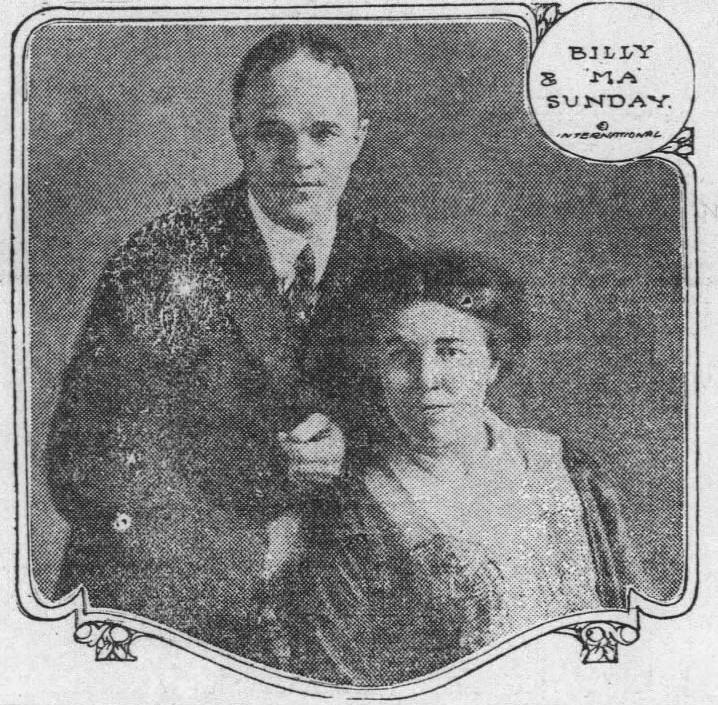
Billy Sunday was sued in 1918 about his book “Great Love Stories of the Bible.”

The Echo, Buffalo, New York

Thu, May 02, 1918 ·Page 1

ANOTHER SUIT AGAINST THE “REV.” BILLY SUNDAY

Man Who Wrote Book for Him Sues for $100,000 for Breach of Contract.

The Rev. William A. Sunday, the evangelist, was sued in the New York City Supreme Court last Wednesday by Hugh C. Weir of New Rochelle to recover $100,000 for breach of a contract, under which Weir alleges he wrote the series of “Great Love Stories of the Bible,” which appeared with Billy Sunday’s name as the author. Weir also alleges that under the agreement with Sunday he was to write “Billy Sunday’s Own Story,” and another series based on the Bible.

Weir says that he was to get 50 per cent. of the royalties on all the books except “Great Love Stories of the Bible,” for which Sunday got 60 per cent., out of which he was to pay 10 per cent. to a Bible historical authority for proofreading. Sunday was to advance $5,000 to Weir and collect out of the latter’s share of the royalties. The plaintiff also alleges that Sunday agreed to arrange for the sale of the books at all his meetings.

The complaint alleges that although a contract has been made with a reputable house for the publication of the books the evangelist has repudiated his agreement in all respects.

Mr. Sunday has served his answer in the suit, in which he admits that Weir collaborated with him in writing “Great Love Stories of the Bible,” but denies that he has broken any agreement made with Weir

Billy Sunday’s Theology (c 1918)

The Duluth News Tribune. Thu, May 02, 1918 ·Page 8

Billy Sunday’s Theology

WE ARE for Billy Sunday.

There are a lot of people sincerely worried because his specially built tabernacle is to cost $25,000 when money is needed for the war. There are others who worry because holes have been dug in the courthouse lawn.

Others fear that, aroused by the impassionate William, a good many people on that last day of his visit may add to his wealth. A still larger number do not like his brand of theology and rebel at his salvation processes.

But it is a fact that most folks, if they did not worry about one thing would worry about some others. The building salvage will be considerable for the tabernacle; the grass will grow again, and no one who does not wish to do so need give a cent to Billy or even go to hear him. It is all free will, not foreordination.

Moreover, there is a psychology in giving. The money he gets from his hearers would not go to any other cause; no one else could get it, and he does not destroy it. As a matter of fact, war work will get more through his coming. He himself gives liberally to every war cause and then buys Liberty bonds. But besides this, he finds the combination to purses that no one else can open. He creates and strengthens the spirit of giving.

The more any community gives, the easier it is for it to give, and this goes on increasingly. Billie knows this and for himself only asks the last day’s collection. He takes his chance, and if he gets more or less, he earns it. He works six weeks for the result, and leaves behind this greater willingness to give.

Billy Sunday certainly has one brand of theology we like. He has a religion to which we respond. He has a gospel which needs to be preached here, as everywhere. This is the theology, the religion, the gospel of Americanism.

He preaches it with unequalled force and vigor. He drives it home with a club. He has no more doubts as to it, as great a faith in it as in his old-fashioned brand of Christianity. He does not quibble, nor apologize, nor temporize, nor emasculate as to either.

Tens of thousands will go to hear him. He will have many thousands no one else can reach or attract. They will all hear this gospel of Americanism, not just preached, but driven home and spiked down. He has exactly the methods needed to accomplish the result.

Thousands who hear him may be no better Christians afterwards, or may backslide in the niceties of Christian conduct, but what is much the same thing today as is the unwavering, unquestioning Christianity he preaches, they will all be better Americans and that will stick. He takes doubt as to this war, as to its righteousness and our common duty in supporting it, and scalps it, leaving not a hair of its camouflaged head to comfort or conceal an ingrowing brain and conscience.

If for no other reason than this, we are for Billy. We do not it would be money well spent to arouse the people of all this section to their obligations just as citizens. He is the best recruiting agent, the best antidote for the slacker, the best seller of Liberty bonds, the best promoter of war giving and the most inspiring sledgehammer of unadulterated Americanism this country has produced. If for no other reason, we are for Billie Sunday. We do not care what his other theology is, his American theology is right and it is needed. We will all be better citizens, more loyal, more un- selfishly patriotic, more willing to give what is dearer than our own lives, for his coming.

What kind of prep-work went into hosting a campaign for Billy Sunday (c 1918, Duluth, Minnesota)?

The Duluth News Tribune. Mon, Apr 08, 1918 ·Page 3

ADVANCE MAN IS HERE TO PAVE WAY FOR BILLY SUNDAY

Looks to Building of Tabernacle at Courthouse Square—Construction Starts Next Week.

Actual work in preparation for Billy Sunday’s campaign in Duluth will begin early next week when workmen will commence construction of the huge tabernacle in which the meetings will be held.

This was the announcement made yesterday by James E. Walker, advance representative for the evangelist. Mr. Walker reached Duluth Saturday and immediately plunged into the work of preparation for Sunday’s appearance in Duluth. He met representatives from Duluth, Superior and range churches at the First Presbyterian church at 3 o’clock yesterday afternoon.

Richard Close and W. L. Smithies, of the men’s interchurch council addressed the meeting. Both gave their impressions of the Sunday campaign in Chicago. Mr. Smithies was in Chicago Saturday and witnessed the mammoth parade, held at noon, which preceded the largest meeting that has yet been held at the Chicago tabernacle.

Sunday’s Methods Outlined.

Walker’s talk outlined, for the local workers, the Sunday method of conduction a campaign. His classification divides the work into three parts. The preparatory work, he says, usually covers a period of eight weeks preceding the campaigns. The latter constitutes the second division and the third division in, in Walker’s words, “the follow-up campaign or work of conservation.” The first part is now well under way in Duluth.

The Sunday campaigns are usually conducted by 15 committees. Fourteen of these will be in operation in Duluth within a short time. The fifteenth, constituting a restaurant committee, often necessary through the comparative inaccessibility of the tabernacles, will not be needed in Duluth owing to the central location of the tabernacle.

Two Thousand Ushers.

The other committees, some of which are already being formed, together with Walker’s estimate of the number required for each, follow: Music committee, including the personnel of three choruses, 2,500; Neighborhood prayer meeting committee, 2,000; ushers and doorkeepers, who will work in relays, 700; personal workers, 500; secretaries, who will take the names of “trail-hitters” at the meetings, 300; men’s Bible class organizers and workers, 500; finance, automobile, hospital and students committees, 500. This, in the round figures of Walker’s estimate, will total a working staff of 7,000. “And every one of them,” said Walker last night, “will have something to do.”

“The most important part of the work,” said Walker, “is the neighborhood prayer meetings, previous to and during the campaign. If Sunday’s coming did nothing else than serve as an incentive for the organization of these meetings, he would have done enough. It is his wish that a great deal of time and care be spent in the perfecting of the committee which will be in charge of these meetings.

Territory Divided.

“The territory surrounding Duluth and the city itself will be divided into districts, these districts subdivided into sections and these sections again divided into communities or, as we call them, neighborhoods. It is our plan to have prayer meetings for two nights each week for three weeks previous to Sunday’s appearance. These meetings will not be held in the churches of the communities but in the private homes. There were 99 conversions reported at similar meetings which preceded the Los Angeles campaign.

“Billy Sunday’s request is that, at these meetings, those who attend pray for the success of the campaign. The attendance at the Los Angeles prayer meetings was recorded at 73,938. There were 7,556 homes open for meetings.

Tabernacle 8,000 Capacity.

The Duluth tabernacle, according to the present estimate, will accommodate 8,000. It will include, besides the main auditorium, the usual rooms that are built in all Sunday tabernacles. The Duluth structure will be of the turtle-back type that is used in a majority of the cities. Its dimensions will be approximately 176 by 224 feet. It will be built on the courthouse grounds at Fourth avenue West from First to Second streets. Sunday will conclude his Chicago campaign on May 19. He will come to Duluth during the following week and will open here May 26. Walker has established his offices on the second floor of the Y. M. C. A. in the offices of Mr. Smithies. He will direct the preparatory campaign from there and will remain here until after the opening of the campaign proper.

From the Duluth Herald May 2, 1918

How did the 1918 Billy Sunday Chicago campaign do by the numbers?

Chicago Tribune. Mon, May 20, 1918 ·Page 1

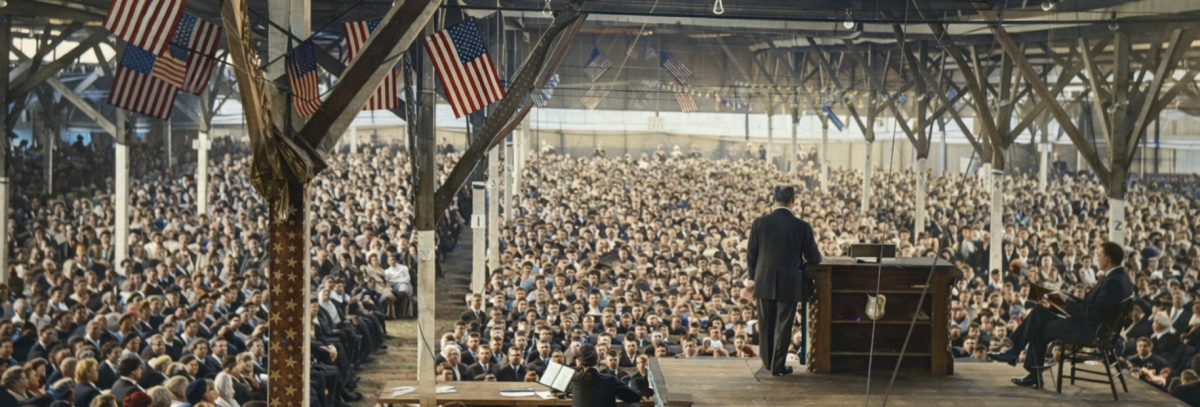
Bily Sunday Tabernacle. Chicago, Navy Pier, c. 1918.

49,165 SOULS AND $56,000, BILLY’S SCORE

Great Crowd Hears Revivalist Close Campaign.

Trail hitters (total) ………… 49,165

Attendance at tabernacle and meetings led by members of the Sunday party ………… 1,200,000

Money raised for current expenses ………… $135,000

Money raised for free will offering to Billy Sunday, which he will give in its entirety to the Pacific Garden mission ………… $56,000

Number of churches co-operating ………… 424

Length of campaign (including 11 Sundays) ………… 10 weeks

BY THE REV. W. B. NORTON.

Billy Sunday has prepared his own epitaph, which he says he wants chiseled on his tombstone when he shall be laid away in Forest Home cemetery, where, he says, he expects his body to rest. It is this:

“I have fought a good fight, I have finished my course, I have kept the faith: Henceforth there is laid up for me a crown of righteousness, which the Lord, the righteous judge, shall give me at that day.”

Last night Billy announced the end of his revival campaign here by saying:

“I’ve done my duty. Like a physician after he hands the new baby over to the mother and the nurse, takes his departure, so I commit these new converts to the churches and I go on my way to other fields.”

A Strenuous Finish.

For the first time since Billy began preaching in the tabernacle at Chicago avenue and the lake ten weeks ago, he pulled off both coat and collar and went at his task as in the old baseball days. It was his final sermon and he put into it all the power and feeling he could command.

The rain beat heavily on the roof, and occasionally an umbrella began to rise, but was quickly put down again, so as not to obstruct the view of others. Finally all of the roof windows were closed and the doors opened. At least 13,000 were present, many of them standing. A considerable number were in the seats at 5 o’clock with knitting or papers in hands, determined to have a seat for the final service, no matter how large the crowd.

Appeals for the free will offering for Billy, which is to go to the Pacific Garden mission, were made by George W. Dixon, chairman of the committee on the offering; W. A. Peterson, chairman of the finance committee; the Rev. John Timothy Stone, and Mel Trotter, superintendent of the Pacific Garden mission.

1918, Navy Pier.

Chicago Tribune. Mon, May 20, 1918 ·Page 4

Sunday Is Pleased.

“I consider the most remarkable feature of the meetings has been the evident hunger of the people to hear the gospel, their eagerness of attention, and the steadiness with which they have come,” Mr. Sunday said yesterday. “Every time the invitation has been given there has been a steady stream of hitters, not as I have seen it elsewhere, many coming at one meeting and almost no one the next time. I feel that it has been a remarkable meeting.”

Chicago Tribune. Tue, Jun 25, 1918 ·Page 3

The building (at Chicago Avenue and the lake) is the largest tabernacle ever built for the use of Mr. Sunday and was fourteen feet longer than the next largest one built in New York. It accommodated an audience of 16,000 when the vestibule was filled, as was done on several occasions during the revival campaign.

More images of the Chicago 1918 campaign.

What did Billy Sunday’s 1918 campaign mean to Chicago?

The Muscatine Journal. Tue, May 21, 1918 ·Page 3

WHAT BILLY SUNDAY MEANT.

“Billy” Sunday has come and gone. His mission is a matter of history. What did it signify? Some of the facts of the great revival are indicated in figures. The famous “trail” of the tabernacle for example was touched by nearly 50,000 pairs of feet seeking Mr. Sunday.

Chicago Daily News, no copyright.

The combined audiences at all the Sunday meetings are again reckoned at something like 1,200,000. Plainly a very considerable section of Chicago listened to the Sunday message. No politician, nor even a statesman, ever enjoyed such a hearing.

The novelty in the evangelist’s preachments arose from his unique personality. The doctrines preached by the Rev. William A. Sunday were essentially much the same as those the Chicago of another generation heard from the Rev. Dwight Moody. They were the same to be heard today in the four hundred-odd churches which were represented by the Sunday campaign.

The homely virtues, individual rectitude in business, personal morality in domestic life—these were the essentials. The code preached by “Billy” Sunday was familiar to his congregations. It is characteristically American. The “thou shalts” and “thou shalt nots” are the precepts and the prohibitions of the United States.

Mr. Sunday gave a new emphasis to a creed learned by most of his hearers in infancy. Like all successful missionaries in the home field, he affirmed persuasively what his converts believed, but did not consistently practice.

Many of those who renewed their religious pledges in the tabernacle will be better citizens. Chicago like Billy Sunday. His sincerity and disinterestedness made a good impression.

Every one wishes him success in his next public work.—Chicago Herald- Examiner.

For more information:

The Wheaton College Archives. The Chicago Campaign, 1918.

When did Billy Sunday host an evangelistic campaign in Chicago?

Billy Sunday’s 1918 revival campaign in Chicago, held from March 10 to May 20, was one of his most ambitious and high-profile efforts. It occurred during a pivotal moment in American history, as the nation grappled with World War I, the temperance movement, and the looming influenza pandemic.

The Billy Sunday Tabernacle, Chicago. 1918. Bill Sunday (left), Homer Rodeheaver (right).
Public domain.

Campaign Overview

The campaign was strategically timed to bolster support for Prohibition in Chicago, a city known for its vibrant nightlife and strong opposition to temperance reforms. Sunday, a fervent advocate for the ban on alcohol, delivered his fiery sermon “Get on the Water Wagon,” in which he vividly denounced the liquor industry. He likened the “booze interests” to a “rattlesnake that wriggled its miserable carcass out of hell,” vowing to fight them relentlessly—even “on ice” if hell froze over.

Despite his passionate rhetoric and widespread attention, Sunday’s efforts did not yield the desired political outcome. Chicago voters rejected a local Prohibition initiative during the campaign, a defeat famously referenced in Frank Sinatra’s song “Chicago (That Toddlin’ Town)” with the line: “The town that Billy Sunday could not shut down.”

Attendance and Impact

The campaign drew substantial crowds, with estimates suggesting that over 650,000 people attended the meetings over the course of seven weeks.

Sunday’s dynamic preaching style and the campaign’s extensive organization contributed to its broad reach and influence.

Legacy

Although the immediate goal of enacting local Prohibition in Chicago was not achieved, the campaign underscored Sunday’s significant role in the national temperance movement. His efforts contributed to the broader momentum that led to the ratification of the Eighteenth Amendment in 1919, establishing Prohibition across the United States. The Chicago campaign remains a notable example of Sunday’s impact on American society during a transformative era.

Toledo, 1911 campaign statistics

This image is in the public domain.

In early 1911, the city of Toledo, Ohio, found itself at the center of a spiritual and cultural whirlwind when Billy Sunday brought his revival campaign to town. Running from January 29 to March 12, this six-week crusade marked a significant moment not just in Sunday’s ministry, but in the broader urban revival movement sweeping America in the early 20th century.

To accommodate the expected crowds, a massive wooden tabernacle seating around 9,000 was constructed along Jefferson Avenue, near downtown. Though the city’s population at the time was just under 170,000, more than 350,000 people flooded into the tabernacle over the course of the campaign. It was not unusual for Sunday to preach three or four times a day to packed audiences, some standing in the aisles or spilling outside the structure just to hear his voice thunder through the open air.

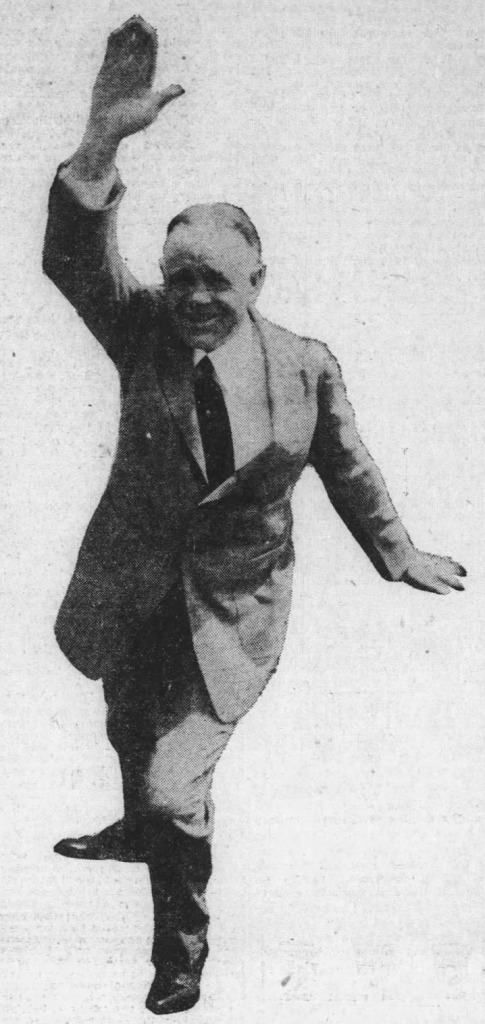
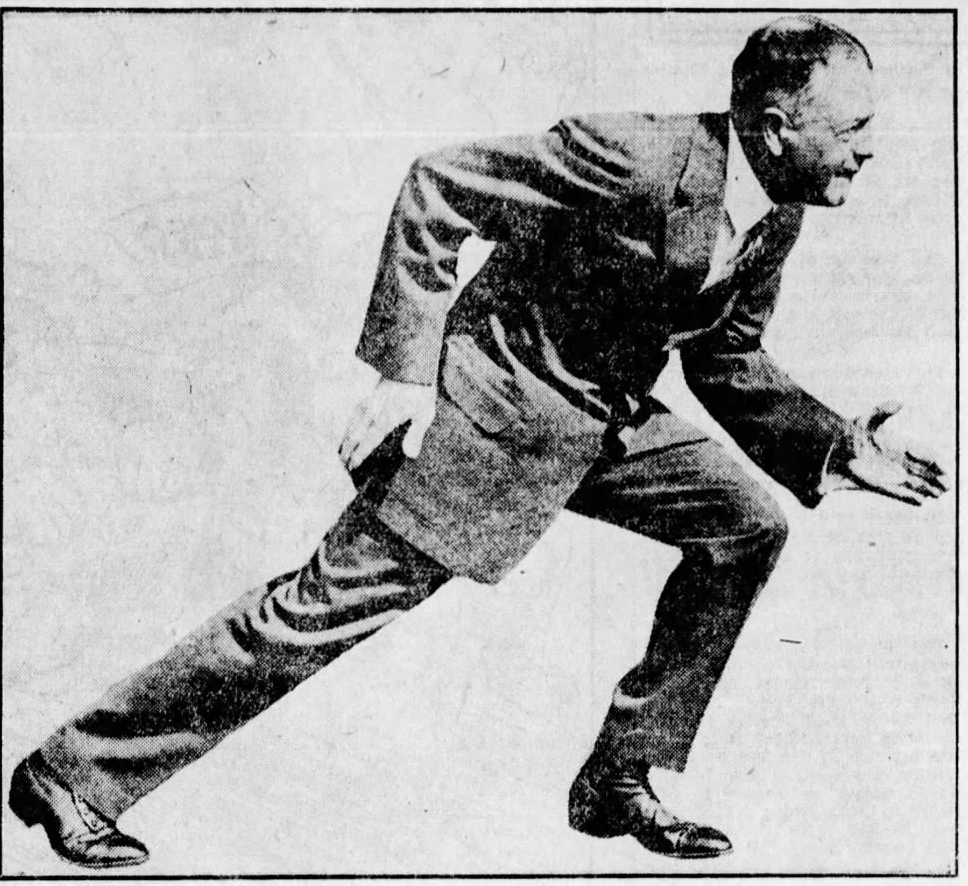
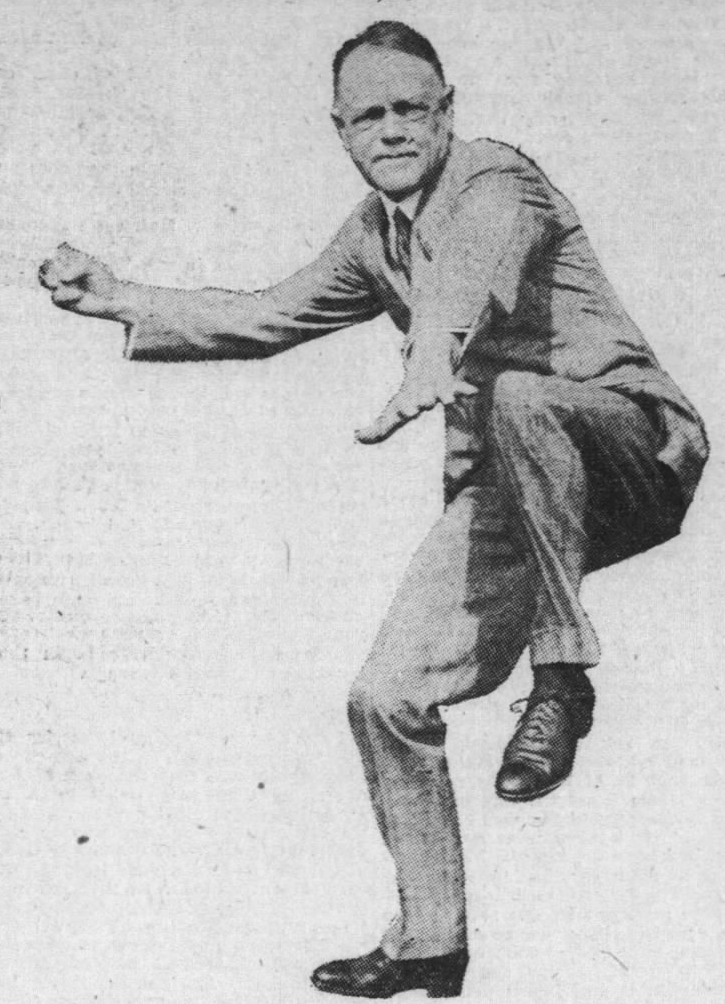
Sunday’s preaching style in Toledo was vintage Billy—fiery, theatrical, and unforgettable. He ran across the stage, leapt onto chairs, punched the air, and peppered his sermons with vivid imagery and baseball metaphors. Among the messages he delivered were some of his most iconic: “Booze,” “Backsliding,” “If Hell is a Joke,” and “The Ten Commandments.” His attack on the saloon business in “Booze” especially struck a chord in a city known for its proliferation of taverns and political corruption. “I want to preach so plainly,” he declared, “that the man who runs may read, and that even the saloonkeeper will know that I mean him!”

The results were staggering. Over 18,000 individuals reportedly made decisions for Christ, and local churches saw a dramatic uptick in attendance and membership. The spiritual momentum didn’t stop at the altar. Sunday’s relentless promotion of Prohibition, moral reform, and church revitalization left an indelible mark on Toledo’s civic and religious landscape.

The local press—especially The Toledo Blade—covered the revival extensively, offering daily summaries and commentary. While some editorials criticized Sunday’s bluntness and emotionalism, many praised the campaign’s influence on the moral climate of the city. Business leaders, city officials, and pastors saw firsthand the social power of mass evangelism, and Sunday’s reputation as a national revivalist soared.

Toledo was more than a successful campaign—it was a turning point. It proved that Sunday could handle large urban centers with complex political, economic, and moral challenges. It set the stage for even bigger crusades in Detroit, Boston, and New York, and solidified his status as one of the most influential evangelists of his time.

Atonement Through the Blood of Jesus – a sermon by Billy Sunday

Billy Sunday preached “Atonement Through the Blood of Jesus” as part of his core doctrinal sermons, often reserved for Sunday evenings or major campaign nights. While the exact first delivery date is unclear (since Sunday didn’t publish a formal collected works), this sermon was prominently featured during several of his middle and later campaigns, including: 1916 Boston campaign – Multiple newspapers noted a stirring sermon on the blood of Christ and substitutionary atonement, delivered to tens of thousands in the tabernacle built on Huntington Avenue.

Atonement Through the Blood of Jesus by Evangelist Billy Sunday

“For if the blood of bulls and of goats and the ashes of an heifer sprinkling the unclean, sanctifieth to the purifying of the flesh” – Paul argued in his letter to the Hebrews “how much more shall the blood of Christ, who through the eternal Spirit offered himself without spot to God, purge your conscience from dead works to serve the living God.” (Heb. 9:13-14) No more of this turtle-dove business, no more offering the blood of bullocks and heifers to cleanse from sin. The atoning blood of Jesus Christ – that is the thing about which all else centers. I believe that more logical, illogical, idiotic, religious and irreligious arguments have been fought over this than all others. Now and then when a man gets a new idea of it, he goes out and starts a new denomination. He has a perfect right to do this under the thirteenth amendment, but he doesn’t stop here. He makes war on all of the other denominations that do not interpret as he does. Our denominations have multiplied by this method until it would give one brain fever to try to count them all. The atoning blood! And as I think it over I am reminded of a man who goes to England and advertises that he will throw pictures on the screen of the Atlantic coast of America. So he gets a crowd and throws pictures on the screen of high bluffs and rocky coasts and waves dashing against them, until a man comes out of the audience and brands him a liar and says that he is obtaining money under false pretense, as he has seen America and the Atlantic coast and what the other man is showing is not America at all. The men almost come to blows and then the other man says that, if the people will come tomorrow, he will show them real pictures of the coast. So the audience comes back to see what he will show, and he flashes on the screen pictures of a low coast line, with palmetto trees and banana trees and tropical foliage and he apologizes to the audience, but says these are the pictures of America. The first man calls him a liar and the people don’t know which to believe. What was the matter with them? They were both right and they were both wrong, paradoxical as it may seem. They were both right as far as they went, but neither went far enough. The first showed the coast line from New England to Cape Hatteras, while the second showed the coast line from Hatteras to Yucatan. They neither could show it all in one panoramic view, for it is so varied it could not be taken in one picture.  God never intended to give you a picture of the world in one panoramic view. From the time of Adam and Eve down to the time Jesus Christ hung on the cross he was unfolding his views. When I see Moses leading the people out of bondage where they for years had bared their backs to the taskmaster’s lash; when I see the lowing herds and the high priest standing before the altar severing the jugular vein of the rams and the bullocks; on until Christ cried out from the cross, “It is finished,” (John 19:30) God was preparing the picture for the consummation of it in the atoning blood of Jesus Christ. A sinner has no standing with God. He forfeits his standing when he commits sin and the only way he can get back is to repent and accept the atoning blood of Jesus Christ. I have sometimes thought that Adam and Eve didn’t understand as fully as we do when the Lord said; “Eat and you shall surely die.” (Gen. 2:17) They had never seen any one die. They might have thought it simply meant a separation from God. But no sooner had they eaten and seen their nakedness than they sought to cover themselves, and it is the same today. When man sees himself in his sins, uncovered, he tries to cover himself in philosophy or some fake. But God looked through the fig leaves and the foliage and God walked out in the field and slew the beasts and took their skins and wrapped them around Adam and Eve, and from that day to this when a man has been a sinner and has covered himself, it has been by and through faith in the shed blood of Jesus Christ. Every Jew covered his sins and received pardon through the blood of the rams and bullocks and the doves. An old infidel said to me once, “But I don’t believe in atonement by blood. It doesn’t come up to my ideas of what is right.” I said, “To perdition with your ideas of what is right. Do you think God is coming down here to consult you with your great intellect and wonderful brain, and find out what you think is right before he does it? ” My, but you make me sick. You think that because you don’t believe it that it isn’t true. I have read a great deal – not everything, mind you, for a man would go crazy if he tried to read everything – but I have read a great deal that has been written against the atonement from the infidel standpoint – Voltaire, Huxley, Spencer, Diderot, Bradlaugh, Paine, on down to Bob Ingersoll – and I have never found an argument that would stand the test of common sense and common reasoning. And if anyone tells me he has tossed on the scrap heap the plan of atonement by blood, I say, “What have you to offer that is better?” and until he can show me something that is better I’ll nail my hopes to the cross. Suffering for the Guilty You say you don’t believe in the innocent suffering for the guilty. Then I say to you, you haven’t seen life as I have seen it up and down the country. The innocent suffer with the guilty, by the guilty and for the guilty. Look at that old mother waiting with trembling heart for the son she has brought into the world. And see him come staggering in and reeling and staggering to bed while his mother prays and weeps and soaks the pillow with her tears over her godless boy. Who suffers most? The mother or that godless, maudlin [drunk] bum? You have only to be the mother of a boy like that to know who suffers most. Then you won’t say anything about the plan of redemption and of Jesus Christ suffering for the guilty. Look at that young wife, waiting for the man whose name she bears, and whose face is woven in the fiber of her heart, the man she loves. She waits for him in fright and when he comes, reeking from the stench of the breaking of his marriage vows, from the arms of infamy, who suffers most? That poor, dirty, triple extract of vice and sin? You have only to be the wife of a husband like that to know whether the innocent suffers for the guilty or not. I have the sympathy of those who know right now. This happened in Chicago in a police court. A letter was introduced as evidence for a criminal there for vagrancy. It read, “I hope you won’t have to hunt long to find work. Tom is sick and baby is sick. Lucy has no shoes and we have no money for the doctor or to buy any clothes. I manage to make a little taking in washing, but we are living in one room in a basement. I hope you won’t have to look long for work,” and so on, just the kind of a letter a wife would write to her husband. And before it was finished men cried and policemen with hearts of adamant were crying and fled from the room. The judge wiped the tears from his eyes and said: “You see, no man lives to himself alone. If he sins others suffer. I have no alternative. I sympathize with them, as does every one of you, but I have no alternative. I must send this man to Bridewell [house of correction].” Who suffers most, that woman manicuring her nails over a washboard to keep the little brood together or that drunken bum in Bridewell getting his just deserts from his acts? You have only to be the wife of a man like that to know whether or not the innocent suffer with the guilty. So when you don’t like the plan of redemption because the innocent suffer with the guilty, I say you don’t know what is going on. It’s the plan of life everywhere. From the fall of Adam and Eve till now it has always been the rule that the innocent suffer with the guilty. It’s the plan of all and unless you are an idiot, an imbecile and a jackass, and gross flatterer at that, you’ll see it. Jesus’ Atoning Blood Jesus gave his life on the cross for any who will believe. We’re not redeemed by silver or gold. Jesus paid for it with his blood (1 Peter 1:18). When some one tells you that your religion is a bloody religion and the Bible is a bloody book, tell them yes, Christianity is a bloody religion; the gospel is a bloody gospel; the Bible is a bloody book; the plan of redemption is bloody. It is. You take the blood of Jesus Christ out of Christianity and that book isn’t worth the paper it is written on. It would be worth no more than your body with the blood taken out. Take the blood of Jesus Christ out and it would be a meaningless jargon and jumble of words. If it weren’t for the atoning blood you might as well rip the roofs off the churches and burn them down. They aren’t worth anything. But as long as the blood is on the mercy seat (Lev. 16:14), the sinner can return, and by no other way. There is nothing else. It stands for the redemption. You are not redeemed by silver or gold, but by the blood of Jesus Christ. Though a man says to read good books, do good deeds, live a good life and you’ll be saved, you’ll be damned. That’s what you will. All the books in the world won’t keep you out of hell without the atoning blood of Jesus Christ. It’s Jesus Christ or nothing for every sinner on God’s earth. Without it not a sinner will ever be saved. Jesus has paid for your sins with his blood. The doctrine of universal salvation is a lie. I wish every one would be saved, but they won’t. You will never be saved if you reject the blood. I remember when I was in the Y.M.C.A. in Chicago I was going down Madison Street and had just crossed Dearborn Street when I saw a newsboy with a young sparrow in his hand. I said: “Let that little bird go.” He said, “Aw, g’wan with you, you big mutt.” I said, “I’ll give you a penny for it,” and he answered, “Not on your tintype.” “I’ll give you a nickel for it,” and he answered, “Boss, I’m from Missouri; come across with the dough.” I offered it to him, but he said, “Give it to that guy there,” and I gave it to the boy he indicated and took the sparrow. I held it for a moment and then it fluttered and struggled and finally reached the window ledge in a second story across the street. And other birds fluttered around over my head and seemed to say in bird language, “Thank you, Bill.” The kid looked at me in wonder and said: “Say, boss, why didn’t you chuck that nickel in the sewer?” I told him that he was just like that bird. He was in the grip of the devil, and the devil was too strong for him just as he was too strong for the sparrow, and just as I could do with the sparrow what I wanted to, after I had paid for it, because it was mine. God paid a price for him far greater than I had for the sparrow, for he had paid it with the blood of his Son, and he wanted to set him free. No Argument Against Sin So, my friend, if I had paid for some property from you with a price, I could command you, and if you wouldn’t give it to me I could go into court and make you yield. Why do you want to be a sinner and refuse to yield? You are withholding from God what he paid for on the cross. When you refuse you are not giving God a square deal. I’ll tell you another. It stands for God’s hatred of sin. Sin is something you can’t deny. You can’t argue against sin. A skilful man can frame an argument against the validity of religion, but he can’t frame an argument against sin. I’ll tell you something that may surprise you. If I hadn’t had four years of instruction in the Bible from Genesis to Revelation, before I saw Bob Ingersoll’s book, and I don’t want to take any credit from that big intelligent brain of his, I would be preaching infidelity instead of Christianity. Thank the Lord I saw the Bible first. I have taken his lectures and placed them by the side of the Bible, and said, “You didn’t say it from your knowledge of the Bible.” And I have never considered him honest, for he could not have been so wise in other things and such a fool about the plan of redemption. So I say I don’t think he was entirely honest. But you can’t argue against the existence of sin, simply because it is an open fact, the word of God. You can argue against Jesus being the Son of God. You can argue about there being a heaven and a hell, but you can’t argue against sin. It is in the world and men and women are blighted and mildewed by it. Some years ago I turned a corner in Chicago and stood in front of a police station. As I stood there a patrol dashed up and three women were taken from some drunken debauch, and they were dirty and blear-eyed, and as they were taken out they started a flood of profanity that seemed to turn the very air blue. I said, “There is sin.” And as I stood there up dashed another patrol and out of it they took four men, drunken and ragged and bloated, and I said, “There is sin.” You can’t argue against the fact of sin. It is in the world and blights men and women. But Jesus came to the world to save all who accept him. “How Long, O God?” It was out in the Y.M.C.A. in Chicago. “What is your name and what do you want?” I asked. “I’m from Cork, Ireland,” said he, “and my name is James O’Toole.” Here is a letter of introduction.” I read it and it said he was a good Christian young man and an energetic young fellow. I said, “Well, Jim, my name is Mr. Sunday. I’ll tell you where there are some good Christian boarding houses and you let me know which one you pick out.” He told me afterwards that he had one on the North Side. I sent him an invitation to a meeting to be held at the Y.M.C.A., and he had it when he and some companions went bathing in Lake Michigan. He dived from the pier just as the water receded unexpectedly and he struck the bottom and broke his neck. He was taken to the morgue and the police found my letter in his clothes, and told me to come and claim it or it would be sent to a medical college. I went and they had the body on a slab, but I told them I would send a cablegram to his folks and asked them to hold it. They put it in a glass case and turned on the cold air, by which they freeze bodies by chemical processes, as they freeze ice, and said they would save it for two months, and if I wanted it longer they would stretch the rules a little and keep it three. I was just thinking of what sorrow that cablegram would cause his old mother in Cork when they brought in the body of a woman. She would have been a fit model of Phidias [ancient Greek sculptor], she had such symmetry of form. Her fingers were manicured. She was dressed in the height of fashion and her hands were covered with jewels and as I looked at her, the water trickling down her face, I saw the mute evidence of illicit affection. I did not say lust, I did not say passion, I did not say brute instincts. I said, “Sin.” Sin had caused her to throw herself from that bridge and seek repose in a suicide’s grave. And as I looked, from the saloon, the fantan rooms, the gambling hells, the opium dens, the red lights, there arose one endless cry of “How long, O God, how long shall hell prevail?” (Psa. 74:10) You can’t argue against sin. It’s here. Then listen to me as I try to help you. When the Standard Oil Company was trying to refine petroleum there was a substance that they couldn’t dispose of. It was a dark, black, sticky substance and they couldn’t bury it, couldn’t burn it because it made such a stench; they couldn’t run it in the river because it killed the fish, so they offered a big reward to any chemist who would solve the problem. Chemists took it and worked long over the problem, and one day there walked into the office of John D. Rockefeller, a chemist and laid down a pure white substance which we since know as paraffine [paraffin wax]. You can be as black as that substance and yet Jesus Christ can make you white as snow. “Though your sins be as scarlet they shall be as white as snow.” (Isa. 1:18)

Backsliding – a sermon by Billy Sunday

Billy Sunday’s sermon titled “Backsliding” was part of his standard preaching repertoire and was delivered repeatedly throughout his evangelistic campaigns, especially in the 1910s and 1920s. While it’s difficult to pinpoint a single first occurrence, several documented instances include:

1915 Syracuse, NY Campaign – He preached “Backsliding” to a large crowd, with newspapers reporting on its vivid imagery and sharp rebukes against nominal Christians and social sins.

Backsliding
by Billy Sunday  (1862-1935)

“Thy own wickedness shall correct thee. Thy backsliding shall reprove thee. Know therefore and see that it is an evil thing and bitter that thou hast forsaken the Lord thy God, and that my fear is not in thee, saith the Lord God of Hosts.” Jeremiah 11:19.

Many start the voyage of the Christian life under sending skies and upon smooth waters, but as they sail out of the harbor the sky becomes dark and the craft of their religion crashes upon the rocks. At first they are careful to obey the command of God, but after the revival they neglect their duties and finally come to wreck.

God speaks much of the sin of backsliding, and in the Bible has spoken of it in many places. There are all kinds of backsliding.

First, there is the careless kind. The invitation is never given at the revival but there are those who will respond to it, and for a time will live as Christians should. Then, when the revival is over and the routine of everyday life begins, they slip gradually back into their former ways. They become negligent and drift back to the old haunts and the old gang.

Oh, it is easy to think of things divine when the revival is on and there is inspiration on every side and the bands are playing and the crowds are marching.

I’ve sometimes thought, almost, that it might be a Godsend to many a community if it could only be swept by typhoid fever or pneumonia or scarlet fever just after a good revival and before the people have a chance to slide back.

The second class of backsliders is the class that started soberly and seriously, but not seriously enough. They do not make a complete surrender. If you secure a balloon with 100 ropes and cut 99 of them, the balloon will still be held, but don’t cut the shore lines, they have failed to cut loose from sin, and it is drawing them back.

A friend of mine holding a meeting, asked how many who were present had been Christians, but were now backsliders. Finally forty fessed up. Then he asked them for the reasons for their falling away. Finally a man got up and said he backslid through believing that he could be a Christian and keep his store open on Sundays.

A young lady arose and said that she backslid because of cards. A friend had given a card party and she had to give one in reciprocity. She said she had invited a young man to attend, but that he didn’t know what kind of a party it was to be. He came, but when he found out he said he was sorry, but he must go, for he could not stay there. “I admired him for his loyalty to his religion, he made me feel that I wasn’t worthy to have my name as a church member,” the young lady said.

Another man stood up and said: “I backslid when I voted for the saloon.” You bet he did or he would not have voted for the dirty, rotten thing. Why, he backslid before he voted that ticket, or he wouldn’t have voted it.

A young lady said: “I thought I could be a member of the church and dance.” Sure she could. You can be a member of the church and a burglar too, but not a member of the body of Christ. She said, “I attended a dance and found my desire to pray diminishing. I attended another and I found my desire to pray had become nebulous. And then,” she said, “my desire to pray disappeared.”

I tell you I never saw a drinking, dancing, card playing Christian who amounted to anything. The dance is a quagmire of wreckage. It’s as rotten as hell. You wait until I get at it.

I believe more people in the church backslide because of the dance, card playing and theater gadding then through the saloons. But hold on there, don’t you think for a minute that I’m in favor of the dirty, stinking, rotting saloons.

I’m against a lot of amusements popular among church members, as you people are going to find out before I am through in Boston. I don’t give that (snapping his fingers) whether you like my preaching or not. Understand? It’s a question of whether you are interested in decency. If you live wrong you can’t die right. Emerson said: “What you are speaks so loudly that I cannot hear what you say.

This is an age of incompleteness of unfinished things. Life is full of half done things. Education is begun and abandoned. Obedience to the law of God is begun – and given up. People start in business – and fail. They attempt to learn a trade – and don’t do it thoroughly. A hound once started running after a stag and after running for a while it saw a fox and turned after it. A little farther along it saw a rabbit and ran after that, and finally wound up holing a field mouse. So it is with so many who enter the Christian life. They started to hunt and compromised on a glass of booze. They enter a royal race, but compromised on a glass of beer or on some little gain through dishonesty.

Not every backslider is an apostate, but every apostate is a backslider. Peter was a backslider, but he came back and preached that sermon at Pentecost. Judas was a backslider, and what he did so preyed upon his mind that he did not want it. He went out but he never came back.

I have never tabooed but two towns in my life and one of them was a little town in Iowa, where I once held a meeting before I really became an evangelist. That town had an infidel club of 150 members. There were only two church members in the place, and there was an interrogation point after them at that. They could have started a founding asylum of their own in that community. My life was not safe there – they threw stones at me in the streets.

A storekeeper there told me he was going to sell out and leave the town for purely moral reasons, at a loss of about $8000.00. He said that he had daughters and that there wasn’t a young man in the town that he would trust with them. He said that any young man in that town were to call on any of his daughters he wouldn’t go upstairs to bed unless he had a Gattling gun he could train on the visitor at a moments notice. It is not only for here and now, it is not only for a time, but it is for eternity. It is one of the great things. All other things are incidents.

The leader of that God – forsaken, iniquitous gang was a man named Dickson, who ran a one – horse country grocery business in a place about as big as a boxcar. He had been a Christian – used to be a classleader in a Methodist church. He kept a store. I used to pass the store as I went to preach, and I would see the bunch, as many as 40 sometimes, sitting around in the little store.

Whenever a new preacher came they would assemble to talk him over, and if old Dickson gave consent, they would go to church to hear him. I remember one old brush rat. He had bushy whiskers with a dirty brown streak down the middle, and he could spit 30 yards and hit a fly. I’ll bet my life he could hit a post down there. He used to come in late, with one pant leg tucked in his boot, no coat or vest, no galoshes – just a rope around his paunch – the old son of perdition.

He’d sit down and turn the hose on the wall. He looked to me as if he had had only one bath in his life and that one when he was born. He came clattering down the aisle – old hair and beard twisted – looked like a cows tail. He started as a backslider, ended in apostasy, just as disease ends in death if not checked.

In business life, crises come unforeseen. Hard times come. When they do, you may be able to get away with a overdraft at the bank if the cashier knows you too well. At the bank of heaven no checks on God’s mercy, when signed by God’s loyal followers have ever been turned down. If you come with honest heart God will honor the appeal if your hands are red with blood.

In a campaign like this, for some little thing many men will sell out. There are men whose honor hang like meat in butcher shop, for sale for so much a pound. I thank God though, that most men are honest and most women are virtuous, and that even the minority can be made to yield when you preach the gospel right.

I ask about a man. “Has he reached the burning bush?” They answer, “Yes, and got past it.” I ask, “Is he a K. of P.?” They say he is. I ask, “Has he jumped?” They say, “Yes.” I don’t know what it means to jump, for I am not a K. of P. I heard a couple of K. of P.’s talking, though ? they didn’t leak. I suppose it has something to do with the initiation. I ask. “Is he an Odd Fellow?” “Yes” They tell me he will share his last dollar with a needy person, die for the widow or the orphan, put his head on the track ahead of the Black Diamond or allow himself to be shot to pieces before he would be false to the vows he took amid the scent of the orange blossoms.

That sounds like a good man, but there are lots of men who will be true in all these things, and false to Jesus Christ. They will go to church and partake of the communion, then will line up in front of some bar and tell smutty stories. True in business, true to lodge, true in society, true in the home, but a perjurer in the sight of God. If you are such a man you are a backslider – a backslider, sir, and a liar.

If I were to go to a man and say: “They say you’re an old liar.” Would he say, “Well, Bill, I suppose I am, but you mustn’t put the standard too high for poor, weak humanity, and I’m only human.” If I were to say to him, “They say you are an old thief and that they have to hide everything when you come around.” Would he say he supposed it was true, but I mustn’t set the standard too high for poor human nature? If I say, “They tell me that you are a rotten old libertine and that you have ruined many innocent girls, that you would crush a woman’s virtue as quickly as a snake beneath your foot.” Would he say he supposed it was true, but I mustn’t set the standard too high for poor human nature?

No sir. If he were anything of a man at all he would say, “I demand, sir, that you prove your charges.” But that’s not what a man does when you charge him with being a backslider or to say that he is a liar. Oh, for the Presbyterian or Baptist or Episcopal backslider who stands up and talks about poor human nature – yet to say a man is a backslider is to say that he is a liar. Of, for power to come to you and show what you ought to be.

I can imagine a man being untrue in business. I can imagine him being untrue in politics. I can even – but it is difficult – imagine him being untrue to the vows made at the altar – but to be untrue to God! Be untrue to God and you will lose heaven and lose all. Be true to God and you will lose hell. I pray that God will so work upon the consciences of you backsliders who hear me that you will cry salt tears and turn and roll upon your pillows when you go home tonight and seek a dry spot that he may reproach you until you have been stung into a return to the God to whom you have been false.

A heathen woman named Panathea was famous for her great beauty, and King Cyrus wanted her for his harem. He sent his representatives to her and offered her money and jewels to come, but she repulsed them and spurned their advances. Again he sent them, this time with offers more generous and tempting; but again she sent them away with scorn. A third time she said “Nay.” Then King Cyrus went in person to see her and he doubled and tripled and quadrupled the offers his men had made, but still she would not go. She told him that she was a wife, and that she was true to her husband.

He said “Panathea, where dwellest thee?”

“In the arms and on the breast of my husband.” She said.

“Take her away.” Said Cyrus. “She is of no use to me.”

Then he put her husband in command of the charioteers and sent him into battle at the head of the troops. Panathea knew what this meant – that her husband had been sent in that he might be killed.

She waited while the battle raged and when the field was cleared she shouted his name and searched for him and finally found him wounded and dying. She knelt and clasped him in her arms, and as they kissed, his lamp of life went out forever.

King Cyrus heard of the mans death and came to the field. Panathea saw him coming, careening on his camel like a ship in a storm. She called, “Oh, husband! He comes – he shall not have me. I was true to you in life and will be true to you in death.” And she drew her dead husband’s poniard from its sheath, drove it into her own breast and fell dead across his body.

King Cyrus came up and dismounted. He removed his turban and knelt By the dead husband and wife and thanked his God that he had found in his kingdom one true and virtuous woman that his money could not buy nor his power intimidate.

A person of Boston, preachers, the problem of this century is the problem of the first century. We must win the world for God and we will win the world for God just as soon as we have men and woman who will be faithful to God and will not lie and will not sell out to the devil.