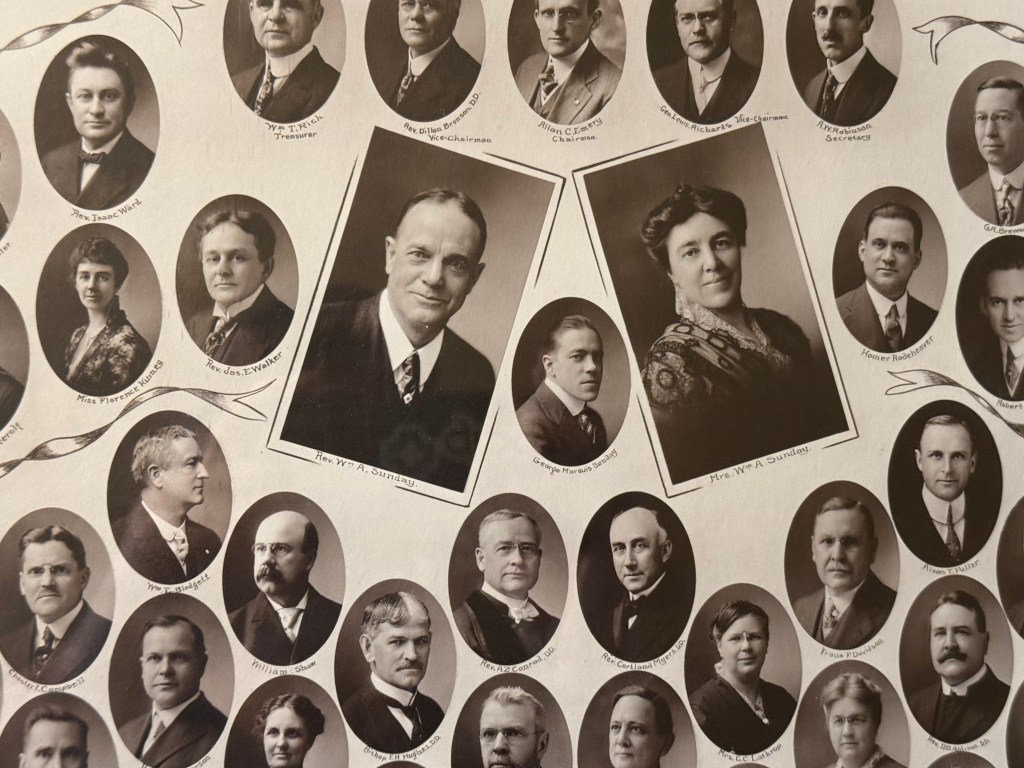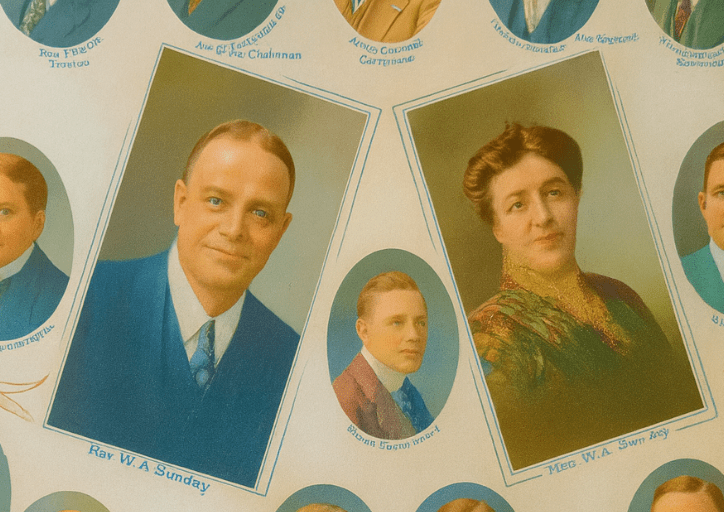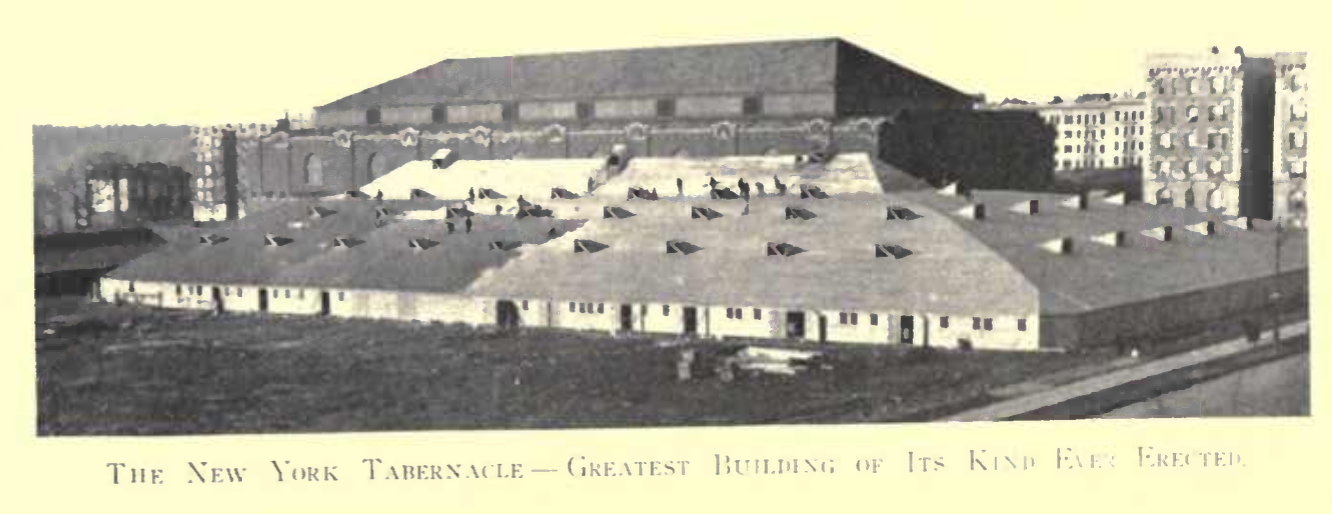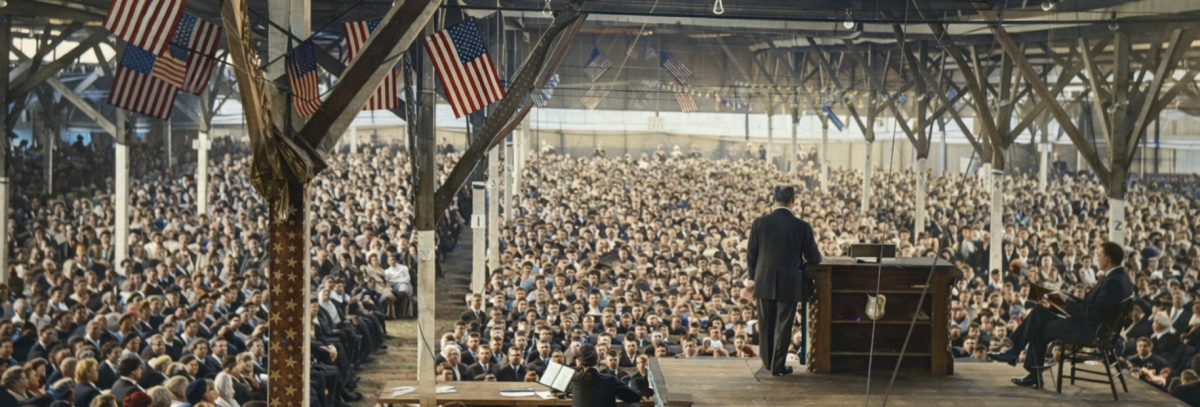
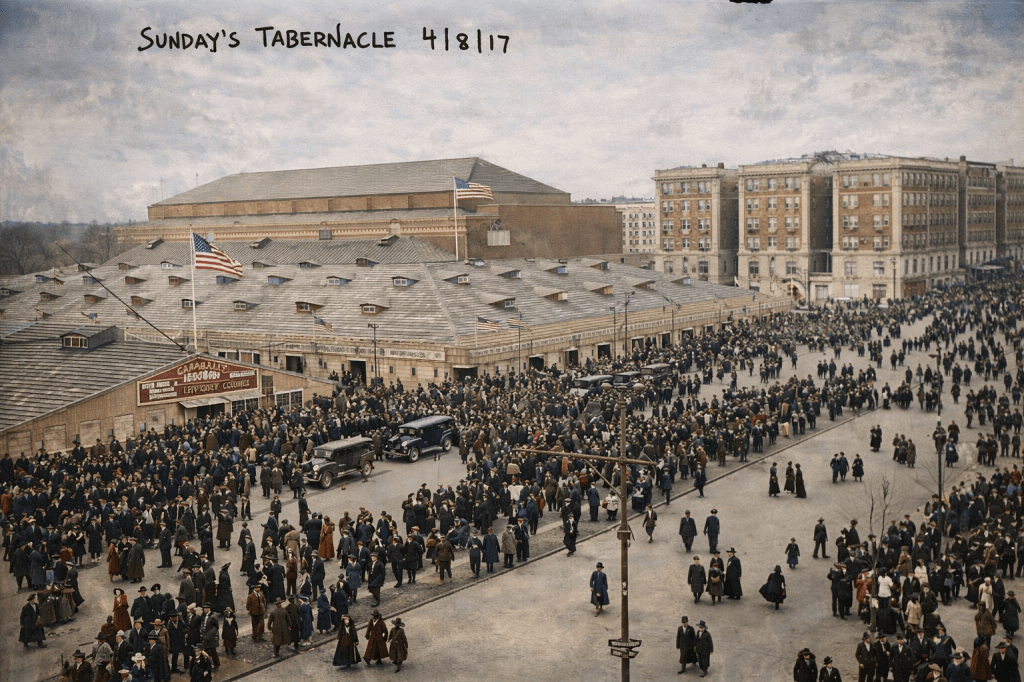
Billy Sunday New York City campaign, c. 1917

“New York City gave me $120,485, Mr. Sunday said, and I turned over every cent for the work that I had said I would. I went to Chicago, and the city gave me $65,000 and I gave the sum to the Pacific Garden mission. I give away a tenth of my income. And that is all right. I do not advertise all the things I do with my money. I do not tell all the world the things that I pay off. You follow me around, some of you, and I will make you dizzy with the money I give away. But I don’t have to tell anyone. It is written down above so that is all that matters.”
As reported by The Richmond Item. Fri, May 26, 1922 ·
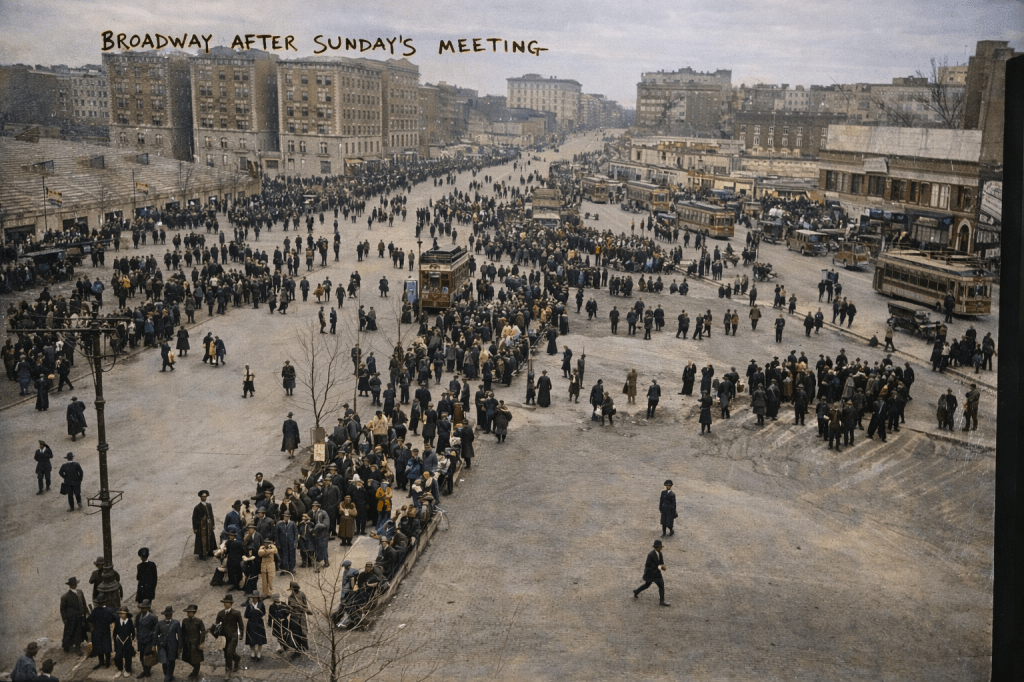
Billy’s New York Tribune editorial
The letter was typed on the back of Richmond January 1919 letterhead

New York Tribune
New York City N.Y.

For ten weeks in New York, I went the limit of my strength preaching Christ and Him crucified, explaining as plainly as I could the plan of Salvation as revealed in the Bible. Hundreds of thousands flocked to the old Tabernacle at One Hundred and sixty-eighth street and Broadway (the dearest spot in little old New York to me) and tens of thousands publicly expressed their faith in His atoning blood, proving beyond question of a doubt that people are willing and eager to go hear the Bible explained but will not go to hear it explained away.

There is no Christianity without the deity of Christ, there is no Salvation without faith in the atonement of Christ on Calvary. The doctrine that God is the father of us all and that “self-sacrifice is the key to Heaven” is religious bunk. The fountain head of this horrible war that has drenched the world with blood you will find was in that infamous hellish theology made in Germany. It is now showing its fangs in Russia.

The future existence of our government and its institutions depend in a large measure upon the class of people who will soon be called upon to assist in solving the grave problems that lie just ahead of us. It has been well said that this is a government of the people, by the people and for the people. Therefore, it can rise no higher than the plane of its citizenship. Christianity is the only weapon with which we may successfully contend against extreme Socialism, Bolshevism, I.W. Wism and Anarchy.

When I pronounced the benediction the last night in New York my responsibility for the work there ended. I’ve never yet been satisfied with the results of any campaign I have ever conducted. No business house does as much business as it would like to do. No newspaper ever has as large a circulation as the owner would like to have. No doctor saves as many lives as he would like to save. I have never seen as many people accept Christ as I would like to see but I do my utmost in every campaign.

In a city where I held a campaign there was a church four squares from the Tabernacle. The pastor did not openly oppose the meeting, but he did not encourage his people to help. He had no ushers from his church in the aisles, no singers in the choir, no personal workers in the building, nobody on the committees. Neither he nor his church made any special investment of time energy or money. A few weeks after the meeting closed, he published a statement that though his church was scarcely more than a stone’s throw from the Tabernacle there were no results, and the campaign was a failure.

In the same city another pastor, whose church was seven miles away, entered actively into the campaign. His men were ushers, his singers were in the choir, his workers zealous and untiring in their efforts to win others. He and his people invested largely in time, strength and money and within two weeks after the campaign closed nearly one hundred persons united with his church on profession of faith. And this pastor published a statement that the campaign was a great success. To the one object failure – to the other, a triumphant success. One used a hammer, the other a saw, draw your own conclusions.

As long as God gives me strength I will keep pounding away at the fortifications of sin and pointing men to Jesus Christ as the only way of Salvation, no matter who knocks.

Don’t worry about old John Barleycorn. He has been tried, convicted, sentenced by forty states and today he sits strapped in the chair waiting for the executioner to pull the lever. His time is about up. I’ve given him a few uppercuts myself during the past twenty-five years and you can write it down in your blue book that I’m getting ready to preach his funeral sermon and close with the doxology.

W.A. Sunday
Faith in the Efficacy of Prayer, April 1917 – importance of prayer

The Kansas City Star. Sun, Apr 01, 1917 ·Page 41

The first important thing was to get the whole Christian population of the city to praying for the success of the campaign. Prayer is the one great secret of Billy Sunday’s success, he says himself. He prays without ceasing. The members of his party pray always. Every difficulty that arises is a subject of prayer. If some preacher declines to take part in the revival they pray for him and keep on praying. They pray for little things and big things. Billy catches cold; the whole party prays for him. His voice gets husky; they all begin praying. There is indecision as to which city the next campaign would better be held in; Billy and his party begin praying to be led aright. It is prayer, prayer, prayer, constantly.

And so, great maps of New York were hung upon the wall at headquarters. Each church and school was marked with a tack, a redheaded tack denoting a Methodist church, a blue tack a Baptist church, and so on. Then all of Greater New York was divided into districts and the work of prayer began.

An executive committee was named with twenty-seven men on it, each one a hustler. John D. Rockefeller jr. and William Jay Schieffelin, two of the richest men in New York, are on the committee, and both are actively working.

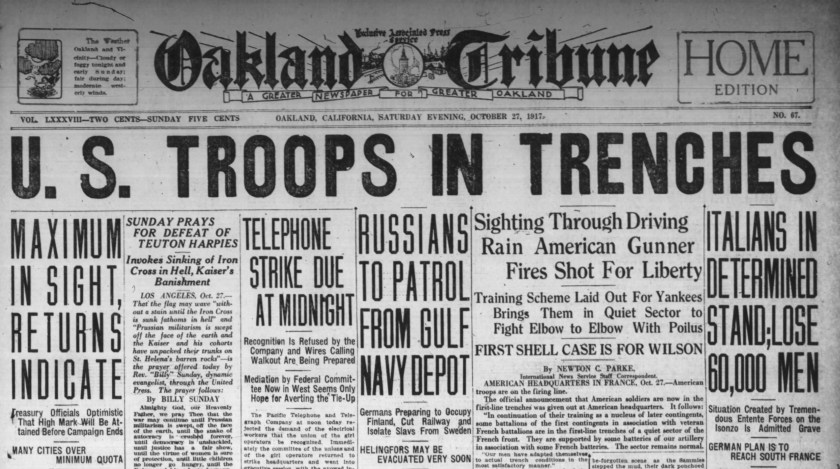
Billy Sunday prays for the U.S. involvement in World War I in late October, 1917. Complete text.

By November 1917, America’s entry into World War I was still more promise than power. The nation had declared war on Germany in April, but its fighting strength was only beginning to take shape. The Selective Service Act had drafted millions, yet most soldiers were still training in sprawling new camps across the country. Only a few thousand “Doughboys” had reached France, and fewer still had seen combat.

At home, the United States was undergoing a massive transformation—industries retooled for war, Liberty Loan drives stirred patriotism, and propaganda urged unity behind President Wilson’s call to “make the world safe for democracy.” Yet beneath the flags and speeches, the mood was uneasy and uncertain. America was a nation of recent immigrants, many with ties to both sides of the conflict, and the sudden plunge into a distant European war left much of the public ambivalent, even anxious.

While the Navy was already active in convoy protection and anti-submarine patrols, the Army’s role remained largely preparatory. Reports from Europe reminded Americans of the staggering cost of trench warfare—the mud, gas, and mass casualties that had consumed Europe since 1914.

Thus, by late 1917, America stood on the threshold of full engagement, committed but not yet blooded, confident yet cautious. The war had only begun for the United States, and few could yet grasp how deeply it would change the nation—or the world.

Paper source

Just as the Atlanta Billy Sunday campaign was to begin, Billy’s prayer for U.S. forces in Europe was published in the press.

BILLY SUNDAY PRAYS FOR OUR VICTORY IN THE WAR

Los Angeles, Cal., Oct. 27.—”That the flag may wave without a stain until the iron cross is sunk fathoms in hell,” is the prayer offered today by Rev. “Billy” Sunday, evangelist, through the United Press for use on Sunday, proclaimed by President Wilson a day of prayer. The prayer follows:

“Almighty God, our Heavenly Father, we pray Thee that the war may continue until Prussian militarism is swept off the face of the earth, until the snake of autocracy is crushed forever, until democracy is unshackled, until justice has a fair show, until the virtue of woman is sure of protection, until little children no longer go hungry, until the Kaiser and his cohorts have unpacked their trunks on St. Helena’s barren rocks.

“And in the meantime give each one of us the fighting spirit that led the Crusaders to victory. If we do not fight with our hands in the trenches, help us to fight with sacrificing hearts at home.

“Thou knowest, oh, Lord, we have not entered this bloody war because of avarice or greed and we do not covet Germany’s gold or land. We have drawn the sword to defend our country against the most infamous, blood-thirsty horde of human harpies that ever disgraced the earth. They respect neither law nor religion; nothing is sacred if it stands in their path.

“Lord, bless the president; give him wisdom; bless all the councils of state and war. Keep us a united nation in fact and spirit.

“Bless the army and navy. Many of our brave boys already sleep somewhere in France or beneath the sea. Bring victory to our cause because we know it is Your cause. We have joined hands and hopes and hearts with our noble allies that this world may be a safe place in which to live.

“Thou knowest, Lord, that the tidal wave of sneering unbelief that has blighted the faith of millions and denied that Jesus is Thine only begotten Son, came from the beer mugs of that pretzel crowd across the sea. All this, together with the deluge of blood is enough to make hell laugh and heaven weep.

“Lord, Thou has never forsaken our flag. It waves without a stain. May it lead every step of the way until the iron cross is sunk fathoms in hell and the world rests once more bathed in the radiance of the Cross of Christ.

“All this we ask in the name of Jesus Christ, Thy Son, our Savior, Amen.”

Billy’s debt to J. Wilbur Chapman, in his own words

I owe more to Dr. Chapman than to any other man that I ever became a preacher. I traveled with him for two years as an assistant. He picked me up out of the corn rows of Illinois. We went to a town up in Kansas one time to conduct a series of meetings. We were accustomed to have union meetings, but in that place, when we arrived on the scene, we found that they could have had a union meeting had it not been for a quarrel with the Presbyterian church. They had had a fuss and there were a few people live and awake, up-to-date, who said they’d withdraw. So they went down to the bank of the river and they built a church, they had a good live-wire preacher there who was going at a good gait all the time on high gear, while the other fellow had the brakes set.

The Atlanta Constitution. Wed, Nov 07, 1917 ·Page 12

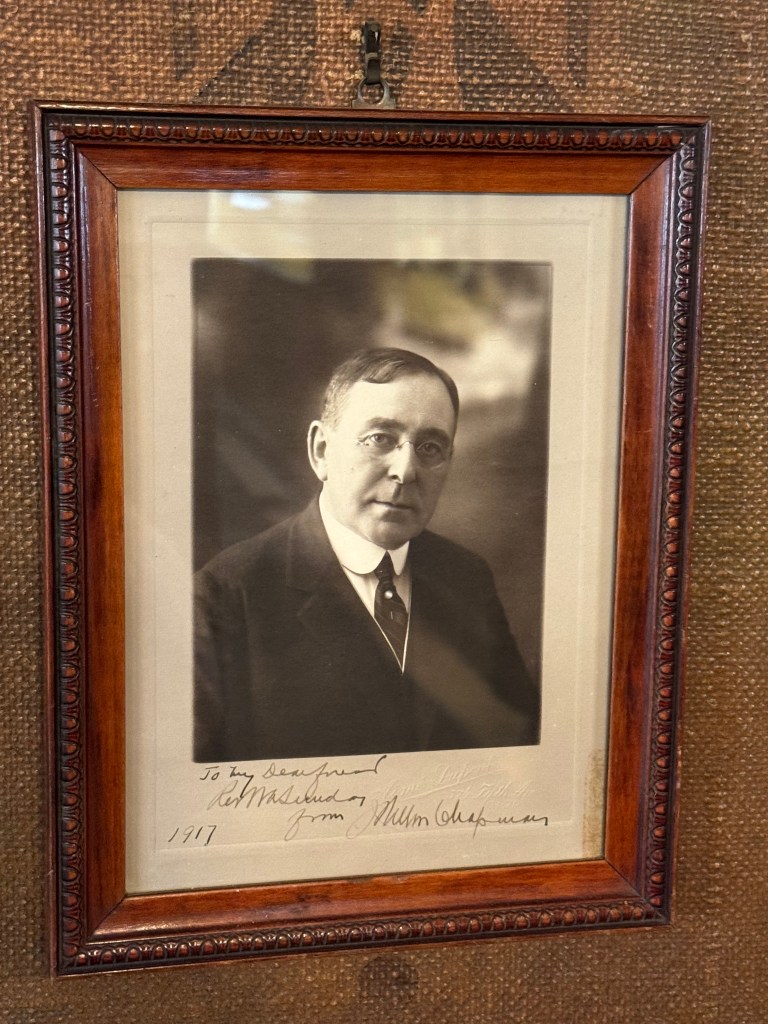
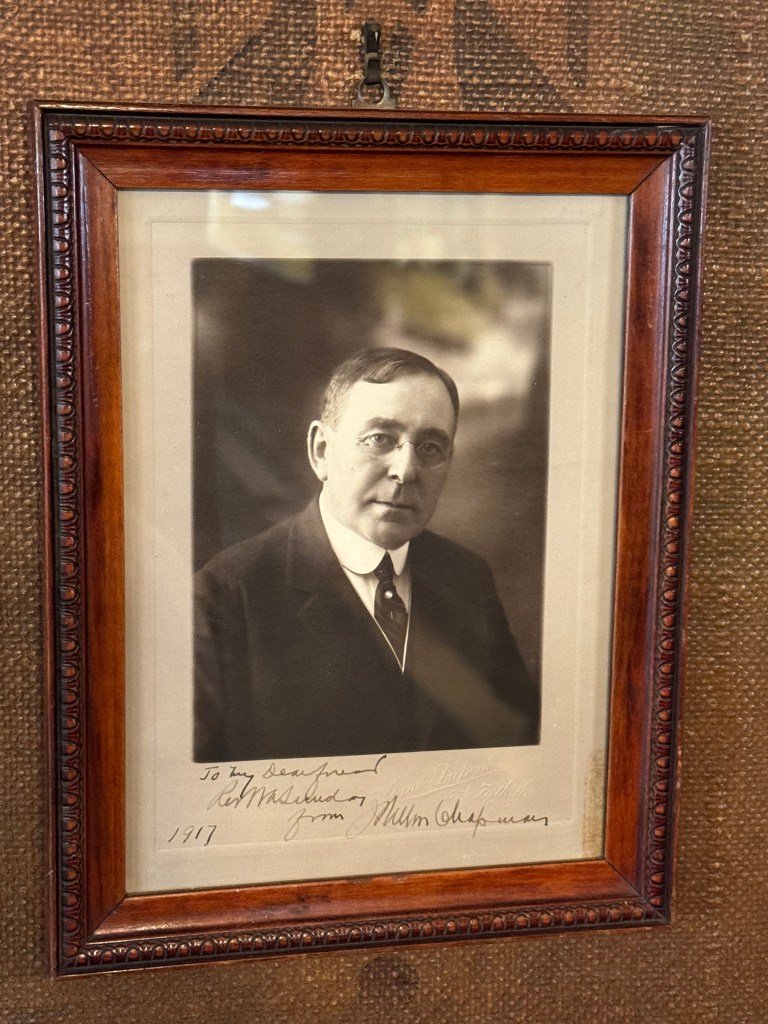
This picture of Chapman hangs on Billy’s wall in his Winona Lake home. It is inscribed with the date 1917.

$10,000 Raised In Ten Minutes for Negro YMCA – Atlanta 1917-1918

“Atlanta, Jan. 1.—Ten thousand dollars raised within ten minutes by white citizens of Atlanta yesterday assures the negroes of this city success in completing their Y.M.C.A. building. The white people are pledged to raise another ten thousand if necessary. A fifty thousand dollar fund was needed to obtain the gift of $25,000 from Julius Rosenwald. C.W. McClure made a donation with the statement that the friendly relations between the whites and the negroes were better than ever since Billy Sunday preached to both.”
Jan 1 paper

In the waning days of 1917, as Atlanta turned the page to a new year, a remarkable act of interracial philanthropy unfolded that would leave a lasting mark on the city’s history. Newspapers reported that ten thousand dollars had been raised in just ten minutes by white citizens of Atlanta to help fund a new YMCA building for the city’s Black community. The drive was part of a larger campaign to secure a matching gift of twenty-five thousand dollars from Julius Rosenwald, the Sears, Roebuck & Co. magnate whose generosity was transforming African American education and social life across the South. Local businessman C.W. McClure, who helped spearhead the effort, remarked that the relations between whites and Blacks in Atlanta had improved markedly since evangelist Billy Sunday had preached to both communities during his campaign there.

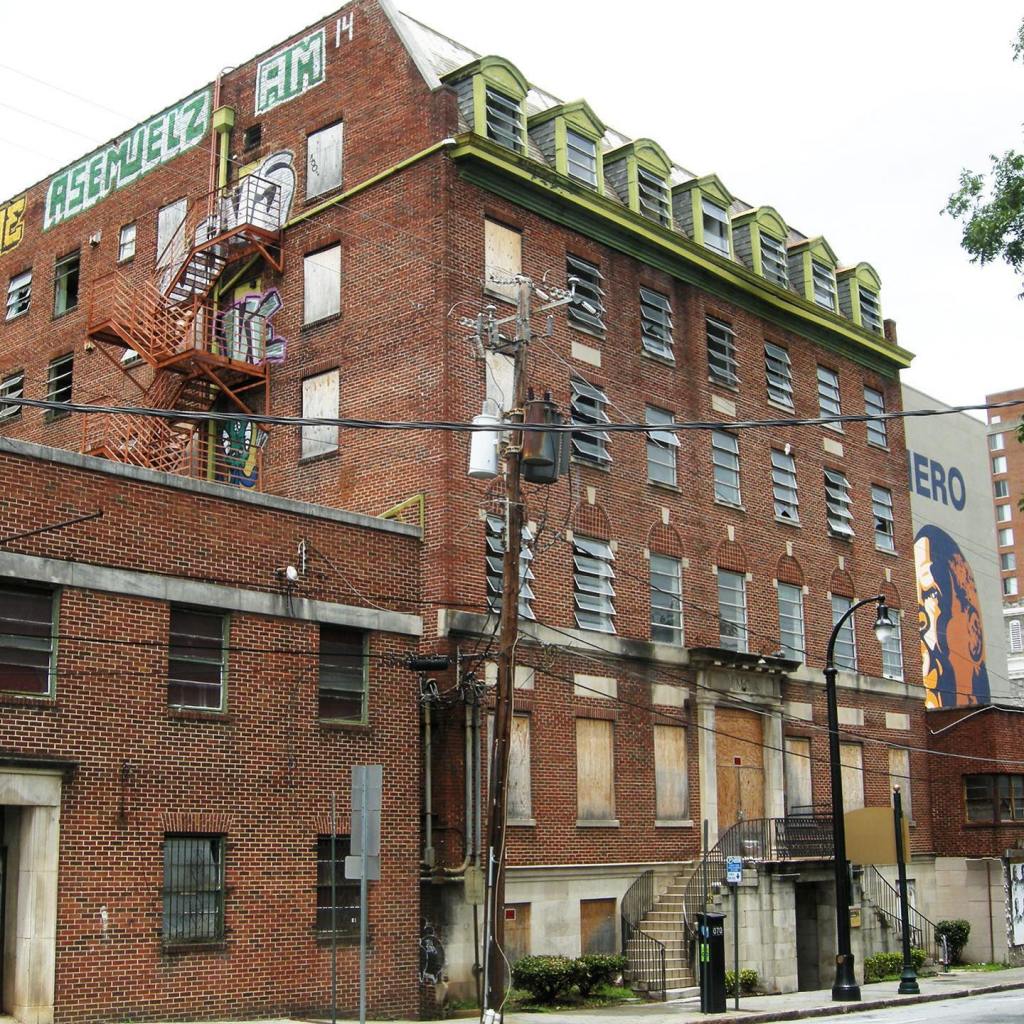
The fruits of that campaign materialized in the Butler Street YMCA—known in its day as the “Negro Y.” Built between 1918 and 1920, the new structure rose in the heart of the Sweet Auburn district, the beating center of Black enterprise and culture in Atlanta. The project followed Rosenwald’s signature pattern: a challenge grant that required local citizens—both white and Black—to raise the balance. The local enthusiasm kindled by Sunday’s revival evidently carried over into civic generosity, helping to meet the $50,000 goal needed to unlock Rosenwald’s contribution.

The Butler Street YMCA quickly became one of the South’s most important centers of African American life. Designed by the firm Hentz, Reid & Adler and built under the direction of Black contractor Alexander D. Hamilton, the facility was impressive for its time—three stories of brick and stone housing a swimming pool, gymnasium, dormitories, meeting halls, and classrooms. It provided a wholesome environment for young men seeking moral and social uplift in a city that offered them few such spaces.

More than a recreational facility, the Butler Street Y grew into a cornerstone of civic and spiritual leadership. Over the decades it came to be known as the “Black City Hall” of Atlanta, hosting meetings that shaped the course of civil rights and community advancement. Figures such as Martin Luther King Jr., Maynard Jackson, and Vernon Jordan would later pass through its doors. The Y stood as a living emblem of what cooperative goodwill and faith-inspired philanthropy could achieve during an era when segregation still divided the city.

The 1918 campaign that launched the Butler Street YMCA was more than a fundraising victory. It was a moment when revival energy turned outward—when the social conscience stirred by Billy Sunday’s preaching translated into practical generosity. In helping to fund the YMCA, the people of Atlanta built not only a structure but also a bridge between communities, one that carried forward the spirit of reform, service, and reconciliation that Sunday’s message had kindled. The Butler Street Y remained for nearly a century a monument to that brief but luminous cooperation—a place where faith met action and where the legacy of revival took tangible form in brick, mortar, and hope.

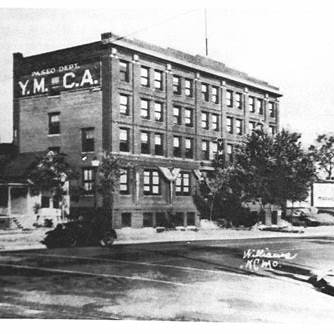
Butler YMCA, image from their Facebook page

Billy Sunday was mentored by J. Wilbur Chapman

The following (1917) signed picture of J. Wilbur Chapman, in the Billy Sunday home in Winona Lake, attests to the massive influence Chapman had on Sunday.


When the Apprentice Met the Evangelist: How J. Wilbur Chapman Shaped Billy Sunday’s Early Ministry

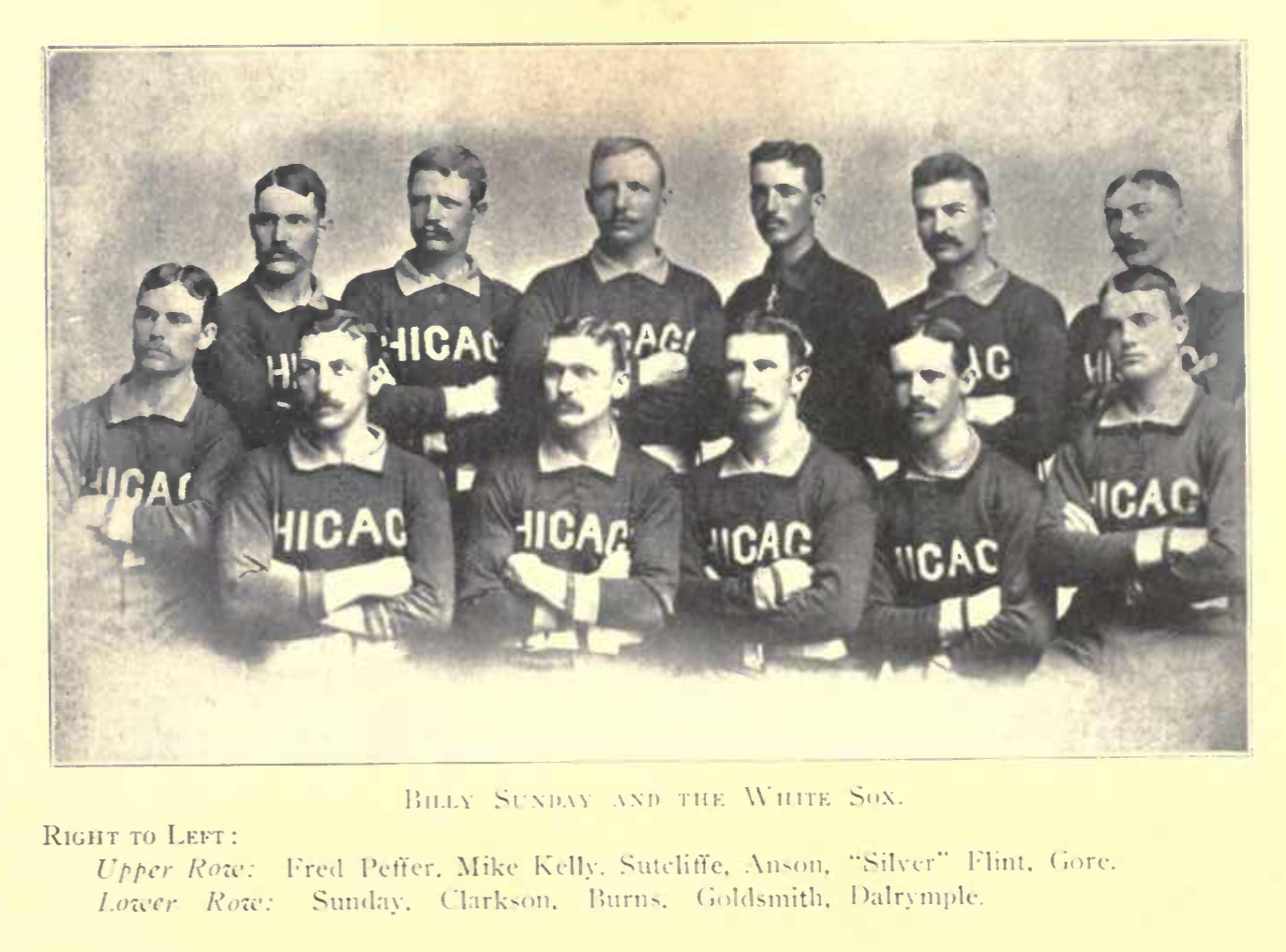
Before the tabernacles were packed, before the crowds surged forward by the thousands, before the name “Billy Sunday” echoed across the country like a revivalist’s thunderclap—he was simply a former ballplayer, freshly converted, and hungry to make his life count for Christ.

That’s when J. Wilbur Chapman stepped into the picture.

It was 1893. Chapman, already an established evangelist with a Presbyterian pedigree and a knack for drawing the spiritually curious, needed an assistant—someone to handle logistics, rally local churches, and stir up enthusiasm before his campaigns. Billy Sunday had the energy and the zeal. Chapman had the method and the message.

For two critical years—1893 to 1895—Sunday shadowed Chapman like a student to his rabbi. He wasn’t yet preaching, but he was watching. Learning. Absorbing. Chapman’s campaigns weren’t just events—they were carefully orchestrated spiritual operations. Inquiry rooms. Personal follow-ups. Gospel invitations that were both clear and convicting. Sunday took it all in.

But it wasn’t just technique that Chapman passed on—it was a vision. A way of doing evangelism that held fast to the truth of Scripture while reaching real people in real places. Sunday saw in Chapman a man who carried both conviction and compassion. And though their styles couldn’t have been more different—Chapman, the dignified clergyman; Sunday, the kinetic whirlwind—it worked. Like iron sharpening iron.

In 1895, Chapman surprised many by stepping back from itinerant preaching to take a pastorate in New York. The pulpit reclaimed him. But for Billy Sunday, it was a release—a gentle push from the nest. With his mentor’s example still fresh, Sunday stepped onto his own stage. He started small—tiny Iowa towns, rough-hewn tabernacles, handfuls of seekers. But something was forming. Something bold.

It’s hard to overstate what those two years meant. Without Chapman, Sunday might’ve remained a sideshow curiosity—a saved athlete giving testimonies. But with Chapman’s imprint, he became an evangelist. A revivalist. A force.

And though their paths diverged, Sunday never forgot the man who shaped his earliest steps. He took Chapman’s gospel framework, set it ablaze with his own personality, and carried it farther than either man probably imagined.

Chapman taught him how to build the fire. Sunday learned how to preach like it mattered.

Billy Sunday donated the equivalent of almost $4 million to Pacific Garden Mission, the Y.M.C.A, and the Red Cross.

As reported by The Richmond Item. Fri, May 26, 1922 ·Page 7.

SUNDAY DONATES SUM OF $120,485

Then on Top of That he Gives $65,000 to Pacific Garden Mission of Chicago

Those who call Billy Sunday a grafter were asked yesterday afternoon to hear a little of some past donations of the evangelist. He told his tabernacle audience that when he was in New York City (c. 1917) he told the people coming to the tabernacle to give him all they were able to and he would give it all to the Red Cross and the Y. M. C. A., for their war work.

New York City gave me $120,485, Mr. Sunday said, and I turned over every cent for the work that I had said I would. I went to Chicago and the city gave me $65,000 and I gave the sum to the Pacific garden mission. I give away a tenth of my income. And that is all right. I do not advertise all the things I do with my money. I do not tell all the world the things that I pay off. You follow me around, some of you, and I will make you dizzy with the money I give away. But I don’t have to tell anyone. It is written down above so that is all that matters.

No Guarantee

When Mr. Sunday promised to come to Richmond, he was guaranteed nothing, and all that was to go to him was the free-will offerings the last day of the campaign. He exclaimed, I wonder whether any circus would come to your city on that basis just take up a collection. I wonder whether your county or city officials would collect its taxes on that basis take up a collection. I wonder whether they would let you go to the movies and then take up a collection. No collection for Dempsey when he stood ten minutes in the ring and received $300,000. Oh! no. If I got some of you pay more for your gasoline each year than you do for your church. Oh. it makes me mad when I see you putting God on a five and ten cent basis.

Little

Like one old bird who was always at prayer meeting giving testimony and telling of all he did when he had more on tobacco than he gave to the church in 13 years.

Mr. Sunday preached on God So Loved the World. The Rev. Alford of Columbus, O., made opening prayer. Messrs Mathews and Rodeheaver sang a duet. Mr. Rodeheaver sang My Wonderful Dream. following the sermon, Mr. Sunday gave the invitation and six persons responded.

had found the sheep that was lost. He took her tenderly, and in his shepherd’s plaid he carried her to the fold. One, two, three, four, five, six ninety-six, ninety-seven, ninety-eight, ninety-nine and one hundred. He locked the fold and entered the cabin and she had fallen exhausted on the floor.

She was lying there panting and at the sound of his voice and footsteps she staggered to her knees, reeling and fell dead.

That Jesus Christ should come to this old world to give us a chance to be saved, to try and find us, cursed and scarred and bruised with sin. That is God’s message to us. He so loved the world, that he gave his only Begotten Son, that whosoever believeth in him should not perish, but have everlasting life.

Once, years ago in New York I was told there lived a wealthy Christian merchant. He married a beautiful woman, gave her a bank account and unknown to him she drank. She used to go away and visit friends on pretence of visiting relatives. She kept it up and at last fell into a life of sin and shame.

One night he came home and found a note telling him that she had gone away never to return. That her life could not merit his true, Christian character and life. He hired detectives and they searched every where and they could not find her.

Copies of her pictures were left with the police and with undertakers around the country and he said, If you run across her body, use the best clothes that money can buy, buy the finest casket, etc.; bank it with flowers and send for me.

Three years went by when the phone rang and a voice said, We have found her.

And he went to the undertaking establishment and as he looked through the glass upon her face, he cried, Oh, Mary, if you only knew how I loved you, you would have come back.

He stood weeping as if his heart would break and he said, Bury her.

And he erected a costly monument and said to the undertaker, Put on it one word: Forgiven.

That is God’s message to us. He forgives our transgressions, and I am glad that I have a God and that I have a Salvation like that to preach to you.