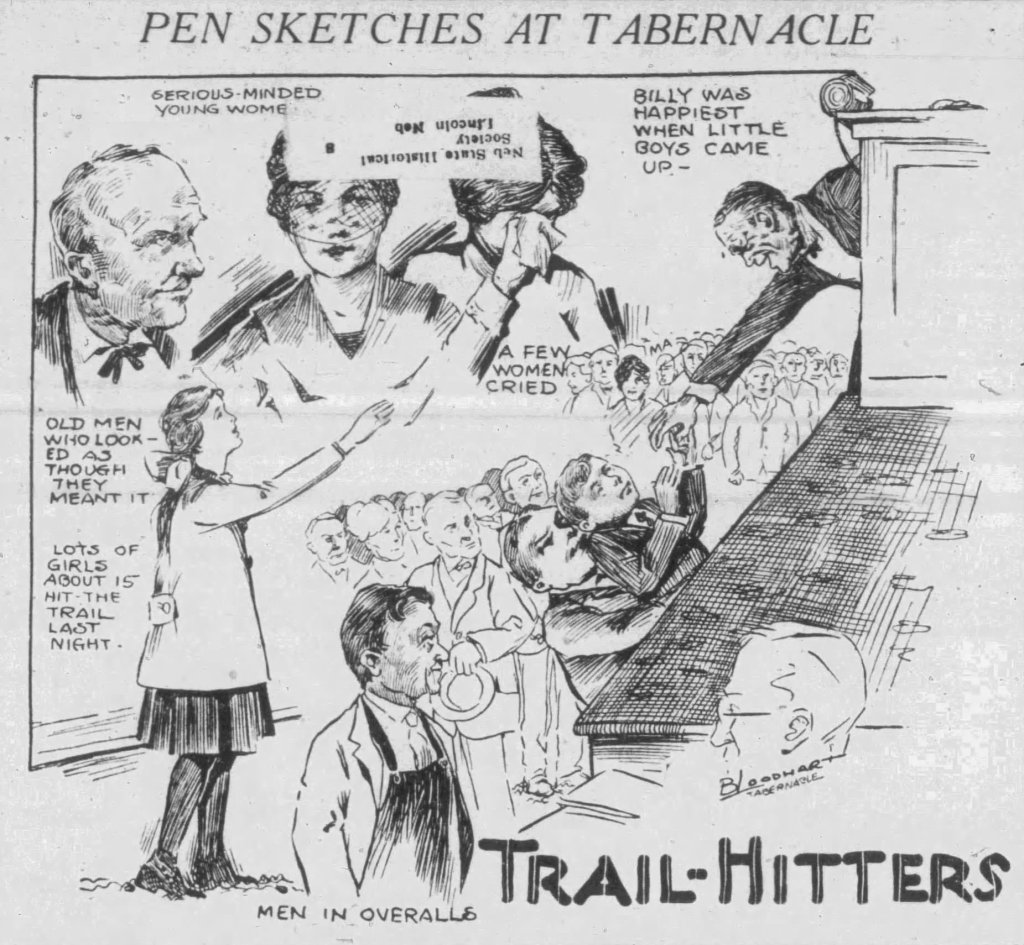
On the Sawdust Trail: A Night at Billy Sunday’s Tabernacle, Philadelphia (Week One)

Curated from: The Philadelphia Evening Ledger. January 6, 1915:3.

You don’t just attend a Billy Sunday meeting—you step into it.

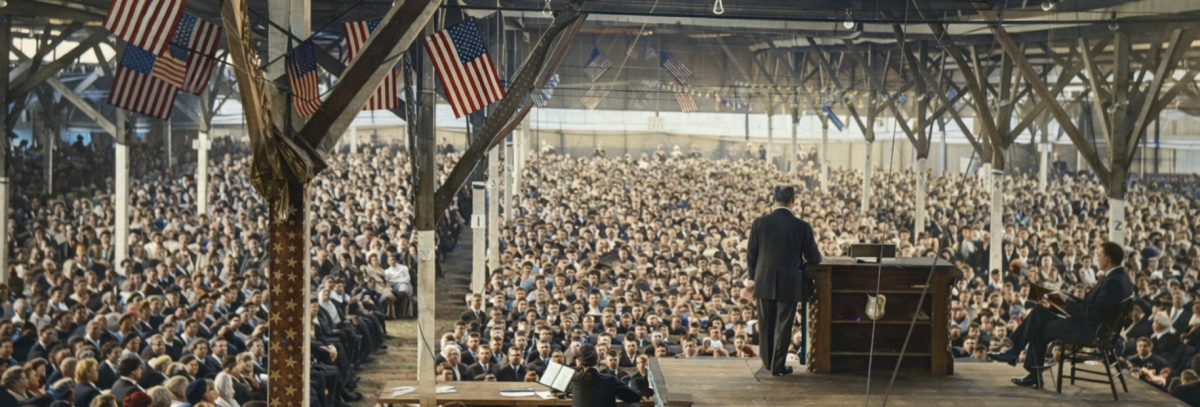
By the time I reached the tabernacle, the place was already alive. Not just crowded—alive. Policemen lined the edges, firemen stood ready, and yet there wasn’t even “the merest hint of disorder.” Whatever this thing was, it had structure. It had gravity. And it was pulling people in.
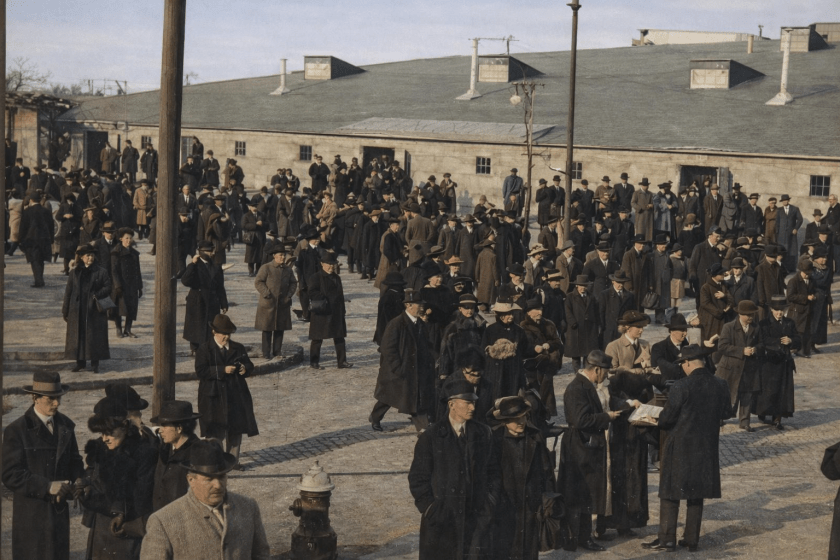
Colorized image of the Billy Sunday tabernacle in Philadelphia, c.1915.

Inside, the air carried that peculiar mixture of sawdust, sweat, and anticipation. Outside, though—that’s where you heard the real story.

A man near me, confident as a prophet, said to no one in particular:

“Billy Sunday has only started… it’s going to get worse and worse. He arouses more enthusiasm each day. If you don’t believe me, ask Scranton.”

That was the mood—this wasn’t the event. This was the beginning of the event.

The Crowd Watching the Crowd

It struck me quickly: people weren’t just watching Billy Sunday.

They were watching each other.

One visitor said it plainly:

“I was naturally interested in ‘Billy’ Sunday, and perhaps even more so in the crowd.”

And what a crowd it was.

A boy—no more than ten—hobbled in on crutches just to hear him. A sailor from the battleship Kansas had been waiting “for months” to catch a meeting. A woman stood nearby, nervous, almost whispering:

“Oh! no. I cannot give my name… my husband would throw a fit if he knew I had been in here.”

And yet—there she was.

That’s how you knew something was happening. Not just attendance—but risked attendance.

What People Were Saying

If you wanted to understand Billy Sunday, you didn’t start with the sermon.

You started with the talk afterward.

“What do you think of ‘Billy’?” someone asked.

The answers came quick, overlapping:

“Great.”
“Some man.”
“An ace.”
“I like him because he goes after the hypocrites.”
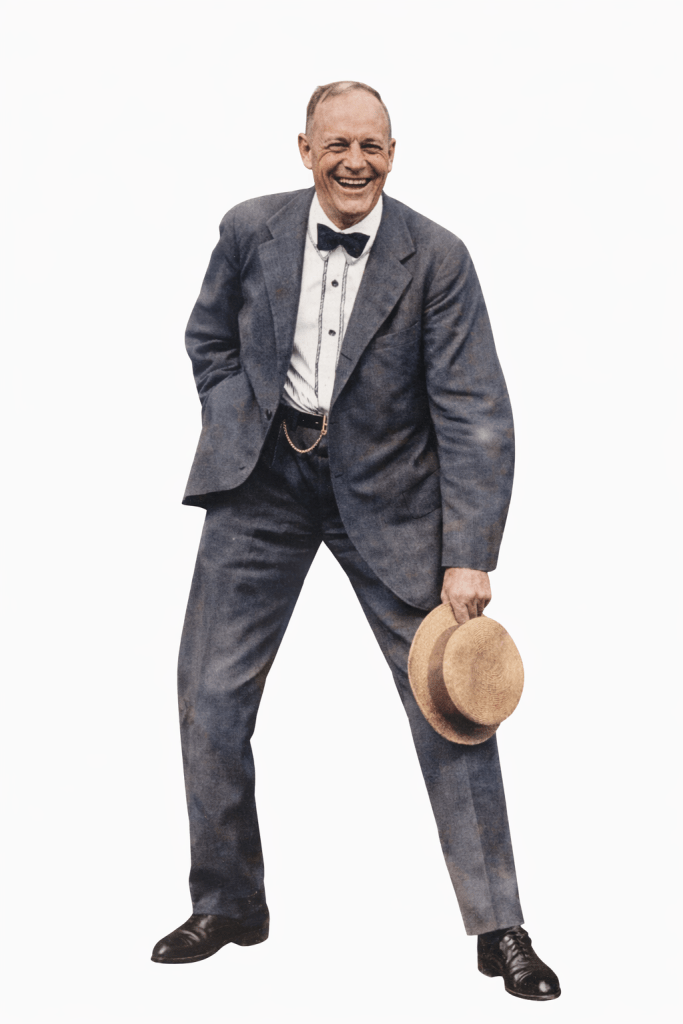
Others reached for bigger words:

“Wonderful… splendid… marvelous.”

But not everyone could quite put their finger on it.

One woman, looking slightly dazed, said:

“I have had so many things fired at me in the last hour that I can’t quite set my bearings.”

That may have been the most honest response of all.

More Than a Sermon

There was something else in the air—something heavier than excitement.

A man, speaking to a small group of women, said what many were thinking:

“I would like to see ‘Billy’ Sunday wake this city up and get the rum out of it… Look how many homes he would make happy.”

And then, almost quietly, another moment:

In the northeast corner of the tabernacle, someone reported hearing a man say:

“This is my last drink.”

No sermon transcript can capture that.

That’s the sawdust trail doing its work.

The Unexpected Details

Not everything was solemn.

Someone joked about the sawdust itself:

“They say Mr. Sunday hates noise, and I know I am going to sneeze. I always do when around sawdust.”

Even the ministers weren’t immune to the moment. One well-known clergyman was said to amuse himself before preaching by reading The Fun of Getting Thin—and now, thanks to the crowds, “occupies two seats.”

And everywhere—evidence of men lingering longer than usual:

“There were enough cigar butts left in the gutters… to start a true second-hand cigar store.”

It wasn’t tidy.

It wasn’t polished.

But it was real.

Order in the Midst of It All

For all its energy, the thing held together.

The crowds were vast, but they moved. The police managed them. The firemen stood watch. The machinery of the city seemed, for a moment, to cooperate with something larger than itself.

One observer summed it up best:

“To get and hold a vast throng like this on a weekday for the purpose of hearing the gospel certainly is a tribute to the man himself.”

And It’s Only the Beginning

If you stood there long enough, listening—not to the sermon, but to the people—you began to realize something:

The revival hadn’t peaked.

It hadn’t even arrived yet.

It was building.

You could hear it in the confidence of the man who said, “ask Scranton.”
You could see it in the boy on crutches.
You could feel it in the nervous woman who came anyway.
You could sense it in the man who muttered, “my last drink.”

Billy Sunday may have been the preacher.

But the city—
the crowd—
the conversations spilling out onto the streets—

They were becoming the message.

And Philadelphia, whether it knew it yet or not, was just getting started.
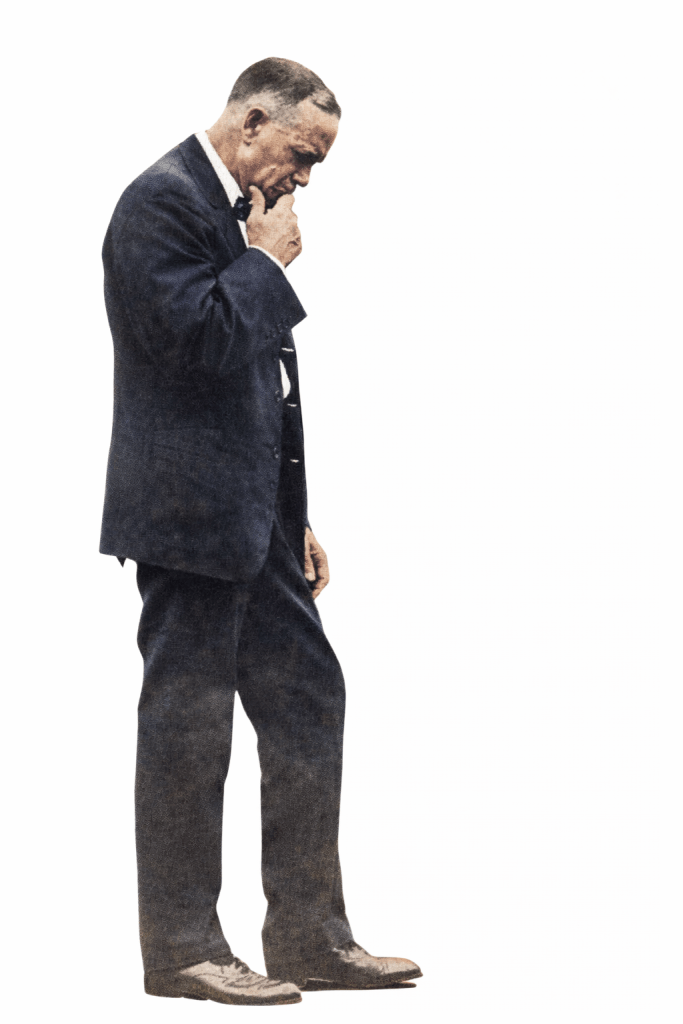
When Billy Sunday prays

Billy Sunday prays with a punch.

He prays as though God Almighty were standing right before him.

He prays for everybody.

He prays with the same earnestness and energy that marks his preaching. He prays with the zeal and vim that starred him in baseball.

He expects his prayers to land.

He prays for you and me, for the plumber and the telephone girl, for the banker and the street cleaner, for the washwoman and the debutante.

There’s nothing perfunctory in Sunday’s praying.

Sunday’s prayer is not what he says many a prayer is—“Just a funny noise.”
Sunday has something to ask for and he asks for it.

He prays for the salvation of souls, for the success of his meetings, for men to “hit the trail for Jesus Christ.”

Billy Sunday at prayer is the picture of a lawyer pleading to a court. Sunday is the attorney at the bar. Those he prays for are his clients. God Almighty is the supreme judge. God is on the bench hearing the argument.

Sunday states his case. He tells the “judge” what he wants; he gives his reasons; he makes his argument; he pleads:

“For Christ’s sake, God, grant what I ask.”

There’s punch in Sunday’s praying.
His prayers distinguish him.

Cited from: The Omaha Daily News. September 19, 1915: 10.

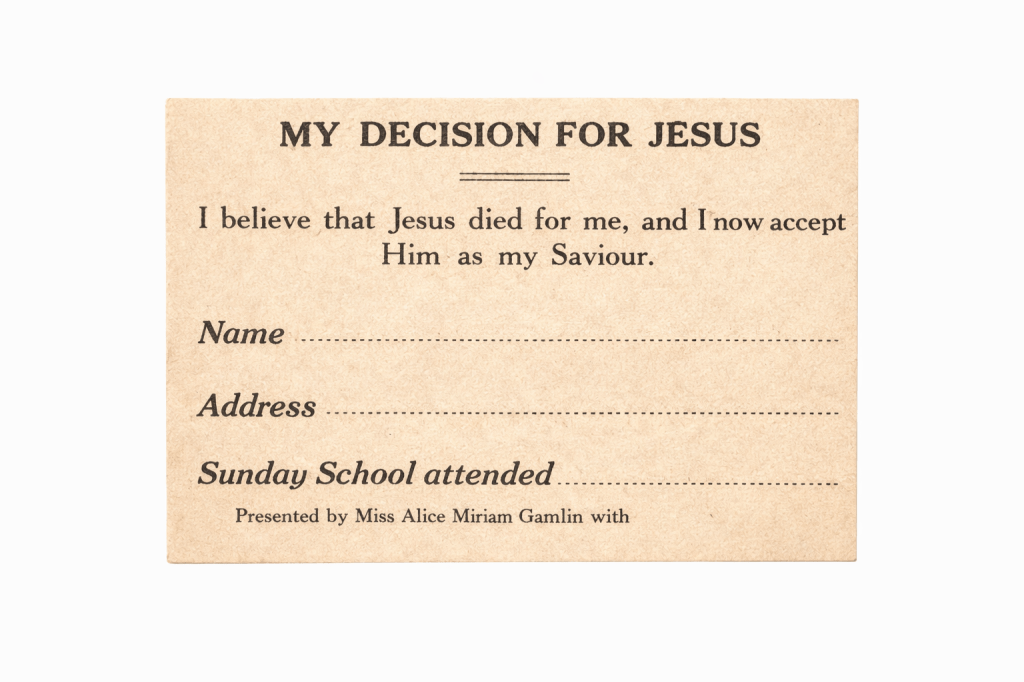
A ‘salvation’ decision card for a Billy Sunday revival

Here is what a ‘trail hitter’ filled out who walked the sawdust trail during a Billy Sunday revival. Omaha saw 13,000+ conversions, closing on October 24, 1915 (opening Sept 5). Billy preached at least 96 times just in the tabernacle during this revival, and scores more outside of the tabernacle venue.

Sermon: Secret of failure (Jer. 5:25), c.1915

Another popular sermon for Billy Sunday during the 1915-1916 campaigns was the Secret of Failure.

In “Secret of Failure,” Billy Sunday argues that failure in life is not accidental but rooted in disobedience to known truth. Using Jeremiah 5:5, he contends that God’s blessings are available, but people forfeit them by breaking His laws. The central issue is not ignorance but willful rebellion—people know what is right yet refuse to do it. Sunday emphasizes that sin is often subtle and socially acceptable, not just gross immorality, and that even church members can live in quiet compromise. He warns that partial obedience, moral neglect, and conformity to the world lead to spiritual defeat. External religion—church attendance, respectability, or profession of faith—cannot substitute for genuine obedience and transformation. True success, he insists, comes from aligning one’s life with God’s revealed will. The sermon builds toward a direct appeal: stop excusing sin, confess it honestly, and live out what you already know to be true, or failure—spiritual and moral—is inevitable.

Quotes from the sermon

“Your failure isn’t because you don’t know better—it’s because you won’t do better.”

“God tells you what to do, and you nod your head—but you never move your feet.”

“Some men are too good to be counted among the wicked—and too bad to be counted among the saved.”

“A half-obedient man is a whole failure.”

“You can sit in church and hear the truth every week—and still go to hell with a Bible in your lap.”

Curated from September 24, 1915 Omaha Daily Bee.

Secret of failure-Omaha_Daily_Bee_1915_09_24_2

Sermon: David and Nathan, 2 Samuel 12

Billy Sunday preached the sermon of David and Nathan often during 1915-1916, using it in Kansas City, Baltimore, Philly, and Omaha.

Billy was fond of using narrative passages of Scripture to apply to a gospel sitting.

In this sermon, Billy Sunday argues that the Bible’s credibility is demonstrated by its honesty in revealing both the virtues and sins of its central figures. This transparency proves Scripture is not fabricated but divinely truthful. From this foundation, he emphasizes the universality and progressive nature of sin, showing how it enslaves individuals and shapes character over time. Sunday rejects the idea that morality, religious rituals, or personal effort can remove sin, insisting that only Christ provides true forgiveness and transformation. Genuine salvation, he argues, results in a changed life, not mere outward reform. The sermon builds toward an urgent appeal for repentance and new birth, calling listeners to abandon self-deception and receive the cleansing and renewal that only God can provide.

June 4, 1916. The Kansas City Star.

Here are some noteworthy quotes from the sermon

“God tells both sides of the story. He doesn’t whitewash His saints—He shows you the black spots as well as the bright.”

“A man doesn’t become a criminal in a day; he practices himself into it. Sin is a habit before it is a headline.”

“You can’t whitewash your heart with good works—sin soaks through. It takes the blood of Christ to make it clean.”

“If a man is born again and lives like the devil, then either he isn’t born again—or the Bible isn’t true.”

Billy Sunday receives bomb death threat while in Omaha in 1915

Curated from original Omaha Daily Bee newspaper

A sensational threat upon the life of Evangelist Billy Sunday, conveyed through a crudely written “black-hand” letter, stirred the city yesterday but failed to interrupt the progress of the revival meetings at the great tabernacle.

The warning, received through the mails on Wednesday, declared that a bomb would be hurled into the tabernacle at 2 o’clock Thursday afternoon, September 23, and that Sunday would be killed unless he departed the city within ten days. The missive, scrawled in poor handwriting across ordinary note paper, bore at its lower corner the drawing of a black hand and a crude sketch of a bomb connected to a clock marking the fatal hour.

The Billy Sunday Tabernacle. Omaha, Nebraska.

Authorities were immediately notified. Chief of Police Dunn detailed detectives to trace the author of the threat, and a vigilant watch was ordered about the tabernacle grounds. Secretary Mathews, who first examined the letter, refrained from alarming the evangelist and quietly placed the matter in the hands of the police.

Despite the ominous warning, the Thursday afternoon meeting proceeded without incident. A squad of detectives, led by Sergeants Patsk Havey and Tom Donahue, mingled with the crowd, keeping careful surveillance in anticipation of any attempt upon Sunday’s life.

If the threat was intended to deter attendance, it met with mixed success. Many curious men flocked to the tabernacle, drawn by the sensational report, while the number of women present was noticeably reduced. Total attendance fell below the usual mark. Yet inside, the service moved forward undisturbed—save for the innocent crying of a baby, whose presence, smuggled past ushers, proved the only interruption to the evangelist’s address.

Thus, what promised to be a day of danger passed into one of quiet defiance. The bomb did not appear. The preacher remained. And the revival, under the watchful eye of the law, pressed on.

Adapted from: The Omaha Daily Bee, September 23 and 24, 1915