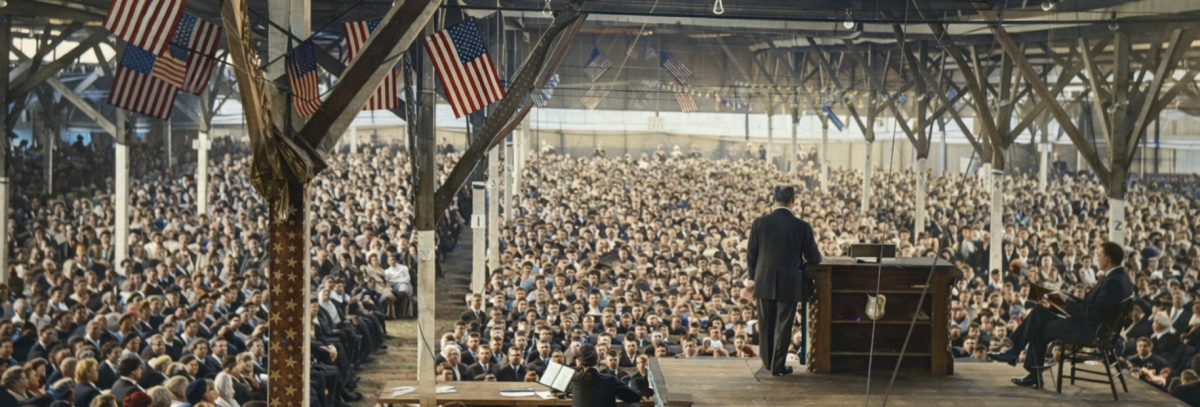
In the summer of 1910, Billy Sunday stood at an interesting crossroads in his rapidly expanding ministry. By this point he was already nationally known as one of America’s most electrifying evangelists. Cities across the country were beginning to build large tabernacles to accommodate the crowds that flocked to hear him preach. Yet during the summer months—when revival campaigns often paused—Sunday occasionally appeared on the Chautauqua circuit, the great American network of traveling lecture assemblies that combined education, entertainment, reform movements, and religion.
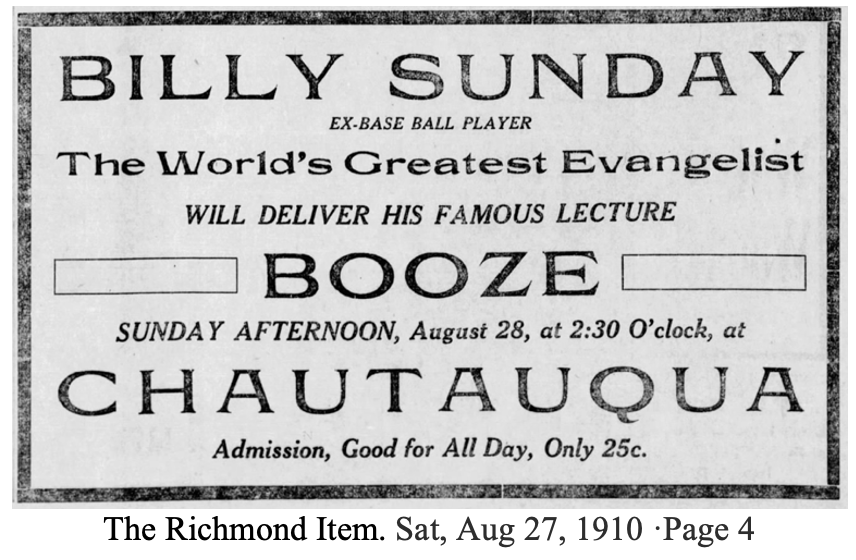
Unlike many lecturers who spent the entire season touring the circuit, Sunday’s 1910 Chautauqua schedule was surprisingly limited. He appeared only at a handful of assemblies, and his comments to the press make clear that this was intentional. Sunday had been offered lucrative opportunities to spend the entire summer lecturing. One newspaper reported that he declined an offer of $20,000 to devote the season to Chautauqua work, explaining that the exhausting schedule would leave him unable to conduct revival campaigns in the fall.
“The report that I am to retire is all pure nonsense… I refused $20,000 to give my time to Chautauqua work this summer, as I would be worn out and could not preach before January.”
Sunday’s priority remained evangelistic preaching. Nevertheless, the few Chautauqua appearances he did make during the summer of 1910 provide a fascinating glimpse into his growing national popularity and the remarkable drawing power he already possessed.
Whidbey Island: The Northwestern Chautauqua Assembly
Sunday’s Chautauqua engagements began on July 24, 1910, at the Northwestern Chautauqua Assembly on Whidbey Island, Washington.
At this gathering Sunday delivered a message titled “Forces that Win.” Like many of his sermons, it blended moral exhortation with vivid biblical storytelling. Reports indicate he illustrated his message with the story of David and Goliath, a favorite example of spiritual courage overcoming overwhelming odds.
Even among the prominent lecturers and performers typical of a Chautauqua program, Sunday stood out. His dynamic speaking style—rapid delivery, colorful language, and dramatic physical movement—contrasted sharply with the more measured lecture format audiences often expected.
Hillsboro–Litchfield: A Midwestern Assembly
In early August Sunday appeared at the Hillsboro–Litchfield Chautauqua, running from August 4 through August 11. These regional Chautauqua assemblies usually featured a mixture of lectures, concerts, political discussions, and religious addresses.
Sunday’s presence on such programs reflected the growing recognition that he was not merely a revivalist but also one of the most compelling public speakers in the country.
Maxwelton, Washington: Crowds Even in Small Communities
On August 6, Sunday spoke at the Maxwelton Chautauqua in Washington, addressing a crowd estimated at 4,500 people.
The size of the audience is striking. Maxwelton itself was a small community, yet thousands gathered to hear Sunday speak. Even outside the large urban revival campaigns for which he would soon become famous, his reputation alone was enough to draw impressive crowds.
Patterson Springs: Record-Breaking Interest
Another Chautauqua stop came on August 10 at Patterson Springs. Newspapers noted that Sunday had previously delivered a lecture there that produced $3,600 in ticket receipts, reportedly a record for a single Chautauqua lecture.
This financial success reveals something important about Sunday’s role in the Chautauqua movement. He was not just a preacher filling a religious slot in the program. He was one of the circuit’s major attractions, capable of drawing large audiences and generating significant revenue.
Even so, Sunday resisted becoming primarily a Chautauqua lecturer. His heart remained in revival work.
Lake Whatcom: The “Human Interest” Lecturer
On August 24, Sunday appeared at the Washington Assembly Chautauqua near Lake Whatcom. Promotional material advertised him as delivering the program’s “human interest” lecture, a category that perfectly suited his style.
Sunday’s talks often mixed humor, storytelling, social criticism, and passionate moral appeal. He could move easily from a humorous anecdote to a blistering denunciation of vice, particularly the liquor trade. This blend of entertainment and moral seriousness made him an ideal Chautauqua speaker.
Richmond, Indiana: A Crowd of Eight Thousand
Sunday’s most dramatic Chautauqua appearance of 1910 came on August 28 at the Richmond, Indiana Chautauqua.
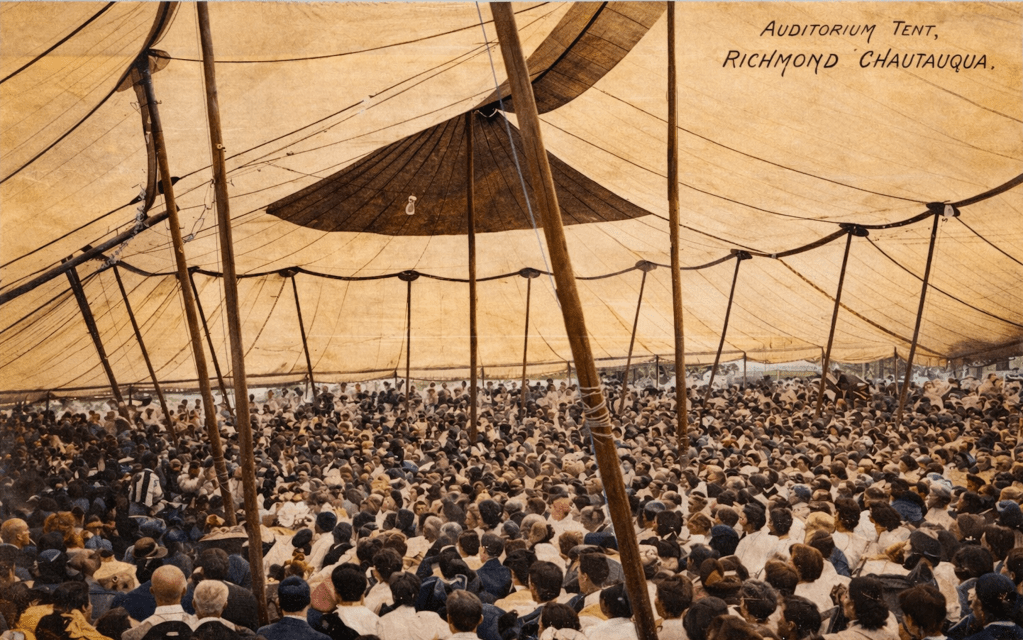
The crowd numbered roughly 8,000 people, and Sunday delivered one of his most famous temperance sermons, “Booze.”
Contemporary accounts describe a performance that was nothing short of theatrical. Once fully warmed up, Sunday removed his coat and launched into an explosive denunciation of the saloon. At one point he grabbed a red flag representing the liquor trade, hurled it to the ground, and stamped on it before triumphantly seizing the American flag to symbolize moral victory.
Such dramatic gestures were typical of Sunday’s style. Critics sometimes mocked them as stage tricks, but audiences loved them. They reinforced his reputation as the relentless enemy of alcohol and social vice.
Why the 1910 Season Was Short
One of the most interesting aspects of Sunday’s Chautauqua activity in 1910 is how limited it was.
Rumors circulated in the press that he might be retiring from public speaking altogether. In reality, the opposite was true. Sunday simply refused to devote the entire summer to the lecture circuit.
He explained that constant Chautauqua travel would leave him exhausted and unable to conduct the revival campaigns that he believed were his true calling. Instead, he used the summer months partly for rest and partly for select speaking engagements before returning to the intense schedule of fall revivals.
This decision proved wise. Later in 1910 Sunday conducted major campaigns in New Castle, Pennsylvania, and Waterloo, Iowa, drawing enormous crowds and recording thousands of conversions.
A Glimpse of Sunday’s Expanding Influence
Though brief, Billy Sunday’s 1910 Chautauqua season reveals several important aspects of his rising influence.
First, it demonstrates the extraordinary demand for him as a public speaker. Even isolated appearances drew crowds in the thousands.
Second, it shows that he was already a major figure in the reform movements of the era—especially the temperance crusade.
Finally, it highlights Sunday’s own priorities. While many speakers made their careers on the Chautauqua circuit, Sunday viewed it as secondary. His passion remained revival preaching and evangelism.
In hindsight, the summer of 1910 marks a moment when Billy Sunday could have easily become one of the most lucrative lecturers in America. Instead, he chose the harder path—returning to the sawdust floors of revival tabernacles and the exhausting pace of evangelistic campaigns.
And in doing so, he continued building the ministry that would soon make him the most famous evangelist in America.
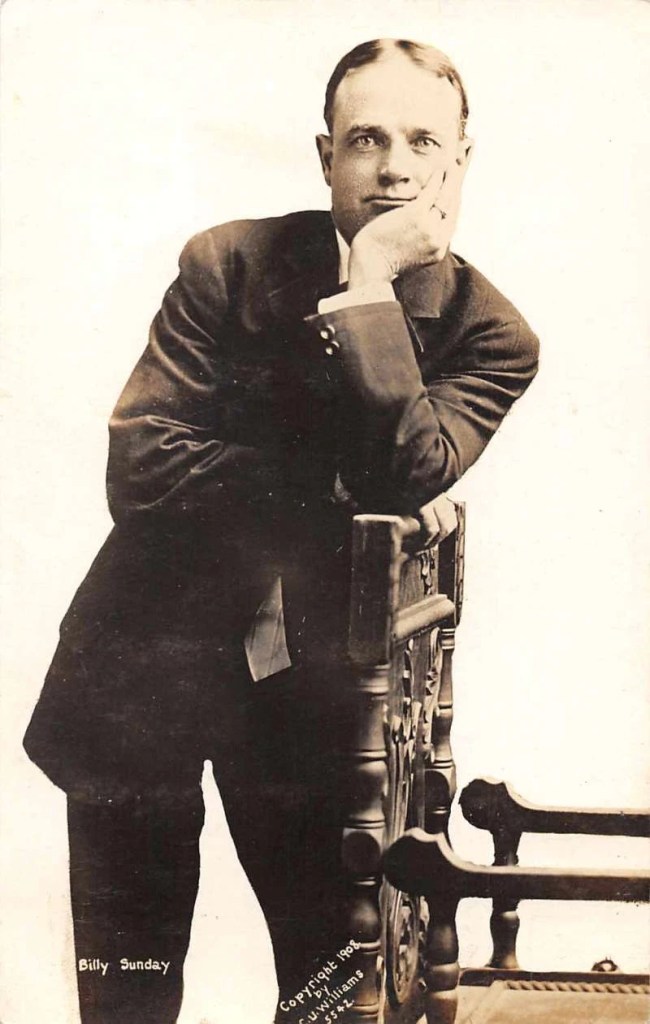
 Evangelist Billy Sunday (1862-1935)