Evangelist Billy Sunday compared to others in the itinerant class

The following information* was addressed to the Wilkes-Barre Editor in 1913, probably just before the February revival. It was likely drafted by Billy himself or someone else close to him from his campaign team. The revival at Wilkes-Barre took place February 22 (23), thru April 13th, 1913.

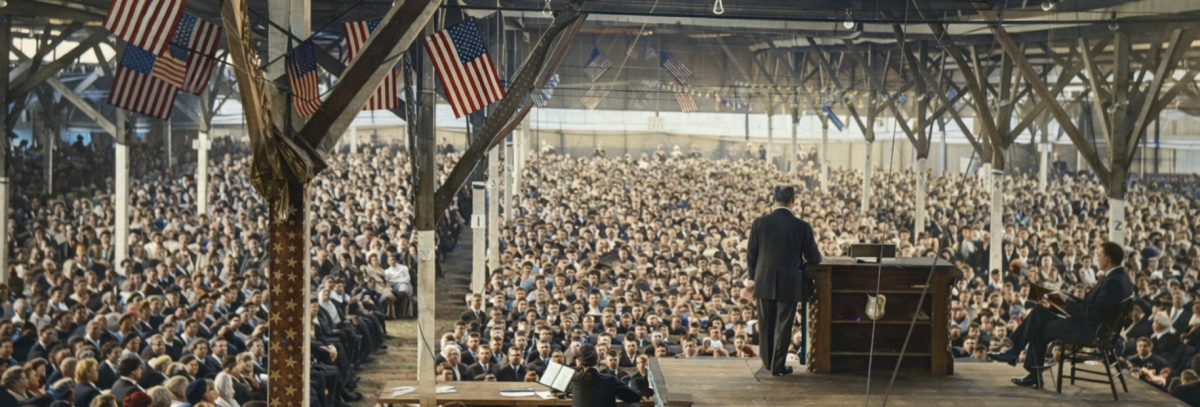
Image made by J. Inbody, Elkhart, Indiana. Author’s collection. From a 1915 postmarked postcard.

“He [Billy] has skimmed the literature of the English race for information and illustrations, and has a slang vocabulary that is simply astounding. He uses his knowledge with such telling effect that those who come to scoff remain to pray. His earnestness, his transparent honesty, carries his hearers with him, and his slang is all forgotten in his clarion call for repentance; his denunciation of all that is bad, vile and wicked, and in his praise of God, home and country.

“The old school of evangelists were of the itinerant class, moving rapidly through the country, their evangelism seemed sudden in its effects, and I am afraid somewhat evanescent in its results. It is just here that Sunday’s campaign gives promise of more lasting good. His coming has been carefully prepared for, and his meeting place is undenominational and unconventional in character. His is a movement conducted with great business acumen and sound common sense. He trains the ministers and church workers in such a way as to make them capable of caring for the harvest when it comes. Like a good farmer, he prunes the fruit trees with vigor, cuts out all the dead wood and sprays well to get rid of moths, beetles, and such like, so that when the new fruit shall ripen it will be sound and good. Mr. Sunday is a man with a great faith. He prays for the blessing, he prepares for the blessing, and he is sure of getting it. It is therefore no surprise to him when it comes.”

*Original artifact is in the Billy Sunday Archives at the Morgan Library, Grace College.
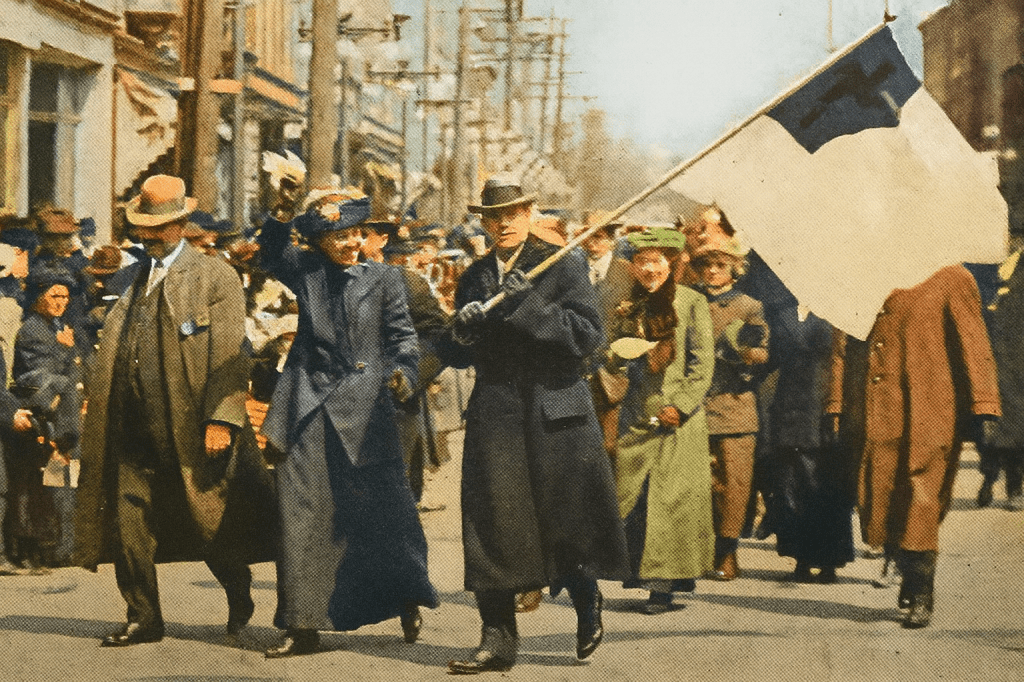
Billy Sunday, and wife Helen, lead a procession of around 20,000 people in a
Sunday School parade at Wilkes-Barre. Colorized by the author.
Poem sent from Wilkes-Barre, PA to Billy Sunday c May 1913

Just prior to starting the late April 1913 South Bend revival campaign, Billy Sunday finished his campaign in Wilkes-Barre, PA. He was apparently sorely missed just days afterward as a citizen-employee from Vulcan Ironworks sent this poem to the South Bend Tribune, published Mon, May 05, 1913 ·Page 7.

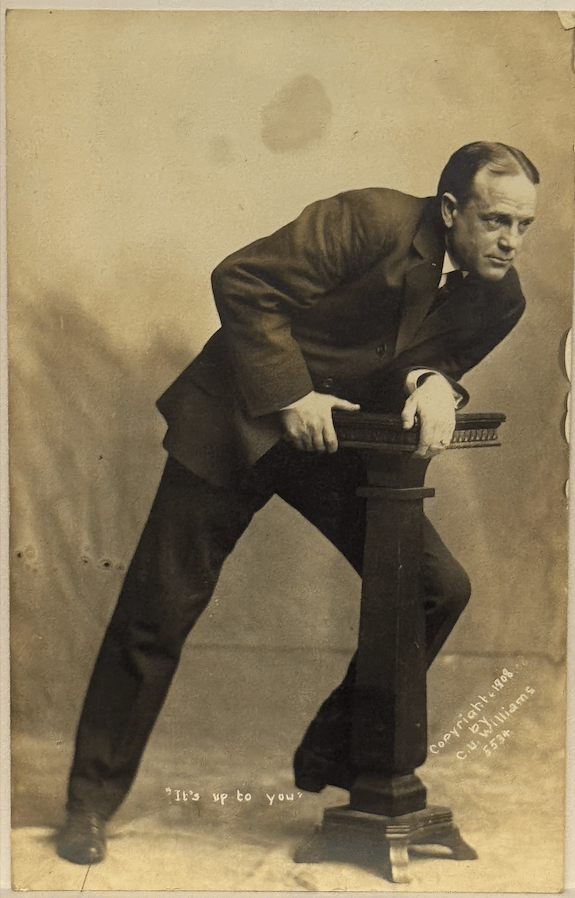
Copyright 1908. Author’s Collection.

Tribute to Sunday.

Tell your friends, we knew a fellow

Who’s the real thing through and through.

He’s a friend well worth having,

And he’ll be a friend to you.


When he came to old Wilkes-Barre,

Some of us were pretty tough.

And we thought that Billy Sunday

Was a grafter, sure enough.


But, one night we went to hear him—

With a banner and his band—

And we found that Billy Sunday

Is the best man in all the land.


How he hits the old ‘booze-fighter,’

And his cussing, spewing life—

Tells you how he starves his children,

Kills his poor, long-suffering wife.


Then he preaches Christ the Saviour

And His divine love, until

All the crowds just melt around you,

“Leaving God and you and ‘Bill.'”


When he says, ‘Don’t trust your feelings

“Come to Christ. He’ll never fail.’

And he holds his hand out pleading,

‘Fore you know, you’ve hit the trail.


Why, he makes sin seem so awful,

And religion seems so grand,

That you wish ten thousand “Billies”

Could sweep over this whole land.


But the best part can’t be told, friends,

How God fills your heart with peace,

And with hope and strength and courage,

And with joys that never cease.


So, three cheers for “Billy” Sunday,

Yes, three cheers, and three times three,

For the man who makes salvation

Plain to men like you and me.


And through all this great republic

‘Twould be mighty hard to find

Your grateful bunch of fellows,

Than his friends, the undersigned.

Post-Wilkes-Barre campaign results (published May 1913 in The South Bend Tribune)

WHAT SUNDAY DID AT WILKES-BARRE [February 23-April 13, 1913]

OFFICIAL OF CAMPAIGN MAKES STATEMENT ON RESULTS.

CITY BETTER GENERALLY

Business Was Improved, Politics Was Elevated and Social Life Was Raised to Higher Standard Says Man in Interview.

The Tribune’s Special Service.

WILKES-BARRE, Pa., May 6.

The Sunday party has gone from Wilkes-Barre to South Bend, Ind.

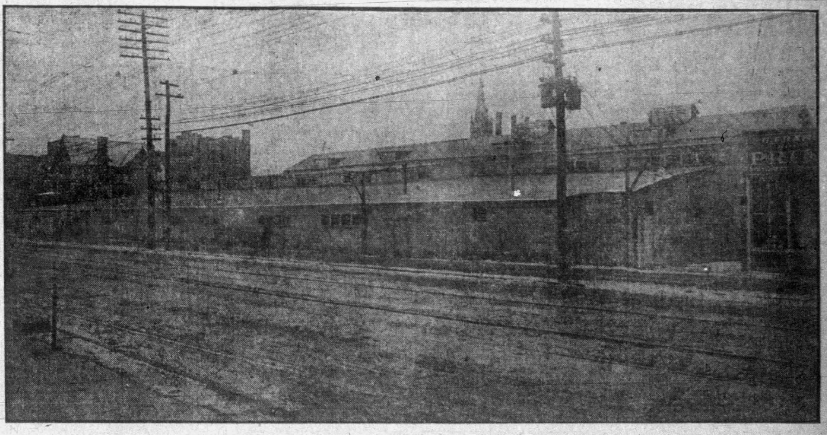
Exterior view of the Billy Sunday Tabernacle.
Wilkes-Barre Times Leader. Friday, February 21, 1913.

The tabernacle is being torn down day by day. The thousands who gathered beneath its roof to hear the greatest winner of souls in this generation have scattered and gone about doing the duties of their individual lives, but Wilkes-Barre and the Wyoming Valley will never be the same as it was a few months ago, before Billy Sunday came to this city. The moral and social life of the community has been given a new moral tone to the extent of which cannot be estimated for years.

This is the statement of Rev. J. W. Parkin, chairman of the Wilkes-Barre Ministerial Evangelistic committee, which had charge of the recent campaign in this city.

Moral Awakening.

“The most conservative,” he declared, “will admit that there has been a moral awakening the like of which has never been experienced here before. It is absolutely impossible to measure the immense amount of good that was accomplished, but I am sure that there is not one that regrets the hours and time and even money spent in planning for this campaign.”

“What,” he was asked, “do you consider the result of this visit on business here? You know it was prophesied that he would injure business.”

“An honest business could not have received greater help than came through the Sunday campaign,” was Mr. Parkhurst’s opinion. “A moral awakening such as we have had could not help but improve business. This has been evidenced in many ways, but particularly in the fact that people now realize more keenly than ever their obligations to each other and to the community. Hundreds of merchants have stated that accounts which they had considered closed because of inability to collect have been paid. There is a greater feeling of mutual respect now between employers and employes.

Politics Elevated.

“And politics; what about that? Do you think the campaign will have any influence on the politics of the country?”

“Well, I’m not much of a politician,” said the campaign leader, “but it seems reasonable to me to suppose that when a man finds himself in the position of a candidate for office he will be more careful in the future than ever before that there will not be any question about his private or business life.

There are many men in this city who have never been heavy drinkers for years who have bound themselves to abstinence. Hundreds of others who have been more or less indifferent or lukewarm in their opinion of intemperance have been aroused to a more active interest.”

“The moral wave,” he declared, “has been given a refining influence that is going to raise the standard of the community. Wilkes-Barre needed just such an indictment to make it realize where it was leading. I know hundreds of young people who have ‘cleaned house’ since Mr. Sunday came here.

‘You consider then that the people who criticized Mr. Sunday and his methods have been answered by the results which have been attained?’ was asked.

‘The critics have had nothing to offer that will accomplish the same amount of good that has been accomplished by Mr. Sunday.’

February 22, 1913


“Immediately following Columbus, Mr. Sunday opened a series of meetings at Wilkes-Barre, Pa., the farthest east of any district in which he had ever worked. The campaign opened on Washington’s Birthday—February 22—1913. Rev. W. M. Randles, pastor of the Bethesda Congregational church, gives the number of converts as 16,348, and the free-will offering as $23,527.66. In only this one respect did the Wilkes-Barre campaign exceed that of Columbus.”

  • Frankenberg, 1917: p. 132.