This picture hangs in the house of the Billy Sunday home in Winona Lake. Image taken with permission.
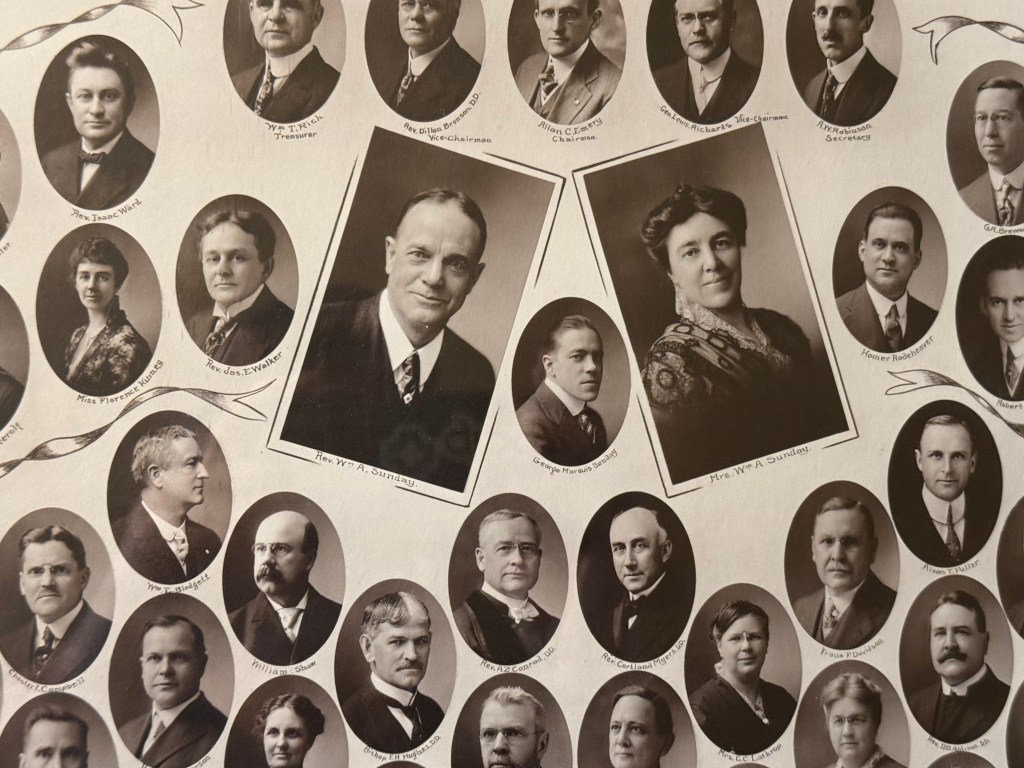
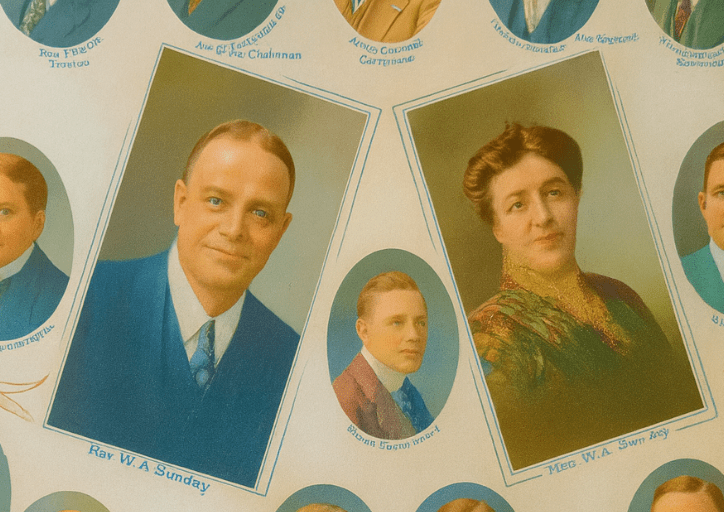
Evangelist Billy Sunday (1862-1935)
Former professional baseball player-turned urban evangelist. Follow this daily blog that chronicles the life and ministry of revivalist preacher William Ashley "Billy" Sunday (1862-1935)
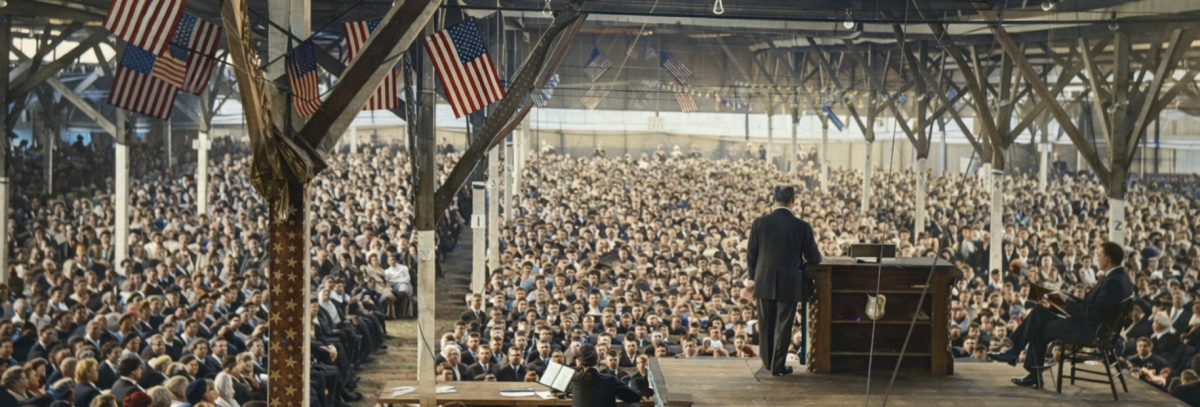
This picture hangs in the house of the Billy Sunday home in Winona Lake. Image taken with permission.
LANDMARKS IN BOSTON’S BILLY SUNDAY CAMPAIGN
1915
Feb. 22—Fifty Boston ministers and laymen go to Philadelphia; hear Sunday preach for first time; walk into his bedroom the next morning and demand that he come to Boston. Sunday accepts and date is fixed for Fall of 1916.
March 6—Organization of Boston committee announced at big meeting in Park Street Church.
March 7—Committee files papers at State House as “Boston Sunday Evangelistic Committee, Incorporated.”
1916
Jan. 21—Committee decides to build tabernacle on Huntington-av site.
March 22—Twenty members of Boston Committee go to Baltimore to learn their jobs from campaign workers in that city.
April 27—Wooden tabernacle bill vetoed by Gov McCall. Committee nonplussed.
April 30—Campaign for $100,000 in guaranty pledges launched.
Aug. 10—Ground broken for tabernacle. Mayor Curley attends. Joe Spiece begins work.
Oct. 2—Cottage prayer meetings open.
Nov. 12—BILLY SUNDAY PREACHES FIRST SERMON IN BOSTON.
As appearing in The Boston Globe Sun, Oct 15, 1916 • Page 80
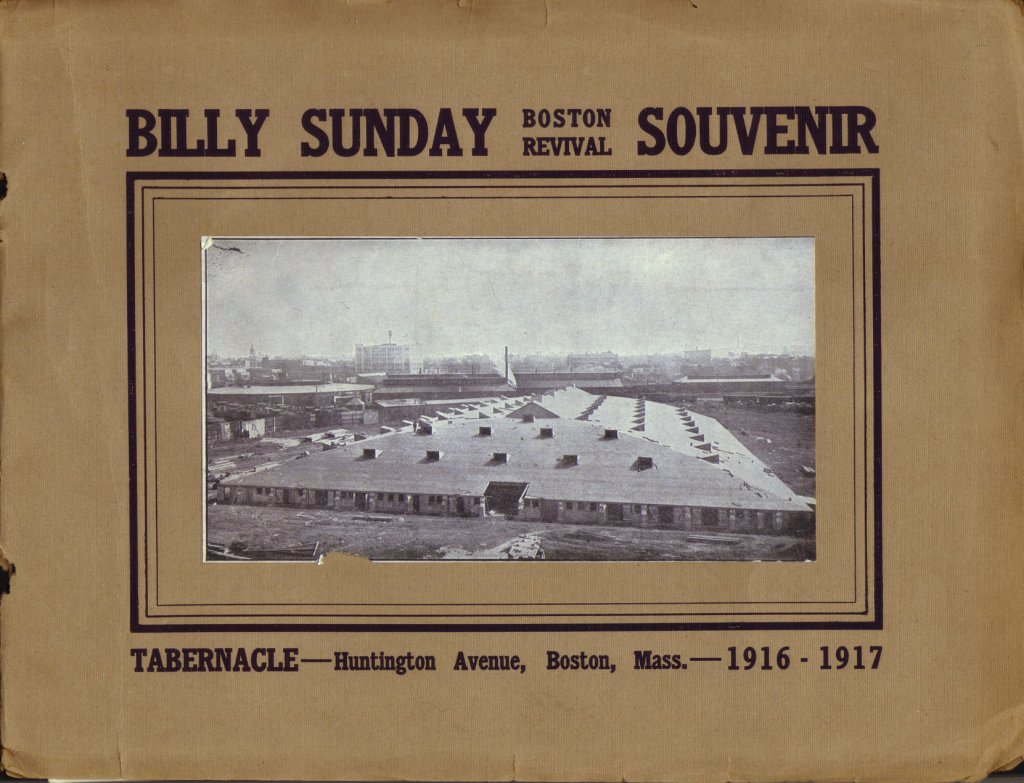
Boston Post. Tue, Nov 14, 1916 • Page 18
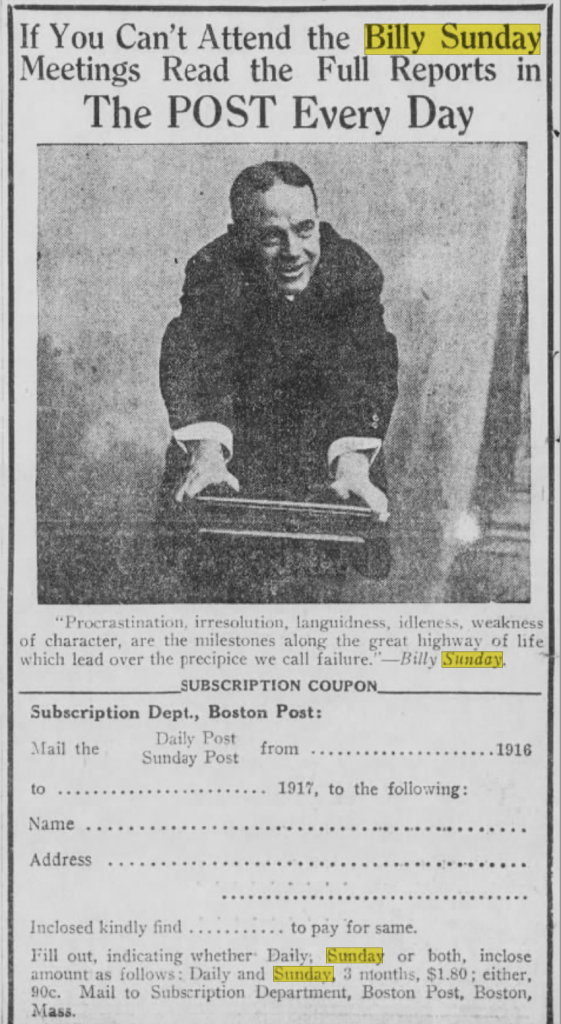
In early 1916, Billy Sunday launched one of the most ambitious evangelistic campaigns of his career in Boston—a city known for its intellectualism and religious diversity. Running from January through April, the campaign was meticulously organized, with more than 5,000 volunteers and significant cooperation from local churches. A massive tabernacle, seating up to 20,000 people, was specially constructed on Huntington Avenue, symbolizing the scale and seriousness of the effort.
Over the course of the revival, more than 1.5 million people attended Sunday’s fiery sermons. His preaching, characterized by dramatic flair and passionate appeals, emphasized personal salvation, moral reform, and national righteousness. At a time when World War I loomed and social tensions were high, Sunday’s message struck a chord. He was especially vocal against alcohol, aligning his campaign with the growing Prohibition movement.
Despite initial skepticism from Boston’s more refined religious circles, Sunday’s influence grew as thousands “hit the sawdust trail” in public commitment to Christ. Media coverage was extensive, and the revival became a citywide spectacle. The impact extended beyond the tabernacle, as many local churches reported a lasting spiritual renewal.
Sunday’s 1916 Boston campaign stands as a milestone in American revival history—an event that combined religious fervor, civic organization, and cultural theater in a way that few evangelists before or after have matched.
 Evangelist Billy Sunday (1862-1935)