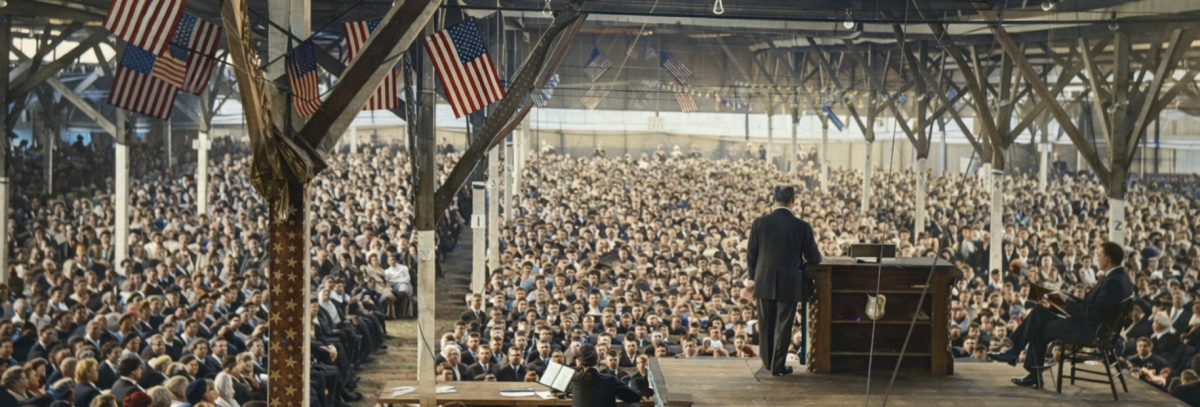
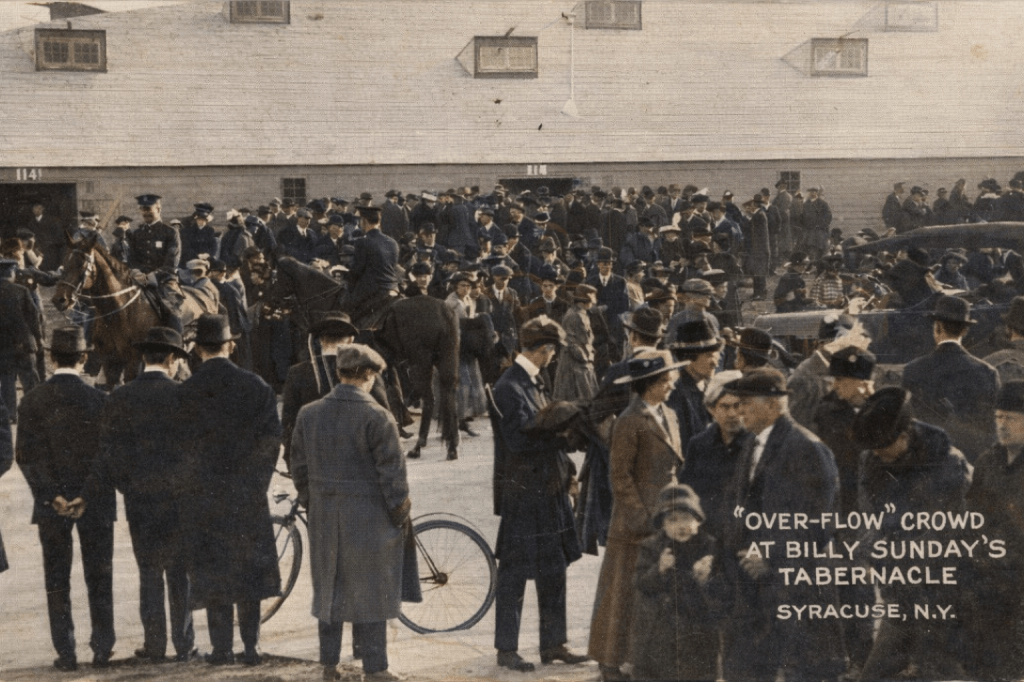
Billy Sunday conducted a significant revival campaign in Syracuse, New York, from October 31 to December 19, 1915. This campaign was part of his broader evangelistic efforts during the 1910s, a period when he held major revivals in cities like Philadelphia, Kansas City, Detroit, Boston, Buffalo, and New York City.
Lincoln Journal Star
Fri, Dec 31, 1915 · Page 2
LEADING CITIZENS LINED UP
BIG MEN OF SYRACUSE HIT TRAIL AT SUNDAY MEETINGS.
Remarkable Results Achieved by Evangelist as Told by Member of Local Committee.
Here is the story of the Billy Sunday campaign in Syracuse, N. Y., as told by a local committeeman in the current issue of the Christian Advocate, one of the leading Methodist papers of the country:
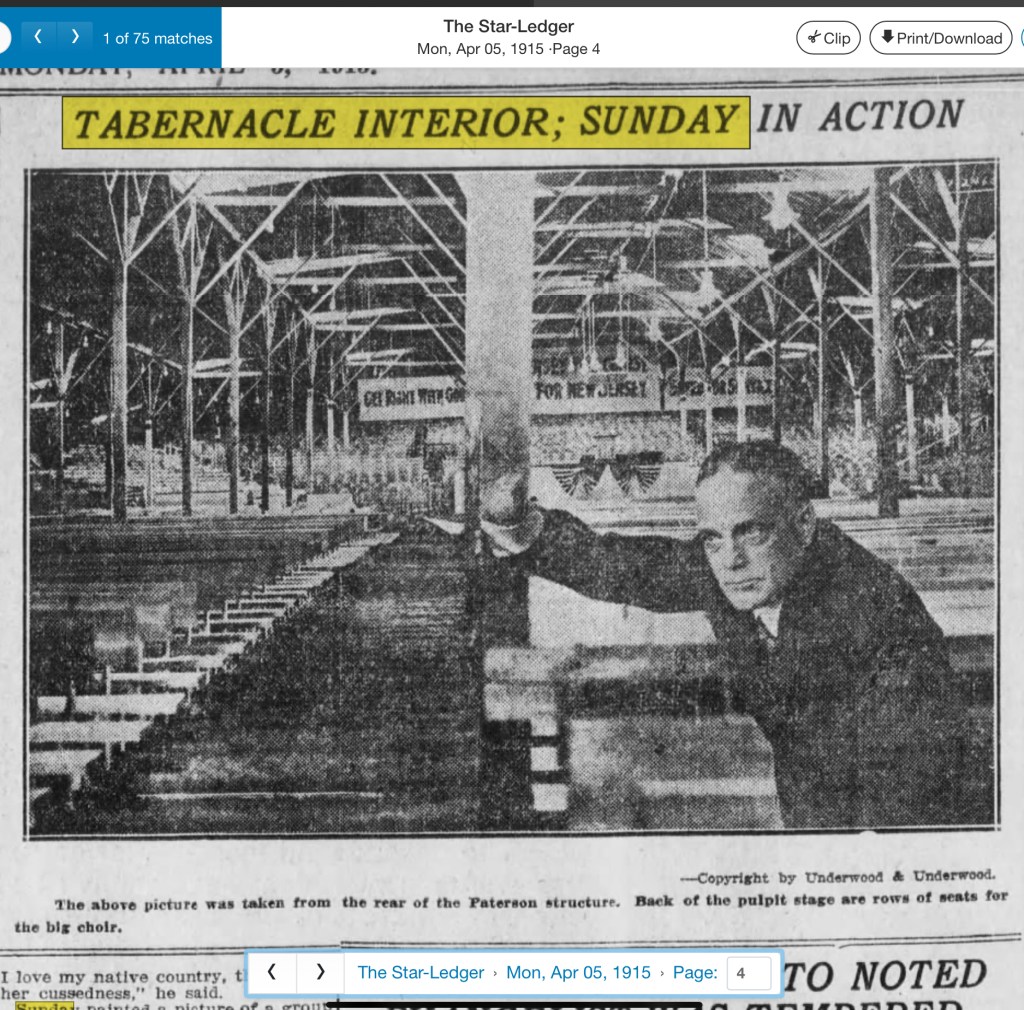
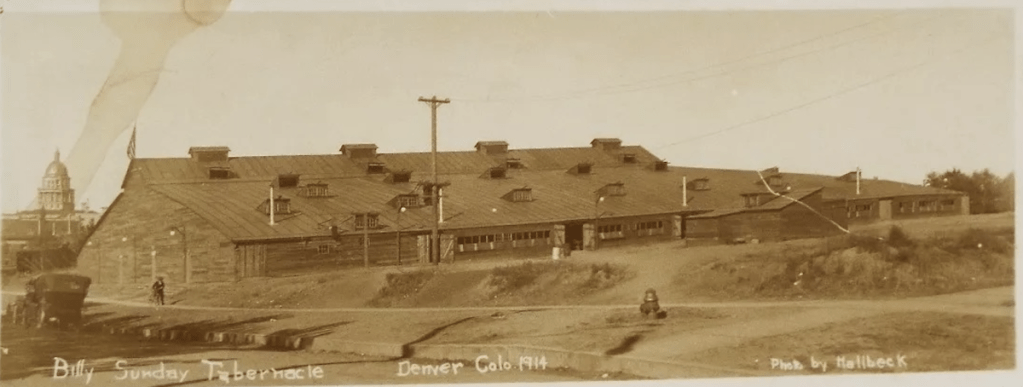
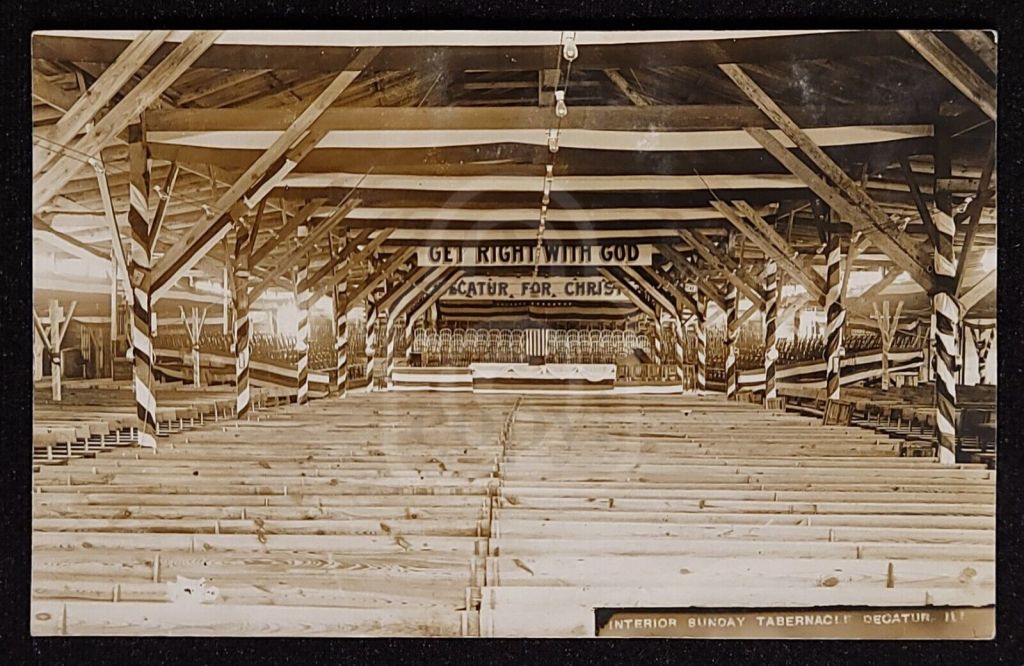
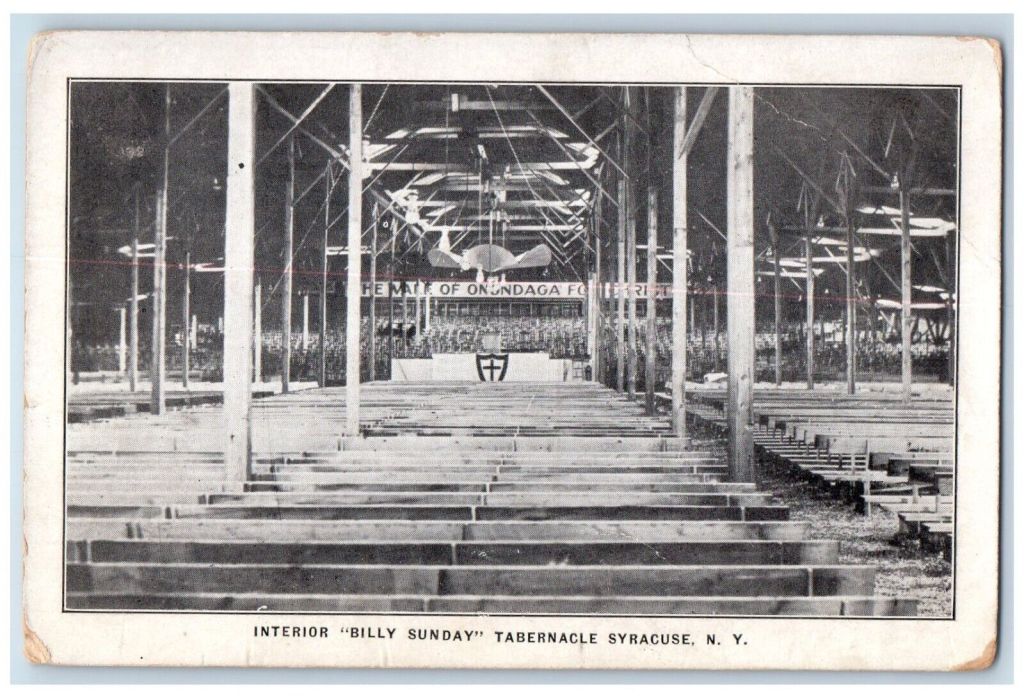
The seven weeks of the ‘Billy’ Sunday campaign have passed altogether too quickly. The interest which was at the flood when representatives of fifty-four churches in 250 automobiles, and hundreds of the faculty and students of Syracuse university, led by the university brass band, met ‘Billy’ Sunday and his party at the railroad station on the afternoon of October 30, and escorted them to the handsome residence on Onondaga street which was to be their home while in Syracuse, has continued without abatement, and there has been no slump at any time in the attendance at the services, a somewhat unusual circumstance Mr. Sunday tells us. At the evening services and three times on Sunday the tabernacle has been packed with an audience numbering from 12,000 to 15,000 people and an evening when, on account of a snowstorm, the streets were well-nigh impassable, was no exception. People from as far west as Buffalo have come in large delegations to the afternoon services and members of the Sunday party have gone out into communities within a radius of fifty miles of Syracuse, and have held evangelistic services and organized classes for Bible study. Stores, factories, high schools and the university have given Mr. Sunday and his party the largest possible audience. No class of persons has been omitted by the ministry of these good people, from the maids in the kitchen to the people of refinement and wealth, into whose homes Mr. Sunday has been most welcome. The choir of 4,500 people was composed of persons without regard to race, color or creed, and this choir was divided into choruses of 1,500 each, one chorus being made up of men, and was under the masterful leadership of a member of the party known familiarly as “Rhody,” who is a soloist trombonist and between whom and Mr. Sunday there is the feeling that existed between David and Jonathan.
A Memorable Sabbath.
A service that stands out conspicuously as one of the most wonderful of the campaign was held on Sunday morning, November 14, when, following the sermon, Mr. Sunday gave the invitation for the first time for the people to come forward and take his hand and 1,500 responded, some for reconsecration, others to announce for the first time their desire to lead the christian life.
Memorable Sabbath that, for Pentecost repeated itself, when over 3,000 “hit the trail.” Another service not soon to be forgotten was on Sunday morning, December 12, when, after a powerful sermon by Mr. Sunday, and an appeal which brought hundreds to the front, Chancellor Day was invited to the platform, to pray for the penitents, and as he and the evangelist stood side by side, men equally great in their respective realms, and the chancellor poured out his soul in a wonderful prayer for those who were inquiring the way of salvation, the great assembly was mightily moved.
The greatest week-day evening, perhaps, was what was known as university night, when about 3,000 of the faculty and students, led by the university band, marched to the tabernacle.
Opportunity was given by the leader before the service for college songs and yells, and the people from the hill certainly owned things for a while. After the sermon, when the invitation was given, scores went forward and took Mr. Sunday by the hand, thereby indicating their desire to lead a Christian life.
Mr. Sunday and his co-workers have given much of their time to the students, speaking to them at mass meetings, chapel services and in their fraternities, sororities and dormitories, with the result that up to this time over 400 have hit the trail.
Hundreds Unite With Churches.
The results of this wonderful religious movement can only be tabulated in part at this time. While hundreds have united with the churches, hundreds who have not been active in the church for years have renewed their vows. Employers have come down the aisles of the tabernacles on evenings when their employees have been attending in a body, leading them by twos and threes to the front. Business men and manufacturers have suspended business and work that their employees might hear the message from Mr. Sunday or a member of his party. Firms which at the beginning were not especially friendly to the movement have extended warm welcomes to those who would hold meetings in the shops. As a striking instance of a change of front toward the Sunday campaign, one church which did not join in the invitation to Mr. Sunday to come to this city, and refused to be one of the co-operating churches in the campaign, was represented on the evening when the brotherhood of the different churches occupied reservations by the rector and over one hundred men. True it is that the people who are speaking against Mr. Sunday are the folks who have refused to hear him.
The liquor traffic has been roughly handled. While “Billy” Sunday does not preach a sermon in which he does not score the rum business, when he preached the booze sermon he said: “You have heard me make a few remarks about the liquor traffic that you might get your mental adjustments, but next Sunday I will preach on booze or get on the water wagon, and this sermon always gives the devil the pneumonia.” Afternoons and evenings he preached to audiences of men only, who packed the tabernacle, and that sermon and his general crusade against the liquor business have certainly made the liquor men sick (of their business). Business in some of the down-town places has fallen off 30 per cent. In three places, where crowds have been accustomed to gather at night, the clientele has been cut almost in two. The receipts of the most fashionable bar in the city have fallen off 80% and an aloonkeeper in referring to the matter said: “The Billy Sunday has about destroyed the saloon business in Syracuse.” Several bartenders have hit the trail and one or lookkeeper, after he had hit the trail, went back to his home and called up the brewers who were back of him in business and told them they could take the business, for he was through. On the day when the “booze” sermon was preached a card requesting the mayor to enforce the law relative to Sabbath observance and liquor traffic was signed by 18,000 voters.
Secular Press Endorses Sunday.
To quote from a recent editorial in one or but our evening papers not especially favorable to the campaign at the beginning: “Cleaner speech, the only reliable index of clean thought, is everywhere noted. There is a sensible abatement of vice of every kind. Moral derelicts have been rescued by the hundreds and have been placed on th solid ground of hope and renewed self-confidence, but the individual instances of strange conversations, better resolutions sand redeemed estrays do not begin to measure the results of the Sunday crusade. The whole atmosphere of the community has been charged with a fresh and bracing moral ozone and to Mr. Sunday and his party we extend our sincere expression of appreciation, respect and gratitude.”
Last Day of Campaign.
On the last day, Sunday, December 19, four services were held. One of the afternoon services was for men only and with such power did Mr. Sunday reason on the judgment to come that five hundred men responded to his appeal at the close of the sermon. In the evening the tabernacle was packed in every part by thirteen thousand people, hundreds being turned away. The evangelist urged the people to an immediate decision, with the result that fifteen hundred hit the trail. More of the leading citizens took a stand for Christ at these meetings than at any of the previous services. An impressive feature of the evening service was when Mr. Sunday invited members of his party to come on the platform and the vast audience, led by a choir of fifteen hundred voices, sang: “God be with you till we meet again” and gave the chautauqua salute.
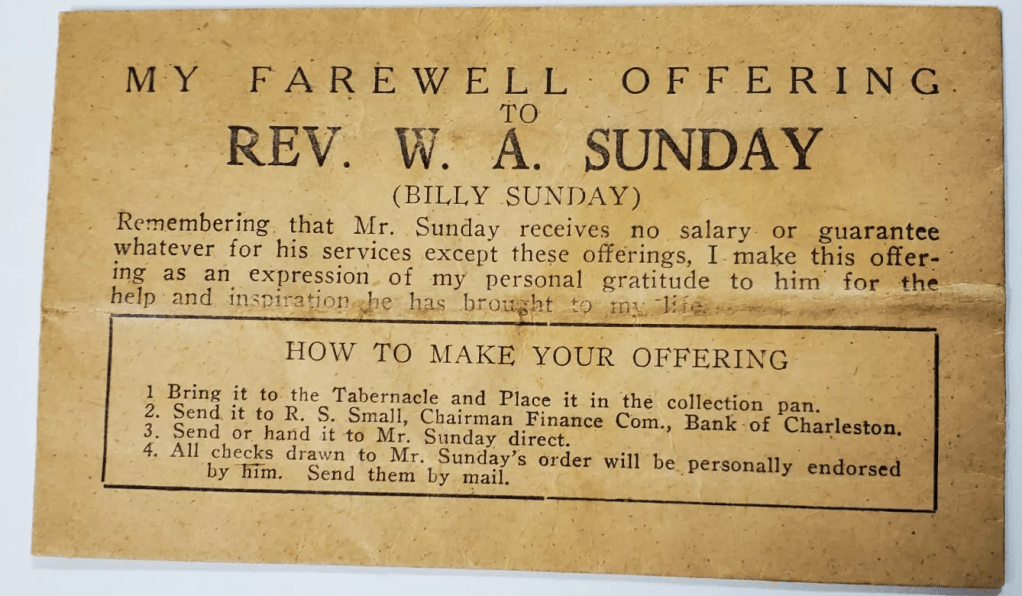
Twenty-three thousand one hundred and fifty-five hit the trail during the campaign. Over $50,000 has been received through the offerings, several thousands going to local charities. Mr. Sunday received $11,155 as a free-will offering. The evangelist paid a high compliment to the people of Syracuse at the closing service. He said because of their co-operation with him and their effort to provide him with every comfort he was leaving a very much better man physically than when he came. Thousands went to the depot and sang the songs they had learned to love to Mr. and Mrs. Sunday, whom they had also learned to love, as they took their departure to their western home.
The [Wilkes-Barre] Times Leader. Mon, Dec 20, 1915 ·Page 25
SUNDAY CAMPAIGN CLOSES
Syracuse Gives Evangelist $23,000 and Nearly 20,000 Converts
With the free will offering amounting to more than $23,000 and the converts numbering nearly 20,000, the Billy Sunday campaign at Syracuse closed yesterday amid great enthusiasm. More than 2,000 converts marched down the aisle and grasped the evangelist by the hand during the day.
It is understood that personal checks amounting to several hundred dollars have not yet been counted in the free-will offering and the total collection is expected to reach close to $24,000. Syracuse now ranks third in point of attendance, conversions and free-will offering of all the cities in which the evangelist conducted campaigns.
The Buffalo News. Mon, Dec 20, 1915 ·Page 3
BILLY SUNDAY CLOSES SYRACUSE CAMPAIGN
911,000 Total Attendance—Trail-hitters Numbered 22,449.
Syracuse, Dec. 29—Rev. Billy Sunday closed his seven weeks evangelistic campaign in Syracuse last night. At four meeting during the day he preached to more than 50,000 persons. His thanks offering was $23,112.
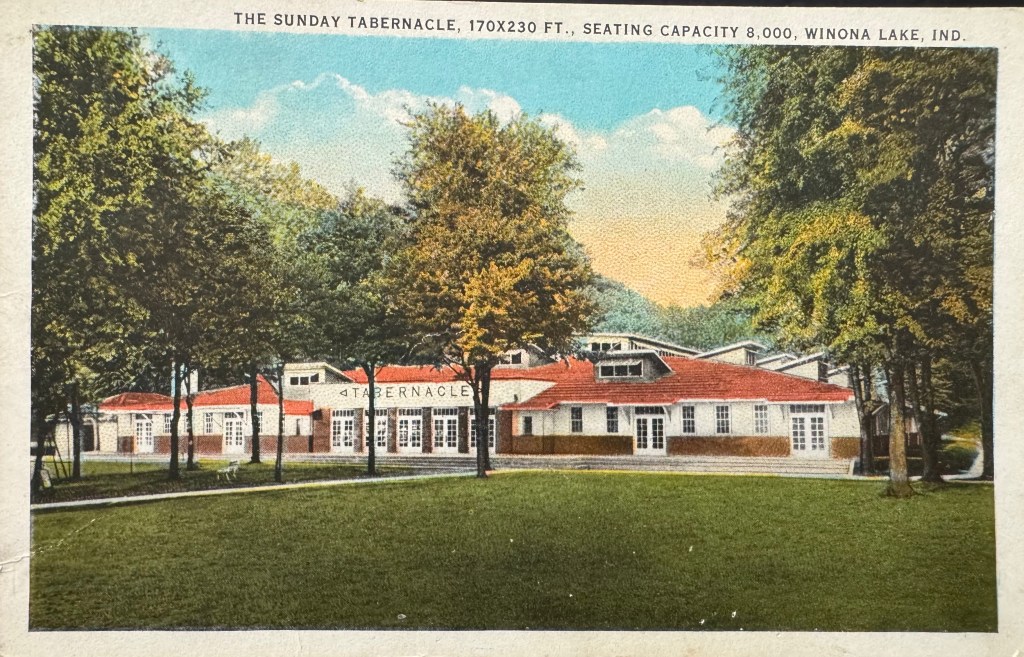
The total attendance at the Sunday meetings was 911,000, trail hitters numbered 22,449. The evangelist and his wife left last night for their home at Winona Lake, Wis., to rest a week before opening the campaign at Trenton, N. J., one week from Sunday. Five thousand persons gathered at the railroad station to bid him farewell.
In one of his closing sermons Sunday took a fling at ‘cold church people,’ saying among other things: ‘I’ve got no use for a bottle-fed church. Some preachers are like huge nursing bottle with 500 rubber tubes running to a lot of 200-pound babies in the churches and the preacher has to be a wet nurse to the whole bunch.’

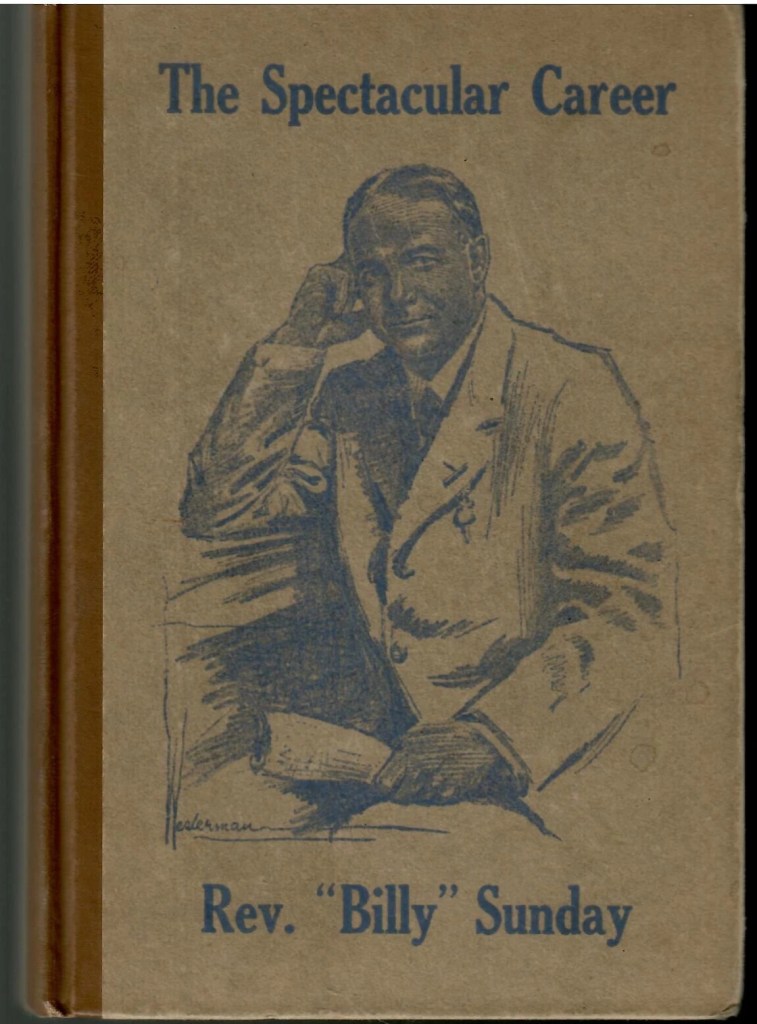
 Evangelist Billy Sunday (1862-1935)