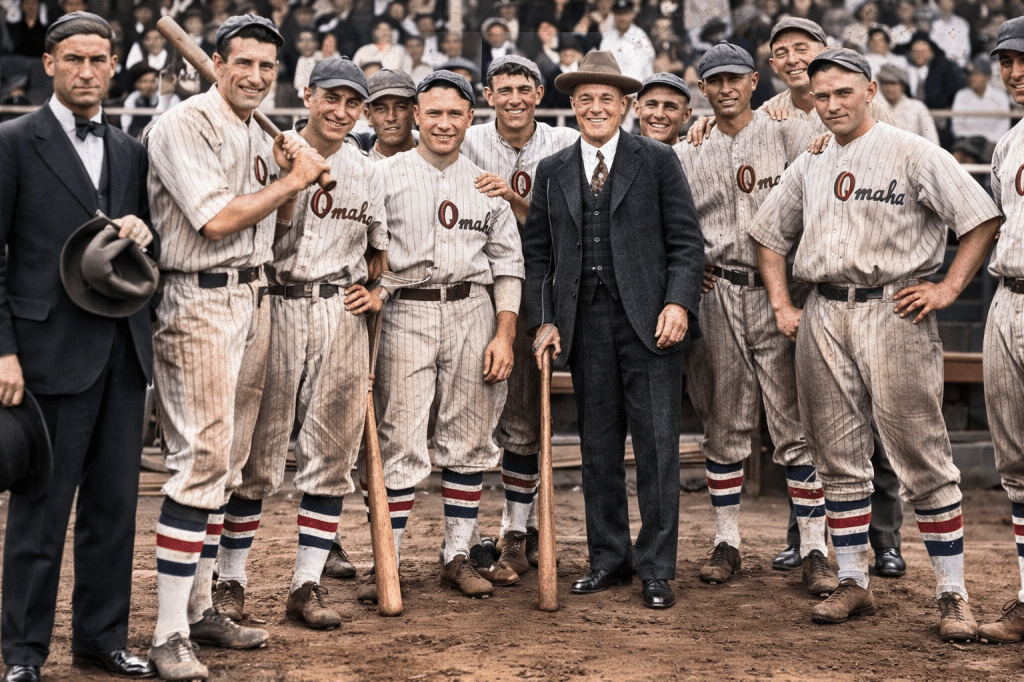
C. 1915 Billy Sunday posing with the Omaha Roarkes Baseball Team
Evangelist Billy Sunday (1862-1935)
Former professional baseball player-turned urban evangelist. Follow this daily blog that chronicles the life and ministry of revivalist preacher William Ashley "Billy" Sunday (1862-1935)
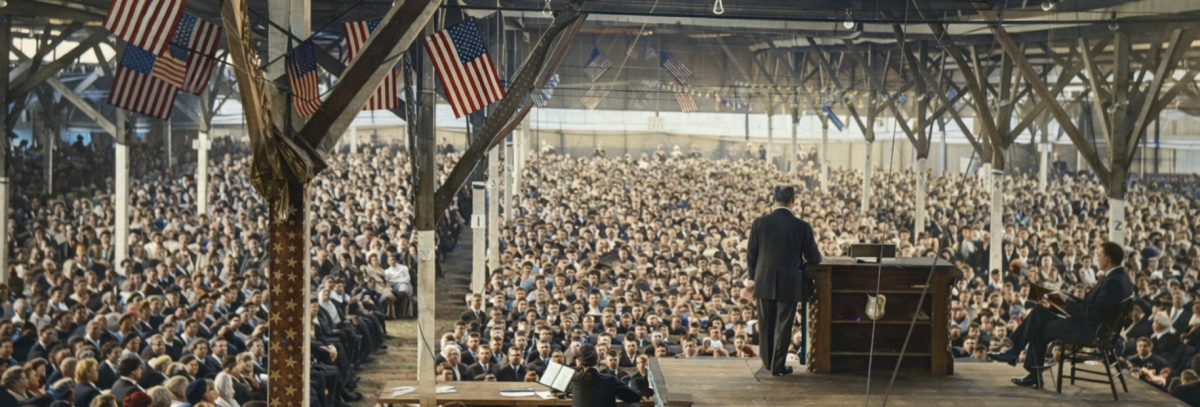
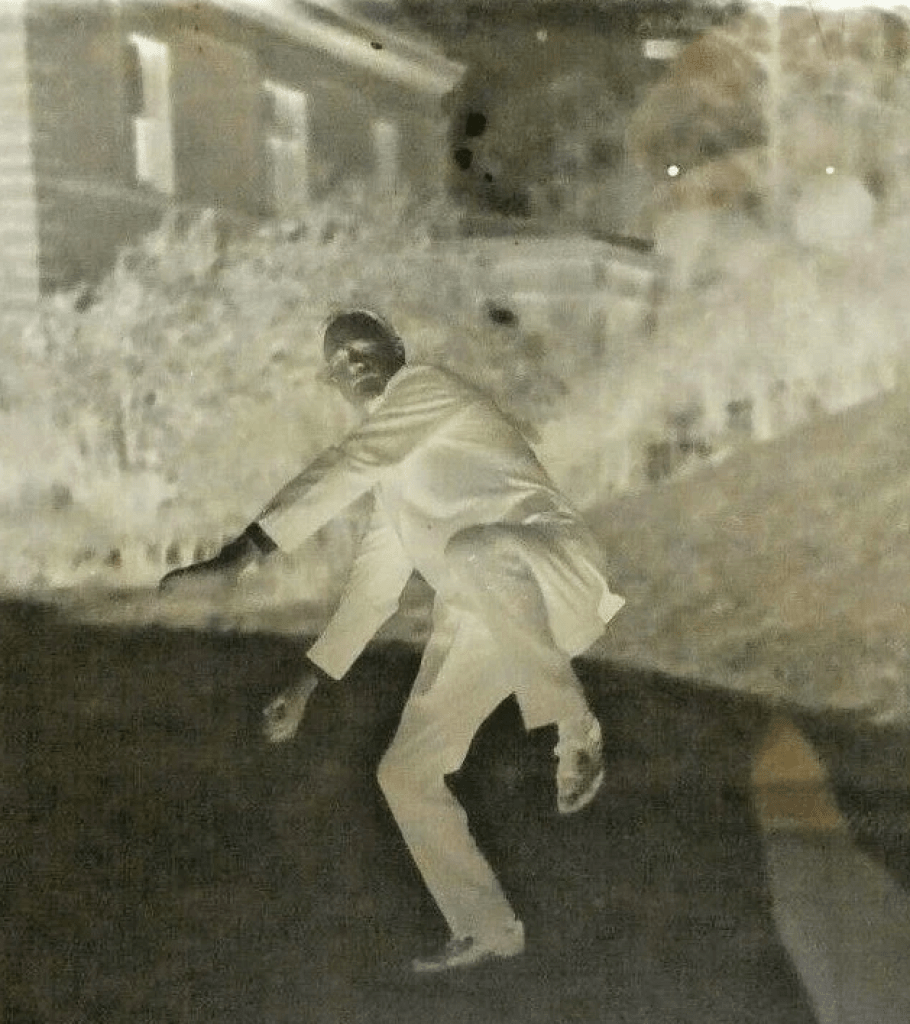
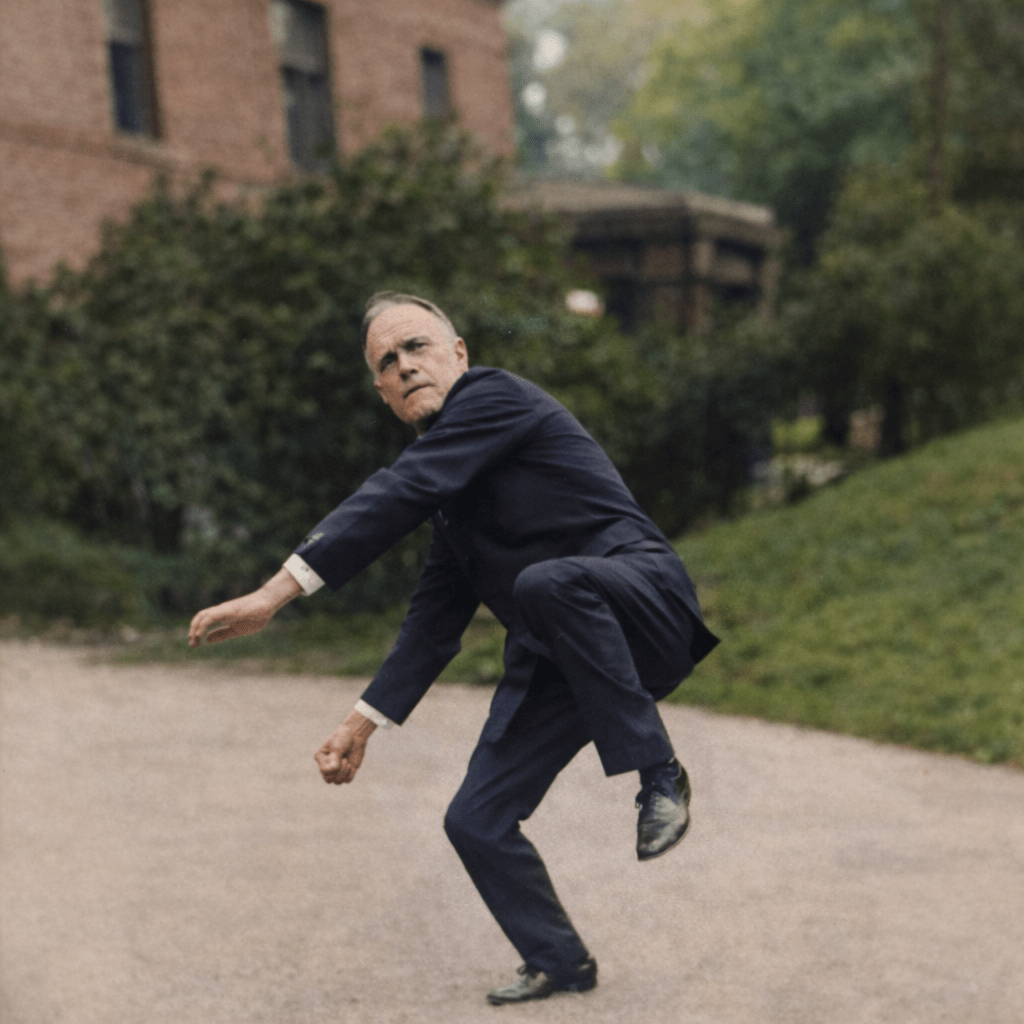
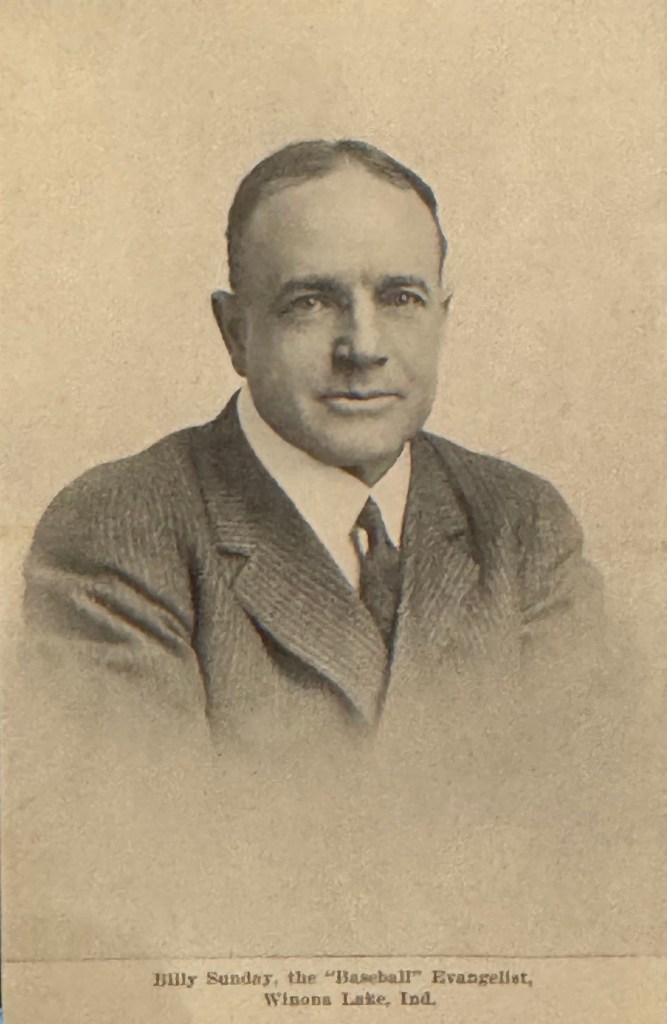
“In regard to the personality of the man I would say first that he is fundamentally a man of prayer. Let the mistaken critic of Sunday rid himself at once of the notion that his meetings are merely big displays of the powers of advertising and organized enthusiasm and the product of a man who is called “a great salesman”. The life of the man and the activities of a campaign are shot through and through with prayer. In every place where he holds a meeting he chooses a secluded spot from whence he storms heaven. This place becomes a Bethel to him. In prayer he is natural. His prayers are not long but to the point and usually open with “and now Jesus” from whence he proceeds in his peculiar manner to pray for all the matters pertaining to the success of the meetings. Without prayer he believes he would be as Samson shorn of his strength. He makes no decision or takes no step without first taking the matter to the Lord.”
“Life and Labors of William A. Sunday,” Soltman. 1921
Morgan Library, Grace College.
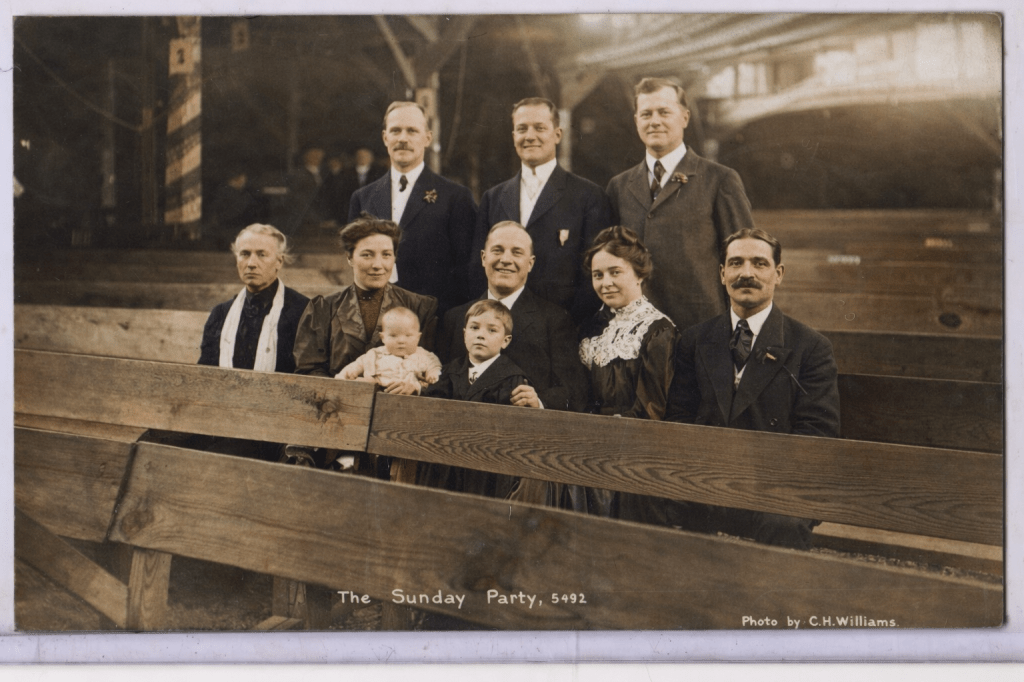
Colorized and restored by author
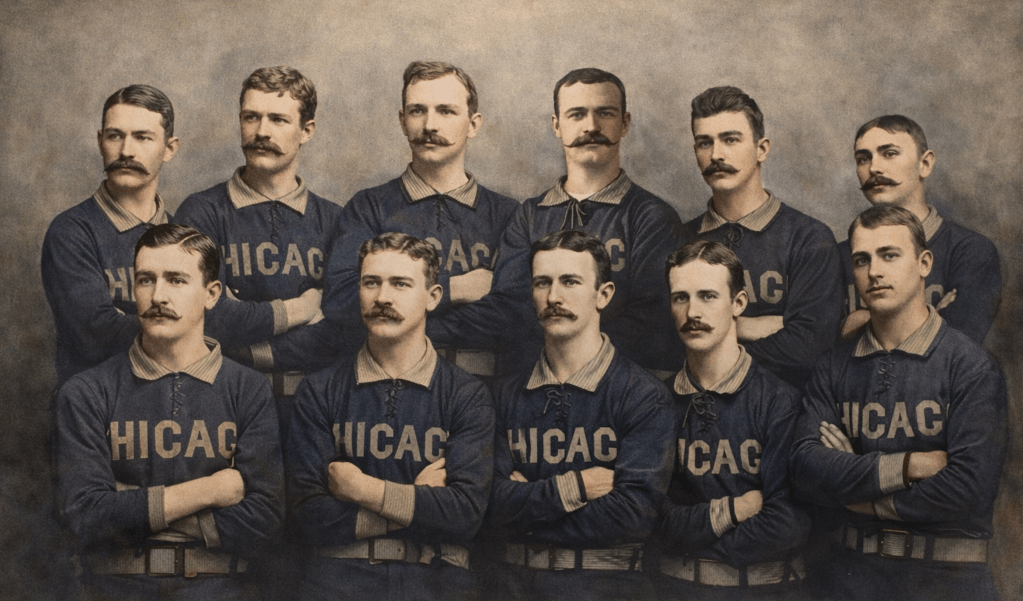

His stats according to BaseballReference.com
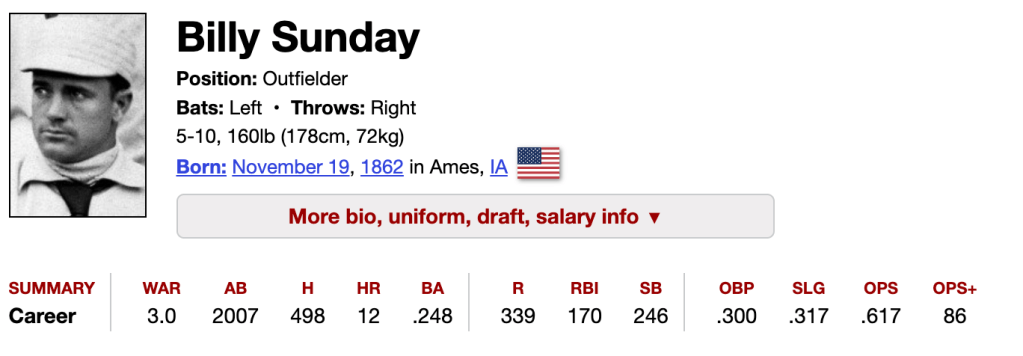
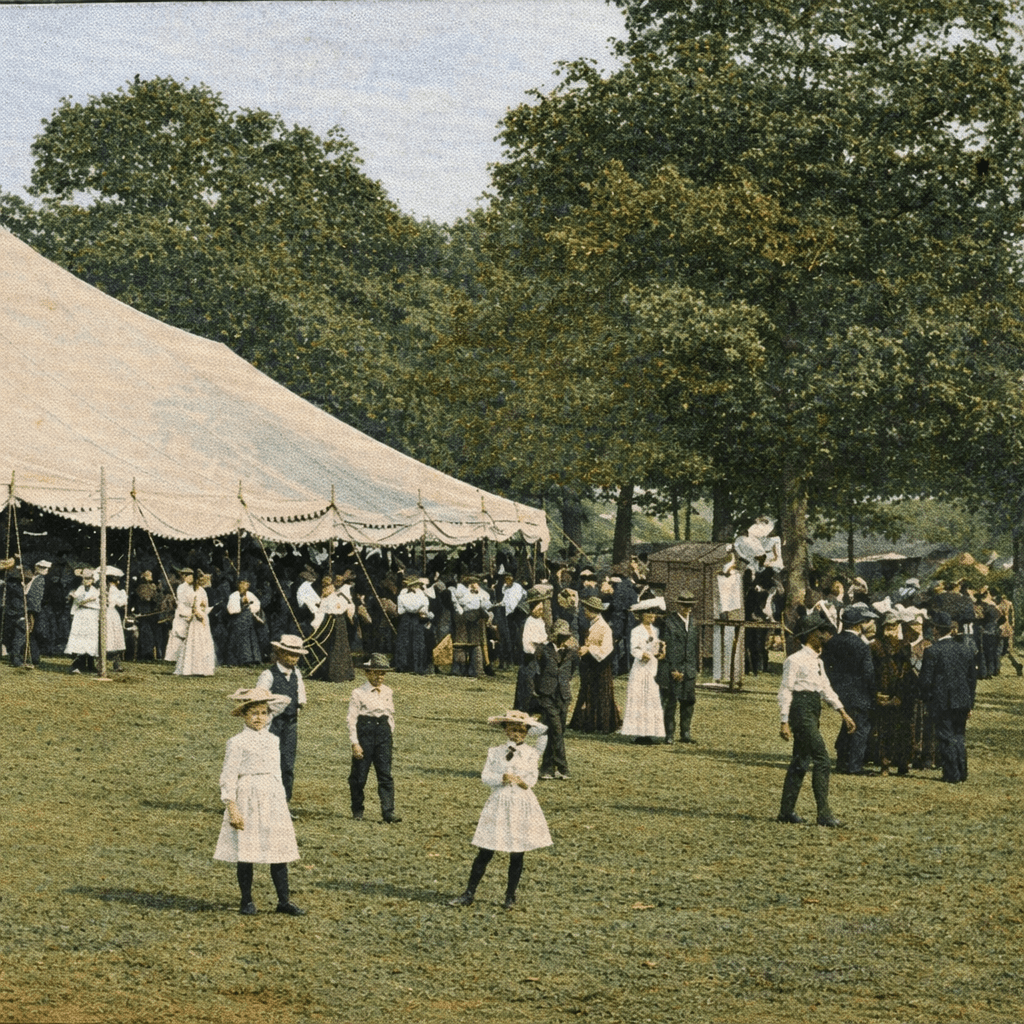
From a postcard, colorized by author.
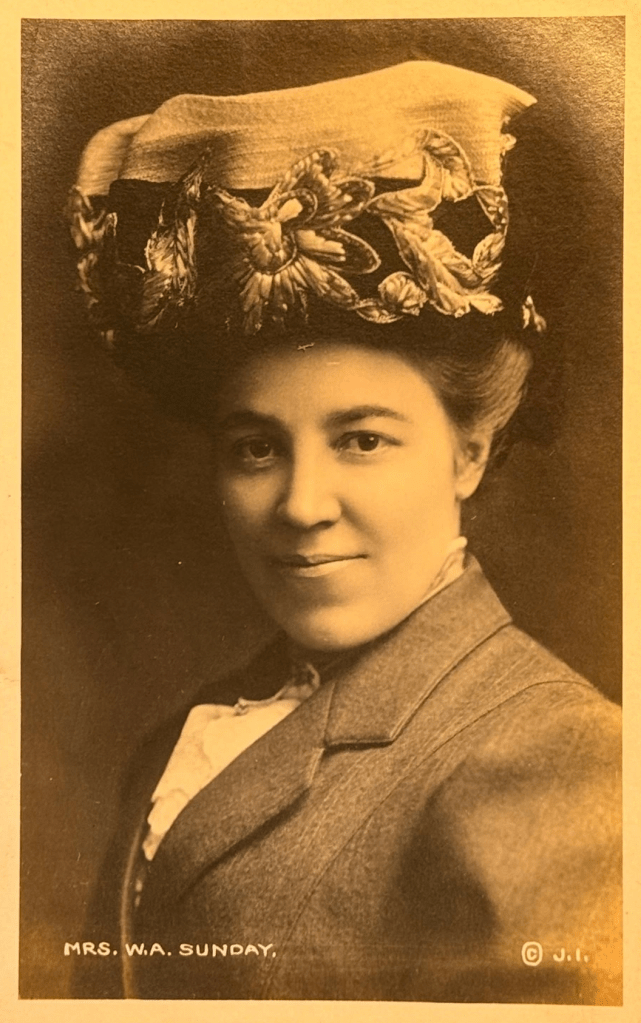
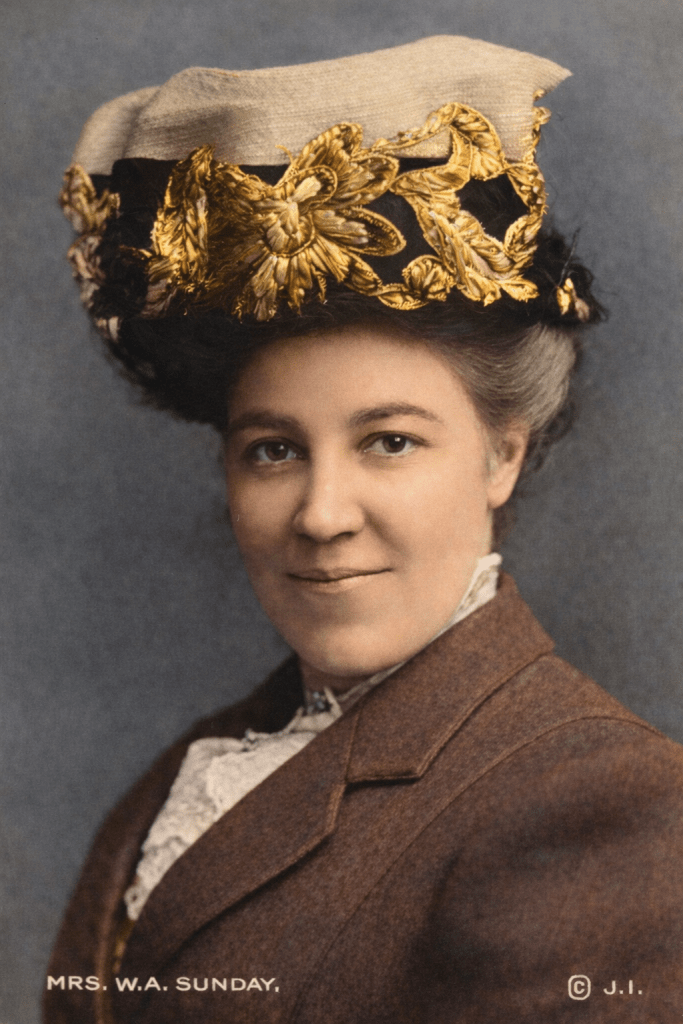
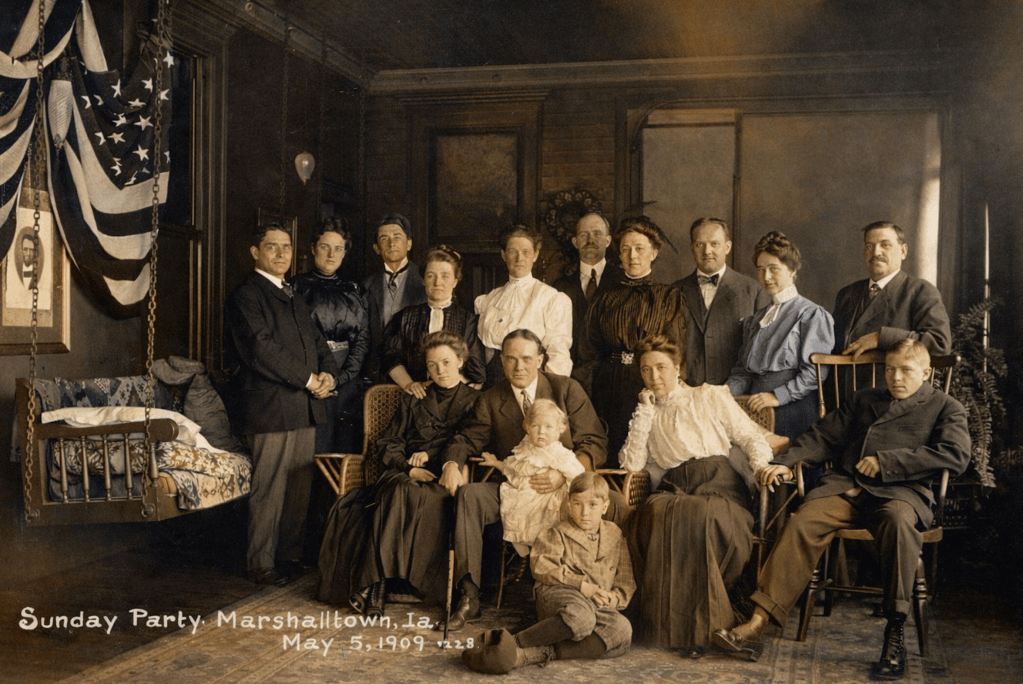
Billy Sunday Comes to Marshalltown (April–May 1909)
In the spring of 1909, Marshalltown, Iowa was transformed into a revival center that drew crowds from across the region and left a lasting mark on the community.
Billy Sunday’s campaign ran from April 25 through May 29, 1909, with the tabernacle standing as the visible heart of the movement. The vast wooden structure dominated the landscape, and every night it filled with singing, testimony, and Sunday’s electrifying preaching.
The opening night on Sunday, April 25 set an extraordinary tone.
Newspapers reported that 12,000 people attended the very first day, even though the tabernacle’s seating capacity was only 5,000. The crowd spilled out around the building, filling the grounds, streets, and nearby areas. Trains brought visitors in, local families rearranged schedules, and the entire town seemed to pulse with anticipation.
Sunday’s preaching style was unmistakable: plain-spoken, forceful, and vividly illustrated. He mixed humor, athletic imagery, moral urgency, and heartfelt appeals for personal decision, holding massive audiences in rapt attention night after night.
The campaign did not slow down.
By the final day on May 29, Sunday preached to 13,200 people, an even larger crowd than opening night. That evening, 125 people walked the “sawdust trail,” publicly committing their lives to Christ.
But the revival was far more than a handful of large meetings.
According to newspaper accounts, there were 84 separate services held inside the tabernacle alone. Beyond that, the spiritual energy of the campaign spilled into the wider city: another 528 meetings took place in churches, homes, schools, and gathering places throughout Marshalltown.
The numbers are staggering for a town of its size.
Total attendance across the six weeks reached 199,300 people. This figure included repeated attendance by many locals as well as visitors from surrounding towns and counties.
Total collections for the campaign amounted to 12,894 dollars — a substantial sum in 1909. From this, Billy Sunday personally received 6,500 dollars for himself and his team, with the rest covering the costs of running such a massive operation.
Newspapers also reported that approximately 2,000 people made professions of faith over the course of the campaign. Local pastors later testified that many of these converts joined churches and became active participants in community life.
Marshalltown formally closed the revival on June 6, according to the Freeport Weekly Standard, marking the end of one of the most intense religious seasons the city had ever experienced.
What makes Marshalltown especially significant in the story of Billy Sunday is not just the scale of attendance, but the depth of community involvement. This was not a series of isolated sermons; it was a town-wide movement that reshaped schedules, united churches, and focused public attention on moral and spiritual questions for weeks at a time.
For six remarkable weeks in 1909, Marshalltown was not simply an Iowa town — it was a crossroads where tens of thousands encountered the passionate message of America’s most famous evangelist.
Long after the tabernacle came down, people remembered that spring as a moment when their city stood at the center of something larger than itself.
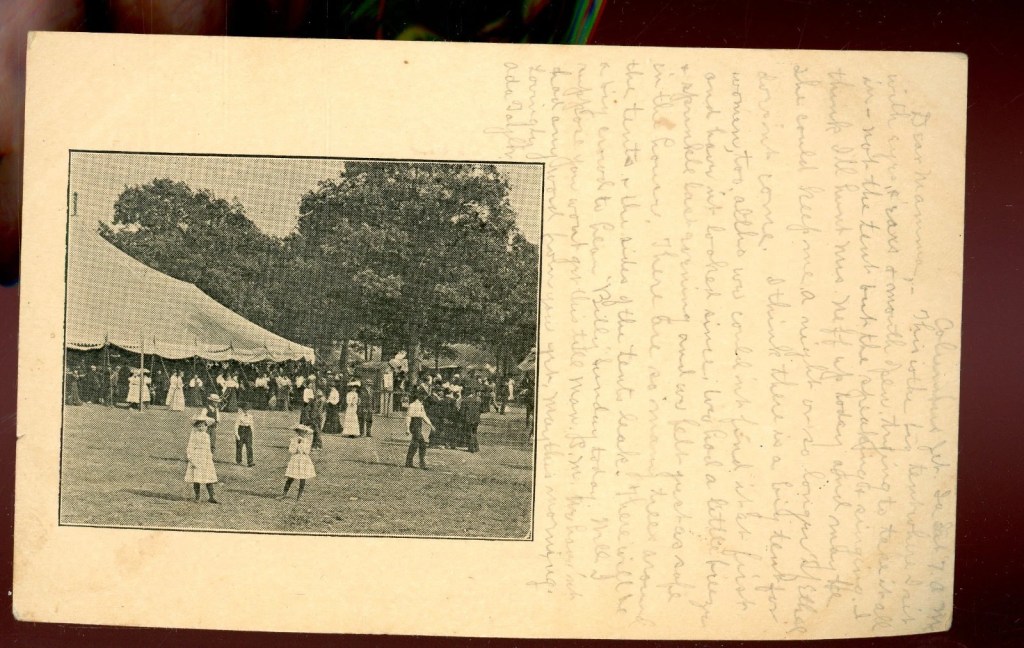
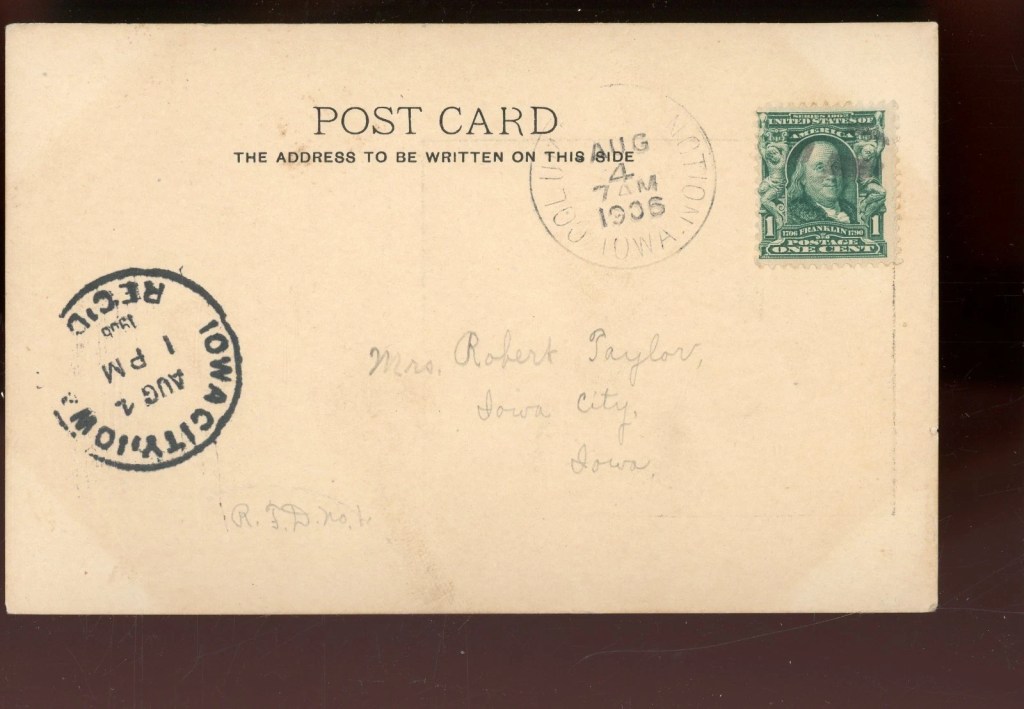
Postcard verifies Billy spoke “today” in Columbus Junction, Iowa (Chautauqua)
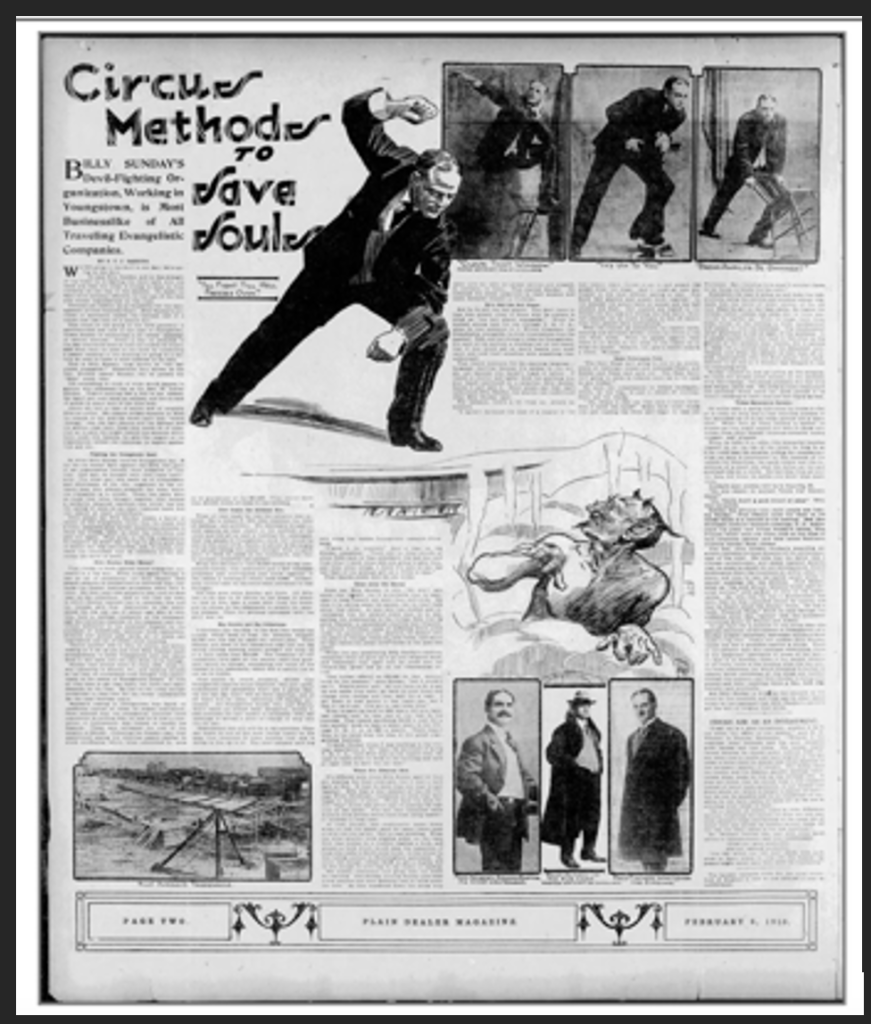
When Billy Sunday rolled into Youngstown, Ohio, in January 1910, he did not arrive quietly—and Youngstown did not receive him quietly either.
From the very first night, it was clear that this industrial city, filled with steel mills, rail yards, immigrants, laborers, and restless energy, was primed for revival. Sunday began his campaign on January 8, 1910, and within hours it was obvious that this would be no ordinary meeting.
On opening night, 5,000 people packed the tabernacle, according to the New Castle News (Jan. 10, 1910). The very next evening, crowds swelled to 7,000, as reported by The Pittsburgh Post (Jan. 10, 1910). The word had spread fast: Billy Sunday was in town, and Youngstown wanted in.
As the weeks unfolded, the numbers only grew more astonishing.
By February 4, the campaign had already recorded 2,221 conversions. That same night, 15,000 people attempted to crowd into a tabernacle that could seat only 7,000—a vivid picture of spiritual hunger and civic excitement. The Cleveland Press marveled at the scene, noting the crush of humanity trying simply to hear Sunday preach.
Youngstown had become a revival city.
The campaign reached its crescendo on February 20, 1910.
That final day, 10,000 people attended, while 6,000 more were turned away for lack of space. The Marion Daily Star reported that 5,900 total conversions had been recorded over the course of the meetings, including 970 decisions on the closing day alone.
It was a stunning finish—one of those great climactic Sundays that made Sunday’s name synonymous with American revivalism.
At the conclusion of the campaign, Sunday received his customary purse of 10,000 dollars, a significant sum in 1910 and a sign both of the city’s appreciation and of the scale of the event.
The Youngstown campaign illustrates several hallmarks of Billy Sunday’s ministry:
Most of all, Youngstown demonstrates why Sunday was “the man for the moment.” In an era of rapid industrial change, social tension, and moral anxiety, he spoke with clarity, fire, and confidence—and cities like Youngstown listened.
More than a century later, the Youngstown campaign stands as one of the great urban revivals of Sunday’s early career. The numbers are impressive, but the deeper story is about a city temporarily transformed—its people stirred, challenged, and moved to decision.
Writing just days after the Youngstown campaign ended, J. Wilbur Chapman offered this striking tribute to Sunday in The Dayton Herald (Feb. 23, 1910):
“Some of the sermons he preaches now are not mine. I love him. I know his sincerity and passion for Jesus. I thank God for his ministry. Most of us are too dignified. Let rules of grammar and conventionality be broken if souls can be saved. As soon as he begins to speak the doors will be closed so you can’t get out. You’ve got to take your dose for once. If ever a man was called to preach; if ever a man had the seal of God’s approval on his ministry, that man is Sunday. I take off my hat to any man that can turn men to Jesus Christ.”
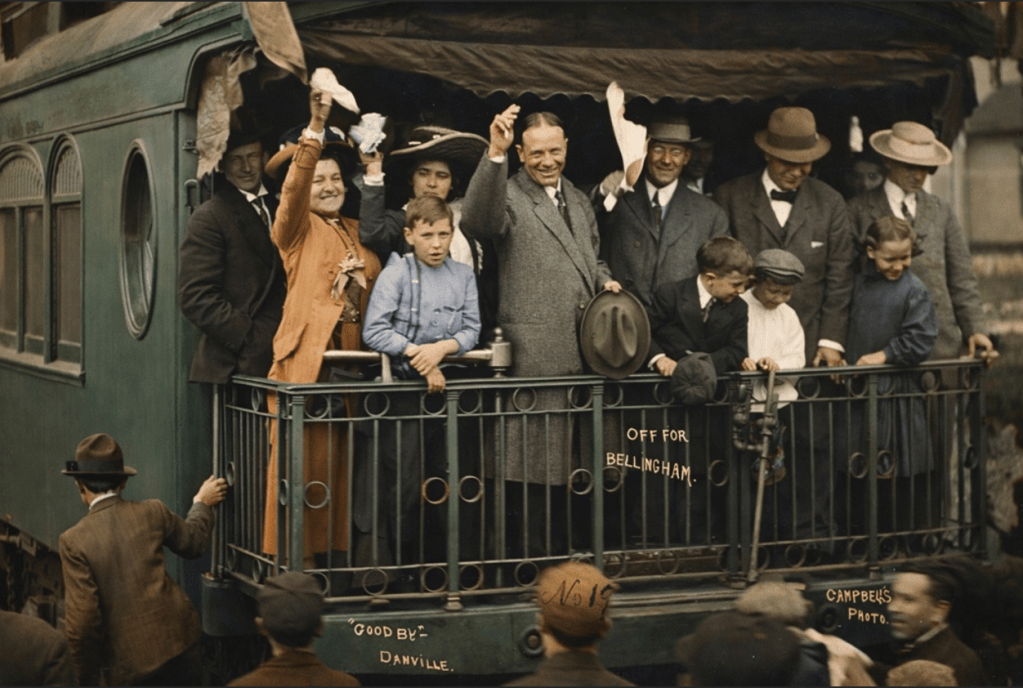
When Billy Sunday arrived in Bellingham, Washington, in the spring of 1910, the city knew something significant was about to happen.
His campaign formally began on April 17, 1910, and was scheduled to run for six weeks through May 29. Even before the opening service, anticipation was high. On April 16, The Bellingham Herald placed the coming revival on the front page, signaling that this was not just another religious meeting but a major civic event.
From the start, the campaign drew extensive attention. Local and regional newspapers covered Sunday’s meetings with unusual depth and frequency. By May 2, The Seattle Star was featuring the revival prominently on its own front page, evidence that Sunday’s influence extended far beyond Bellingham into the broader Pacific Northwest.
One of the most remarkable days came on Sunday, May 1. That evening, approximately 15,000 people crowded into the tabernacle and surrounding grounds to hear Sunday preach. The turnout was stunning for a city of Bellingham’s size at the time. Collections that day totaled $3,201.10, a substantial sum in 1910, reflecting both the generosity of the crowd and the financial scale of Sunday’s campaigns. That same service also recorded 140 conversions, showing that this was not merely spectacle but a movement that claimed measurable spiritual results.
Interest in Sunday’s work went beyond daily newspaper reports. On May 8, The Bellingham Herald devoted magazine-style coverage to the revival, suggesting that the meetings had become a defining moment in the city’s public life rather than a passing event.
Perhaps the most revealing glimpse into Sunday himself came from an interview published in The Daily Herald of Everett on May 18 under the title “Billy Sunday: His Methods, His Ideas and His Work.” In it, Sunday rejected the idea that his success came from showmanship or gimmicks. He explained his approach in characteristically plain terms:
“I haven’t any tricks. I’m just an old-fashioned preacher. I tell people in plain words the simple truth, that they are lost in sin and need salvation. I just preach the Bible – that’s all.”
That statement captures the heart of his appeal in Bellingham. He did not present himself as a social reformer, a political activist, or a religious entertainer. He came as a straightforward revival preacher who believed that the Bible, clearly proclaimed, could still change lives.
By the time the campaign concluded on May 29, Bellingham had experienced six weeks of intense preaching, packed crowds, and sustained public attention. For many residents, these meetings likely became a defining memory of the year 1910—a season when their city was temporarily at the center of a national religious movement.
The Bellingham campaign illustrates why Billy Sunday was such a powerful figure in early twentieth-century America. He could command enormous crowds, attract front-page coverage, inspire generous giving, and still insist that his effectiveness rested not on method but on message. In Bellingham, as in so many other cities, Sunday left behind not just statistics, but stories of a community stirred by revival.
 Evangelist Billy Sunday (1862-1935)