Billy Sunday Comes to Marshalltown (April–May 1909)
In the spring of 1909, Marshalltown, Iowa was transformed into a revival center that drew crowds from across the region and left a lasting mark on the community.
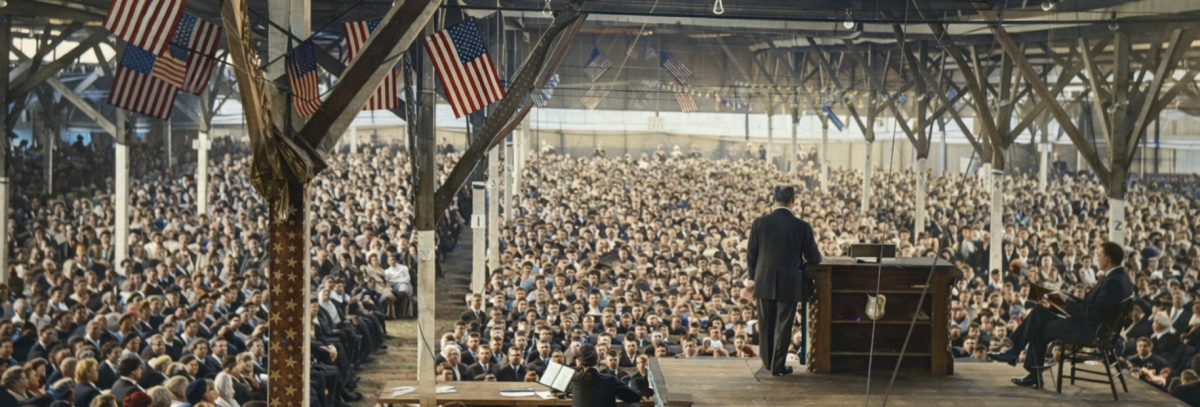
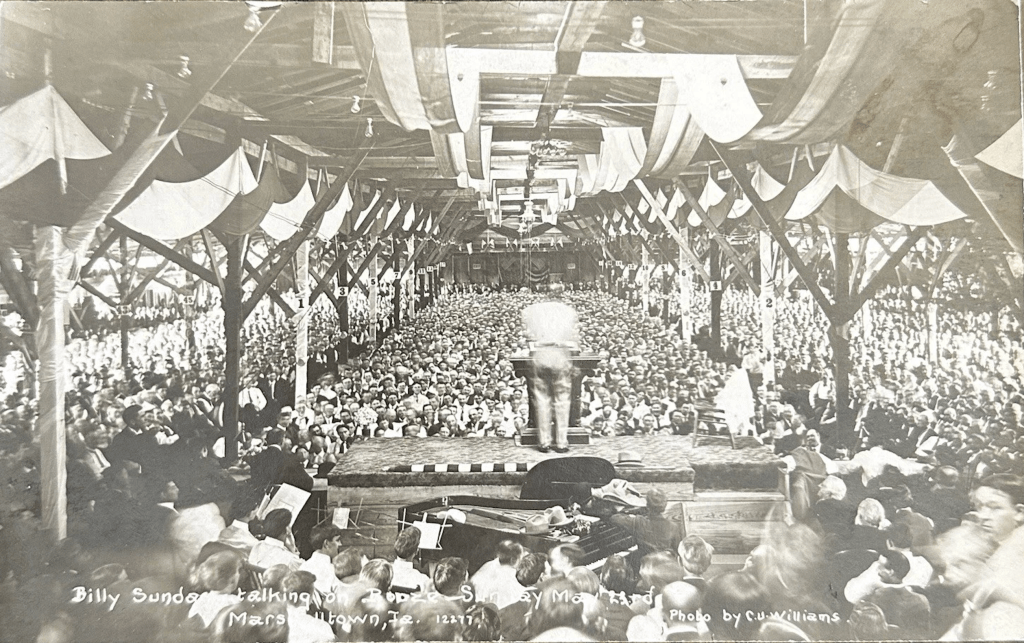
Billy Sunday’s campaign ran from April 25 through May 29, 1909, with the tabernacle standing as the visible heart of the movement. The vast wooden structure dominated the landscape, and every night it filled with singing, testimony, and Sunday’s electrifying preaching.
The opening night on Sunday, April 25 set an extraordinary tone.
Newspapers reported that 12,000 people attended the very first day, even though the tabernacle’s seating capacity was only 5,000. The crowd spilled out around the building, filling the grounds, streets, and nearby areas. Trains brought visitors in, local families rearranged schedules, and the entire town seemed to pulse with anticipation.
Sunday’s preaching style was unmistakable: plain-spoken, forceful, and vividly illustrated. He mixed humor, athletic imagery, moral urgency, and heartfelt appeals for personal decision, holding massive audiences in rapt attention night after night.
The campaign did not slow down.
By the final day on May 29, Sunday preached to 13,200 people, an even larger crowd than opening night. That evening, 125 people walked the “sawdust trail,” publicly committing their lives to Christ.
But the revival was far more than a handful of large meetings.
According to newspaper accounts, there were 84 separate services held inside the tabernacle alone. Beyond that, the spiritual energy of the campaign spilled into the wider city: another 528 meetings took place in churches, homes, schools, and gathering places throughout Marshalltown.
The numbers are staggering for a town of its size.
Total attendance across the six weeks reached 199,300 people. This figure included repeated attendance by many locals as well as visitors from surrounding towns and counties.
Total collections for the campaign amounted to 12,894 dollars — a substantial sum in 1909. From this, Billy Sunday personally received 6,500 dollars for himself and his team, with the rest covering the costs of running such a massive operation.
Newspapers also reported that approximately 2,000 people made professions of faith over the course of the campaign. Local pastors later testified that many of these converts joined churches and became active participants in community life.
Marshalltown formally closed the revival on June 6, according to the Freeport Weekly Standard, marking the end of one of the most intense religious seasons the city had ever experienced.
What makes Marshalltown especially significant in the story of Billy Sunday is not just the scale of attendance, but the depth of community involvement. This was not a series of isolated sermons; it was a town-wide movement that reshaped schedules, united churches, and focused public attention on moral and spiritual questions for weeks at a time.
For six remarkable weeks in 1909, Marshalltown was not simply an Iowa town — it was a crossroads where tens of thousands encountered the passionate message of America’s most famous evangelist.
Long after the tabernacle came down, people remembered that spring as a moment when their city stood at the center of something larger than itself.

 Evangelist Billy Sunday (1862-1935)