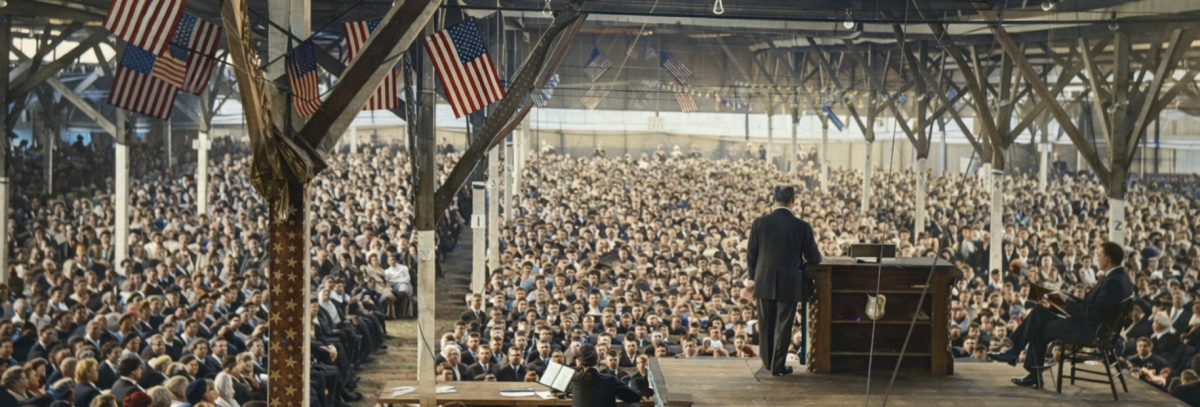
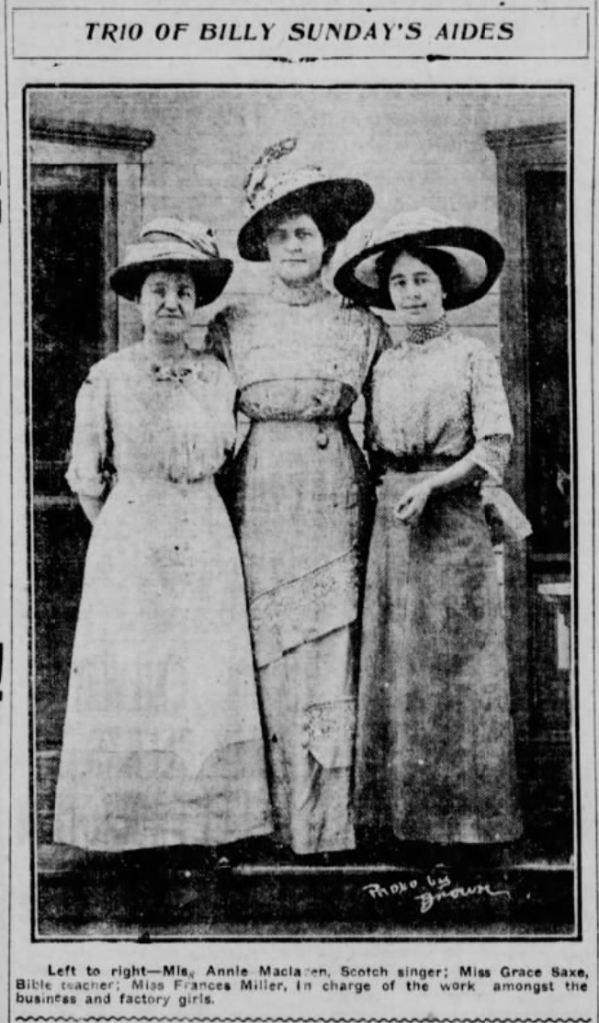
Note: Grace Saxe was the lead Bible teacher for Billy Sunday from 1911 – 1921.
Pittsburgh Post-Gazette. Fri, Jan 30, 1914 ·Page 7
Miss Grace Saxe Compares Life of Old Israelites With That of Christian Today.
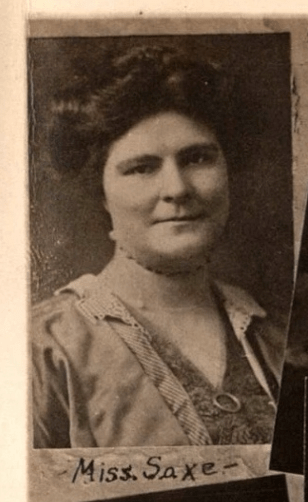
There is a remarkable correspondence between the experiences of the chosen people of Israel and of the saved soul,” said Miss Grace Saxe yesterday afternoon before her Bible class in the tabernacle. Miss Saxe has begun a study of the books of the Bible, their arrangements and their significance and her class which occupies the platform at the close of the afternoon meeting in the tabernacle fills every seat. Miss Saxe said:
The symbolism of the Pentateuch is remarkable. No less remarkable is the order of these first five books. Genesis is the book of beginnings and yet before it closes it shows the beginning of the entrance of sin. Exodus is the book of redemption symbolized by the release from bondage in Egypt. Leviticus is the book of worship showing the experience of redemption. Numbers, the book of journeying the experiences of the redeemed from day to day, while Deuteronomy is the book of instruction to the redeemed, the plan of regeneration.
Note the steps from Egypt, through the Wilderness to Canaan. Egypt typifies the world, Satan’s domain; the Wilderness, the place of the unsurrendered to God, while Canaan symbolizes the spirit-filled, spirit-controlled Christian life.
We are asked where we get our authority for this comparison of the life of the Israelites and the life of the Christian. You will find it in I Cor. 10:4.
As the Israelites left Egypt and wandered for 40 years in the Wilderness there is one thing I want you to note, that when they looked back toward Egypt they longed for the fish, the melons, cucumbers, leeks, onions and garlic. Each stage of longing was lower, stronger and ranker. The picture is exact in every particular.
Every great revival has two objects. The first is to get people to obey God, to come out for Him. That is the first great crisis. The second object is to get the wilderness Christians to take a second step into the promised land, the land of Canaan, instead of wandering and drifting about. This is the second great crisis.
Miss Saxe will continue her study of the books of the Bible each afternoon at the close of the afternoon meeting. On Saturday afternoon of next week she will outline a plan for neighborhood Bible classes to continue after the close of the present Sunday meetings.
Pittsburgh Post-Gazette. Fri, Jan 30, 1914 ·Page 7
 Evangelist Billy Sunday (1862-1935)