Two Objects Aim of Every Big Revival, Grace Saxe, 1914 – Symbolism of the Pentateuch

Note: Grace Saxe was the lead Bible teacher for Billy Sunday from 1911 – 1921.

Pittsburgh Post-Gazette. Fri, Jan 30, 1914 ·Page 7

Miss Grace Saxe Compares Life of Old Israelites With That of Christian Today.

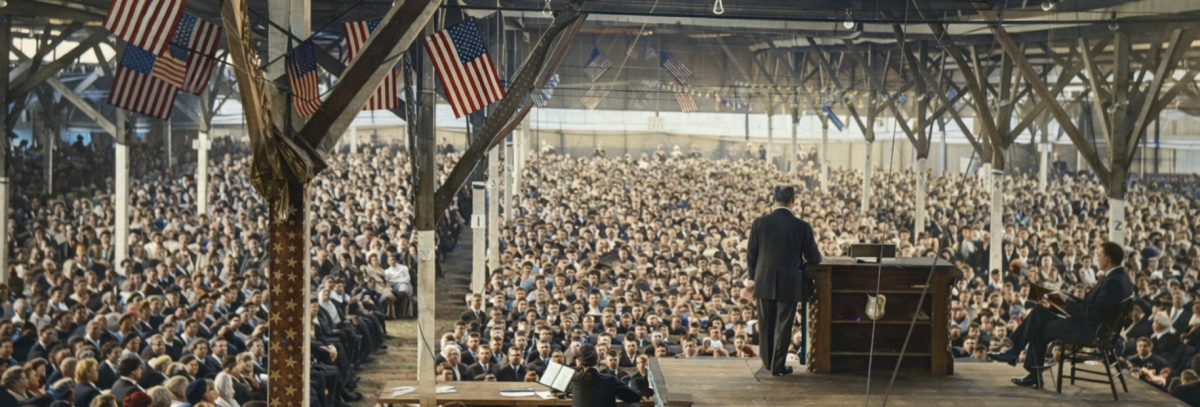
There is a remarkable correspondence between the experiences of the chosen people of Israel and of the saved soul,” said Miss Grace Saxe yesterday afternoon before her Bible class in the tabernacle. Miss Saxe has begun a study of the books of the Bible, their arrangements and their significance and her class which occupies the platform at the close of the afternoon meeting in the tabernacle fills every seat. Miss Saxe said:

The symbolism of the Pentateuch is remarkable. No less remarkable is the order of these first five books. Genesis is the book of beginnings and yet before it closes it shows the beginning of the entrance of sin. Exodus is the book of redemption symbolized by the release from bondage in Egypt. Leviticus is the book of worship showing the experience of redemption. Numbers, the book of journeying the experiences of the redeemed from day to day, while Deuteronomy is the book of instruction to the redeemed, the plan of regeneration.

Note the steps from Egypt, through the Wilderness to Canaan. Egypt typifies the world, Satan’s domain; the Wilderness, the place of the unsurrendered to God, while Canaan symbolizes the spirit-filled, spirit-controlled Christian life.

We are asked where we get our authority for this comparison of the life of the Israelites and the life of the Christian. You will find it in I Cor. 10:4.

As the Israelites left Egypt and wandered for 40 years in the Wilderness there is one thing I want you to note, that when they looked back toward Egypt they longed for the fish, the melons, cucumbers, leeks, onions and garlic. Each stage of longing was lower, stronger and ranker. The picture is exact in every particular.

Every great revival has two objects. The first is to get people to obey God, to come out for Him. That is the first great crisis. The second object is to get the wilderness Christians to take a second step into the promised land, the land of Canaan, instead of wandering and drifting about. This is the second great crisis.

Miss Saxe will continue her study of the books of the Bible each afternoon at the close of the afternoon meeting. On Saturday afternoon of next week she will outline a plan for neighborhood Bible classes to continue after the close of the present Sunday meetings.

Pittsburgh Post-Gazette. Fri, Jan 30, 1914 ·Page 7
Grace Saxe’s Prayerbook, c 1911

Source – the author of this article is probably the wife to Evangelist M.B. Williams.

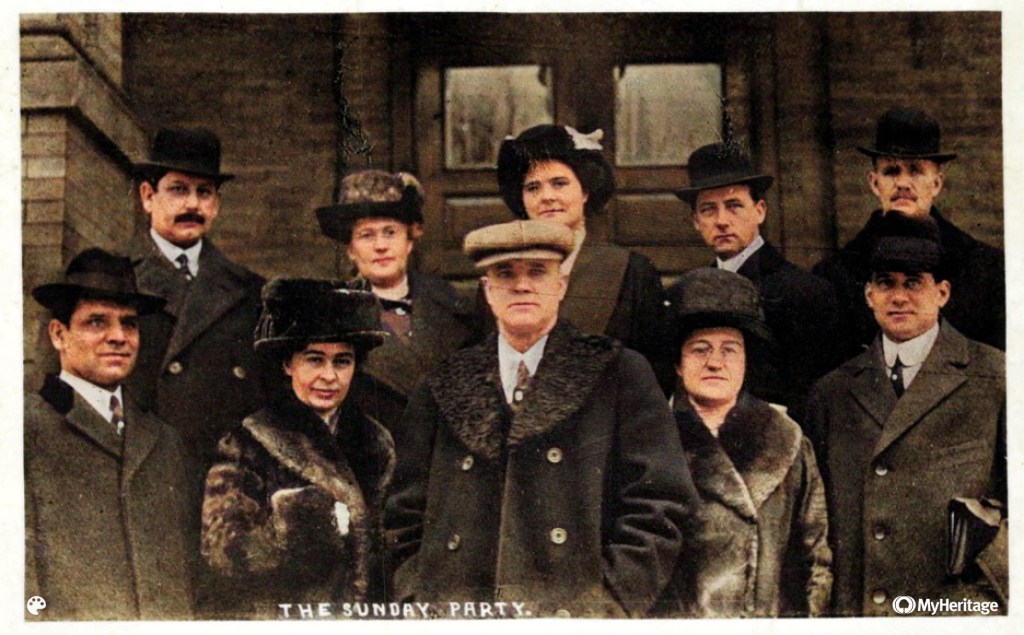
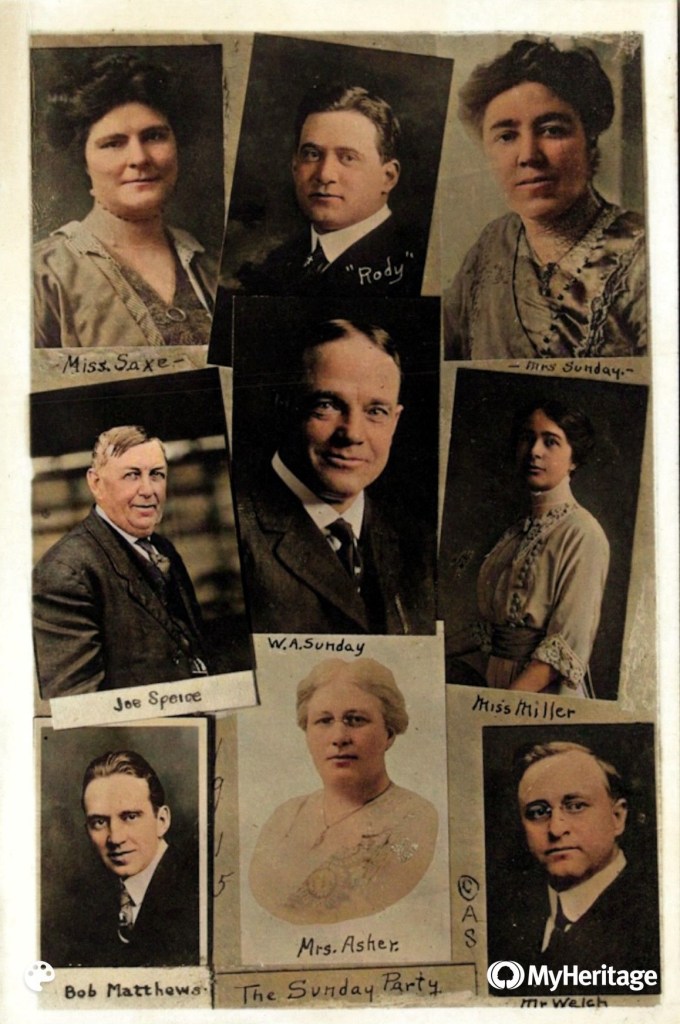
Grace Sax joined the Sunday team in February 191. She immediately assumed the leader of the cottage prayer meetings, as well as Bible teaching and training local churches to handle the fruit of the Sunday revivals.

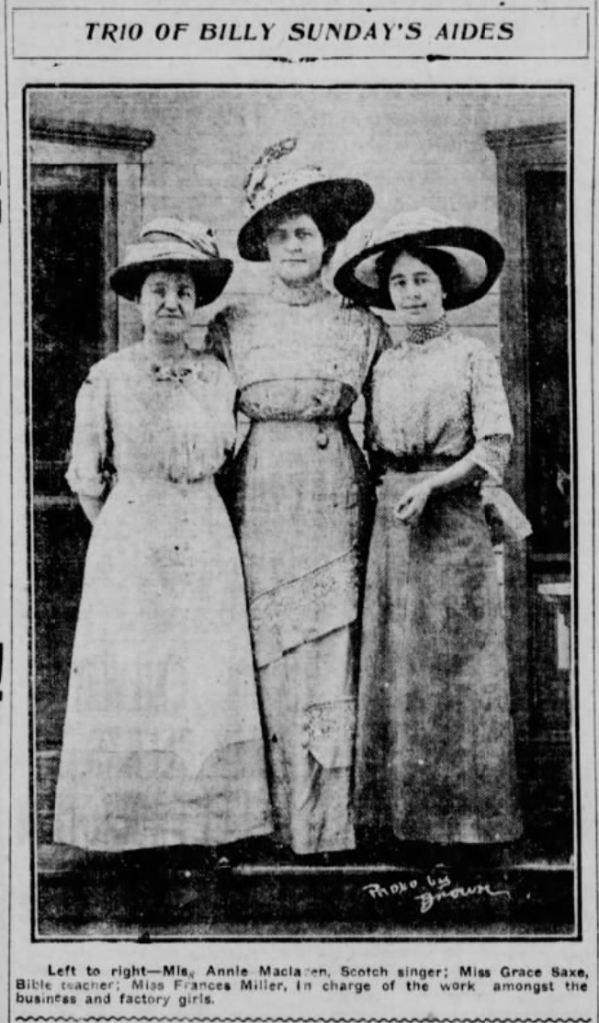
The Liverpool Evening Review. Wed. Sept 18, 1912:1. Grace is in the center.

This article in a 1911 newspaper gives a glimpse of the importance of prayer to Grace.

Miss Saxe then held up little blank book which is called “Answered Prayer.”

She calls it, “A Record of the Footsteps of a Prayer Hearing and Prayer Answering God.” It is divided into four blank columns headed. First, date of asking; second, the request; third, the special promise pleaded; fourth, date when answered.

In this record she puts only the prayers which to man’s eyes it seem impossible to have answered. All of her prayers, she says, have not been answered thus far—many of them have however been answered fully.

“There are conditions to fulfill if prayers are to be answered.” These seven conditions she has in the back of her “Answered Prayer”

1. Personal condition, Psalm 66:18,

2. Forgiving Spirit, Mark 11:25,

3. Spiritual Motive, James 4:3.

4. Asking, Matthew 7:7,

5. Asking in Faith, Mark 11:24,

6. Asking according to God’s will (not to interfere with His plans) 1 John 5:14,

7. Asking in Jesus name, John 16:23. “Pray so that if it were written we could ask Jesus to sign it.”

In our prayers Miss Saxe suggests that the following should be the form of approach to God: Adoration, Confession, Thanksgiving, Supplication.

Taking the first letters of these words in order, we spell the word Acts. In Genesis 32:9-12 we find that order observed in Jacob’s prayer. In conclusion Miss Saxe suggested the reading of Andrew Murray’s ‘With Christ in the School of Prayer.’—Mrs. A. R. Williams.

Source – the author of this article is probably the wife to Evangelist M.B. Williams.

The following story was printed in a paper on March 3rd, 1915:

“One of the special features of the meeting yesterday afternoon came when Miss Grace Saxe, of Sunday’s party, rushed from the platform and threw her arms around the shoulders of a woman trail hitter. Miss Saxe later explained that the woman was a relative, living in this city, and that she has been praying for her to come to the front since the opening of the campaign.”

Personal Workers to Extend Revival

PERSONAL WORKERS TO EXTEND REVIVAL

WILL FILL SUNDAY’S PLACE ON HIS DEPARTURE.

ALWAYS DO GREAT WORK

Citation: The South Bend Tribune. Thu, May 29, 1913 · Page 7

Results at Wilkes-Barre and Columbus Show What South Bend Can Do in Important Branch of Campaign.

The recent organization of the personal worker’s league among the men of the city has brought many to believe that this body of men will be the means of making the Billy Sunday campaign a most productive one, permanently.

It is not the purpose of the personal workers’ league to work only during the few remaining weeks of the revival but the members propose to maintain the same spirit that pervades religious circles at the present for months to come. The league is designed to take the place of Billy Sunday after he leaves, carrying on the revival work in different places in South Bend and Mishawaka, and surrounding districts.

Is Important Factor.

In other cities, such as Columbus, O., and Wilkes-Barre, Pa., the personal workers’ league has been one of the most important factors during the closing weeks of the campaigns and of great assistance to the evangelist in his work. The men who belong to the league go among their associates, whether in the factory, in the office or in the stores, trying to persuade other men to become Christians. It has been found that this is a very effective way of bringing men to the tabernacle meetings and eventually to the altar as the proposition is put to them in a practical manner and appeals to the majority.

In Wilkes-Barre, where Mr. Sunday recently closed a campaign, the personal workers’ league is holding meetings throughout the city, in the towns and in the vicinity every day. Excellent results are being derived from these meetings and men are being converted almost every day. The league is credited in an effort to convert the whole Wyoming valley and have organized a perfect machine which is working the community systematically and thoroughly.

Much Interest Here.

Present indications point to the fact that South Bend will have even a greater personal workers’ league than that at Wilkes-Barre, as more men are taking an interest in the work from the very start. The members include many of the most prominent business and professional men of the city and all are using their influence in an effort to get their associates to ‘hit the trail.’

They are entering the work with a spirit of enthusiasm unknown in re-

Meet Each Noon.

The personal workers are to meet every noon at the Y. M. C. A. while the campaign is on, and frequently after it has closed. The first day, nearly 100 men were in attendance, and each day those present were urged to return the following day with a friend. The plan has accomplished good results and the membership of the organization is steadily increasing.

In case it is decided to begin the noon mass meetings downtown next week, the personal workers’ league will meet daily at the same place where the meeting is held. The business for the day will be transacted as soon as the men get together, then the meeting will be over in time that they would have an opportunity to listen to Billy Sunday speak and hear the sermon, if necessary.

The South Bend Tribune. Thu, May 29, 1913 · Page 7

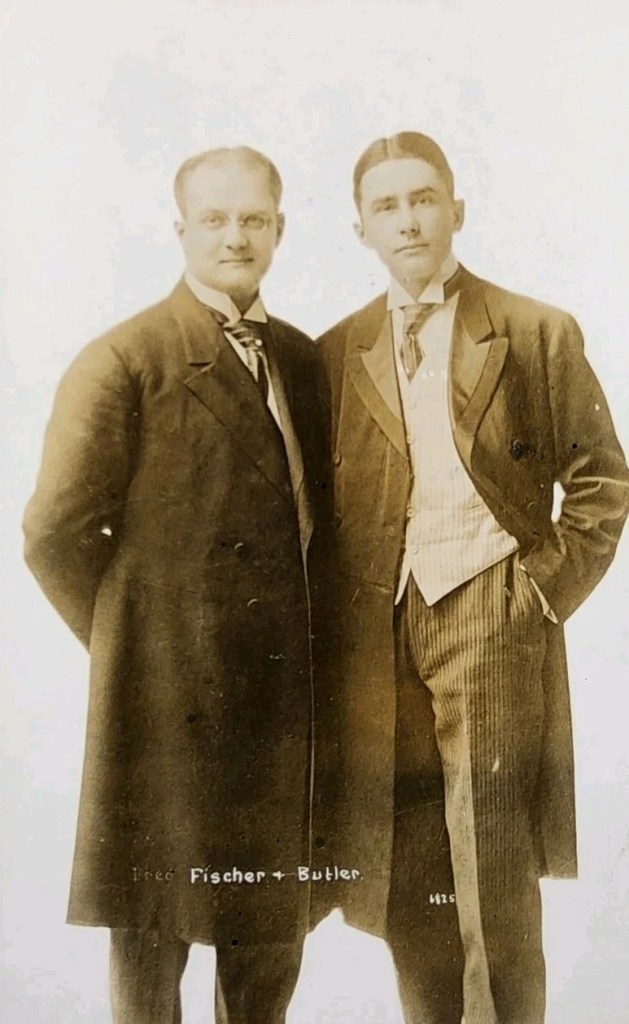
Fred G. Fischer – Choir Leader and Soloist and Charles Butler – Soloist

We recently acquired this image.

The reverse back of the postcard is blank.

Billy Sunday worked closely with two key musical assistants: Fred G. Fischer and Charles Butler, both of whom played significant roles in his evangelistic campaigns.

Fred G. Fischer – Choir Leader and Soloist

Fred G. Fischer was among Sunday’s earliest and most trusted collaborators. Serving as both choir leader and soloist, Fischer was instrumental in organizing and directing the musical components of Sunday’s revival meetings. His tenure with Sunday spanned approximately from 1900 to 1910, during which he helped cultivate the energetic and participatory musical atmosphere that became a hallmark of Sunday’s campaigns.

Charles Butler – Soloist

Charles Butler served as a soloist in Billy Sunday’s team, contributing to the musical aspects of the revival meetings. His role involved performing solo pieces that complemented the choir’s performances and supported the overall worship experience. Butler’s involvement with Sunday’s campaigns was notably during the years 1907–1908.

Both Fischer and Butler were integral to the musical dimension of Billy Sunday’s revival meetings, enhancing the emotional and spiritual resonance of the events through their leadership and performances.

Circa 1907 (1900-1910)

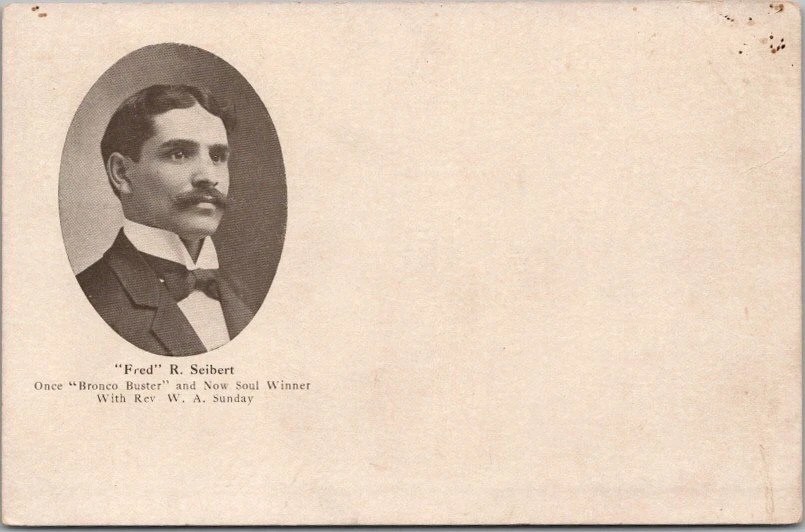
Logistical support from Fred R. Siebert, C 1910 postcard

Fred R. Seibert played a pivotal role in Billy Sunday’s evangelistic campaigns during the early 20th century. As a member of Sunday’s core team, Seibert was known as the “handy man of the tabernacle,” overseeing the logistical and operational aspects of the revival meetings. His responsibilities included managing the physical setup of the tabernacle, coordinating volunteers, and ensuring the smooth execution of events. ​

Beyond his logistical duties, Seibert was deeply involved in the spiritual mission of the campaigns. He authored Rescue the Perishing, a guide aimed at assisting new converts in their Christian journey. Published in 1921, this work provided practical advice and biblical teachings to support individuals in their newfound faith. ​

Seibert’s contributions were integral to the success of Billy Sunday’s revivals, combining organizational acumen with a commitment to spiritual mentorship.

BELOW – Article in The South Bend Tribune. May 1, 1913.

HERE IS STORY OF FRED’S LIFE

If you have heard Billy Sunday, you have also heard him say, “Here, Fred, open some of these ventilators, it’s too hot in here,” or “If you people want song books, you can get them from Fred.”

In fact, Billy started talking about Fred long before South Bend people ever knew there was a Fred. But most of the people who are going to the tabernacle these days, know Fred now.

Fred is a stock sort of a fellow, with raven black hair. His last name is Seibert and his initials might be “A. B.”—always busy—but they are not.

Fred Seibert is official custodian of the big Sunday tabernacle on Vistula avenue and he guards the immense building day and night. If you want to hear an interesting story sometime, just step up to Fred and ask him to tell something of his life history.

But maybe Fred would be backward in speaking to a stranger about the matter, so you can be saved the trouble of approaching Fred by continuing to read this story.

Eighteen years ago, in a little town out in Iowa, there lived a young man who, like many other young men, was wasting his life away on cards and similar vices.

One night the young fellow got up from the gaming table with no money. Some people call it “broke,” while others who are without money, say they are “strapped.”

Well, “broke” or “strapped,” the gambler had no money, and he was disgusted with cards, the world and himself. He left the place and went out in the street. Near the corner he heard music. It was the singing of a church choir, but the fellow did not know that when he entered the building.

He knew it a minute after, however, when an evangelist in the front of the room arose to announce his text for the evening.

The man tried to leave the building, but a usher held him.

“I guess I done passed by my station,” said the gambler, but the usher thought otherwise and told the other so.

That gambler, broken spirited and penniless, was Fred Seibert, the “Fred” to-day of the Billy Sunday party.

And to-day Seibert can look the best man in the world in the eye and say casually:

“My friend, my life has not been in vain for the reason I have had the pleasure of bringing 12,000 people to the altar, and showing them the presumptive military pages to them who accept it.”

And Fred has earned a nation wide reputation as a Bible student and a personal worker. He has committed 1,400 books of scripture to memory and can do a trick with the Bible which is a common enough one with playing cards, but is a decidedly unique one when it comes to the Bible. He also enjoyed the privilege of assisting to escort his mother and six brothers and three sisters to the altar.

Pick up the Bible and turn to any page in it, and Fred will tell you the name of the book and just about the chapter you have your hand on.

Seibert was born in Waverly, Ia., and worked as a broom twister for nine years. After he was converted he entered the Moody Institute, where he stayed for a year and a half. Five years ago he joined the Sunday party. Ever since his duties have been that of taking care of the tabernacle and personal work.

To assist himself and others in this work, Fred wrote a little pamphlet, “Rescue the Perishing,” which has been accepted as an authority by experts of the Bible throughout the country.

Seibert is married, and as two children, who live in Santa Monica, Cal., but the greatest thing, next to his family and his God, is the greatest respect.

Fred pays his children so much for learning scripture and they have to memorize every week and recite it word for word.

The little boy and girl of mine keep on learning scripture and they interrupt their “daddy,” said Fred.

And they that follow me, because I do not believe he doesn’t care.