Former professional baseball player-turned urban evangelist. Follow this daily blog that chronicles the life and ministry of revivalist preacher William Ashley "Billy" Sunday (1862-1935)
“Dr. Sunday (Westminster College had just conferred an honorary doctorate upon Sunday) knows his Bible which is the true body of divinity in theological lore. Mr. Sunday has devoted his life to the supreme task of world evangelization for which the Bible is the great charter.
He is, therefore, both in scholarship and practical effort entitled to the degree. Just as a Doctor of Medicine is supposed to know the Science of Medicine and practice the art of healing, so a Doctor of Divinity who know the truth about God and practices the art of saving 1s entitled to the degree. In many institutions it is customary to bestow the honorary degree of Doctor of Divinity upon those who are men noted for their knowledge of “the traditions of the scribes and pharisees” than for knowledge and practical use of the Bible itself.”
Sincerely yours,
R.M. Russell to T.T. Frankenberg (Columbus, Ohio) August 30, 1913
Artifact credit: Morgan Library, Grace College
The recipient of this letter, Theodore Thomas Frankenberg, was no casual correspondent. A Columbus-based journalist and author, Frankenberg was in the midst of gathering materials for what would become the first popular biography of the evangelist, Billy Sunday: The Man and His Message (published in 1914). Letters like Russell’s provided him with both anecdotal color and institutional validation—evidence that Sunday was not just a charismatic revivalist but a figure respected by the academic establishment.
This exchange captures an important cultural moment. Westminster’s degree signaled a rare bridging of worlds: a Presbyterian college recognizing a frontier-style evangelist whose power lay not in polished scholarship but in the raw urgency of his preaching. To Sunday’s critics, the degree may have looked like a concession to populism. To his supporters, it was overdue acknowledgment that the man who knew his Bible best and preached it most widely deserved the honor more than those “scribes and Pharisees” who merely debated it in lecture halls.
In the end, Frankenberg’s biography helped cement Sunday’s reputation, weaving together stories, letters, and testimonies like this one. And tucked inside that narrative is the 1913 moment when Westminster College draped Billy Sunday in academic robes, placing him—at least symbolically—among the doctors of divinity.
“Winona people are beginning to know something of Mrs Sunday’s gifts and abilities, as they never have before understood them. She works with unusual tact, and gives evidence of thinking every subject through before action is taken. Personally, I appreciate such a counsellor more than I can express. I feel satisfied that her spirit has touched the heart of every Commissioner of the General Assembly; and this has resulted in inspiring their confidence in Winona’s present, and enlarged their vision of the great future this Institution faces.”
Letter from J.C. Breckenridge, General Secretary, Winona Assembly and Bible Conference. May 24, 1921. Addressed to Billy Sunday. Morgan Library. Billy Sunday Archives.
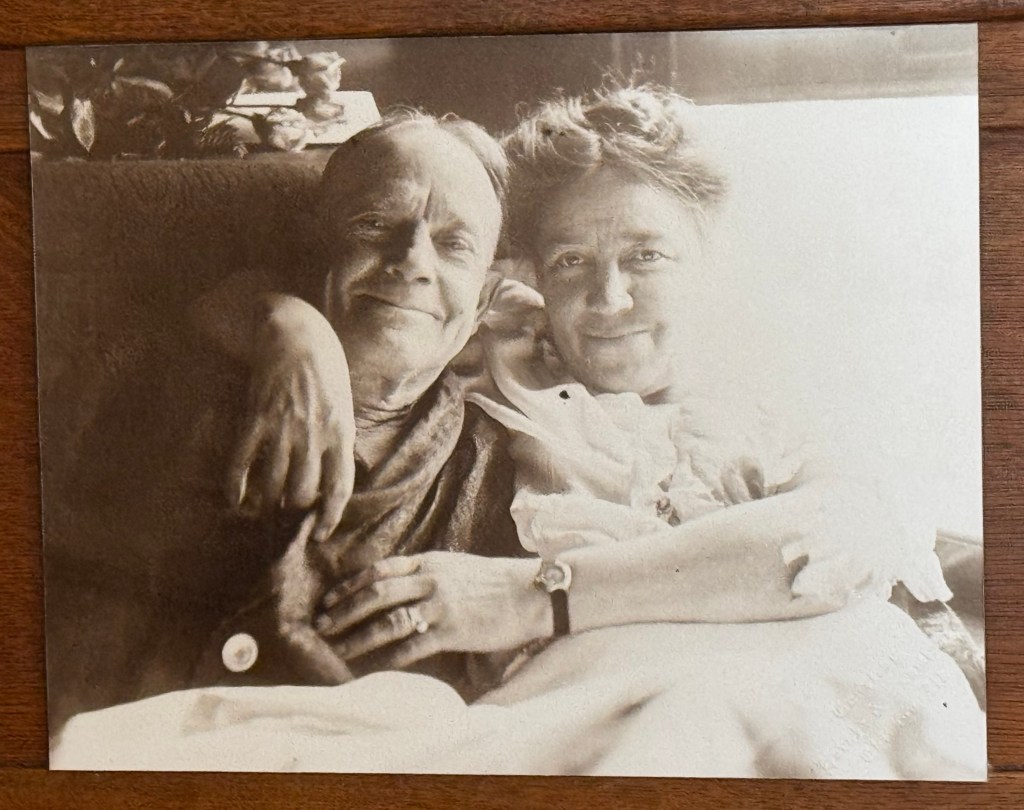
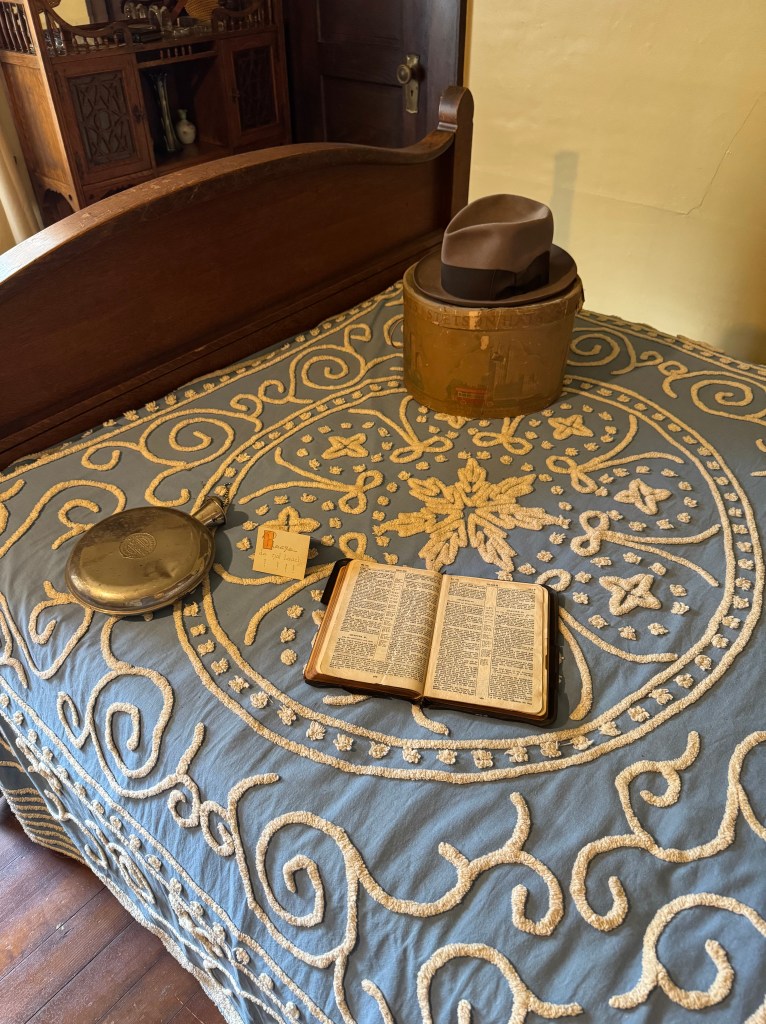
Here is the bed of Billy and Ma Sunday in their former Winona Lake home. The accompany picture (probably 1930s) of the famous couple is placed on the headboard.
A colorized version.
Photography permission granted by the Winona Lake History Center.
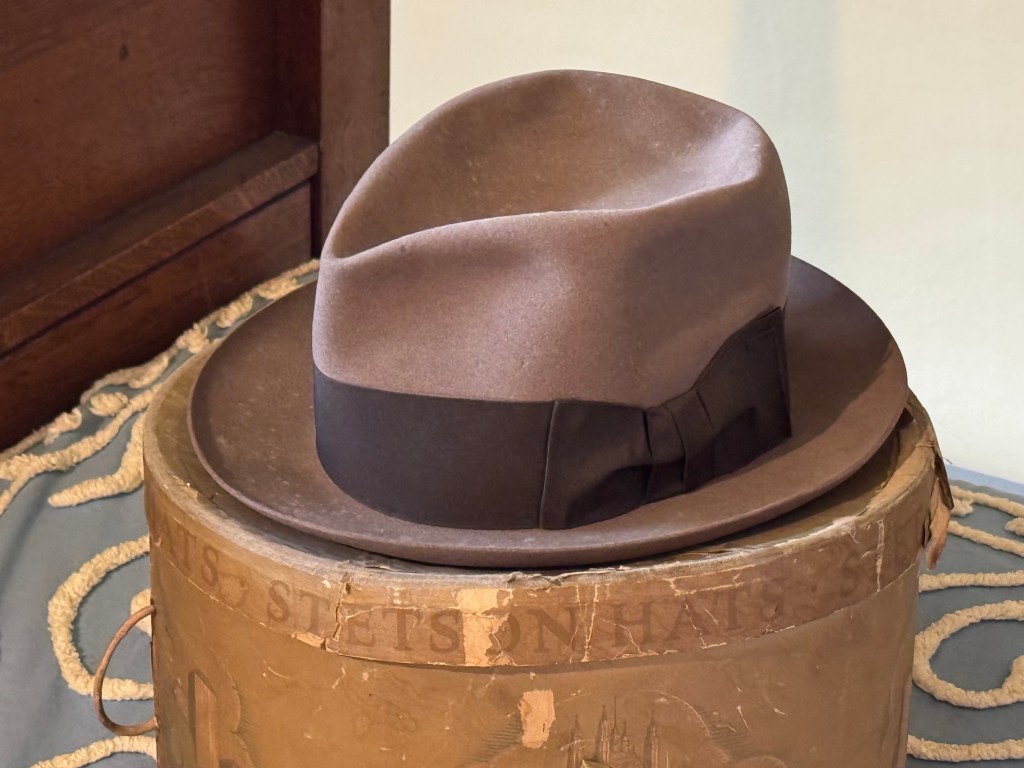
Billy was often photographed in this hat, which now resides on the bed in his former Winona Lake home. Permission to photograph was granted by the Winona Lake History Center.
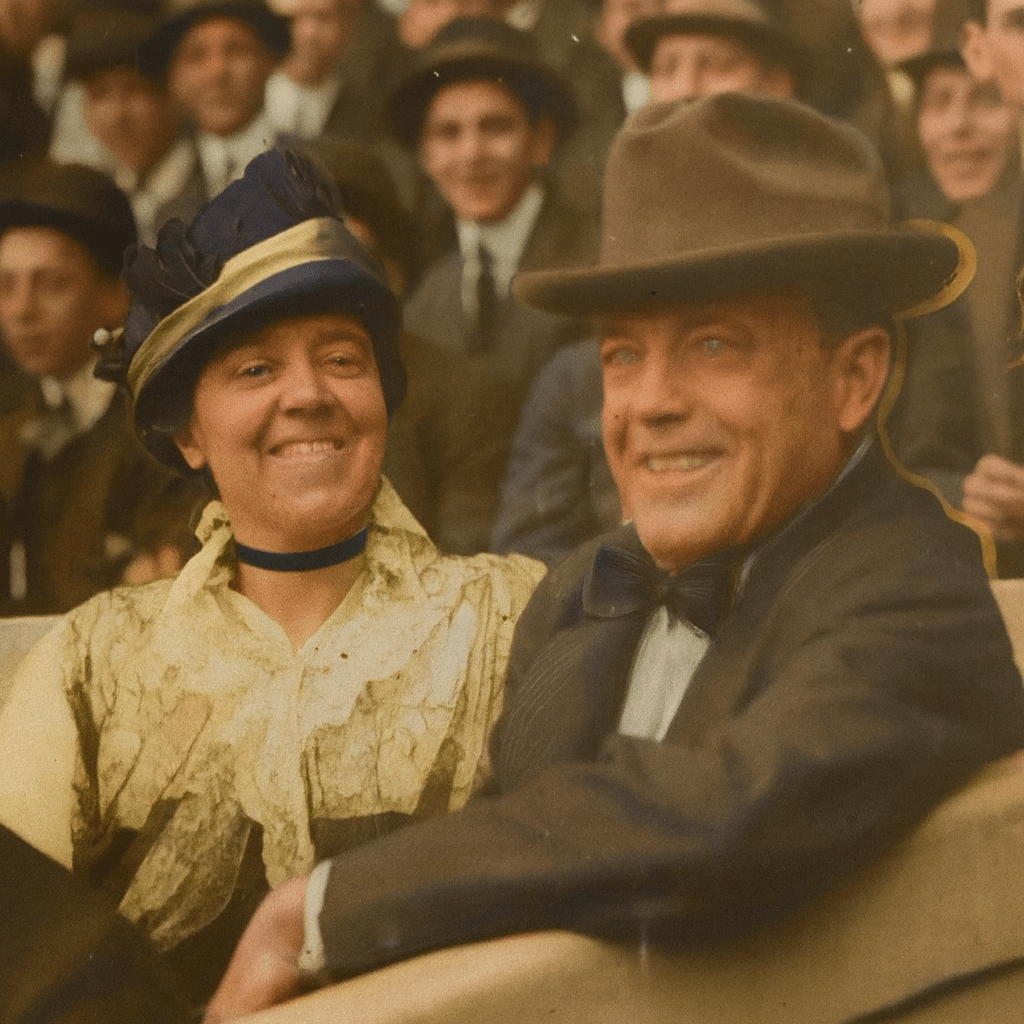
The picture below was taken in 1915 at the Polo Grounds (colorized with AI).
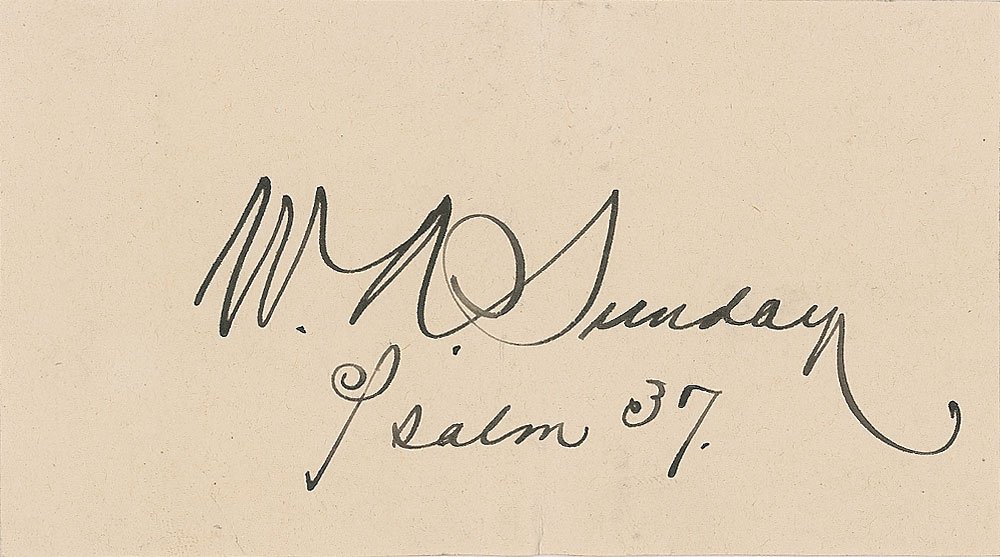
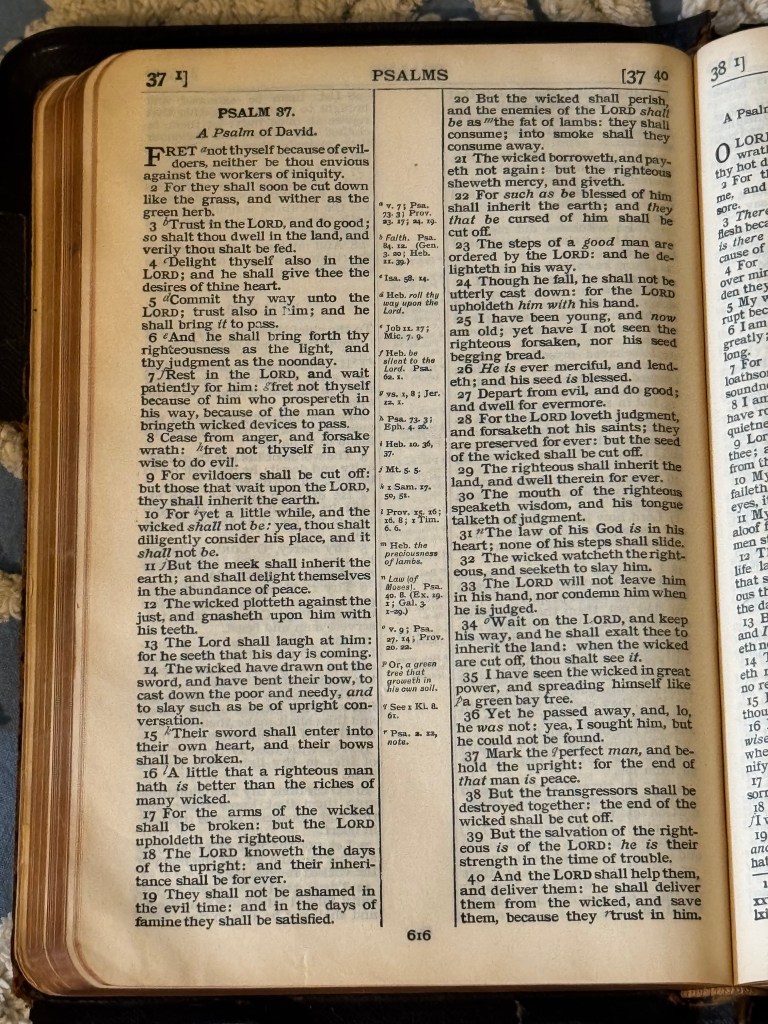
Many surviving signatures of Billy Sunday accompany and simple inscription to Psalm 37.
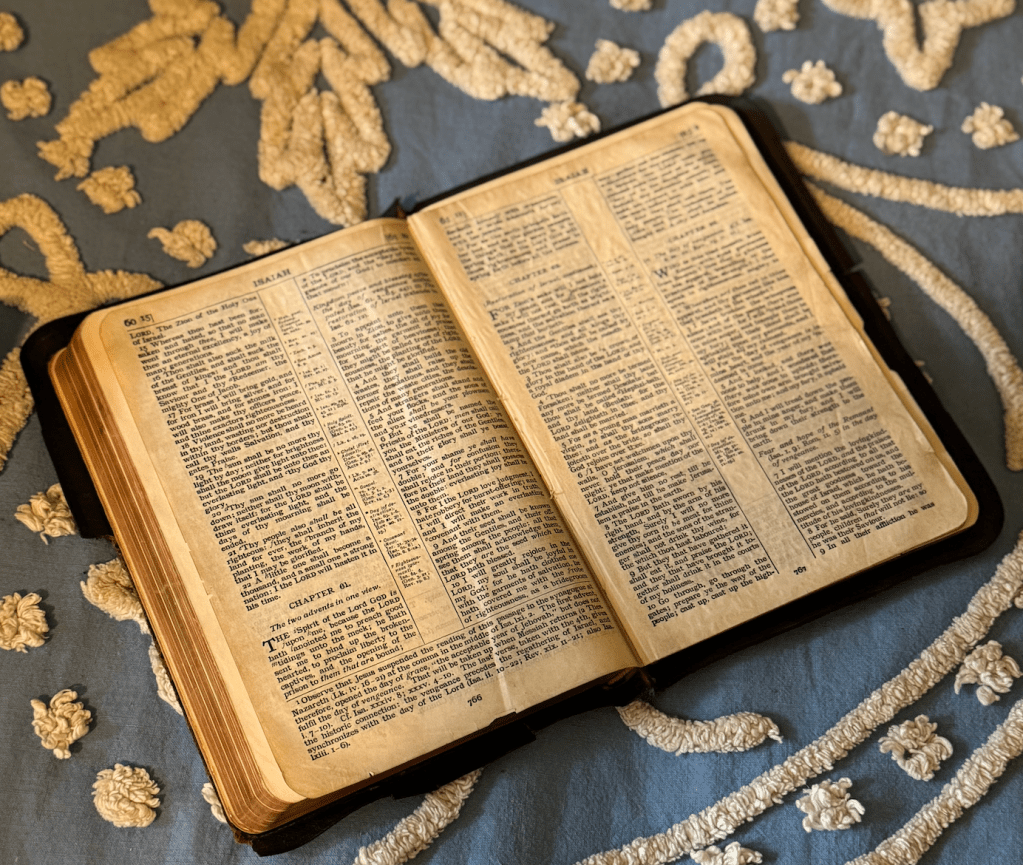
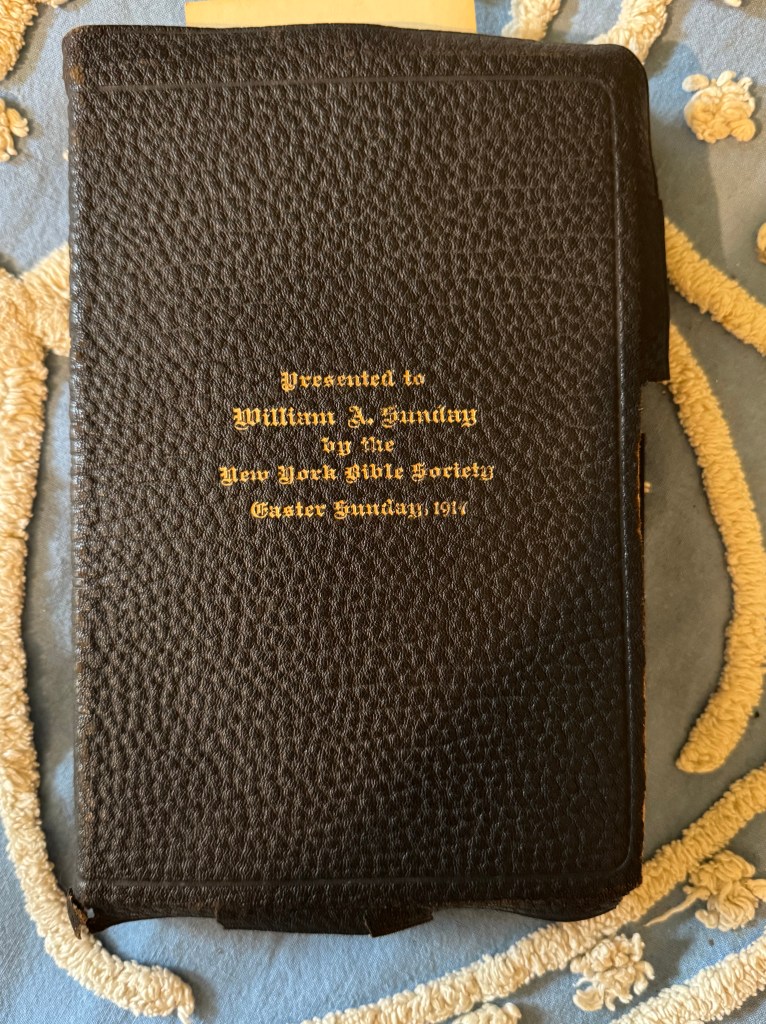
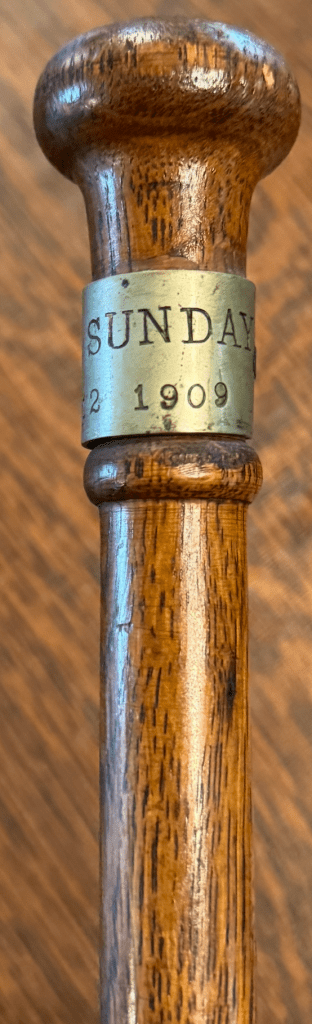
There is a KJV Scofield Bible, dated 1909, on the bed of Billy and Ma Sunday in their home in Winona Lake. This particular Bible was gifted to Billy in 1917 on Easter Sunday, in New York.
Permission granted by the Winona Lake History Center to photograph the Bible.
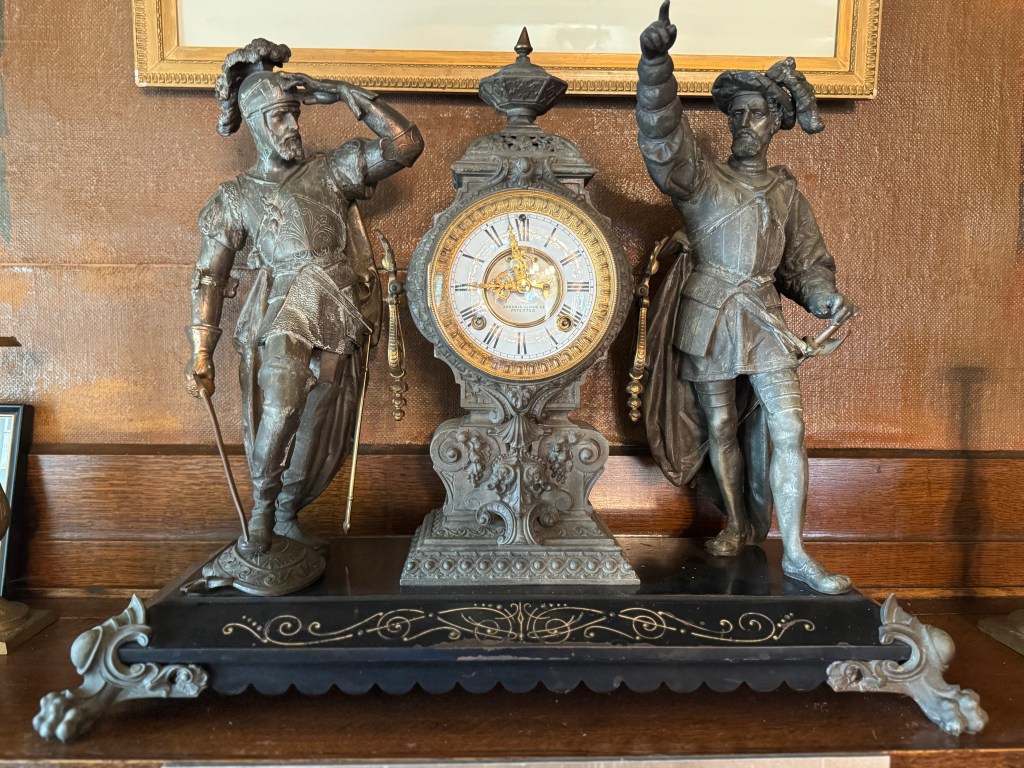
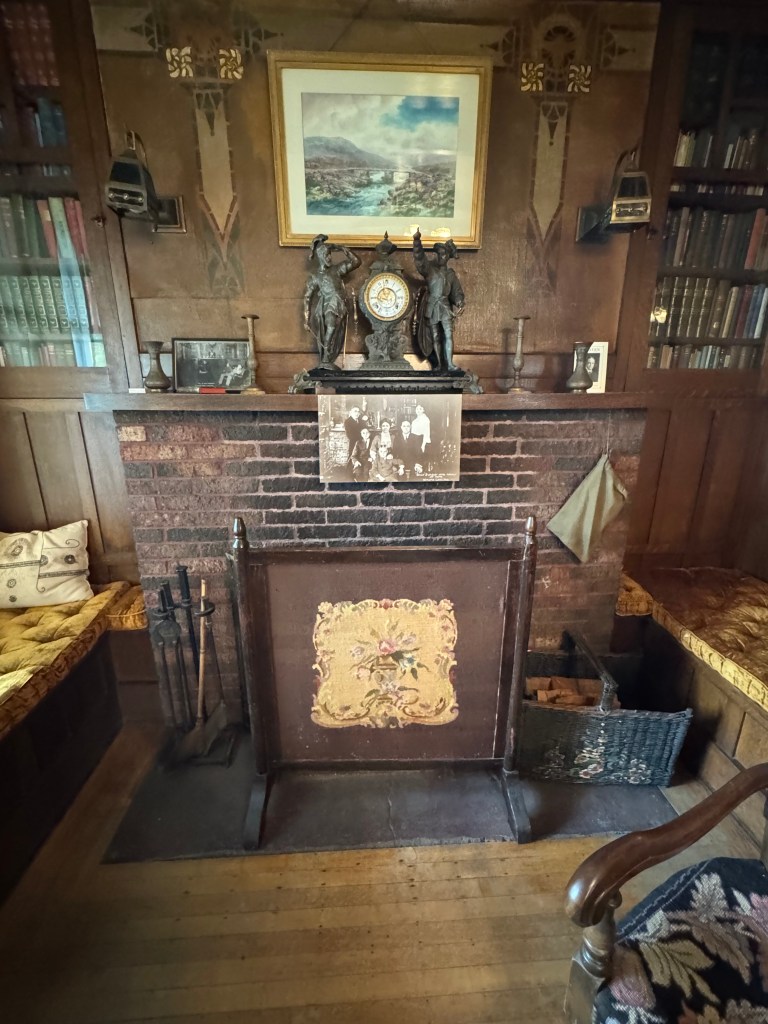
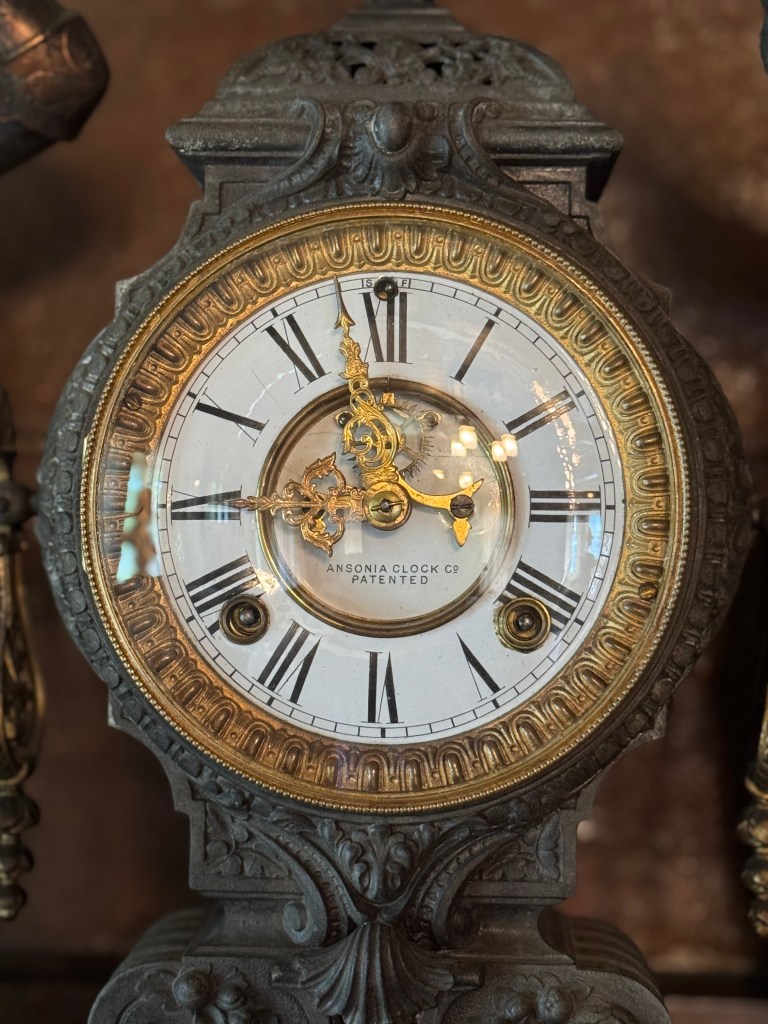
Billy and Ma Sunday displayed a beautiful Victorian clock on their mantel in their home in Winona Lake. The characters are Pizarro & Cortez. The clock was made by the Ansonia Clock Company and this model was patented in 1891. One could only conjecture why this piece inspired Billy or Ma Sunday.
Image captured upon permission from the Winona Lake History Center.
Advertiser (Adelaide, SA : 1889 – 1931), Saturday 23 March 1918, page 7
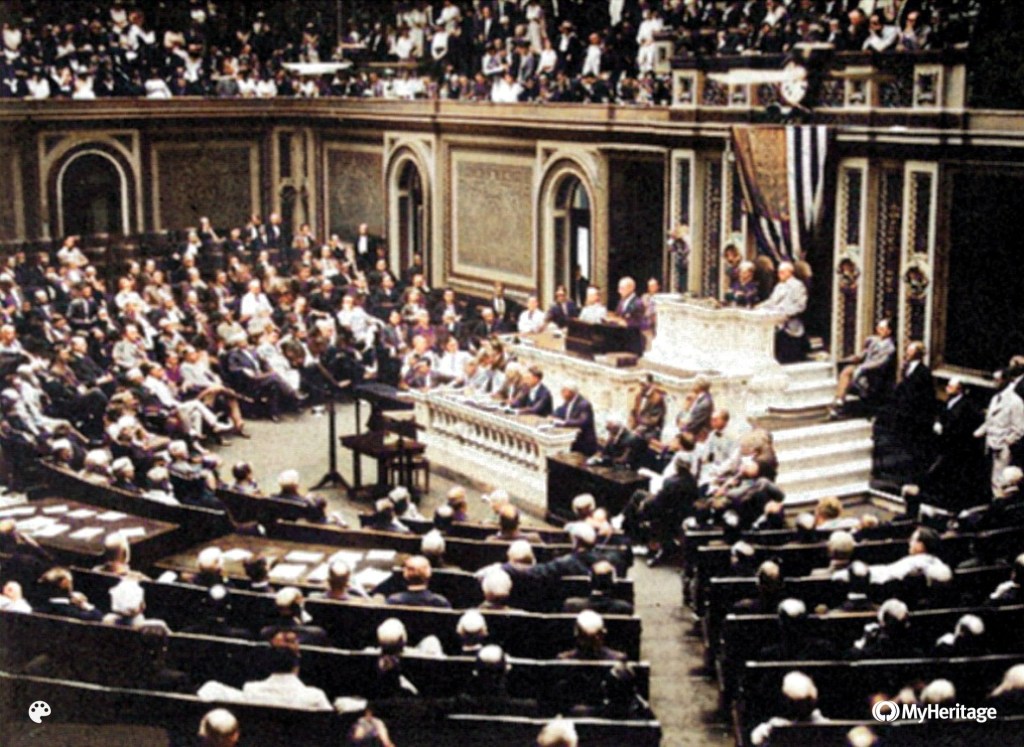
The U.S. House of Representatives, 1918. Colorized by author.
BILLY SUNDAY’S PRAYER.
CHEERED IN PARLIAMENT.
Billy Sunday prayed in the House of Representatives at Washington on Thursday, January 10, and was applauded at the close of his appeal. Mr. Champ Clark, Speaker of the House, extended the invitation to Mr. Sunday to take the place of the regular House chaplain. Mr. Sunday, in his prayer, verbally assailed the Germans, and invoked the aid of Divine Providence to help the President, the Secretary of War, and Congress to defeat Prussianism.
“We thank Thee that we are Americans,” prayed the evangelist, ‘”and live beneath the protecting folds of the Stars and Stripes. We thank Thee, that Thou canst look over the battlements of glory on our land and see that there is not one stain on any star or stripe. We thank Thee for our happy homes. We thank Thee for our wives and little ones. We thank Thee for the fruitful trees and bountiful harvests. We thank Thee that as a nation we have never gone to bed hungry, or scraped the bottom of our flour barrel, and we pray for Thy continued mercy and blessing.
Most Infamous Nation in History.
“We pray that Thou wilt forgive our transgressions and blot out our iniquities. Thou knowest, O Lord, that we are in a life-and-death struggle with one of the most vile, infamous, greedy, avaricious, bloodthirsty, sensual, and vicious nations that ever disgraced the pages of history.
‘”Thou knowest that Germany from the eyes of mankind has wrung enough tears to make another sea; that she has drawn blood to redden every wave upon that sea; that she has drawn enough shrieks and groans from the breasts of men, women, and children to make another mountain.
‘”We pray Thee that Thou wilt bare Thy mighty arm and strike that great pack ot hungry, wolfish Huns, whose fingers drip with blood and gore. We pray Thee that the stars in their courses and the winds and waves may fight against them.
“We pray Thee that Thou wilt bless our beloved President and give him strength of mind and body and courage of heart for his arduous duties in these sorrow laden, staggering days. We pray Thee to bless the Secretary of War and the Secretary of the Navy, and bless, we pray Thee the Navy Strategy Board. Bless we pray Thee, the generals at the head of our army and the boys across the sea. somewhere in France, and bless those protecting our transports, loaded to the water’s edge with men and provisions.
Prays for Allied Victory- ‘ “Bless our boys at home who are in ‘ cantonments. Bless, we pray Thee, this Senate and House, and give them wisdom and strength, for they seem to have come into the kingdom for such a time as this.
“‘And, Lord, may every man, woman, and child from Maine to California, from Minnesota to Louisiana, stand up to the last ditch and be glad and willing to suffer and endure until final victory sha’ll come. Bless our Alliée, and may victory be ours. And in Thy own time, and in Thy own way, we pray Thee that Thou wilt release the white-winged dove of peace until it shall dispel the storm and clouds that hang lowering over this sin-cursed, blood-soaked, and sorrowing world, and when it is all over we will uncover our heads and lift our faces to the heavens ‘ and ring with a new meaning
“‘My country, “tis of thee, sweet laud of Liberty.
” Of thee I sing.’
“‘And the praise shall come to Thee forevermore through Jesus Christ. Amen.”
The House broke into instant applause at the ending words of the prayer. Many members crowded around the evangelist, and shook hands with him, and an in-formal reception was held in the lobby.
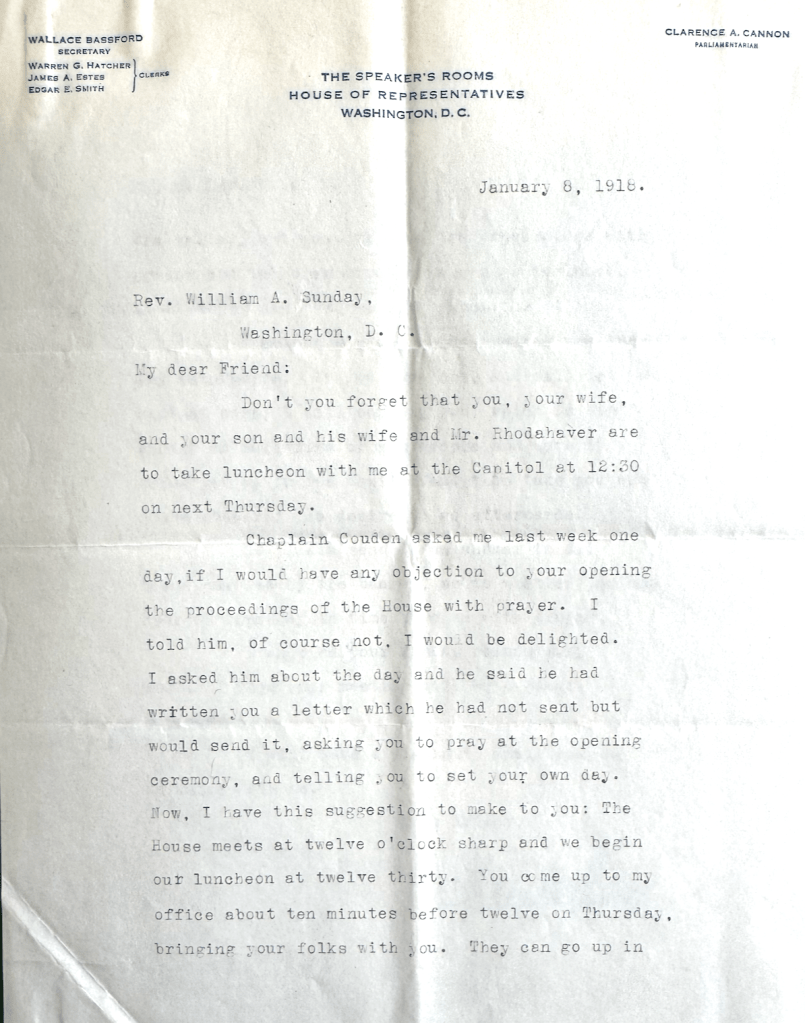
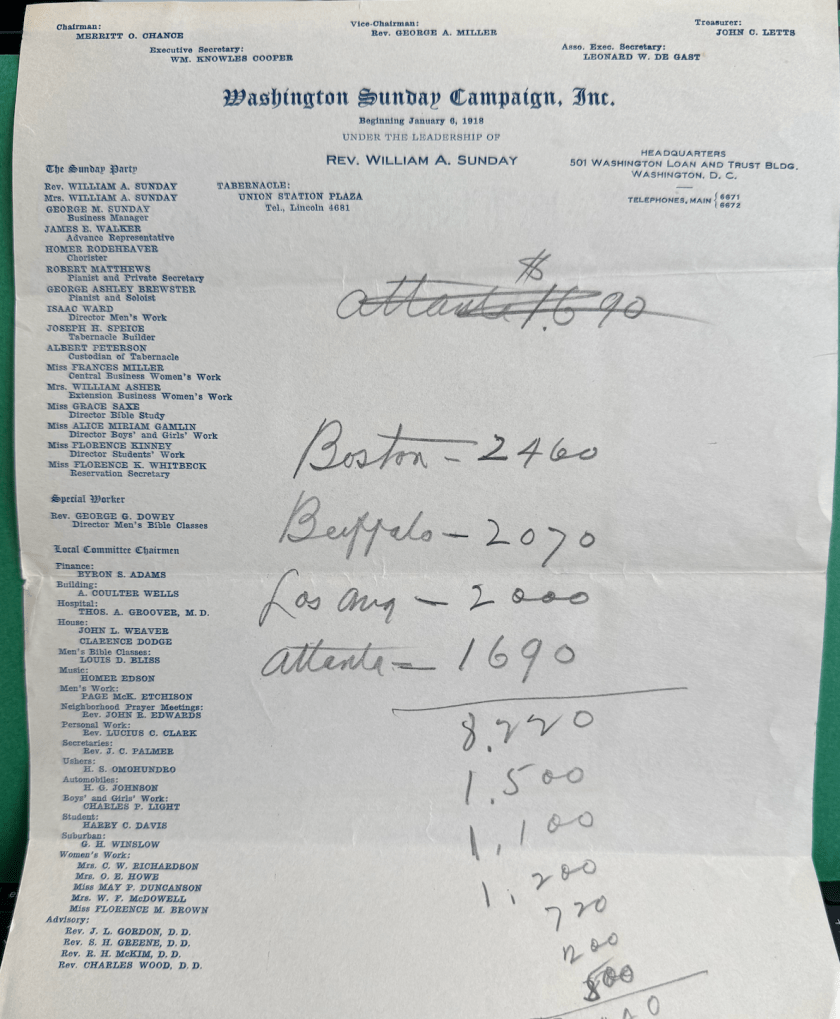
The Billy Sunday archives at Grace College in Warsaw, Indiana have the following related artifact in their archives. He seems to have spoken at Union Station Plaza, starting January 6, 1918.
Champ Clark (James Beauchamp Clark, 1850–1921) was a prominent American politician and leading Democrat in the early 20th century. By 1918, he was near the end of his long and distinguished career in the U.S. House of Representatives, which he had served in almost continuously since 1893.
Transcription of above letter:
WALLACE BASSFORD, SECRETARY
THE SPEAKER’S ROOMS HOUSE OF REPRESENTATIVES
WASHINGTON, D.C.
January 8, 1916.
Rev. William A. Sunday,
My dear Friend:
Don’t you forget that you, your wife, and your son and his wife and Mr. Rodehever are to take luncheon with me at the Capitol at 12:30 on next Thursday. Chaplain Couden asked me last week one day, if I would have any objection to your opening the proceedings of the House with prayer. I told him, of course not. I would be delighted.
I asked him about the day, and he said he had written you a letter which he had not sent but would send it, asking you to pray at the opening ceremony, and telling you to set your own day.
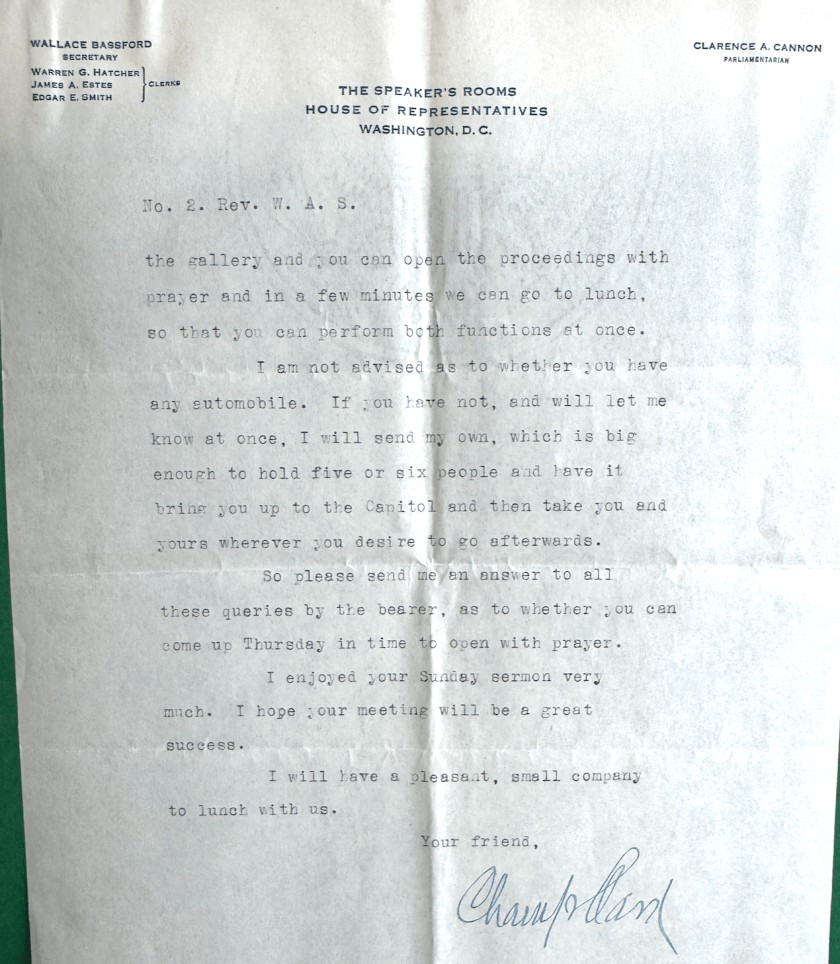
Now, I have this suggestion to make to you: The House meets at twelve o’clock sharp and we begin our luncheon at twelve thirty. You come up to my office about ten minutes before twelve on Thursday, bringing your folks with you. They can go up in the gallery and you can open the proceedings with prayer and in a few minutes we can go to lunch, so that you can perform both functions at once.
I am not advised as to whether you have any automobile. If you have not, and will let me know at once, I will send my own, which is big enough to hold five or six people and have it bring you up to the Capitol and then take you and yours wherever you desire to go afterwards.
So please send me an answer to all these queries by the bearer, as to whether you can come up Thursday in time to open with prayer.
I enjoyed your Sunday sermon very much. I hope your meeting will be a great success.
I will have a pleasant, small company to lunch with us.



 Evangelist Billy Sunday (1862-1935)