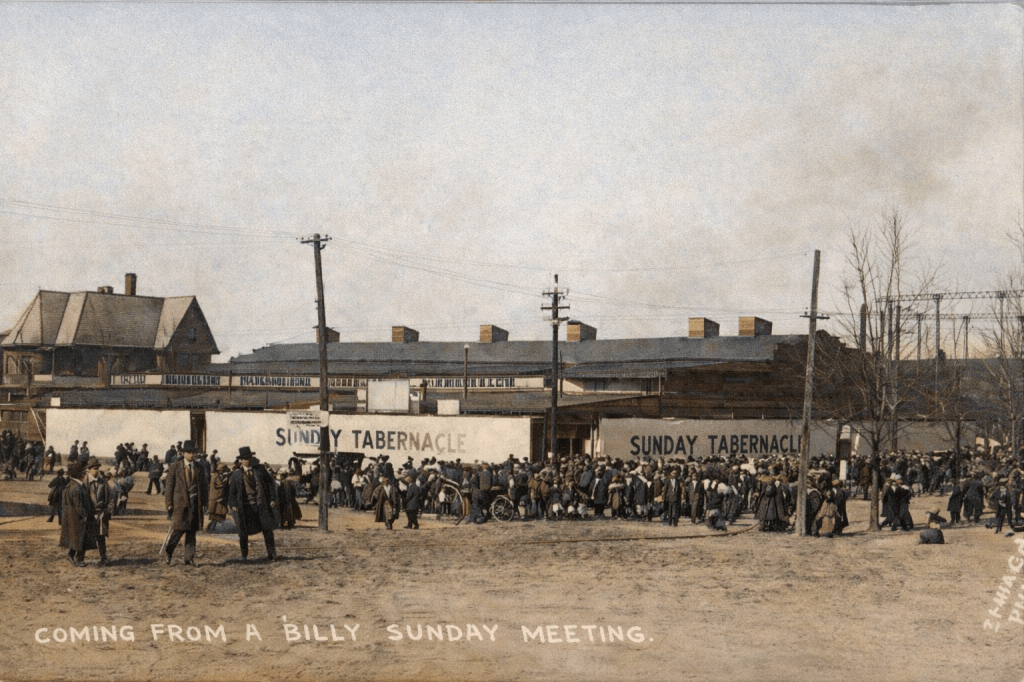
The Marshalltown campaign opened Sunday April 25, 1909.
Colorized.
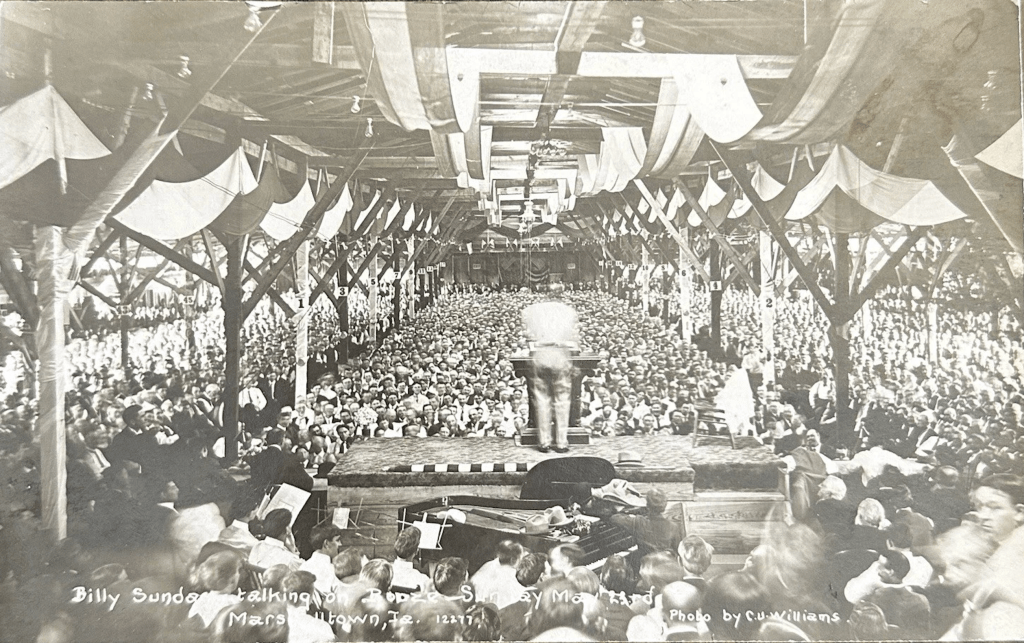

Evangelist Billy Sunday (1862-1935)
Former professional baseball player-turned urban evangelist. Follow this daily blog that chronicles the life and ministry of revivalist preacher William Ashley "Billy" Sunday (1862-1935)
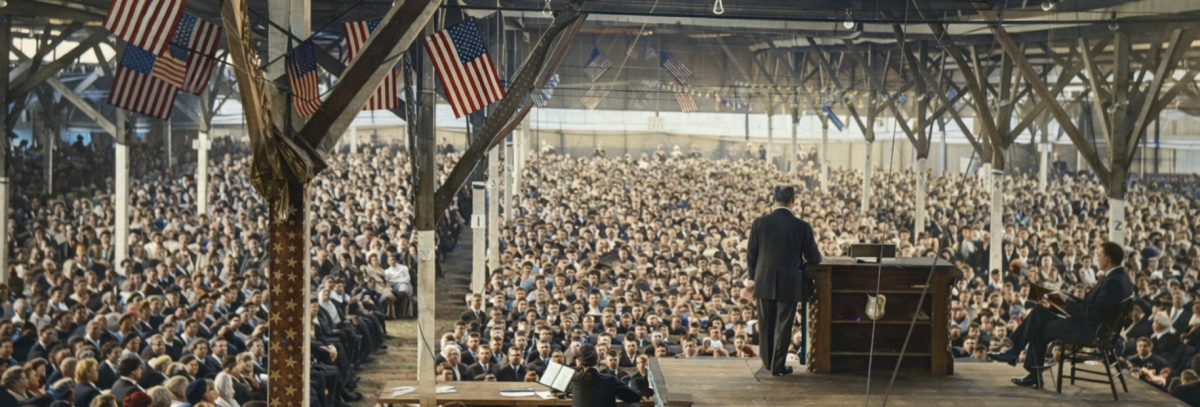
The Marshalltown campaign opened Sunday April 25, 1909.
Colorized.
eBay June 2025
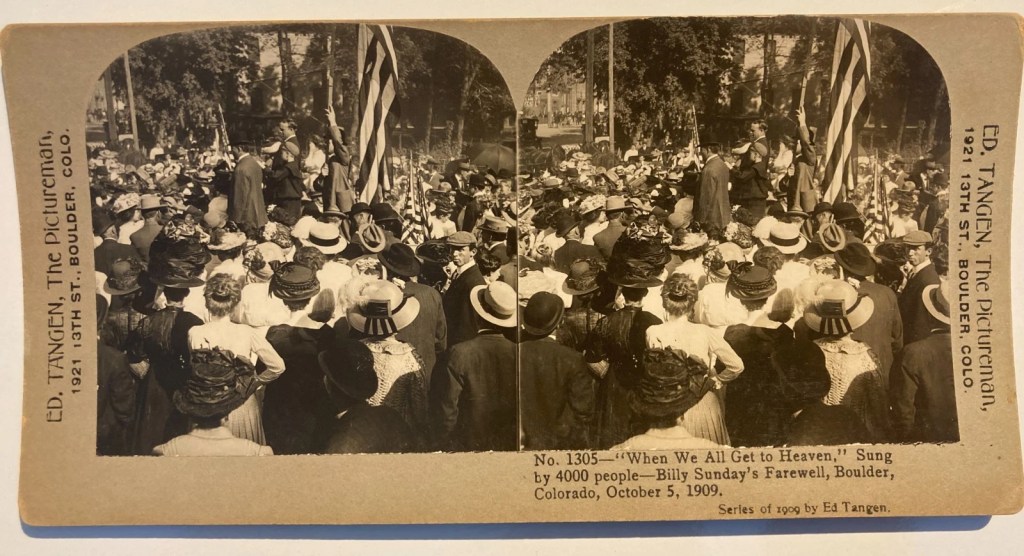
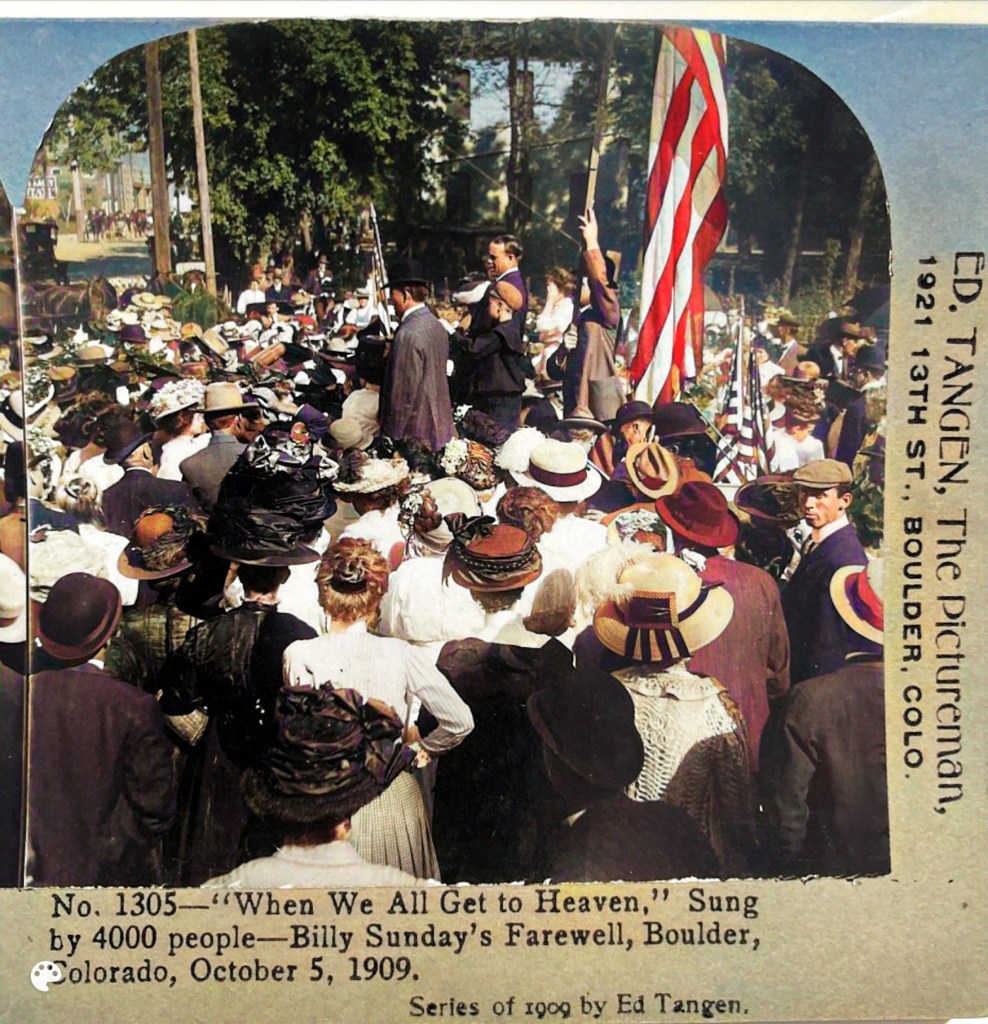

Image source: eBay (late June 2025)

Billy held his Cedar Rapids campaign Oct 10 – Nov 21st 1909
Billy Sunday spoke at the Glenwood park Chautauqua in New Albany, Indiana.
Citation source that documents this: New Albany Evening Tribune, July 28, 1911.
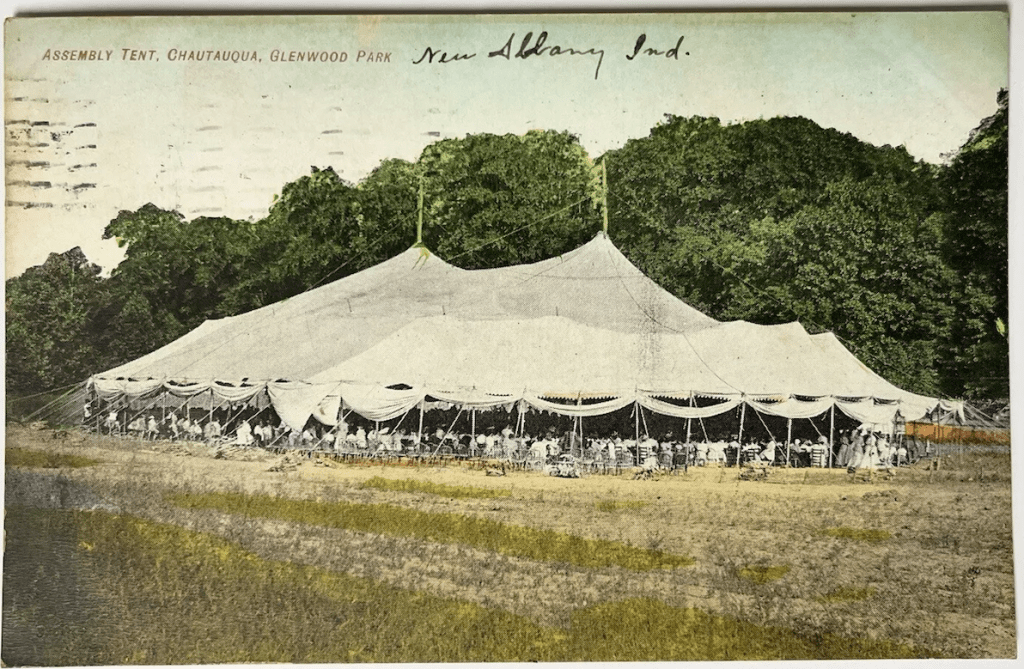
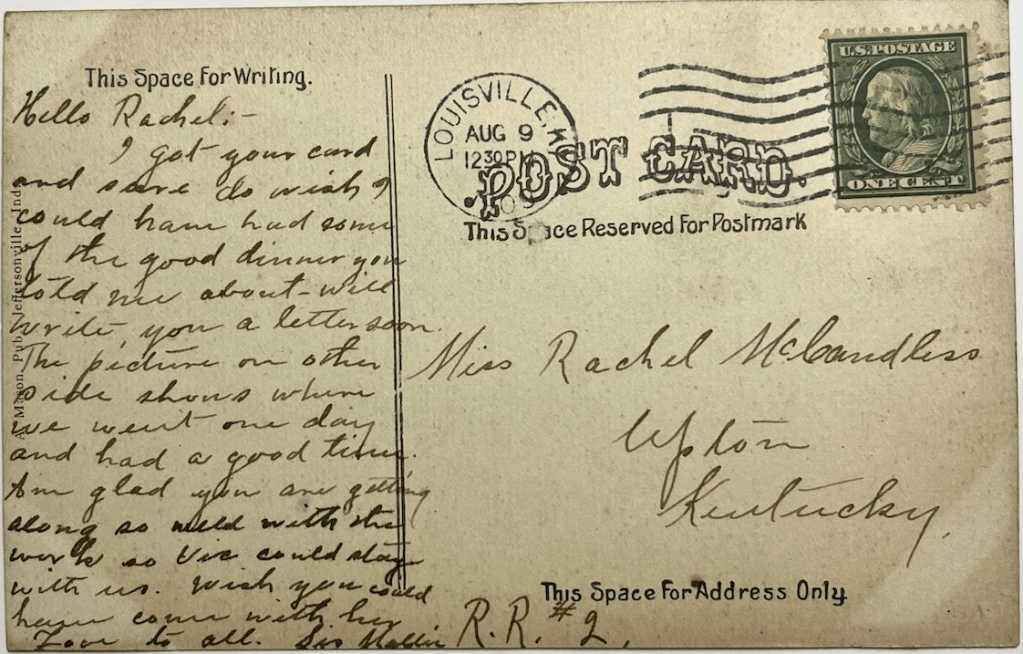
A postcard postmarked November 23, 1909, recently sold on eBay with the following handwritten message by the sender.
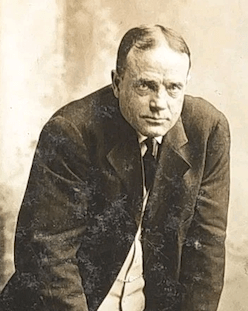
[This text is legally in public domain.]
Dear Mother & Father,
Am sending you this of “Billy Sunday” if anyone ever says anything against him tell them they don’t know a thing about him he is a sincere Christian he doesn’t go around the bush for any one he is out spoken and some people can’t stand that. are all well hope you are the same.
Mary
Billy Sunday Comes to Springfield, Illinois (February–April 1909)
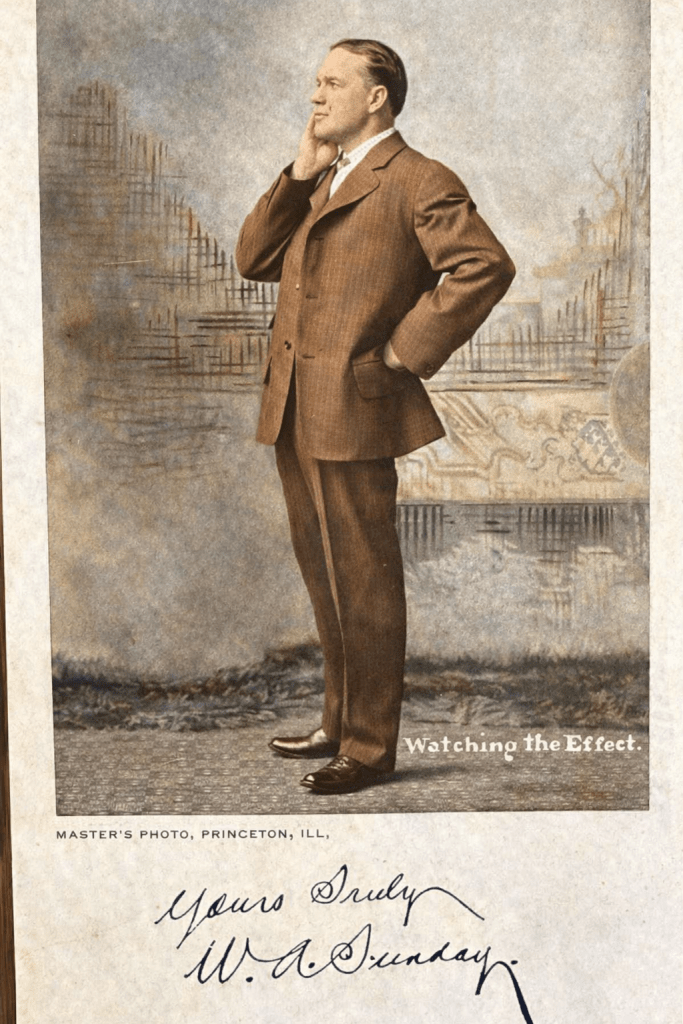
From February 26 to April 11, 1909, Springfield, Illinois became the center of one of Billy Sunday’s most significant early urban revivals.
This campaign followed a string of highly successful meetings in 1908, including his powerful revival in Bloomington, Illinois. By the time Sunday arrived in Springfield, he was already becoming a nationally recognized figure — a former baseball star turned evangelist whose name drew crowds, controversy, and intense public attention wherever he preached.
For six weeks, a massive wooden tabernacle dominated 2nd Street between Monroe and Capitol. Built specifically for the meetings, the structure was simple in design but enormous in scale, capable of holding thousands of people at a time. Night after night, it filled with hymn singing, prayer, and Sunday’s unmistakable blend of humor, blunt moral challenge, and urgent appeals for personal decision.
Tens of thousands attended over the course of the campaign. Families came together, churches cooperated, and people traveled from surrounding towns to hear the most famous preacher in America.
By the end of the revival, newspapers and church leaders reported that 4,729 people had made public commitments to Christ. These were not just momentary emotional responses; many went on to join local congregations and participate in community life.
One of the most lasting outcomes of the Springfield meetings was the founding of Washington Street Mission. Born out of the spiritual energy of Sunday’s campaign, the mission was created to serve the poor, hungry, and vulnerable in the city — and it continues that work to this day, more than a century later.
The timing of the revival made it especially meaningful.
Only a few months earlier, Springfield had been shaken by the 1908 Race Riot, one of the most violent racial conflicts in Illinois history. Tensions still lingered when Sunday arrived. His sermons, which emphasized repentance, moral reform, and personal responsibility, resonated deeply in a city searching for healing and stability.
While Sunday did not directly address political or racial issues in the modern sense, his call for transformed lives and renewed community carried special weight in a town still recovering from turmoil.
The Springfield campaign marked a turning point in Billy Sunday’s ministry. It was one of his first major city-wide revivals and helped launch a decade in which he would preach in America’s largest urban centers — from New York to Los Angeles.
More than just a revival, Springfield in 1909 was a milestone. It showed that Sunday could move beyond small towns and regional fame to shape the moral conversation of the entire nation.
For six weeks that spring, Springfield was not just the capital of Illinois — it was the pulpit of America.
 Evangelist Billy Sunday (1862-1935)