by Kraig McNutt
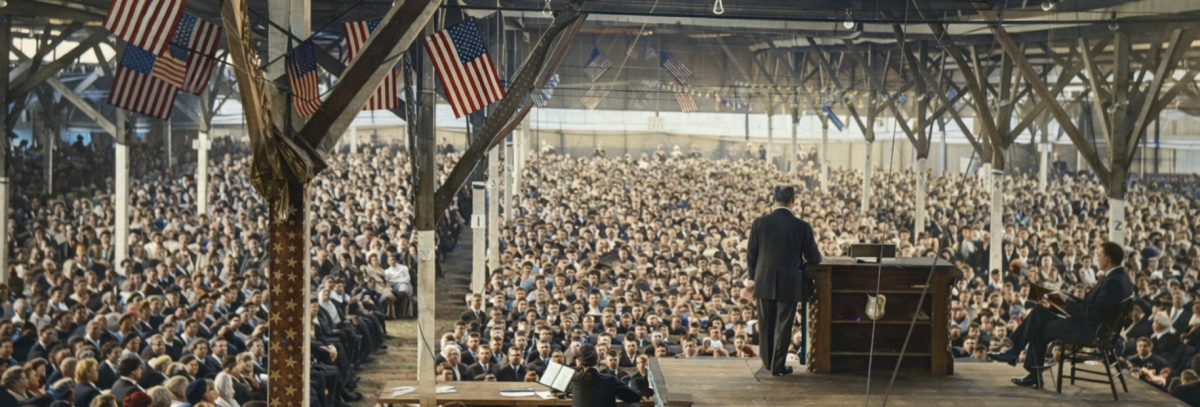
When most people think of revival preachers in American history, names like D.L. Moody, R.A. Torrey, or J. Wilbur Chapman often come to mind. But Billy Sunday was cut from a different cloth. He wasn’t just a preacher—he was a one-man spiritual cyclone, mixing athleticism, theatricality, and gospel fire in a way no one had ever seen before.
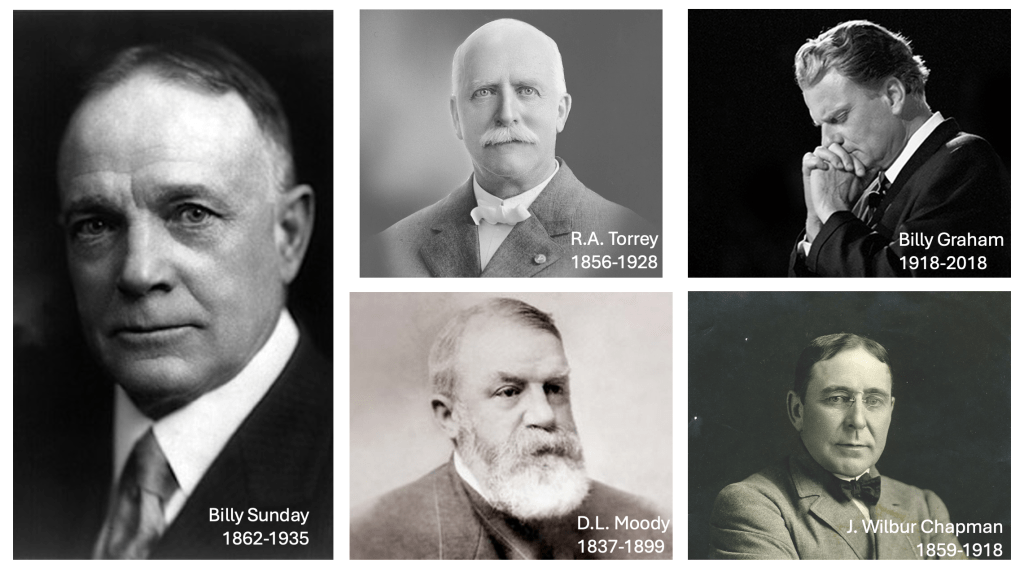
So what exactly set Billy Sunday apart from the rest? How did his preaching and ministry differ from his contemporaries? Here’s a snapshot comparison to help you see why Sunday’s voice roared across the American landscape like a thunderclap—and why his influence still echoes today.
A Quick Comparison: Billy Sunday vs. His Contemporaries
| Topic | Billy Sunday | Contemporary Evangelists |
|---|---|---|
| Preaching Style | Fiery, physical, theatrical; used slang and sports metaphors | Moody: Calm and fatherly; Torrey: Intellectual; Chapman: Pastoral |
| Theological Emphasis | Strong focus on personal salvation, substitutionary atonement, and sin | Similar focus, though often with more doctrinal exposition or gentler tone |
| View of Modernism | Vehemently opposed; saw it as a threat to true Christianity | Most were critical, but some (like Fosdick) were sympathetic to modernist ideas |
| Social Issues | Fiercely anti-liquor (Prohibition), anti-gambling, anti-dancing; championed “old-time religion” | Moody: Emphasized charity and urban outreach; others less publicly political |
| Engagement with Politics | Highly political; openly supported Prohibition, patriotic causes, and civic reform | Moody and others were less politically vocal, though supportive of moral reform |
| Use of Media/Publicity | Master of mass media: posters, press coverage, advance men, tabernacles | Chapman and Torrey used some publicity, but far less theatrically or broadly |
| Attitude toward Higher Criticism | Condemned it outright as destructive to faith | Most conservative contemporaries agreed, though some engaged it more thoughtfully |
| View on Women’s Role | Praised godly mothers; Helen Sunday was integral to the ministry, though Billy upheld traditional roles | More varied: some supported women in ministry (e.g., Aimee Semple McPherson) |
| Revival Structure | Mass meetings, community-wide, tabernacles, extended multi-week events | Similar formats, but Sunday’s scale and advance team coordination stood out |
| Legacy Impact | Set the stage for 20th-century mass evangelism (influence on Graham, etc.) | Others laid groundwork (Moody), but Sunday modernized the revival model |
Why It Mattered Then—and Now
Billy Sunday didn’t fit into a neat category. He was part preacher, part performer, part prophet—and all in for Christ. While others wrote theological treatises or built Bible schools, Sunday pounded his fists on pulpits and dove across stages to bring people to the cross.
His fierce denunciation of sin, especially the sins tearing apart American families—booze, gambling, corruption, moral apathy—connected with the common man. He used theatrical movement, slang, and sports metaphors to reach crowds who might never set foot in a traditional church.
But his legacy wasn’t just showmanship. Billy Sunday built the prototype for what would later become 20th-century crusade evangelism, paving the way for figures like Billy Graham. He made evangelism a national event, not just a church function.
Final Thought
In a world drifting further from spiritual conviction, it’s worth remembering men like Billy Sunday—men who refused to compromise truth, who called a nation to repentance, and who showed that the gospel is worth getting loud about.
Whether you’re a pastor, a historian, or just someone trying to figure out what revival looks like in your day, take a page from Sunday’s playbook: preach it hot, live it loud, and never apologize for loving Jesus.

 Evangelist Billy Sunday (1862-1935)