Billy Sunday’s Toledo Campaign (April 9 – May 21, 1911)
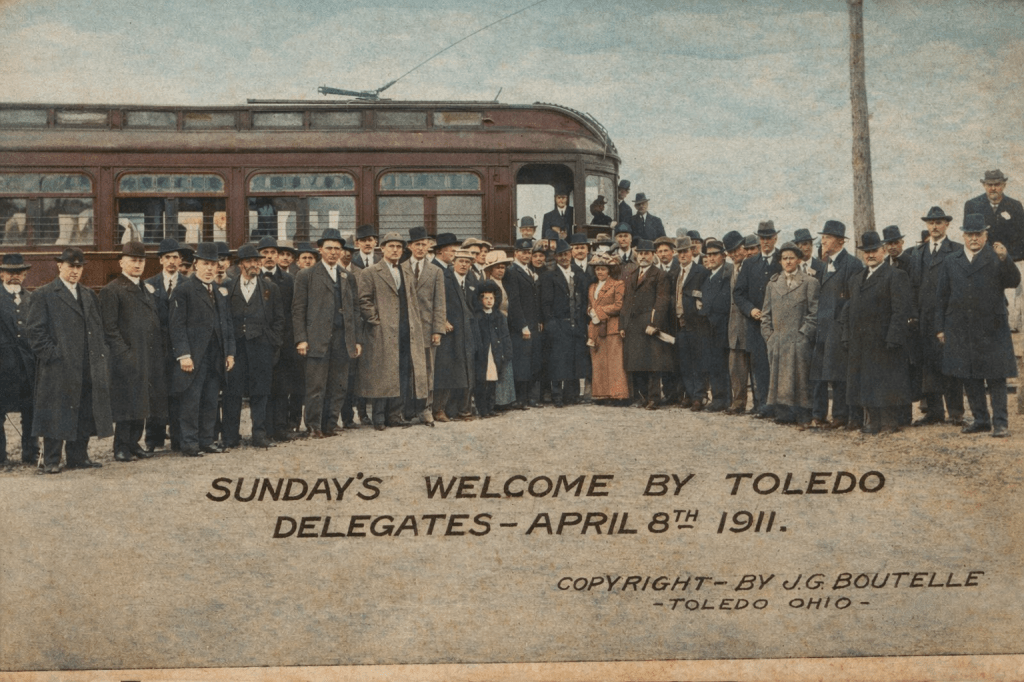
Billy Sunday’s 1911 revival in Toledo, Ohio, was one of the most anticipated evangelistic events the city had ever seen. Running for six intense weeks—from April 9 to May 21—the campaign opened with extraordinary momentum. On opening Sunday alone, more than 30,000 people attended three services, immediately signaling the citywide interest and spiritual hunger surrounding Sunday’s arrival.
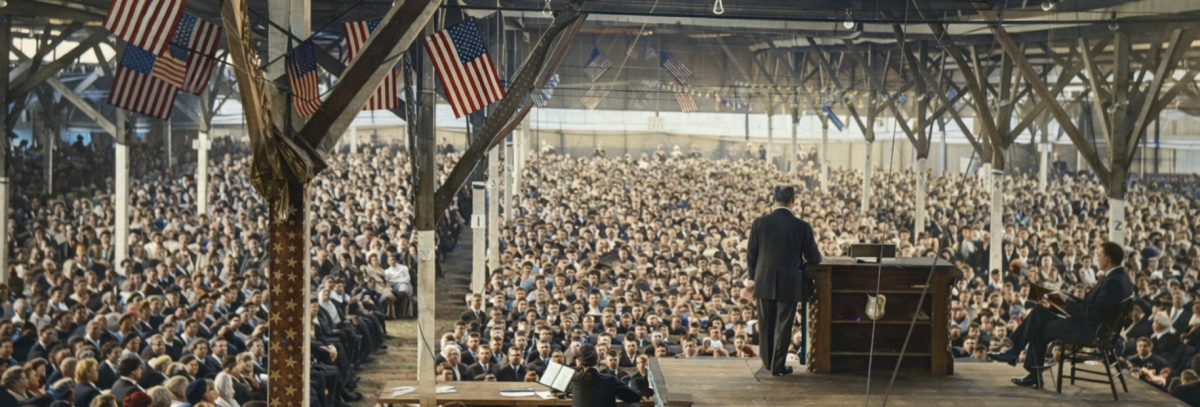
The revival was held in a massive temporary tabernacle measuring 160 by 220 feet, with seating for 7,000 people, plus an additional 1,000 seats in the choir loft. Night after night, the structure filled with working men and women, families, and curious onlookers drawn by Sunday’s reputation for plainspoken preaching, moral urgency, and energetic delivery.
Organizers initially hoped for 20,000 conversions, a figure reflecting Toledo’s size and the scale of the meetings. While that expectation proved optimistic, the final results were still remarkable: 7,323 people publicly professed conversion, surpassing Sunday’s previous record at New Castle. The response confirmed Toledo as one of the strongest campaigns of his early national prominence.
Financial support from the city was equally notable. Total offerings reached $14,423.58, breaking Sunday’s earlier giving record of $10,000 at New Castle. Newspapers emphasized that these contributions came largely from people of ordinary means, underscoring the grassroots character of Sunday’s appeal and the broad civic buy-in to the revival.
By the time the campaign concluded in late May, Toledo had experienced weeks of sustained attention on spiritual renewal, personal reform, and public morality. Though it fell short of early conversion projections, the Toledo campaign stood as a record-setting and influential moment in Billy Sunday’s rise as America’s most prominent evangelist of the Progressive Era.
 Evangelist Billy Sunday (1862-1935)