Note: To read Billy Sunday’s actual prayers, as they were published in the local paper in Richmond, visit this link.
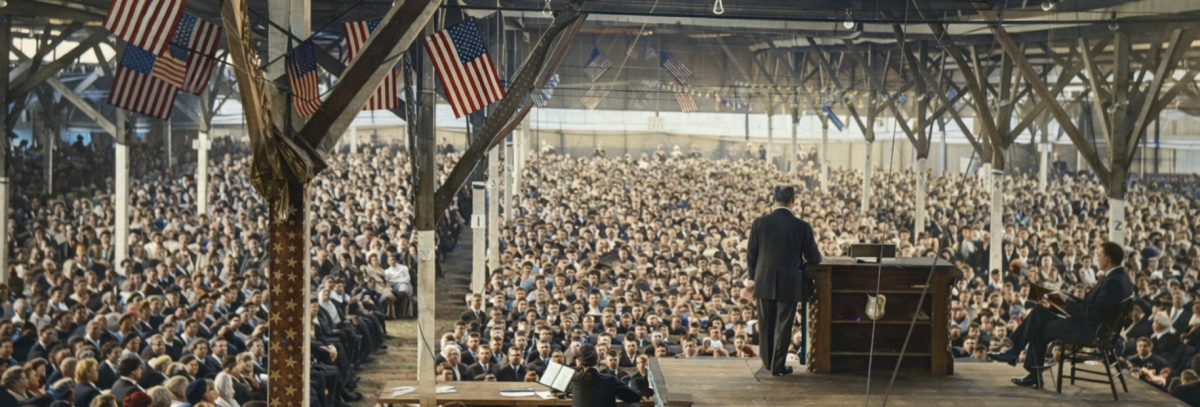
In the spring of 1922, evangelist Billy Sunday descended upon Richmond, Indiana, for a multi-week revival campaign. Thousands flocked to the great wooden tabernacle built for the occasion. They came to hear Sunday’s famously theatrical sermons—but they also heard him pray.
Many of these prayers were transcribed by local newspapers, preserving a unique glimpse into Sunday’s heart when he spoke not to the crowds, but to Christ.
What do these prayers tell us about the man? What did he care about most? What themes, ideas, and images kept surfacing? What unusual moments give us insight into the soul of this revivalist?
After reviewing more than two dozen of his public prayers from the Richmond campaign, a compelling portrait emerges—equal parts preacher, prophet, and penitent.
1. Evangelistic Zeal and Urgency
Above all, Billy Sunday was an evangelist. His prayers are not casual introductions or polite benedictions—they are urgent appeals to heaven for conversions on earth.
Time and again he pleads, “Help them to walk down here,” or “May many tonight say, ‘Here is my hand, my heart, my pledge.’” He speaks to God with the language of altar calls. He prays as a man storming the gates of hell to rescue the lost.
In one prayer, he imagines a vast spiritual migration:
“Help hundreds of men and women to walk down the aisles tonight and take their stand for Christ… inside here, and the people outside here… help them all tonight to take their stand for Jesus Christ.”
His prayers are saturated with urgency, especially for those who might never get another chance.
2. The Devil Is Real—and He’s the Enemy
Sunday believed in the devil. Not as a metaphor, but as a malevolent force actively working to destroy lives and communities. He blames Satan for:
- Every penitentiary,
- Every broken home,
- Every alcoholic and prostitute,
- Every grave dug in rebellion against God.
In his words:
“It seems to me the devil has dug enough graves… carved enough epitaphs… made enough drunkards… enough whoremongers.”
He prays for the devil to be “beaten back” and envisions him retreating from Richmond on “crutches,” staggering in defeat. This isn’t poetic fluff—it reflects a core conviction: revival is spiritual warfare, and prayer is how you fight.

3. A God of Nearness, Not Abstraction
For all of Sunday’s thundering urgency, his prayers also reveal a tender intimacy with Christ. He doesn’t begin with “Our most gracious heavenly Father,” but with the familiar, almost childlike invocation:
“Say Jesus…”
He pictures Jesus leaning over heaven’s battlements, watching, weeping, waiting. He describes God’s heart as a harbor in a storm:
“It is big enough for a world to hide in.”
And when Sunday talks about Christ’s presence, he appeals to the common-sense faith of farmers and factory workers:
“We can’t see You… but we know You are here. We don’t see the air either, but we know it’s there. We’re breathing it.”
4. Confession of Inadequacy
One of the most human aspects of Sunday’s prayers is how often he admits weakness. Despite his celebrity and rhetorical firepower, Sunday repeatedly tells Jesus:
- “I feel distressingly inadequate.”
- “I don’t know what more to say.”
- “If I’ve failed, it’s from the head, not the heart.”
In one powerful moment, he imagines standing before God in eternity and being asked whether he preached the truth. He answers each divine question with clarity and conviction, but it’s clear he is not self-congratulatory—he’s a servant hoping he has done enough.
5. Gratitude and Specificity
Sunday doesn’t just thank God in broad strokes. He prays for:
- The Starr Piano Factory
- The Rotary and Kiwanis Clubs
- The Odd Fellows and Masonic lodges
- Factory workers, businesswomen, farmers, police, firemen, and clerks
- His team: Rodey, Bob, Mrs. Asher, and others by name
This detailed intercession reflects a preacher deeply connected to his audience, not only spiritually, but culturally and economically.
6. Theology in the Trenches
Sunday’s theology comes through clearly:
- The Bible is true.
- Jesus is the only way of salvation.
- Hell is eternal.
- The Holy Spirit is active.
- Salvation is by faith, not works.
But what’s unique is how conversational and concrete these doctrines become in prayer. He doesn’t just affirm them—he reasons with God about them, preaches them back to heaven, and pleads for their consequences to take root in people’s lives.
7. Vivid, Unusual, and Creative Moments
A few standout moments show Sunday’s inventive imagination:
- Mock Interview at the Judgment Seat: He prays as if answering Jesus’ questions about whether he preached the full counsel of God—including hell, the Cross, and the exclusivity of Christ.
- Agricultural Intercession: In one prayer, he pleads for protection from potato bugs, green aphids, boll weevils, and chinch bugs—spiritual warfare with an entomological twist!
- Preaching Boards: As the tabernacle was to be converted into a gymnasium, Sunday says, “Every knot hole will seem to preach a sermon. Every board will be precious.” Even the building itself becomes a kind of legacy.
- Evangelism by Auto: He imagines a man driving home from the tabernacle and being stopped by a sword-bearing angel with the question, “Did you solve the problem—what shall it profit a man if he gain the world and lose his soul?”
Conclusion: A Man on Fire, A Gospel on Display
Billy Sunday’s Richmond prayers are far more than stage-setting; they are the spiritual lifeblood of the campaign. Through them we meet a man convinced of eternal realities, obsessed with souls, conversing with God like an old friend, and pouring out every ounce of energy to bring people to Christ.
And though the world has changed in a thousand ways since 1922, the raw passion of these prayers still speaks. They call us back to a faith that is urgent, concrete, emotional, and unashamed.
Sunday once imagined God asking, “Bill, did you preach the truth?”
His prayers leave little doubt how he would answer:
“I did.”
Would you like this formatted into a downloadable PDF or Word doc for posting or printing?

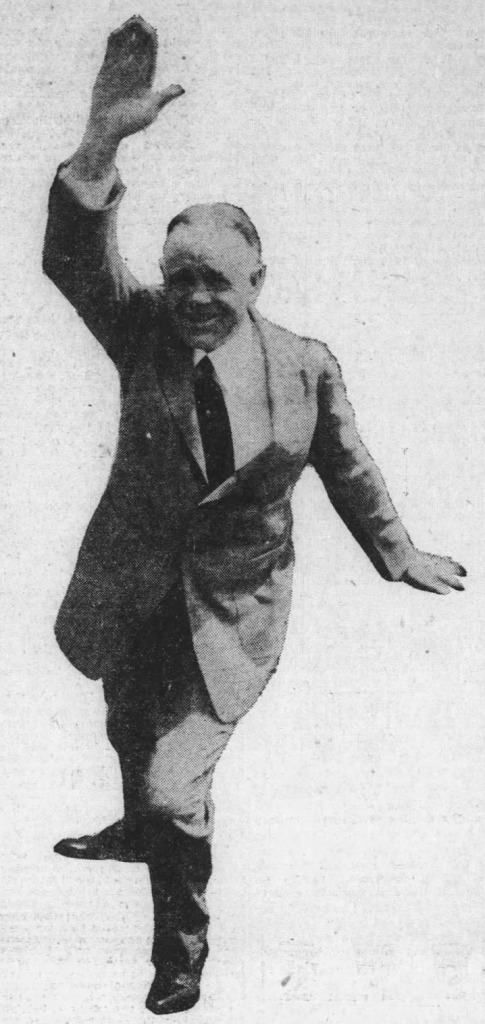
 Evangelist Billy Sunday (1862-1935)