The Muscatine Journal. Tue, May 21, 1918 ·Page 3
WHAT BILLY SUNDAY MEANT.
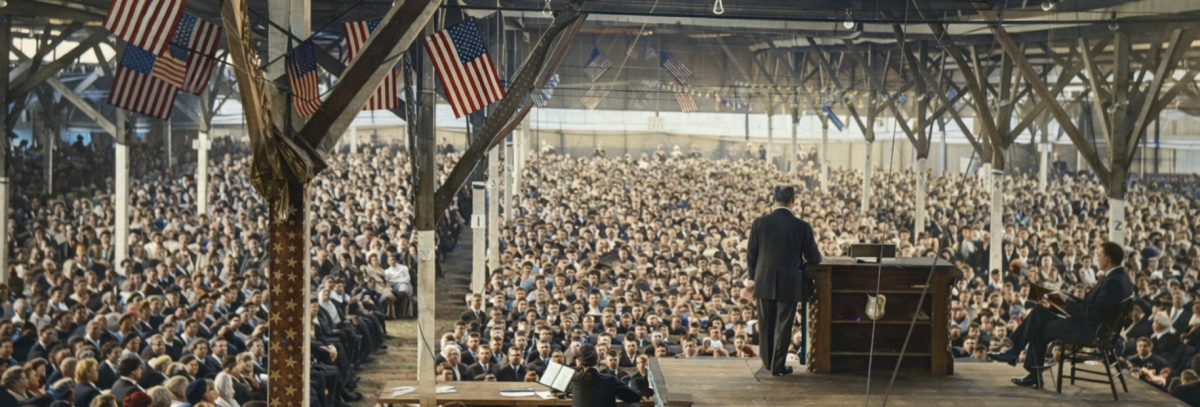
“Billy” Sunday has come and gone. His mission is a matter of history. What did it signify? Some of the facts of the great revival are indicated in figures. The famous “trail” of the tabernacle for example was touched by nearly 50,000 pairs of feet seeking Mr. Sunday.

The combined audiences at all the Sunday meetings are again reckoned at something like 1,200,000. Plainly a very considerable section of Chicago listened to the Sunday message. No politician, nor even a statesman, ever enjoyed such a hearing.
The novelty in the evangelist’s preachments arose from his unique personality. The doctrines preached by the Rev. William A. Sunday were essentially much the same as those the Chicago of another generation heard from the Rev. Dwight Moody. They were the same to be heard today in the four hundred-odd churches which were represented by the Sunday campaign.
The homely virtues, individual rectitude in business, personal morality in domestic life—these were the essentials. The code preached by “Billy” Sunday was familiar to his congregations. It is characteristically American. The “thou shalts” and “thou shalt nots” are the precepts and the prohibitions of the United States.
Mr. Sunday gave a new emphasis to a creed learned by most of his hearers in infancy. Like all successful missionaries in the home field, he affirmed persuasively what his converts believed, but did not consistently practice.
Many of those who renewed their religious pledges in the tabernacle will be better citizens. Chicago like Billy Sunday. His sincerity and disinterestedness made a good impression.
Every one wishes him success in his next public work.—Chicago Herald- Examiner.
For more information:
The Wheaton College Archives. The Chicago Campaign, 1918.
 Evangelist Billy Sunday (1862-1935)