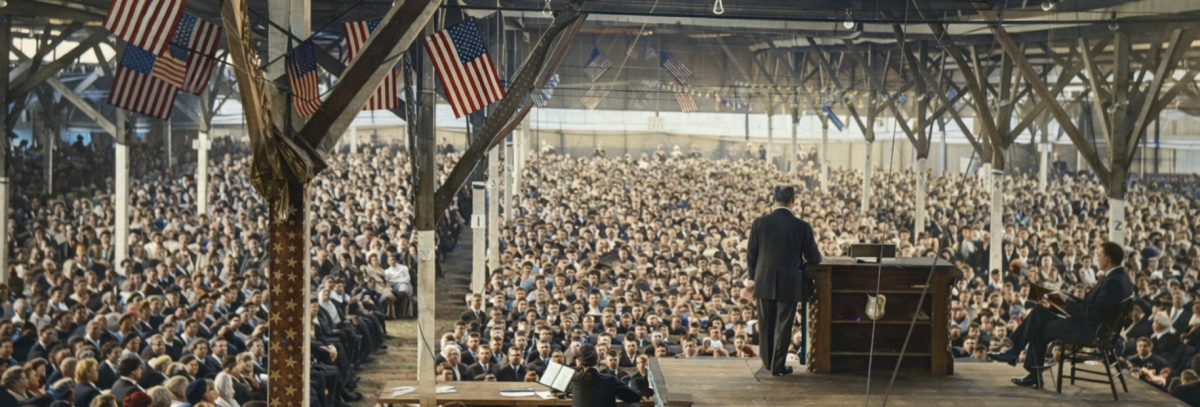
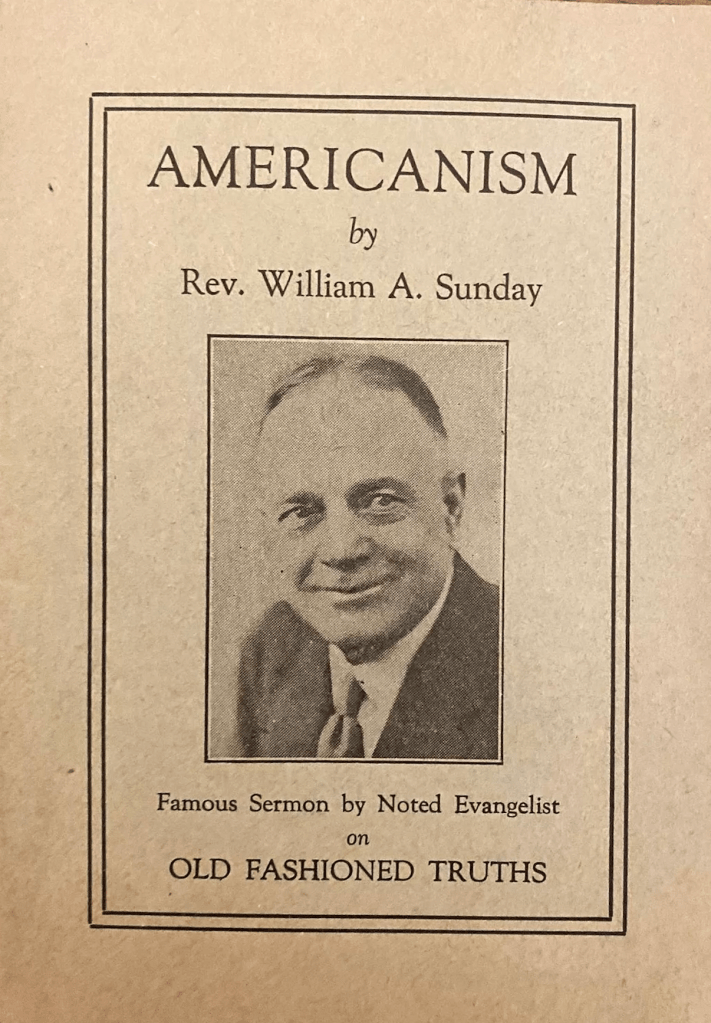
In 1922, evangelist Billy Sunday delivered a sermon titled “Americanism,” reflecting his staunch support for traditional American values and his opposition to radical ideologies. In this address, Sunday criticized groups he perceived as threats to the nation’s moral and social fabric, including socialists, communists, and certain university academics. He accused these groups of promoting rebellion and undermining American institutions. Sunday also addressed issues of labor and capital, condemning both dishonest laborers and exploitative employers. Additionally, he expressed his views on racial matters, asserting that social equality between white and black individuals was unattainable, though he acknowledged the importance of civil equality. This sermon was later published as a pamphlet, allowing for wider dissemination of his views.
Country Crowded with Radicals
The cuckoo is a bird that never builds a nest of its own: it lays its eggs in the nests of other birds which it drives away. Our country is crowded with a Socialistic, I. W. W., Communistic, radical, lawless, anti-American, anti-church, anti-God, anti-marriage gang, and they are laying the eggs of rebellion and unrest in labor and capital and home. And we have some of them in the universities. I can take you through the universities and pick out a lot of fellows that shouldn’t draw pay from the people that send their boys there, for they are nothing but black-hearted, Communistic fellows who are teaching that to the boys and sending them out to undermine America. There are a lot of good-for-nothing, assinine, fool preachers that are just as low down as the rest of them.
No wonder the world is going to hell so fast she is breaking the speed limit!
The theory that a man should loaf on the job thereby causing under-production in order to make work for more men is a damnable heresy that came out of Europe. A laborer is a thief if he soldiers on the job and don’t give honest work for the wages that are paid him. An employer is a thief if he pays starvation wages and makes that man and his children live below the hunger line. (Applause.)
This radical element, which you will find everywhere, has gotten into the church. Why, I am a Presbyterian—and we have got Presbyterian preachers that are preaching damnable heresy right in the pulpits with the name “Presbyterian” on the outside of the church. They are preaching a bloodless salvation. They say, “Read good books, keep good company, think good thoughts and you will go to heaven.” You will go to HELL. (Laughter.)
Whites and Blacks
Then the matter of social equality between the white and the black. Talk about social equality! There never will be social equality between the white and the black. (Applause.) The radical characteristics, my friends, are such, to make forever impossible social and political equality, in my opinion. Now you confuse that with civil equality. The black man is entitled to civil equality as much as you. You give him half the road. Why, we have not social equality even among white folks. There are a lot of white people who wouldn’t have me in their home. (Laughter.)
However, when you are out on the highway with your Pierce-Arrow limousine you have got to give half of the road to that darkey with his tin lizzie. (Laughter.) Civil equality is all right. Social equality is another proposition. No decent negro man would want to marry a white woman. No decent white man would want to marry a negress.
Talk about social equality? Never, no: just get that into your nut right straight off….
America for Americans
And I will tell you, Philadelphia, this country is going to be run by Americans, cost what it will. (Applause.) It is going to be run on the basis of government under the Constitution of our forefathers who struck the snow-covered hills of New England with a Bible in one hand and a spelling book in the other, under the Stars and Stripes and not under the red rag of rebellion or Socialism or Communism. (Applause.) …
Socialism is the sulphur. I. I. W.’ism is the niter which the radicals would mix into the TNT of rebellion and blow this government to atoms, and they are trying to tunnel under the capital at Washington with a keg of powder in one hand and a box of matches and a fuse in the other.
Now, sir, efforts are being made against every form of authority, whether that authority is from the church or whether it is from the government or the state — they don’t give a hoot. I will tell you now that we will make our rivers run blood before we ever see the land of Washington, Jefferson and Lincoln trampled under the feet of those virulent scabs. (Applause.)
The Lowest Down Scoundrel
… I would not lift my voice nor I would not journey to Philadelphia nor any place else to say anything, my friends, that would prevent the immigration of worthy Europeans. We have got millions of such and they are 100 per cent Americans, (applause) but I tell you what I would do: I would knock into a cocked hat and higher than Gilroy’s kite the theory, sir, that America has got to be forever the dumping ground for foreign filth. (Applause.) I mean the class that no other country wants. The devil himself would not have them. They have got the instincts of a dog without his fidelity. That is the bunch I mean. Say, we have made American citizenship too cheap: we have allowed every creature that calls himself a man and wears whiskers and poses on his hind legs to sway the scepter of American sovereignty and become a factor in framing public opinion. We have made ’er too cheap. I tell you. You are suffering for it right now. (Applause.)
No man, my friends, who swerves in the slightest degree from absolute loyalty to Americanism and the law has any right to ask or claim to be called an American citizen….
That is all we ask, yes, sir: but we can’t compete with this promiscuous importation nowadays. An American has got to have meat once a day and a bath once a week. (Laughter.) You can’t compete with a fellow who takes up his belly-band for breakfast, no; eats spaghetti and hot dog and rye bread for lunch, and sucks in his limburger cheese for supper. No, no, sir.
America Sustains the World
It so happens that America is placed in a position where the fate of the world depends largely on her conduct. If we lose our heads down goes civilization. Woe to the world if this nation wobbles out of her orbit of liberty. The mission of America seems to be to salvage the world from the wreck of war. That seems to be what we are here for. Woe to the man that staggers away from the duty be owes to his God and his country, sir….
Do you know what America needs? She needs a tidal wave of the old-time religion. (Applause.) Without religion we are in a dismal swamp. My friends, religious indifference is always followed by moral decay. You can study the history of the world and whenever people become indifferent to religion you will find low down morals and disrespect for law.
Source: Billy Sunday, “‘Americanism,’ Address by Billy Sunday” (Philadelphia: Law Enforcement League of Philadelphia, April 10, 1922), 22–23, 26–32, 34–37, 41–47.
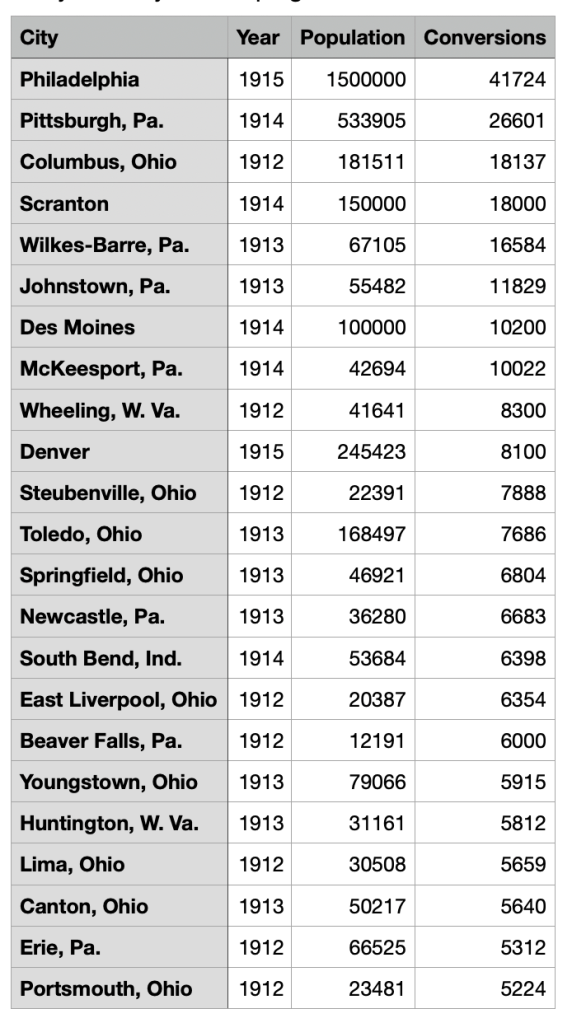
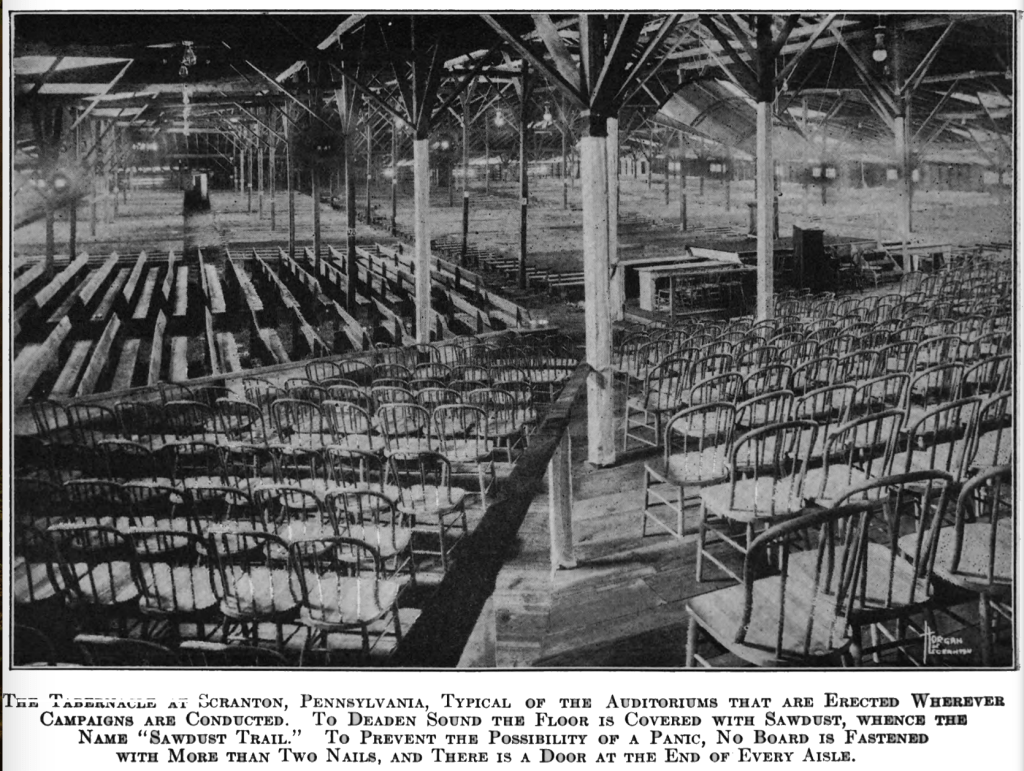
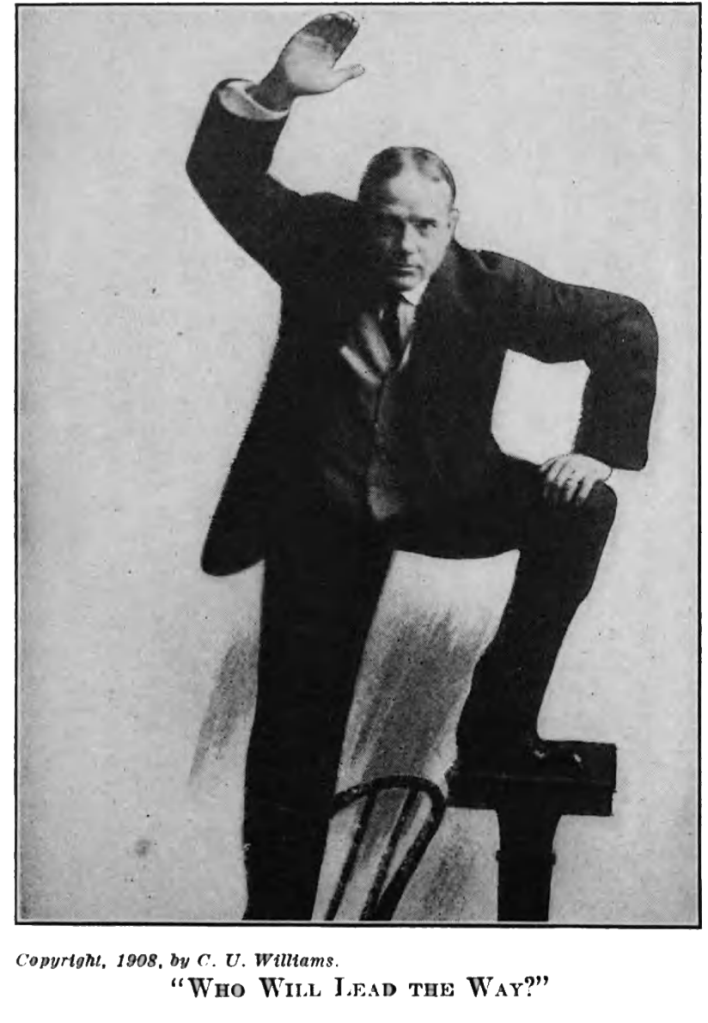
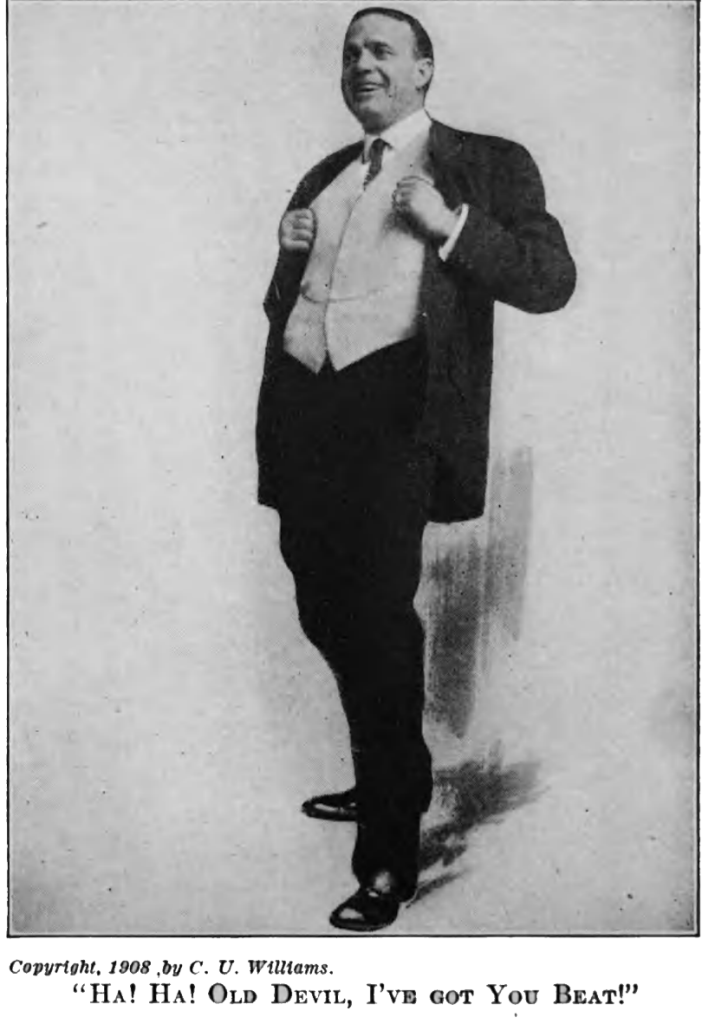



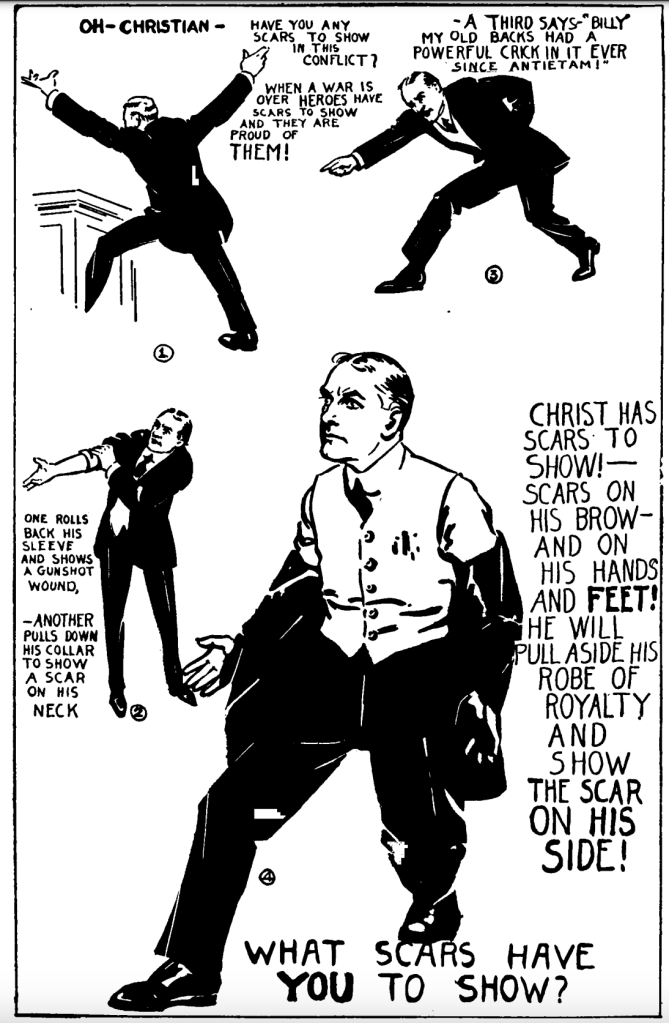
 Evangelist Billy Sunday (1862-1935)