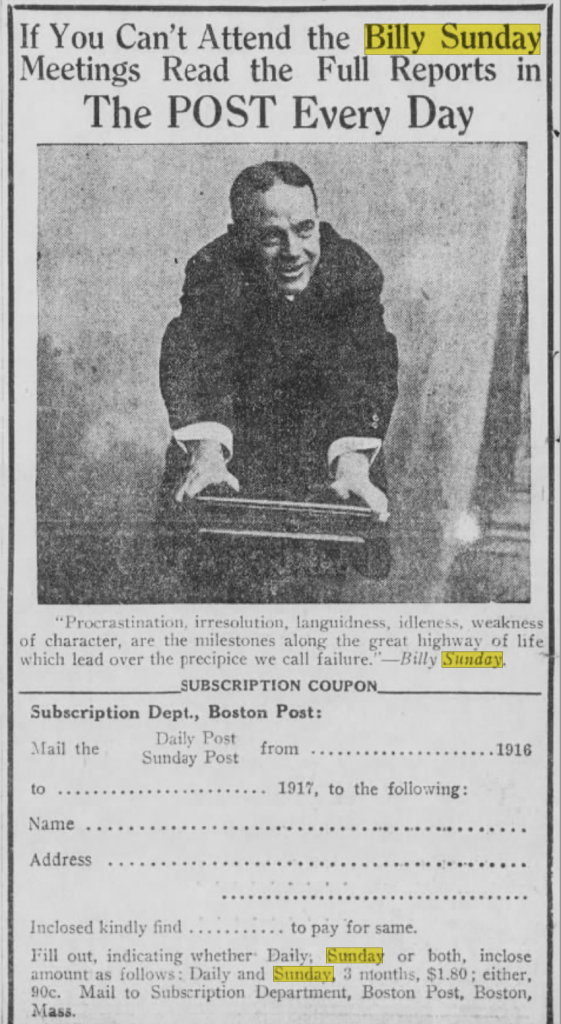
Boston Post. Tue, Nov 14, 1916 • Page 18
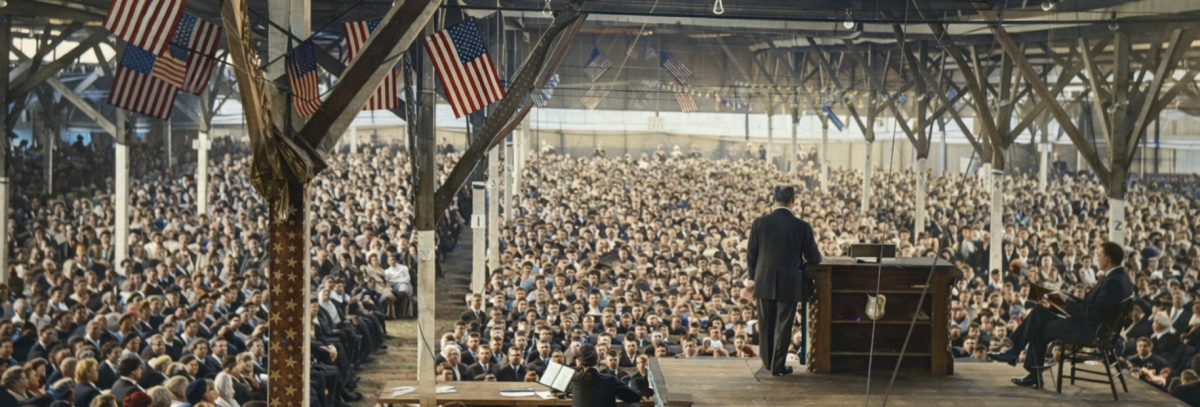
In early 1916, Billy Sunday launched one of the most ambitious evangelistic campaigns of his career in Boston—a city known for its intellectualism and religious diversity. Running from January through April, the campaign was meticulously organized, with more than 5,000 volunteers and significant cooperation from local churches. A massive tabernacle, seating up to 20,000 people, was specially constructed on Huntington Avenue, symbolizing the scale and seriousness of the effort.
Over the course of the revival, more than 1.5 million people attended Sunday’s fiery sermons. His preaching, characterized by dramatic flair and passionate appeals, emphasized personal salvation, moral reform, and national righteousness. At a time when World War I loomed and social tensions were high, Sunday’s message struck a chord. He was especially vocal against alcohol, aligning his campaign with the growing Prohibition movement.
Despite initial skepticism from Boston’s more refined religious circles, Sunday’s influence grew as thousands “hit the sawdust trail” in public commitment to Christ. Media coverage was extensive, and the revival became a citywide spectacle. The impact extended beyond the tabernacle, as many local churches reported a lasting spiritual renewal.
Sunday’s 1916 Boston campaign stands as a milestone in American revival history—an event that combined religious fervor, civic organization, and cultural theater in a way that few evangelists before or after have matched.

 Evangelist Billy Sunday (1862-1935)