By Kraig McNutt
1. The Revival Shook the City
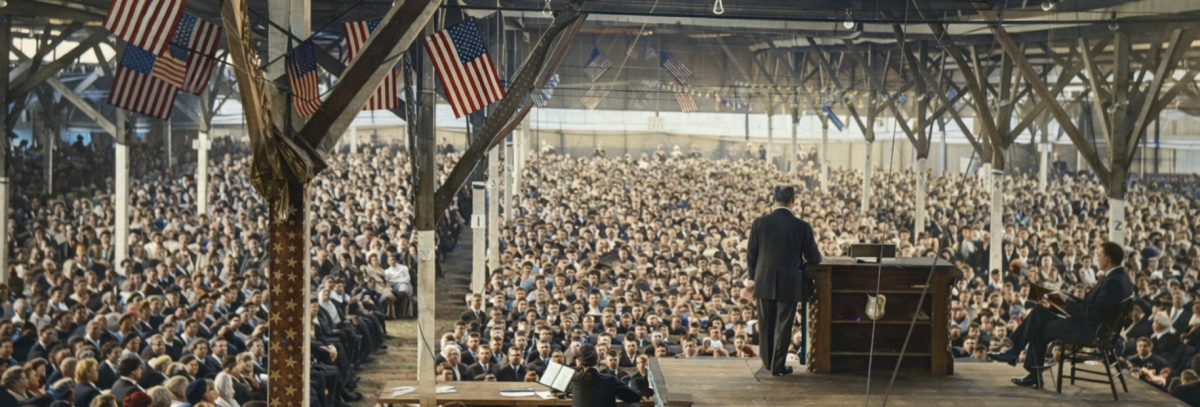
—Literally From November 9 to December 17, 1905, Billy Sunday preached daily to crowds of 6,000–10,000 in a massive wooden tabernacle. On the final night, 7,000 packed the building, with 5,000 more turned away.
2. Sunday Preached Himself to Collapse
On December 18, Sunday collapsed in front of 4,000 people, fainting from exhaustion after weeks of near-constant preaching. Newspapers feared for his life. He had been preaching “day and night for months” with little rest.
3. 2,500 Converts Publicly Responded
By the end of the campaign, 2,484 people had “hit the trail”, coming forward in response to Sunday’s bold calls for repentance. Men’s meetings alone drew thousands, with hundreds responding in a single afternoon.
4. $4,000 Raised in Free-Will Offerings
The people of Burlington gave Sunday over $4,000, a substantial sum for the time, reflecting both appreciation and the revival’s reach across economic lines.
5. The Mayor Ordered Saloons Closed on Sundays
The revival’s influence extended beyond the pulpit. Mayor Caster issued a public order to close all saloons on Sundays, a clear response to Sunday’s fiery sermons against the liquor trade.
6. A Civic Reform League Was Born
Sunday’s preaching catalyzed long-term impact: 150 citizens formed the Civic Reform League to continue fighting for moral reform and social change after the campaign ended.
7. His Style Divided the Crowd
While many were inspired, others were offended. The Cedar Rapids Gazette praised his sincerity but criticized his “gutter language” and aggressive tone. Sunday, however, refused to hold back: “You say, ‘It’s nobody’s business what I do.’ Hear me—it’s everybody’s business what everybody does.”
8. His Sermons Were a Fusion of Gospel and Social Commentary
Sunday denounced profanity, spiritual apathy, poor parenting, and cultural decay with equal fire. His sermons were revival messages with a conscience, tackling both personal sin and systemic vice.
9. Sunday Preached to a City, Not Just a Crowd
He reached every class—from maids to manufacturers, skeptics to civic leaders. His revival stirred the homes, workplaces, newspapers, and even local politics of Burlington.
10. Burlington Witnessed Both the Brilliance and the Breaking of a Revivalist
The Burlington campaign was a turning point in Sunday’s early career. It showed his remarkable reach, but also the cost of his calling. He preached with such intensity that it nearly ended his ministry—or his life.

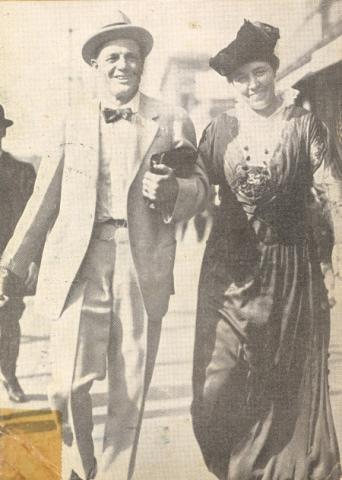
 Evangelist Billy Sunday (1862-1935)