CONVERTS AND EMOTIONAL EXPERIENCE IN THE PROGRESSIVE ERA
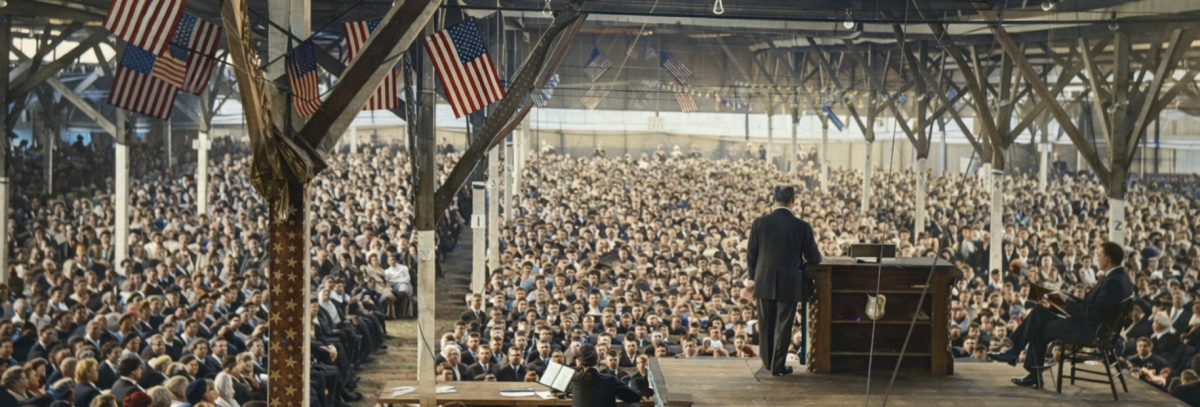
Millions of Americans watched the evangelist Billy Sunday preach during the years 1905-1935, and many were profoundly affected by the experience. Using letters, published and unpublished reminiscences, and other primary source documents, this article reconstructs the emotional experience of Sunday’s converts and offers insights into the meaning of conversion and followership in Sunday’s and other similar social movements. Through their emotional responses to the evangelist, followers recast socioeconomic problems and community pressures as personal, internal crises that could be resolved through adherence to Sunday’s principles. The process of conversion was considered and volitional; it was also a long-lasting act of self-fashioning. Americans who converted in Sunday’s tabernacles thoroughly reinvented themselves as followers of Sunday and then set out to remake society according to the evangelist’s goals. Generalizing from these insights, the article argues that followership of inspirational leaders was a site of significant agency for Progressive Era Americans. It also identifies emotional experience as a way for historical figures to translate cultural trends into concrete social action. The article concludes by calling for additional research into how emotions shape and condition historical change.
Published online by Cambridge University Press: 22 July 2015
The Journal of the Gilded Age and Progressive Era

 Evangelist Billy Sunday (1862-1935)