By Kraig McNutt
When we think of early 20th-century American revivalism, the name Billy Sunday often comes to mind—fiery sermons, theatrical gestures, sawdust trails, and roaring crowds. But behind the pulpit drama was a logistical innovation that changed the face of evangelism: the custom-built tabernacle.
While evangelists before him preached in churches, tents, and open fields, Sunday did something revolutionary: he constructed massive wooden structures—tabernacles—specifically for each citywide campaign. These were more than just venues. They were the heartbeat of a new era of professionalized, urban mass evangelism.
A Tabernacle for Every City
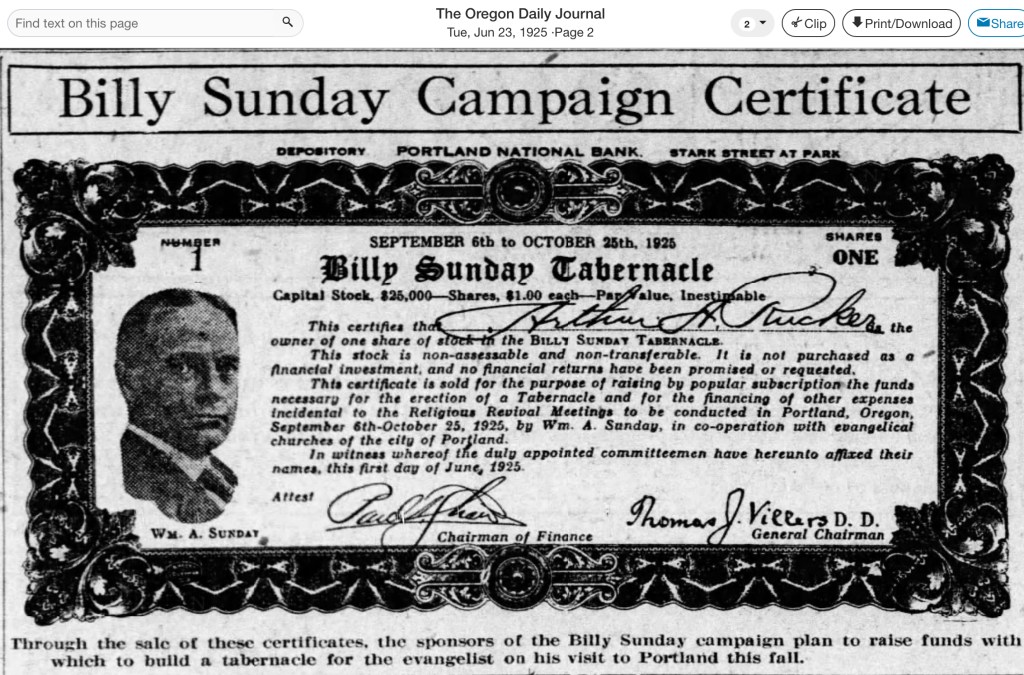
Beginning in the early 1900s, Sunday’s team would send advance workers to a target city months ahead of the campaign. Their job? Not just promotion and prayer, but planning the construction of a new tabernacle from the ground up.
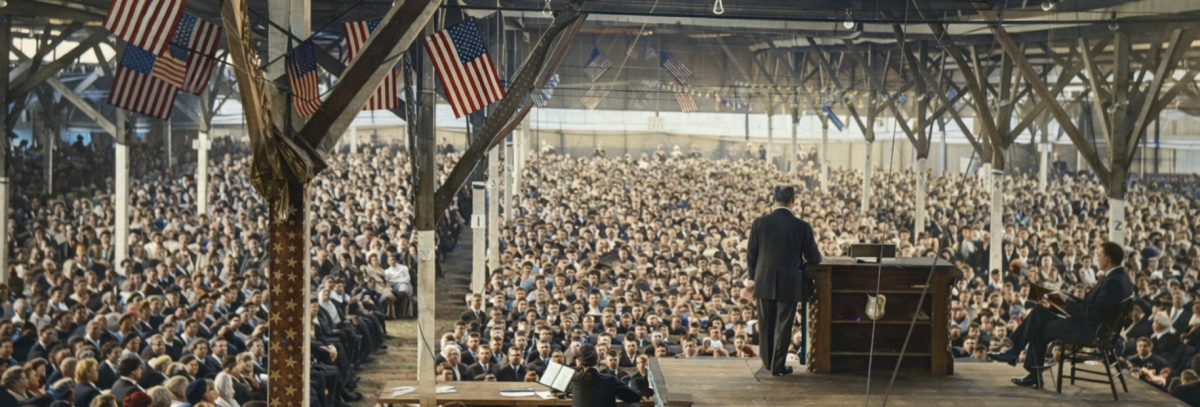
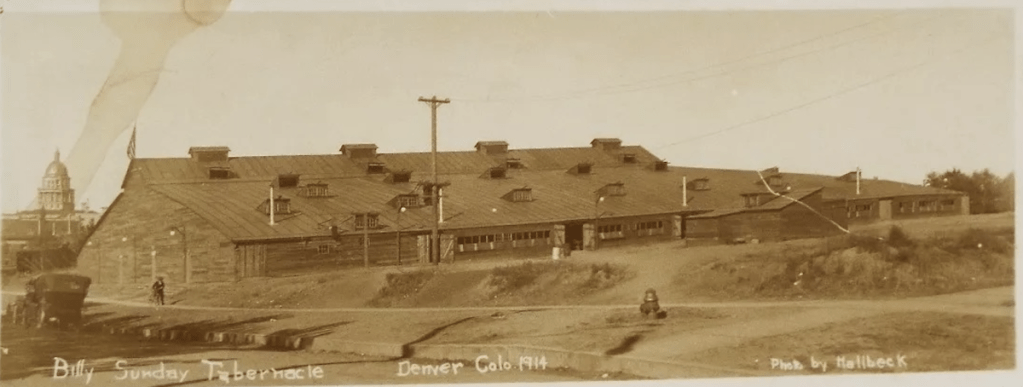
These weren’t small tents or temporary stages. They were giant, rough-hewn wooden auditoriums built by local volunteers, often capable of holding 10,000 to 20,000 people. Once the campaign ended, the structure would be dismantled—or sometimes repurposed for community use.
The tabernacle gave Sunday’s campaigns a physical and symbolic presence in the city, a spiritual landmark that couldn’t be ignored.
Spectacle Meets Sacred Space
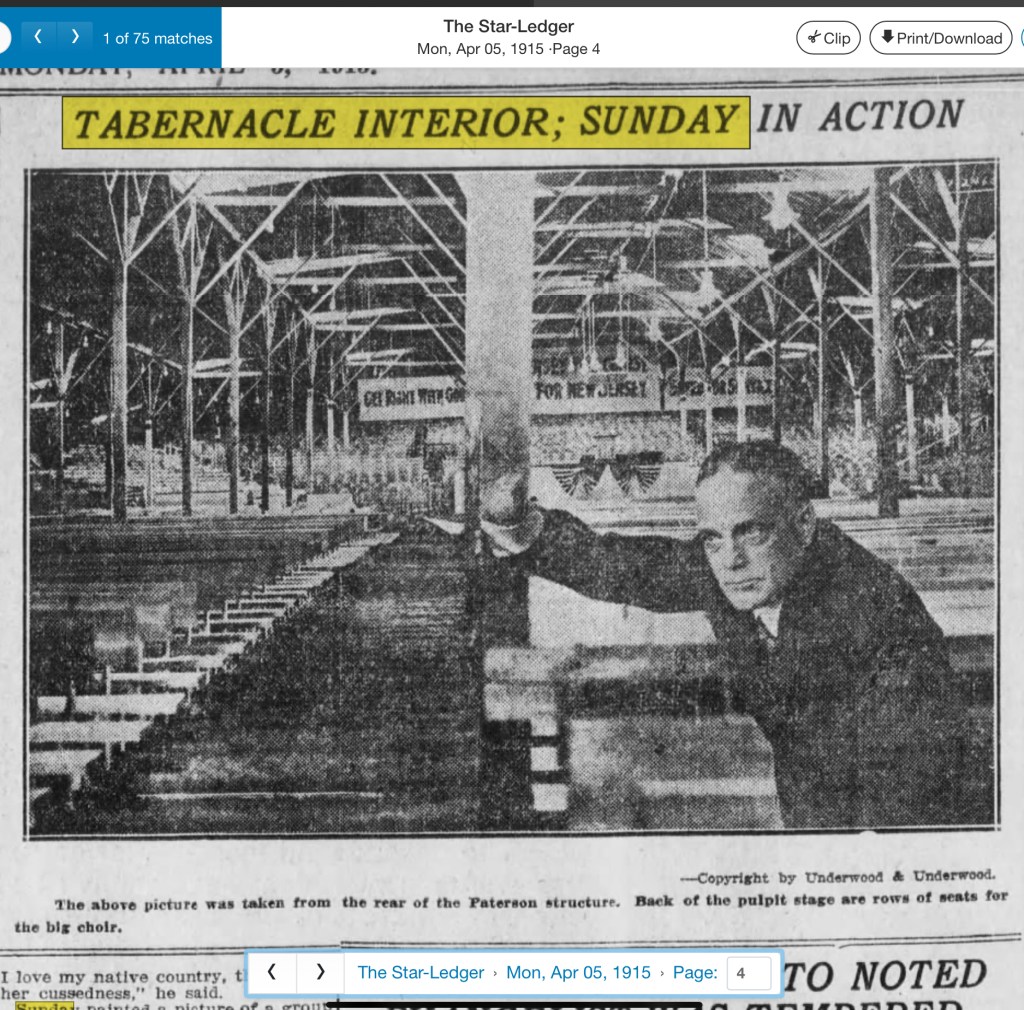
The experience inside these tabernacles was part of the draw. With their sawdust-covered floors, long wooden benches, and raised stages, the atmosphere was electric.
- The “sawdust trail” became a metaphor for conversion—people physically walked down the aisle to commit their lives to Christ.
- Sunday’s preaching style, full of athletic energy and booming voice, was designed for big, echoing spaces like these.
- The structures were simple but powerful: stripped of ornate church trappings, they conveyed urgency, accessibility, and raw conviction.
In a way, Sunday turned these tabernacles into temporary temples of decision—spaces where entire communities were invited to wrestle with the gospel.
Strategy, Media, and Momentum
The construction of the tabernacle itself became part of the publicity strategy. Local newspapers reported on its progress. Crowds gathered to watch it rise. And anticipation built as opening night drew near.
In today’s terms, it was like launching a faith-based pop-up arena. The visual dominance of the tabernacle in the cityscape sent a message: something big—and holy—is happening here.
Legacy: From Sawdust to Stadiums
Billy Sunday’s tabernacle strategy was a game-changer. It showed that revival campaigns could be:
- Logistically organized
- Massively scalable
- Culturally embedded in cities
- Visibly and tangibly part of the urban landscape
His model directly influenced Billy Graham, who adapted the same principle—just with stadiums, microphones, and television cameras. The tabernacle gave way to the arena, but the blueprint remained the same.
Even today, the spirit of Sunday’s tabernacle lives on in modern megachurches, tent crusades, and evangelistic events that blend spiritual fervor with logistical excellence.
Final Thoughts
Billy Sunday’s preaching converted thousands. But his tabernacle model converted the very mechanics of mass evangelism. It was no longer just about the message—it was about how you delivered it, where you delivered it, and how many could hear it at once.
By literally building revival into the city, Sunday laid a foundation that evangelists still build on today.
 Evangelist Billy Sunday (1862-1935)