WHAT SUNDAY DID AT WILKES-BARRE [February 23-April 13, 1913]
OFFICIAL OF CAMPAIGN MAKES STATEMENT ON RESULTS.
CITY BETTER GENERALLY
Business Was Improved, Politics Was Elevated and Social Life Was Raised to Higher Standard Says Man in Interview.
The Tribune’s Special Service.
WILKES-BARRE, Pa., May 6.
The Sunday party has gone from Wilkes-Barre to South Bend, Ind.
Wilkes-Barre Times Leader. Friday, February 21, 1913.
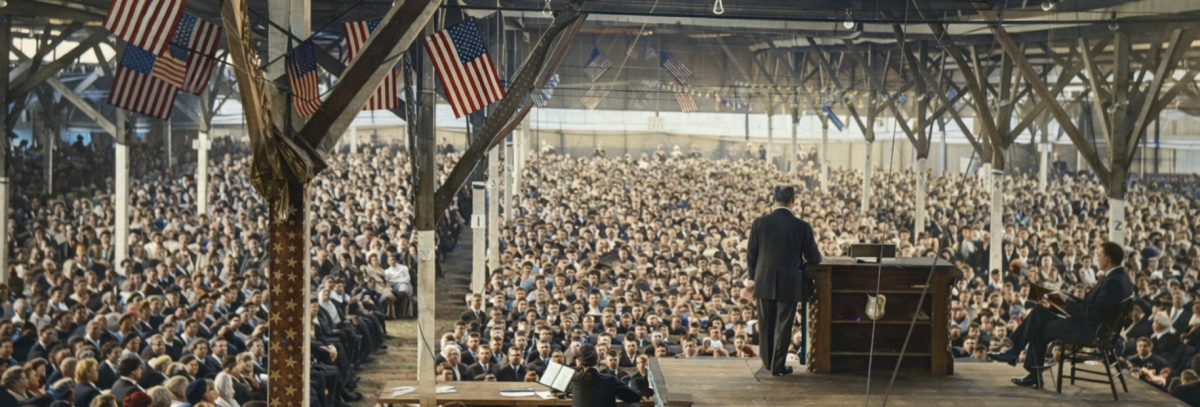
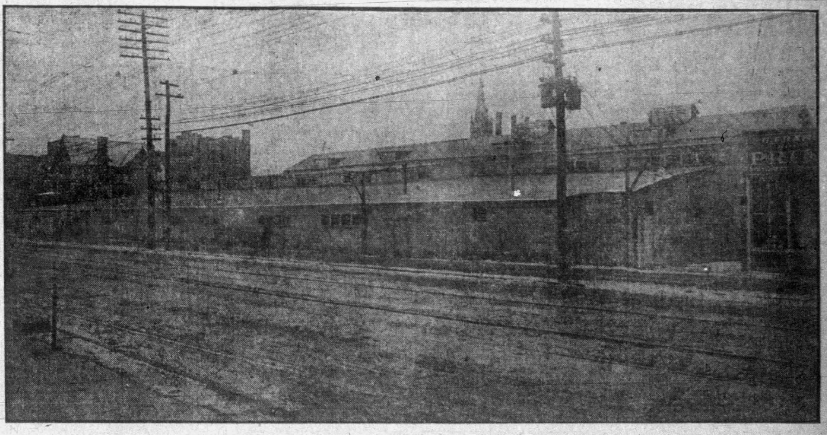
The tabernacle is being torn down day by day. The thousands who gathered beneath its roof to hear the greatest winner of souls in this generation have scattered and gone about doing the duties of their individual lives, but Wilkes-Barre and the Wyoming Valley will never be the same as it was a few months ago, before Billy Sunday came to this city. The moral and social life of the community has been given a new moral tone to the extent of which cannot be estimated for years.
This is the statement of Rev. J. W. Parkin, chairman of the Wilkes-Barre Ministerial Evangelistic committee, which had charge of the recent campaign in this city.
Moral Awakening.
“The most conservative,” he declared, “will admit that there has been a moral awakening the like of which has never been experienced here before. It is absolutely impossible to measure the immense amount of good that was accomplished, but I am sure that there is not one that regrets the hours and time and even money spent in planning for this campaign.”
“What,” he was asked, “do you consider the result of this visit on business here? You know it was prophesied that he would injure business.”
“An honest business could not have received greater help than came through the Sunday campaign,” was Mr. Parkhurst’s opinion. “A moral awakening such as we have had could not help but improve business. This has been evidenced in many ways, but particularly in the fact that people now realize more keenly than ever their obligations to each other and to the community. Hundreds of merchants have stated that accounts which they had considered closed because of inability to collect have been paid. There is a greater feeling of mutual respect now between employers and employes.
Politics Elevated.
“And politics; what about that? Do you think the campaign will have any influence on the politics of the country?”
“Well, I’m not much of a politician,” said the campaign leader, “but it seems reasonable to me to suppose that when a man finds himself in the position of a candidate for office he will be more careful in the future than ever before that there will not be any question about his private or business life.
There are many men in this city who have never been heavy drinkers for years who have bound themselves to abstinence. Hundreds of others who have been more or less indifferent or lukewarm in their opinion of intemperance have been aroused to a more active interest.”
“The moral wave,” he declared, “has been given a refining influence that is going to raise the standard of the community. Wilkes-Barre needed just such an indictment to make it realize where it was leading. I know hundreds of young people who have ‘cleaned house’ since Mr. Sunday came here.
‘You consider then that the people who criticized Mr. Sunday and his methods have been answered by the results which have been attained?’ was asked.
‘The critics have had nothing to offer that will accomplish the same amount of good that has been accomplished by Mr. Sunday.’
February 22, 1913
“Immediately following Columbus, Mr. Sunday opened a series of meetings at Wilkes-Barre, Pa., the farthest east of any district in which he had ever worked. The campaign opened on Washington’s Birthday—February 22—1913. Rev. W. M. Randles, pastor of the Bethesda Congregational church, gives the number of converts as 16,348, and the free-will offering as $23,527.66. In only this one respect did the Wilkes-Barre campaign exceed that of Columbus.”
- Frankenberg, 1917: p. 132.
 Evangelist Billy Sunday (1862-1935)