JANUARY
Freeport Journal-Standard. Thu, Jan 25, 1906 ·Page 1
- Tabernacle to be built:
- 90×120 feet
- Will seat 2,000
- Costs: $2,500 for lumber
- Located at Jackson and Walnut in Freeport, ILL
- Lumber, lighting and labor to cost $6,900
- Freeport Journal-Standard. Tue, May 15, 1906 ·Page 1
FEBRUARY
- Feb 17th newspaper article:
- “Revival Wave Sweeps State”Freeport Daily Bulletin. Sat, Feb 17, 1906 ·Page 7 Refers to the upcoming April revival w Billy Sunday
MARCH
- Freeport Daily Bulletin. Fri, Mar 16, 1906 ·Page 4
- Sunday just finished his campaign in Princeton, ILL.
- 1,890 conversions of a population of 5,000.
- March 26th
- Freeport Daily Bulletin. Mon, Mar 26, 1906 ·Page 5
- Churches agree to NOT meet on dates of Sunday revivals
APRIL
- Finished tabernacle by Hamlyn Brothers
- Freeport Journal-Standard. Wed, Apr 04, 1906 ·Page 1
Initial Dates for Freeport revival set:
- April 28 – May 11 (every night)
- Freeport Daily Bulletin. Sat, May 12, 1906 ·Page 1
MAY
After the initial last night of May 11th, the revival was extended.
The Freeport Bulletin (May 24) says…..
- His campaign in the city will end June 3rd.
- Freeport Tabernacle the largest (at this point)
- From May 11 – May 22nd, 490 conversions are reported
JUNE
Last date for Freeport Revival is June 3rd
JULY
Post Freeport campaign Freeport Journal-Standard. Thu, Jul 05, 1906 ·Page 5
- Billy preached at Prophetstown, ILL
The 1906 Billy Sunday Revival in Freeport, Illinois: A City Shaken
In early 1906, the city of Freeport, Illinois, began to prepare for what would become one of the most talked-about spiritual events in its history: a full-scale revival campaign led by the former professional baseball player turned evangelist, Billy Sunday.
The Tabernacle and the Build-Up
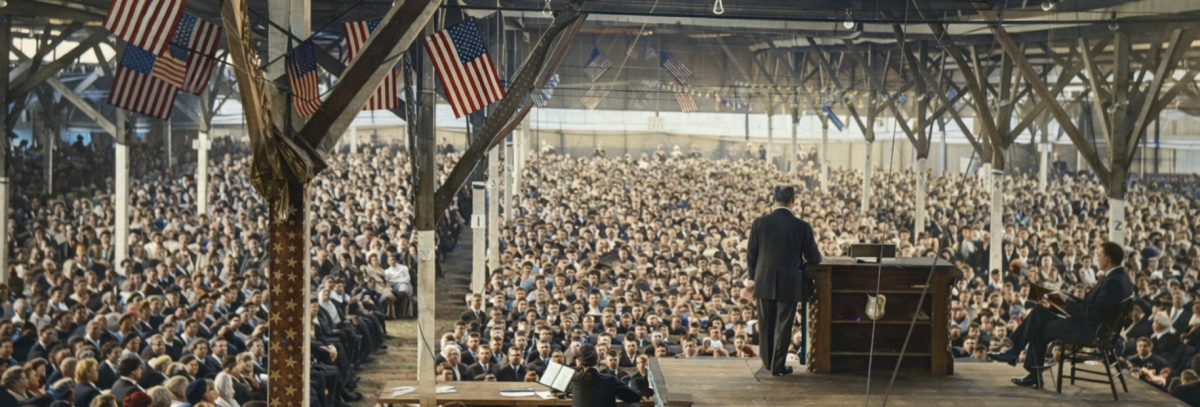
As early as January 25, the Freeport Journal-Standard announced the ambitious plans for a massive temporary tabernacle to be constructed at the corner of Jackson and Walnut Streets. Measuring 90 by 120 feet and designed to seat 2,000 people, the structure reflected both the scale of Sunday’s influence and the expectations for a large crowd. With $2,500 allocated for lumber and a total projected cost of $6,900 for lighting, labor, and construction, the city made a significant investment in preparing for the revival.
By February, anticipation was spreading beyond Freeport. A February 17 Freeport Daily Bulletin article declared that a “revival wave [was] sweeping the state,” pointing to the upcoming April arrival of Sunday as a major contributor. Just weeks earlier, Sunday had concluded a powerful campaign in Princeton, Illinois, resulting in nearly 1,900 conversions out of a town of just 5,000—numbers that generated buzz and raised expectations for Freeport.
As March turned to April, preparations intensified. Local churches agreed not to hold their own services during the revival campaign, recognizing the potential for unity and focus. The Hamlyn Brothers completed the tabernacle by early April, just in time for the set launch date of April 28.
Revival Unleashed: April 28 – June 3
The revival began on April 28 and was initially scheduled to last just two weeks, ending May 11. But as nightly crowds filled the tabernacle and the number of conversions grew, the campaign was extended through June 3. By May 24, reports in the Freeport Bulletin indicated that 490 conversions had taken place just between May 11 and May 22. Momentum was building.
The Freeport tabernacle became, at that time, the largest such structure Sunday had used. Thousands streamed in nightly to hear his fast-talking, energetic sermons that combined homespun stories, baseball metaphors, and unflinching moral appeals. He denounced sin with the fervor of a prophet and the flair of a showman, and the people of Freeport couldn’t get enough. The revival stirred the city so thoroughly that even local skeptics had to admit its impact.
Aftermath and Legacy
The meetings formally ended on Sunday, June 3. Though exact figures for total conversions are not available in your data, the revival left a lasting impression. Just a month later, Sunday was preaching in Prophetstown, Illinois (Freeport Journal-Standard, July 5), continuing his revival circuit—but the spiritual spark he had ignited in Freeport still lingered.
The 1906 campaign marked a pivotal moment in Sunday’s early evangelistic career. Freeport, known for its beer and pretzels, had experienced a spiritual shake-up. Though some converts would later drift away—as often happens after revival—the consensus, even among critics, was that Sunday’s visit had made Freeport a better, more sober, more spiritually awakened city.

 Evangelist Billy Sunday (1862-1935)